

Tactile Sensor Startups Expand Beyond Hardware Into Data and Embodied AI
At IROS 2026 in Pittsburgh, Sharpa unveiled three products simultaneously: the D01 integrated tactile-perception dexterous manipulation robot, the W02 fully tactile dexterous hand, and the AE01 exoskeleton data glove with tactile feedback.
Sharpa co-founder David Li previously stated in an interview that the company planned from the outset to pursue a full-stack approach, developing hardware, data, and AI concurrently and iteratively.
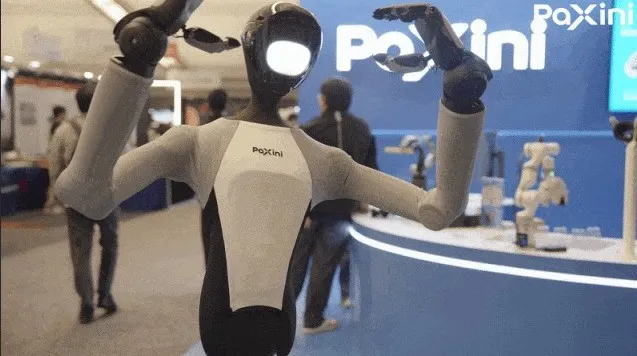
Similarly, PaXini presented a comprehensive product lineup at the same conference. Ranging from fingertip tactile sensors, plantar perception, six-axis force, and joint torque sensors to data collection gloves, dexterous hands, and robot bodies, its offerings cover most key stages of physical contact, from perception and data acquisition to execution.
Other companies are also building their own "full stacks." TASHAN launched a tactile data collection and training platform; Daimon Robotics released a multimodal dataset incorporating tactile information; and Link-touch, primarily known for six-axis force and joint torque sensors, began exploring force-control algorithms and data services.
Although these companies follow different technical routes and expand in somewhat divergent directions, their business scopes can no longer be easily summarized as merely "sensor suppliers."
In the past, upstream suppliers provided sensing components while downstream robot companies handled integration, establishing supply relationships based on performance, cost, and reliability. Now, some suppliers are entering data acquisition, algorithms, and training systems, while body manufacturers are organizing their own production of tactile-inclusive data.
Capital involvement has further complicated these relationships. AgiBot and Galbot have transitioned from being customers of Link-touch to becoming its shareholders, while BYD and JD.com have invested in PaXini, extending their collaboration into robot applications and data collection.
As tactile sensors evolve from mere perception components into integral parts of robot data production and model training, the traditional upstream-downstream division of labor is shifting. As the industry chain lengthens, where will the newly created value ultimately reside?
Full-Stack Is Not a New Story
Sensors have not escaped the fate of price wars.
According to PaXini’s official store, the starting price for some basic models of its PX6AX GEN3 multi-dimensional tactile sensor has dropped to RMB 199.
The barrier to entry for vision-based tactile products is also lowering. By late 2025, Daimon Robotics had reduced the starting price of its next-generation vision-tactile products to RMB 1,299. Du Bo, head of R&D at Daimon, told Yicai at the time that while customers recognized the effectiveness of vision-tactile sensors, the cost pressure remained significant if they needed to deploy them on hundreds or even thousands of robots.
For robotics companies, cheaper sensors mean they can consider installing tactile sensors in more locations and expand the scale of data collection experiments.
For upstream enterprises, however, the situation is less straightforward. While lower prices do not necessarily squeeze upstream profits, once costs for chips, packaging, manufacturing, and calibration are reduced, mass production can similarly improve business performance.
But some companies had already begun seeking businesses beyond hardware before these low-priced products emerged; PaXini is one example.
Since its establishment in 2021, PaXini has started with multi-dimensional tactile sensors and gradually expanded its products to include dexterous hands, six-axis force sensors, joint torque sensors, and robot systems. This is not a transformation driven by the recent round of low-price competition. As early as 2023, when the company disclosed its financing, it had already listed dexterous hands and humanoid robot R&D as uses of funds.
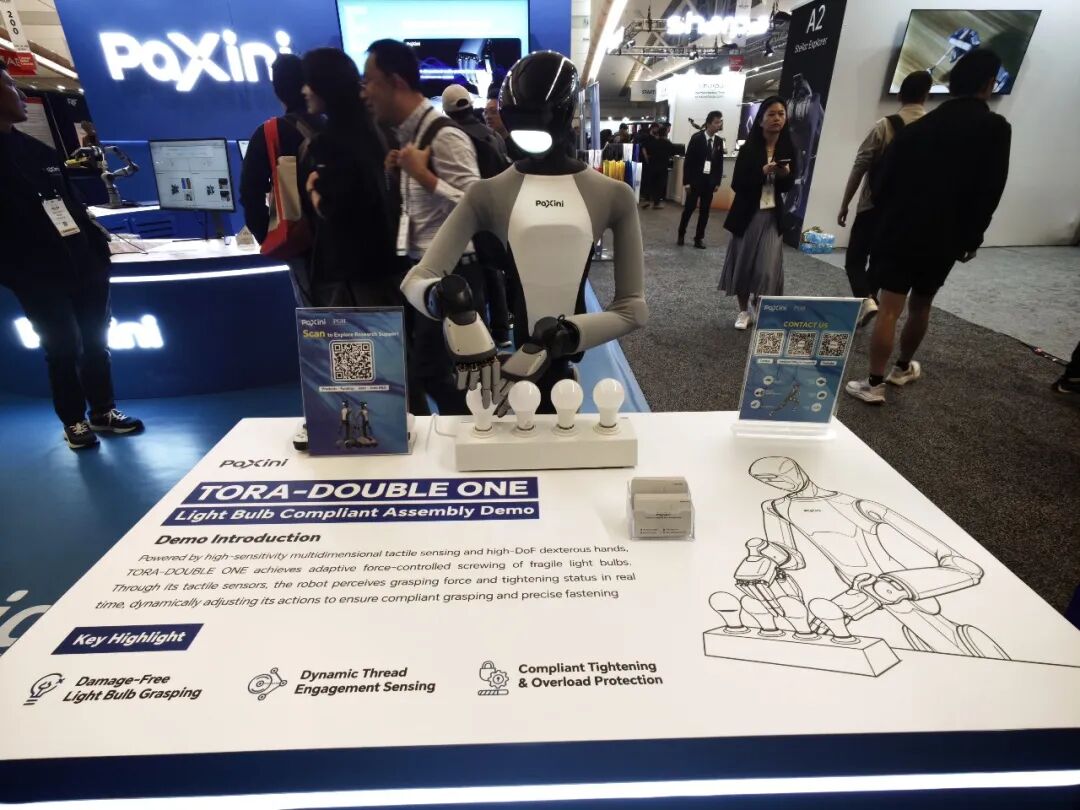
These layouts are all reflected in the physical exhibits at this year's IROS exhibition.
A robot demonstration on the booth that screwed in a light bulb drew considerable attention: it tightened the bulb without damaging it.
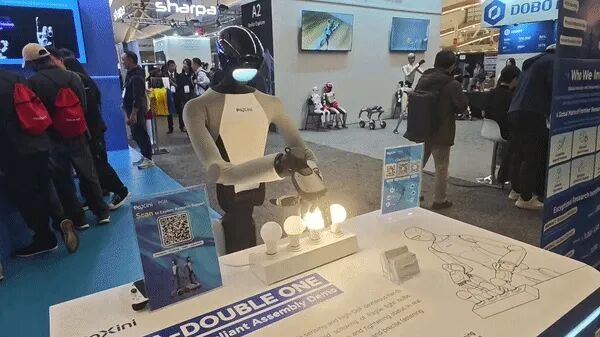
This seemingly simple action is not easy for a robot. The robot must control the forces applied during grasping and rotation, ensuring the light bulb is tightened securely without causing damage from excessive force. Unlike executing actions along a preset trajectory, the difficulty of such operations lies in the robot's need to adjust in real time based on continuously changing contact states.
Unlike fingertip tactile sensing, which primarily serves object manipulation, foot-bottom perception focuses on the contact state between the robot and the ground.
Staff on site explained that during walking, if the robot lacks sufficiently detailed sole contact information, the control system may struggle to accurately perceive force variations across different areas of the foot. Adding sole perception allows this information to be fed back to the robot's control system, providing more basis for gait adjustment and stability control. He also noted that some humanoid robots make loud noises when landing, which may be related to insufficiently refined force control.

However, the sound of a robot’s footsteps is also influenced by factors such as mechanical structure, control strategies, and ground conditions. The actual improvement in gait stability and force control provided by plantar tactile sensing still requires quantitative experimental validation.
PaXini also showcased six-axis force/torque sensors and joint torque sensors designed to perceive force states during robotic arm and joint movements. In an interactive demonstration, a robotic hand grasped a tubular object. When staff gently pushed the object, a nearby screen immediately displayed the force variations detected by the sensors, with colors corresponding to force intensity and the interface indicating the direction of the applied force. Staff explained that the sensors can capture these force changes not only from direct pressing but also from slight pushes applied to the object.
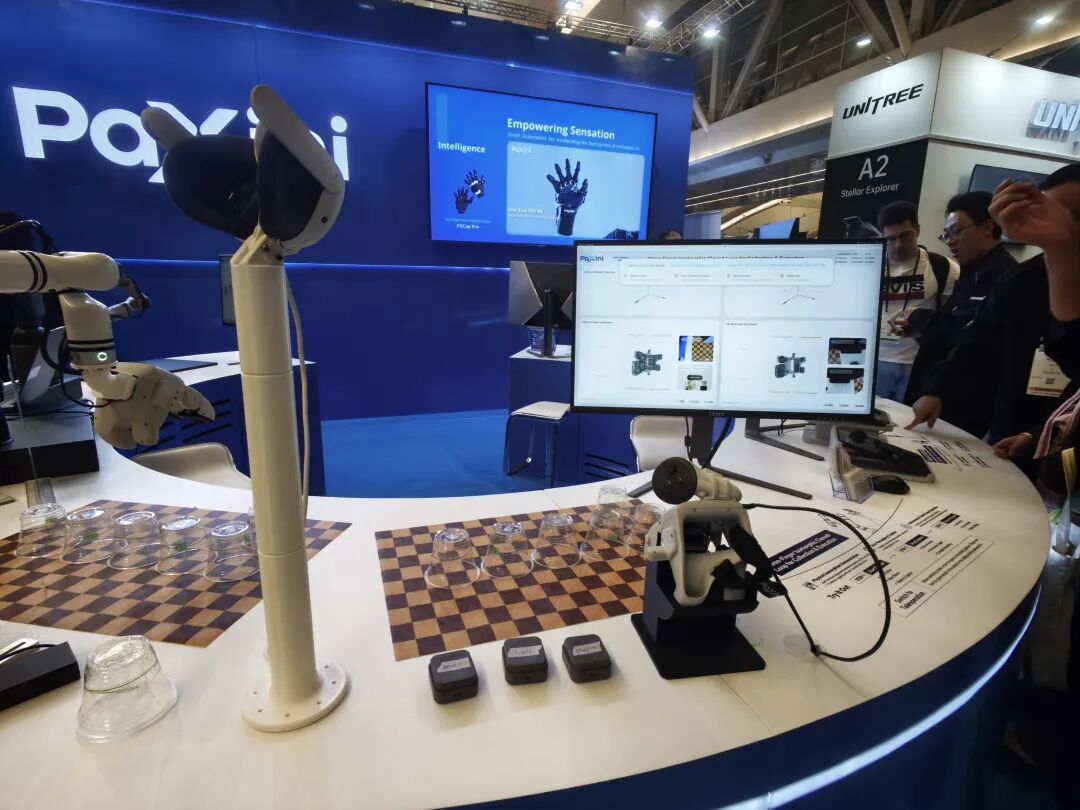
From fingertip contact with objects to foot-ground interaction and internal joint force feedback, PaXini’s product philosophy leans toward preserving complete physical interaction information during the data collection phase. As for which specific data points will ultimately be utilized by models, answers are left to subsequent training and experiments.
This approach extends to its data business. Over the past year or so, PaXini has advanced physical interaction data as an independent business line.
In June 2025, PaXini launched the Super EID Factory for embodied AI in Tianjin. Spanning approximately 12,000 square meters, the facility deploys 150 standardized data collection units covering scenarios such as automotive manufacturing, 3C assembly, and household environments, with a planned annual output of nearly 200 million embodied AI training data samples.
In May this year, PaXini announced two commercial milestones. On May 25, the company confirmed the delivery acceptance of a bulk order related to humanoid robots from Korean robotics firm Neuromeka, involving perception hardware and robot systems. Three days later, PaXini’s Tianjin subsidiary unveiled results from cross-border transactions of embodied AI data. According to local authorities, the relevant data products have completed compliance procedures and achieved commercial monetization.
Companies developing tactile sensors are moving into the data business, supported by technical capabilities and strategic rationale.
Cameras can record how humans pick up, move, and assemble objects, but they may not directly capture force variations or slip states during contact. By synchronizing tactile data with visual and motion records, more physical interaction information can be preserved for robot training.
During this year’s World Robot Conference, PaXini CEO Jincheng Xu stated a desire to collect as much multimodal information as possible, converting the physical interactions humans can feel into digital records.
PaXini is not alone in pursuing this approach.
TASHAN started with AI tactile chips and multi-dimensional tactile sensors, gradually launching products such as the TS-VT vision-tactile fusion training platform and the TS-ECHO tactile perception finger cots, connecting sensors, data acquisition, and training tools.
Daimon Robotics combines vision-tactile hardware, de-embodied data collection, and model research. In April, the company released Daimon-Infinity, a full-modal dataset including tactile data, making 1,000 hours of initial data available.
Link-touch follows a different path: scaling up hardware production first before extending into application algorithms. It focuses on force-sensing technologies such as six-axis force sensors and joint torque, continuously expanding manufacturing capacity while exploring force-control algorithms and data services. According to company disclosures, its production base has an annual capacity of 1 million joint force sensors and 200,000 end-effector six-axis force sensors.
However, producing data is a different business from selling sensors.
The value of sensors is relatively easy to quantify through metrics such as accuracy, repeatability, lifespan, and price. Data, by contrast, is evaluated based on the tasks it records, the contact processes it contains, and its ability to genuinely improve robotic manipulation.
Having the capability to produce tactile data does not guarantee a broad buyer base. Moreover, companies interested in physical interaction data extend beyond just tactile sensor manufacturers.
Entering Each Other's Territory
In April this year, AgiBot released the AGIBOT WORLD 2026 dataset. According to official descriptions, the data was collected using the AGIBOT G2 robot, integrating various grippers and dexterous hands to synchronously record visual, tactile, force, and joint state information. A tailored collection and annotation system was designed for different research tasks. The June release, themed 'Diverse Interactions,' further recorded real-world interaction events such as grasp failures, object slippage, and accidental collisions.
For AgiBot, tactile sensing has become integrated into its own data production pipeline. How robots collect data, what they collect, and how failures are recorded are all designed around the training needs of their hardware bodies and models.
Unitree is similarly building out related infrastructure. Its G1-D data acquisition and training solution covers the robot body, data collection, processing, annotation, review, data asset management, as well as model training and deployment tools.
Tactile companies and robot body manufacturers are beginning to intersect at the data stage, but the resources each side possesses differ.
Real-robot data acquisition can directly record actions, joint states, visual inputs, and force information while a robot executes tasks. This data corresponds directly to the specific mechanical structure and control methods of the robot. The trade-off is that scaling up requires significant investment in additional robots, facilities, and personnel.
Data collection centered on humans aims to reduce dependence on specific robot hardware. Operators use devices such as data gloves and tactile finger sleeves to perform tasks, with motion and contact information then transferred to the robot’s actuators.
At IROS, PaXini demonstrated the structural correspondence between its three-finger data acquisition device and the execution end, as well as action mapping from five-finger gloves to dexterous hands with different configurations, including four- and five-finger designs. TASHAN advocates for morphology-agnostic data collection, using tactile finger sleeves to reduce human demonstration's reliance on specific robot morphologies.
These approaches seek to broaden the applicability of collected data. However, because different robotic hands vary in actuation methods, contact areas, and sensor layouts, the actual forces exerted on objects may differ even when performing similar actions. Currently, there is no widely adopted unified standard for tactile data representation and interfaces across sensors and robot configurations.
Hardware manufacturers can design data formats tailored to their specific robot structures, control systems, and model requirements, deciding which signals to capture, how to label contact states, and whether to retain failure and error-correction processes. Independent data suppliers, by contrast, aim to enhance the generality of their acquisition equipment and data products so they can serve diverse clients.
Whether data can be used across different devices directly impacts delivery costs for these suppliers.
Previously, AGILINK CTO Kun Xiong noted in an interview that the company’s DUET hierarchical contact intelligence architecture separates action learning from human demonstrations with real-time contact control strategies trained using force and tactile data. He also discussed the replacement, calibration, and maintenance of tactile devices. For dexterous hands to operate long-term, questions arise regarding whether damaged sensors can be easily replaced, whether data output remains consistent after replacement, and whether control strategies require re-tuning—all factors influencing actual operational costs.
These are engineering challenges that upstream companies must address. Based on publicly available information, a significant portion of current collaborations remain focused on specific enterprises, products, and projects.
If entering each new client requires redesigning sensor interfaces, data acquisition workflows, and adaptation schemes, suppliers’ scale expansion may always be accompanied by substantial engineering investment.
In the research market, accumulated findings based on the same hardware are more likely to influence equipment choices for future adopters.
Does the Tactile Field Need a G1?
In robotics research, Unitree’s G1 has become a humanoid robot platform used by numerous universities and laboratories. Researchers can build upon this existing foundation. Code, tools, and experimental experience accumulated around the same hardware or models can also be reused by other teams.
The tactile field already had similar research hardware. Sensors such as GelSight and DIGIT have been widely used in robotic perception and manipulation studies. Researchers choose them not only for their sensing performance but also because of available drivers, data processing tools, and related research accumulation.
Last year, Sharpa launched its first-generation dexterous hand, the Sharpa Wave, which was subsequently adopted by multiple universities and research institutions and included in NVIDIA’s Isaac GR00T reference humanoid robot solution. Although this does not equate to large-scale deployment, being selected for a reference design carries industrial significance.
From this perspective, PaXini is also striving to secure a similar ecosystem position.
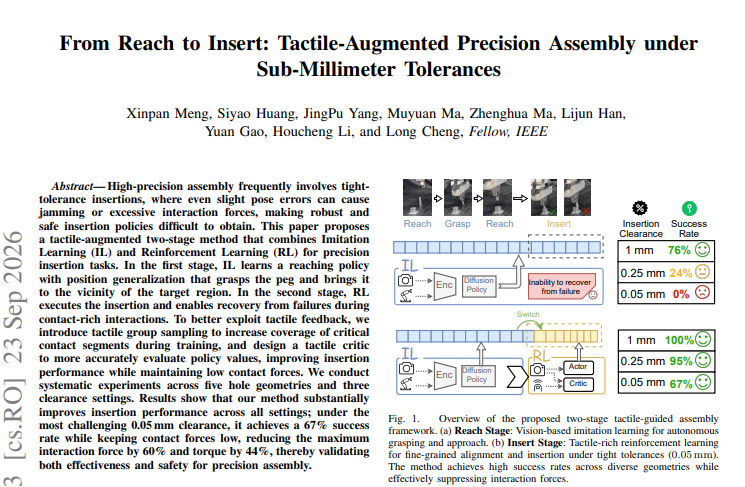
This year, PaXini launched the "PaXini Global Horizons" program, providing perception hardware and R&D platforms to universities. Within approximately two months of its launch, it received responses from over 100 universities and research institutions, cumulatively supporting 128 research projects. At IROS 2026, a precision insertion study conducted by a research team from the Chinese Academy of Sciences utilized the PaXini PX6AX GEN3 sensor.
This market is not a blank slate, nor will it necessarily converge on a single dominant platform. Beyond GelSight and DIGIT, which have already accumulated research users, AnySkin attempts to address issues such as surface wear and the difficulty of reusing models after sensor replacement; meanwhile, a Columbia University research team showcased FlexiTac at this year's IROS, using open-source hardware designs and manufacturing tutorials to lower the cost of entry for researchers.
Visual tactile sensors, multi-dimensional force sensors, six-axis force sensors, and flexible electronic skins provide different types of information, and different tasks have varying perception requirements. It is difficult to justify using a widely adopted sensor across all tasks simply because of its popularity.
Regardless of the path chosen, achieving scientific influence comparable to Unitree's G1 depends on ecosystem scale and whether researchers instinctively choose it. After all, procurement represents only a one-time revenue event.
An investor who has surveyed the tactile sensing sector stated in discussions that the industry remains in a technology validation phase, with commercialization loops not yet fully established, necessitating continued observation.
The tactile industry certainly has business opportunities. Professional sensors are already being supplied in volume, and there are existing cases of embodied data transactions. However, whether these newly expanded businesses in data, algorithms, and research platforms can generate sustained revenue remains an open question.
Current products offered by tactile companies far exceed single sensors. From data acquisition and model training to research development tools, companies are attempting to move further downstream. Only time will tell how much of the added value generated by this extended supply chain remains with upstream suppliers.