

DeepSeek Reportedly Eyes Embodied AI as Chinese and U.S. Foundation-Model Firms Signal Moves
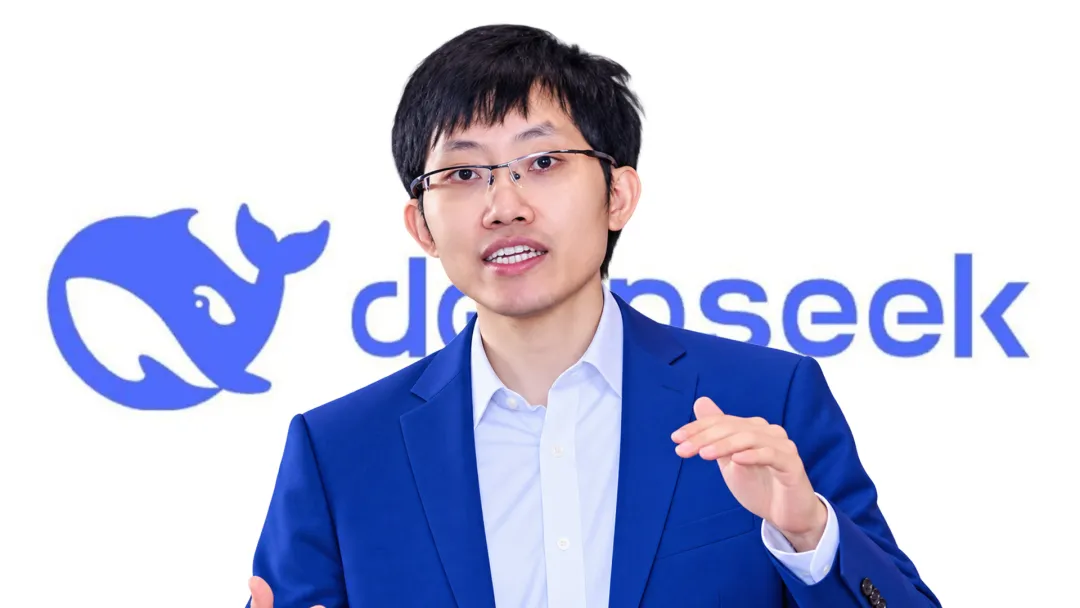
On the night of October 12, reports emerged that DeepSeek founder Liang Wenfeng has been closely monitoring the embodied AI sector. DeepSeek is reportedly evaluating whether to enter the field, with potential strategies including building an in-house R&D team or investing in relevant companies to gain a foothold. Additionally, Bloomberg reported that DeepSeek plans to lead the seed round for Winverse AI, a robotics company founded by former Tencent AI scientist Han Hu. The financing scale is in the tens of millions of dollars, with a post-money valuation of approximately USD 400 million. If this investment materializes, it will mark a further deepening of DeepSeek’s commitment to embodied models, following its cooperation agreement with Unitree signed in August of this year.
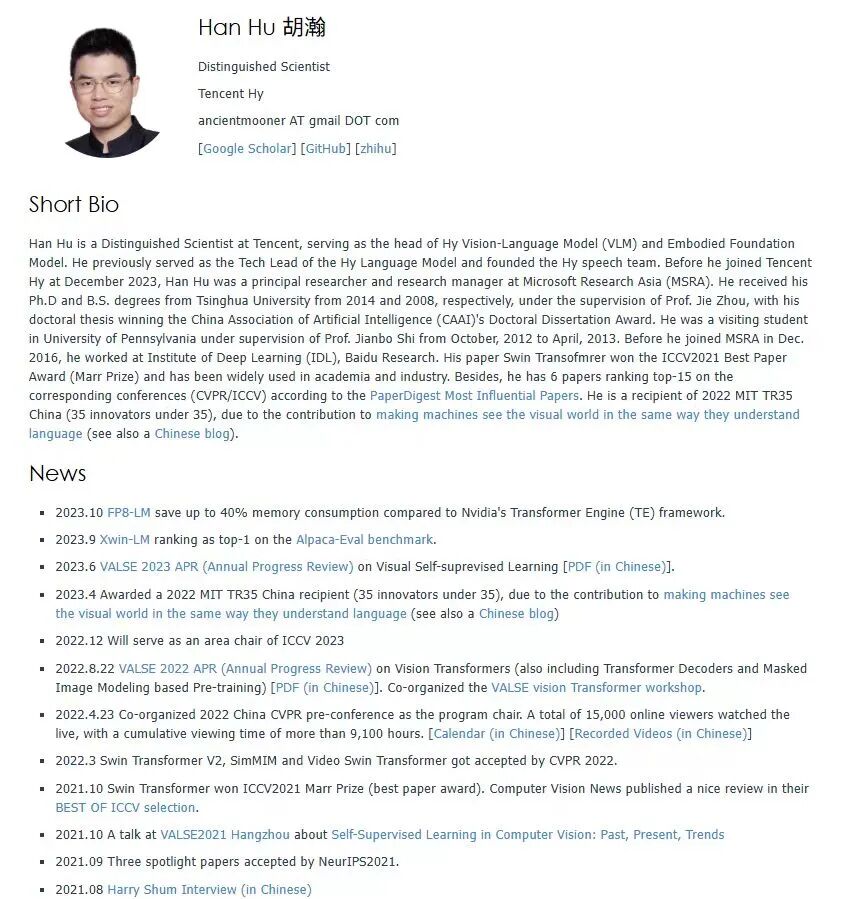
Winverse AI focuses on infrastructure for model acceleration, providing support for DeepSeek’s model capabilities. Its CEO, Han Hu, previously served as the technical lead for Tencent’s Hunyuan large model, overseeing the research and development of multimodal and vision-language models. He has also held positions at Microsoft Research Asia and Baidu.
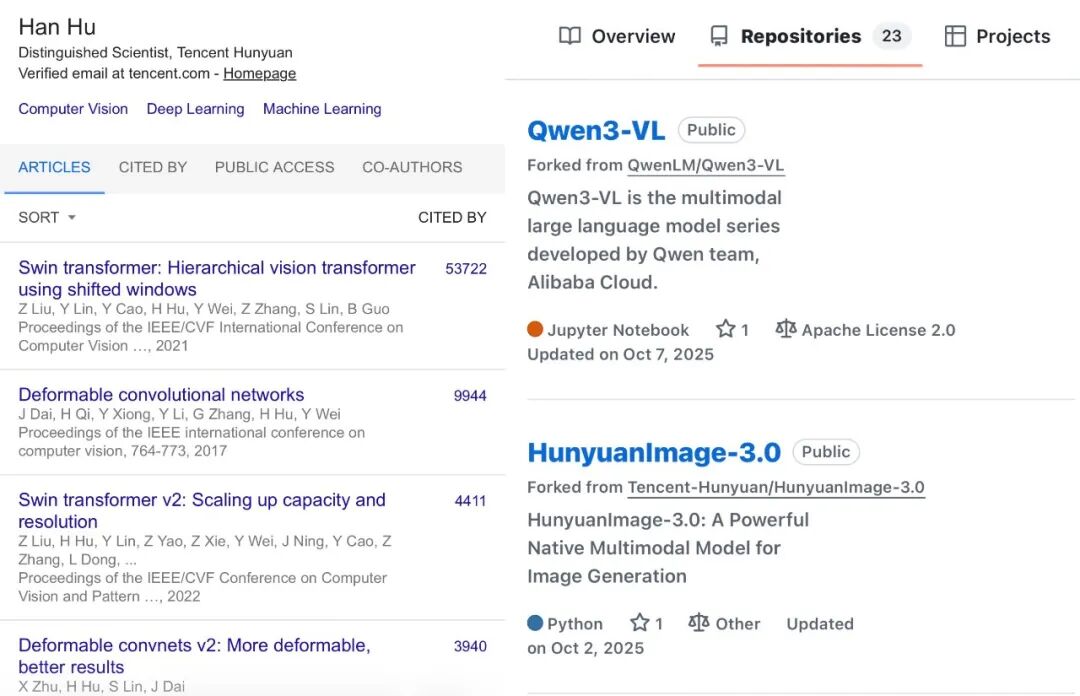
According to his GitHub profile and several published academic papers, Han Hu has achieved multiple research breakthroughs in machine visual understanding and generation technologies. In 2021, as a core author, he contributed to the paper Swin Transformer: Hierarchical Vision Transformer using Shifted Windows, which proposed a hierarchical vision Transformer architecture based on shifted windows. This work won the Best Paper Award (Marr Prize) at ICCV 2021.
Winverse AI states that it “focuses on developing AI models for robots, aiming to enable robots to understand voice commands and handle complex tasks in the real world, rather than merely executing preset actions or completing motion control.” Given its technical expertise and past experience, it is speculated that Winverse AI is likely to enter the field via technical routes such as VLA (Vision-Language-Action) or WAM, which are closely related to visual reasoning, thereby enhancing embodied models’ ability to understand physical environments.
Why is DeepSeek intensifying its focus on embodied AI at this moment? What does this shift in attention signify for foundational large model companies? And what technical limitations and considerations lie behind these moves?
AGI Is Expanding
The concept of AGI (Artificial General Intelligence) is shifting from a static academic definition toward functional definitions and commercial narratives.
DeepSeek founder Liang Wenfeng has publicly stated in multiple media interviews that DeepSeek’s core objective is to build AGI. During a closed-door investor meeting in May this year, Liang mentioned that the company already has phased expectations for achieving AGI.
"We can view AI development as a series of steps. The step taken last year was CoT, or Chain of Thought... This year’s step is Agent, which should address how models can learn continuously... After that, we may reach an intelligence singularity capable of self-iteration, followed by embodied AI."
As the concept of AGI expands and front-end technologies accelerate, embodied AI may have already entered DeepSeek’s radar. Given DeepSeek’s intent to achieve AGI, the company’s business investments in this area may have been anticipated.
However, objective challenges remain: the technical pathways for embodied AI are evolving rapidly, and DeepSeek’s large language model technology does not fully align with embodied AI requirements. With the emergence of OpenAI’s new GPT-6 Astra model, the gap between Chinese and US foundational models has widened slightly. Entering the embodied AI track may force DeepSeek to weigh both its commercial landscape and technological capabilities.
Dual Considerations
Since 2024, the advancement of foundational models has further driven technical research and application exploration in embodied AI. Consequently, the robotics community’s understanding of the relationship between models and hardware bodies has deepened. Compared to earlier periods, significant changes have occurred in the field’s technical pathways.
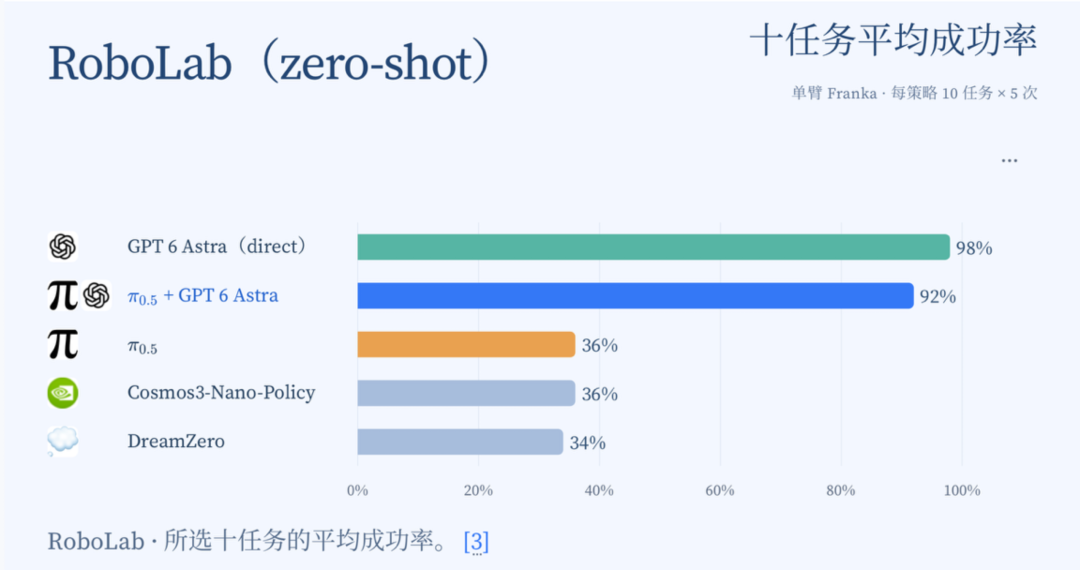
Meanwhile, foundational large models such as GPT-6 Astra are expanding in parameter size and training data richness, demonstrating sufficient generalization capabilities to compete with embodied AI models on robotic platforms.
Some industry observers suggest that GPT-6 Astra’s performance in robot deployment rivals that of specialized embodied models. This is attributed partly to the further expansion of model parameters and partly to OpenAI’s likely inclusion of robot-scenario training data in its next-generation foundational model training. These factors are considered key drivers behind DeepSeek’s plan to enter the embodied AI sector.
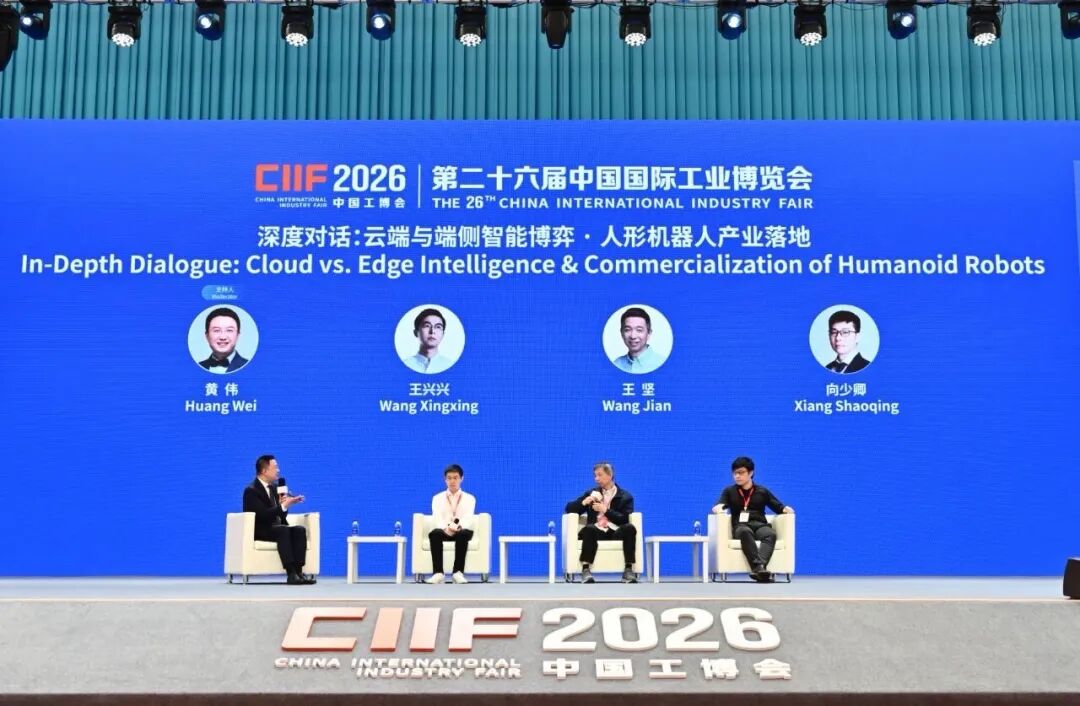
On the first day of the 26th China International Industry Fair, Unitree Technology CEO Xingxing Wang offered a similar assessment. He noted that the rapid iteration of artificial intelligence technology globally has led practitioners in the embodied AI industry to continuously advance their predictions for the arrival of the technological singularity.
The arrival of the entire tipping point may be quite rapid, possibly within one or two years. When GPT-7 is released next year, it might directly break through the embodied AI problem.
From a technical perspective, DeepSeek’s foundational model and embodied AI models follow different development paths. Entering this new track requires significant investment in personnel, time, and costs. Since autonomous driving, embodied AI has been regarded as another highly complex systems engineering challenge in modern tech manufacturing, with no consensus yet on the overall technical direction. Researchers continue to explore how to connect model perception, reasoning, and robotic action control using multimodal representations and physical world modeling, evolving from VLMs and VLAs to world models, and subsequently developing approaches like WAM, ICL, and reinforcement learning.
The rapid advancement in frontier technologies in this area stems fundamentally from the fact that the data organization for physical intelligence is entirely different from the natural language data available on the internet. Data must be extracted and organized from the rich physical world, then used by models to plan and respond for robotic carriers. In fact, the relationship between foundational models and robotic carriers can no longer be simply viewed as a distinction between 'brain' and 'body'; some embodied technologies are shifting decision-making and planning functions toward the 'brain.' If a company chooses to independently develop an embodied model, it means the foundational large model company must build, from 0 to 1, data standards, talent structures, and experimental infrastructure distinct from traditional language model R&D, while being willing to bear the uncertainties brought by long-term investment.
Beyond data, hardware storage technology remains a key breakthrough point for embodied AI. A more ideal approach to achieving better embodied intelligence is edge-side deployment, enabling in-memory computing. Although GPT-6 Astra demonstrates strong generalization capabilities, current hardware storage and computing power limit the ability to fit trillion-parameter large models into robotic carriers. Additionally, the application of mixture-of-experts models in embodied AI has not yet matured. In some scenarios, robots still need to call upon cloud-based large models for inference and response, resulting in significant interaction latency in real-world settings. This is not a problem that DeepSeek can solve single-handedly.
DeepSeek has two options. One is to invest in embodied AI companies such as Winverse AI or pursue mergers and acquisitions to broaden its ecosystem understanding of the upstream and downstream supply chains for embodied AI from multiple angles. The other option is to enter the field directly by establishing a specialized R&D team for embodied AI and advancing technological implementation through industrial partnerships. For a leading company in the foundational large model space, neither capital-driven entry nor direct participation is an easy choice.
Major Signals Emerge from Foundational Large Model Companies in China and the US
DeepSeek is not the only foundational large model company turning its attention to embodied AI.
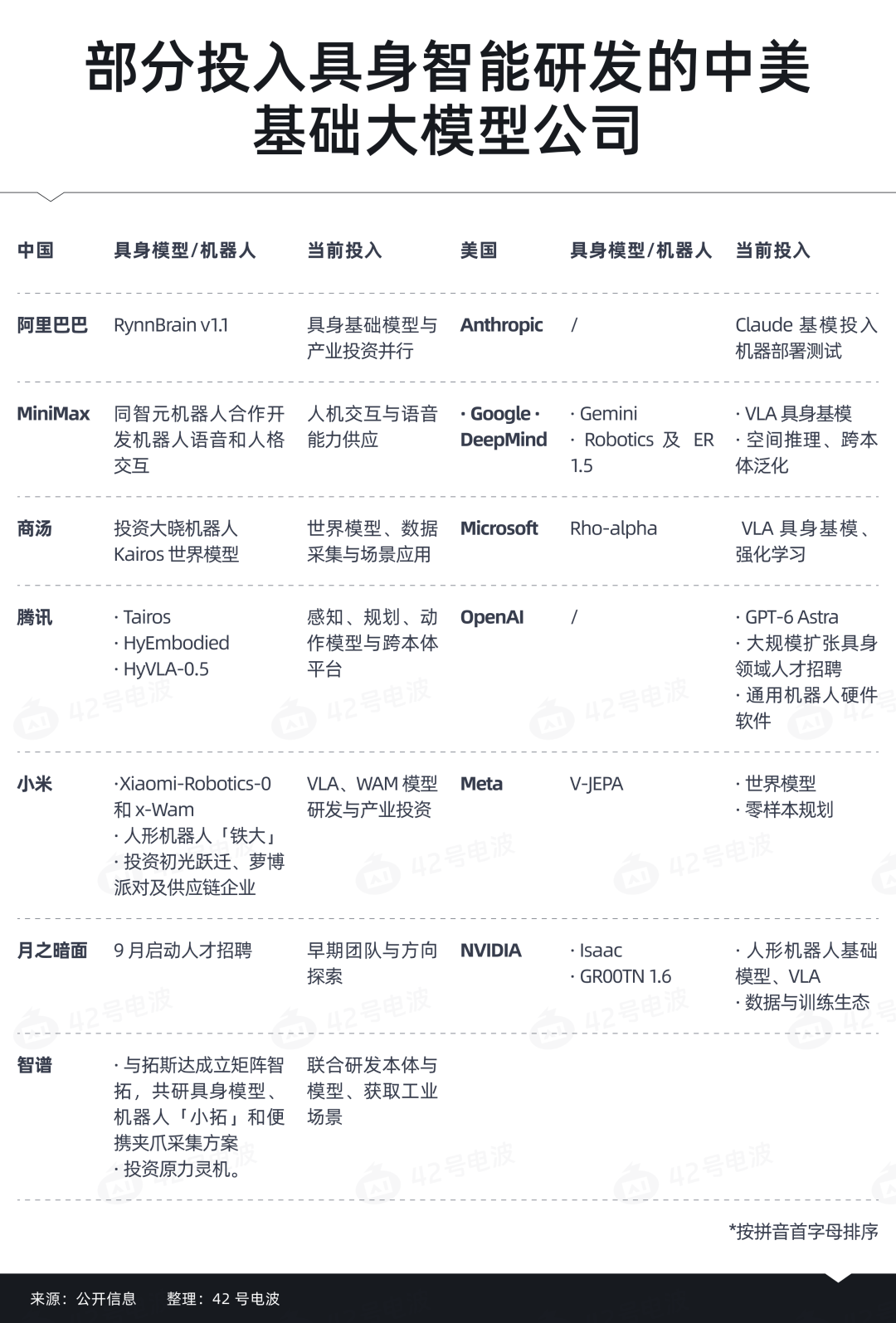
This convergence is particularly noteworthy. From Google DeepMind’s continuous iteration of Gemini Robotics to Meta’s increased investment in world models and robotics teams, and OpenAI’s resumption of robotics R&D alongside expanded hiring, US foundational large model companies are advancing their embodied AI initiatives across technical research, talent acquisition, and industry collaboration. Meanwhile, on the Chinese market, companies including Alibaba, Tencent, Xiaomi, SenseTime, and Zhipu AI are also extending into the robotics sector through model development, industrial investment, and scenario-based cooperation.
In just one year, the sequential focus of foundational large model companies in China and the US on embodied AI may signal a major shift for the entire artificial intelligence industry.
For foundational large model enterprises, embodied AI is evolving from a relatively independent area of robotics research into a critical technical scenario for testing whether artificial general intelligence can enter the physical world. In this phase where technology has not yet converged, foundational large models appear to be competing to define their ecological niche within embodied AI. This implies that future competition in embodied AI will involve not only training data, simulation systems, chip compute power, and edge-side deployment, but may further evolve into a competition for “model-robot integration” between foundational model providers and robotics companies.
A deeper question remains: How will the technical boundary between foundational large models and embodied models evolve?

If future general-purpose foundational models can achieve rapid adaptation across different robot bodies through stronger physical reasoning, minimal robotic motion data, and specialized control modules, then the parameter advantages of foundational model companies may extend further into the field of embodied AI. However, as long as robots continue to rely on substantial real-world interaction data, dedicated motion policies, and body-specific training—and given that edge computing and storage technologies have not yet seen breakthroughs—even enterprises with powerful foundational model capabilities may not be able to directly replicate their competitive advantages from the digital world.
At this critical juncture, the fact that leading companies are releasing business signals almost simultaneously suggests that the competition for next-generation general AI is increasingly extending from the digital world into the physical world—a clear trend. Therefore, what deserves attention is not only how DeepSeek enters this track, but also how general artificial intelligence technology will ultimately converge and take shape in the journey toward the next stage of AGI.
DeepSeek has not yet publicly disclosed specific plans for its embodied AI business layout. It remains unclear whether it will form a dedicated team or has already anchored its technical route and long-term goals. Liang Wenfeng’s gaze toward the robotics sector may indicate that DeepSeek is poised to take a landmark step soon. Solving the problem of model interaction with the physical world and enhancing the practicality and generalization capabilities of intelligence aligns with DeepSeek and Liang Wenfeng’s near-pilgrimage-like belief in achieving AGI, while also requiring immense courage.
Recent reports indicate that DeepSeek will complete its latest round of financing in the near future, with the funding amount increasing from the previously planned RMB 50 billion to approximately RMB 100 billion. Standing at the forefront of future industries, the role DeepSeek will play, and how general-purpose embodied intelligence will take shape amidst this new technological wave, remain to be observed in the future.