

Interviews
Conversations with founders, researchers and engineers.

TacVLA: Activating Tactile Tokens Only Upon Contact for Robust Manipulation
In an interview at IROS 2026, co-author Heng Zhang discusses TacVLA, a contact-aware tactile fusion method that uses a gating mechanism to activate tactile tokens only during physical contact, improving VLA manipulation robustness without adding unnecessary computational overhead.

Purdue Team's IROS Best Paper Nominee: Active Palm and Multimodal Sensing in a Three-Finger Robot Hand
Yuhao Zhou and team from Purdue University present the VTAP Gripper, a three-fingered robot hand that achieves complex manipulation by making the palm active and multimodal. The design challenges the trend of adding fingers, proving that dexterity can come from effective use of existing contact surfaces rather than increased degrees of freedom.

Samsung Researchers Show Compressed VLA Model Outperforms Larger Teacher on Real Robots
Researchers from Samsung R&D Institute demonstrate that compressing a visual-language-action model's Transformer layers from 18 to 6 via knowledge distillation reduces inference latency by more than half while maintaining success rates, enabling faster real-world robotic deployment.
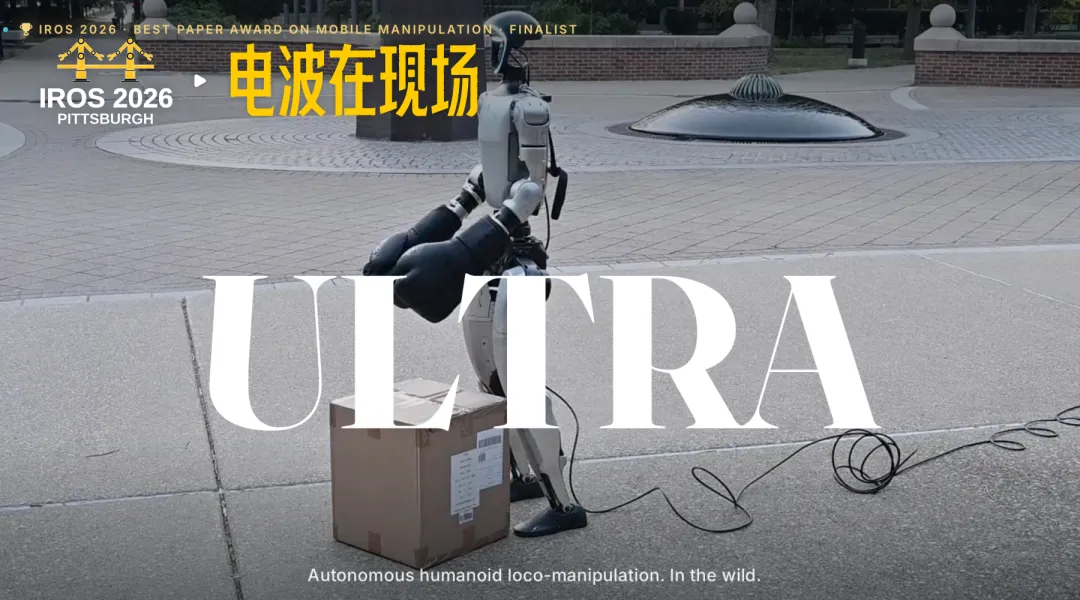
ULTRA: Toward Autonomous Whole-Body Movement and Manipulation
At IROS 2026, Xialin He and Sirui Xu from UIUC presented ULTRA, a unified multimodal control framework that enables humanoid robots to learn whole-body loco-manipulation through physical simulation and reinforcement learning.

IROS Best Paper Finalist: Helping Robots Detect Glass for Safer Navigation
42HOW Robotics interviews co-first author Yu Jingwen on the Southern University of Science and Technology team’s RANSAC-based framework that fuses depth foundation models with sensor data to enable safe robot navigation through glass obstacles.

RIMBOT Unveils Physical RSI Framework, Targets Industrial Validation
RIMBOT, a robotics startup founded in March 2026, is deploying its Physical Recursive Self-Improvement framework in industrial ICT testing lines. Co-founder Yuanxin Zhong explains why factories offer the necessary failure data and infrastructure to move beyond zero-shot generalization toward continuous real-world learning.
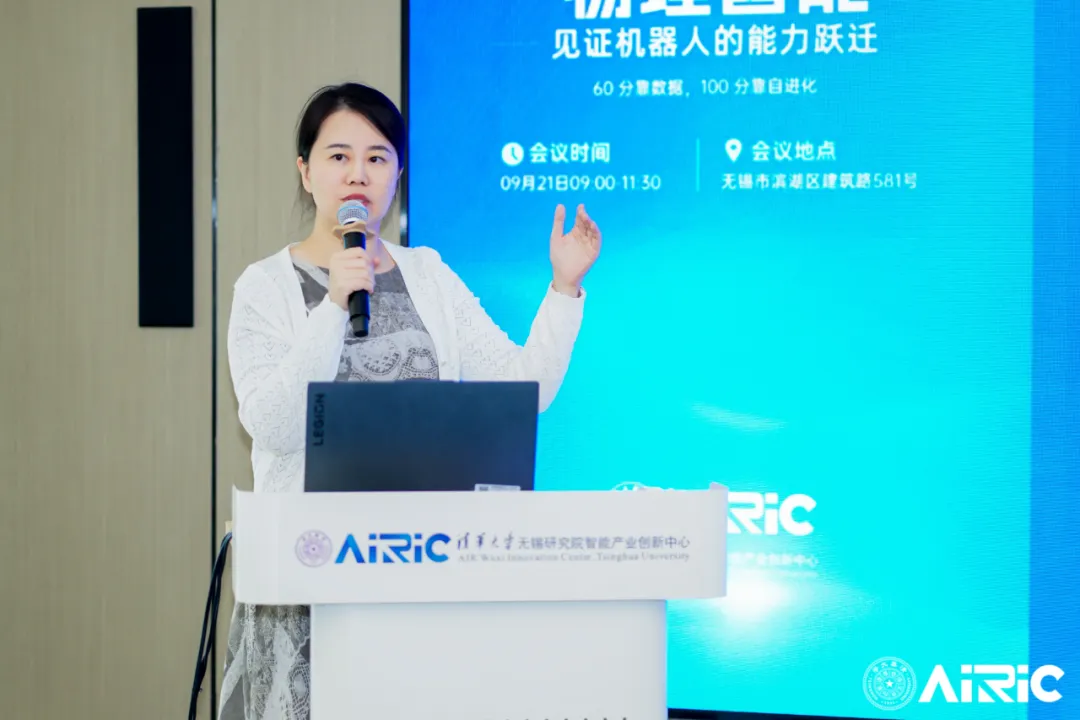
Tsinghua’s Cao Ting Unveils Zeva-Ego Model for Physical Self-Evolution via Causal Learning
At a Tsinghua University event, Zhang Ya Qin introduced Physical Self-Improvement (PSI), while Professor Cao Ting unveiled the Zeva-Ego model and ICCL framework to enable robots that learn causal relationships from real-world interaction.
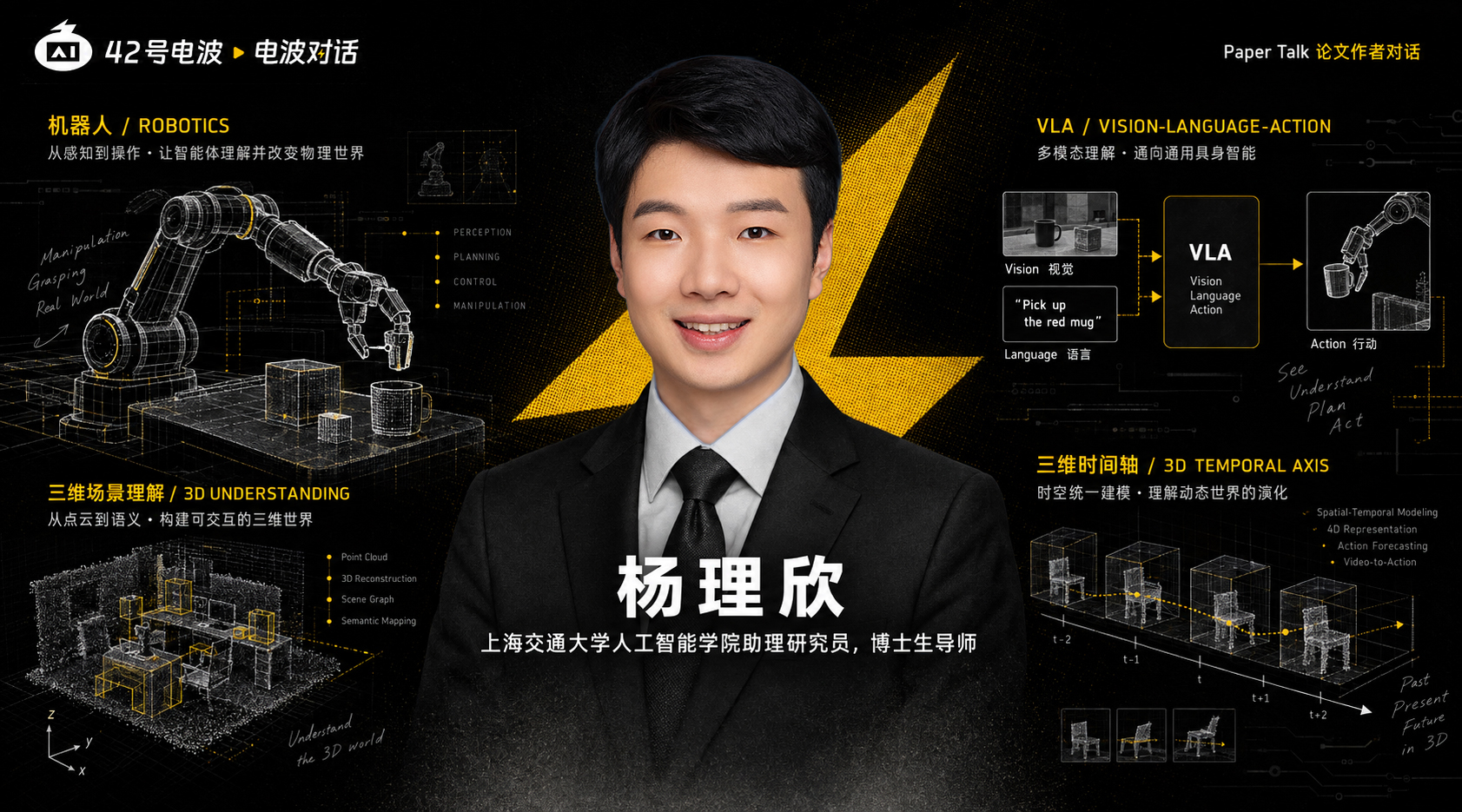
Shanghai Jiao Tong University Assistant Researcher Yang Lixin on Why Robots Need a '3D Time Axis'
Shanghai Jiao Tong University assistant researcher Yang Lixin discusses how LaMP, ChronoFlow-Policy, and Track4Action integrate 3D point flow to give robots spatial awareness, temporal memory, and understanding of environmental changes.

HopTo Technology CEO Fangzheng Wang: Building a Robot That Jumps and Flies
In an interview, HopTo Technology CEO Fangzheng Wang discusses the commercialization of Hopcopter, a hybrid drone-leg robot that transitions between jumping and flying. The company aims to launch its first product for overseas markets at under USD 1,000.

Daxiao Robotics and NUS Release ACE-Data-0, a High-Density Multimodal Embodied AI Dataset
Daxiao Robotics and NUS S-Lab released ACE-Data-0, an L5 multimodal embodied dataset. We discuss how high-density, physically grounded data is shifting the industry bottleneck from model architecture to physical supervision.

Huawei Veteran Zhou Shunbo’s New Home Robot Startup Secures Hundreds of Millions in Funding
Zhou Shunbo, founder of Ou La Wan Xiang, discusses his journey from Huawei to creating a wheeled home robot. He argues that data is the first principle of embodied AI and believes that high-value, non-AGI-dependent robots can succeed in family scenarios.

INTACT: Search-Free World Model for Robotics Achieves Faster, More Reliable Control
Researchers propose INTACT, a search-free world model framework that aligns physical and goal intentions using a shared operator. Achieving 95.33% success rate with 300x faster inference than LeWM, it upgrades JEPA from prediction to deployable control.