
At This Year's CES, Robots Steal the Show
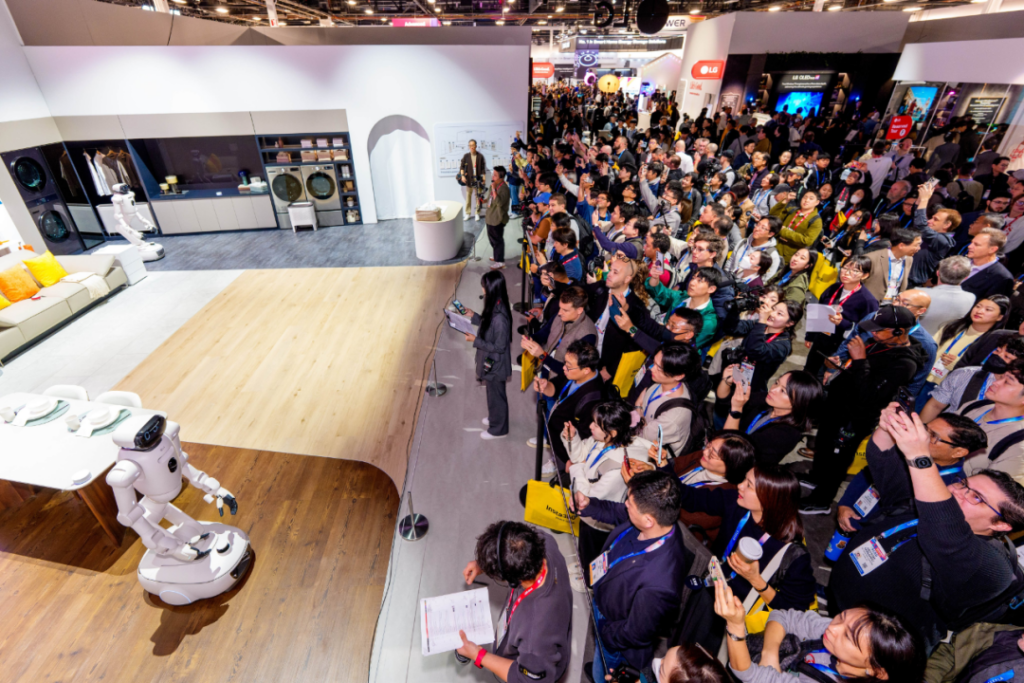
On January 6 local time, CES 2026 kicked off in Las Vegas, USA. As the world's most influential consumer electronics show, this year's CES remains bustling. On the opening day, Radio Wave No. 42 also arrived at the exhibition site to bring you related reports.
Overall, more than 4,000 companies participated in the exhibition, with exhibits further emphasizing bringing AI into the physical world, given that this year's CES theme is 'Smarter AI for All'.
Moreover, Jensen Huang stated in his speech a few days ago: 'The ChatGPT moment for Physical AI has arrived.' In the era of Physical AI, AI must figure out how to achieve Embodied AI in the real world.
Therefore, throughout the past year, AI products have noticeably begun to focus more on how to enter the real world and provide tangible value to everyone.
As the best carrier of Embodied AI, robots, after continuous verification of their capabilities, displayed a confidence unlike before when arriving at this year's CES.
At this year's CES, you would see robots actively showcasing various skills, with many exhibition booths packed to capacity; they became the standout attractions of the show.

Robots Take Center Stage
In fact, this year’s CES featured a significant number of domestic exhibitors. Most had already showcased their robot products at previous domestic trade shows, and this time they came to the international stage to display the prowess of Chinese-made robots.
However, veteran robot manufacturer Boston Dynamics brought its latest product to this year's CES: the new-generation Atlas robot. One particularly striking data point is that the new-generation Atlas stands at a height of one point nine meters, making it among the tallest exhibits at this year's robotics show.
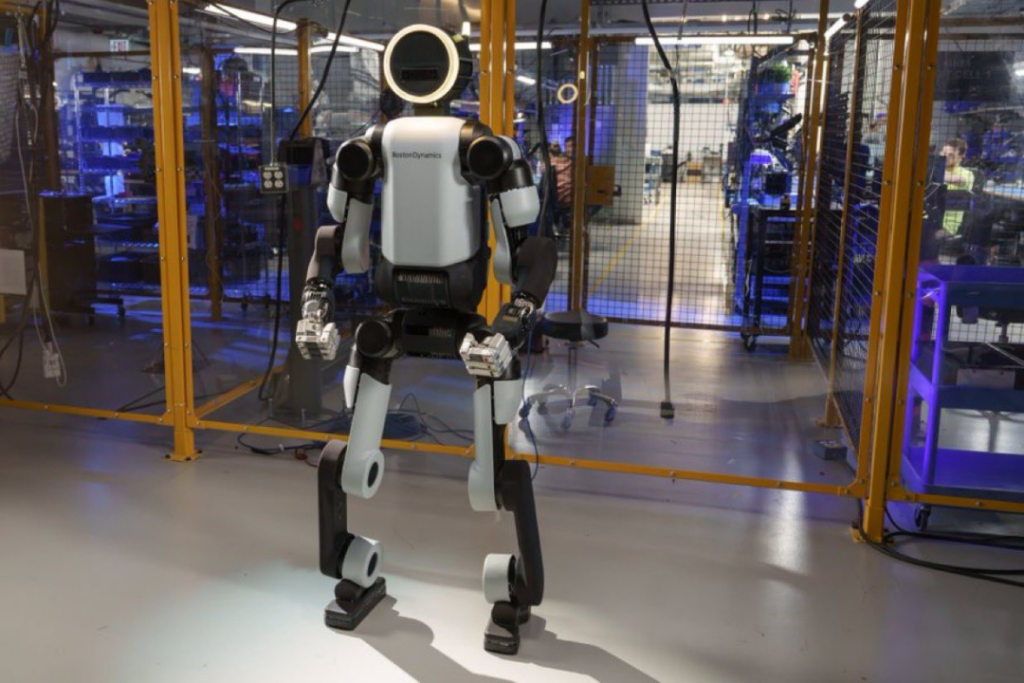
During the live presentation, the newly revealed Atlas was shown as a prototype. Meanwhile, the previous generation’s Atlas appeared unusually excited, dancing on stage to celebrate what it called its "version iteration."
The new Atlas is designed primarily for industrial applications, so its design focuses accordingly. It features four-finger dexterous hands, can carry loads up to 50 kilograms, has a maximum reach height of 2.3 meters, and offers four hours of battery life with swappable batteries—all tailored to better adapt to factory workflows. Additionally, the presentation hinted that Hyundai Motor Company, as Boston Dynamics’ controlling shareholder, will establish a dedicated robot manufacturing facility with an annual production target of 30,000 units.
At Unitree Robotics’ exhibition booth, crowds remained densely packed three layers deep, with attendees showing immense enthusiasm. To get close-up views of the Unitree G1 robot fighting competition, visitors had to push through the throng.
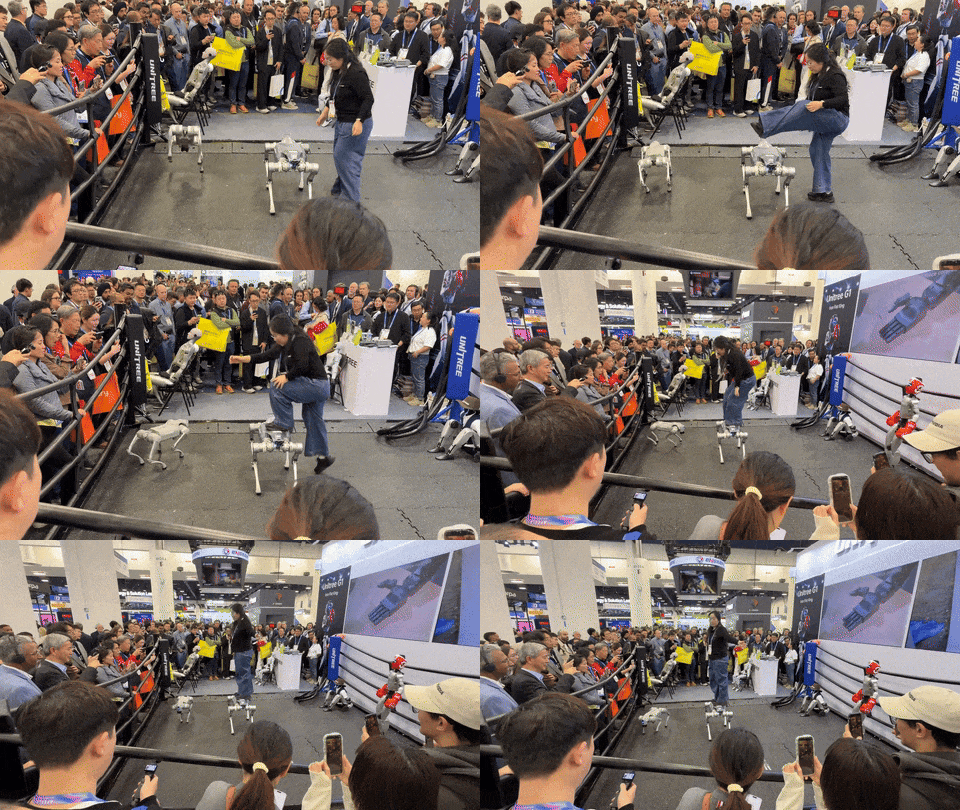
At the event, the Go2 robot dog was constantly performing acrobatics, while staff demonstrated its load-bearing capacity by standing on another A2 robot dog. Meanwhile, the new H2 humanoid robot with long legs happened to be sitting on a chair resting and did not move to demonstrate its functions.
At Zhiyuan's booth, different robots showcased their unique capabilities. Lingxi X2 danced passionately on-site, even demonstrating the charm of Chinese Tai Chi to foreign audiences. Jingling G2 continued to perform stably in operational tasks, handing drinks to viewers admiring Lingxi X2's performance—a true 'workaholic' that didn't forget to serve as a hotel concierge at the exhibition.
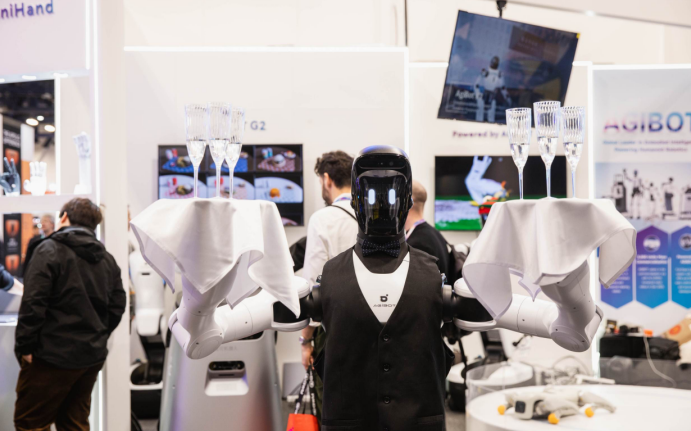
Additionally, Shangwei Qiyuan Q1, which had just launched recently, also appeared at CES. Released only about a week prior, it quickly came into view. It remains unknown whether anyone on-site wanted to immediately stuff it into their backpack and take it away.
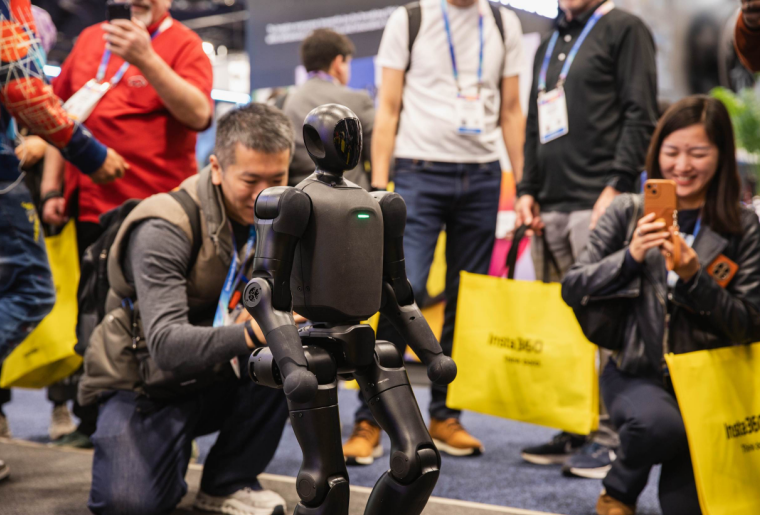
Zhongqing Robot brought T800 and PM01 to CES. While interacting with attendees, PM01 turned the booth into a filming set, continuously demonstrating its punching and kicking abilities through high-difficulty moves.
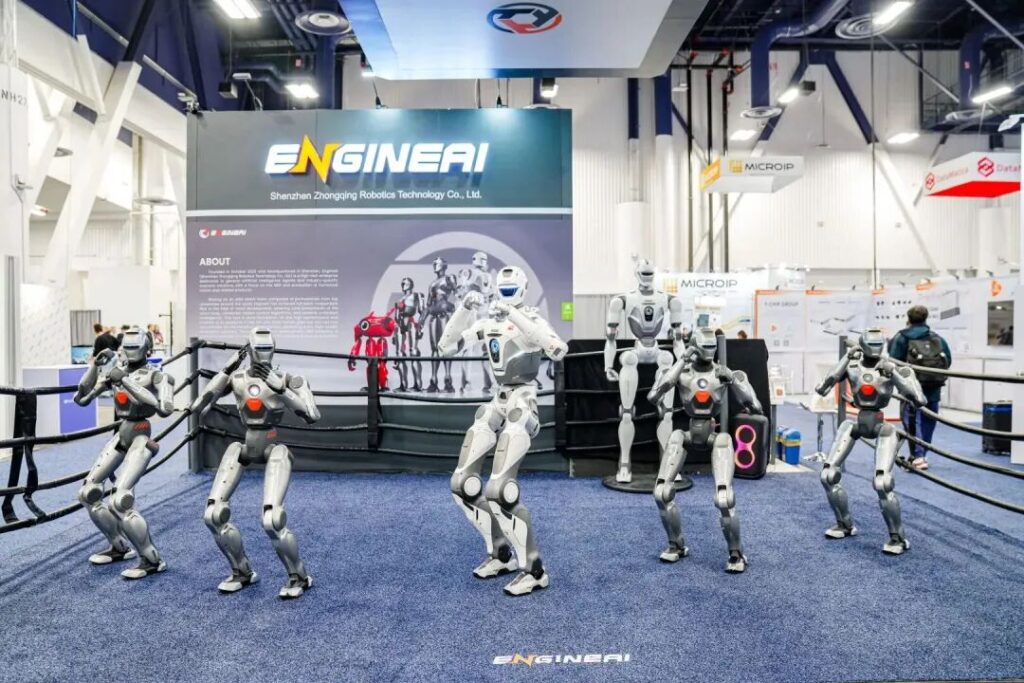
Fourier also showcased its "Care-bot" GR-3 at the booth. This heartwarming robot could make heart gestures to visitors and introduce the products available at its own exhibit area. Its cute appearance made people unable to resist wanting to pet it.
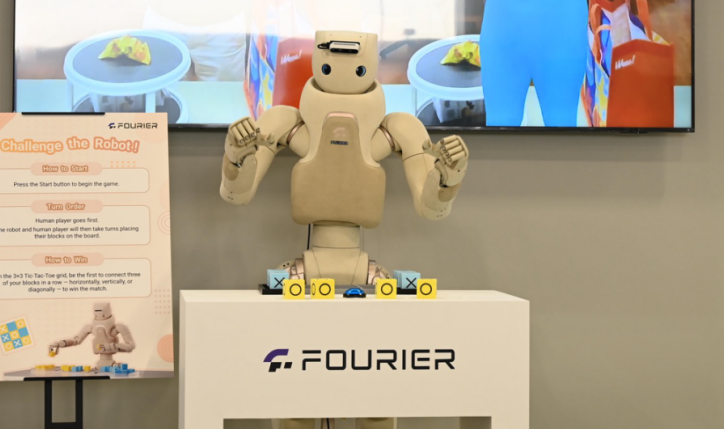
At the tender exterior, the GR-3 also showcased its logical capabilities. The 'Tic-Tac-Toe' match held at the event was played between the audience and the robot. In scenarios that test logic and data processing skills, it is not certain whether humans could win against the GR-3.
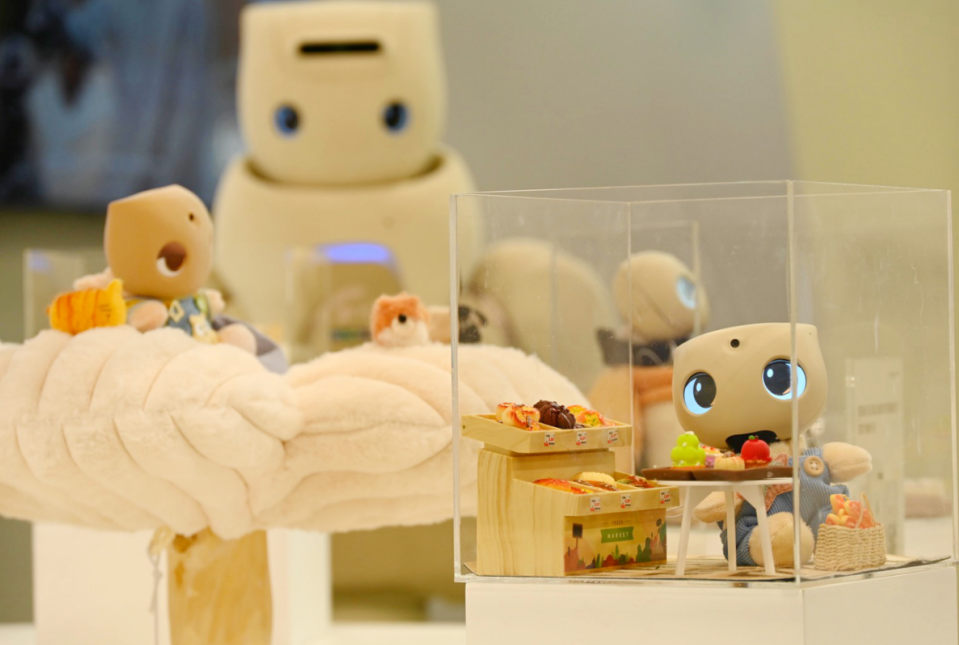
Besides the GR-3, Fourier also unveiled a desktop 'Care-bot' robot concept prototype. Sharing the same IP setting as the GR-3, this model serves as an emotional companion for office workers when placed on a desk.
On another side of the booth, the Beijing Humanoid Robot Innovation Center presented the Embodied Tiangong 2.0 and Embodied Tiangong Ultra. The booth turned into a real 'workplace,' where the Embodied Tiangong 2.0 demonstrated autonomous parts sorting while interacting with the audience. Despite being surrounded by onlookers, the robot's work proceeded without disruption, simply focused on doing its job well.

The Embodied Tiangong Ultra did not lag behind either, showcasing its stability and endurance in long-distance running, living up to its reputation as the half-marathon champion among humanoid robots.

What else is interesting?
At the exhibition, a Vbot super robot dog named "Big Head BoBo" also became the focus of attention. With no language barriers, it can understand English and interact with people by shaking hands, capturing the hearts of many attendees.

Big Head BoBo's cute appearance made foreign friends unable to resist wanting to take one home. Staff introduced that the global version of the Vbot super robot dog is being developed simultaneously and is expected to launch in Q2 this year for markets including North America, Europe, and the Middle East.
At this CES, LG also brought its first humanoid robot, CLOiD. This robot is designed for home use and can integrate with smart home devices.

During the presentation, they demonstrated how CLOiD works specifically. After receiving a towel handed by a human, it placed the towel into a washing machine whose door opened automatically.
A key product showcased by Roborock was a robot vacuum cleaner, but this model has two legs, adopting a wheel-legged design. It's hard to imagine that current robot vacuums can now climb stairs on their own.
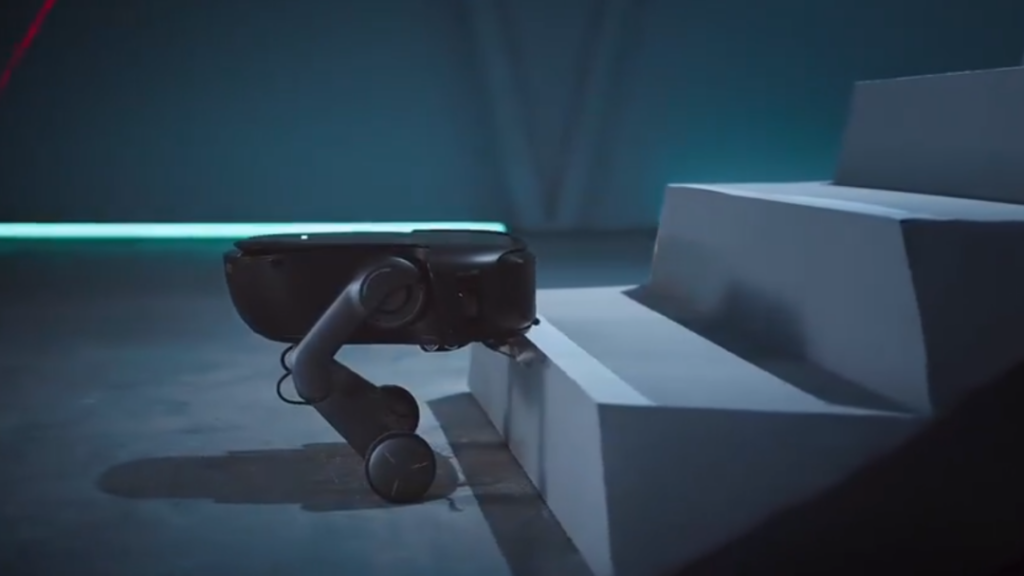
We may see more similar products on the market in the future, making traditional home appliances embodied intelligent. It's definitely worth reimagining these with AI.
Sharpa robots from Singapore held a table tennis arena at the event, challenging audience members. From the footage, Sharpa's playing style appears steady and conventional.
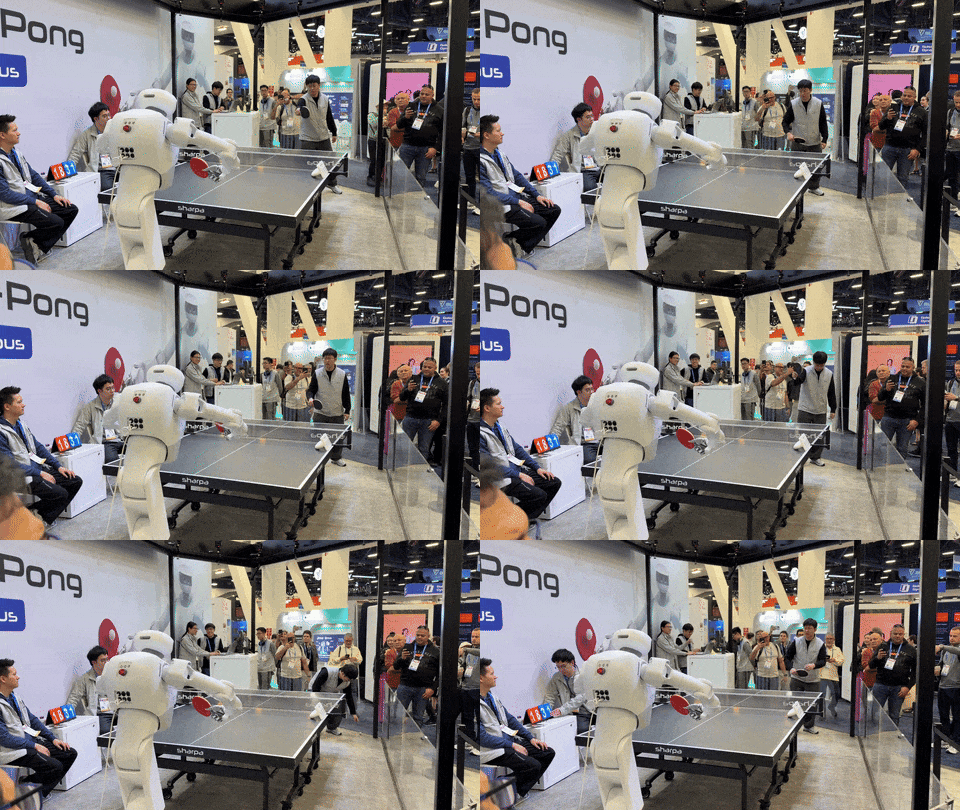
Don't underestimate robots playing table tennis—the guy on site couldn't even return Sharpa's shots, so players without a table tennis background might find it hard to beat it.
Meanwhile, Urobot showcased its capabilities by demonstrating how to brew tea and mix cocktails on the exhibition stand.

These robotic skills can help quench the thirst of exhausted attendees after a long day at the show. Perhaps bartenders could eventually be replaced by robots.

**Final Thoughts
After a full year of continuous evolution, robots have now entered a new stage of development.
This generation of various embodied products is already contemplating how they should enter the real world and coexist with everyone.
Although they still showcase some seemingly useless skills in public, the important thing is that they have begun to think about how they can play a practical role in the real world, which is a good start.
Some robots choose to work in factories, some aim for deployment in home scenarios, and others are attempting to reimagine traditional home appliances through embodied AI.
The industry truly enters the next stage only when robots begin to become useful in physical spaces. The CES robotics exhibition area may not be more bustling next year, but there will be more products heading into the real world than this year.