

Aina Ring Bets $399 on an AI Approval Button, but Do Agents Really Need That Many Prompts?
Hardware startup Aina opened pre-orders for the Aina Ring on November 5. Priced at an early-bird rate of $399 and a regular price of $499, the smart ring requires full payment at checkout on its website and is expected to ship in early 2027.
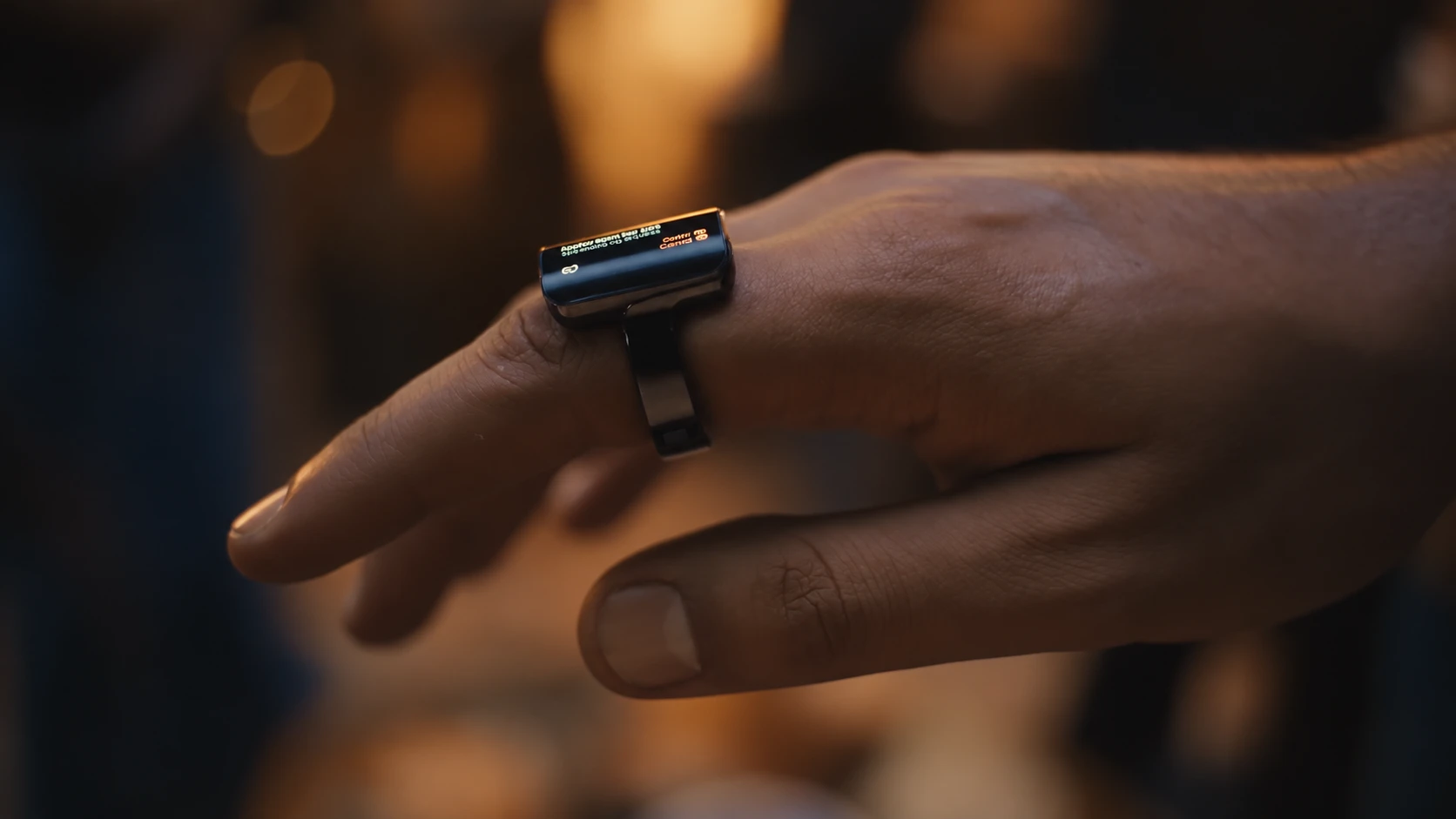
On November 5, U.S. time, hardware startup Aina launched pre-orders for its eponymous smart ring, the Aina Ring. Priced at an early-bird rate of USD 399 and a regular price of USD 499, the device requires full payment at checkout on the official website and is expected to ship in early 2027.
Unlike most smart rings on the market that track sleep and heart rate, the Aina Ring contains no health sensors whatsoever. Instead, it is positioned as a wearable remote control for smartphones, computers, and various AI agents. Worn on the index finger, the ring features a built-in small display, a four-way directional pad, a microphone, and a speaker. Once paired with an iPhone and a Mac, users can press and hold a button to issue voice commands to an AI, raise their finger to their ear to answer calls, or use the ring to manage computer meetings and change music tracks.
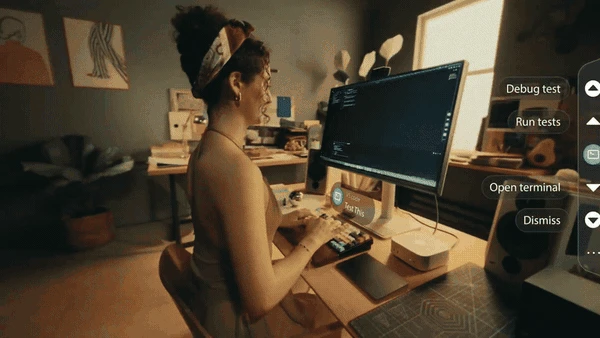
Its primary use case is enabling users to approve AI actions without ever pulling out their phones. The companion system reads calendar events, location data, and daily software habits from the user's phone and computer to anticipate upcoming tasks, or pushes requests from background agents awaiting a decision directly to the ring's display. For instance, when it is time to leave for work in the morning, the ring automatically displays an option to hail a ride to the office; a single upward flick of the thumb confirms the order. If the system detects an impending late arrival to a meeting, the AI drafts an explanatory email and pushes it to the ring; flicking up sends it immediately, while flicking down rejects it.

Founder Apoorv Shankar authored a dedicated product manifesto for the ring titled "From Browsing to Commanding to Approving." His assessment is straightforward: over the past 15 years, using a touchscreen smartphone required four steps—unlocking, finding the app, typing or clicking, and executing. The advent of voice assistants reduced this to two steps: stating the request and confirming. However, over the next two to three years, proactive AI agents will complete tasks in the background based on users' schedules, locations, and habits. People will need to process hundreds of proactive AI suggestions daily, reducing human interaction to a single final step: approval.
"Pulling your phone out of your pocket, unlocking it, and tapping into an app for every single 'yes' simply does not work anymore." The Aina homepage defines the ring as "the least effortful way for the human body to say yes."
Turning the simple act of "clicking agree" into a standalone USD 400 wearable device rests the entire product logic on a single premise: in the agent era, there will genuinely be hundreds of approvals waiting for a human click every single day.
Why is it so expensive?
Viewed in the context of shifts in the overseas smart ring market over the past year, Aina's decision to bypass health monitoring is hardly surprising.
The overseas health ring market is largely dominated by Oura. According to statistics from third-party research firm Smart Analytics Global, Oura captured approximately 79% of global smart ring shipments in the first quarter of this year, backed by 5 million paid subscribers with an 85% annual retention rate. In August last year, the U.S. International Trade Commission (ITC) ruled that Indian brand Ultrahuman and Chinese brand RingConn had infringed on Oura's patents and issued an import ban. Since then, most new entrants have abandoned the health monitoring space, pivoting instead to explore whether smart rings can serve as portable AI interfaces.
However, among the new interactive rings, Aina has chosen a path characterized by complex hardware and the highest price point. In contrast, Index 01, launched by Pebble founder Eric Migicovsky, features only a single button, a microphone, and a multi-year battery. Users simply press and hold the button to speak, while a model running on the smartphone converts the audio into memos or reminders. It launched at just USD 75 with no subscription fee.
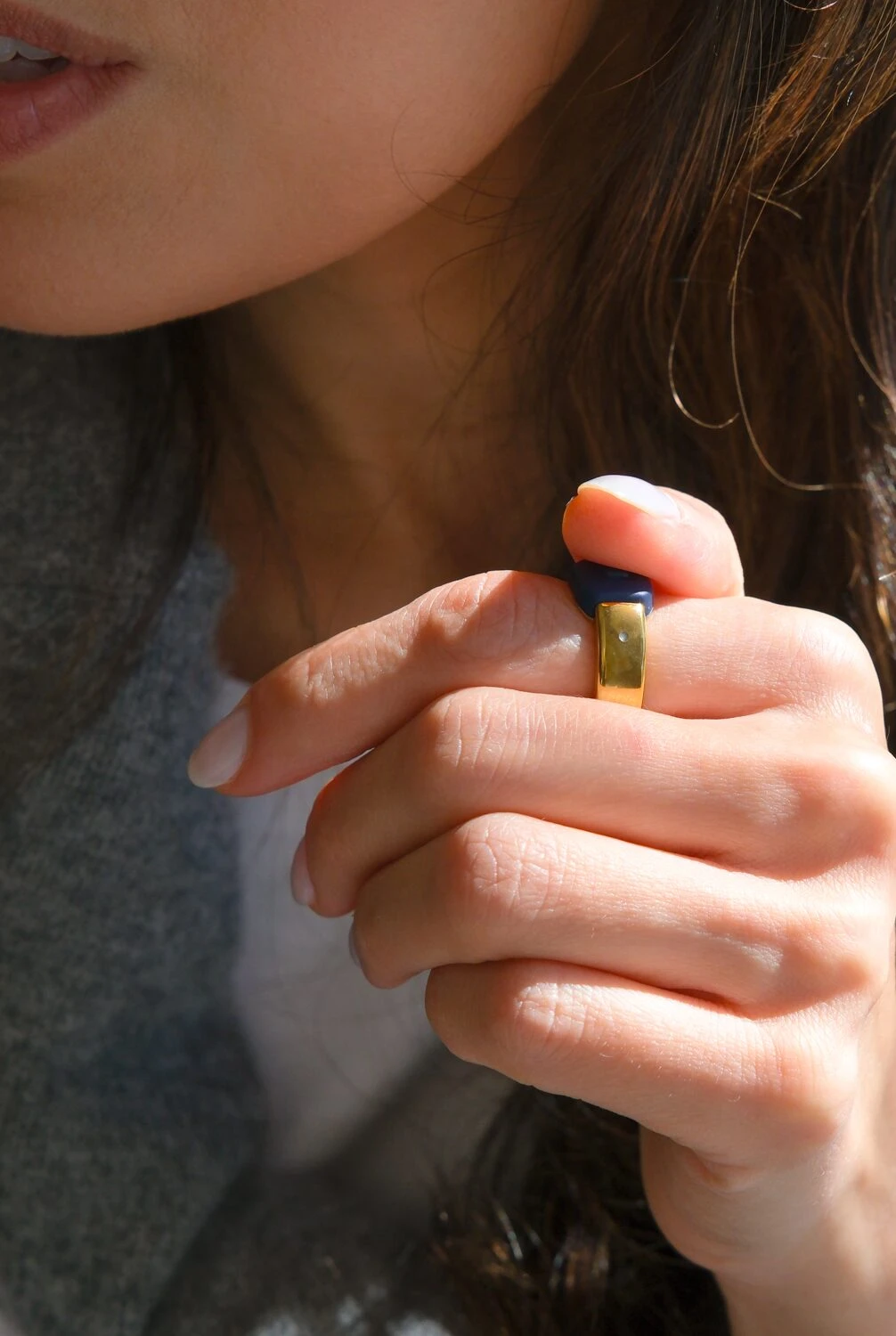
Sandbar, founded by former Meta employees, developed the Stream ring, which focuses on whispering to the AI and taking notes simply by raising a hand. It retails for USD 249, plus a USD 10 monthly subscription. Both companies share the same design philosophy: treating the ring as a wearable microphone switch and minimizing the number of components packed onto the finger.
Aina, however, has taken the exact opposite approach. According to the structural details published on its official website, the ring is designed to fit a microphone, a micro speaker, a four-way planar joystick called the Shifter, and a 0.9-inch OLED screen protected by curved Corning Gorilla Glass all onto a single finger. To achieve this, the device uses four titanium alloy shell pieces to house 140 internal components.
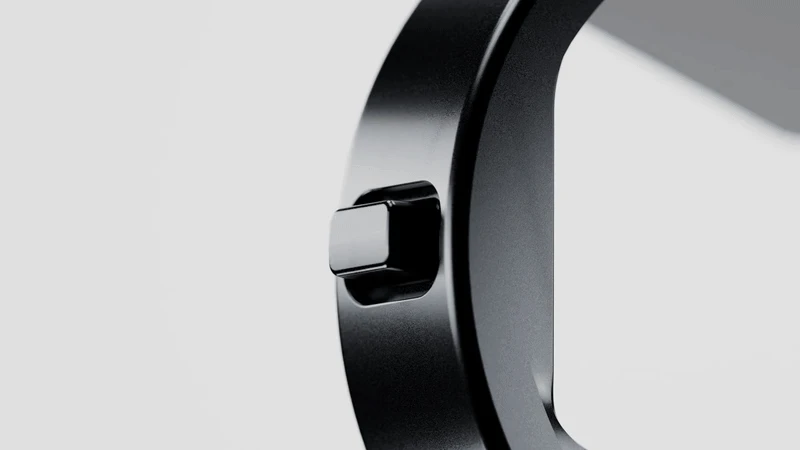
Beyond using the thumb to navigate the joystick and interact with proactive system suggestions—officially termed Cues—long-pressing the center button can invoke Wispr Flow for voice input on a Mac, syncing spontaneous notes directly into Granola or Obsidian. During video conferences, the ring also functions as a physical shortcut for muting the microphone, turning off the camera, and leaving the meeting.
Packing a screen, a joystick, and a speaker into such a confined space on a finger comes at a significant cost. The Aina Ring offers a maximum battery life of just 18 hours per charge, requiring it to be placed on its charging dock every night. Its water and dust resistance is limited to an IP65 rating, meaning it must be removed before swimming or showering. Furthermore, the system currently only supports iPhones running iOS 18 or later and Macs running macOS 15 or later, with no support for Android or Windows.
While competitors are simplifying their interactive rings, why is Aina willing to sacrifice battery life and push the price to USD 300 to 400 just to keep the screen, joystick, and speaker? The answer lies in the fact that founder Apoorv Shankar finalized this specific hardware architecture seven years ago.
Echoes from Seven Years Ago
Apoorv Shankar last pitched this exact same idea in the summer of 2019, long before ChatGPT even existed.
After completing a master's degree in product design at the Indian Institutes of Technology, Shankar founded a hardware startup called LazyCo in 2017. He initially set out to build a self-defense alarm ring for women during his studies. However, user research revealed that no one wanted to wear a dedicated device every day for an emergency feature they might use only once every few months. He then pivoted to exploring how to shift high-frequency daily smartphone interactions to the finger. To enable hands-free call answering, he and researchers from three university departments spent eight months developing a "near-field directional audio" solution that directs sound exclusively toward the palm raised near the ear.

In June 2019, LazyCo brought this technology to the Kickstarter crowdfunding platform under the exact same name, the Aina Ring (the campaign page was later renamed RingX).
A review of the feature list from the original crowdfunding coverage shows it aligns almost point-for-point with today's product: an OLED screen embedded in the ring's face, a microphone, and a directional speaker for answering calls by raising a hand to the ear. It also leaned heavily on "behavioral AI," claiming the ability to learn user habits and anticipate next actions. Even the examples used in the official demo were the same as seven years ago: "without taking out your phone, the ring knows when it's time to call an Uber."
However, the ring, originally slated for delivery in early 2020, attracted only 166 backers. Its crowdfunding page fell silent after posting its final update in August 2021. In April 2022, Ultrahuman, a company focused on metabolic health and smart rings, acquired LazyCo. Shankar and his team joined the acquisition, with Shankar taking on the role of Vice President of Hardware, where he witnessed the health ring market's trajectory from explosive growth to being squeezed out by Oura's patent enforcement.
Early last year, Shankar left Ultrahuman to launch a new venture, initially establishing a human-computer interaction lab under the name Project Mirage. In an interview with TechCrunch, he noted that while he was quite disappointed by the high-profile missteps of the Rabbit R1 and the Humane AI Pin, he still believed that the window for new interaction hardware beyond keyboards and touchscreens had finally opened.
The team first released a trial product: Dune, a three-key external macro pad for Mac that began shipping in April of this year. Dune's logic is context-aware, changing its functions based on the active foreground application. When switched to meeting software, the three keys control the microphone, camera, and window pinning, respectively; when switched to VS Code or Claude, they act as development and workflow shortcuts. A few hundred units were shipped. In July, the company officially reverted to the name Aina, which Shankar had used seven years prior, and closed a USD 5.5 million seed round led by Redstart Labs and 360 ONE.

The real tailwind arrived in August and September of this year. In just over a month, consumer-facing personal agents from several Silicon Valley companies launched in rapid succession. In late August, Instinct—which operates without a standalone app, relying entirely on text messages and phone calls to run errands and book restaurants—opened its invite-only beta. By late September, it had secured USD 1 billion in funding from Sequoia, Benchmark, and Coatue, pushing its valuation to USD 10 billion. On September 8, Meta launched Muse, capable of controlling browsers across standalone apps and WhatsApp to execute cross-platform tasks. Then, on September 29, OpenAI unveiled Dots at its developer conference, an agent designed to run persistently in the background on cloud computers.
A month later, the redesigned Aina Ring was unveiled. In the press release, Shankar explicitly named Muse, Instinct, and Dots, while the official website's support list added Instinct, Muse, and Grokbot. Seven years later, the core concept of the ring remains largely unchanged. What has changed is its target of control: shifting from Alexa and Shortcuts back then to today's agents that proactively seek user approval.
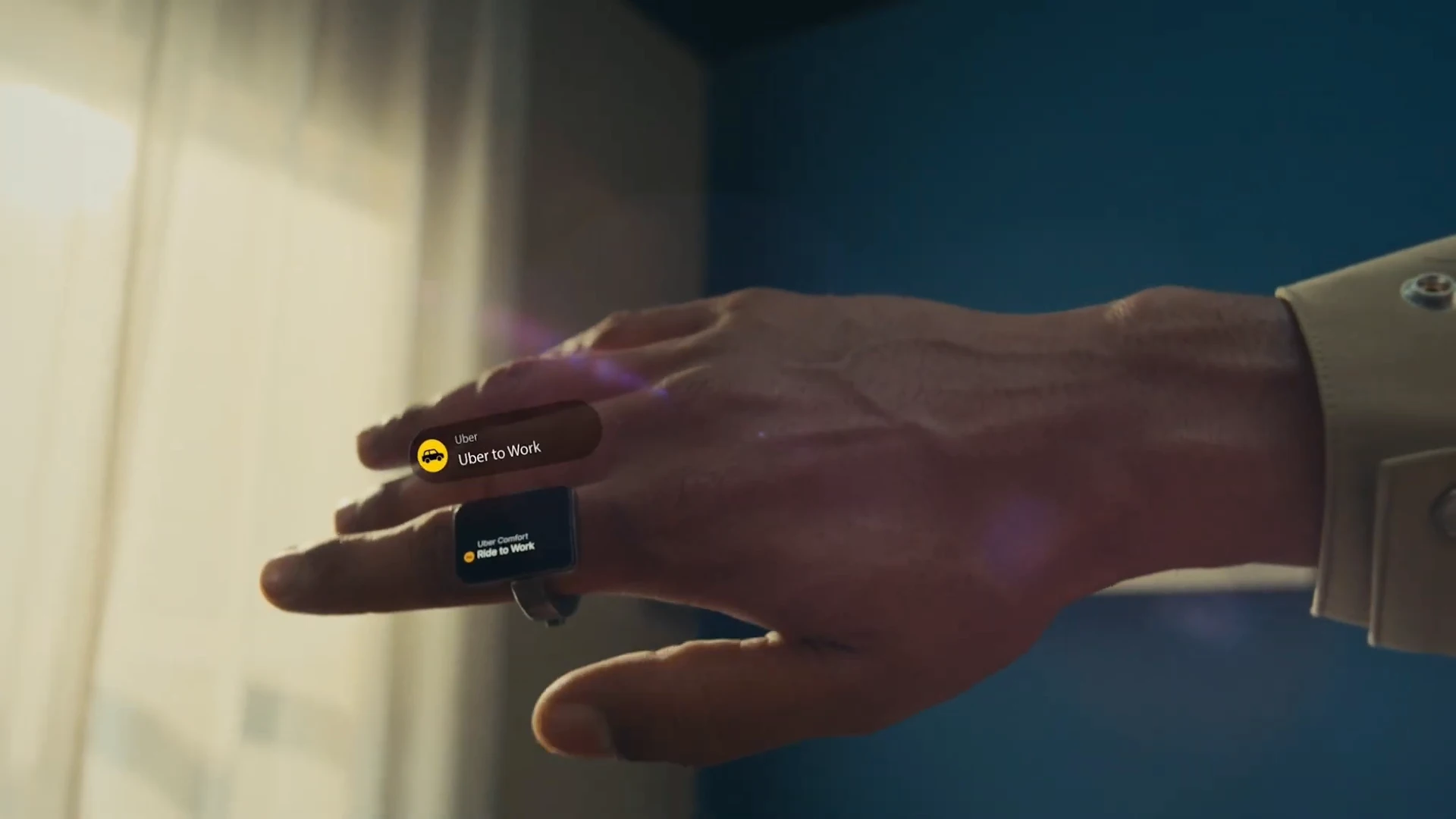
The question, however, is whether this hardware, originally designed seven years ago for mobile shortcuts, can truly keep pace with the evolution of agents.
Model providers are working to eliminate high-frequency approvals
Aina's entire business narrative is built on the premise that people need to process hundreds of approvals every day. However, backend data released this year by the model providers actually building agents on the front lines contradicts this assumption.
On May 25 of this year, Anthropic published an engineering report titled "How We Constrain Claude in Our Products," which rarely disclosed real-world operational data for its coding tool, Claude Code. The initial safety design required the agent to prompt the user for permission via a pop-up before executing every single action. While human oversight is theoretically the safest approach, backend telemetry revealed that users clicked "agree" on these permission prompts approximately 93% of the time.
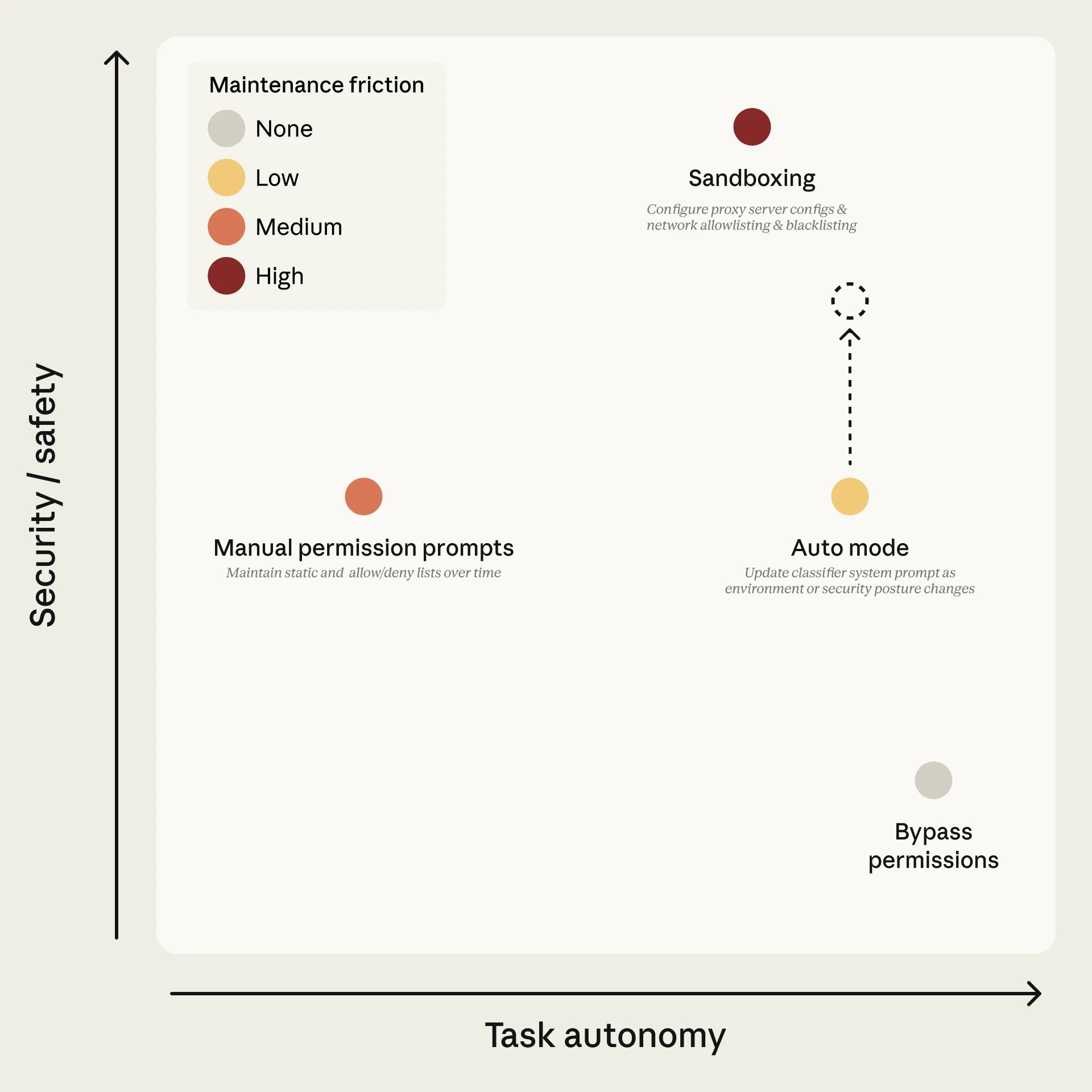
Anthropic's engineers were blunt in the report: the more approval pop-ups a user sees, the less attention they can dedicate to each confirmation. Oversight quickly degrades into a conditioned reflex—a "rubber stamp" approach. The confirmation prompts originally added as a safety backstop ultimately cause users to stop reviewing altogether.
When faced with pop-ups on a computer screen detailing specific instructions line by line, even professional developers approve more than 90% of them with a casual click. If this were scaled to one or two hundred prompts pushed to a user in daily life, expecting them to make hundreds of careful, effective judgments with a tap of their index finger would fundamentally violate human cognitive habits.
More noteworthy are the subsequent moves by the software team. After discovering that high-frequency approvals were ineffective, Anthropic did not research how to help users click the "agree" button faster. Instead, it worked to reduce the number of confirmations required. On one hand, it confined the agent within OS-level sandboxes, virtual machines, and network ingress and egress restrictions, directly locking down the files and credentials it could access at the environment level. On the other hand, it launched Auto Mode, featuring a dual-layer classifier, at the end of March to automatically approve low-risk operations. Combining these two approaches reduced system permission prompts by 84%.
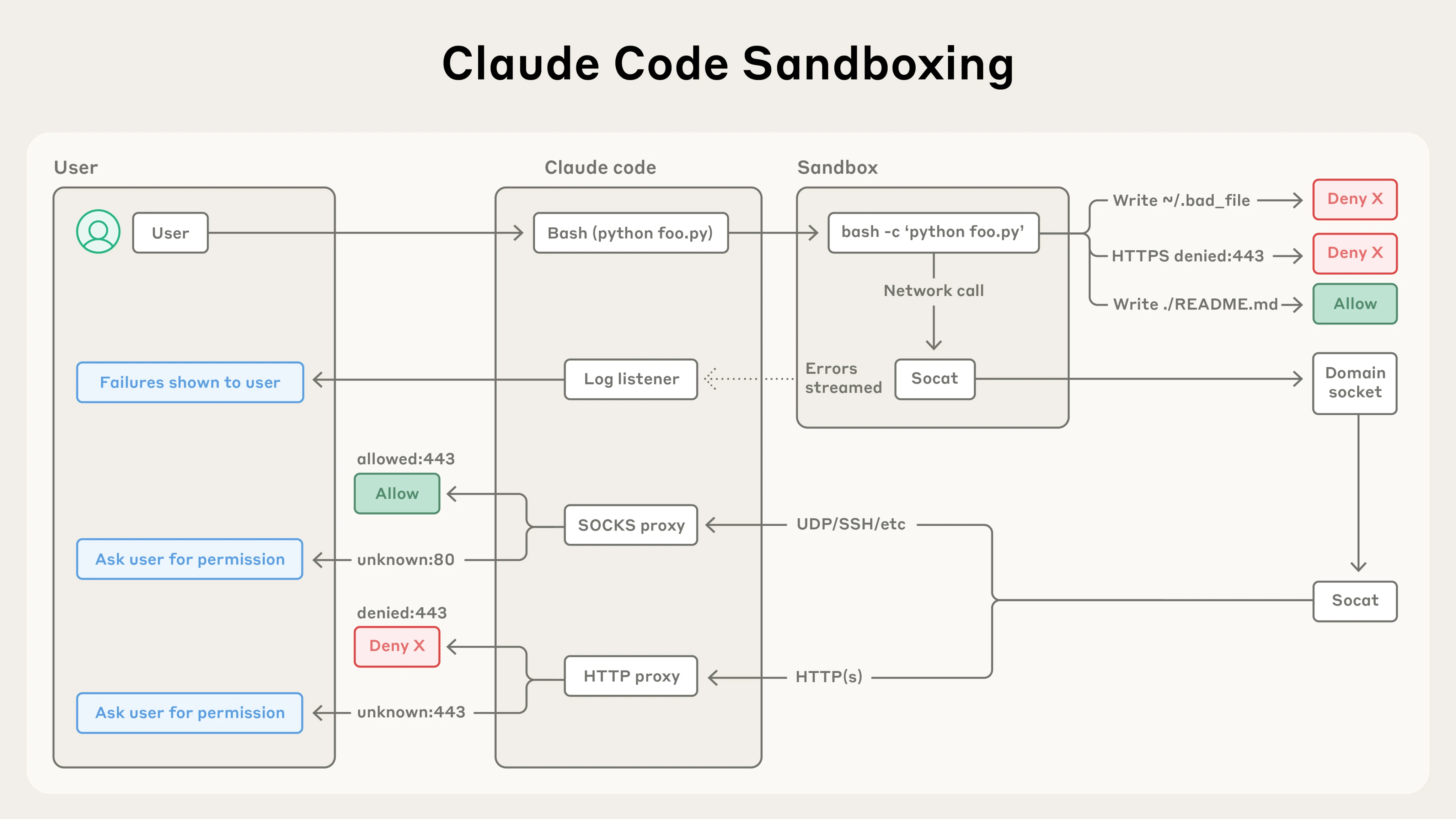
Users' own habits are also evolving. In a research report on Claude Code usage behavior, Anthropic noted that among new users with fewer than 50 sessions, the proportion enabling fully automatic approval is approximately 20%. For power users with more than 750 sessions, this figure rises to over 40%. Experienced users prefer to establish clear boundaries upfront and intervene mid-task only if something seems off.
In other words, requiring human approval at every step is not the interaction standard for the agentic era; it is merely a transitional symptom of unstable model capabilities and unrefined permission guardrails. Model developers and power users are working together to reduce trivial approvals during operations. Yet a smart ring not slated for delivery until 2027 is betting that this symptom will persist, or even expand to hundreds of times a day.
Approving is easy, but who bears the consequences?
However, even if sandboxes and automated rules handle 80% to 90% of trivial confirmations, a few tasks each day will still require human approval. And it is precisely these few critical instances that should least be decided based on a single sentence on a tiny screen.
One category includes minor tasks such as skipping a track, muting a meeting microphone, turning on the lights upon entering the house, or opening a meeting window on a computer at a scheduled time. Even if these actions are performed incorrectly, they can be easily undone with virtually no consequences. For such high-frequency minor tasks, as long as the system's predictions are sufficiently accurate, users will naturally configure them for automatic execution once accustomed, eliminating the need to flick a joystick every time. However, if the predictions frequently fail—such as pushing a track-skipping prompt while a user is speaking in a meeting—they will likely just disable the notifications after being interrupted a few times.
The other category involves tasks that truly require approval, such as ordering a ride to the airport at 8:30 a.m., sending an email to a client or supervisor explaining a delay, having an agent purchase an item on the user's behalf, or modifying an already scheduled multi-person itinerary.

AI cannot be allowed to act autonomously for these tasks because the cost of a human cleaning up the mess if it fails is extremely high. Yet a prerequisite for effective approval is that the approver has access to the key context. Take ordering an Uber to a hotel: the tiny 0.9-inch screen on the ring can only display "Uber to hotel" and the estimated arrival time in minutes. But what the user actually needs to confirm before making a decision is the specific terminal exit for pickup, whether the price is within the expected range, and whether the selected vehicle is a standard ride or a premium car. Similarly, when the screen lights up with "Send the deck?", the person approving needs to know if it is the final version revised the previous night, and whether the recipient list is missing anyone or has inadvertently cc'd someone who should not see it.
An experiment published on arXiv in August of this year validated this point. Researchers recruited 113 laypeople without software backgrounds and had them observe an agent handling emails, travel arrangements, and payments during a simulated day. Out of 18 tasks, they intentionally included seven out-of-bounds operations that the users had not authorized. In the group that established rules in advance, 148 out-of-bounds operations ultimately slipped through; of these, 133 were presented to the users via pop-ups, and the users themselves clicked approve to let them proceed. If users miss these issues when viewing full prompts on a computer screen, it will be even harder for them to spot problems when the text is reduced to two- or three-word abbreviations on a smart ring.
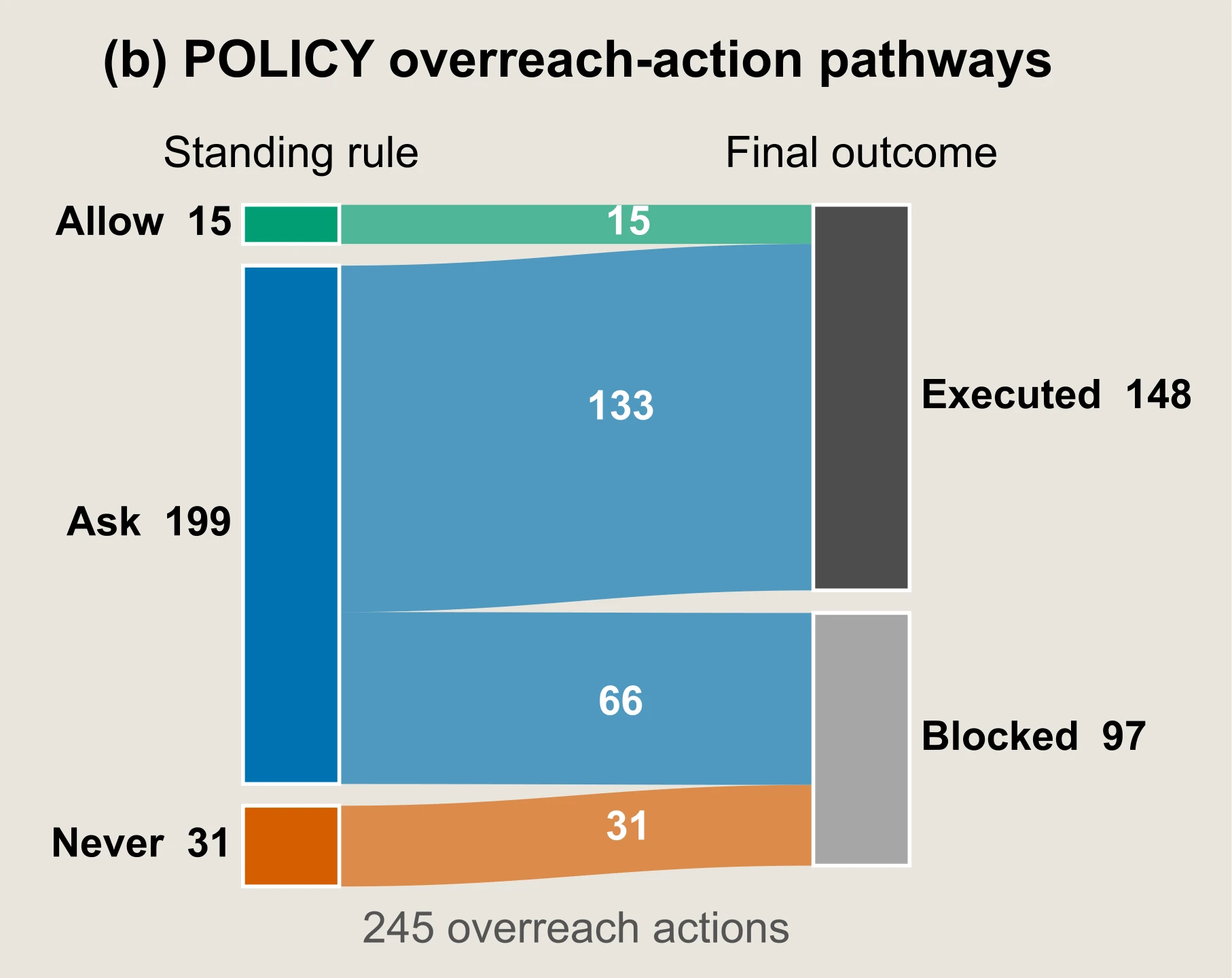
This tiny screen is in an awkward position. To fit on the index finger, it reduces all details to a short title. While this makes clicking "agree" easier, it eliminates the basis for judging whether an action is appropriate. When it comes to spending money or emailing external contacts, cautious users will still need to pull out their phones to double-check, meaning the ring saves no steps. Meanwhile, those simply looking for convenience are unlikely to spend USD 399 on a dedicated approval device.
The more mature the agent, the less it needs a confirmation key
Even if consumer agents remain in an integration phase over the next year or two, generating a dozen or so trivial confirmation prompts daily that require a portable entry point, this role is unlikely to be left to a third-party ring company.
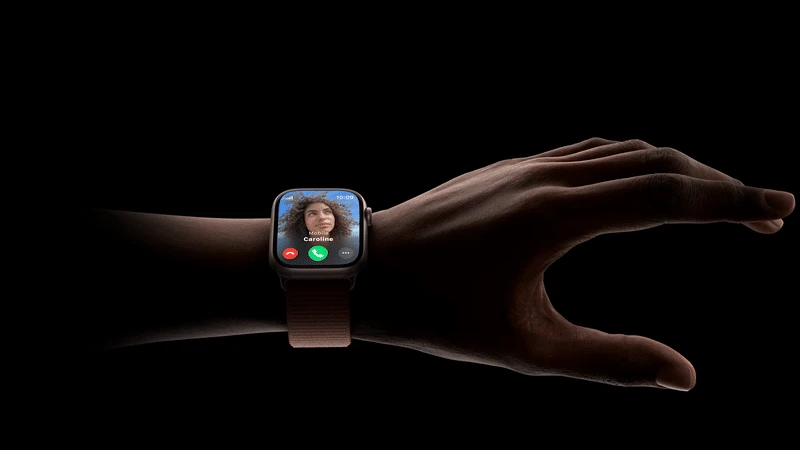
A look at the supported platforms listed on Aina’s website makes this clear. Meta Muse, listed at the top, has already launched apps for Apple Watch and Wear OS. The watch acts as a remote control for the mobile Muse app—receiving task updates and allowing users to tap to confirm on their wrists. Moreover, the watch screen is much larger than a ring's, and Meta is already teasing a companion wearable pendant, the Muse Charm. Another company, Instinct, valued at USD 10 billion, has bet on "no new interface" since its inception, routing all commands and confirmations through the phone's native SMS and phone calls. For Apple users already wearing an Apple Watch or AirPods, a simple wrist flick or a voice command like "send it" through the earbuds is enough to confirm. There is no need to spend an extra USD 399 on a titanium ring that requires nightly charging.
A more practical constraint lies in system permissions. Aina does not build its own underlying foundation models; instead, its "Context Aware OS" serves as a middleware layer connecting smartphones, Macs, and various agents, operating exclusively within the Apple ecosystem. At a time when Apple strictly controls iOS background processes and cross-app permissions—and even Amazon is blocking Muse's crawler traffic—a 41-person hardware startup has yet to clarify whether its listed third-party agents have secured official API partnerships or are merely achieving control by intercepting and forwarding phone notifications. Caught between the walled gardens of the mobile operating system and the agent developers, the lifeline of a third-party remote control remains firmly in the hands of others.
In fact, for interactive rings that do not track health metrics, their true strength in the AI era lies in "initiation" and "perception," rather than "review." When a user is walking, carrying items, or otherwise unable to look at a screen, they can simply raise their hand to whisper a task, casually record a memo, or let the ring rest quietly against the skin to collect biometric data for backend agents. All of these use cases leverage the ring's lightweight and unobtrusive nature. This is precisely why another wave of overseas interactive ring teams have chosen to eliminate screens and speakers altogether, prioritizing compact size and battery life instead.

Forcibly cramming a 0.9-inch screen and a four-way joystick onto an index finger to handle hundreds of "yes" or "no" prompts a day means using the most cramped display area in wearables to perform a task that software engineering is already rendering obsolete. The agent era does not require so many approvals, let alone spending USD 399 to install a dedicated confirmation button on a finger.
Found an error? Tell us