

D-Robotics Open-Sources Uranus World Model Simulation Platform, Achieving 0.98 Correlation in RoboTwin Closed-Loop Evaluation
By Jiang Si Qi
On October 27, the D-Robotics large model team open-sourced the Uranus technical report alongside its inference code, SDK, and model weights, offering 100 early access slots to developers and researchers worldwide.
On October 27, D-Robotics' large model team open-sourced the Uranus technical report, simultaneously releasing the inference code, SDK, and model weights, and offering 100 early access slots to developers and researchers worldwide. Uranus is designed for the interactive testing and comparison of robot policies. Real-robot experiments are constrained by equipment availability, timeframes, and safety conditions, while traditional simulation relies on manually built scenes and physics models. The team aims to learn the visual changes caused by actions from real-world interaction data, enabling policies to run continuously in virtual environments.
When using Uranus, developers provide a reference image, camera parameters, a description of the robot body, a task prompt, and future joint trajectories, which the model uses to predict multi-view observations. The policy reads the generated frames and outputs the next action, after which the model continues the rollout. Task prompts can describe specific operations, such as "pick up the white snack and then put it down," as shown in the figure.
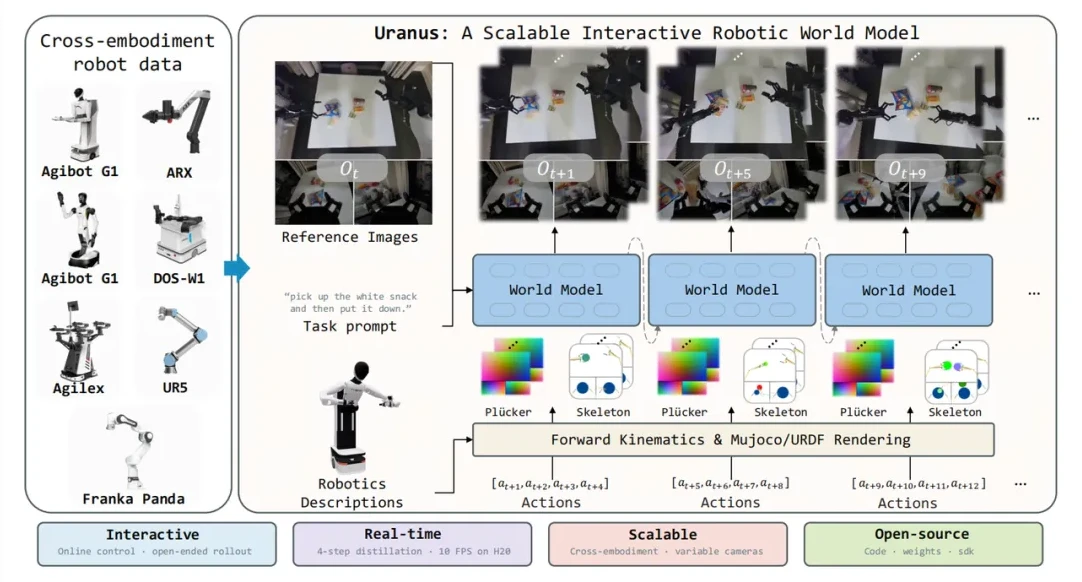
Figure 1 | Overall framework of Uranus
Different robots have varying numbers of joints, structures, end-effectors, and camera layouts. Uranus performs forward kinematics calculations based on the embodiment description and joint states, converting keypoints and end-effector poses into a skeleton representation; camera calibration parameters are used to generate Plücker ray embeddings, which describe the correspondence between the image and 3D space. The team states that this unified representation supports seven mainstream robot embodiments and various camera configurations.
In a single rollout, the model receives a sequence of future joint positions, predicts latent frames, and then decodes them into continuous frames corresponding to each camera. To enable the model to continuously use its own generated observations, Uranus adopts a causal architecture, allowing new frames to read only the reference frame and valid history; the cache retains the reference frame and manages other historical information through a sliding window. The team combines autoregressive rollout distillation with historical feature reuse, compressing the denoising of each latent frame to four steps. The framework diagram indicates an inference speed of 10 FPS on an H20 GPU; the team also demonstrated a rollout extending from a roughly 3-second training clip to a 60-second continuous closed-loop simulation.
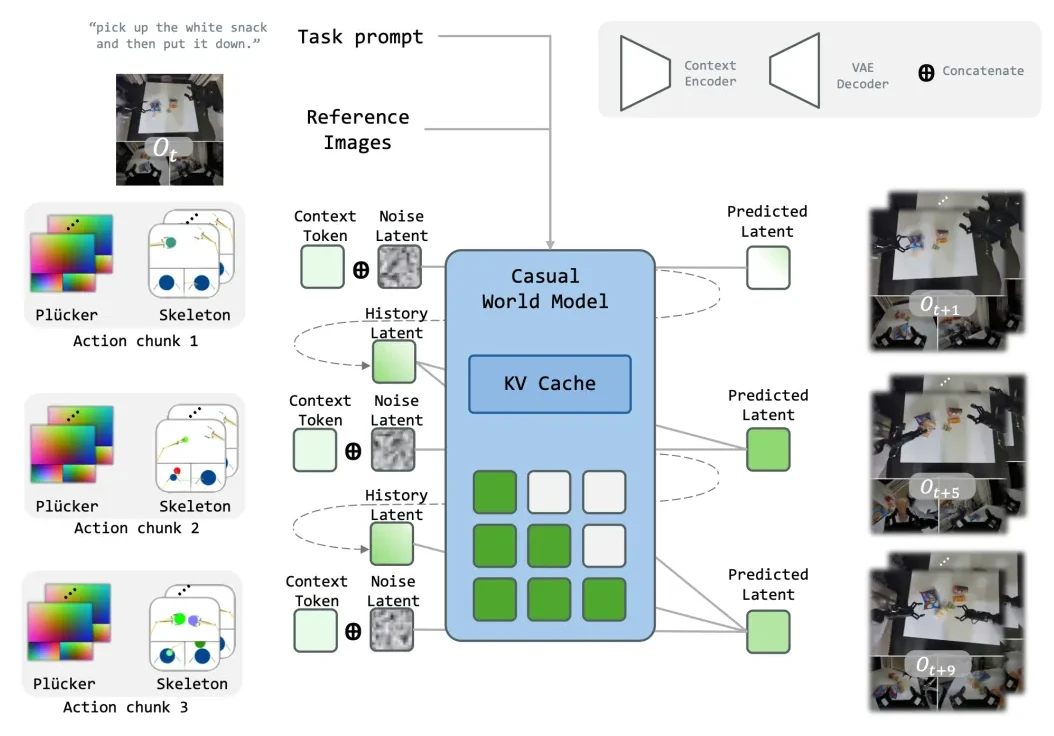
Figure 2 | Continuous generation process
In closed-loop evaluation, the policy continuously reads the frames generated by Uranus and outputs actions, with the model advancing the environment. The team conducted experiments on 5 tasks and 9 policies in RoboTwin, running each policy for 15 episodes per task. After domain adaptation for RoboTwin, the correlation coefficient for average success rates between the policies in Uranus and the original simulation environment reached 0.98, and the policy ranking metric MMRV was 0.01.

Figure 3 | RoboTwin closed-loop policy evaluation
In the WorldOlympiad robot evaluation setup, Uranus achieved an overall score of 0.722 and an interaction score of 0.730. The figure below compares these overall scores, showing Uranus outperforming Cosmos-Predict-2.5 (0.712) and LingBot-World (0.684). Because the models target different applications, the team treats these results as a reference evaluation.
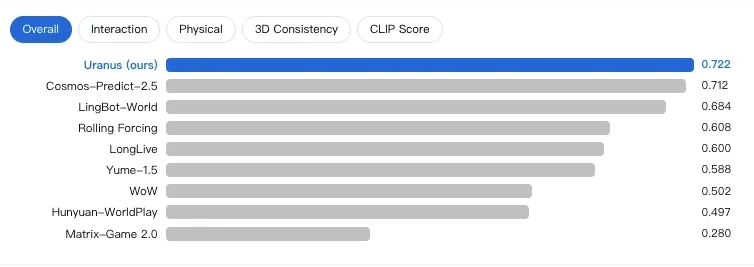
Figure 4 | WorldOlympiad overall score comparison
These experiments demonstrate that Uranus can be used to compare policy performance under specific tasks and applicable conditions. However, its handling of fine-grained contact and object state changes, along with the transferability of virtual evaluation results to physical robots, requires further validation. The technical report, inference code, and model weights are now publicly available, and developers can apply for early access via the official portal.