

Construction Robotics Startup Weijian Technology Raises Over RMB 100 Million in Fifth Funding Round
By Jiang Si Qi
Shanghai-based Weijian Technology has secured over RMB 100 million in its fifth funding round from Caitong Capital. The company will channel the funds into manufacturing, overseas market expansion, and the continued R&D of its products and embodied AI technologies.
On November 15, according to a report by 36Kr, Shanghai Weijian Technology Co., Ltd., a construction robotics company, recently completed its fifth funding round, raising over RMB 100 million from Caitong Capital. Following this round, Weijian will further shift its R&D focus toward embodied AI.
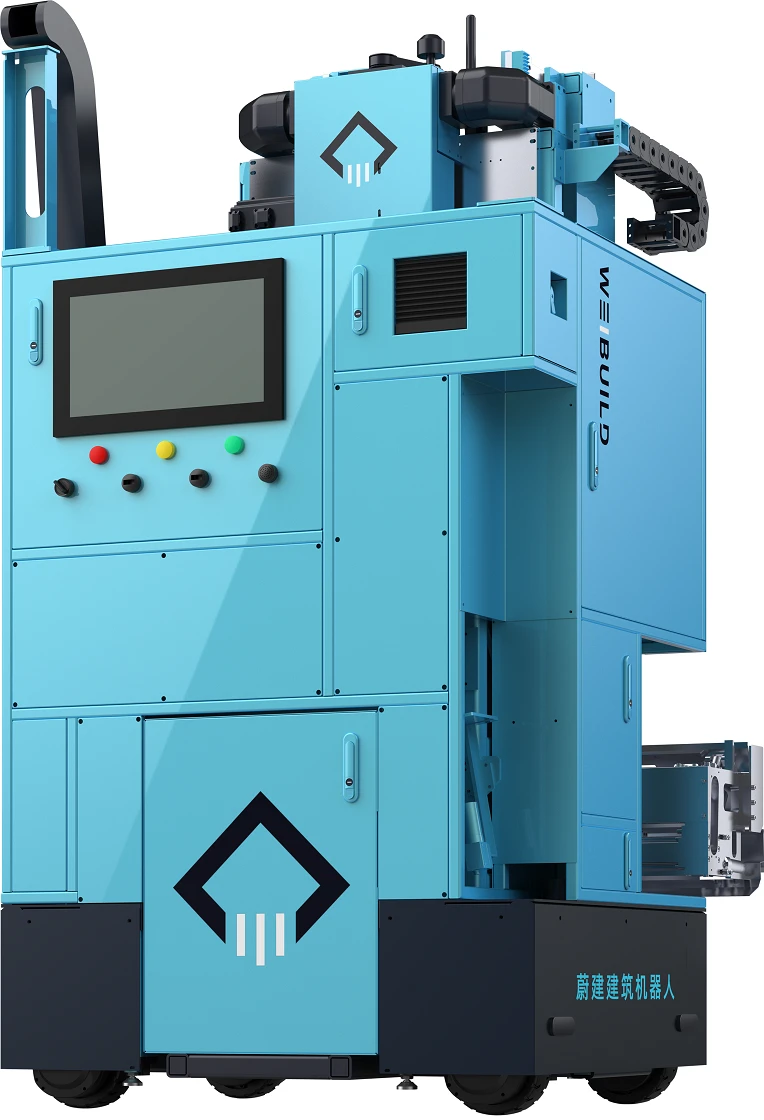
Image | Weijian Technology's plastering robot (Source: Weijian Technology official website)
The funds from this round will be primarily used for manufacturing and production, overseas market expansion, and continued R&D investment in products and embodied AI technologies.
Founded in June 2020 and headquartered in Shanghai, Weijian Technology focuses on the R&D, production, and sales of construction robots. Its products cover processes such as plastering, spraying, modeling, and flexible rebar processing.
Founder Liang Yanxue earned his bachelor's and master's degrees from Shanghai Jiao Tong University and his Ph.D. from the Tokyo Institute of Technology. He previously served as a principal researcher at the FANUC Robotics Research Institute, then as the executive vice president of the Bozhi Lin Intelligent Technology Research Institute, and also led the localization project for lithium battery equipment at CATL.
In an interview with 36Kr, Liang Yanxue noted that industrial robots serve a highly organized industrial workforce, whereas construction processes rely more on experience and have a weaker digital foundation, which poses a significant challenge for construction robotics R&D. According to him, labor costs in the construction market are two to three times higher than in the industrial sector, yet the level of automation remains very low.
Liang categorizes robot movements into "non-value-added" and "value-added" actions, arguing that spatial transfer and emotional interaction yield lower added value, while movements involving physical process transformations—such as welding, coating, and plastering—are the true core of value creation.
Over the past few years, the company has focused on building a "disembodied intelligence" system. Rather than relying on real-time environmental perception or natural language interaction, this approach first ensures stable operations through motion control and process digitalization.
Starting this year, the company is shifting its focus to embodied AI. The core motivation is not to chase trends, but to address the most practical barriers to commercial deployment.
Liang Yanxue believes that the next phase must still demonstrate the robots' operational efficiency under the working conditions of ordinary laborers, noting that performance is influenced by both project management and operational skills.
The company has also developed its proprietary Tiangong System, which comprises the Tiangong Cerebellum for motion control and process parameterization, and the Tiangong Brain for environmental understanding and semantic segmentation.
Liang Yanxue revealed that early in the company's history, they brought in several master craftsmen. A team of PhD researchers recorded and analyzed their movement mechanics, subsequently translating these into parameterized instructions embedded within the system.
The company has established two main product portfolios: the Intelligent Wall Construction System and the Intelligent Rebar Processing System. Its flagship product is the plastering robot, which includes the PMC-3000 and PMC-6000 series. According to Liang Yanxue, the robot achieves an average daily plastering area of 300 to 350 square meters, with a record high of 708 square meters per day, and can exert up to 30 kilograms of pressure against the wall.
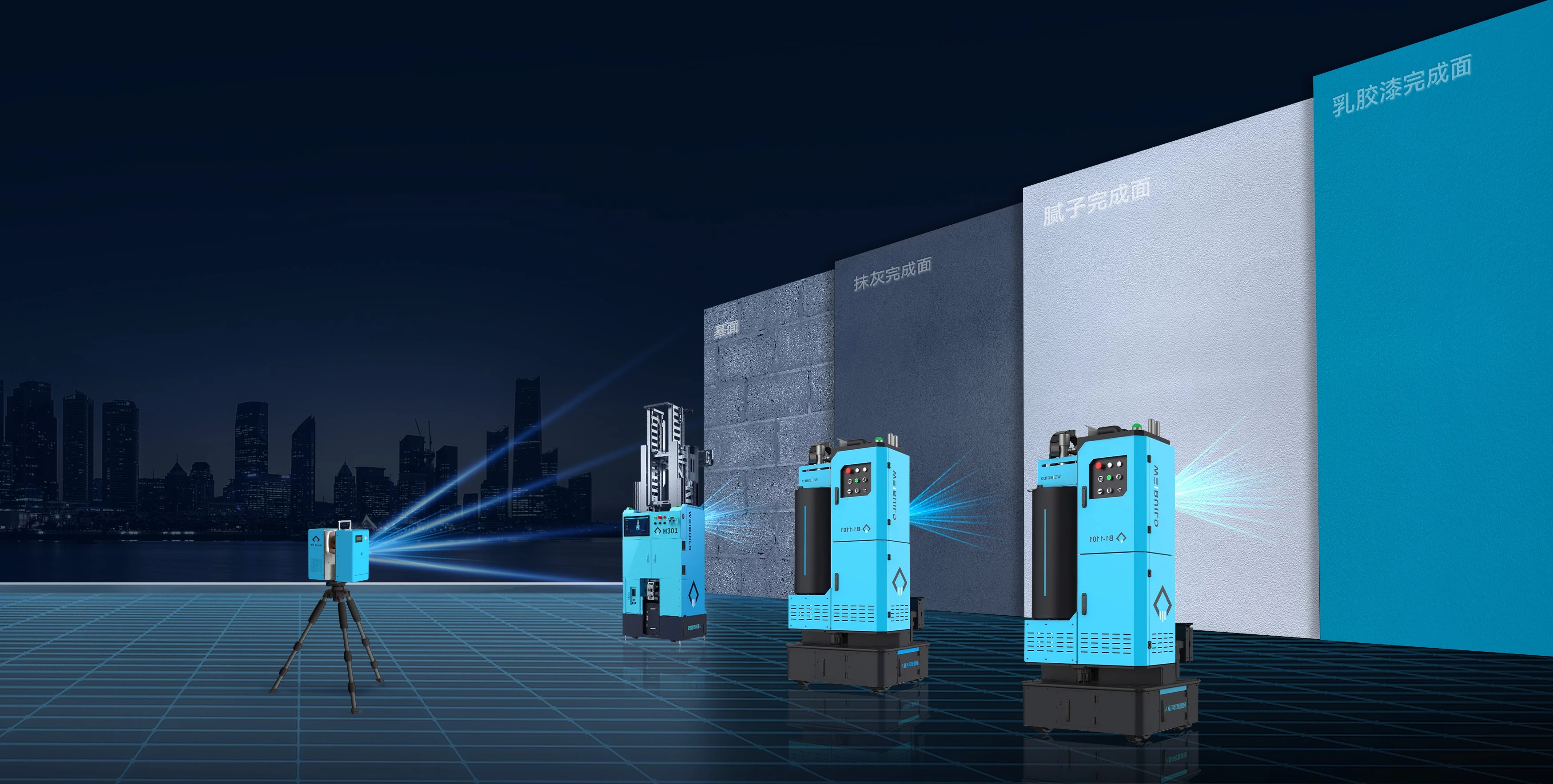
Image | Weijian Technology's wall construction robots (Source: Weijian Technology official website)
Among the spraying models, the PNP-3000iC achieves a putty application rate of at least 200 square meters per hour in a single pass, while latex paint spraying can reach up to 300 square meters per hour. The spray coverage is at least 95%, though actual performance is constrained by floor plan layouts, door openings, and room dimensions.
Their 6-meter-high wall spraying robot has been deployed at the NS Square project in Singapore. Operating in complex ceiling environments, it can autonomously execute the entire workflow of perception, decision-making, and spraying, achieving an efficiency 10 times that of manual labor.
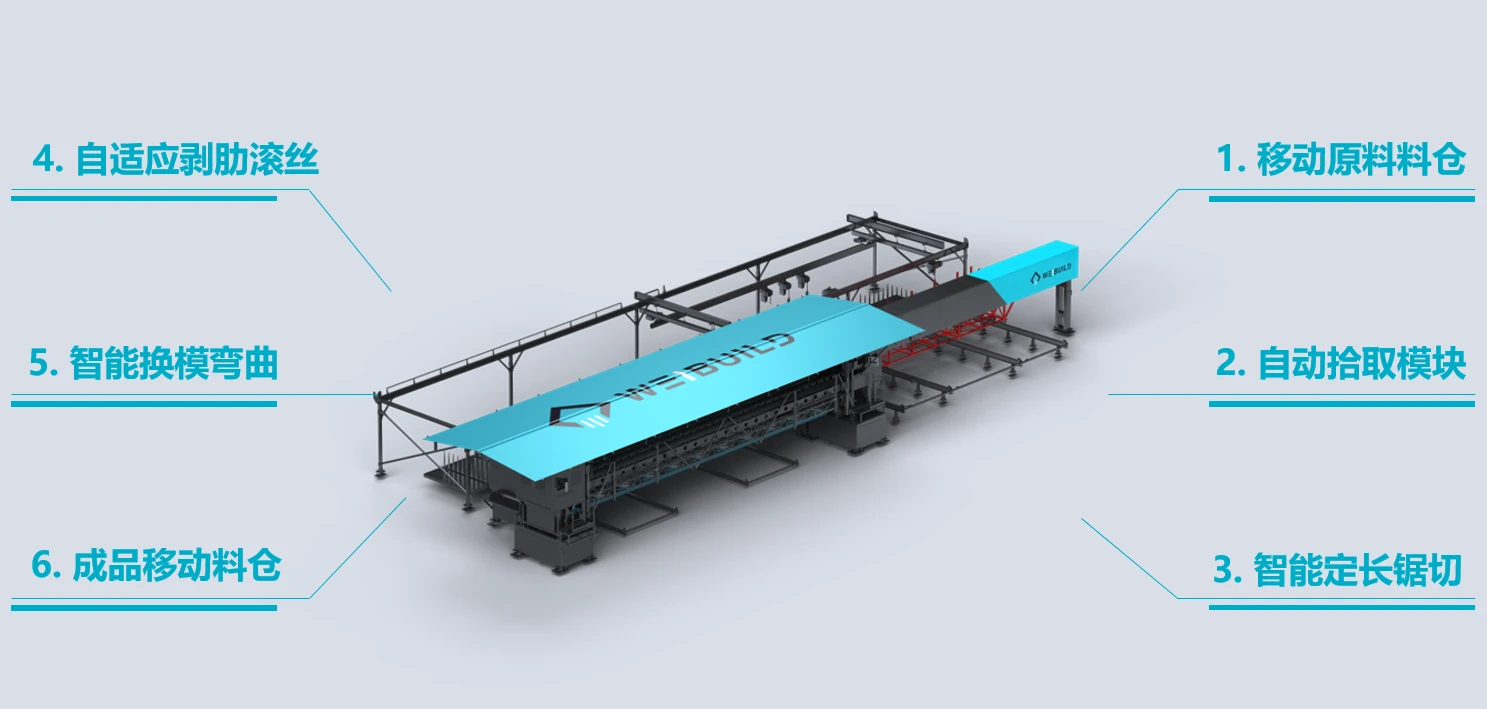
Image | Weijian Technology's flexible rebar processing center (Source: Weijian Technology official website)
Along the rebar processing line, the flexible processing center performs sawing, rib peeling, thread rolling, and bending in a single integrated station. The fully automated production line yields 70 metric tons per day and requires only two workers to assist with loading and unloading, reaching an annual processing capacity of 20,000 metric tons. Compared to traditional methods, this reduces labor input by 90% and cuts material waste by 80%.
On the partnership front, Weijian established a joint venture with the China Construction Eighth Engineering Division, marking one of the few approved robotics joint ventures within the China Construction system. The company also maintains long-term partnerships with leading general contractors, including the China Construction First Bureau, China Construction Third Bureau, Shanghai Construction Group, and Zhejiang Construction Group. Its products have been deployed on construction sites for Japan's Takenaka Corporation and several Middle Eastern firms. As early as April 2025, its spray painting robot won a bid for the Housing & Development Board's centralized construction robot procurement program in Singapore.
To date, Weijian's robots have covered a cumulative construction area of nearly 4 million square meters across more than 40 deployed projects, spanning 11 provinces and 25 cities in China. The company was included in the recommended application catalog for construction robots in 2022 and was recognized as a "Little Giant" enterprise in 2024.
According to Weijian's projections, revenue from product orders will exceed RMB 100 million in 2026, representing a year-on-year increase of more than 100%.
A representative from Caitong Capital noted that the global construction industry faces a persistent shortage of young labor, making the replacement of human workers with machines no longer an optional path. Because construction sites are cluttered and workflows are highly variable, robots require a complete closed loop of perception, decision-making, and execution—essentially, embodied AI capabilities. Caitong Capital is bullish on Weijian because the company chose to tackle labor-intensive, high-skill processes like plastering, spray painting, and rebar processing, continuously refining its efficiency and build quality in real-world construction environments.