

Xiaomi Robotics Details PACE Framework for Tactile-Guided Precision Manipulation
By Ethan
The Xiaomi robotics team discusses how its PACE framework uses temporal tactile conditioning to refine precision manipulation. As the embodied AI industry shifts focus toward real-world deployment in 2026, the team highlights the critical role of tactile perception in bridging the gap between foundation models and physical execution.
Interview with Xiaomi's Robotics Team: Mastering the Rhythm of Touch, How PACE Helps Robots Refine Their Skills
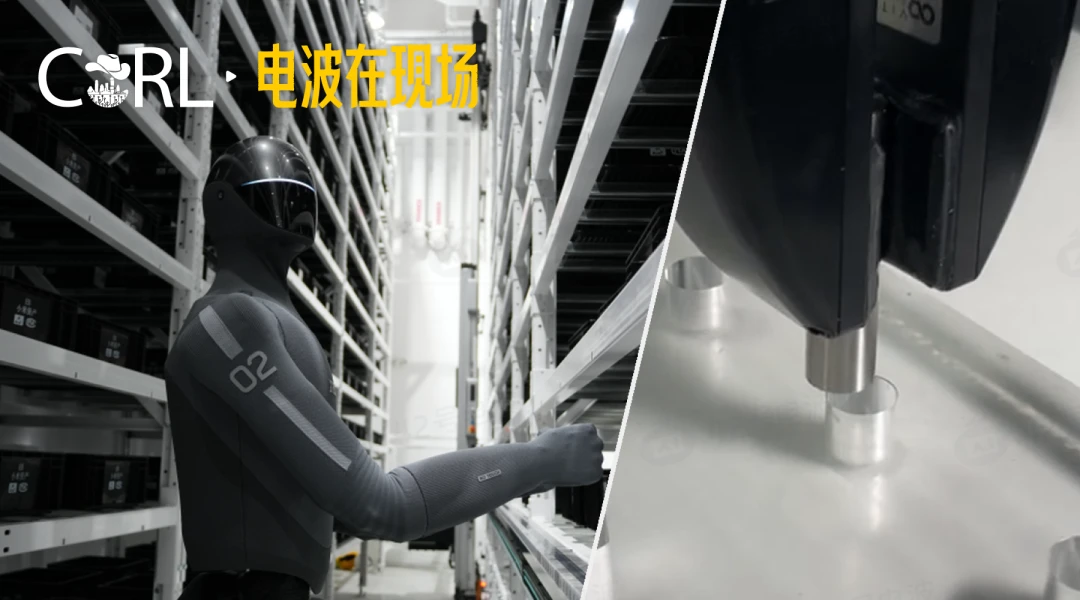
2026 Should Be the "Year of Deployment" for Robots.
Over the past year, the industry narrative around embodied AI has been dominated by "larger models and more data," with trillion-parameter models, hundred-billion-dollar valuations, and tens of thousands of hours of training time constantly making headlines. Meanwhile, researchers, investors, and the general public are increasingly focusing on the real-world deployment of robots. What is holding back the final stretch of bringing general-purpose robot technology into everyday homes?
It has long been argued that the complexity of dexterous robotic manipulation may exceed that of developing the entire robot body. No matter how powerful a foundation model's capabilities are, it ultimately relies on the physical movements of the "hands" to interact with the real world. To date, foundation models still rely on policies to perceive real-world physical quantities such as force and touch, keeping tactile perception technology at the core of robotics research.
At the CoRL 2026 Conference on Robot Learning, held in Austin, Texas, from November 9 to 12, robotic tactile sensing was a key topic. Just before the conference, a tactile research paper from Xiaomi's Robotics Division, titled "PACE: Temporal-Role Tactile Conditioning for Chunk-Based Insertion Policies," was accepted for an oral presentation at CoRL 2026. This placed the paper in the top 1% of all valid submissions, putting Xiaomi's robotics research at the forefront of the field.

Paper link: https://arxiv.org/abs/2610.16308
Project homepage: https://pace-insertion.github.io
This research introduces PACE (Phase-Aware Contact-Event Conditioning), a temporal-role tactile conditioning framework designed for chunk-based insertion policies. The core innovation of PACE is not to equip robots with more tactile information, but to rethink how tactile data is utilized. The research team discovered that tactile signals can reflect continuous contact states, capture instantaneous contact changes, and even aid model training through tactile prediction. PACE leverages these signals to serve distinct roles in action generation, execution correction, and model training, enabling humanoid robots to process tactile feedback more comprehensively.
Since the beginning of this year, Xiaomi Robotics has staged multiple debut showcases spanning from technology to commercial applications. In July, the Xiaomi-Robotics-U0 embodied generative model and the Xiaomi-Robotics-1 embodied foundation model, released by Xiaomi Robotics, achieved leading performance on the WorldArena, RoboCasa 365, and RoboDojo-Sim leaderboards, marking significant progress for the company in the vision-language-action (VLA) paradigm. More recently, at the World Internet Conference, Xiaomi also won the Leading Technology Award for its key technologies in the embodied foundation model.
In public demonstrations, the production-line-level operational capabilities of Xiaomi's humanoid robots in factories and the complex operational capabilities of the embodied foundation model in household scenarios have also been preliminarily validated. A series of key breakthroughs raises compelling questions: What changes are currently occurring at the technological frontier of Xiaomi Robotics? How are they approaching tactile perception for general-purpose robots? And in the eyes of professionals working on the front lines, where will future technology head next?
To this end, 42HOW Robotics exclusively interviewed You Yangwei, Head of Bionic Manipulation at the Xiaomi Robotics Division, and Chen Zhiyuan, an engineer at the division and the first author of the PACE paper, to explore Xiaomi Robotics' cutting-edge progress in tactile perception technology.

Tactile organization based on temporal channels
Tactile technology has faced numerous hurdles in the past. In previously common approaches, tactile perception typically relied on impedance and compliance control, force/position hybrid control, or operational space force control. Although these methods can be highly effective in specific scenarios, the diverse shapes of objects in the real world make it generally difficult for these methods to generalize to real-world insertion tasks.
Take a USB port as an example. If a robot needs to insert a USB flash drive into a computer, the primary task is to visually determine whether the plug and the port are aligned. Upon actual contact, the plug might insert smoothly, or it might get stuck against the edge of the port. The two situations look very similar visually, yet their contact states are entirely different. Once the object and the hand make contact, the robot's parts often occlude the most informative areas. When minor misalignments, edge collisions, and local contact changes cannot be inferred visually, rich tactile perception is required to determine whether the motion is correctly executed.
This also became the research motivation for Chen Zhiyuan and his colleagues. The team revealed that much of Xiaomi Robotics' cutting-edge research originates from real-world deployment needs, seeking to uncover the common scientific and technical challenges behind them. Whether in industrial manufacturing or household service scenarios, there are numerous contact-rich manipulation tasks such as insertion and assembly. These tasks share the common difficulty mentioned above: vision can help the robot locate the target, but once contact occurs, it is difficult to judge whether the fine manipulation is successful relying on vision alone. "We want to explore how to enable robots to truly understand physical contact during manipulation and use this information to guide motion decisions," the team said.
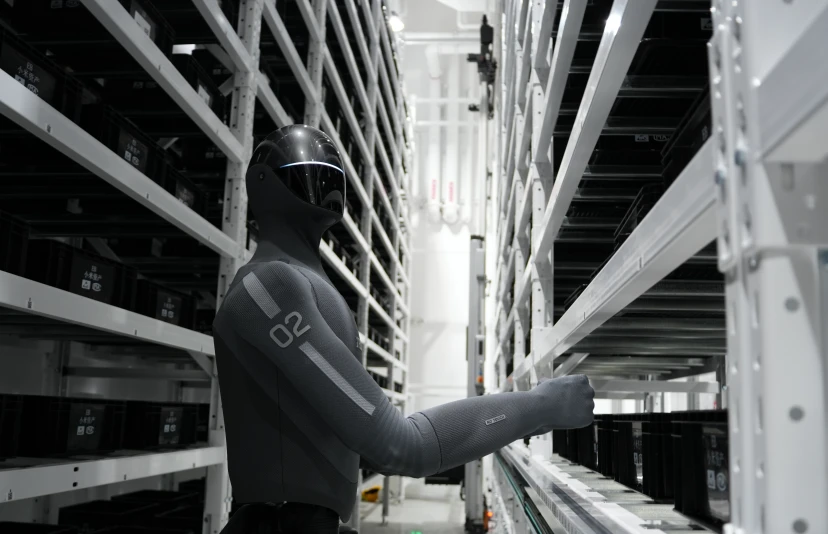
You Yangwei noted that during Xiaomi Robotics' factory deployments this year, they discovered a large number of scenarios requiring precision manipulation that remain unresolved. In March this year, during a stud installation task called the "self-tapping nut loading station," the team encountered the issue of visual blind spots. Because there is a splined structure inside the self-tapping nut, aligning it requires fine adjustments. The team added tactile sensors to the dexterous hand, achieving good results. At the time, to ensure a high success rate, they also added a wrist camera named "wrist eye" to the robot's wrist. But that is not enough. In the long run, they hope to gradually replace the "wrist eye" and let tactile perception play a more dominant role in such tasks.
Clearly, fine manipulation in industrial settings demands highly responsive physical interaction feedback from robots. They must not only accurately perceive object positions but also rapidly adjust their movements as contact states change. Recently, action chunking in end-to-end imitation learning has offered a more flexible approach to robot manipulation, predicting continuous action sequences to boost operational coherence and efficiency. However, when sudden contact changes like collisions or jamming occur during execution, pre-generated actions often become obsolete, leaving the robot unable to adapt effectively in real time.
Humans do not rely on a single modality to understand physical contact during daily interactions or tasks. For instance, sudden contact transients trigger immediate corrective reflexes, while anticipating contact outcomes enables efficient motion planning. While prior works such as RTC and REMAC have enhanced the continuity and smoothness between action chunks, refreshed action chunks at high frequencies (DCDP), or performed tactile action decoding (RDP), the Xiaomi robotics team offers a new perspective: tactile feedback in contact-rich insertion is not merely an extra sensory modality. It also serves distinct temporal roles, and the key challenge is how to better integrate tactile, visual, and model information.
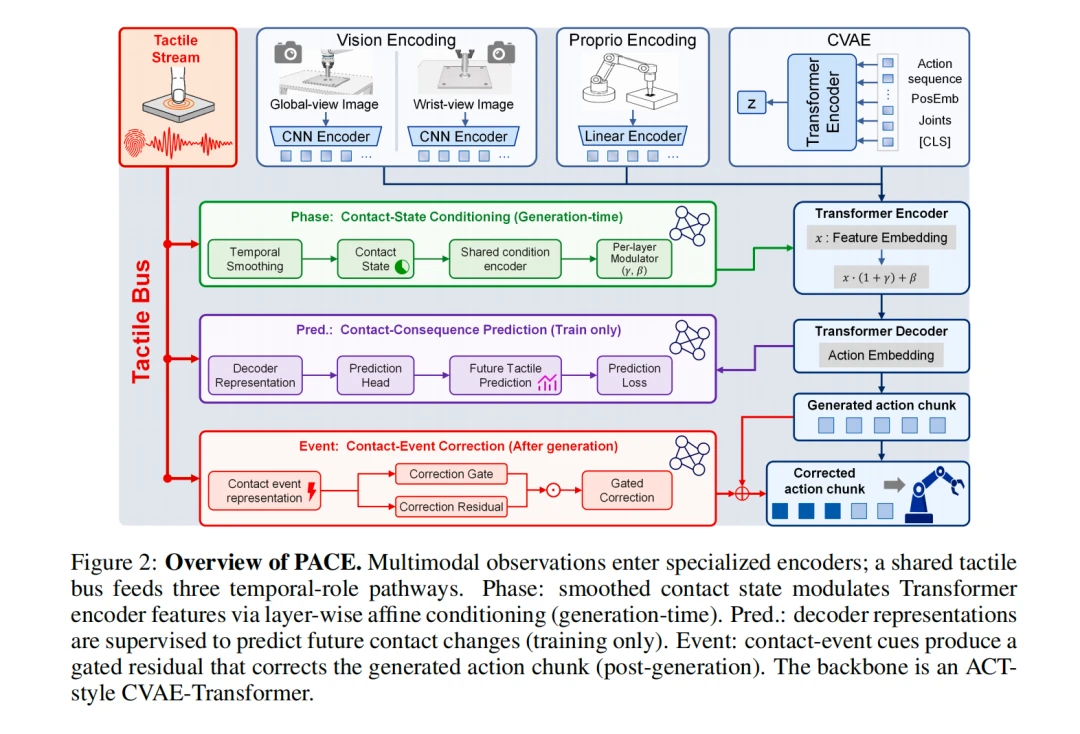
In practice, the smoothness, continuity, and explicit reasoning of action chunks are critical for tactile manipulation in robots. The team introduced PACE (Phase-Aware Contact-Event Conditioning), a novel tactile conditioning framework that organizes a single tactile stream into three learnable temporal channels, each dedicated to a specific temporal role of contact feedback. Phase conditioning guides action chunk generation, Event conditioning adjusts the already generated action chunks, and contact outcome Prediction shapes the action representation during training. This approach avoids relying on single-path tactile fusion to let the policy implicitly learn contact states, events, and outcomes.
How should we understand the patterns of temporal channel transitions and their interactions with force and tactile feedback?
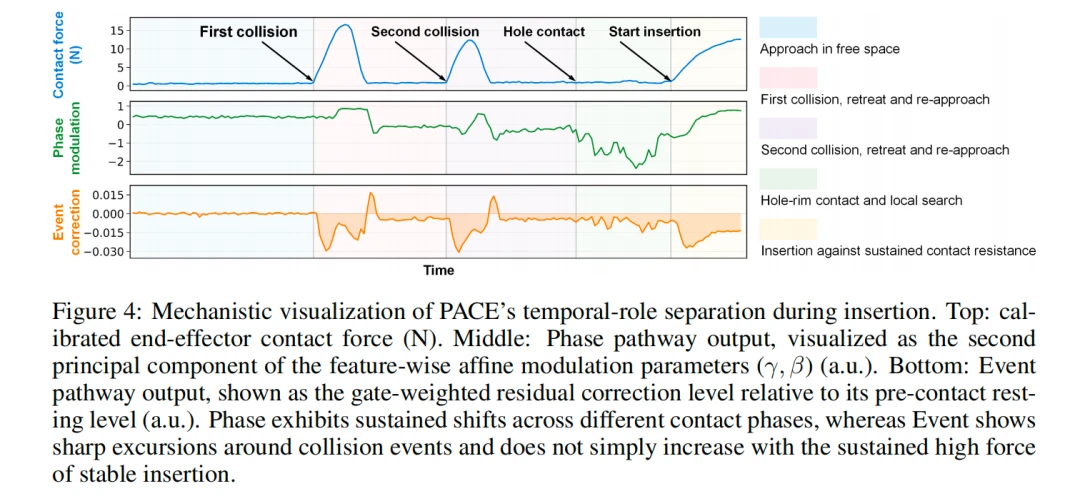
The figure illustrates a complete contact operation driven by PACE. Before the gripper or dexterous hand contacts the object, Phase operates based on the tactile baseline derived from prior training; while the hand is still in free space, both event and force signals remain within stable ranges. When the hand makes contact and the force or tactile feedback spikes, Event takes over to correct the motion by scaling back the robot's applied force in the first few steps of the action chunk. Phase then shifts gears simultaneously. If a second collision occurs, Event intervenes again to correct the trajectory. Once the object is finally engaged, Phase continuously adjusts across several force-tactile thresholds to execute the insertion, gradually increasing the force within a stable contact impedance until the task is completed.
Discussing the challenges faced during the development of PACE, Chen Zhiyuan noted that the biggest hurdle was designing a policy architecture that maximizes the value of tactile feedback while maintaining strong generalizability. The team initially explored various approaches, including feature fusion, attention mechanisms, and modulation. They eventually realized that tactile feedback does not need to be fully merged into visual features; it can instead drive motion corrections through independent channels. "We found that different robots acquire contact information in inconsistent ways: some have tactile sensors, some only have 6D force-torque sensors at the end effector, and some can only perceive contact through joint currents." Although the sensors and the raw data differ, the underlying physical interactions they reflect share commonalities, such as sustained contact states and discrete contact events. Different sensors can all capture these shared physical dynamics. The advantage of this approach is a more universal architecture. It avoids major overhauls to the original vision-only policy; simply integrating tactile feedback through the three channels into the existing policy achieves the desired effect.

Millimeter-level fine manipulation
The team evaluated their approach using two benchmark suites: ManipulationNet for simulation and a real-robot suite for physical testing. ManipulationNet provides the NIST ATB peg-in-hole insertion benchmark, featuring industrial-grade peg insertion tasks with 3 mm, 1 mm, and 0.1 mm clearances. The real-robot suite includes highly dexterous physical tasks such as inserting a key, a two-prong plug, a three-prong plug, a USB connector, and an Ethernet cable.
Notably, to better evaluate real-world feedback performance, the five tasks in the real-robot test suite focus more heavily on resolving different contact ambiguities. For instance, inserting a key and a USB connector requires precise orientation and is highly sensitive to edge collisions, testing event-driven corrections after abrupt contacts. Approaching a two-prong plug hides critical geometry outside the wrist's field of view, forcing the policy to execute a post-contact search based on physical feedback. A connector with snap fits requires continuous insertion force, meaning an increase in force could indicate either normal progress or detrimental jamming. Together, these test suites comprehensively evaluate whether PACE can simultaneously handle gradual contact phase changes and sudden local events, assessing its practical effectiveness in industrial-grade real-robot manipulation.
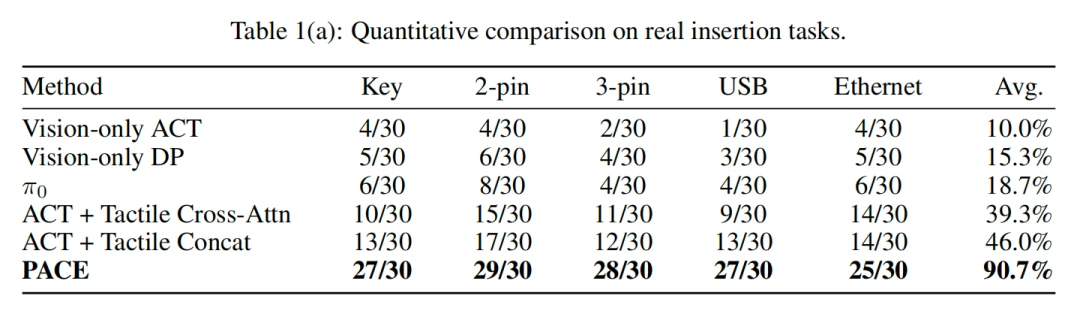
Tests show that compared to pure-vision policies and generation-time tactile fusion baselines, PACE demonstrates a decisive lead, achieving an average success rate of 90.7%. The performance of methods like ACT and DP on key, plug, and snap-fit tasks indicates that pure-vision policies still struggle to resolve post-contact ambiguities. While generation-time tactile fusion performs better than pure vision, PACE significantly outperforms it in leveraging tactile feedback. This also suggests that when tactile feedback is treated as a single-channel input, more complex generation-time fusion mechanisms do not necessarily yield performance gains.
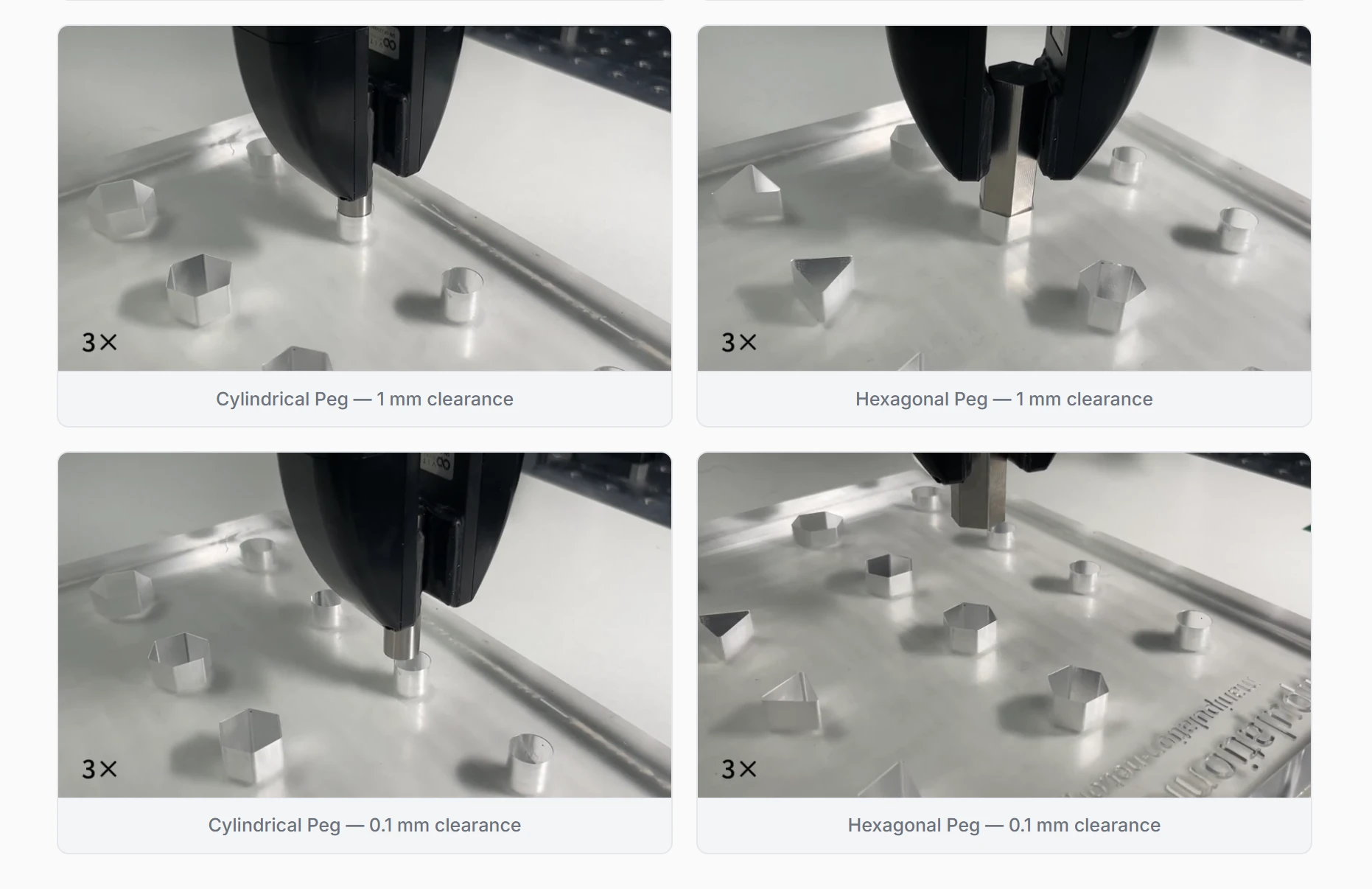
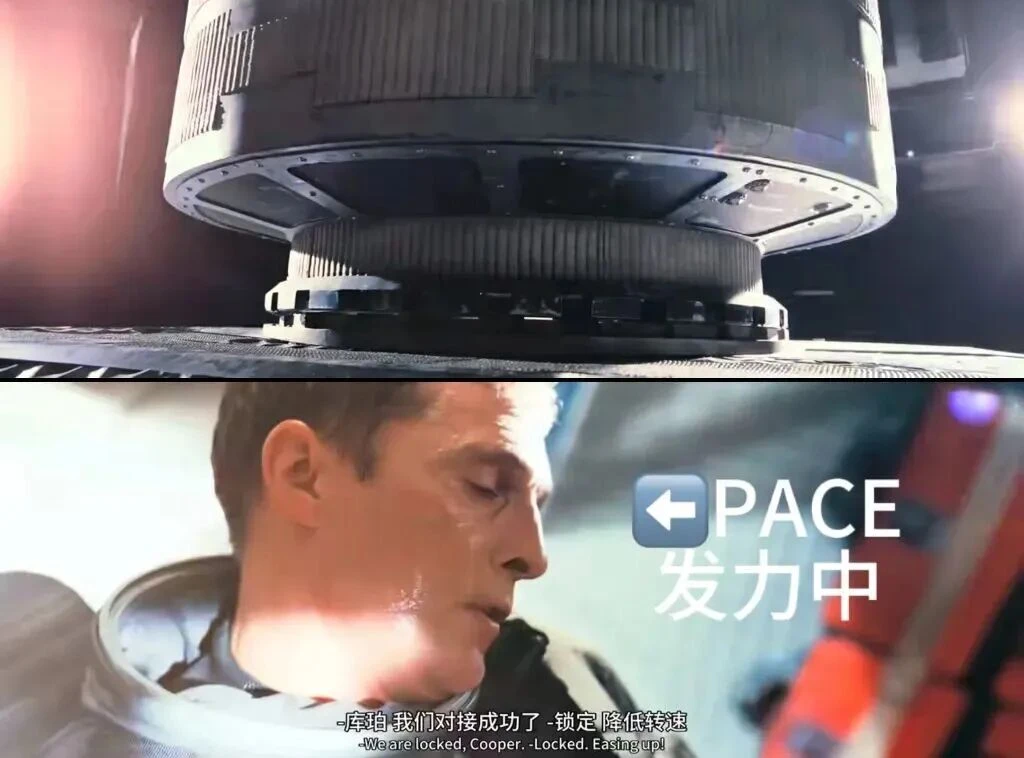
The most astonishing results come from millimeter-scale fine manipulation. PACE remains equally robust on ManipulationNet even at the finest 0.1 mm clearance. To put this in perspective, a human hair is only about 0.05 to 0.1 mm in diameter. At this scale, the tiny target objects and the robotic hand create massive visual occlusion. Even human operators require repeated visual and tactile coordination and alignment; any slight pose deviation would be amplified into a hard collision, resulting in failure or part damage. The precision required for such operations inevitably brings to mind the classic docking scene of the Endurance in Interstellar.
These experiments thoroughly demonstrate PACE's effectiveness under visual occlusion. Why, then, does this hold significant implications for commercial deployment? Final assembly in automotive plants is a classic example of a highly flexible, diverse manual assembly environment, characterized by highly coupled processes, high operational degrees of freedom, and numerous unstructured disturbances. Switching to a different assembly line or part variant drastically changes the operational requirements. For robots, this demands tighter error margins and higher precision. The development of PACE suggests that Xiaomi Robotics is poised to pioneer breakthrough progress in real-world industrial deployment.
Why does PACE perform so exceptionally well? Which components of its temporal channels play the critical role?
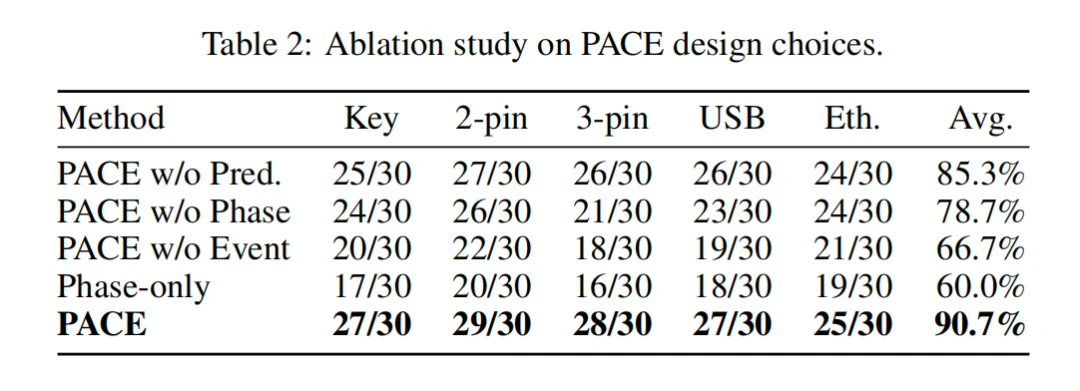
Ablation studies reveal that the most effective component of PACE is the Event channel, which handles contact event corrections; removing it causes the average success rate to plummet to 66.7%. When shorter action chunks compromise temporal coherence and sustained force behaviors, the Event channel maintains the long-chunk structure of the actions while incorporating targeted local corrections. Removing the Phase or Prediction channels also results in a moderate performance drop. These declines indicate that within the decoupled temporal channels, predictive training supervision improves representation quality but is not critical during inference, and relying solely on contact-state conditioning for inference performs even worse. All three components must work in tandem and complement one another to form a comprehensive perceptual channel that fully captures state changes, thereby achieving optimal tactile perception.
Explaining the underlying reasons, Chen Zhiyuan notes that the phase perception represented by the Phase channel essentially assists in modulating the tactile encoding. It helps the visual modality determine the current stage of the manipulation to generate the initial action, which is why its relative performance gain is smaller. The team added a prediction head primarily to enable the robot to predict future tactile feedback, thereby enhancing training effectiveness in a supplementary role. The most critical Event channel operates independently, learning a residual. As Chen explained, "Built upon the base action after fusing and modulating visual inputs, the resulting residual action correction provides the largest adjustment," which is why it delivers the best results.
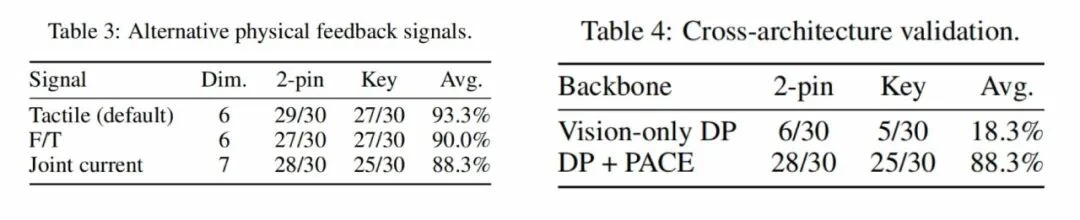
Furthermore, PACE demonstrates strong generalizability across different signal sources and architectures. This means PACE is highly versatile and can be deployed on any robotic platform utilizing contact-sensitive feedback signals. Moreover, its designed triple temporal channels remain effective when integrated with other policy backbones.

Reconstructing the primal form of touch
Chen Zhiyuan noted that the core advantage of PACE lies in rethinking how tactile information should participate in and guide a robot's action decision-making. "Many previous methods primarily focused on fusing tactile features with vision and language, but we found that touch itself has distinct temporal characteristics: it can reflect sustained contact states as well as capture instantaneous contact changes."
Therefore, the team views force and tactile sensing not merely as a supplement to vision, but as a modality that should participate in action generation and control in different ways depending on its specific role. For instance, touch can reflect the manipulation stage—transitioning from no contact to initial contact, and then to continuous insertion. As the contact state evolves with task progress, tactile feedback can naturally help determine the current manipulation stage. Furthermore, because touch is highly sensitive to force variations that are difficult for vision to capture, this information is particularly well-suited for timely action correction.
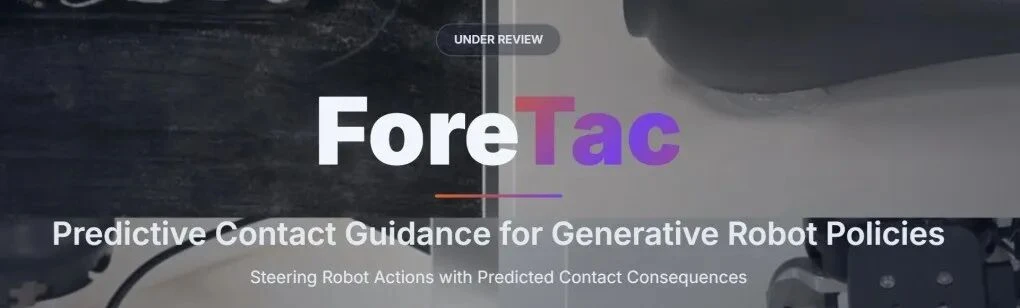
Another study submitted concurrently, also authored by Chen Zhiyuan and colleagues, titled "ForeTac: Predictive Contact Guidance for Generative Robot Policies," explores the biomimetic prediction of tactile perception.
Because PACE relies on reactive control driven by tactile feedback, event-based corrections can sometimes arrive too late to prevent failure. To address this, the team introduced ForeTac, a predictive contact guidance framework organized around a "representation-prediction-evaluation-guidance" loop. By encoding the current tactile state and conditioning on candidate action sequences, the model predicts future latent tactile trajectories. It then evaluates each predicted trajectory using a contact quality objective learned from both successful and failed physical interactions. During inference, the gradient of this objective is backpropagated through the tactile predictor to guide action generation prior to execution.
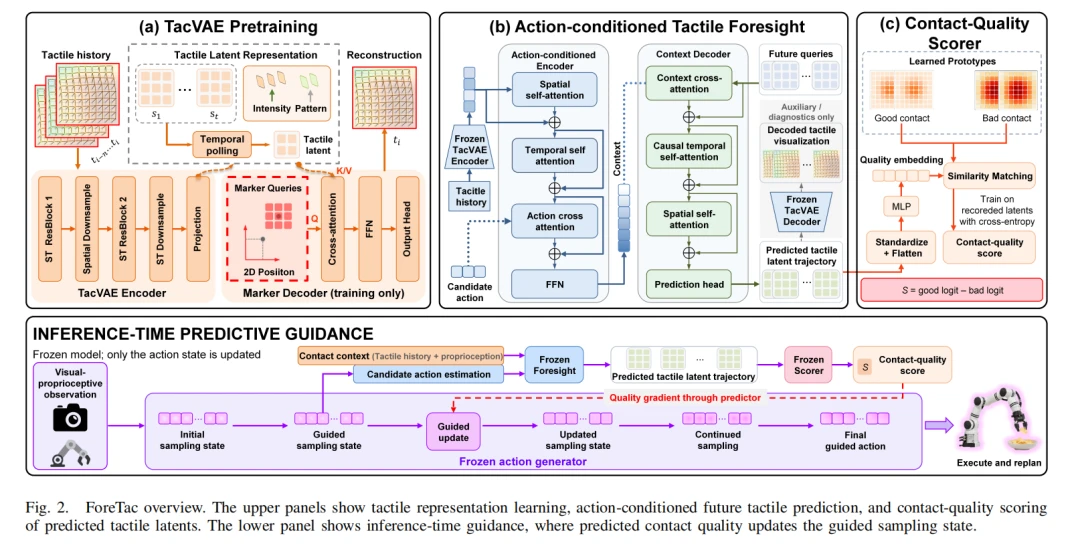
Chen Zhiyuan noted that the two works are inherently continuous and complementary. The reactive touch of PACE and the predictive touch of ForeTac cover the complete state of physical contact, reflecting Xiaomi Robotics' ongoing exploration of tactile intelligence. Regarding the differences between the two, Chen explained that PACE primarily focuses on using current contact feedback to enable the robot to correct its actions promptly upon detecting anomalies. ForeTac, on the other hand, further explores whether the robot can predict the outcome of its actions before execution, thereby optimizing the actions in advance.
"This is very similar to human behavior. If we touch a sharp object, we instinctively pull our hand away due to pain. However, if we know in advance that touching it might cause a cut, we will proactively avoid contact. This serves as a vivid analogy for reactive versus predictive strategies."

Data scarcity remains a key challenge
PACE and ForeTac enable bionic robots to recover essential tactile perception throughout the entire contact process. Where does the application of this technology currently stand?
The Xiaomi robotics team revealed that both studies represent ongoing frontier explorations in tactile technology, though neither has reached large-scale application yet. You Yangwei noted that the team's exploration of tactile technology has entered a critical phase, with a major challenge emerging in data collection.
"We need specialized equipment for tactile data collection that feeds back the contact forces to the operator during manipulation, enabling them to perform fine motor tasks. However, this equipment is expensive and bulky, which creates problems when scaling it up for dexterous hands."
The core issue is the dual scarcity of both tactile data and specialized equipment. Although many industry players are investing in the R&D of tactile data collection devices, no highly effective solutions have emerged yet. Faced with this temporary technical bottleneck, the team turned its attention to using human data. "If it is difficult to collect high-quality tactile data via teleoperated robots, a natural next step is to ask: can we acquire it from humans?" The primary concern is twofold: first, there is still no mature equipment for collecting human motion and tactile data; second, the inherent embodiment differences between human and robot data could compromise training efficiency. "Although we have tried to align the morphological configurations as closely as possible, we still expect some discrepancies to remain."
However, this temporary technical bottleneck has not shaken the Xiaomi robotics team's confidence in its frontier explorations. Given the current lack of sufficient overall data, the team is researching how to utilize data more efficiently, aiming to achieve strong results with limited data in the short term. Looking further ahead, they recognize that scaling up with massive datasets—relying on sheer volume—may ultimately yield even better outcomes. You Yangwei and Chen Zhiyuan believe that organizing tactile data along temporal channels remains highly relevant and will continue to be a valid approach for the foreseeable future. Eventually, this method could be applied to large-scale human datasets to further boost training efficiency.
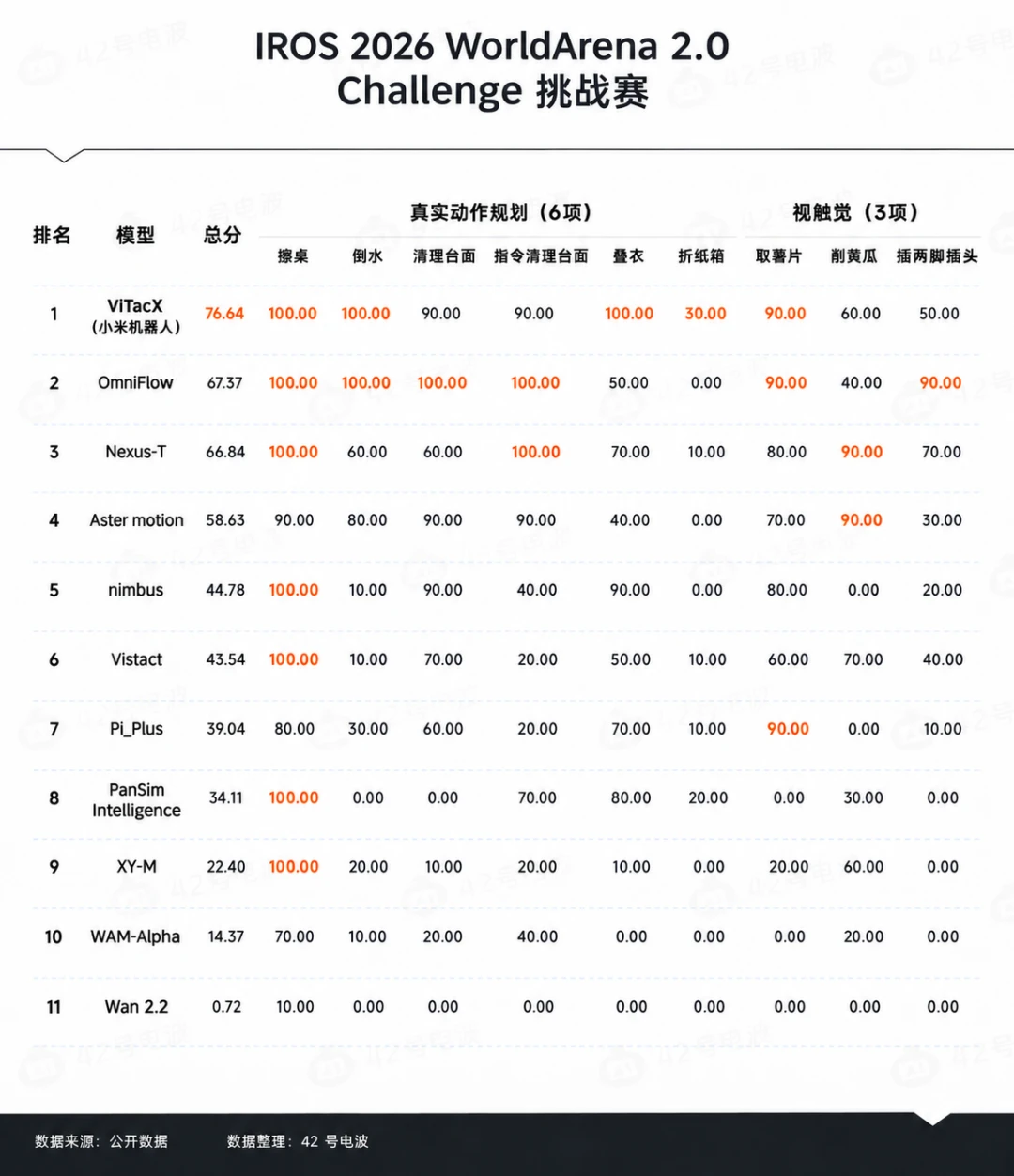
Meanwhile, Xiaomi Robotics is exploring how to integrate multimodal perception with world action models to further enhance robotic manipulation capabilities. The team disclosed that they have already made progress in this direction. At the IROS 2026 WorldArena 2.0 challenge held in September, the team won first place in the real-robot manipulation track with its visuotactile world action model, ViTacX.

Two major future research directions
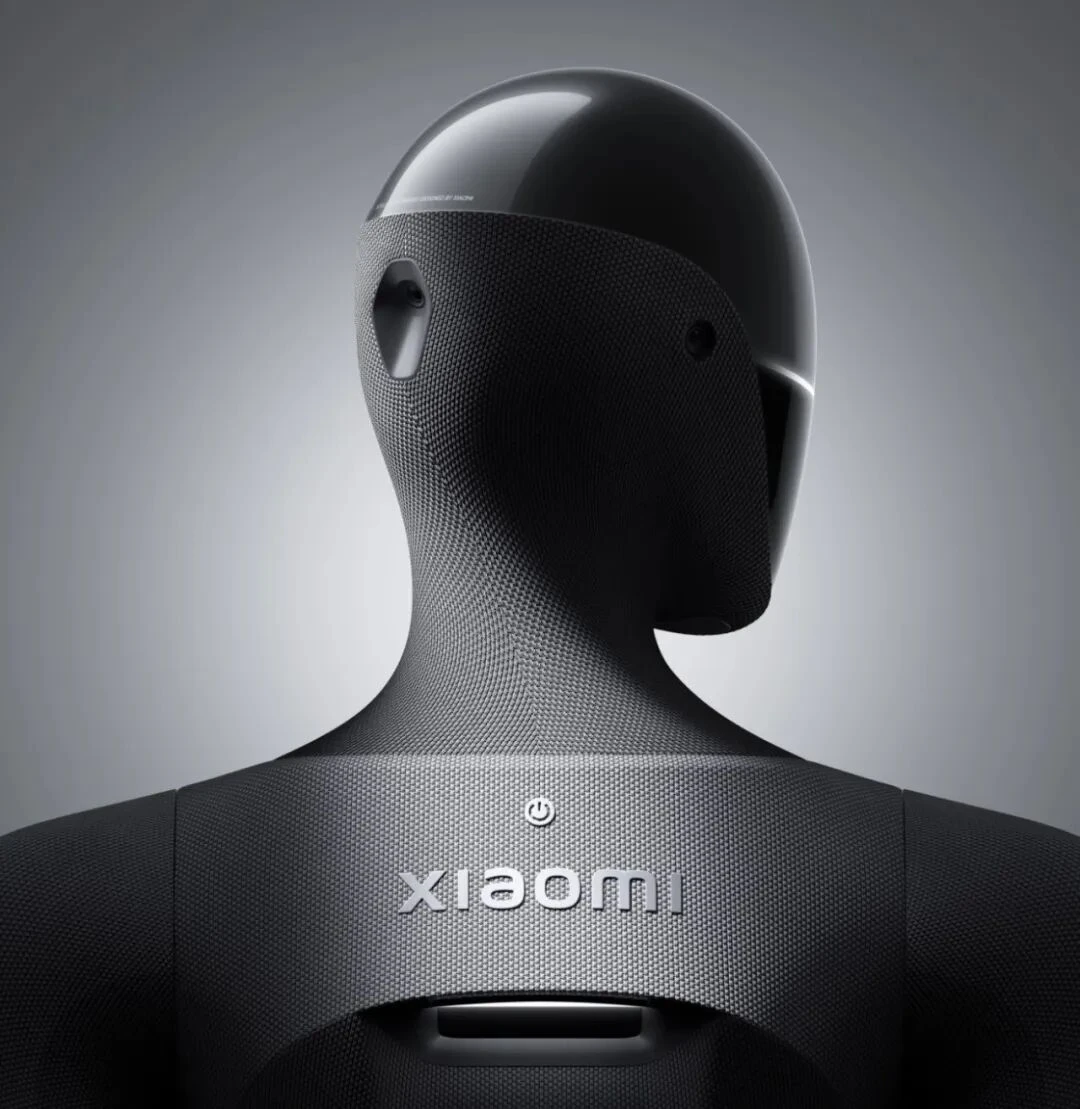
The technical vision that Xiaomi Robotics has been continuously exploring over the past two years spans from timely error correction based on feedback, to predicting contact and making proactive decisions, and ultimately to learning more complex manipulation skills. The introduction of PACE and ForeTac is expected to significantly complement existing foundation models like XR-1. Leveraging Xiaomi's strengths in hardware, automotive, and smart manufacturing, these frontier technologies can be immediately deployed for testing and validation in industrial scenarios once research is completed, rapidly establishing commercial moats for the robotics business.
At the cutting edge, development in tactile sensing and modeling is far from converged, and Xiaomi Robotics continues to strive for perfection. You Yangwei and Chen Zhiyuan stated that the team remains open to technological evolution. They noted that the focus of future general-purpose robotics technology may converge on foundational models and tactile technology, and Xiaomi's robotics division is currently concentrating its core resources on these two areas. Achieving generalization to new scenarios, adapting to diverse disturbances, and learning rapidly from different robot embodiments and failure cases are the ultimate capabilities the foundational model must achieve. Meanwhile, future sensory modalities will become richer, "potentially expanding from vision to multimodality and integrating at the brain level," with tactile sensing serving as a crucial component.
Looking at Xiaomi Robotics' technology roadmap, the landscape spanning the robot body, dexterous hands, foundational models, and tactile technology is becoming increasingly clear. The moment human and robotic fingertips truly touch may not be far away.