

Ken Goldberg: Can Agentic Robotics Close the Reliability, Speed, and Explainability Gap?
By Yu Yue
At the CoRL 2026 Workshop on Agentic Robotics, UC Berkeley's Ken Goldberg argued that both model-based and model-free robotics approaches have hit plateaus in reliability and explainability, and presented his lab's Graph-as-Policy framework as a potential path toward industrial-grade variational automation.
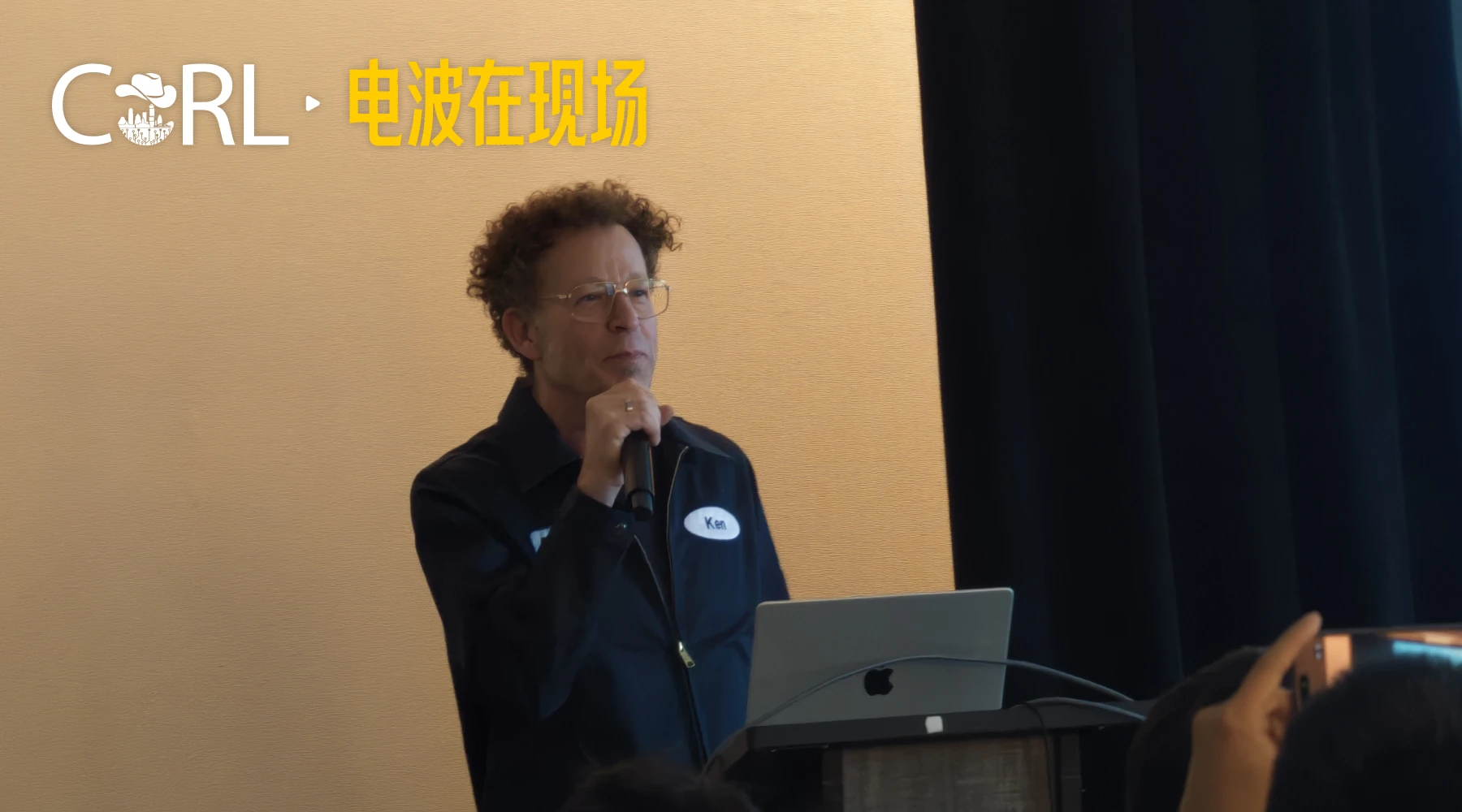
On the afternoon of November 12, 2026, the Conference on Robot Learning (CoRL) hosted the Workshop on Agentic Robotics in Rooms 203–204 at the JW Marriott in Austin. Ken Goldberg, Distinguished Professor of Industrial Engineering and Operations Research and the William S. Floyd Jr. Chair in Engineering at the University of California, Berkeley, delivered the third invited talk, following the presentation by Guanya Shi of Carnegie Mellon University. The room was packed, making it the most heavily attended session at the Workshop on Agentic Robotics.
Goldberg began by asking the audience how many believed that current approaches to building robots could solve all problems, and then how many favored agentic robotics. He then offered his own assessment.
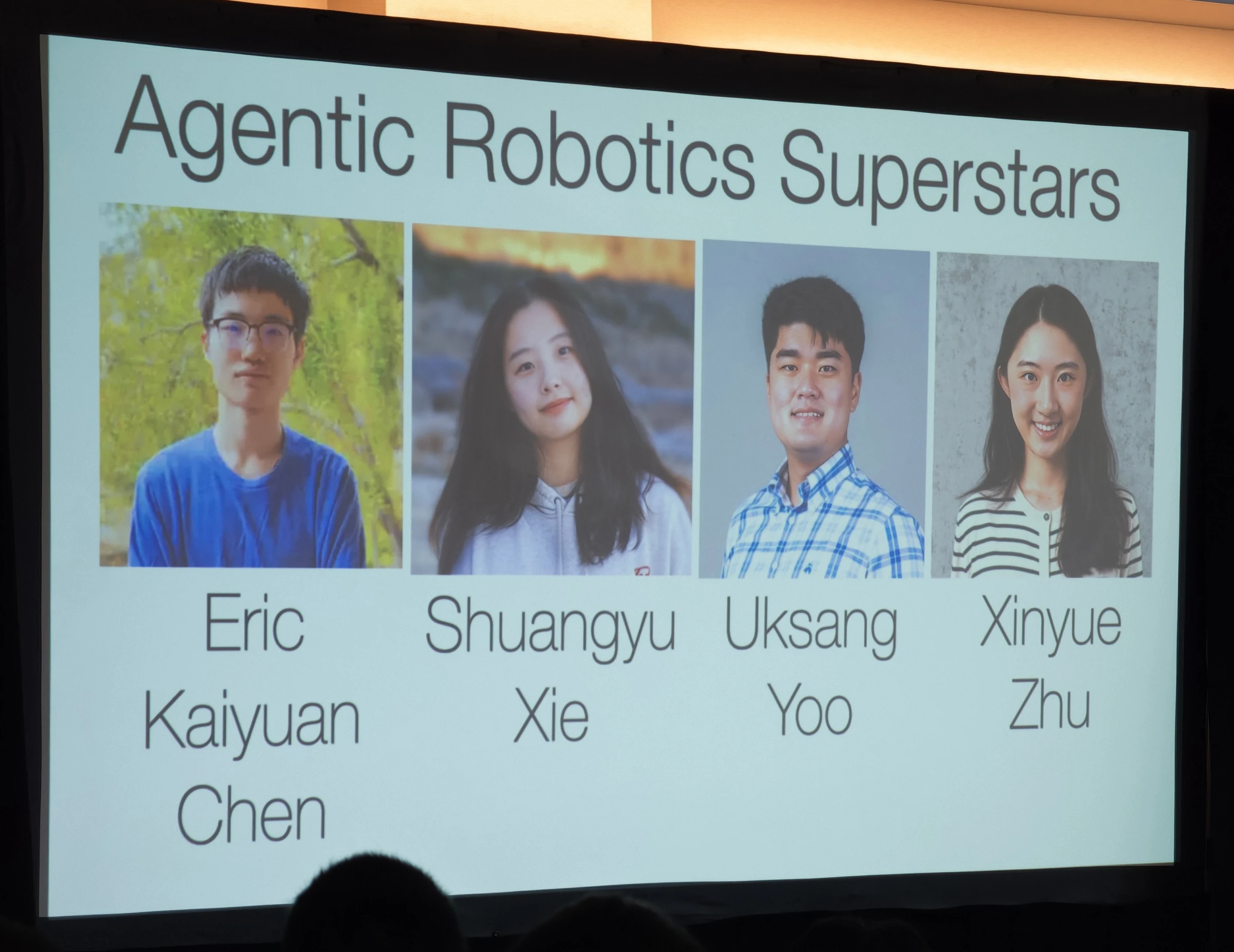
He also highlighted the four most dedicated students in his lab: Eric Kaiyuan Chen, Shuangyu Xie, Uksang Yoo, and Xinyue Zhu, noting that they led most of the case studies presented later.
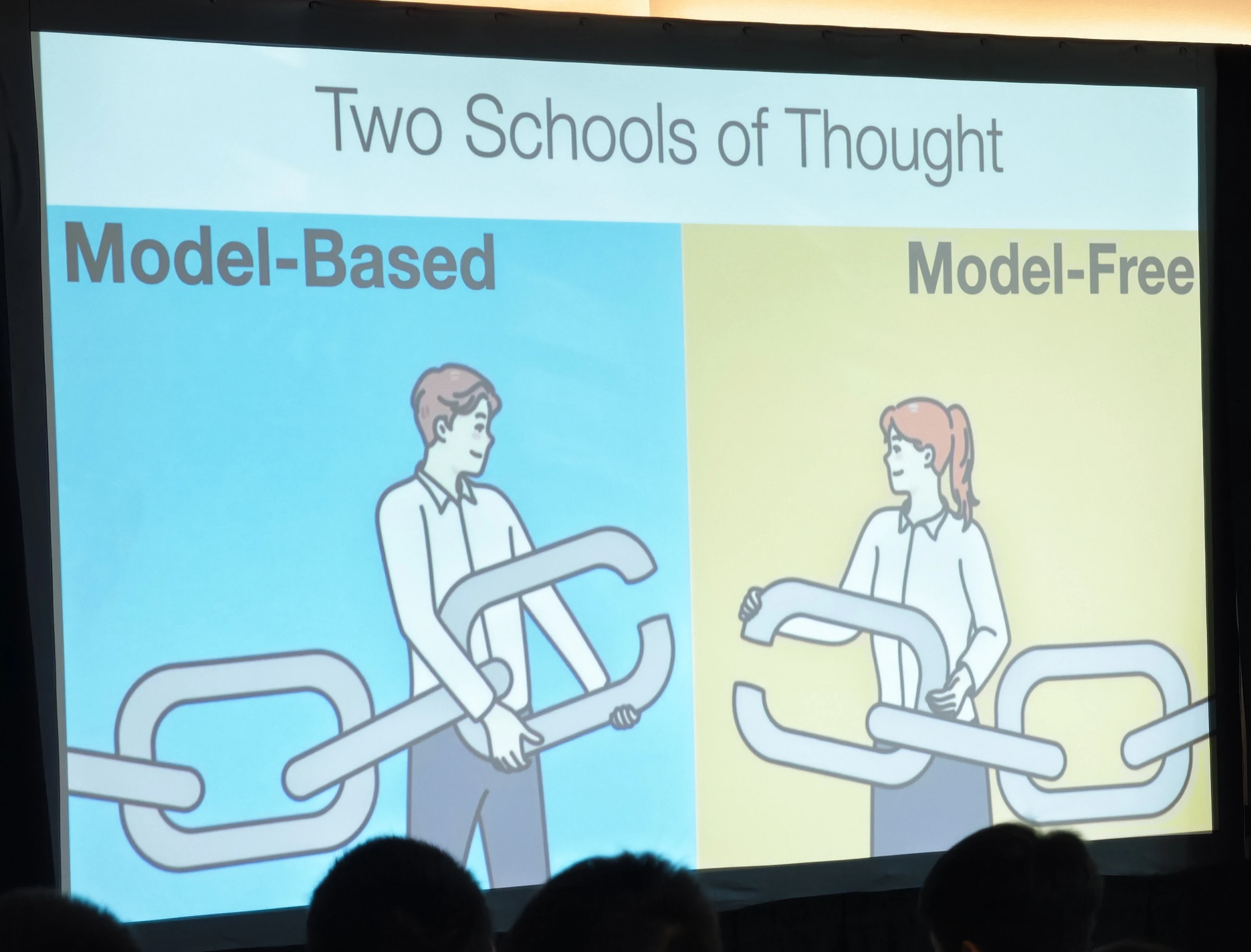
Goldberg noted that there are still two distinct schools of thought in robotics, and, as Guanya Shi noted earlier, there is still tension between the two. One is traditional model-based engineering centered on control theory, which he also calls "Good Old-Fashioned Engineering." The other is the new model-free approach, which he also finds intriguing.
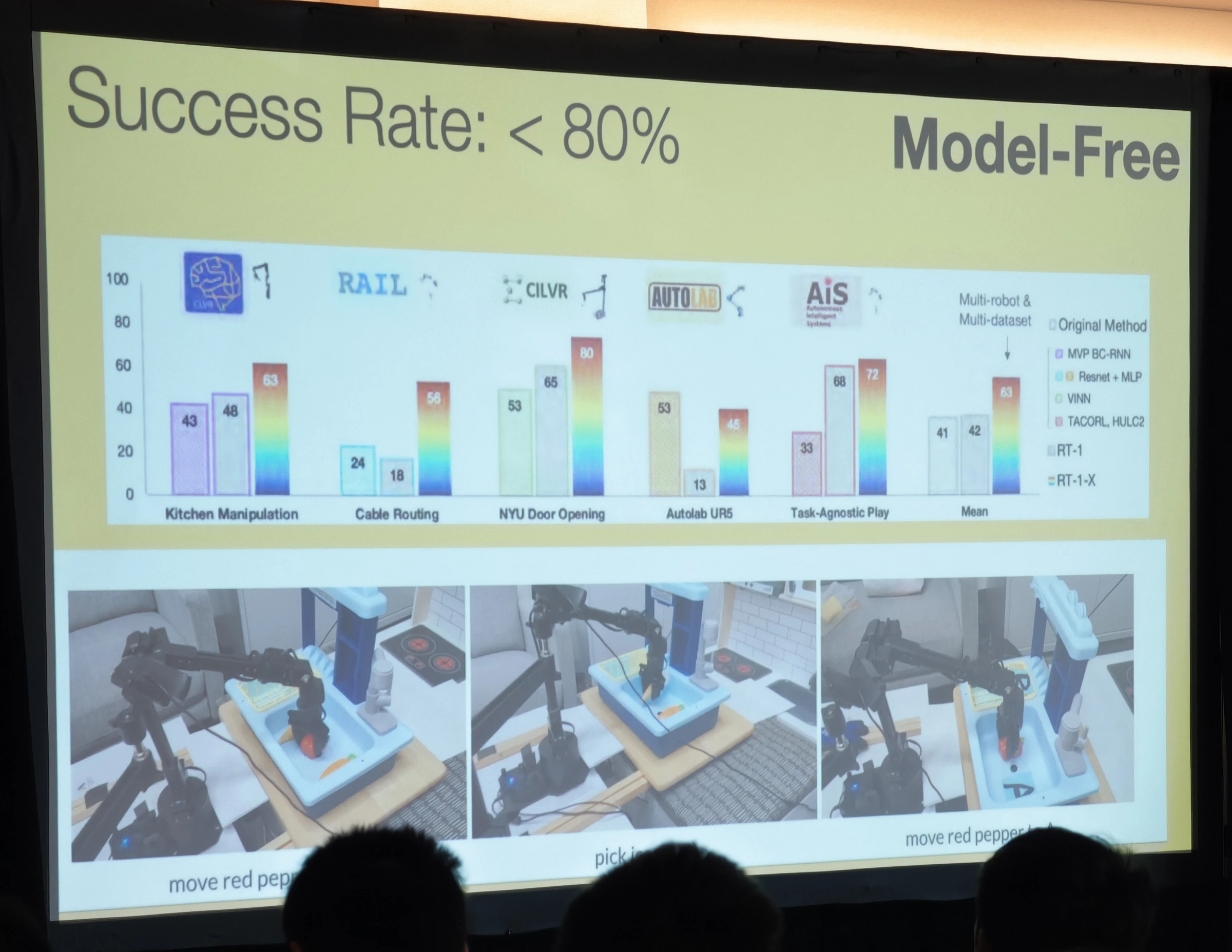
He believes that both approaches have now hit a plateau. State-of-the-art model-free methods currently achieve success rates below 80%, and each incremental gain beyond that is harder to achieve.
He also raised an issue that is not discussed enough: the black-box problem. Industry dislikes black-box systems, which is why these methods see limited adoption in industrial settings.
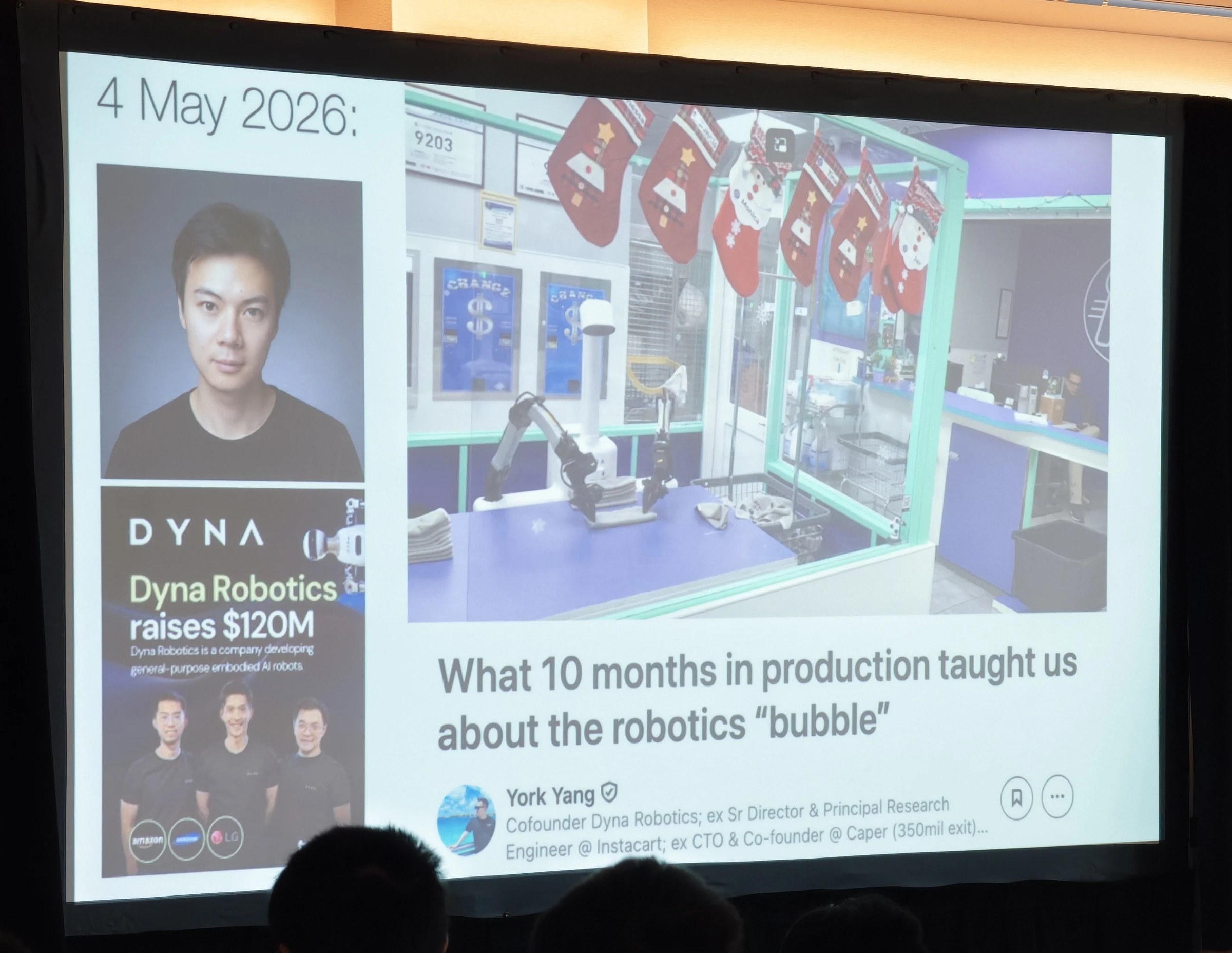
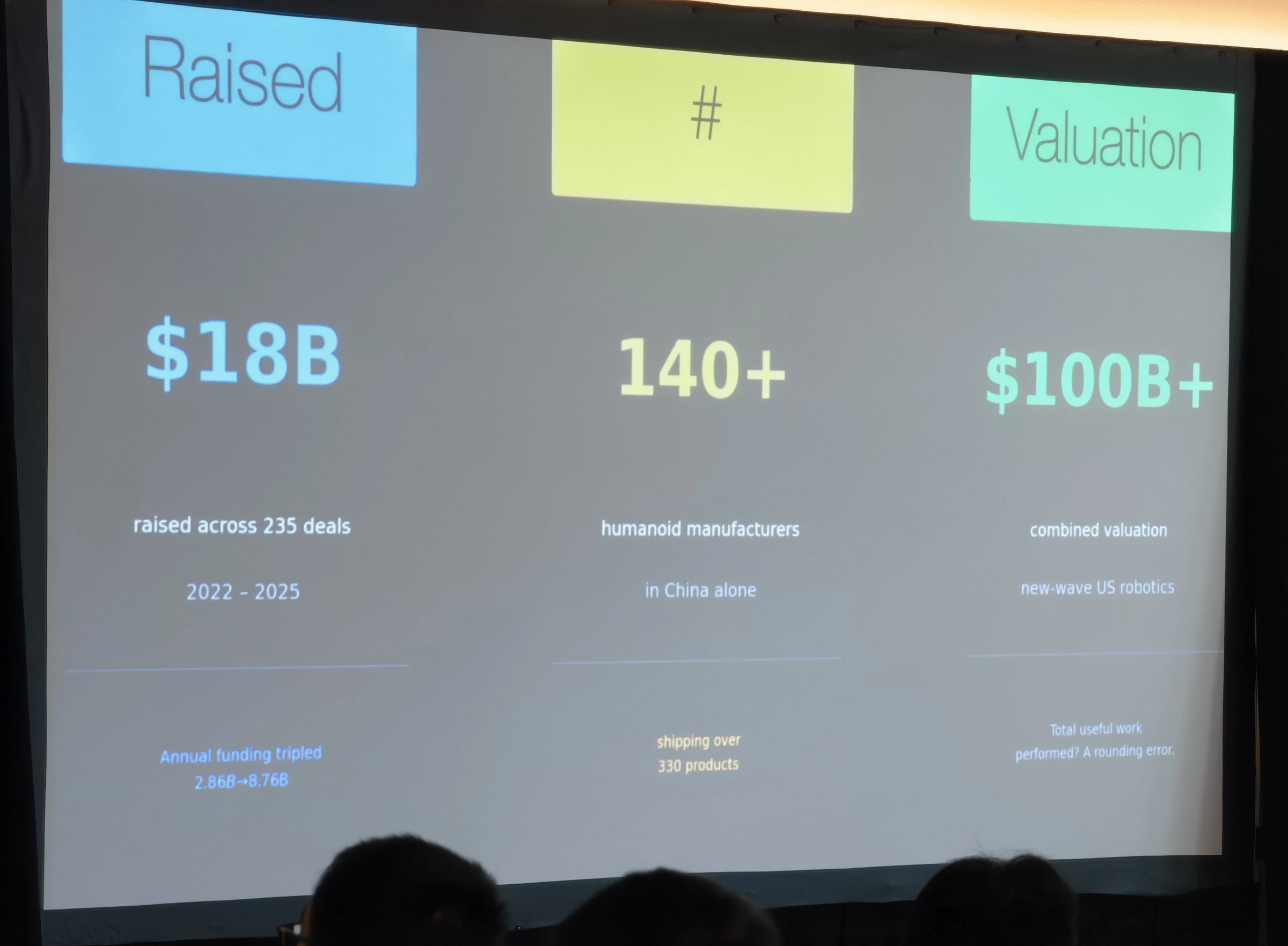
On May 4, 2026, Dyna Robotics co-founder York Yang published a remarkably candid post titled, "What 10 Months on the Production Line Taught Us About the So-Called Robotics Bubble." On one side, he detailed the funding and valuations: 235 deals totaling USD 18 billion from 2022 to 2025, with annual funding tripling from USD 2.86 billion to USD 8.76 billion. China alone has more than 140 humanoid robot manufacturers shipping over 330 products, and the combined valuation of new-wave U.S. robotics companies exceeds USD 100 billion.
In the bottom right corner, it read: the total volume of genuinely useful work actually completed is approximately zero. Goldberg calls this a revenue crisis, arguing that the field needs a serious wake-up call, because investors will not wait forever.
Goldberg admits that this revenue will not come from home robots anytime soon. Home robots will arrive eventually—he hopes so just as much as the audience does—but for the time being, he does not believe it will happen.
In his view, current revenue still comes from fixed automation. Robots are generating revenue every day in these roles, such as painting, spot welding, and assembly.
What industry truly needs to fill the gap for is what Goldberg calls variational automation: tasks that are not fixed, where positions change and objects may vary as well. Making coffee is one such task; people are willing to pay for it, and companies like Physical Intelligence have already started working on it.
He emphasizes that industrial users want three things: reliability, speed, and explainability. The last one is crucial. They dislike black boxes; to adopt a system, they must be able to explain to themselves and their superiors exactly how it works.
The classic model-based approach involves humans writing code based on physics and mathematics. Earlier that morning, a workshop was debating what exactly a "model" refers to, with some defining world models as models as well; the models Goldberg refers to here are strictly physics and mathematics.
He notes that these programs typically have to be written from scratch for each specific application and are not general-purpose. However, they run today, are explainable, and are relatively reliable and functional. The newer approaches aim to be general-purpose, but they cannot yet operate reliably, nor are they explainable.
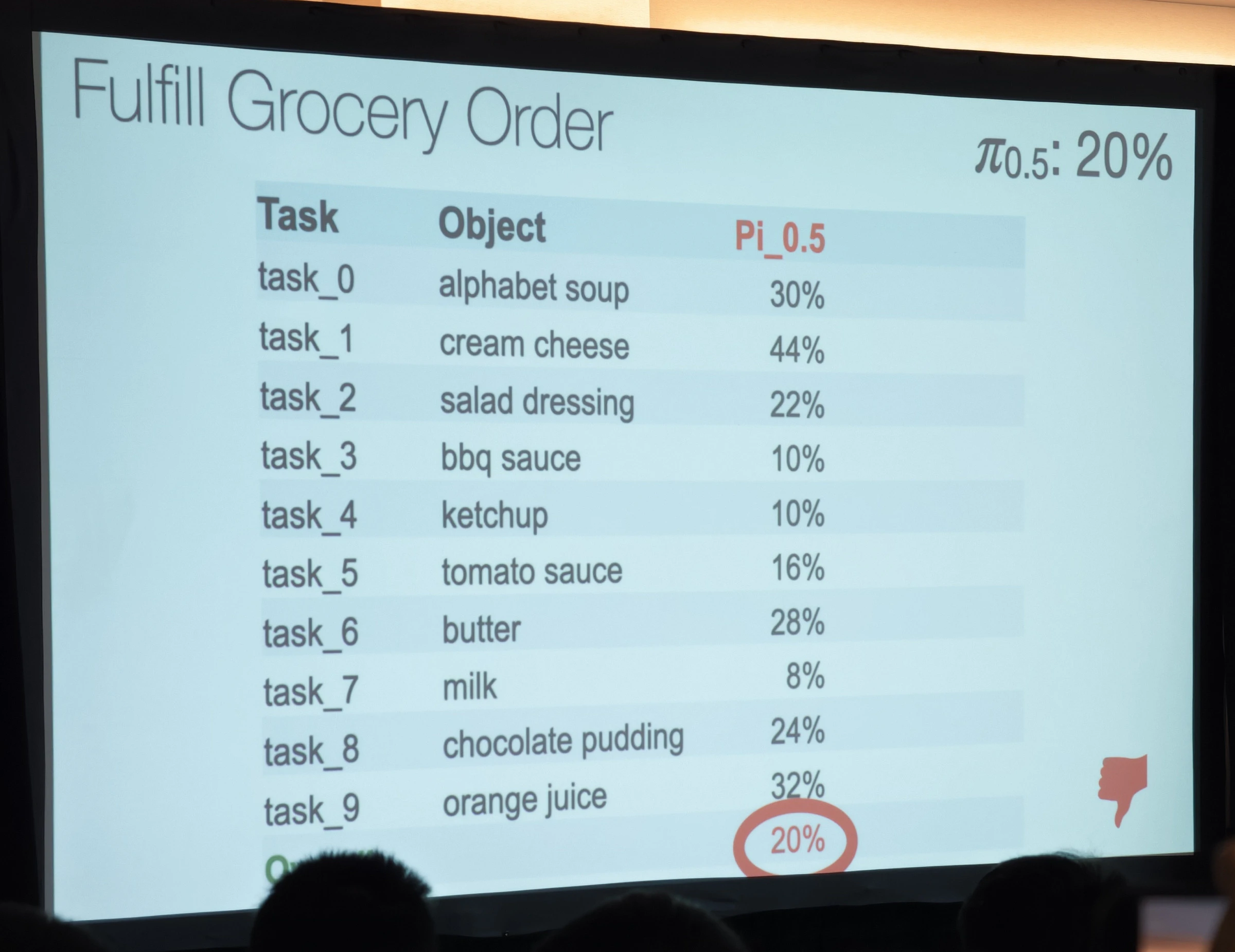
He explains that the lab re-ran its grocery order fulfillment experiment in the spring: when object positions were shifted slightly more than expected, the overall success rate for π0.5 dropped to 20%. Breaking it down by item, the success rate for milk was just 8%, ketchup and barbecue sauce were each at 10%, and the highest was cream cheese at 44%.
Goldberg says the reliability required here is industrial-grade reliability. If we cannot yet achieve that level of reliability, what else can we rely on to bridge the gap between the two?
Meanwhile, large language models and agent systems—particularly their ability to collaborate and write code—have grown significantly more capable. Max Letian Fu and Justin Yu in Goldberg’s lab have been driving this effort, collaborating with students from Carnegie Mellon University, NVIDIA, Stanford University, and the Berkeley Artificial Intelligence Research (BAIR) lab. Guanya Shi is also a co-author on this work, alongside Jim Fan and Yuke Zhu.
Their core question was whether the new generation of agents could write robot code. There is precedent for this: in 2023, Jacky Liang and colleagues explored 'code as policy,' but the code-writing capabilities of language models at the time were not yet up to the task.
They re-evaluated several benchmarks using these new capabilities. Running the CaP-X framework introduced in January 2026, they nearly doubled the success rate on high-level interfaces to 37%. This result caught Goldberg’s attention and excited him, as it suggested the gap might finally be bridgeable.
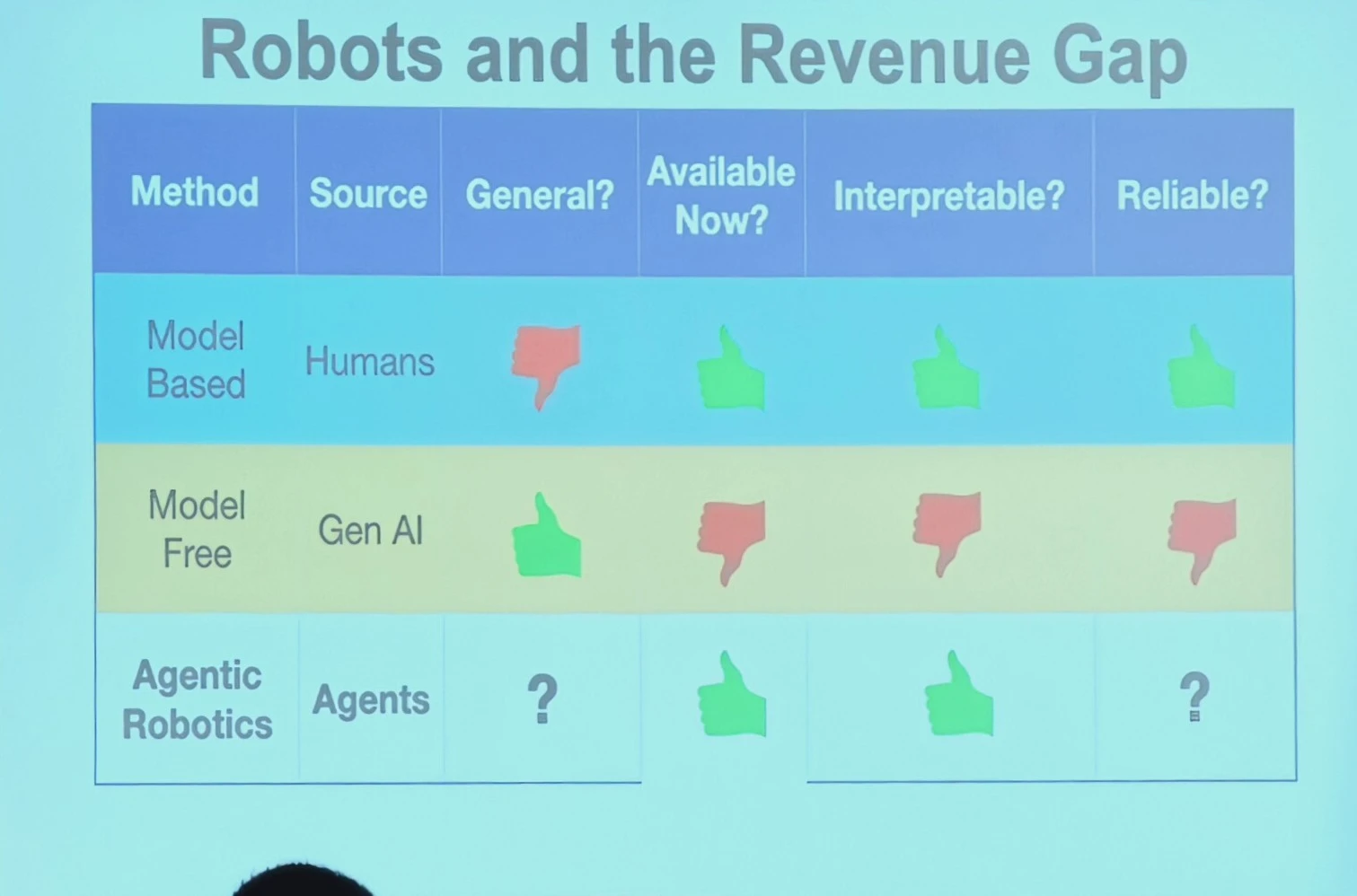
Goldberg’s assessment is that embodied robots still fall short in reliability, speed, and interpretability, while agents appear to possess all three simultaneously. In the comparison table, model-based methods are currently practical, interpretable, and reliable, but lack generalizability; model-free generative methods are more generalizable but are currently impractical, uninterpretable, and unreliable; agentic robots are currently practical and interpretable, but their generalizability and reliability remain open questions.
However, he pointed out that robot code is inherently complex. When multiple agents modify code together, or even when a single agent patches and refines it, the code often becomes tangled.
Eric Chen, the lab’s systems engineer, was using Rust at the time. He proposed: why keep writing in Python? Rust offers clear types, clear structure, and easy compilation, but the key advantage is that it is organized around graphs. Code should be written as graphs.
This idea eventually became the basis for the lab’s work presented at this conference, Graph-as-Policy (GaP), subtitled 'Executing Reliable, High-Throughput Robot Tasks with Agent Frameworks'.
The system uses a large language model to first generate a task graph, then generate functions, and connect them to robotic tools. Perception, grasping, and motion planning each form a subgraph, which then undergoes self-learning in simulation to optimize the computational graph.
Around the same time, other published work like ENPIRE and NVIDIA's open-source agent framework ASPIRE were also moving in this direction, with the lab placing a stronger emphasis on industrial applications.
The system's output can be directly exported as a ROS graph, eliminating the need for an agent at runtime; it simply becomes executable code. The graph also includes a note stating that improvements rely on simulation, which is handled on NVIDIA's end.
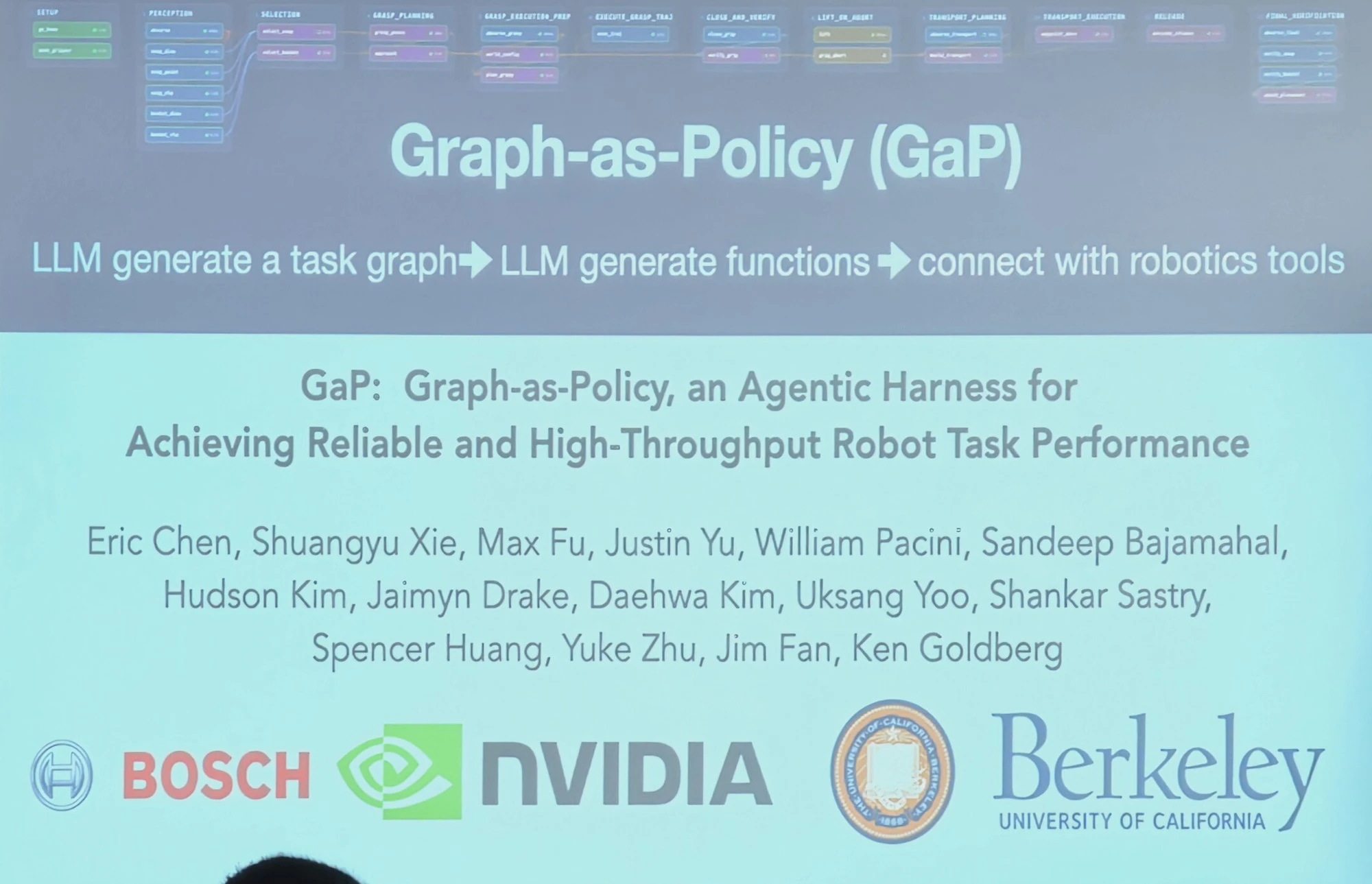
The lab used GaP to re-run previous metrics, and after iterating and fine-tuning the code, observed a significant increase in the success rate. This result deeply impressed Goldberg and noticeably increased the funders' interest. They subsequently conducted multiple case studies to gain a clearer understanding of the phenomenon.
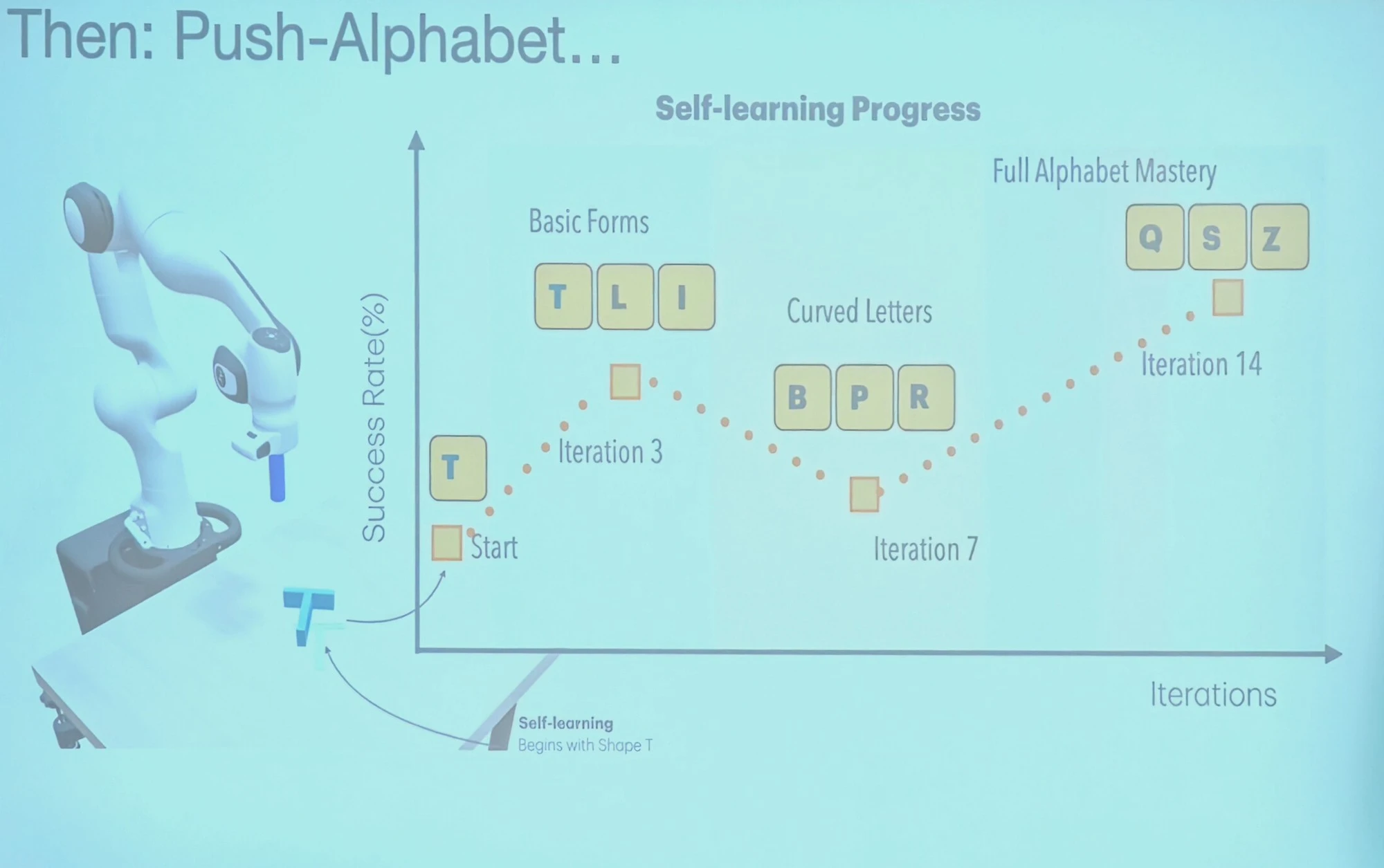
The first case study was the Push-T block manipulation task, which Shi Guanya had just demonstrated. Shuangyu Xie from the lab used Claude Fable to quickly solve the Push-T task and then generalized it to all letters of the alphabet.
The system began self-learning starting with the letter T: by round 3, it mastered the basic shapes T, L, and I; by round 7, it progressed to curved strokes such as B, P, and R; and by round 14, it conquered the most difficult letters Q, S, and Z, achieving full alphabet mastery.
The policy employed model predictive control using Claude Code Fable 5, reaching a 99% success rate in about 20 hours. Compared to the optimal policy proposed by Matt Mason's group, which requires an infinitely large plane, this approach is significantly faster within a finite workspace. The system is already capable of pushing out the letters.
The lab is also collaborating with NVIDIA's Isaac Lab Arena and has begun using Newton. While Newton is becoming an increasingly powerful simulation engine, its numerous parameters and complex configuration have prevented it from seeing widespread adoption so far.
To address this, Eric Chen developed a frontend for Newton called Robo Sim Studio (RSS). It uses sliders and other tools to configure high-fidelity physics simulations, including deformable objects, aligning the necessary parameters so that the simulated behavior matches real-world observations. This tool has been publicly released; just as Newton is open, this frontend is also open. It resolved a key bottleneck at the time: the lack of a user-friendly simulator.
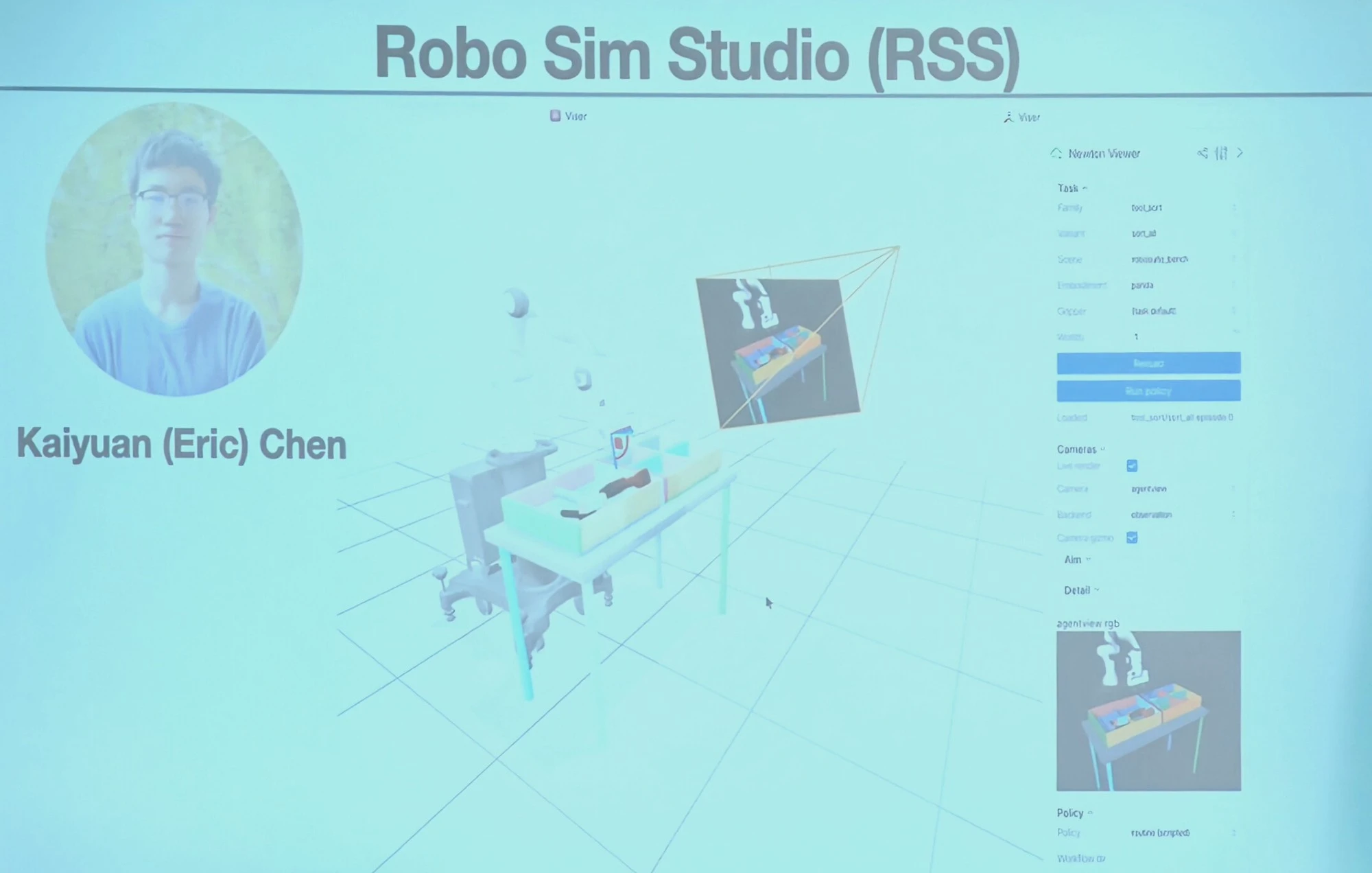
After the release of GPT-6 Astra on September 3, Eric fed this brand-new tool, Robo Sim Studio, along with an otherwise unrelated video from the lab, into Astra, asking if it could reconstruct the scene. An hour later, having read the documentation and the code for Robo Sim Studio, the system began to understand how to configure Newton. It noticed the deformation of the sponge and made the real-robot and simulation almost identical, even matching details such as camera positions, lighting, and materials.
With the simulation in place, they then used GaP to write the code for this task. The graph itself is easy to inspect. When running in the simulation, forces, torques, and the spring constants of the sponge mesh are all visible.
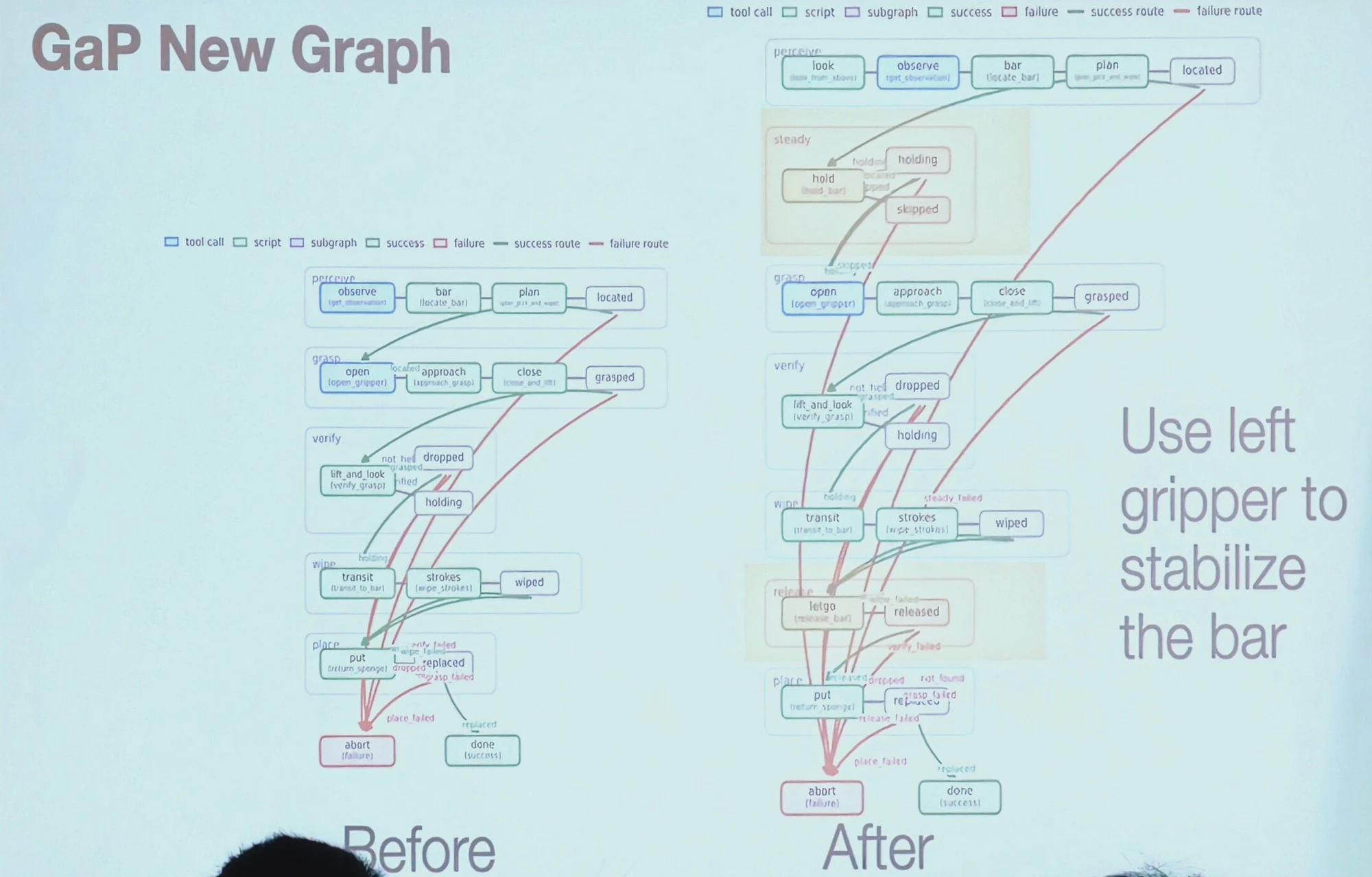
Eric then took the code generated by GaP and ran it on the real robot. It worked, with one exception: it pushed too hard, and the rod fell over. Looking back at the video, they found that the system had not realized from the original video that the rod was neither fixed nor tightly screwed in. The initial draft had mistaken the support for a fixed fixture.
They fed this failure video back into the system, explaining that it had not succeeded here. The system inferred that the rod was a free rigid body, not held down, and that too much force had been applied. It then modified the graph, deciding to use the left gripper to hold the rod in place, which solved the problem. Goldberg noted that he is not claiming this solves every problem, but this particular outcome still surprised them.
A similar real-to-sim approach was also applied to plants, led by Uksang Yoo and conducted together with Simeon Adebola, Shuangyu Xie, and Kaiyuan Chen. The only input was a video of a robot inspecting a plant. After feeding it into Astra and Robo Sim Studio, the simulation was remarkably close, even incorporating things they had not noticed beforehand: a stuffed toy bear outside the window, visible in the real-robot footage, was also recreated in the simulation.
The system is still fine-tuning various parameters for this scene, producing outputs with high resolution and detail.
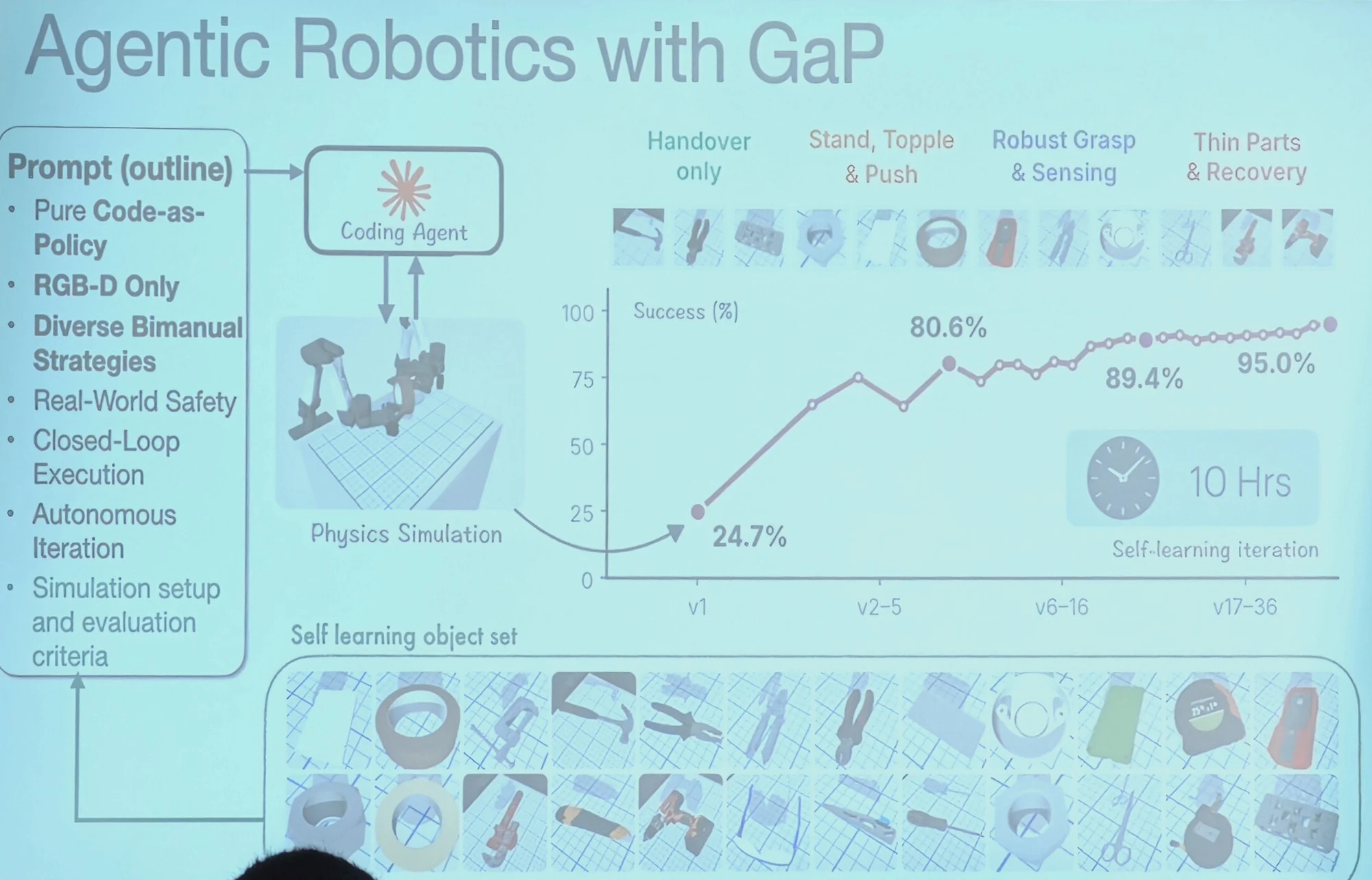
Another project involved dual-arm tool flipping, titled Flip Anything, proposed and led by Shuangyu Xie. It involved 24 tools, flipped 180 degrees using a dual-arm robot.
The system started with a pure code policy, using only RGB-D inputs and various dual-arm strategies, and self-learned in simulation for 10 hours. The success rate of the first version was 24.7%. After going through stages such as handover-only, uprighting and toppling, robust grasping and sensing, and thin-object recovery, it reached 95.0% by rounds 17 to 36.
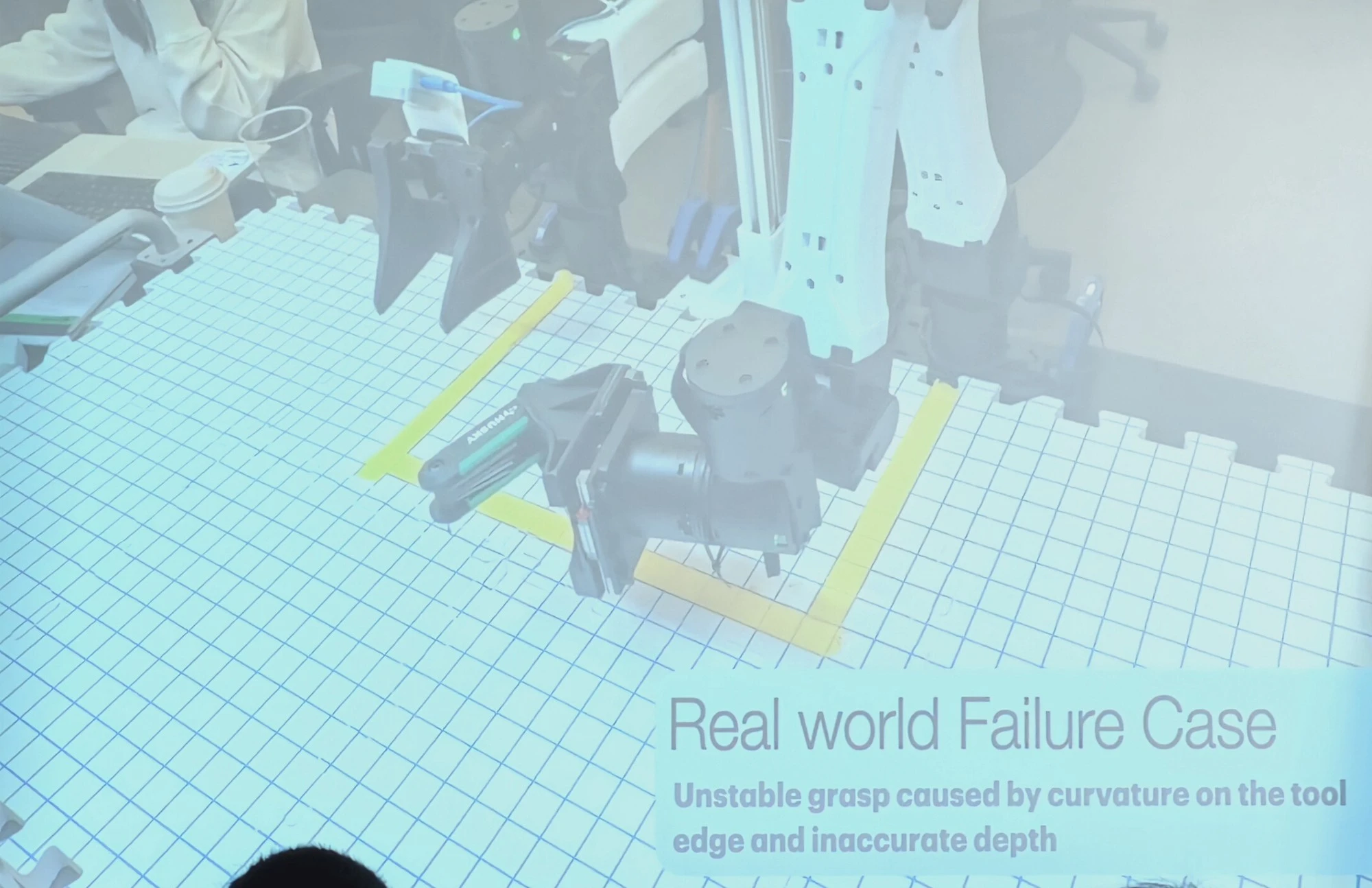
They also conducted zero-shot real-robot tests using two objects not seen during training, which were successful. However, it did not succeed every time. During one attempt to pick up a hex key, the object dropped. A slight bend in the green section, combined with inaccurate depth estimation, led to an unstable grasp. This issue was extremely subtle; the agent failed to detect it and consequently could not compensate.
Another task involved placing objects into corresponding slots in a bin, called Tool Sorting. This task, sourced from Siemens, was carried out by incoming PhD students Xinyue Zhu, Shuangyu Xie, and Kaiyuan Chen. The input consisted of human hand demonstration videos. The system used Astra and Robo Sim Studio to generate the simulation, replacing the human hand with two YAM robotic arms.
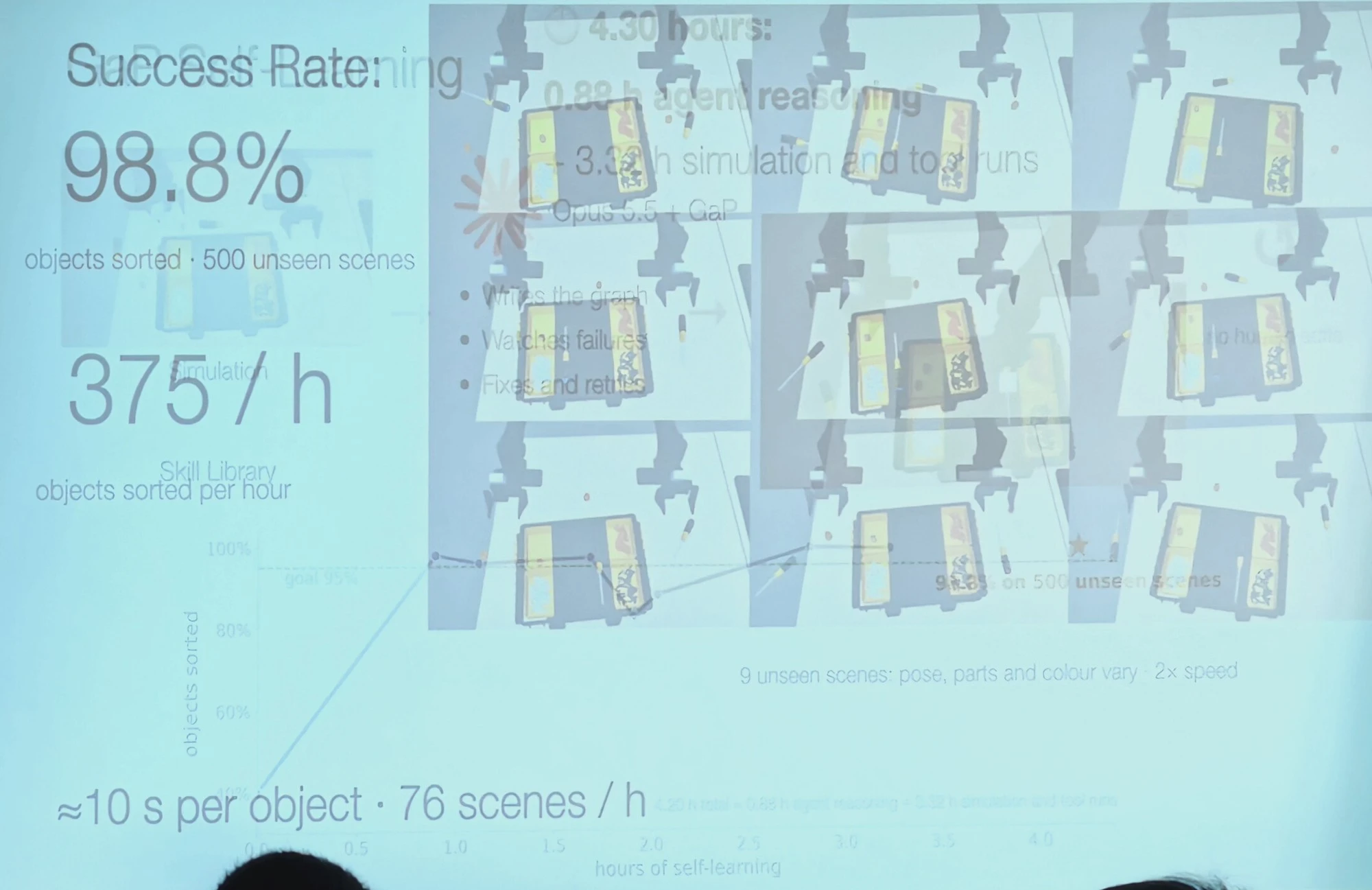
With the high-quality simulation in place, they trained the system using Opus 5.5 and GaP. The total training time was 4.30 hours, comprising 0.88 hours of agent reasoning and 3.32 hours of simulation and trial runs. The agent generated the task graph, analyzed failures, and iteratively modified and re-ran the process.
Across 500 unseen scenarios, the success rate reached 98.8%. In the simulation, the system sorted approximately 375 items per hour, taking about 10 seconds per item, which equates to 76 scenarios per hour.
This task has not yet been validated on the physical robot. However, at 10 seconds per object, the speed and reliability are already close to industrial requirements.
They also tackled the task of connecting water pipes behind a washing machine or dishwasher. This task, sourced from Samsung, was completed by Uksang Yoo, Shuangyu Xie, Kaiyuan Chen, and Shamak Gowda. The input was again a very short human demonstration video, from which the system built a model that closely matched the input. The two robotic arms were positioned in a slightly staggered configuration, making it easier to reach and grasp the water pipe to successfully complete the task.
Another task involved washing turnover boxes, sourced from Bosch. Previously, the lab would first build a physical model, and it would take three weeks to get the simulation right. With this new pipeline, the process is much faster. The system reconstructs the environment from a very short video, allowing the physical robot and the simulation to align.
The control graph used for this task appears quite complex. It first determines where to place the two robots to flip over the boxes. Solving the kinematics is challenging; after ultimately selecting a position, it proceeds with path planning, motion modeling, and obstacle avoidance.
It struggled through 50 attempts before finally finding a solution. Goldberg noted that the approach was so clever he might not have come up with it himself, nor did he think anyone in the room necessarily could have; it was a remarkably elegant example.
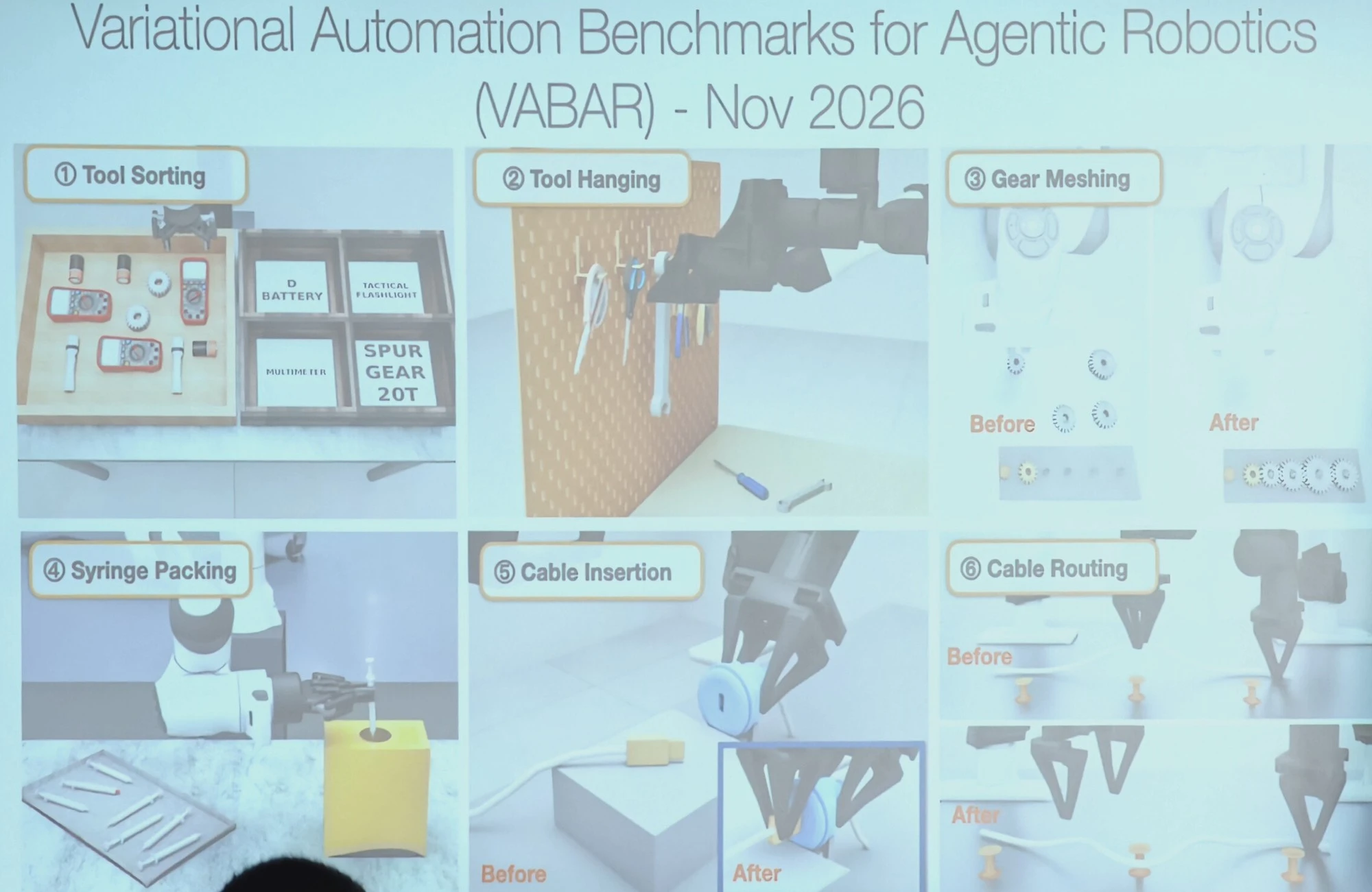
Goldberg also discussed evaluation. His lab introduced VABAR (Variational Automation Benchmarks for Agentic Robotics), a benchmark for agentic robots dated November 2026. The tasks include tool sorting, tool hanging, gear meshing, syringe boxing, cable insertion, and cable routing.
He also highlighted the need for benchmarks that have not yet been fully solved, along with the Embodied First Exam developed by Shi Guanya’s team. Performance on these tasks is still far from optimal, and he encouraged the community to run the evaluations and push the leaderboards.
Many of these are applications he considers highly relevant to industry, such as cable management and routing in data centers. He also mentioned collaborations with the ENPIRE and ASPIRE teams.
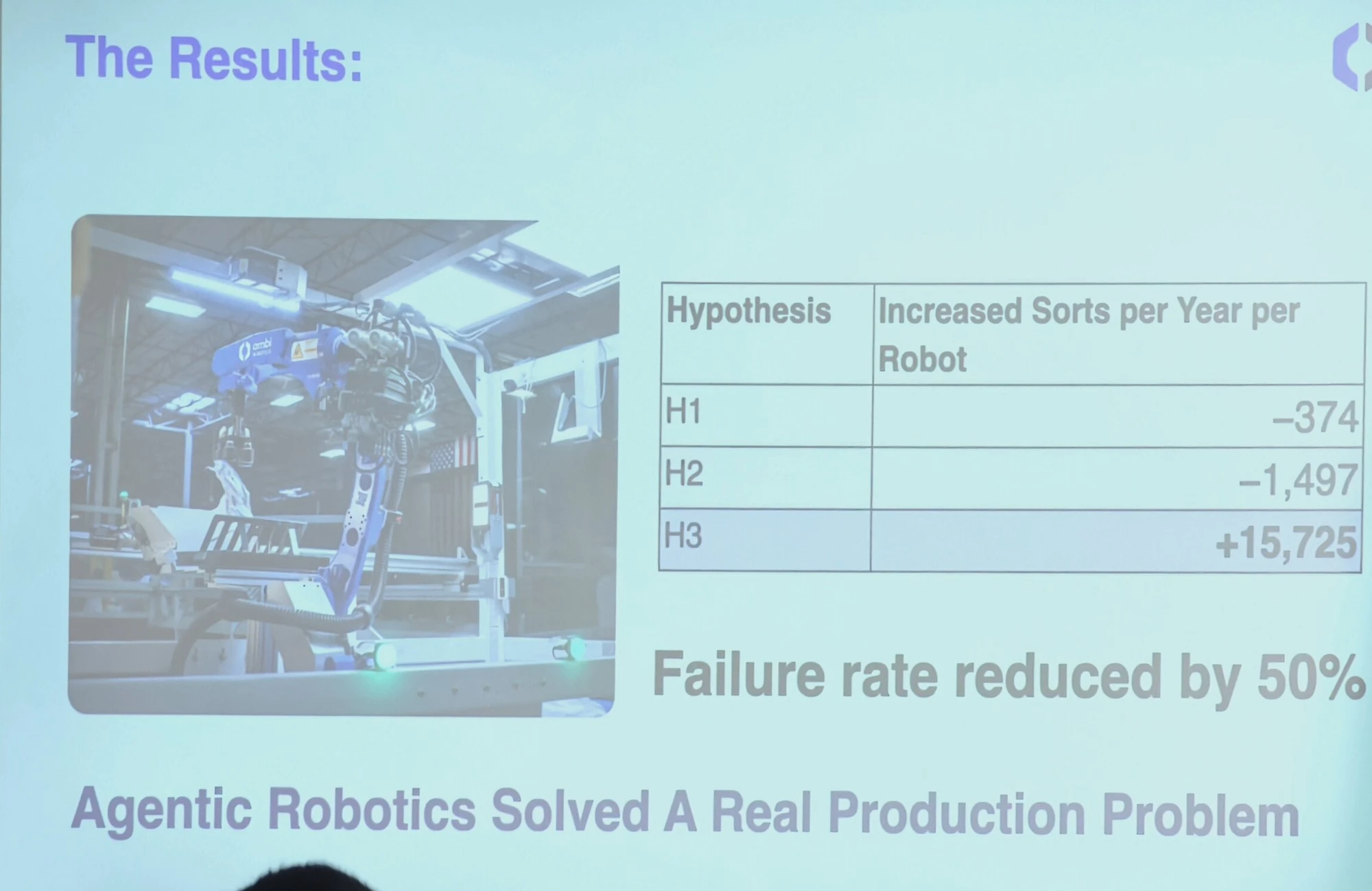
The final set of examples focused on production line use cases. Ambi Robotics, co-founded by Goldberg, sorts packages across multiple locations in the United States. For one customer, packages would frequently jam during a task called precise placement. Each robot experienced 30,000 failures per year, each requiring human intervention to clear, and manual repairs took more than one person-month. He did not disclose the customer's identity.
Jeff Waller used GaP to configure a solution over a single weekend. Waller estimated that a human would have taken a month to do the same.
The system initially proposed two solutions, both of which worsened the situation: the first would cause each robot to sort 374 fewer items per year, and the second 1,497 fewer; the third solution, however, would sort 15,725 more items per year and cut the failure rate in half, and it is already running on production lines in Philadelphia and Atlanta.
Goldberg believes this approach is meaningful for bridging the revenue gap mentioned earlier. He sees this as a significant opportunity for the field and encouraged interested parties to think carefully and invest the time to actually deploy robots in production environments, particularly for small and medium-sized enterprises worldwide.
Goldberg ended with a provocative question: has data become useless? He knows this is highly debatable and doesn't actually believe it himself. Demonstration data collected for training vision-language-action (VLA) models may still be useful, and he hopes it will be utilized in future models.
However, he also believes that achieving full generalization in household settings will still require more general, more black-box models trained primarily on data. Many researchers are still pursuing this. But the situation is entirely different when addressing industrial problems.
He also mentioned Thomas Kuhn's The Structure of Scientific Revolutions, a book he read in college that explores how science progresses. Kuhn observed that when fundamental shifts occur, scientists often fail to recognize the change immediately.
He cited an example from physics: nearly all physicists at the time believed in the luminiferous aether, until the Michelson-Morley experiment proved otherwise. It then took a few more years for the community to digest and accept the new reality. A similar shift occurred in mathematics. Researchers once believed in Hilbert's program, assuming mathematics could be completely formalized. In 1931, Gödel fundamentally upended this view, and it similarly took mathematicians a few years to accept the change.
He asked: Is the robotics field also undergoing this kind of paradigm shift? He wouldn't claim it with absolute certainty, but he believes it is possible.
After the presentation, an attendee asked whether household and industrial robots would require two fundamentally different pipelines, and whether the lab was attempting to use recursive self-improvement to develop a universal pipeline. Goldberg noted that he deliberately avoided using the term "recursive self-improvement" (RSI) initially, but that is precisely what they are doing. These systems interact and self-improve: they first improve in simulation, followed by a second round of improvement on real robots.
He also added that cleaning a home is different from cleaning a hotel. Hotels are more structured, making them better suited as a task.
Workshop on Agentic Robotics (CoRL 2026 workshop website, November 12, 2026) https://agentic-robotics-workshop.github.io/
GaP: A Graph-as-Policy Multi-Agent Self-Learning Harness for Variational Automation (VA) Tasks (arXiv:2607.05369, CoRL 2026) https://arxiv.org/abs/2607.05369
Graph-as-Policy project page https://graph-robots.github.io/gap/
This article is based on on-site reports from the workshop on November 12, 2026.