
Vbot Community Surpasses 300 Members: Consumer-Grade Embodied AI is Accelerating into Existence
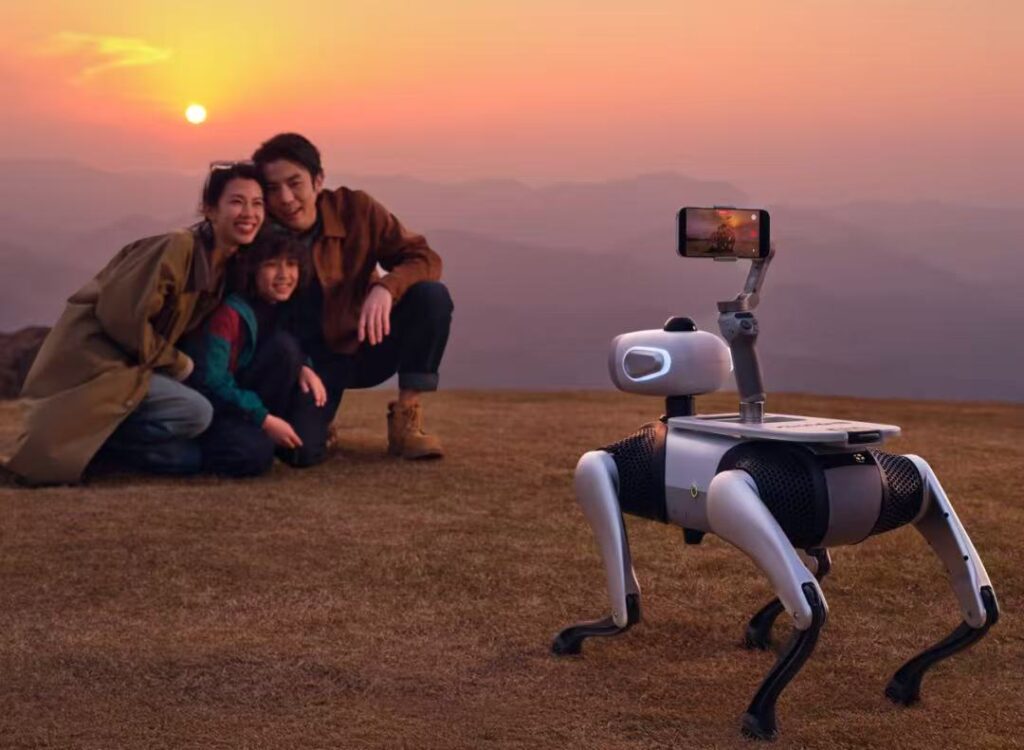
In the past year, the exposure density of robotic dogs has continued to rise, yet products that have truly completed the step from "interest to purchase" are virtually zero.
This is indeed the dilemma faced by robotic dogs thus far: most consumer-grade models can only dance or perform backflips. While they boast advanced cerebellar motion control, they quickly lead to aesthetic fatigue. Moreover, the robotic dogs already in use are mostly products designed for security and industrial scenarios.
Furthermore, robotic dogs that rely on remote controls and preset programs struggle to genuinely assist users in daily life scenarios. This naturally leads to a question in users' minds: Is it taking care of me, or am I taking care of it?
Over time, a misconception began to spread among many: despite consumer demand, no company has been able to bring robotic dogs into consumers' hands on a large scale.
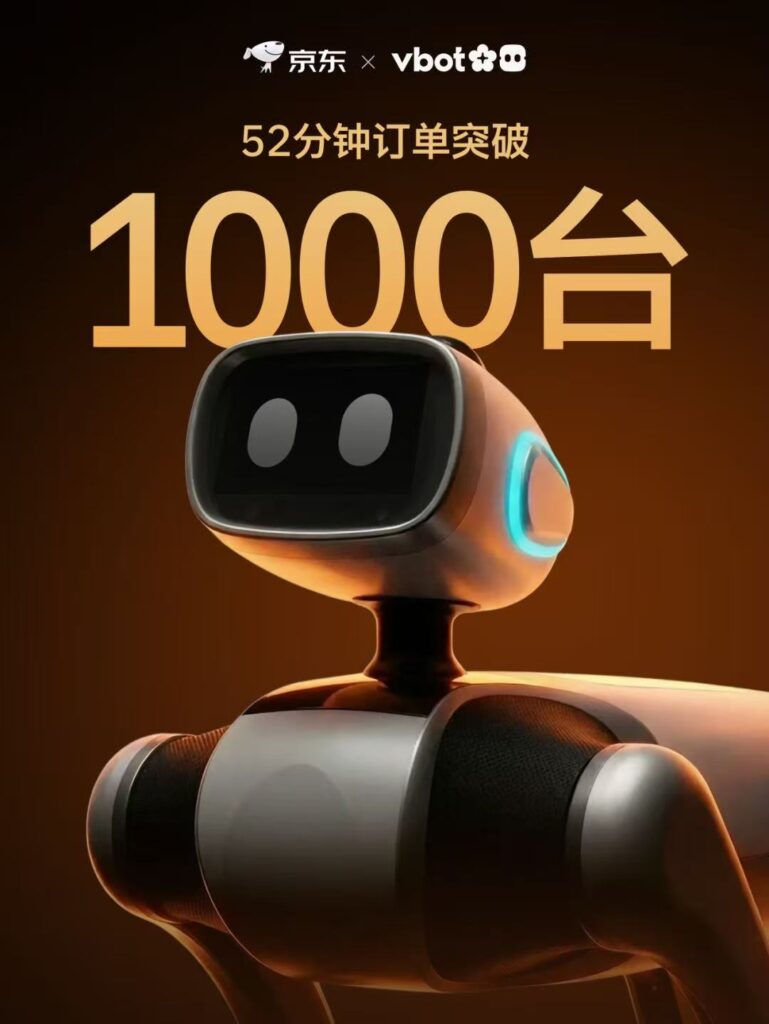
Now, this so-called "consensus" is being shattered. On December 23, Vbot (Vita Power) officially launched the Vbot Super Robotic Dog, also known as "Big Head BoBo." Within just 52 minutes of its launch, the Vbot Super Robotic Dog, priced at an early-bird rate of 9,988 RMB, surpassed 1,000 orders, achieving over ten million RMB in order volume on its first day.
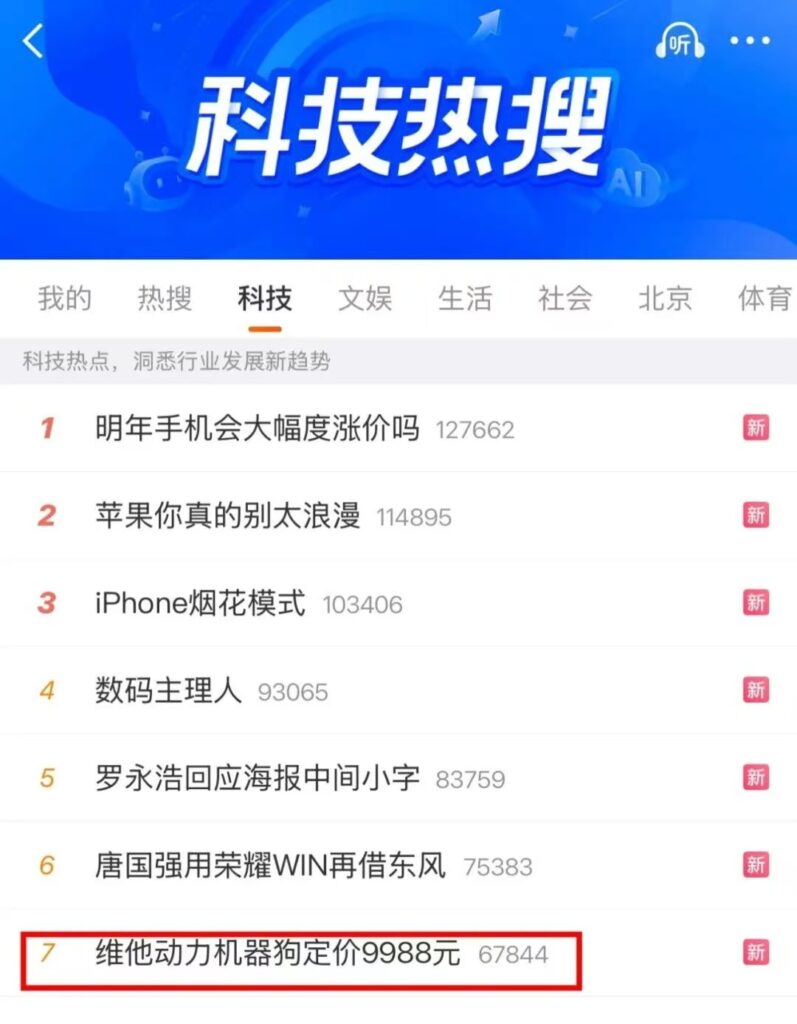
As a consumer-grade embodied AI product, Big Head BoBo's attention far exceeded expectations. The press conference garnered over ten million views across all live-streaming platforms, and within five hours of streaming, it ranked seventh on Weibo's Technology Hot List.
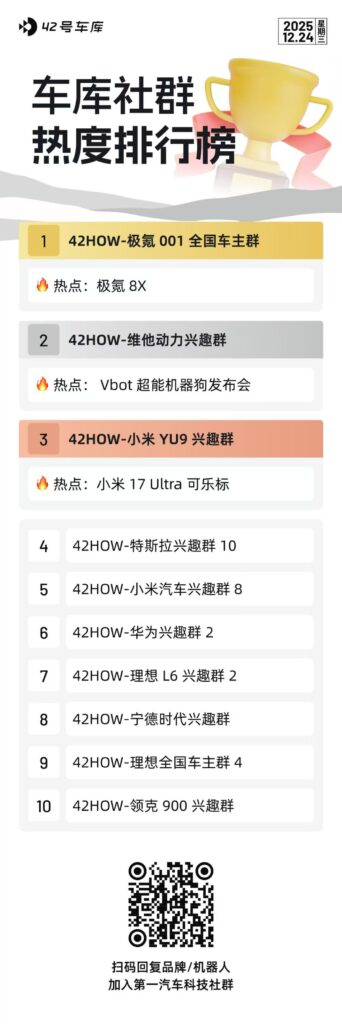
The sustained enthusiasm from users has far exceeded market expectations. In the Vbot Power interest group chat established by 42 Radio Wave, members are eagerly competing to become Vbot's founding "parents."
After the group was created, user numbers rapidly grew to over 300, making it the second most popular among hundreds of self-built community groups, surpassing interest groups for brands like Xiaomi and Huawei. The "parents" who have already placed orders are actively envisioning what they will do with their devices once received.
It also happened to be the first anniversary of Vbot Power yesterday. In response to the enthusiastic market feedback, Vbot Power stated in a "Letter to Vbot Founding Users" that it would establish one-on-one service channels with each pre-order user within a week and answer any questions regarding Vbot.
According to the plan, the team will open public beta registration to all pre-order users on January 12 next year. The first batch of public beta users will receive their products before the end of January. Subsequently, between January and March, the public beta is expected to test a cumulative scale of 500 units. Starting in March, pre-orders will be locked in, and deliveries will proceed according to the order of locks.
Ditching the remote control, the "Big-headed BoBo" designed for real-life scenarios demonstrates that the market potential for consumer-grade Embodied AI is enormous; the key lies in whether you have truly addressed user needs.

Why Users Are Truly Buying In
Vbot broke through 1,000 orders in just 52 minutes. Such a sales velocity is unprecedented for this type of Embodied AI product.
However, if you simply interpret this as the product being popular, you are underestimating its actual significance. Between a user wanting something and being willing to buy it lies a careful assessment of the product's value. Users may be attracted by flashy features, but it is difficult for them to truly spend money.
What sets Vbot apart is that it shows users clear value: the robot dog is not merely a performance tool, but a companion that integrates into daily life and provides practical utility.

After the launch, Horizon Robotics Founder and CEO Yu Kai secured the #001 Vbot unit. He stated that Vbot is powered by the Dianguan (Sweet Potato) robot chip with 128 TOPS, adding, "Walking your dog in the neighborhood, no longer worrying about head-turns."
In the WeChat group 'Vita Power' established by 42 Wave, numerous users have become founding 'parents,' looking forward to Vbot truly becoming a member of their families.

A significant portion of users want Vbot to accompany their children in play, making the remote-control-free, intelligently following Vbot an ideal companion for kids. In outdoor settings, Vbot can use its load-bearing capacity to pull children riding balance scooters around, becoming the "coolest kid" in the neighborhood.
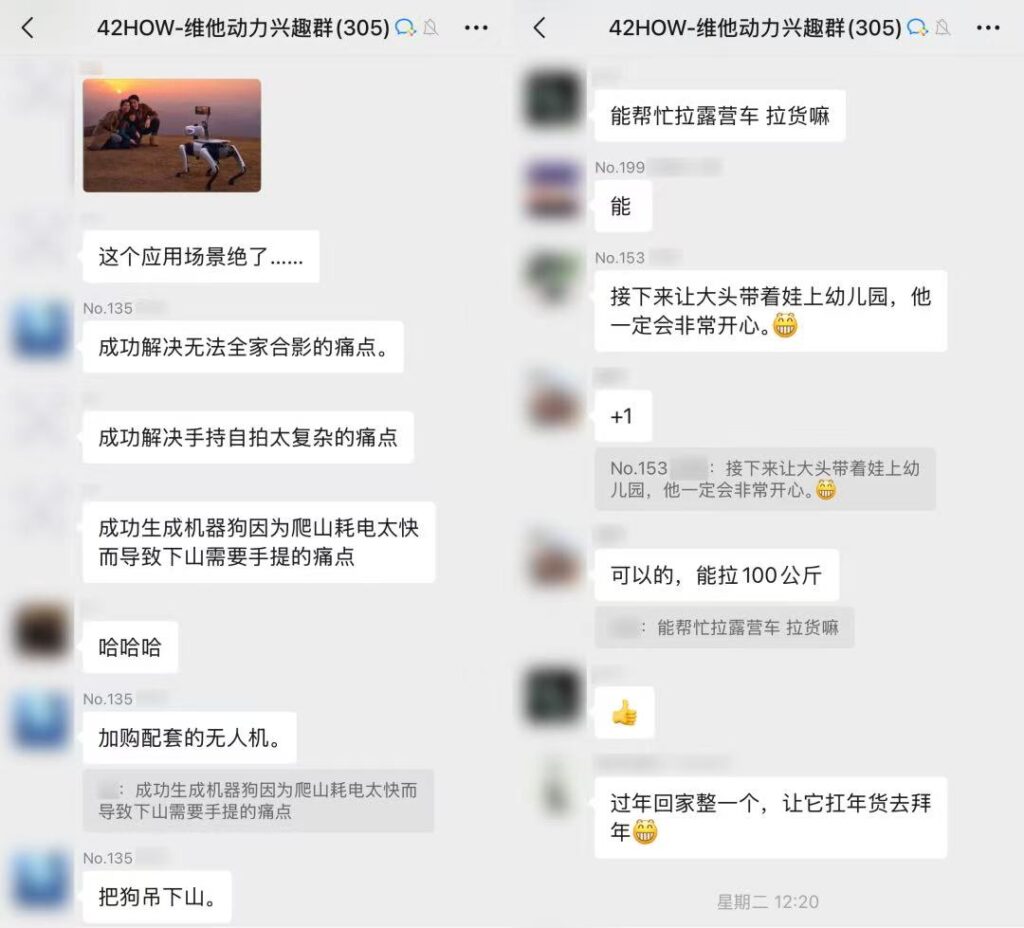
Many users also hope Vbot can assist them with real tasks in daily life scenarios. Whether as a weight-bearing assistant when carrying luggage or as a follow-cam partner for recording life moments, it is clear that what people truly desire is an embodied AI product that meets their needs and has practical applications.
On this basis, users are also very concerned about whether Vbot can sustainably and stably serve as a companion in daily life, making computing power and battery endurance key concerns for everyone.
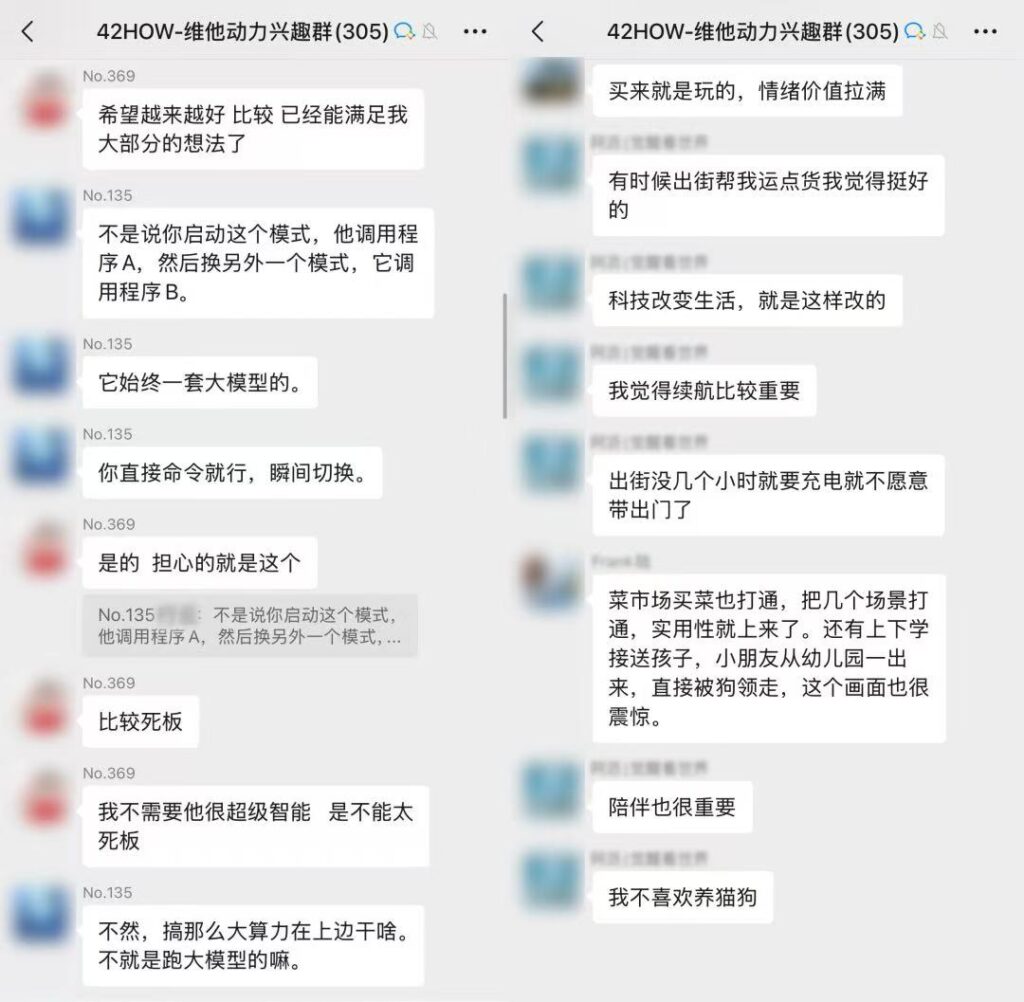
Leveraging 128 TOPS of edge-side AI computing power, Vbot can run large-scale models locally in real time, ensuring fast response speeds. By reconstructing the E/E architecture and reducing the weight of joint modules, Vbot ultimately achieved a battery capacity of 594 Wh, providing a comprehensive battery life of approximately 5 hours.
With this foundation, users feel confident taking Vbot out of the house for leisurely walks. After all, in traditional embodied AI products, shouting at a dog-like robot with sluggish responses outdoors or carrying a dead "burden" home due to lack of battery can be quite embarrassing.
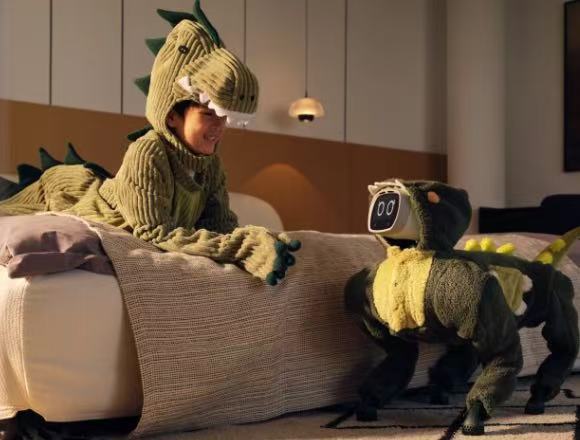
For users, they genuinely want to treat Vbot as a true family member, similar to how they treat pet dogs. Users look forward to dressing Vbot in fashionable outfits and giving it a unique name, making it a playmate for children.
More importantly, Vbot is equipped with 128 TOPS of computing power, LiDAR, and a 5-hour battery life simultaneously, all for just 9,988 yuan.
It's worth noting that many humanoid robots priced at over 100,000 yuan do not even reach this level of hardware configuration. Moreover, the sub-10,000-yuan Vbot can be deployed in specific daily-life scenarios, becoming a member of the household. Therefore, it is understandable why user enthusiasm has been so high.

Quadruped Robots as the Carrier for Consumer-Grade Embodied AI
Currently, the embodied AI products that have truly reached consumers first are not humanoid robots, but quadruped robots.
This year, the entire industry has invested significant resources into humanoid robots; however, their deployment in B-end scenarios like factories often faces stability issues, let alone entering C-end scenarios such as homes, which are far more complex and variable.
Against this industry backdrop, Vita Power's decision to enter the market with a quadruped form factor is essentially a highly rational product judgment.
Compared to humanoid robots, quadruped robots have a stable hardware structure and relatively mature technology, with many hardware choices already converging.

After all, if targeting the consumer market, mass production is an unavoidable issue. Only when the hardware is sufficiently converged can robots achieve the mass-production foundation needed to enter users' homes at scale, which is one of the key reasons Vbot has become a carrier for consumer-grade Embodied AI.
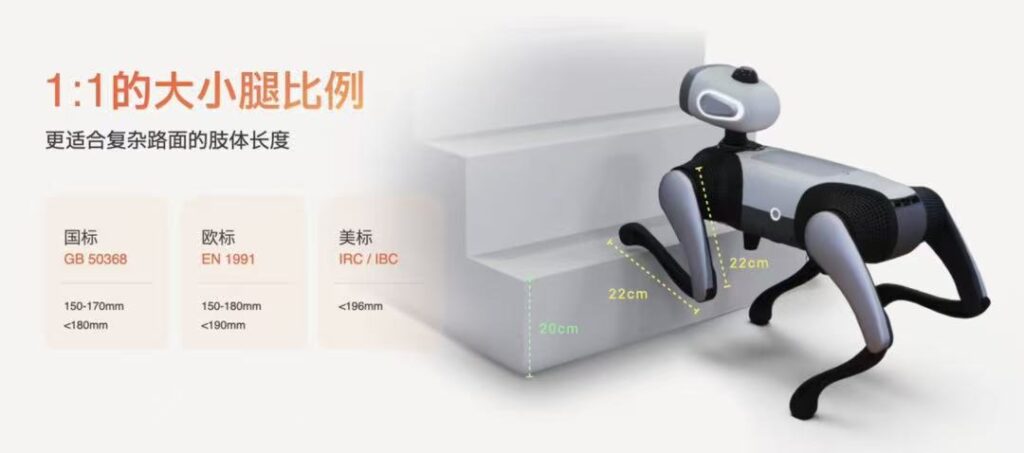
In complex home environments, Vbot possesses all-terrain mobility like a pet dog. Compared to humanoid robots, it is more agile in tasks such as climbing stairs and quickly avoiding obstacles.
Vbot's ability to act autonomously allows users to focus more on themselves. Even without direct intervention, under a full-scenario spatial foundation model, Vbot can think like a human. After decomposing sensor data into geometric and semantic information, Vbot can simultaneously understand the real-world physical environment and plan reasonable paths.
More importantly, Vbot possesses the ability to align with users' genuine needs. Therefore, beyond technological maturity, users are likely to proactively embrace it because their own needs will be met.
Faced with such an intelligent robot dog, users instinctively know how to play with it, requiring little education on how to interact, because humanity's understanding of 'dogs' is embedded in intuition.
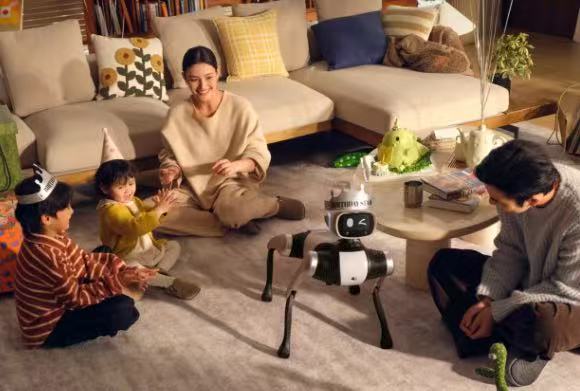
The moment you see it, you instinctively do a few things: talk to it, expect it to follow you, and even subconsciously give it a name. And when this companionship persists, it is no longer just an Embodied AI product; it gradually becomes part of the household order.
When technological maturity, mass production feasibility, adaptation to home environments, and humans' innate emotional cognition all converge on the quadrupedal form, the Vbot Super Robot Dog that hits user needs truly enables consumer-grade embodied AI products to break through to the mainstream.

The Consumer-Grade Embodied AI Era Has Truly Arrived
Many technological waves are overestimated in their early stages, but consumer-grade Embodied AI is the opposite: it has long been underestimated. This is not because the technology is lacking, but rather because it has never been seriously treated as a 'consumer product'.
For consumer goods, the issues that cannot be bypassed are always: what needs of consumers can it satisfy, what value can it bring, and whether its price is appropriate.
So when "Big Head BoBo," which can autonomously accompany users, help with childcare, and serve as a luggage carrier and on-location shooting assistant outdoors, was released at a price of 9,988 yuan, people's reactions were so intense.
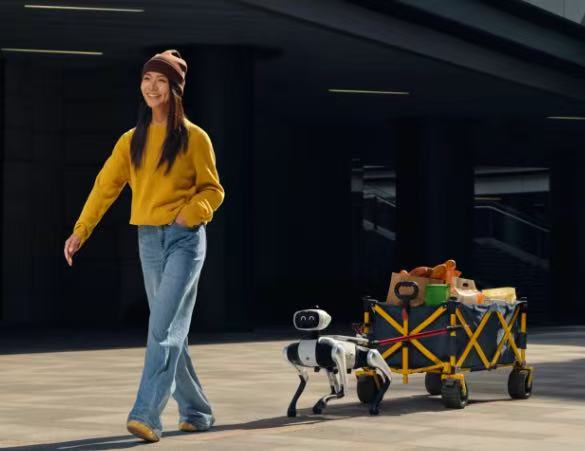
On its first day, it secured orders worth over 10 million yuan. This scale of transactions has allowed Vbot Dynamics to define the threshold for consumer-grade Embodied AI products: centering on user needs.
Vbot, an Embodied AI product designed as a consumer good from the outset, actually represents a larger turning point behind the scenes: when the product ecosystem begins to be built around users rather than engineers, consumer-grade Embodied AI gains the possibility of being driven by market spontaneity for the first time.
In the past, Embodied AI was more like a performance competition, with complex movements being the primary focus of competition. However, once they truly enter the consumer market, showing off skills will no longer be the core; whether they can integrate into users' daily lives and provide better utility is the question products urgently need to answer.
From this perspective, Vbot's significance goes beyond merely launching a product with market potential; it has pioneered a replicable path for consumer-grade Embodied AI.
While the industry is still discussing when robots will enter homes, Vbot is already answering another question: when they do enter homes, what identity should they assume.