
Robots Are Moving Toward Real-World Applications, But Still Need a Good "Hand"
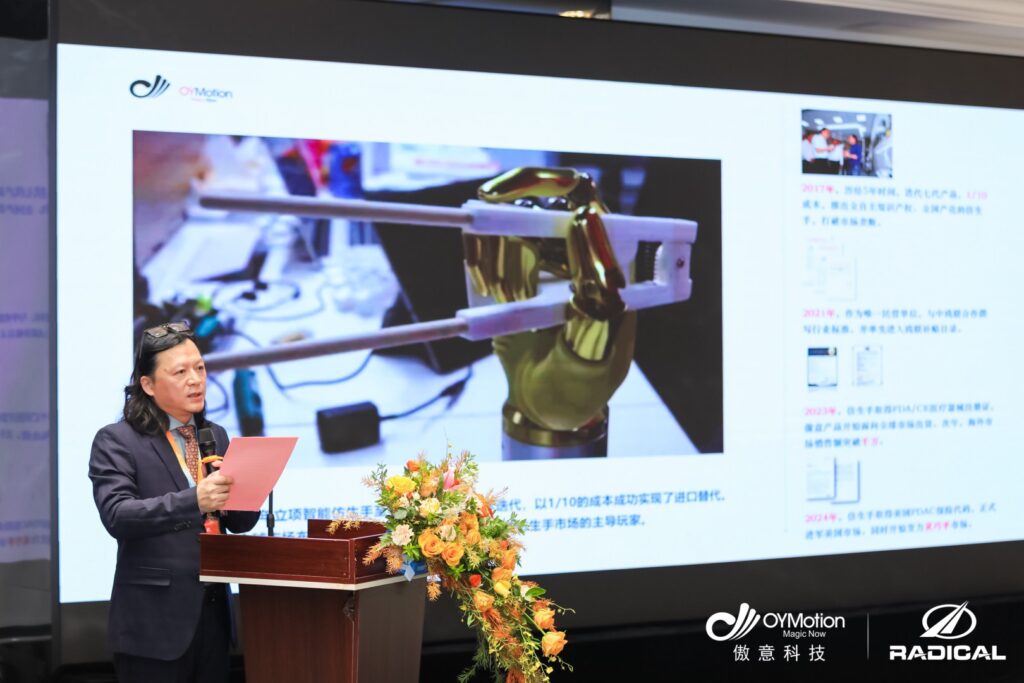
On December 27, the "Orayten Technology 10th Anniversary and Embodied AI Strategic Cooperation Summit" was held in Shanghai. During the event, Orayten Technology signed a strategic cooperation agreement with Reddick Group. Ni Hualiang, founder and chairman of Orayten Technology, also shared the company's progress over the past decade in fields such as Embodied AI and brain-computer interfaces.
Today, as the Embodied AI industry continues to develop, the bottlenecks facing the entire industry are not only in software; the hardware sector has also encountered technical challenges in convergence and difficulties in large-scale mass production.
As one of the most valuable components in a complete robot, dexterous hands can account for about 20% of the robot's cost. They represent a core hardware obstacle preventing robots from entering application scenarios such as factories. Elon Musk has previously mentioned multiple times that making a good robot requires excellent dexterous hands.
Therefore, 'dexterous hand' was a frequently mentioned term during the summit. In his speech, Ni Hualiang revealed that the company's dexterous hands currently serve around 200 downstream customers. The company already covers more than ten SKUs across three major product series.
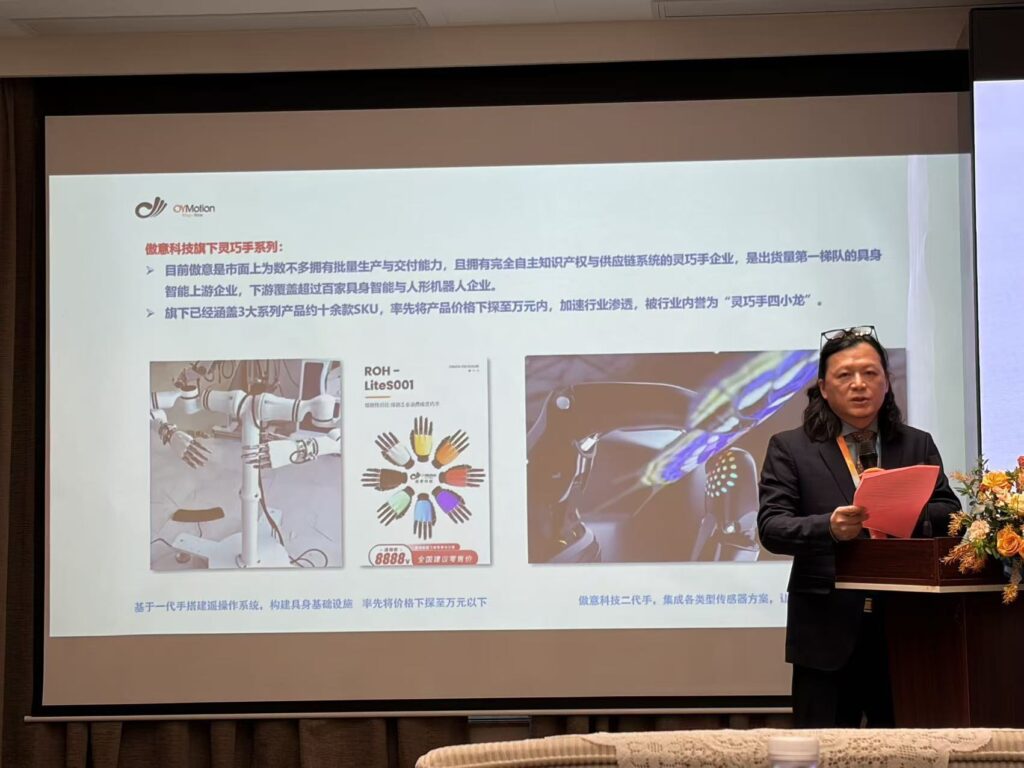
In terms of specific products, Orayten Technology's 'Full-Scenario Dexterous Product Matrix' mainly includes the ROHand series of robotic dexterous hands and the OHand series of intelligent bionic hands. The ROHand series has been gradually iterating.
Among them, the ROH-LiteS001 is a small-sized dexterous hand weighing only 457 grams, with its price brought down to under 10,000 yuan. The ROH-AP001 adopts a highly integrated design, featuring an industrial-grade bionic structure that offers flexibility and manipulation precision close to human fingers. Equipped with a high-density dot-matrix tactile sensor, it can perceive subtle pressure changes ranging from 0.1 N to 25 N in real time, balancing flexible operation with stable load-bearing capacity.
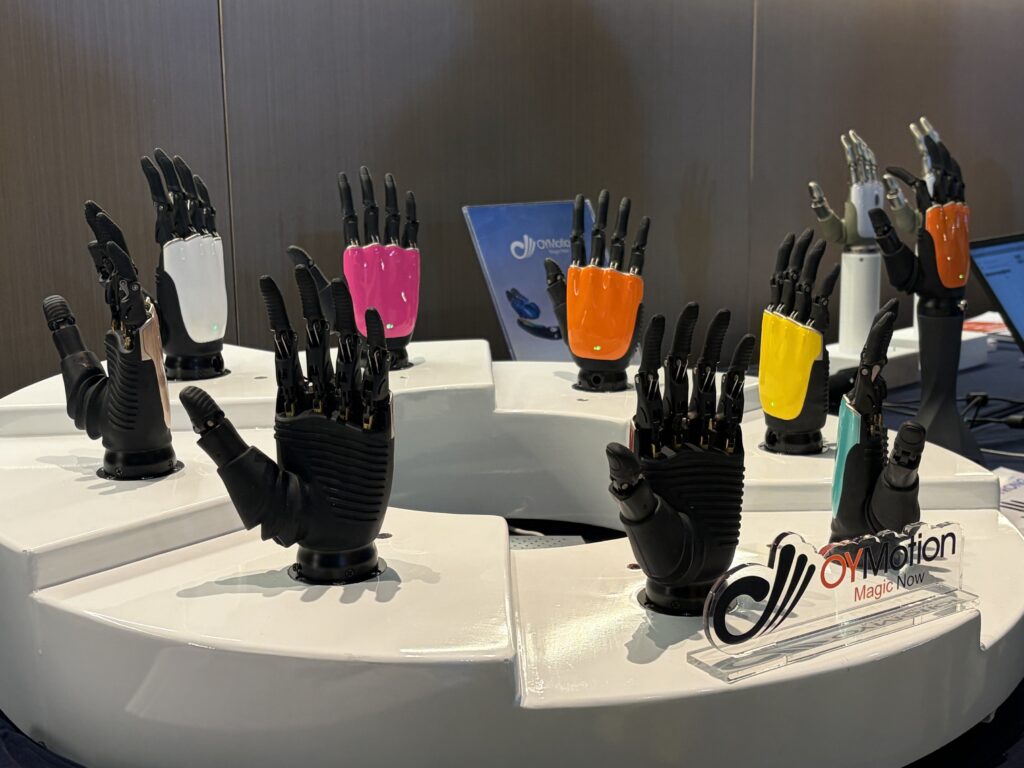
In addition, the OHand intelligent bionic hand is primarily designed for amputees. Based on core technologies such as the company's independently developed non-invasive electromyographic nerve signal sensor array, it can actively and naturally switch by perceiving users' gesture action intentions, simulating human hands to perform basic actions such as side grip, side pinch, pointing, holding, and lifting.
Driven by both technological iteration and market demand, the activity level of the entire Embodied AI industry continues to rise. Previously in November, Laidike, a veteran automotive bearing enterprise, exclusively invested in Aoyi Technology's B3 financing round, crossing over into the Embodied AI industry.
At today's summit, Aoyi Technology and the Laidike Group also completed a strategic cooperation signing. Through joint efforts, the two parties will connect the entire industrial chain from basic components to final execution units, achieve "dual-engine" empowerment, and jointly explore the trillion-level market for Embodied AI.
Shen Renrong, Chairman of Laidike, stated in his speech that this cooperation took only a few months from contact to implementation, forming a multi-level cooperation pattern with a scale of 300 million RMB, including a 160 million RMB strategic investment and the establishment of a joint venture company with 100 million RMB.
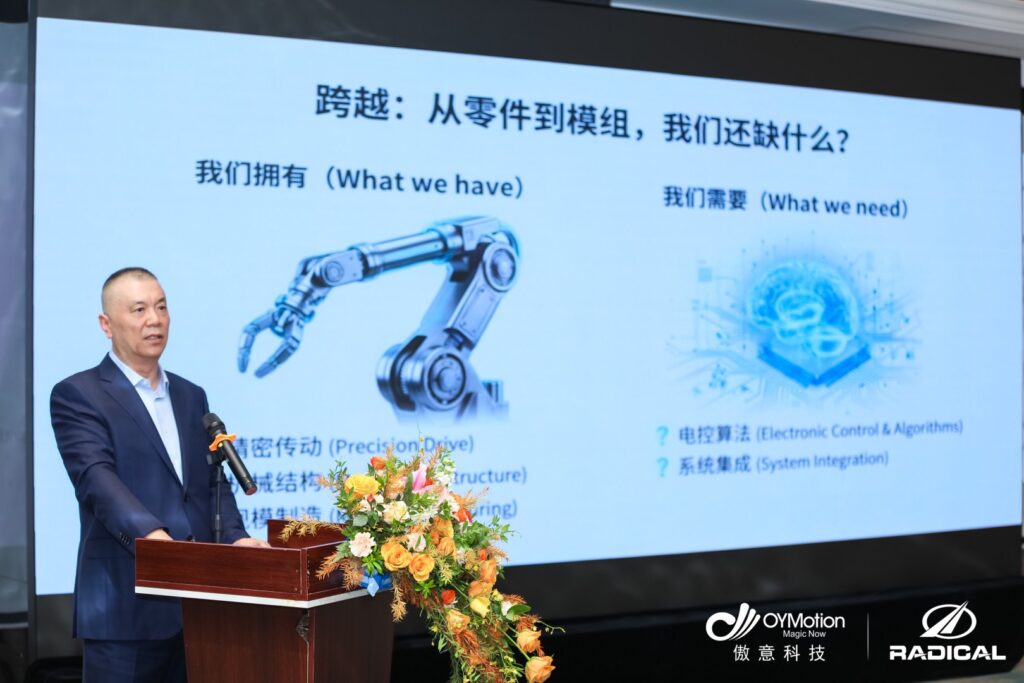
Additionally, during the roundtable forum session set up at the conference, the bottlenecks in intelligence and commercialization encountered in the development of the Embodied AI industry became key topics. Guests unanimously agreed that breakthroughs in core technologies and industrial ecosystem synergy will become the key driving forces for industry development.
From flexible operations in industrial manufacturing to bionic adaptation in medical and elderly care, the dexterous hand, as the core carrier of the "last kilometer" of interaction between robots and the physical world, its technological maturity and industrialization speed also affect the upper limit of robot capabilities. With the influx of more cross-industry forces, the synergy of core component industries, and the continuous improvement of the ecosystem, Embodied AI is gradually moving towards a new stage of large-scale application.