
Star Team with 1.7 Billion RMB in Funding Debuts Embroidery Robot
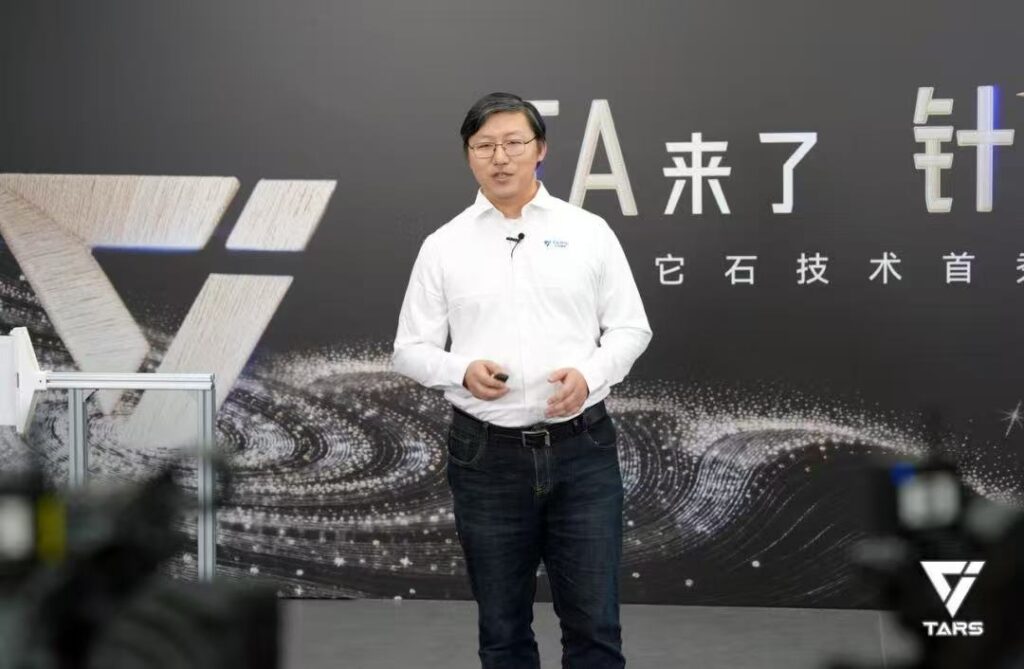
Recently, Embodied AI company Tashi Zhizhang held its first full-stack technology release since its founding, including a human-centric embodied data and model paradigm, the TARS AWE 2.0 model, and a hardware system born for AI.
During the launch event, Tashi showcased the world's first robot capable of completing hand embroidery. Through threading and stitching, it embroidered the company's logo, demonstrating its capabilities in manipulating flexible materials and achieving extreme operational precision.
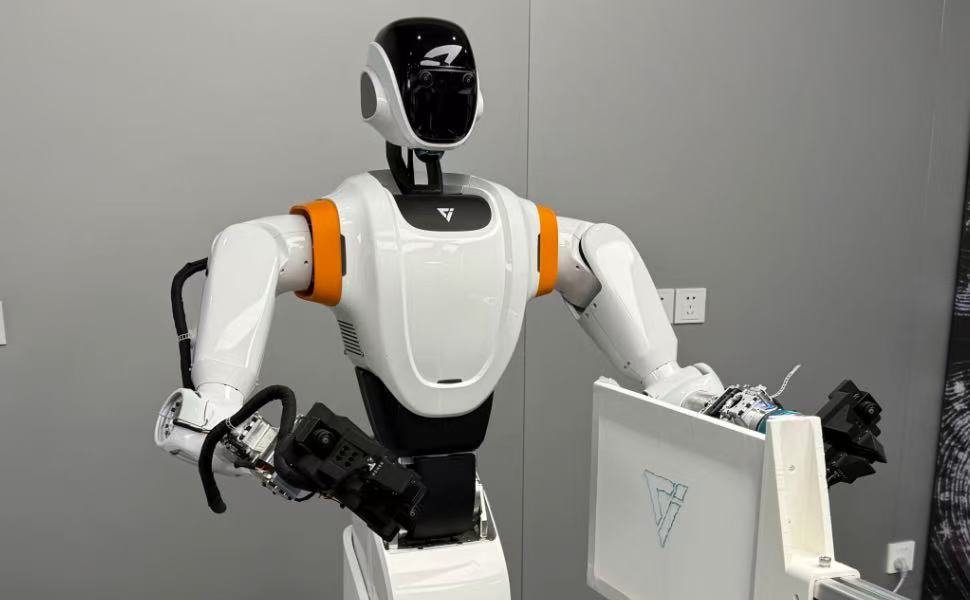
Tashi Zhizhang Founder and CEO Dr. Chen Yilun revealed that the embroidery scenario represents an extension of the robot's capabilities, providing an intuitive demonstration of its performance in fine and complex tasks.
While many robots excel at tasks like handling and sorting, they struggle with fine, complex, long-horizon operations such as embroidery. Beyond hardware challenges, the critical issues are a lack of perception data and insufficient algorithmic capabilities.
Therefore, how to leverage data and models to effectively serve hardware in executing tasks remains a shared technical challenge for the entire Embodied AI industry.
Dr. Chen Yilun stated: "The ultimate test standard for all technologies is whether we can create truly reliable, efficient, and scalable 'useful' robots."

Seamless Hardware-Software Synergy
Faced with the challenge of achieving zero-distance synergy between hardware and software, Tashi has provided a systematic solution integrating DATA, AI, and PHYSICS.
First is the human-centric embodied data and model paradigm. Under this paradigm, through hardware-level innovations, Tashi has built a lightweight, fully modal, wearable embodied data collection system called SenseHub, allowing data collection to naturally integrate into real-world production and life scenarios.
This system deeply fuses visual, tactile, and hand motion data, continuously recording authentic, high-quality operational behaviors without altering human operation methods or requiring additional collection environments.
Furthermore, regarding models, Tashi has constructed TARS AWE 2.0 based on massive real-world data, building a cognitive model of the world for robots through spatial perception pre-training.
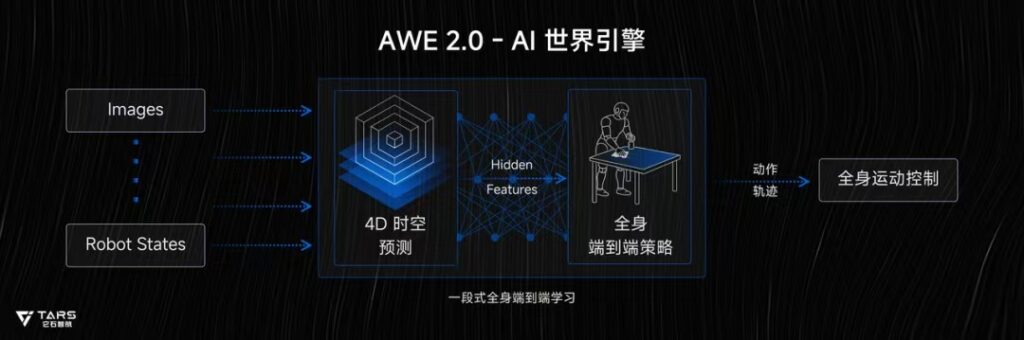
It is reported that its generalization capabilities enable efficient transfer of core skills across different scenarios. This means that in actual robot deployment, resource waste caused by repeated training can be reduced.
Beyond data and models, itShi also introduced a hardware ecosystem designed specifically for AI, using algorithmic capabilities to raise the upper limits of system performance.
Traditional robot hardware typically merely adapts to algorithms in a simplistic manner, focusing monotonously on performance. This makes it difficult for them to truly collaborate with algorithms during practical training applications, resulting in outcomes that fail to meet expectations set during training.
Dr. Ding Wenchao, Chief Scientist at itShi, emphasized the importance of first-principles thinking: determining the required magnitude of data, how to collect it, and identifying the single unique path forward. This includes defining which problems the model must solve, thereby guiding the design of both data and model closed-loop systems. The reason for developing our own hardware is that we discovered the model can only truly exert its capabilities if the gap between Digital and Physical domains is minimized sufficiently.
The A series (bottom left) and T series (bottom right) core robots showcased on-site are centered around the design principle of 'minimizing the digital-to-physical gap.' The complete system integrates fully self-developed core components and super-sensor combinations, enabling algorithmic capabilities from the digital world to be accurately and stably mapped onto real-world physical operation scenarios.
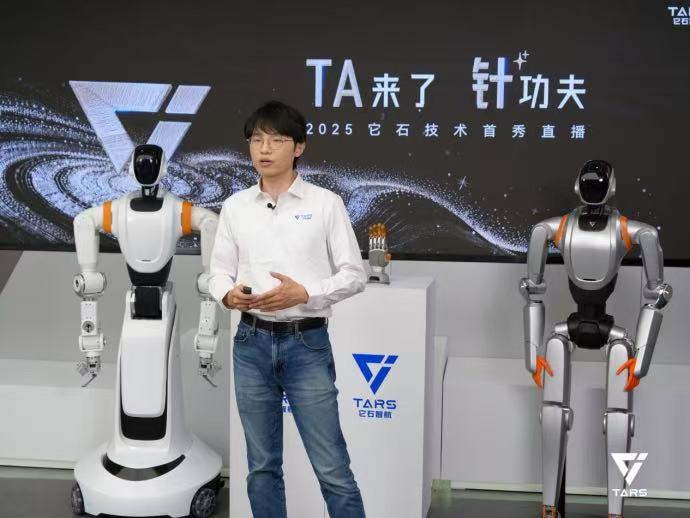
From human-centric embodied data and model paradigms, to the AWE 2.0 model, and now to this hardware ecosystem born for AI, itShi's technology release offers the robotics industry a comprehensive solution integrating software and hardware.
What they have constructed is a technical curve where generalization capabilities continuously improve with scale, possessing long-term compounding effects.

Addressing Real Needs
As an embodied AI company, itStone Zhixing was founded in February this year. In March and July of the same year, itStone Zhixing completed its angel round funding of $120 million and its angel+ round funding of $122 million, respectively. The two rounds totaled $242 million, approximately equivalent to 1.7 billion RMB.
Chen Yilun stated that from its inception, itStone has focused on three key areas: super algorithms, super bodies, and super intelligence.
Regarding the robot body, itStone has finally unveiled its own humanoid robot. However, they have not yet disclosed plans for mass production.
itStone's two series of robots come in wheeled and bipedal forms. Regarding the distinction between these two humanoid robot forms, Chen Yilun believes that wheeled and bipedal models will coexist for a long time. They merely represent different modes of locomotion. If your application scenario involves a very specific business form, opting for a wheeled robot offers significant advantages. However, the advantage of a bipedal robot is that its mobility is not restricted by the scene.
In terms of application scenarios, Chen Yilun pointed out that there are three principles for considering implementation: first, addressing real needs; second, fulfilling functional requirements to solve problems; and third, targeting scenarios that are genuinely demanding and difficult.