

Beijing Humanoid Unveils Intelligent Pressure Gauge Verification Solution for High-Pressure Environments
At the 3rd Metrology Instrument and Equipment Exhibition on November 18, Beijing Humanoid launched an intelligent pressure gauge verification solution powered by its Tianyi 2.0 platform, which has completed scenario validation at ConST Laboratory and the Jiangsu Institute of Metrology. The system targets reliable pressure monitoring and metrological accuracy in industrial, energy, and equipment sectors.
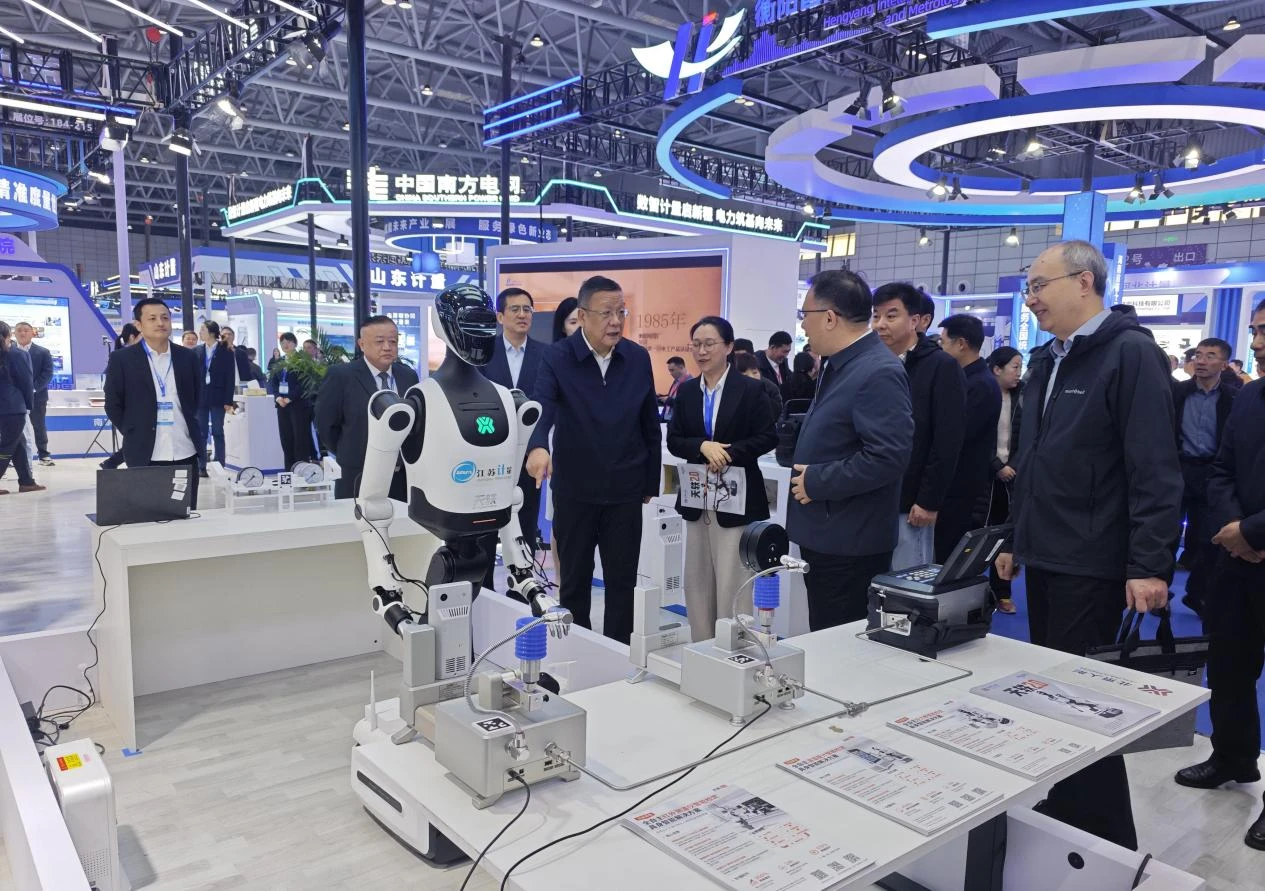
On November 18, the third Metrology Instrument and Equipment Exhibition opened. At the event, Beijing Humanoid unveiled an intelligent pressure gauge verification solution based on Tianyi 2.0. The company stated that the solution has completed scenario validation at the Beijing Conster Laboratory and the Jiangsu Institute of Metrology.
Pressure gauges are used for pressure monitoring in industries such as mining, energy, and equipment manufacturing, where verification results directly impact equipment operation and the reliability of metrology data. Traditional verification requires repeatedly increasing and decreasing pressure, mounting and dismounting gauges, and recording readings. This process is highly repetitive and labor-intensive. Operators must also work in high-pressure medium environments, facing risks such as medium leakage and equipment impact. Furthermore, manual reading and operational discrepancies can affect the consistency of verification results.
Metrology verification involves a wide variety of instrument categories, with inspection tasks and processes that are not entirely identical. Dedicated automated equipment is typically configured around fixed products or processes and may require reconfiguration when expanding to different models. Beijing Humanoid has incorporated pressure gauge verification into the hazardous operations category of its "3D Five Major Scenarios" framework.
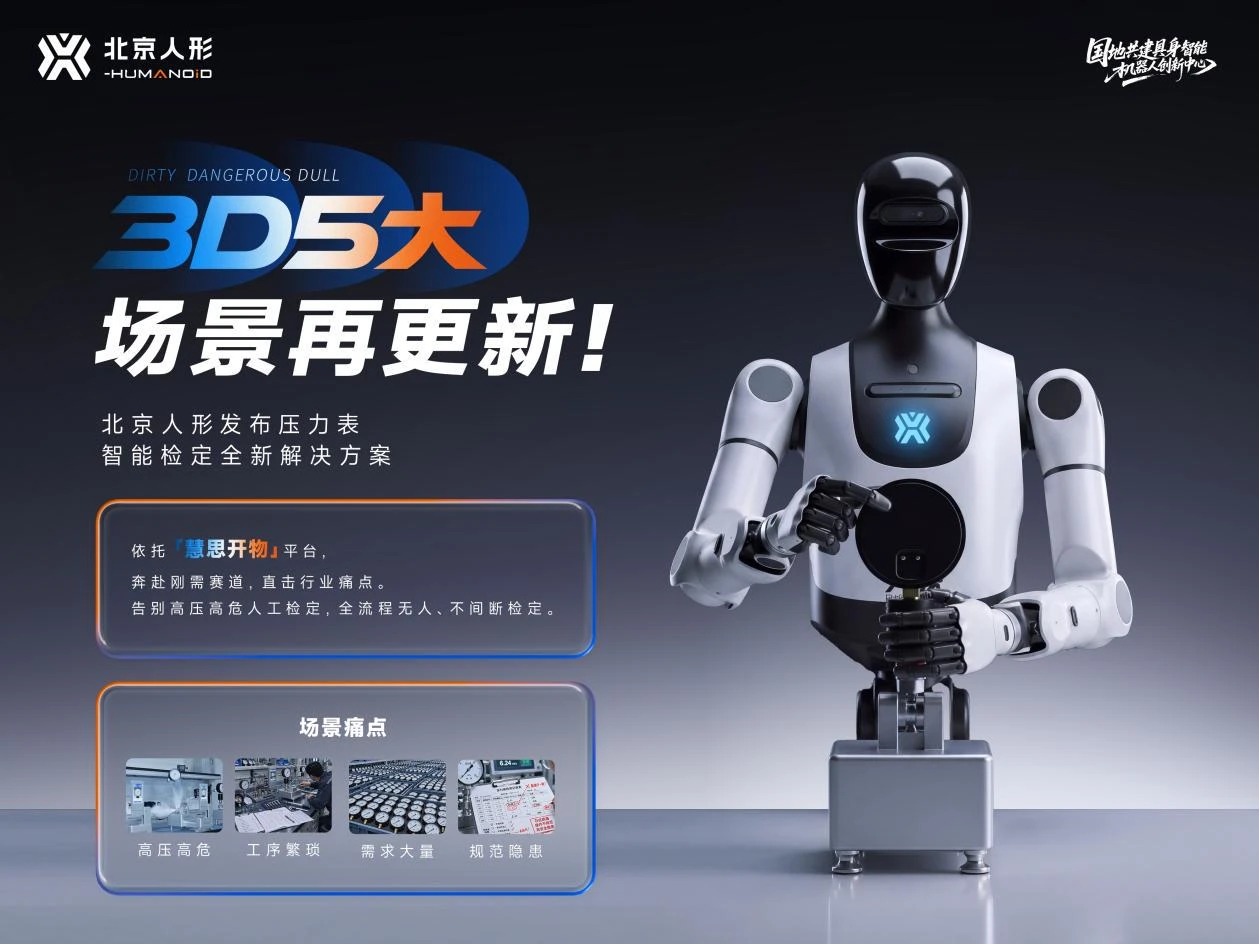
Image | Beijing Humanoid further updates its 3D Five Major Scenarios solution (Source: Beijing Humanoid)
According to Beijing Humanoid, Tianyi 2.0 can sequentially handle pressure gauge transportation, gauge mounting, coordinated testing with verification equipment, and gauge dismounting. It can also sort qualified and unqualified products based on verification results, covering the main stages from material loading to sorting. The solution uses a high-degree-of-freedom anthropomorphic hand combined with reinforcement learning algorithms, allowing the robot to perform multiple rounds of fine manipulation in front of the verification device. The company claims the operation accuracy can reach the millimeter level, with the "Huisi Kaiwu" platform providing software support for the solution.
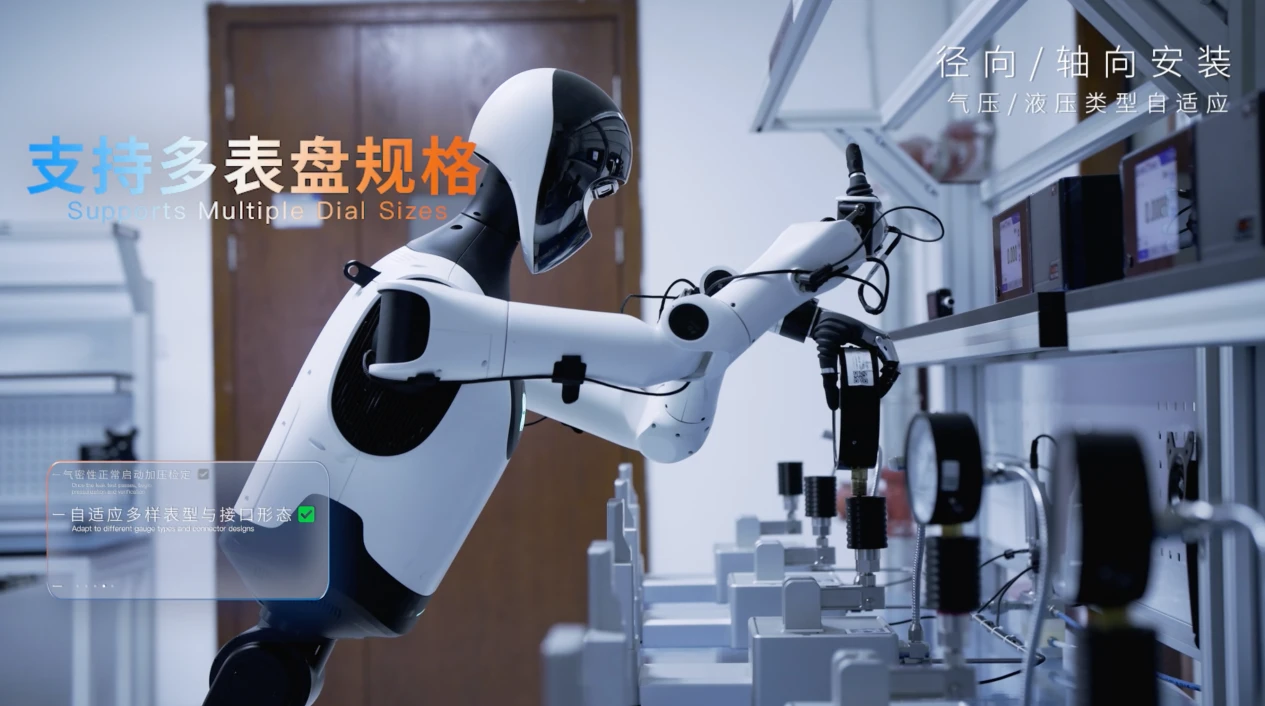
Image | Beijing Humanoid's "Huisi Kaiwu" platform empowers verification in high-risk and complex working conditions (Source: Beijing Humanoid)
The robot collaborates with the customer's existing verification equipment via an MQTT interface, requiring no modification to the original equipment. The system can adapt to mainstream pressure gauge models on the market and interface with Laboratory Information Management Systems (LIMS) to complete instrument filing, result determination, and report generation. Beijing Humanoid stated that the solution supports 24/7 continuous, high-throughput verification. Multimodal data generated during the process is retained for easy recording and querying. Continuous operation also helps reduce operational fluctuations caused by human fatigue, improving the consistency and reproducibility of the results.
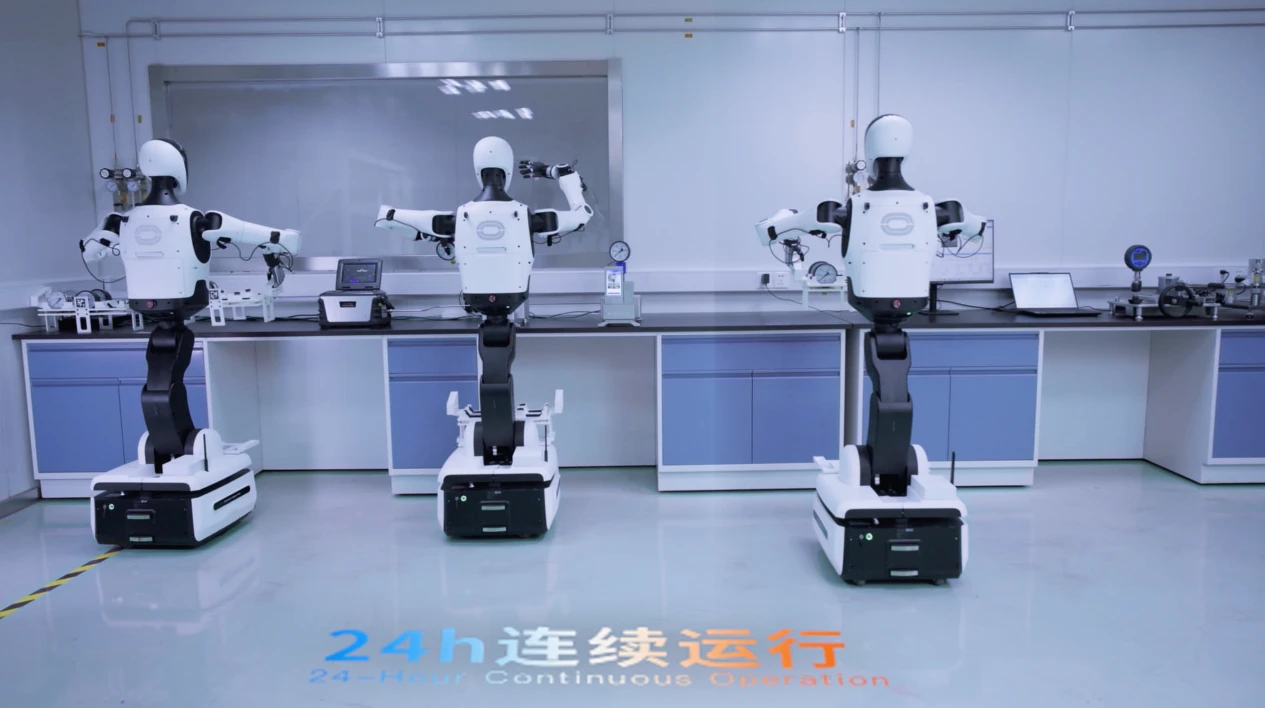
Image | Beijing Humanoid's metrology and testing solution supports uninterrupted verification operations (Source: Beijing Humanoid)
Prior to this release, Beijing Humanoid had already launched metrology and testing solutions for infrared thermometers and temperature and humidity meters. The new pressure gauge solution expands this portfolio to cover pressure instruments. According to the company, these solutions target metrology institutes, corporate metrology and quality inspection departments, and third-party calibration facilities.
Found an error? Tell us