
Musk's AI Tops Korean League of Legends Leaderboard: Is Optimus Gearing Up for Its 'Ultimate Brain'?
Recently, a mysterious player with top-tier gameplay and a win rate as high as 95% appeared on the Korean server of League of Legends, sparking buzz in both the gaming and tech communities. Given Musk's earlier claims that his AI model Grok 5 would challenge professional teams, many speculate this mysterious player is an AI.

Based on OB data, the player '택배기사 (Courier)' of this account started matches after 23:00 on January 8. Primarily playing mid and jungle, they reached the top five in the Korean server ranking in just 51 hours and a total of 56 games, even briefly topping the Korean server with a 95% win rate. In these 56 games, this 'player' lost only four times, winning 52, for an overall win rate of 92%.
There were days when this 'player' barely rested, starting games at 12 noon and staying online until 2:30 AM the next day—a stretch of 14 hours.
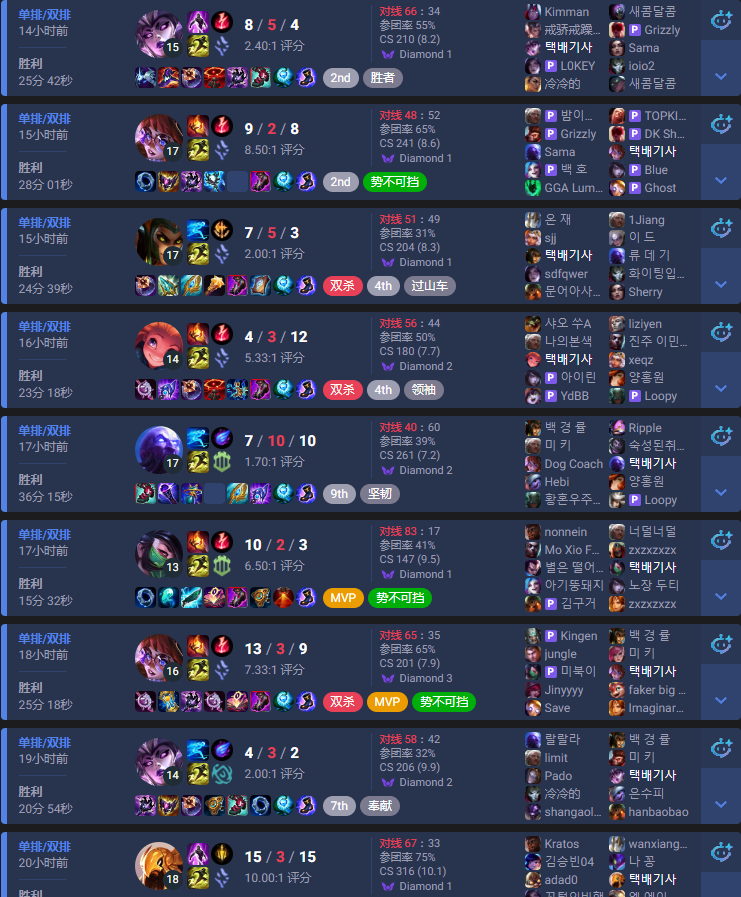
For a competitive game like League of Legends, maintaining competitiveness in high-level matches requires sustained focus. Wave 42 asked the gamers around him, who stated that maintaining high-level performance for 14 consecutive hours is simply impossible; human players inevitably make some operational errors during prolonged, intense matches. Yet this mysterious player consistently delivers high-level performances, with mastery over 22 heroes and an undefeated record in the jungler role.
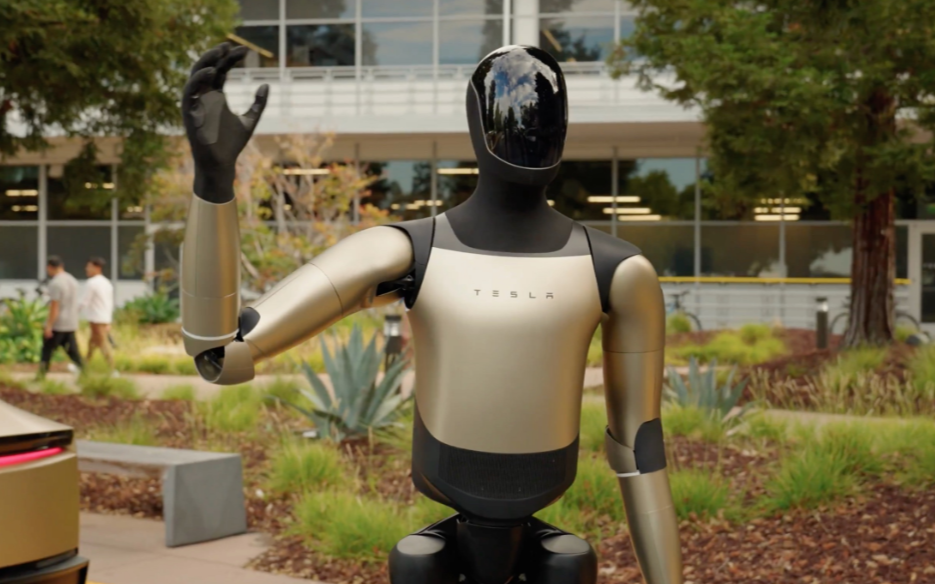
To this day, many players are still debating whether this account is operated by AI. Yet, there is a more significant question to consider: If Grok 5 can truly master complex MOBA games, will Musk's Optimus robot be on the verge of acquiring its 'strongest brain,' capable of adapting to the real world? After all, he has stated that Grok 5's vision-action model will be directly applied to Tesla's Optimus.

Games as a Training Ground for Robot Models
In fact, the underlying logic for an AI to control in-game characters and to control robots is essentially the same: both must handle various dynamic scenarios, formulate corresponding decisions, and then execute actions. Therefore, regardless of whether that player is an AI or not, games like League of Legends, which share similar logic with Embodied AI, are naturally well-suited for AI to test its autonomous decision-making and execution capabilities.
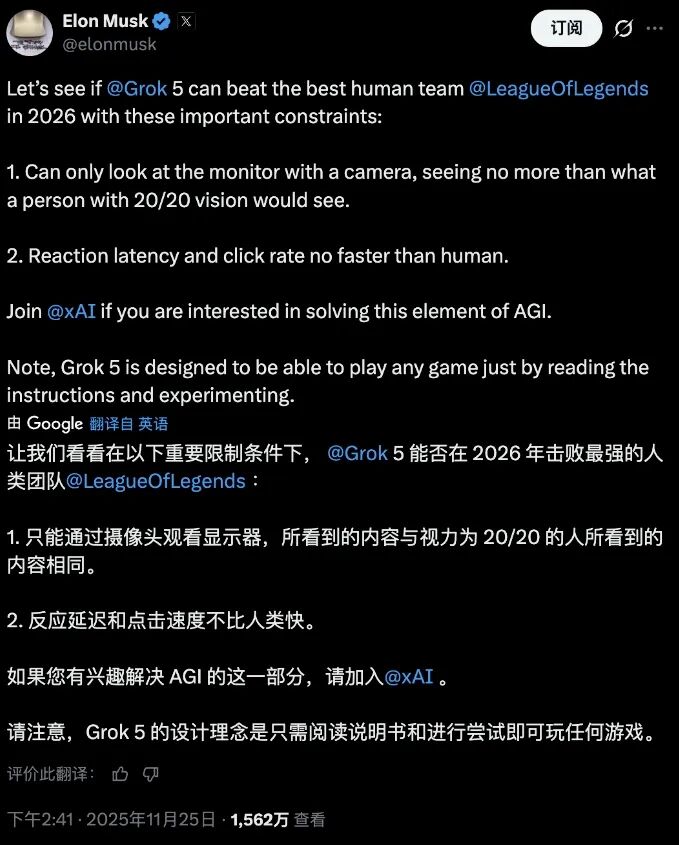
After the conclusion of last year's League of Legends World Championship, Musk stated on X that he would use Grok 5 to challenge top human teams. He also proactively established certain rules for Grok 5 to ensure fairness in the game.
First, the AI must view the monitor just like a human, seeing exactly what a person with 20/20 vision (the standard for normal vision in the US/UK system) sees. Additionally, its response latency and click rate cannot be faster than those of humans. This approach aims to force the AI to think and make decisions in a manner analogous to humans.
From a learning perspective, games serve as an ideal training ground for AI to understand generalization and decision-making capabilities. They provide high-density, highly uncertain dynamic systems, which are precisely the abilities that robot models need to refine repeatedly before entering the real world.
In MOBA games like League of Legends, AI faces a continuously changing competitive environment. Opponents learn, deceive, and make mistakes, while teammate behaviors are equally unpredictable. The model must assess the situation under incomplete information and make trade-offs within extremely short timeframes. This type of training effectively forces AI to develop a generalized understanding of the world, rather than merely memorizing specific scenarios.
From this perspective, it is not difficult to understand why Musk chose "League of Legends" as the training ground for Grok 5. Given his emphasis on directly applying Grok 5's vision-action model to the Optimus robot, it is evident that Musk's broader ambition lies in achieving deployable AGI.

The Key Lies in Deployment
In games, the intensity of information AI must handle is sufficient, yet the rules are relatively deterministic. For instance, the range and trajectory direction of each hero's skills are fixed. Through massive simulations, AI can calculate success rates with very high precision.
In the real world, quantifying various objects and environments is a relatively difficult problem. There is no naturally complete set of rules in reality for models to call upon directly. Objects may have irregular shapes, materials may change due to wear and temperature, and the same action may yield entirely different results in different scenarios.
Therefore, for robots, the real world is not precisely annotated and requires continuous correction through training.
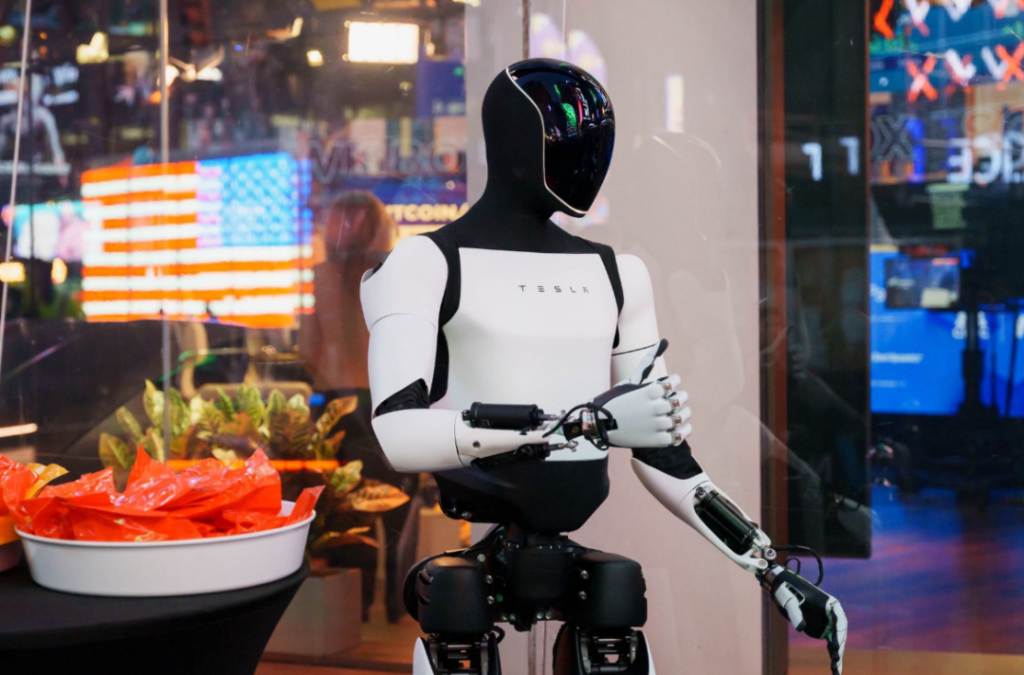
The capabilities derived from game-trained models primarily aim to provide robots with a way to think about the world. Thus, when deploying these models onto robots in real-world environments, it is essential to overlay understanding and decision-making capabilities regarding physical laws and safety boundaries to transform them into truly usable Embodied AI.
However, when AI learns to make decisions amidst uncertainty within game content, it is essentially engaging with the core structure of real-world problems. If AI can navigate complex gaming scenarios adeptly, then its understanding of the dynamic environments and unexpected events in the real world is separated by only one final step: "physical implementation."

Robots Are Not Far From Understanding the Real World
Although there is ongoing debate about whether this mysterious player is an AI, one thing is certain: shortly after its official announcement, League of Legends became a platform for Musk to train Grok 5's decision-making capabilities.
His ambition is not to create an AI that merely plays games, nor a robot that simply dances, but true AGI.
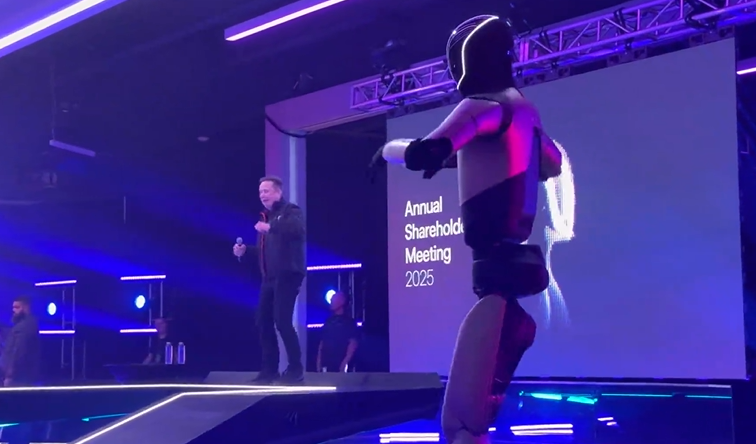
In a sense, team fights in League of Legends are themselves a highly compressed version of the real world, characterized by extremely dense information and very short decision windows, leaving almost no room for error.
When AI can dominate such an environment, what it has mastered is a survival logic for facing a complex world. Bringing this capability into reality allows robots to understand sudden risks in real-world scenarios, make reasonable responses in constantly changing environments, and thus possess practical value for implementation.
So the significance of Grok 5 lies in building a cognitive foundation for robots to handle a complex world. As this cognitive capability begins to integrate with physical robots, we can look forward to the surprises that Optimus V3 might bring in the first quarter of this year.