

RoboMIND Downloads Surpass 50 Million, With the Latest 10 Million Achieved in Just 18 Days

On October 26, the Beijing Innovation Center of Humanoid Robotics announced that the open-source dataset RoboMIND has surpassed 50 million cumulative global downloads. According to official disclosures, the most recent 10 million downloads took only 18 days; by comparison, the first 10 million downloads took 223 days, and the second 10 million took 39 days. RoboMIND was officially released as open source in December 2025, and its cumulative downloads crossed the 20 million mark earlier this September.
Download volume reflects the popularity of dataset acquisition and dissemination, but it is not equivalent to the number of independent users, nor does it directly correspond to the number of teams engaged in training or real-robot deployment. To understand this explosive growth, one must return to the intrinsic value of the dataset itself.
Dataset Scale Expanded from 100,000 Entries to Over 400,000
RoboMIND targets core robotic tasks such as dual-arm coordination, mobile manipulation, dexterous hand control, and tactile perception. When the RoboMIND v2.0 paper was published, the dataset already included over 310,000 manipulation trajectories, compatible with six robot platforms and covering 739 task types, including more than 12,000 entries of tactile manipulation data and 20,000 mobile manipulation trajectories, with a corresponding simulation dataset also made available. Official updates for this release indicate that the dataset now offers over 400,000 dual-arm manipulation trajectories, covering more than 700 practical tasks.
The integration of diverse robot models and task paradigms into a single dataset facilitates research on manipulation policy training and standardized task evaluation. RoboMIND simultaneously connects four key directions: dual-arm coordination, mobile manipulation, dexterous hand control, and high-fidelity tactile perception.
Closed-Loop Pipeline: Data Collection, Model Training, and Real-Robot Evaluation

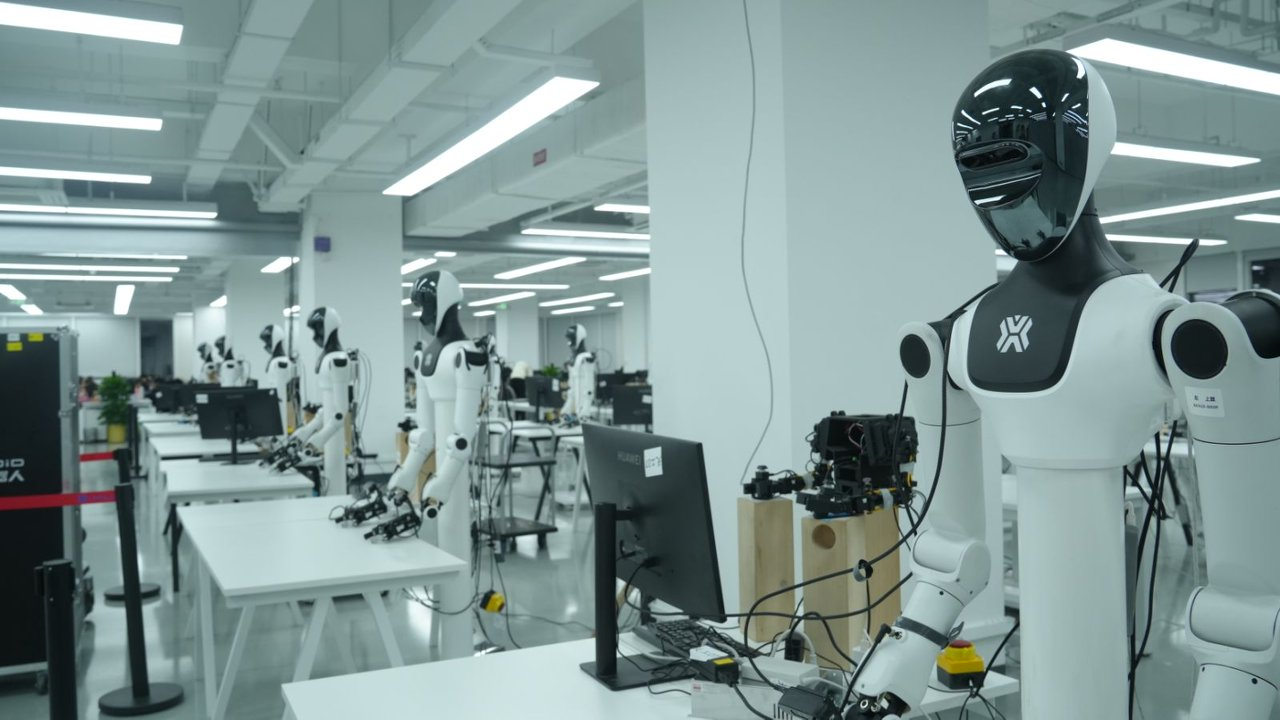
The dataset continues to expand, leveraging the embodied AI data and training base at the Beijing Innovation Center of Humanoid Robotics. The base covers an area of nearly six thousand square meters, featuring more than thirty real-world scenarios across home, supermarket, industrial, and pharmaceutical settings. It deploys forty different robot configurations, totaling over one hundred eighty robots, along with supporting equipment for body-less data collection exceeding one hundred units. The base has an annual data production capacity of 180,000 hours and has already delivered nearly thirty thousand hours of high-quality robot data to external clients.
According to the official introduction, its self-developed toolchain fully covers the entire process of data cleaning, quality inspection, annotation, model training, real-robot evaluation, deployment and launch, and data feedback; the center also spearheaded the drafting of China's first industry standard for embodied AI datasets.
Skill Platform Fills the Application Deployment Entry Point
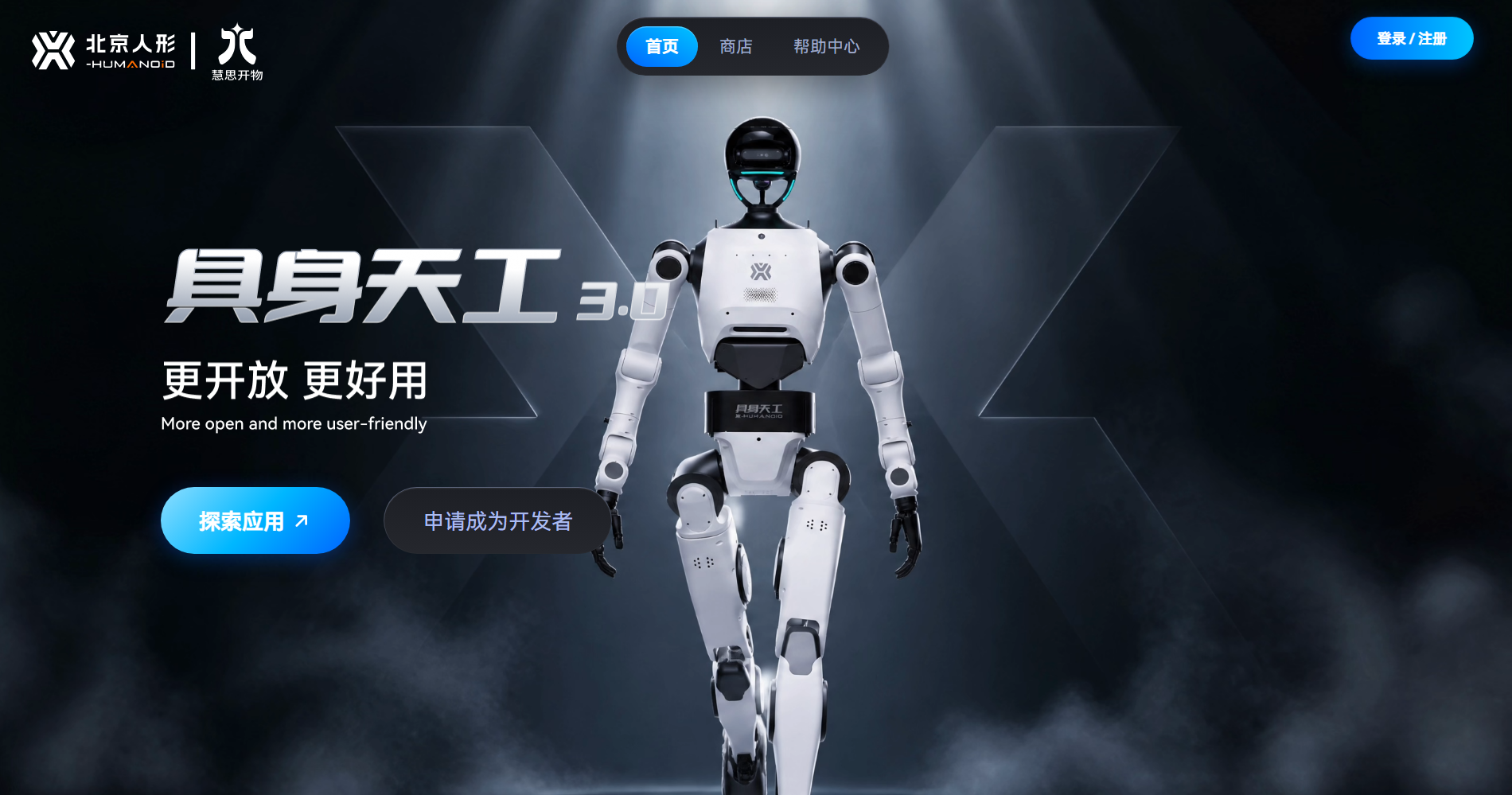
The companion low-code platform and app store, "Wise Kaiwu," launched simultaneously to complement the ecosystem. Developers can upload videos to generate robot skills and list their self-developed skills for sharing; ordinary users can directly invoke ready-made skills or freely orchestrate robot tasks within the platform. The dataset focuses on model training and performance evaluation, while the skill platform targets application building and skill invocation. Together, they cover the complete process of embodied AI from data production to real-world robot deployment.