

RoboMIND Open-Source Dataset Surpasses 50 Million Downloads, Latest 10 Million Reached in 18 Days
By Jiang Si Qi
The Beijing Humanoid Robot Innovation Center announced on October 26 that the open-source dataset RoboMIND has exceeded 50 million global downloads. The latest 10 million downloads were achieved in just 18 days, accelerating significantly from the 223 days required for the first 10 million and 39 days for the second.

On October 26, the Beijing Humanoid Robot Innovation Center announced that total global downloads of the open-source dataset RoboMIND have exceeded 50 million. According to official disclosures, the most recent 10 million downloads were achieved in just 18 days; by comparison, the first 10 million downloads took 223 days, and the second 10 million took 39 days. RoboMIND was officially open-sourced in December 2025, and by September this year, its cumulative downloads had just crossed the 20 million mark.
Download figures reflect the level of interest in acquiring and sharing the dataset, but they do not equate to the number of unique users, nor do they directly indicate the number of teams conducting real-world training or deploying physical robots. Understanding this explosive growth requires looking at the intrinsic value of the dataset itself.
Dataset size expanded from 100,000 to over 400,000 entries
RoboMIND focuses on core robotics tasks such as bimanual coordination, mobile manipulation, dexterous hand control, and tactile perception. When the RoboMIND v2.0 paper was published, the dataset already included more than 310,000 manipulation trajectories, adapted to 6 robot platforms and covering 739 tasks. This included over 12,000 tactile manipulation data points and 20,000 mobile manipulation trajectories, alongside a synchronized release of the corresponding simulation dataset. Recent official updates indicate that the dataset now provides over 400,000 bimanual manipulation trajectories, covering more than 700 practical tasks.
Diverse robot platforms and task paradigms are integrated into a single dataset, enabling researchers to conduct manipulation policy training and standardized task evaluation. RoboMIND simultaneously bridges four major domains: bimanual coordination, mobile manipulation, dexterous hand control, and high-fidelity tactile perception.
Closed-loop pipeline: From data collection and model training to real-robot evaluation
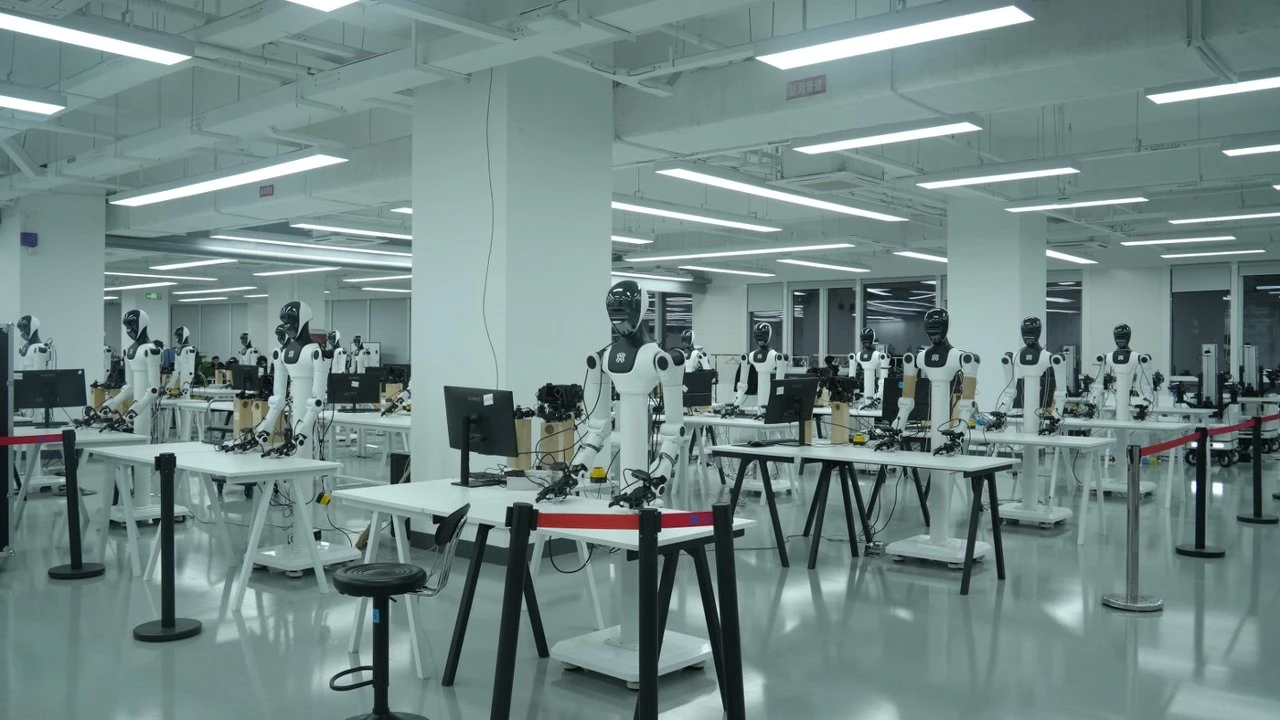
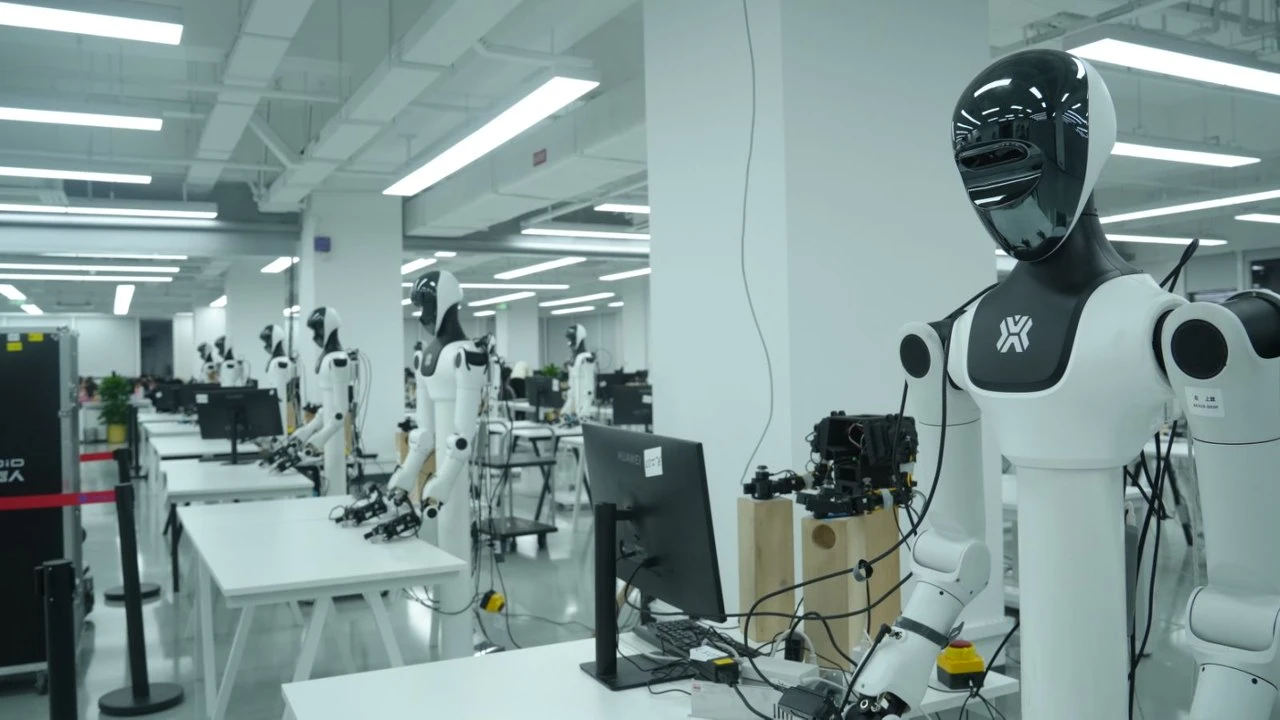
The dataset's continuous expansion is supported by the Embodied AI Data and Training Base at the Beijing Humanoid Robot Innovation Center. Covering nearly 6,000 square meters, the base features more than 30 real-world environments, including residential, retail, industrial, and pharmaceutical settings. It has deployed over 180 robots across 40 different configurations, alongside more than 100 disembodied data collection rigs. The base has an annual data generation capacity of up to 180,000 hours and has already supplied nearly 30,000 hours of high-quality robot data externally.
According to the center, its proprietary toolchain covers the entire workflow, including data cleaning, quality control, annotation, model training, real-robot evaluation, deployment, and data feedback. The center has also led the drafting of the country's first industry standard for embodied AI datasets.
Skill platform completes the real-world deployment pipeline
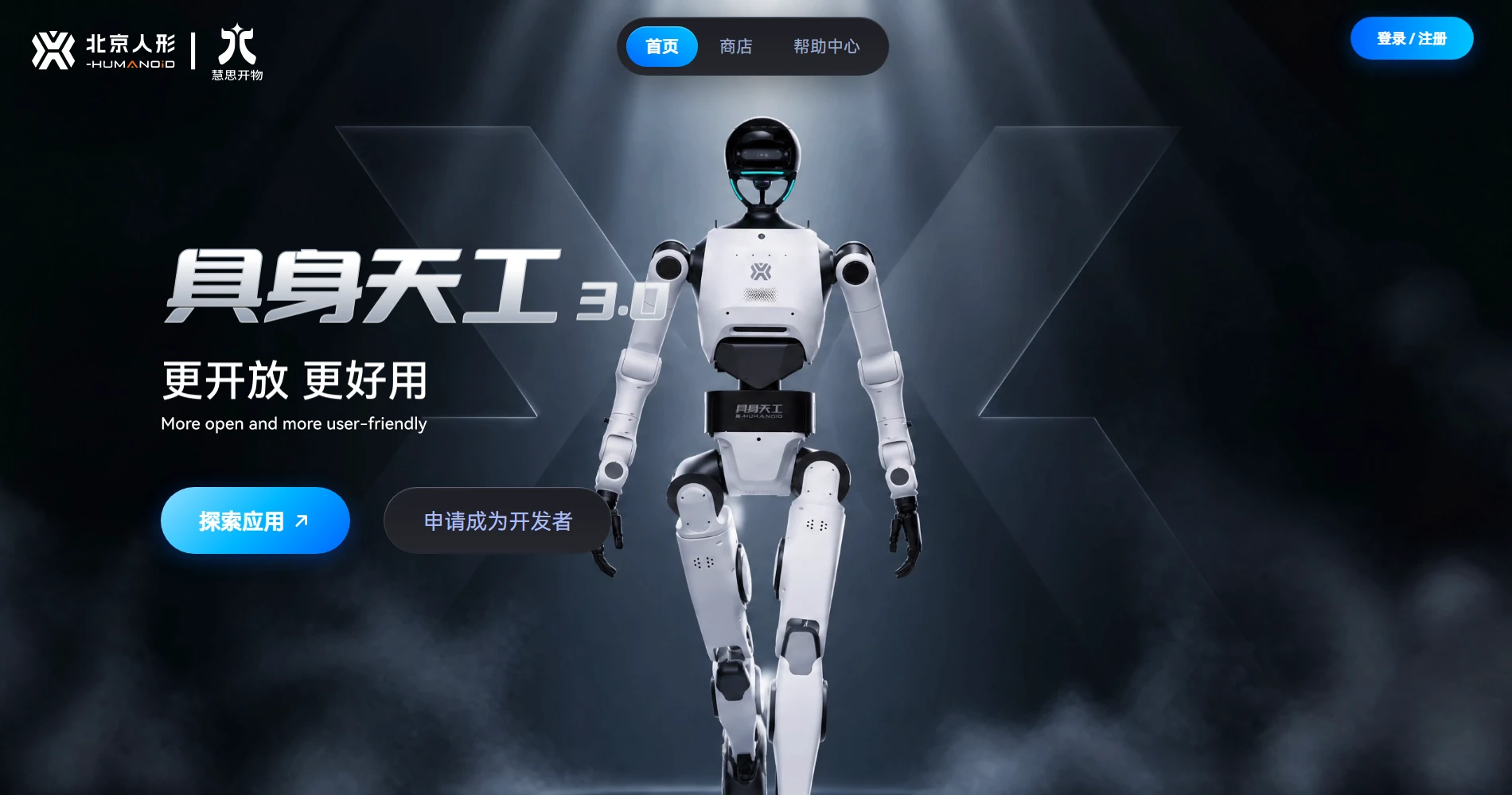
The accompanying "Huisi Kaiwu" low-code platform and app store launched simultaneously to complement the ecosystem. Developers can generate robot skills by simply uploading videos, and they can also publish and share their custom skills. Everyday users can directly invoke ready-made skills or freely orchestrate robot tasks within the platform. While the dataset focuses on model training and performance evaluation, the skill platform is geared toward application development and skill invocation. Together, they cover the entire embodied AI pipeline, from data production to real-world robot deployment.
blocks_2_placeholder_ignored_due_to_input_length_mismatch_do_not_use_this_field