

Rokid Launches Full-Color Smart Glasses and Gesture Ring, Highlighting the Shift in Wearable Interaction
By Huang Si Zhe
Rokid unveiled the Rokid Color binocular full-color smart glasses and the Rokid Ring gesture controller at its Hangzhou event, illustrating how the transition to full-color displays is driving the adoption of dedicated hand-worn input devices in the smart glasses industry.
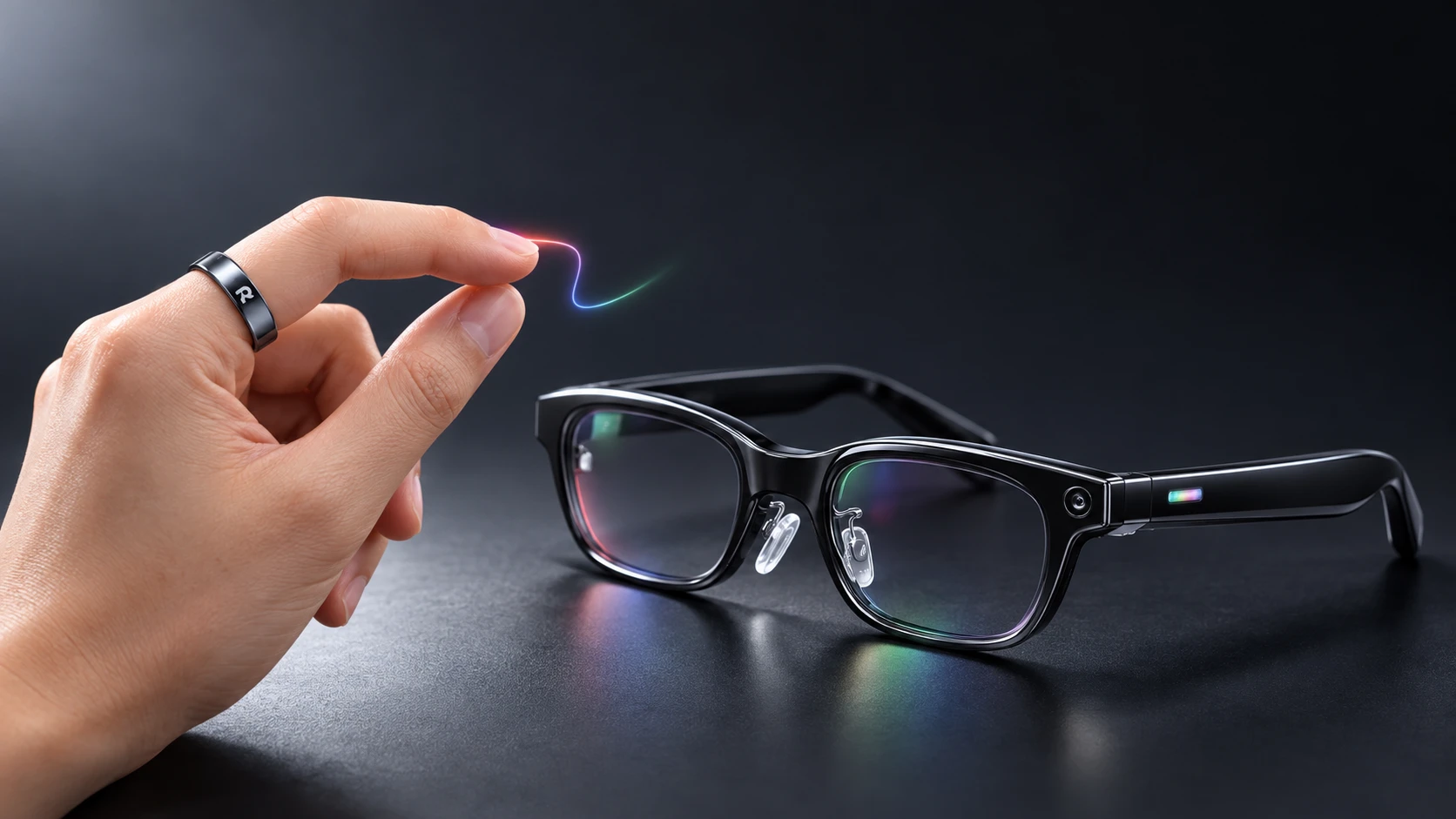
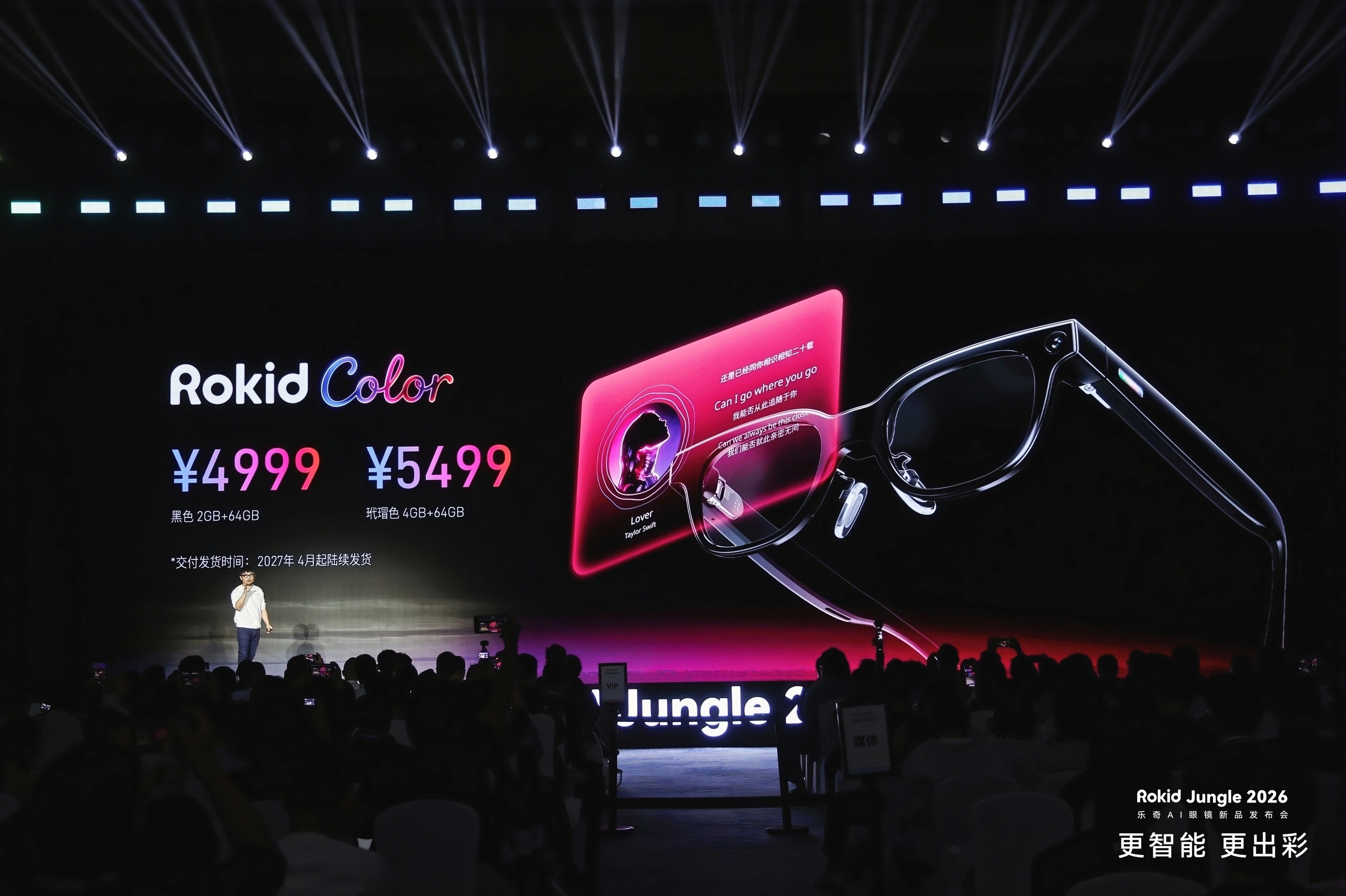
On the afternoon of October 27, Beijing time, Rokid launched two new products at its event in Hangzhou. The first is the upgraded Rokid Glasses 2, which retains a single-color green display and starts at RMB 3,699. The second is the Rokid Color, a binocular full-color smart glasses model. It packs a custom 0.16 cc Micro-LED full-color optical engine into a 55-gram frame, starts at RMB 4,999, and is scheduled to ship in April 2027.
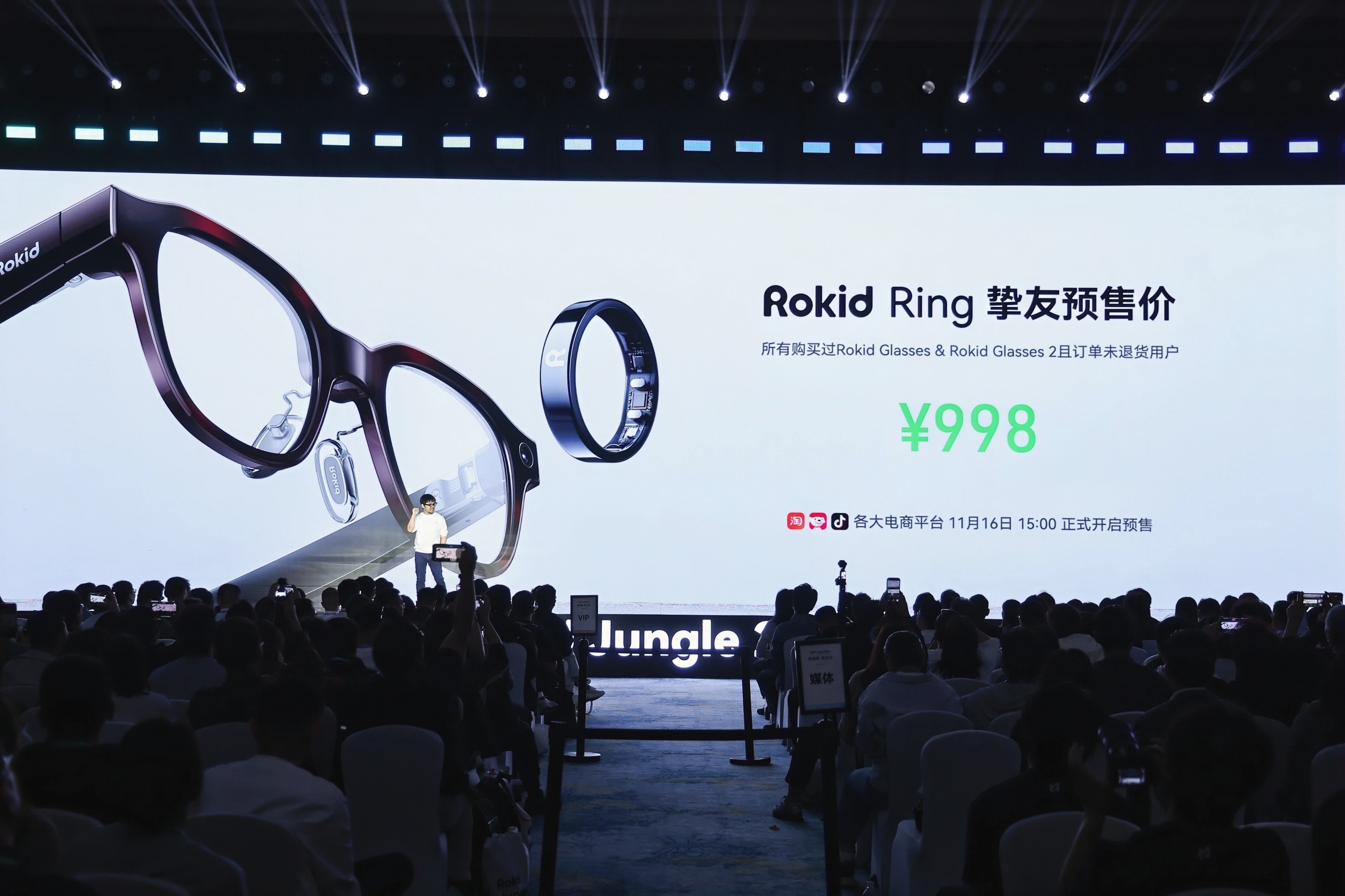
However, the most interesting product at the event was arguably an accessory launched alongside the full-color glasses: a smart ring called the Rokid Magic Ring. It is priced at RMB 1,699, with a pre-sale price of RMB 998 for existing users.
With its first-generation glasses, Rokid heavily promoted the idea that users could handle all operations using only voice commands and touch controls on the temple arms, without needing to wear any additional accessories. So why is it that for the second generation, as the company transitions to binocular full-color displays, spending RMB 5,000 on the glasses is no longer enough, and users must spend over RMB 1,000 more to wear a ring on their finger?
Looking at the broader industry, it becomes clear that this is not an isolated choice by a single company. From early players like INMO and RayNeo to today's Rokid and overseas player Meta, nearly every smart glasses manufacturer entering the color display phase has ultimately abandoned the illusion of relying solely on voice and temple touch controls, instead adding a control peripheral for the user's hand.
Over the past two years, hardware manufacturers have been racing to solve the problem of making screens lighter, brighter, and more colorful. But now that the glasses can actually display full-color interfaces, a long-hidden industry issue can no longer be ignored: the screen has been moved to the face, but how exactly are we supposed to interact with it elegantly?
Why is traditional interaction no longer enough?
During the phase dominated by single-color green displays, smart glasses primarily handled glanceable tasks such as teleprompting, navigation, and translation: prompting the next sentence during a speech, indicating the next turn while cycling, or displaying translated subtitles during a conversation.
In these scenarios, content typically advances automatically with the speech, itinerary, or conversation. Users only need to occasionally turn a page or pause, rarely requiring them to switch back and forth between multiple options. Therefore, while voice commands combined with temple touch controls are not perfectly seamless, they are sufficient to meet most operational needs.
However, once the optical engine is upgraded to full color, the complexity of the content displayed in the lenses jumps by an order of magnitude.
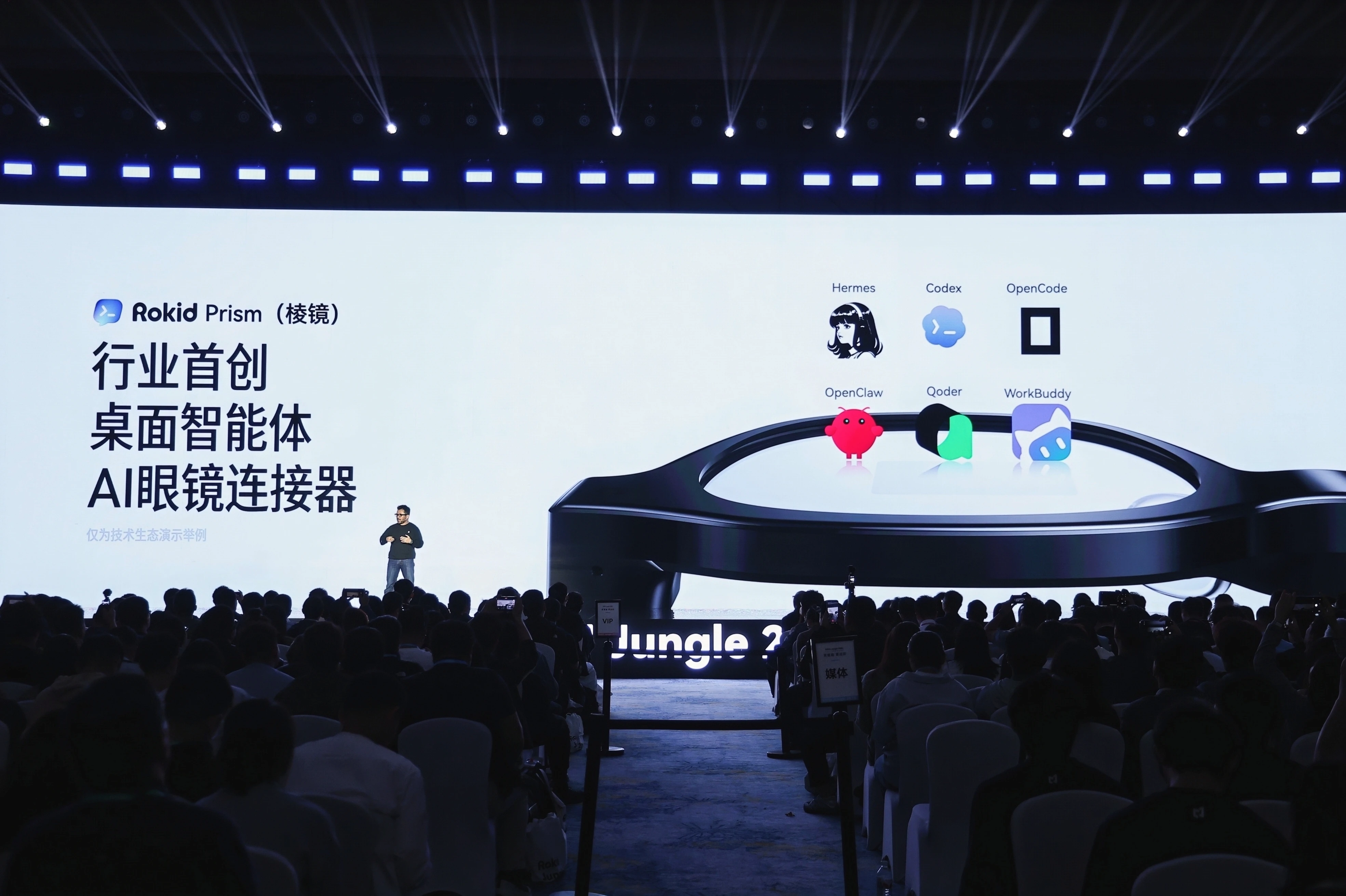
During today's live demonstration of the Rokid Color, the glasses were shown seamlessly scrolling through short videos, displaying live camera previews, hosting video conferences, and replying to chat messages. Furthermore, via the newly launched Rokid Prism connector, the glasses can even sync desktop agents—such as Codex, WorkBuddy, and Qoder—running on a PC directly to the user's field of view. When a programmer steps away from their desk to grab a coffee, the exact progress of their coding agent and any pending permission approvals will pop up directly on the lenses.
Faced with a true two-dimensional graphical interface, these two original interaction methods immediately hit a hard ceiling.
First, there is the awkwardness and inefficiency of voice control in public. Voice is well-suited for broad, single-step commands, such as "call me a ride to Hongqiao Railway Station," but it falls short for high-frequency micro-adjustments and confirmations. You cannot sit in a subway, an elevator, or a quiet office and repeatedly shout commands like "scroll down, scroll down again, tap the image on the left, start editing." In the presence of others, the mere act of talking to oneself becomes the biggest barrier to adoption.
Second, there are the physical limitations of temple-based control. Most mainstream smart glasses place a capacitive touch strip on the outside of the right temple. To keep the temple slim, the touch-sensitive area is only a few centimeters long, restricting users to simple gestures like single taps, double taps, long presses, and forward or backward swipes. This makes precise selection within a complex interface impossible. More importantly, continuous interaction requires a significant amount of repetitive gesturing, which quickly becomes tedious in practice.
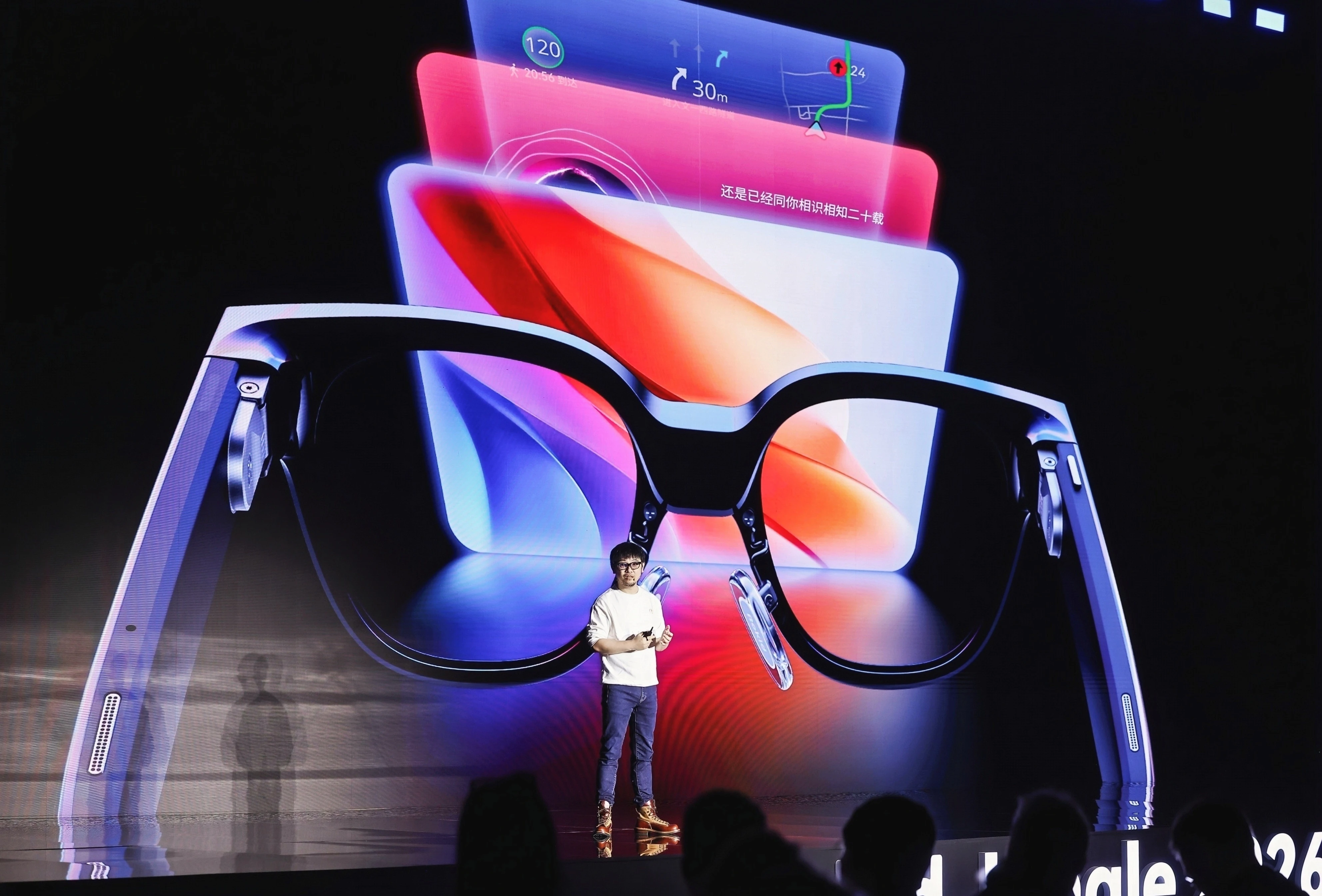
This is much like the transition from Nokia's monochrome displays to color touchscreens: a four-way navigation key was perfectly adequate when the screen only displayed two lines of phone numbers, but it became entirely obsolete once the screen was filled with web pages, photo galleries, and chat windows.
The Evolution of Interaction Modalities
When shifting the interaction input back to the hand, the industry's first instinct was the smart ring. However, in figuring out how to control a ring, hardware manufacturers have clearly taken a significant detour over the past three years.
Leqi is not the first company to develop an interactive ring. Years ago, when INMO launched its full-color AR glasses, it also introduced a first-generation interactive ring. The design philosophy at the time was straightforward: since there were not enough buttons on the glasses' temples, the company embedded five physical buttons—up, down, left, right, and confirm—directly onto the ring's surface. The problem was that to fit these micro-switches, the front of the ring had to feature a large, bulging plastic platform. Worn on the index finger, it was thick and uncomfortable, getting in the way of everyday tasks like picking up a water cup or typing on a keyboard. As a result, no one wanted to wear it all day. Users typically only put it on right before using the glasses, which completely defeated the original purpose of wearable hardware: seamless, unobtrusive wearability.
To transform this bulky, oversized ring back into a normal band suitable for daily wear, manufacturers subsequently removed the physical buttons. They reduced the ring's width to about 8 millimeters, relying instead on thumb taps and swipes across the ring's surface for operation. However, the width of a standard ring is less than half the size of a thumb pad. Pressing a finger onto it covers the entire touch area, making precise tapping and selection on such a narrow, curved surface extremely cramped and difficult.
Even more frustrating was the issue of accidental touches. With simple capacitive tapping, it was difficult to distinguish whether a user was intentionally sending a command to the glasses or merely brushing against the ring during everyday activities like shaking hands, picking up objects, or putting hands in pockets. To prevent the glasses' display from jumping around erratically, some products, such as the Meizu StarV Ring 2, even had to include a warning in their manuals: before using the ring to control the glasses, users must first open the mobile app and manually toggle the 'touch mode switch' on. A ring originally designed to reduce the need to pull out a phone ended up requiring users to take out their phones just to turn it on.
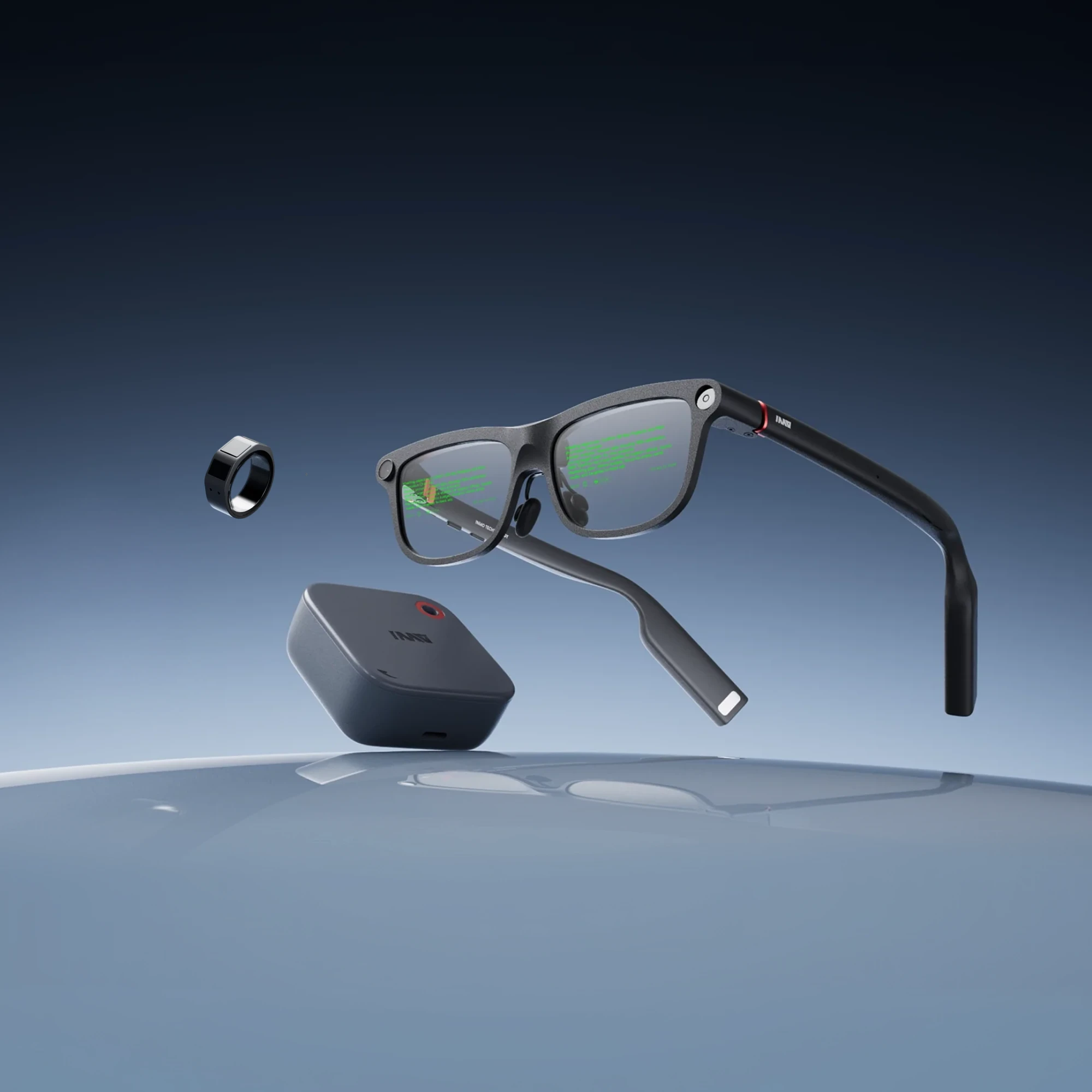
Building on this foundation, a new generation of interactive rings began incorporating Inertial Measurement Units (IMUs) and gesture recognition algorithms. From the INMO Ring 4, which supports 3DoF posture sensing, to the 'Leqi Magic Ring' released by Leqi, these devices use accelerometers and gyroscopes to capture the acceleration and angular velocity of finger movements. They estimate posture changes through sensor fusion, and then use algorithms to recognize specific gestures, mapping them to operational commands such as confirm, return, and switch. Consequently, the interaction area expanded from the narrow surface of the ring to the broader movement of the finger itself.
These gestures are virtually impossible to trigger accidentally during normal daily activities. This eliminates the hassle of opening a phone app to toggle a switch, and removes the need for the thumb to painstakingly aim on an 8-millimeter-wide ring surface. With the hand resting naturally at the side, a simple rub or twist of the fingers is all it takes to execute confirmations and switches.
From Multiple-Choice to Fill-in-the-Blank
However, micro-gesture rings still have one final shortcoming: they can only handle 'multiple-choice' tasks, not 'fill-in-the-blank' ones.
Whether it is a single click to confirm, a double click to go back, or a swipe to turn the page, the essence is simply selecting from a set of predefined options already presented on the screen. But once you enter high-frequency scenarios for full-color smart glasses—such as a WeChat or DingTalk message popping up on the lenses during a meeting, and you want to reply 'In a meeting, wait a moment,' or you need to type a word into a search box—the limitations become glaring. You cannot pull out your phone, nor can you speak the reply aloud in the conference room. In these situations, a ring that can only flip pages and confirm is completely useless.
This is precisely what makes Leqi's integration of gesture-based writing into a ring today so noteworthy. Once a ring can do more than recognize discrete taps and pinches, and instead continuously tracks the movement trajectory of the index fingertip, users can rest their hand on a conference table, their thigh, or even the palm of their other hand, tracing a few strokes with the index finger to write text directly into the smart glasses. From this point on, the ring evolves from a premium page-turner into a digital pen.
Zooming out to the global stage, comparing this writing-capable ring with the spatial interaction approaches of Apple and Meta further highlights the engineering and wearability trade-offs each company has made:
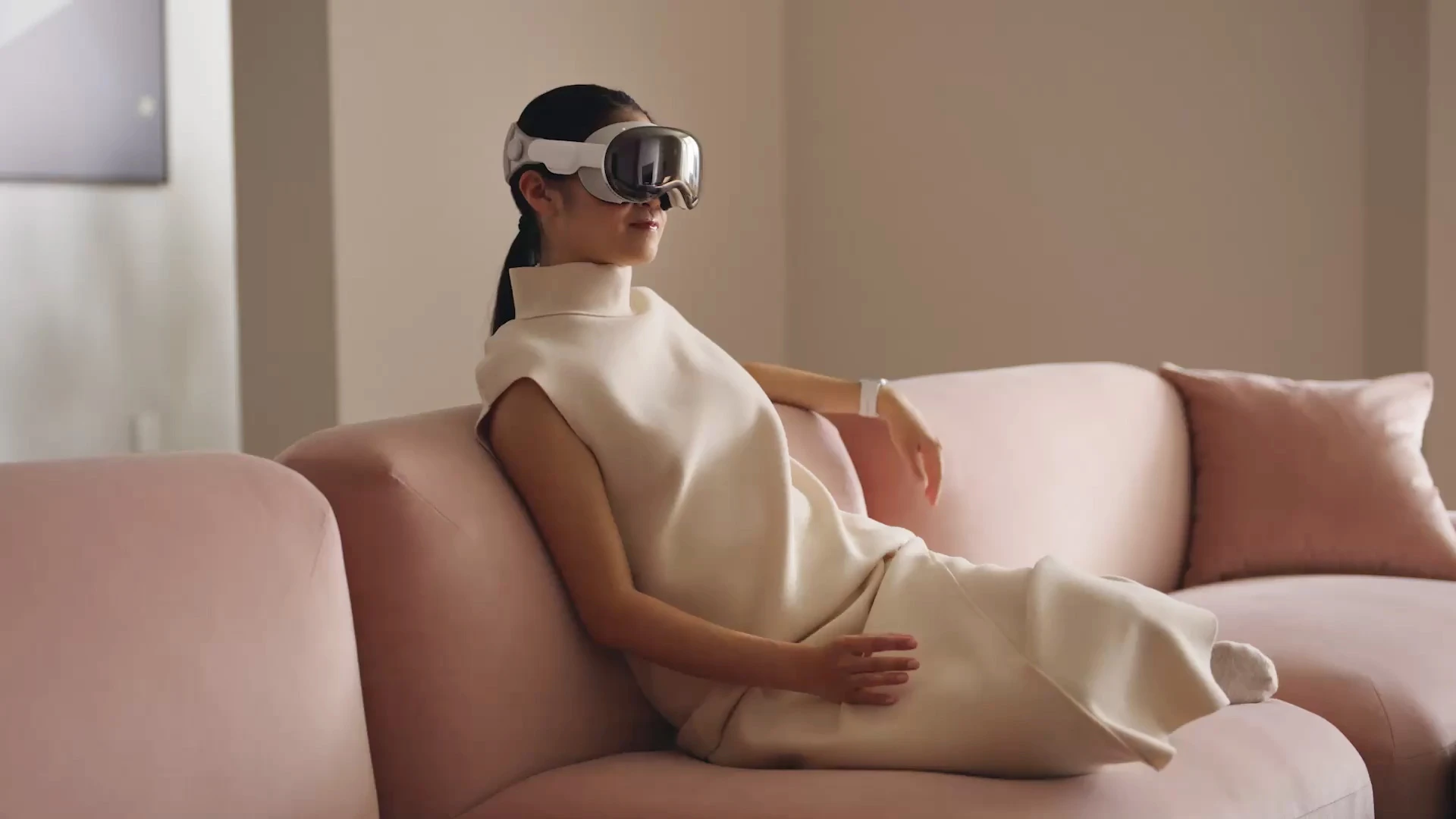
Apple has pursued a pure-vision, bare-hand recognition approach. The Vision Pro is equipped with eight internal and external cameras that track the user's fingers, allowing selection with a simple pinch gesture. This method is the most natural and delivers the best performance. However, the trade-off is that the hands must remain within the cameras' field of view. If a user puts their hands in their pockets, under the covers, or behind a desk, the system fails. Additionally, real-time visual tracking demands immense computing power and consumes significant energy, which is only feasible on a device the size of the Vision Pro. It is physically impossible to implement on a pair of smart glasses weighing just 55 grams with a battery capacity of only a few hundred milliamp-hours.
Meta has pursued a surface electromyography (sEMG) wristband approach. To complement its full-color smart glasses, the Ray-Ban Display, Meta introduced a neural handwriting feature and published its research in Nature. Users wear a Meta Neural Band packed with dry electrodes on their wrist and use their index finger to write on their thigh or a desk. The wristband reads bioelectrical signals from the forearm muscles to infer finger movements, achieving a handwriting speed of up to 20.9 English words per minute in tests.
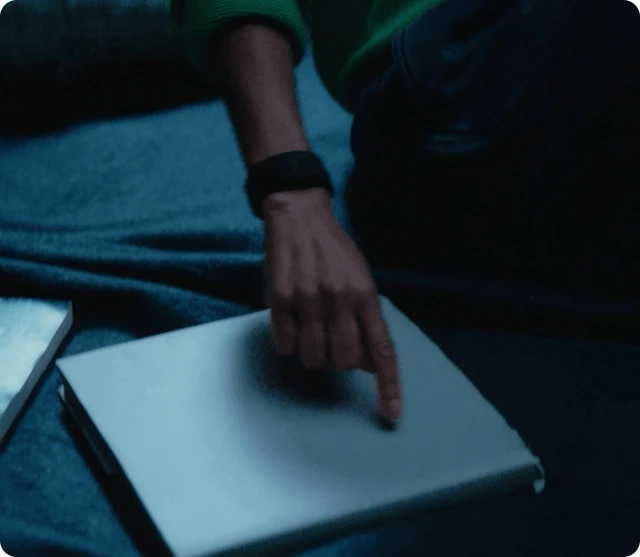
Meta chose to build a relatively bulky wristband because it prioritizes the upper limit of recognition accuracy. Since the wrist can simultaneously capture the muscle group signals controlling all five fingers, it can precisely distinguish the subtle movements of the thumb, index, or middle finger. International media have highly praised its recognition accuracy in hands-on tests.
However, the trade-off for such high precision is a significant wearing burden. To capture weak bioelectrical signals, the wristband must be fastened tightly just above the bone of the dominant wrist, with the dry electrodes fitting snugly against the skin. Furthermore, despite costing USD 199 as a standalone accessory and offering an 18-hour battery life, the wristband features no screen and lacks any health monitoring capabilities, such as heart rate or sleep tracking.
In contrast, Chinese manufacturers betting on gesture rings have taken a different approach to these trade-offs: sacrificing the upper limit of interaction capabilities in exchange for a lightweight wearing experience.
Shrinking the sensors into a ring weighing just a few grams offers obvious advantages: it does not compete with a smartwatch for wrist space, and it is worn directly on the index finger used for writing to track movement trajectories. The Leqi Magic Ring, announced today, also integrates 24-hour heart rate, blood oxygen, body temperature, and sleep monitoring. Even when not controlling the smart glasses, it can be worn daily as a health tracking ring.

But the ring approach also involves engineering trade-offs, starting with its sensing range. Worn on a single finger, a ring can naturally capture fewer dimensions of hand motion than an electromyography wristband that monitors the entire forearm muscle group.
The second challenge is the practical usability of handwriting input. Meta collected electromyography data from thousands of people to train its models, yet it currently only officially supports writing lowercase English block letters—not even cursive script. A ring, on the other hand, relies on built-in inertial sensors to calculate finger trajectories. From an engineering standpoint, the biggest concern is error accumulation and trajectory drift during continuous writing. Writing a character or two is easy, but whether the system can maintain low latency and high accuracy while continuously writing more than a dozen complex Chinese characters will only become clear after real-world testing.
An even more practical challenge is battery life. The internal space of a ring is extremely limited, with battery capacities typically ranging from just 15 to 20 milliampere-hours. While low-frequency heart rate and sleep monitoring can last for a few days, the question remains how many hours the battery will actually last if it must simultaneously provide 24-hour health monitoring and frequently power posture sensors and Bluetooth to recognize gestures and control the glasses.
Every screen revolution waits for its mouse
In fact, the convergence of smart glasses and smart rings is the result of each technology hitting its own practical bottlenecks.

For smart glasses, maintaining a nose bridge weight limit of around 50 grams means the temples can hold a battery of at most just over 200 milliampere-hours—less than one-twentieth the capacity of a typical smartphone battery. Smart glasses with displays average less than four hours of battery life. Simply powering the full-color optical engine consumes more than half of that capacity. Only by offloading high-frequency interactive sensing and power consumption to the ring can the glasses preserve their weight and battery life baselines.
As for smart rings, IDC data shows that in 2025, global smartwatch sales reached 163 million units, while smart ring sales totaled only about 4.3 million. Health rings that merely track heart rate and sleep have struggled to gain mainstream traction because their functions overlap with smartwatches. However, by adding micro-gestures and gesture-based handwriting, the smart ring has finally secured an exclusive use case that a smartwatch can never replace.
Looking back at the evolution of computing devices, displays and input tools have always matured in tandem, one following the other. Xerox research labs developed the graphical user interface in the 1970s, but personal computers did not truly enter everyday homes until the mouse became ubiquitous. Color screens were already widespread during the feature phone era, yet the smartphone application ecosystem only truly exploded once multi-touch displays eliminated physical plastic keyboards.

Applied to today's smart glasses, this reality also demonstrates that the path of relying on a single pair of glasses to independently replace the smartphone is a dead end. Whether it is Meta pairing its devices with wristbands overseas, or domestic manufacturers collectively developing smart rings, they are all acknowledging the same truth: the next generation of personal computing terminals will not be a single standalone device, but rather a split system comprising "a display worn on the face and a controller worn on the hand."
But this also raises a more practical question: since this ring, which enables writing and pinching gestures, has already become an indispensable "mouse" for full-color smart glasses, selling it separately as an "optional accessory" priced at RMB 1,699 is inherently contradictory.
When personal computers popularized graphical user interfaces, no manufacturer treated the mouse as an expensive optional accessory requiring an additional purchase, because without a mouse, the on-screen interface was simply unusable. Today, a pair of full-color smart glasses already sells for RMB 4,000 to 5,000. If users still have to spend more than RMB 1,000 to add a ring just to comfortably operate the glasses on the subway or in a meeting room, the vast majority of everyday consumers will remain priced out.
Therefore, smart glasses will only truly reach their "Apple" moment when this gesture ring is no longer an accessory requiring an extra purchase at launch events, but rather the standard factory equipment included by default in the box of every pair of smart glasses.