

Nature Will Debuts Natura-1, a 50B-Parameter Embodied Foundation Model Trained on One Million Hours of Human Experience
By Ethan
On October 13, Nature Will—founded by Ding Ning, assistant professor and doctoral supervisor at Tsinghua University's Department of Electronic Engineering—released Natura-1, its first general-purpose embodied foundation model, along with a technical report. The 50-billion-parameter mixture-of-experts model was pretrained on more than one million hours of first-person human video and can drive a 20-DOF dexterous hand within a 100-millisecond control loop.
Nature Will's Physical Foundation Model Natura-1 Debuts: Technology, Insights, and the Story Behind It
On October 13, Nature Will—founded by Ding Ning, an assistant professor and doctoral advisor in the Department of Electronic Engineering at Tsinghua University—released Natura-1, its first general-purpose embodied foundation model, alongside a technical report. The release has drawn widespread attention across the industry.
Natura-1 is a 50-billion-parameter Mixture of Experts (MoE) model pre-trained on more than 1 million hours of first-person human experience data. Taking language and vision as inputs, it can drive a 20-degree-of-freedom dexterous hand within a 100-millisecond control loop. According to the official technical report, the model can follow complex natural language instructions in a zero-shot manner, reason about spatial constraints, multi-object relationships, and negative conditions, and autonomously execute long-horizon workflows lasting several minutes without human intervention.
Public records indicate that Nature Will was founded in January 2026. As a research company dedicated to achieving general intelligence in the physical world, Nature Will focuses on the research and development of general physical intelligence and embodied AI. The company trains general foundation models capable of executing closed loops of perception, prediction, reasoning, and action in the real world, while exploring how physical robots can achieve self-awareness and continuous learning within physically native systems.
As the first publicly announced general-purpose embodied foundation model, Natura-1 holds landmark significance for Nature Will. Why has Natura-1 attracted so much attention? And as a general-purpose physical foundation model, what exactly sets it apart?
42HOW Robotics interviewed the Nature Will technical team to discuss the technical choices, development process, and a series of unexpected discoveries surrounding Natura-1. Rather than just focusing on the publicly released demonstration results, we wanted to understand where these capabilities originate, how the researchers interpret them, and uncover the behind-the-scenes details previously unknown to the public.
01 An Alternative Approach
Over the past few years, several widely followed research directions have emerged for embodied AI foundation models. Vision-Language-Action (VLA) models, for instance, typically map visual observations and language instructions directly to robot actions. In contrast, World-Action Models (WAMs) place greater emphasis on modeling environmental dynamics, linking the prediction of future physical states to action generation. Other systems adopt a hierarchical structure, delegating high-level task planning and low-level real-time control to separate modules.
Natura-1 does not fit neatly into any of these simple categories. Rather than being classified as a foundational embodied model along the WAM or VLA trajectory, it has charted a unique path.
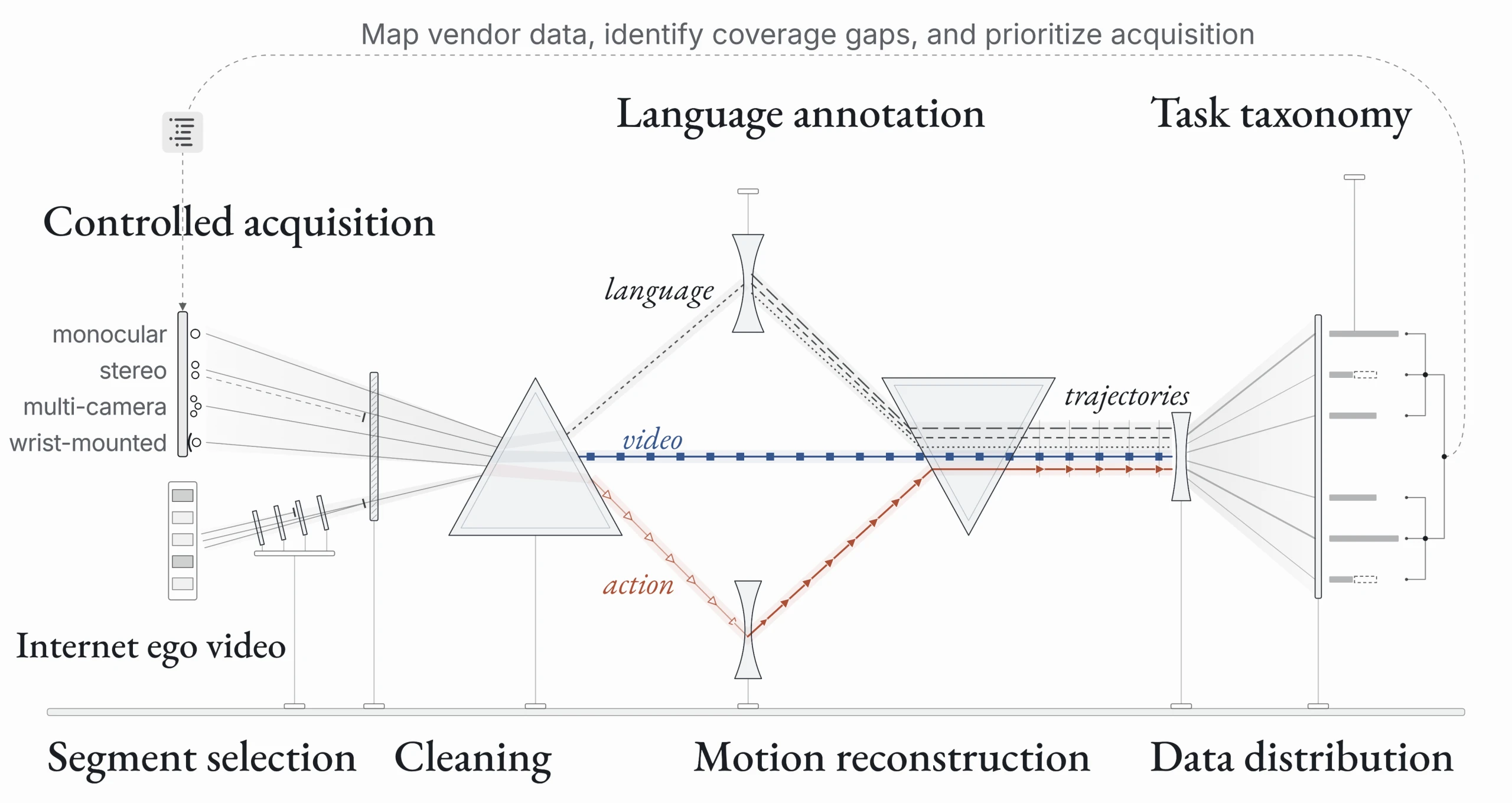
An analysis of how the model encodes data reveals that information from the physical world—such as language, video, and action—lacks a single, absolute point of reference. Natural Will aims to unify language understanding, visual world modeling, and robot action generation within a single model.
Natura-1’s training and inference infrastructure integrates language understanding, visual world modeling, and robot action generation into a single model, enabling the robot to not only predict what will happen next but also decide how to act. Its most prominent feature is its approach to constructing this understanding paradigm, which is modality-agnostic yet inherently serialized.
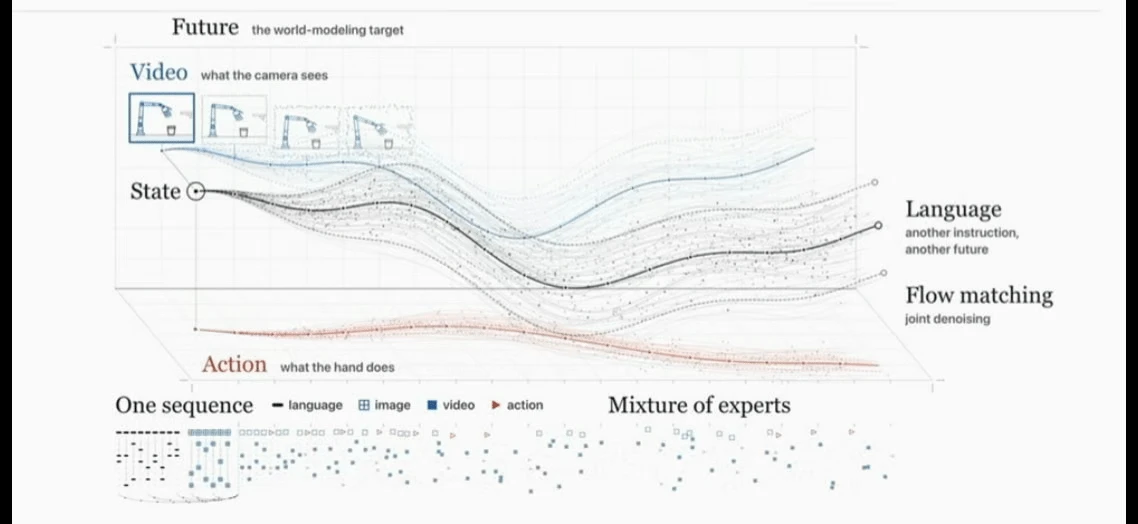
As illustrated, the visual information in the blue region incorporates real historical video frames from multi-camera data, while the right side of the gray surface represents the future frames the model must learn to predict. The central curve depicts the state trajectories of the robot and its environment over time, conceptually illustrating the evolution of the physical states of the robot and surrounding objects. Hand action data—represented by the action tokens—maps one-to-one with these states in real time, creating a streaming alignment. Building on this, fine-grained language supervision is applied so that language intent directly guides both video and action predictions. Consequently, flow matching combined with joint denoising not only stabilizes the model's future predictions, but also allows different instructions to drive the model toward distinct future states and corresponding actions. A key advantage of this joint learning approach is that even when some human data lacks high-quality robot action labels, the rich visual information can still provide supervisory signals for physical changes.
Notably, a closer look at the intrinsic relationship between state and action reveals that Natura-1 treats the video frame and action pose at any given moment as two distinct projections of a single, unified physical state. Thus, learning to predict video content is equivalent to learning to execute actions. For instance, when a person picks up a coffee cup from a table, the video records the hand approaching the cup, the fingers making contact, and the cup lifting off the surface, while the action data describes the hand's pose and movement. Although these two modalities use different representations, they reflect the exact same physical interaction. The model must learn not only which action corresponds to a specific image frame, but also the temporal dependencies across time steps and how actions alter subsequent visual observations.
Simply put, the most critical aspect of Natura-1’s technical approach is the sequential reorganization of multimodal data. This actually highlights the fundamental architectural distinction between Natura-1 and many VLA or WAM models. Rather than merely chaining together a language model, a video generation model, and robot actions, Natura-1 reorganizes the entire robot manipulation experience into a unified sequence comprising language, images, video, and actions, modeling the complete experience recursively.
The potential value of this design is that human experience does not need to be entirely converted into high-quality robot action demonstrations to contribute to model training. Even when different datasets contain varying levels of supervisory information, the model can still learn about object motion, hand manipulation, and their underlying physical relationships from the rich visual dynamics in the videos.
02 Starting from scratch
A critical question arises: where do we find the most fundamental experience for machine learning? Since robot data collection is constrained by the robot's own physical capabilities, it can only operate in environments where data already exists. Clearly, acquiring large-scale data solely from robot actions is impractical.
For humans, this limitation is far less restrictive.
Humans already use their hands in kitchens, offices, factories, and countless everyday environments. Moreover, a vast array of objects, tools, and workflows are designed specifically around human hand kinematics. If these experiences can be effectively translated into training data, robot models could learn from an experiential space far larger than what existing real-robot data provides.
In an interview, the engineering team at Natural Will explained that leveraging human data for training at this scale required building the entire technology stack from scratch. From the project's inception, the team considered the model and infrastructure as a unified system. This approach was necessary because Natura-1's training tasks differ significantly from those of pure language models. It must process language, vision, and action simultaneously, with training objectives encompassing both visual world modeling and action generation. Consequently, off-the-shelf large language model training frameworks could not directly meet these requirements.
More importantly, the team wanted to continuously explore different model architectures rather than constraining their research to a single off-the-shelf system from the outset. This meant the training framework had to be highly modular, allowing researchers to freely combine model components and run rapid experiments as architectures and training recipes evolved. As the technical roadmap solidified, the framework also needed to deliver the efficiency, stability, and fault tolerance required for large-scale distributed training.
When asked why they did not simply adopt an open-source embodied training framework, the team gave a remarkably direct answer: there was no best-in-class solution on the market.
"There wasn't much internal debate. From the beginning of this year until now, the embodied AI field has lacked a training framework that fully supports diverse model architectures, as well as a suite of highly efficient operators. Meanwhile, the operators developed for large language models are completely incompatible with our embodied models."
The team noted that during the early stages of the project, they evaluated open-source solutions, including StarVLA. However, they concluded that existing frameworks were inadequate to handle the training requirements for millions of hours of data and models with over 50 billion parameters.
"We surveyed the open-source landscape at the time and found that existing solutions did not meet our needs. The conclusion was clear: we had to build the entire training framework and operators from scratch."
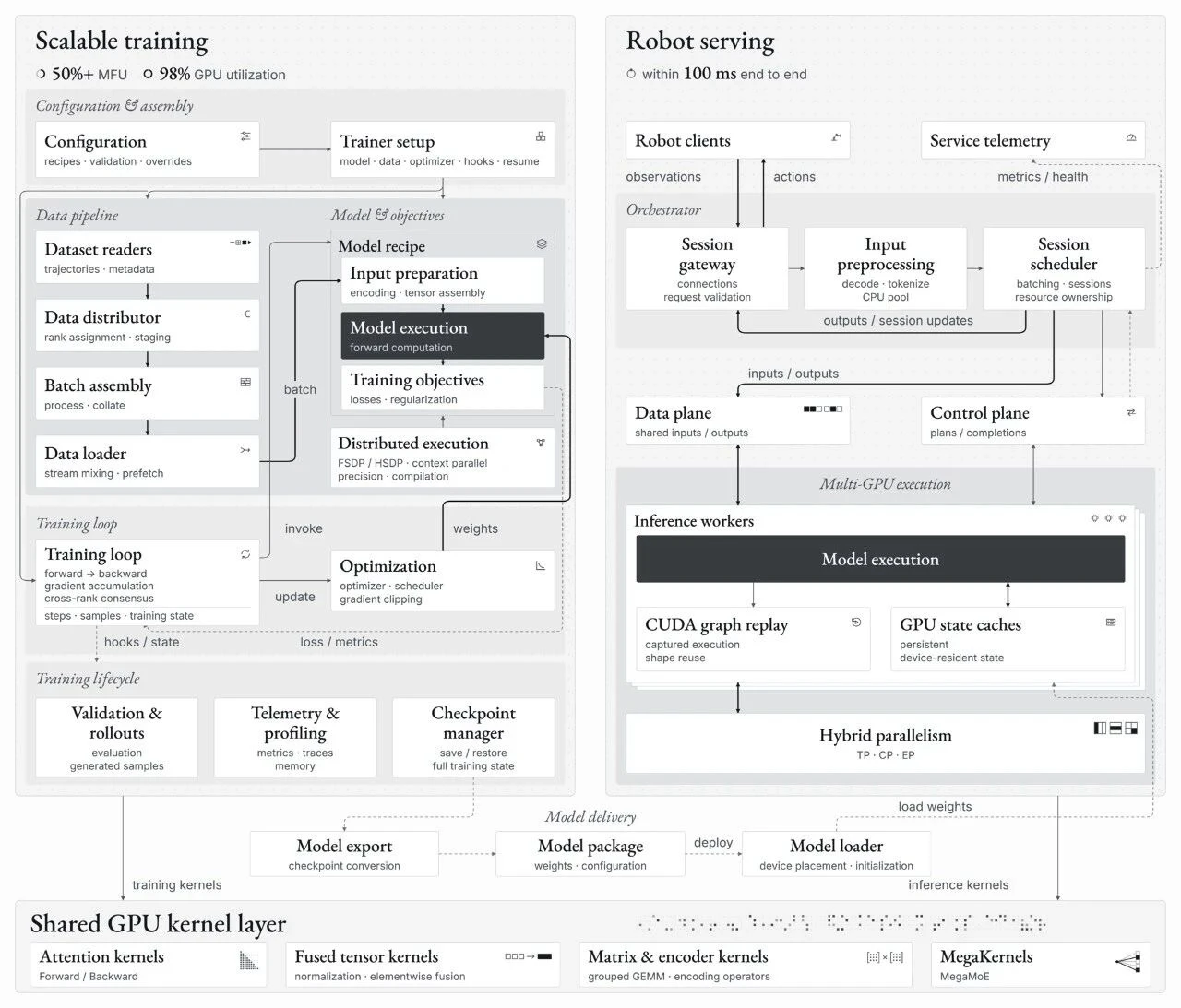
Once the direction was set, the team co-designed the infrastructure, attention operators, and the model. They started with smaller models and datasets for rapid validation, then scaled up the model, data, and infrastructure in tandem. Through iterative refinement, they arrived at the final configuration: the 50-billion-parameter model unveiled today. Achieving physical intelligence, however, faces two notoriously difficult technical bottlenecks: achieving a latency of 100 milliseconds or less, and delivering high throughput at the edge. Both challenges are deeply tied to the design of attention operators and GPU utilization.
Because physical interaction requires the model to continuously ingest new observations and output actions in real time, Natura optimized the entire execution pipeline of Natura-1. To achieve this, the team developed a Rust-based inference scheduling system that overlaps observation ingestion, GPU computation, and action transmission as much as possible. It also leverages fused CUDA operators, GPU cache states, and compute graphs to minimize redundant computation and scheduling overhead. The company states that this system can sustain a 100-millisecond observation-to-action control loop on real hardware.
On the training side, the focus is to keep the GPUs continuously fed with appropriate compute tasks. The team reduced padding waste, load imbalance across devices, and data-waiting time through sample packing, caching, and prefetching. They also implemented dedicated operator optimizations for the model's attention computations. During extended training runs on hundreds of GPUs, the model achieved a FLOPs utilization of over 50% and a GPU utilization rate of approximately 98%. These optimizations serve two overarching goals: efficiently scaling up the model and data during training, and enabling timely action adjustments in response to environmental changes during execution.
03 Why the performance stands out
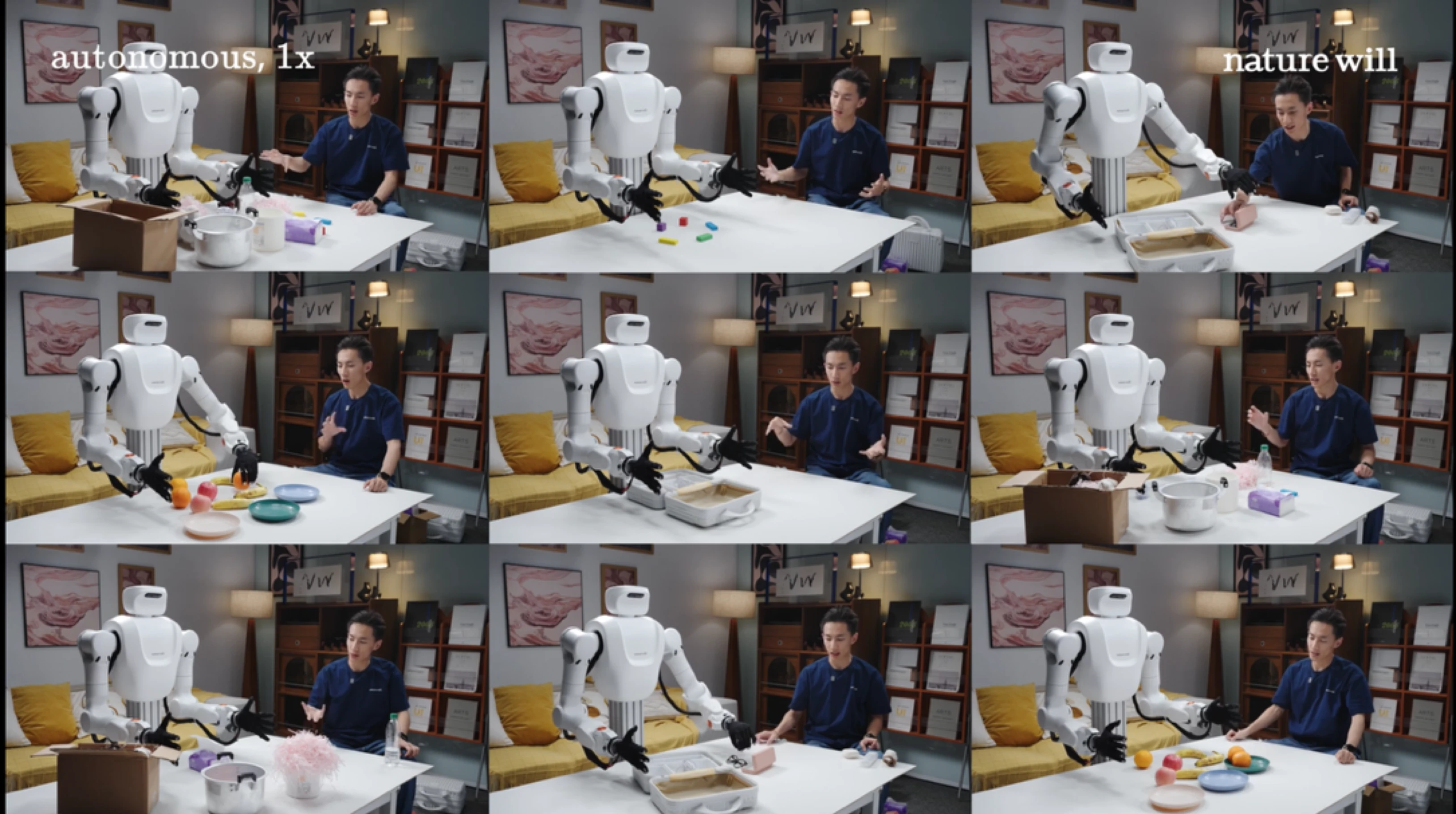
The most groundbreaking aspect of this release is Natura-1’s real-robot performance in both zero-shot generalization and long-horizon tasks. In fact, choosing to deploy and test the model on a dexterous hand was a remarkably bold decision. When discussing Natura-1’s zero-shot generalization capabilities, the team attributes the most critical factor to the increased scale of the training data and the enhanced model architecture.
"We believe the most critical factor is scaling up a massive amount of data while simultaneously expanding the corresponding model architecture. We found that the model's zero-shot generalization, execution speed, ability to recover from failures, and task success rate all improve as the data and model scales increase, demonstrating a clear positive correlation."
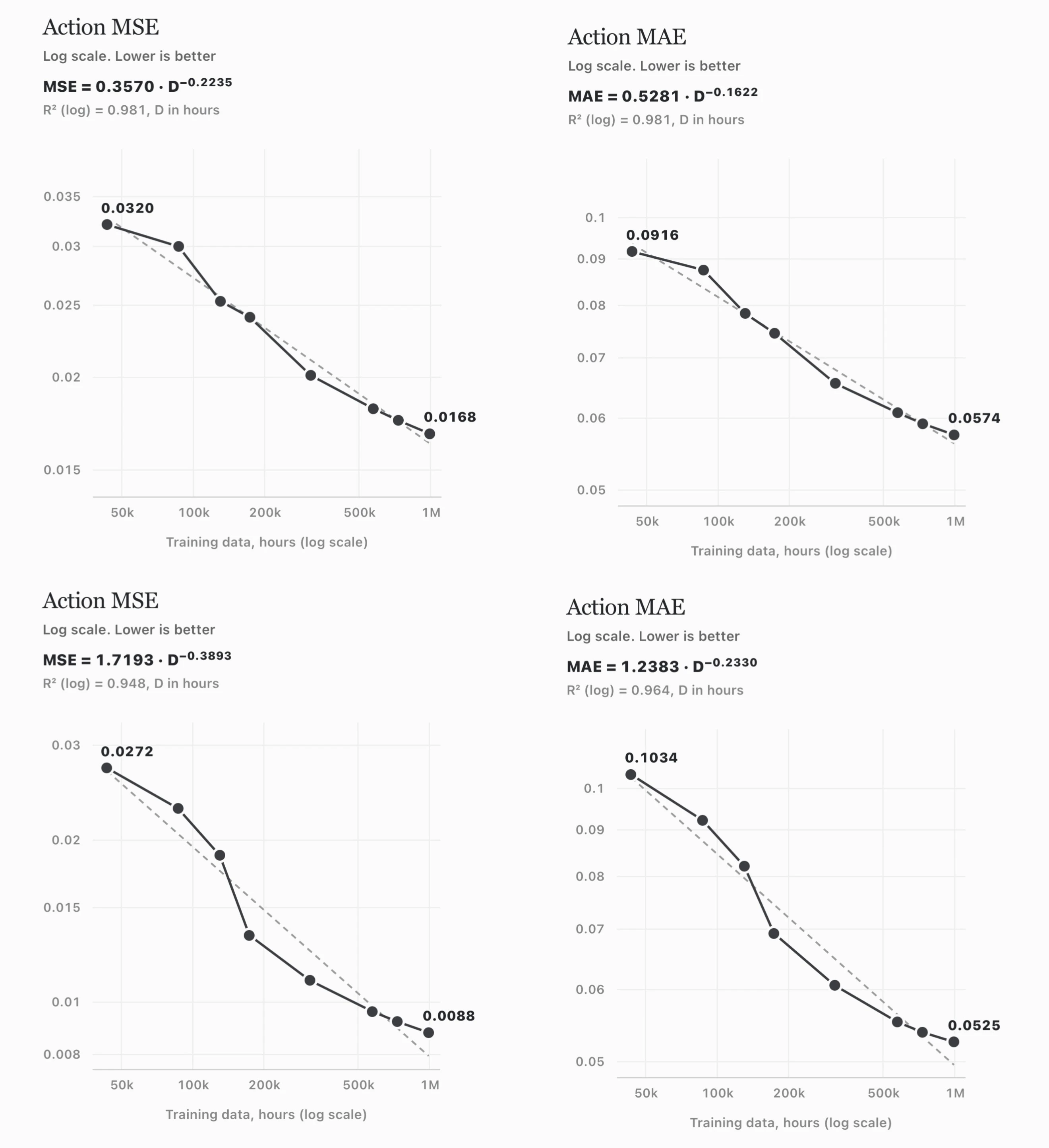
All of this rests on a fundamental premise: the model architecture and training objectives must be capable of absorbing the maximum amount of information from the pre-training data. Based on several benchmark evaluations conducted so far, the open-source model architectures tested under the same data scale yielded training results far inferior to ours. In other words, the first step is to establish a model architecture that can absorb as much information as possible, scales easily, and delivers strong training performance. Only then can the data and model scales be effectively expanded on top of that foundation.
At the same time, the data sources, model training, and physical embodiment must follow a coherent pipeline. Egocentric human videos provide continuously scalable manipulation experience, covering diverse objects, environments, and manipulation methods; dexterous hands can more fully leverage the finger movements, in-hand manipulation, and bimanual coordination information contained within them.
"Many tools and workflows in the real world are inherently designed around the human hand. We want robots to be able to adapt to these tools and workflows."
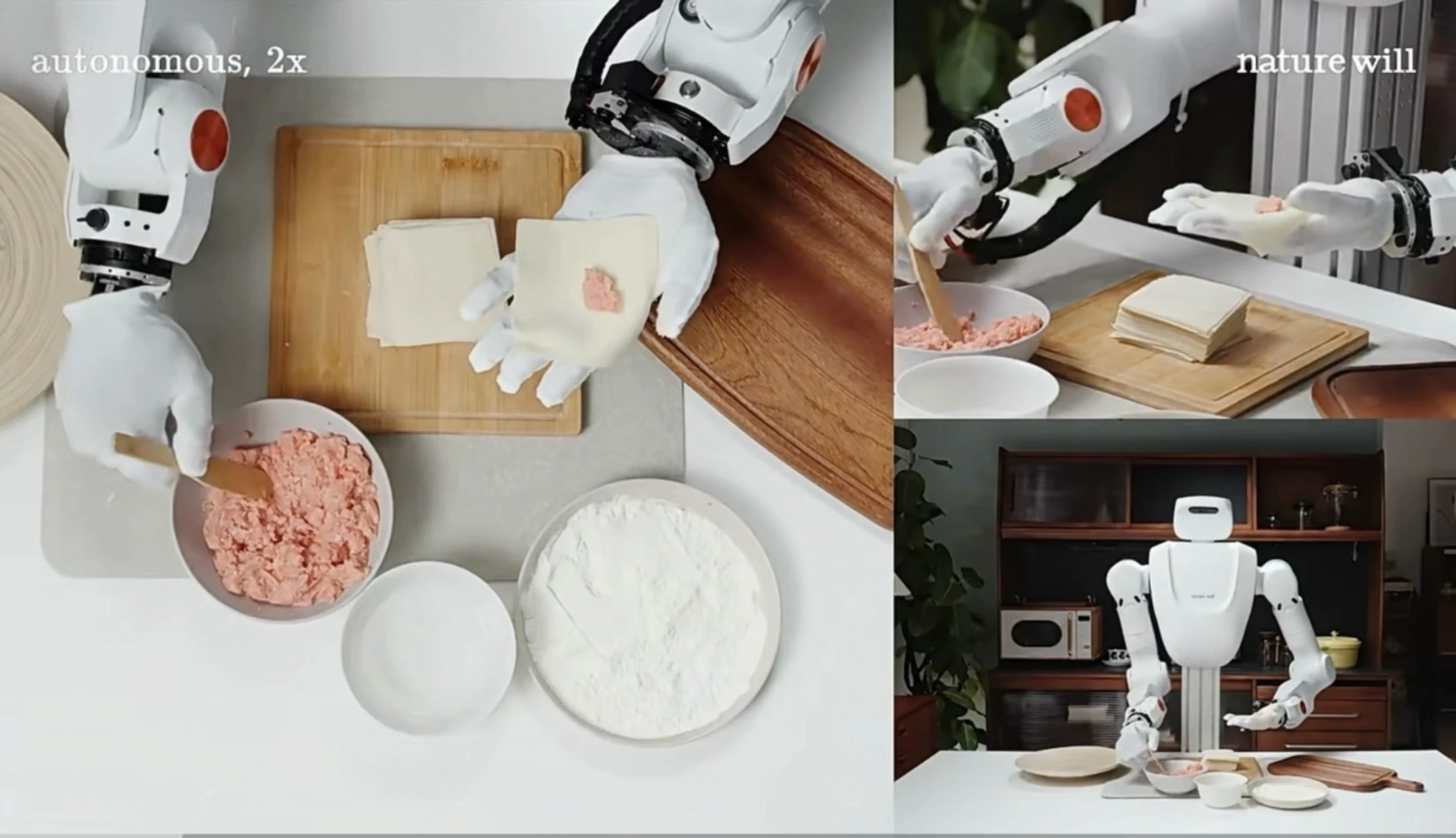
Take wonton-making as an example: the wonton wrappers change shape upon contact, requiring both hands to support the thin wrapper and filling while leaving foldable edges. Natura-1 separates a single wrapper from a stack, supporting it from below with the right palm, adds the filling with a long-handled tool in the left hand, sets the tool down, and then folds and seals the wrapper with both hands. Throughout the process, it continuously adjusts its lifting and pressing motions to apply enough pressure to seal the edges without tearing the wrapper or squeezing out the filling.
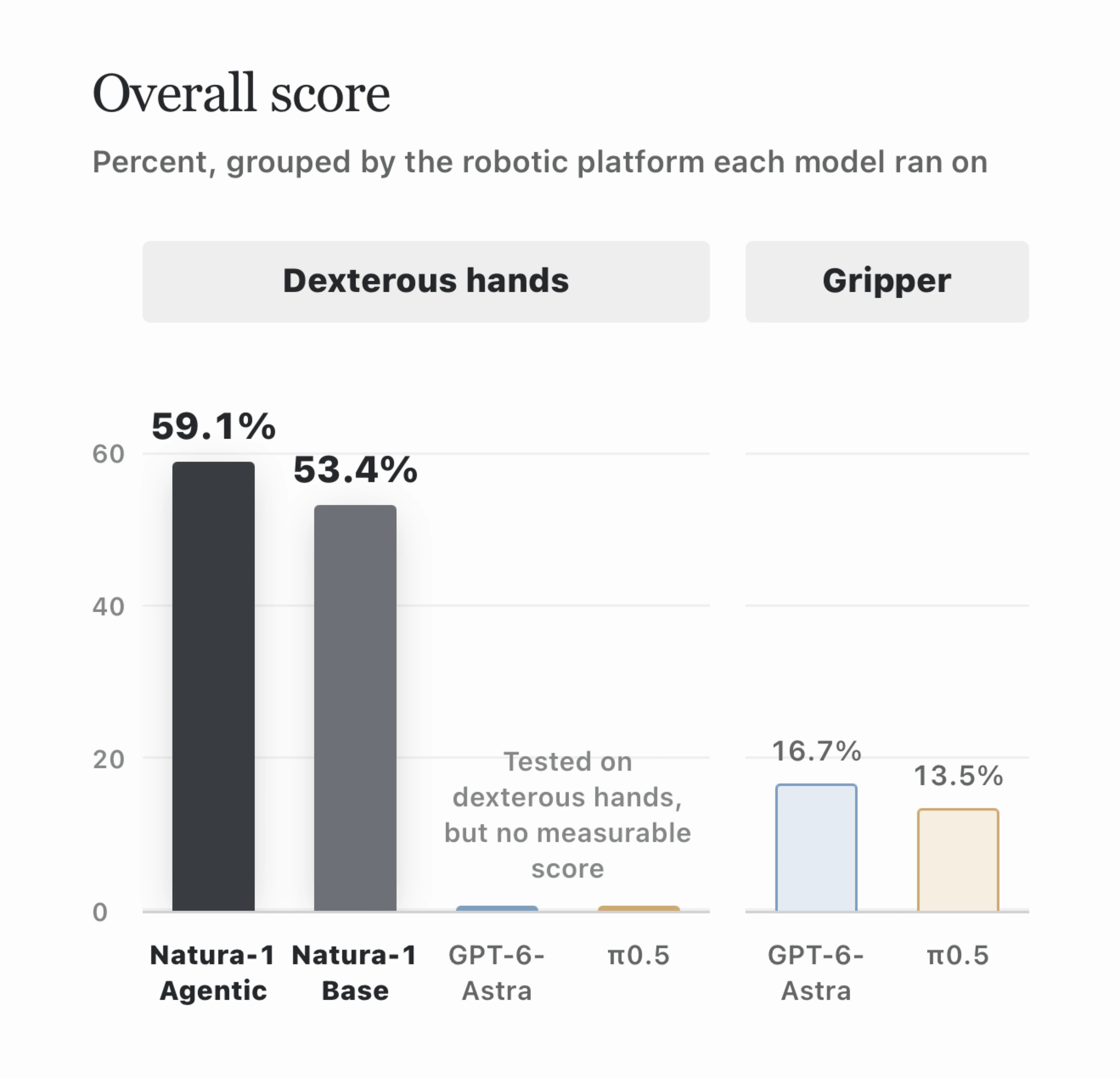
As pre-training data and model scale increase, the model can complete alignment and manipulation more naturally for the same task workflow, reducing the need for iterative workflow modifications. Following task-level fine-tuning, its fine manipulation performance becomes as dexterous as shown in the demonstrations.
The zero-shot instruction evaluations all consisted of spontaneous commands from researchers' daily interactions. In specific scenarios, the requests the model needs to handle become highly representative of real-world situations. For example, 'pick up a bottle that is not blue, pink, orange, green, yellow, or purple'; pick up the same two objects using 'left hand then right hand' and 'simultaneously', respectively; after placing blocks into an open drawer, switch to using four fingertips to push it shut due to the narrow clearance at the edge; a researcher moves a lemon and a storage bin with a long pole three times, prompting the robot to adjust in real time to the updated positions to complete the grasp, or to track and grasp while a human walks away holding the lemon. While these operations and scenarios likely appeared during pre-training on human data, for this experience to truly be internalized by the model, it must be transferable and capable of generalization. This ultimately tests whether the model can extract atomic tasks from the ingested data and then perform reasoning and composition for novel tasks.
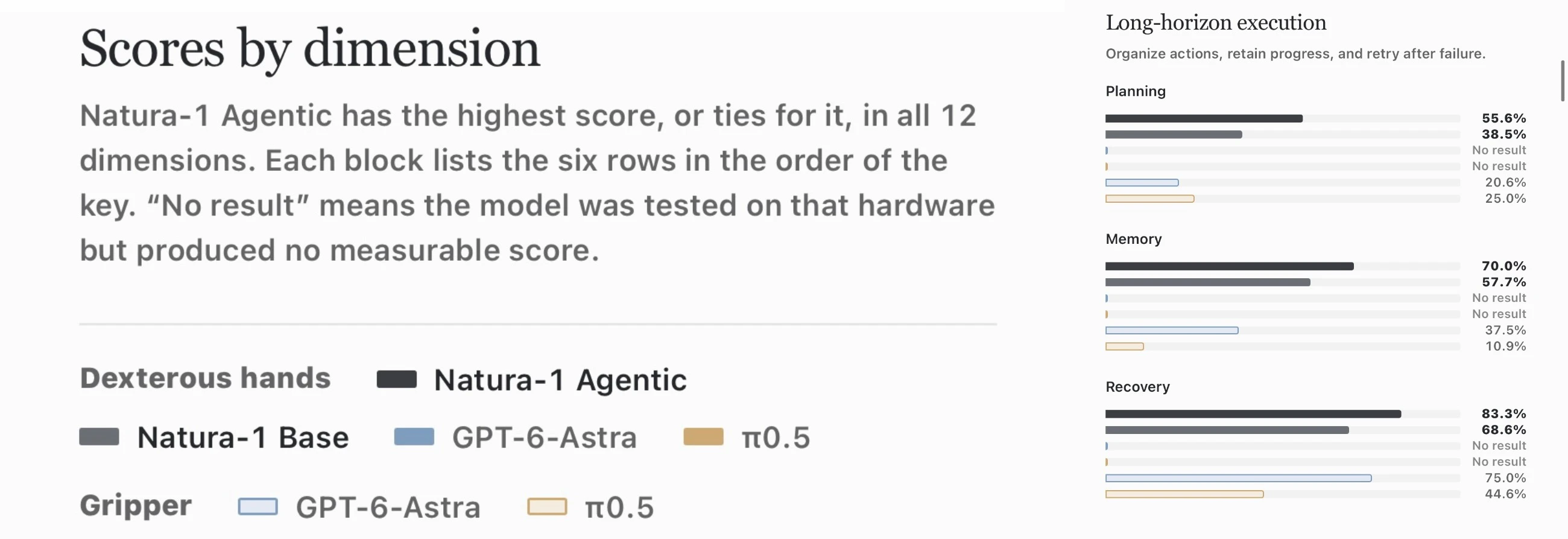
Natura-1 also achieved exceptional performance in long-horizon tasks. Data indicates that across multiple benchmarks for real-time planning, memory, and recovery, Natura-1's scores when deployed with dexterous hands in both Agentic and Base configurations were significantly better than those of Pi 0.5 and GPT-6 Astra.
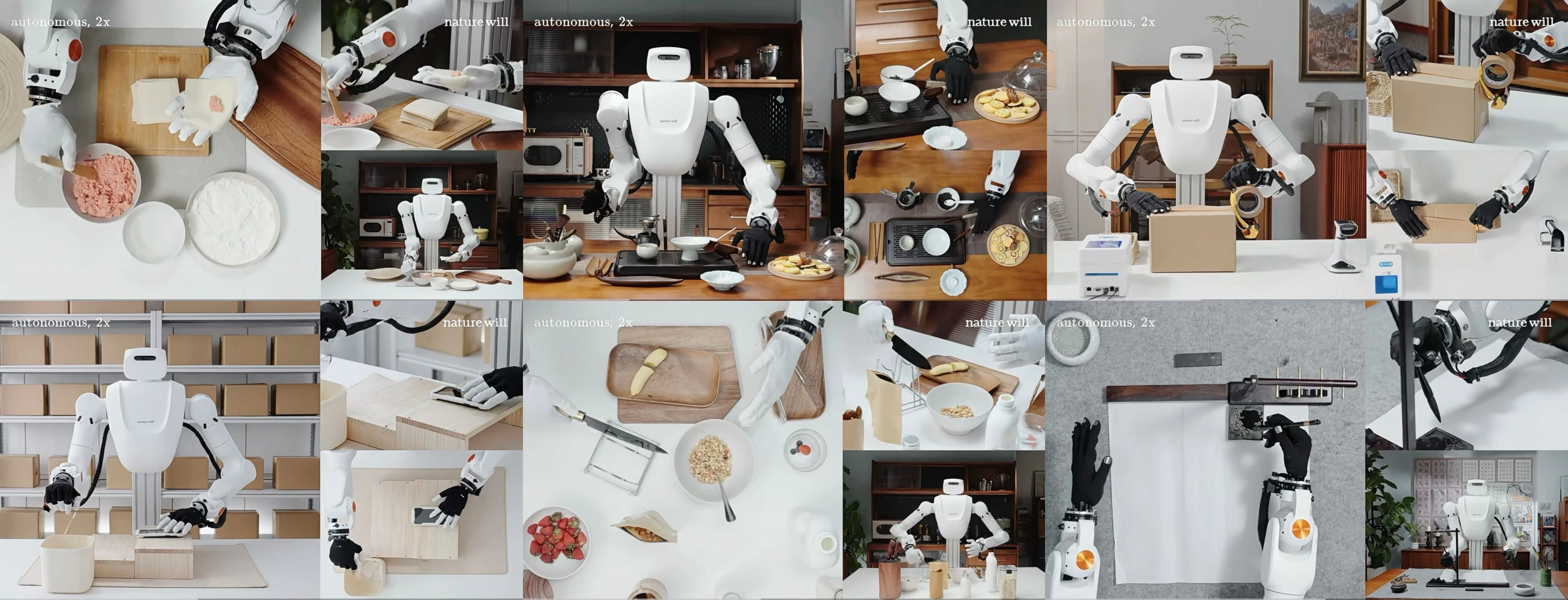
The selection of dexterous hands and scenarios involved deliberate consideration by the team. In the video, Natura-1 demonstrated six workflows recorded in a single continuous take, running for several minutes without human intervention. Whether making wontons, packing shipping boxes, serving tea, writing Chinese calligraphy, applying a tempered glass screen protector to a smartphone, or assembling a yogurt bowl, these tasks require the model to employ a single policy to handle different materials and dynamic contact conditions, including pouring liquids, scooping items, handling flexible objects, using multiple tools, and achieving precise part alignment.
"We hope the demonstrations of these demo scenarios can showcase the model's dexterous manipulation capabilities. The demos we chose all involve extensive tool use, as well as fine manipulation and in-hand manipulation. We also chose these tasks primarily to demonstrate that most daily tasks require dexterous hands, and that dexterous hands can wield tools in a highly natural and efficient manner, executing tasks continuously and with high precision."
The team therefore selected task categories that closely mirror real-world daily scenarios, which are both long-horizon and require dexterous manipulation. The primary goal was to test whether the model can maintain precise and coordinated bimanual movements throughout these long-horizon tasks. Specifically, it needed to orchestrate fine manipulation, tool use, and bimanual coordination across multiple continuous steps, rather than merely executing a single grasp. For instance, wrapping wontons involves flexible materials and in-hand manipulation; calligraphy and applying screen protectors require tool control and precise alignment; while packing, serving tea, and assembling yogurt bowls involve object manipulation, step transitions, and bimanual coordination. Collectively, these tasks test whether the robot can achieve end-to-end precision in a long-horizon task, where the outcome of one step serves as a reliable starting point for the next to complete an entire workflow. The team noted a significant shift: as the foundation model's capabilities improved, they no longer needed to repeatedly tweak every manipulation detail to accommodate its limitations. Following task-level fine-tuning, the foundation model simply acquired the ability to execute complex workflows.
Clearly, Natura-1 has taken another significant step in this area, addressing what was previously the biggest technical bottleneck for the commercial deployment of embodied models. However, the technical team noted that while these demos showcase certain capability dimensions, truly and systematically evaluating the model's abilities still requires assessment across various dimensions in standard benchmarks.
04 Emergence behind the scenes
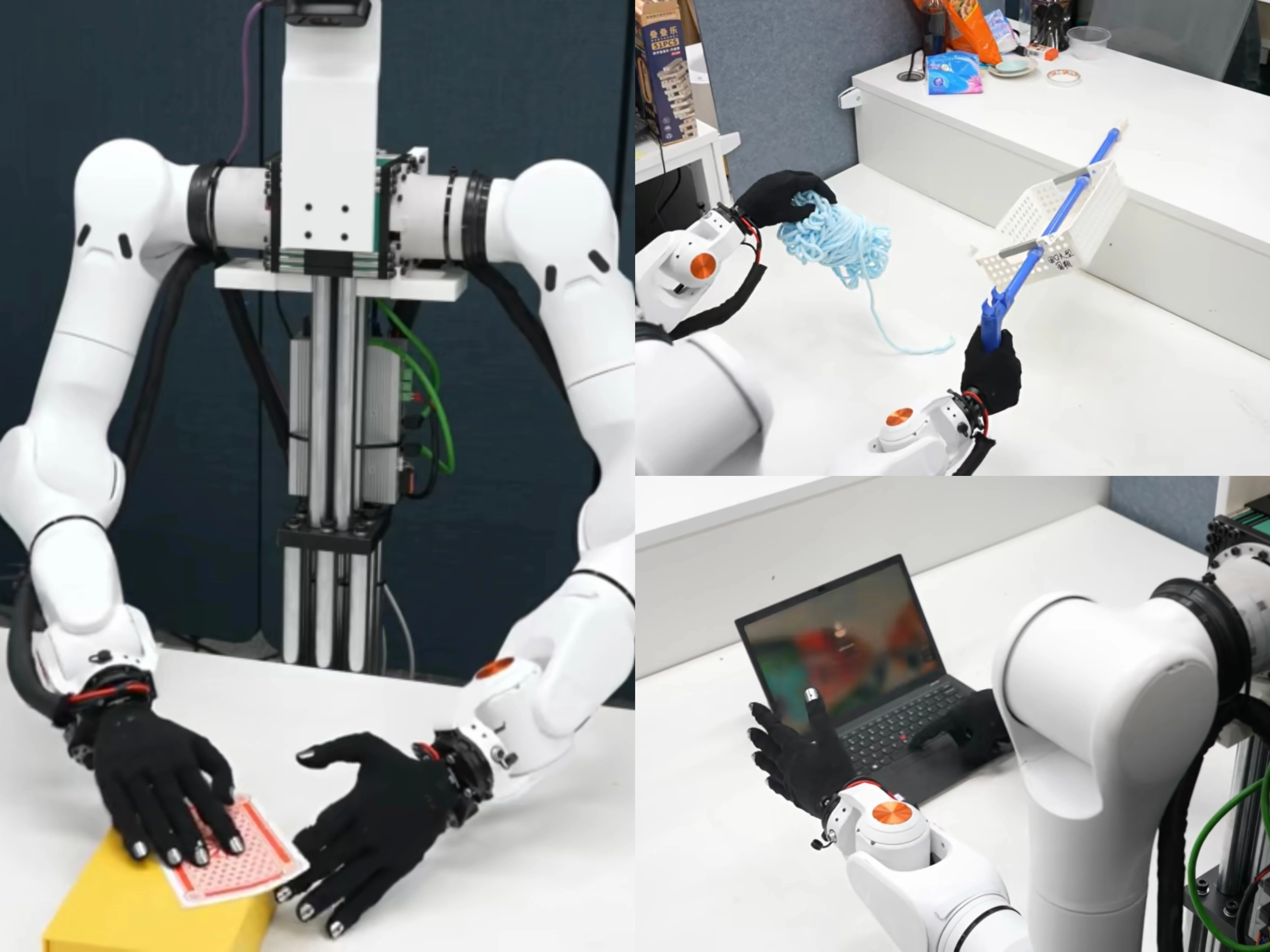
Even more noteworthy is the emergence of intelligent behavior from Natura-1 across a series of novel scenarios. In the publicly released demo videos, much of the data guiding its actions was never actually included in Natura-1's training corpus, nor did it require prior human demonstration.
The team views such behavior as an early indicator of general physical intelligence. Beyond the technical report, the team described how Natura-1 has produced a wide variety of surprises internally.
"Once, we were testing the yogurt bowl assembly task, instructing the model to pick up oats and pour them into a container. During the process, its performance seemed slightly off from our expectations. Upon checking, we realized we had deployed the wrong model: it was the version fine-tuned for the phone screen protector application task. Despite this, it still understood the instruction to pick up the oats and completed the relevant operations. This left a strong impression on me, because applying screen protectors and assembling yogurt bowls are vastly different tasks. Although this was just an accidental discovery during a single test, it demonstrated that even after being fine-tuned for a specific task, the model can still retain a degree of general capability."
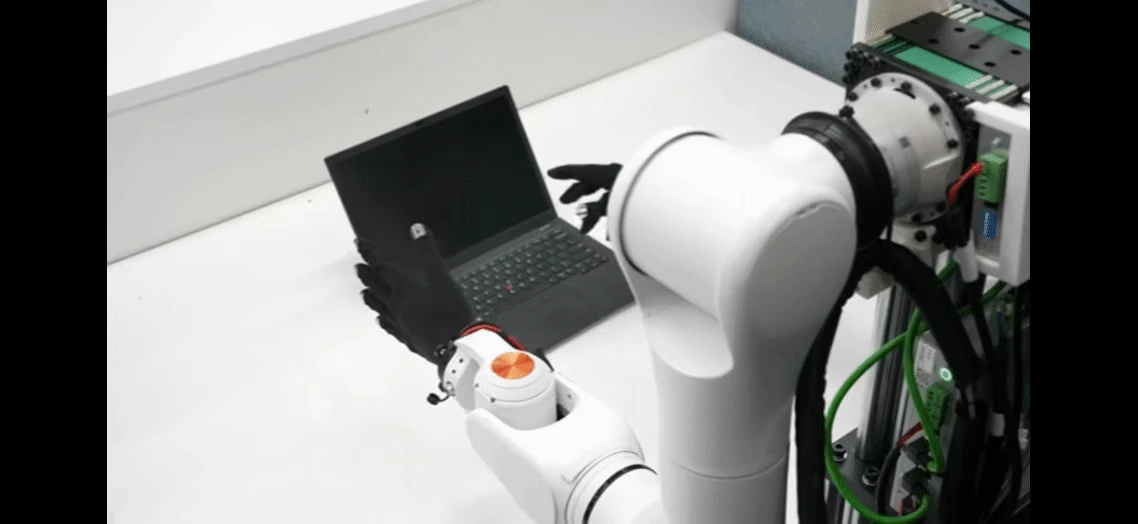
The team recalled an instance where they temporarily brought in a computer and asked the robot to turn it on and press the spacebar with its index finger. Since the team had not collected any real-robot post-training data involving computers, the researchers were initially unsure if the model could complete this task. However, the robot not only understood the operational goal but also successfully used its finger to press the key.
To trace the source of this ability, the team subsequently searched the post-training data for demonstrations that might support this type of manipulation, discovering that the pressing actions primarily originated from desk lamp switches and buttons. Even after removing the relevant motion data, the model was still able to press the keyboard. This result surprised the team, indicating that the model's key-pressing capability cannot be simply explained as a direct reproduction of a specific real-robot training motion.
But where exactly does this capability come from? One possibility is that large-scale human egocentric data provides experience related to button pressing, physical contact, and finger manipulation. The model then transfers this experience to the robot body through the connection between pre-training and post-training.
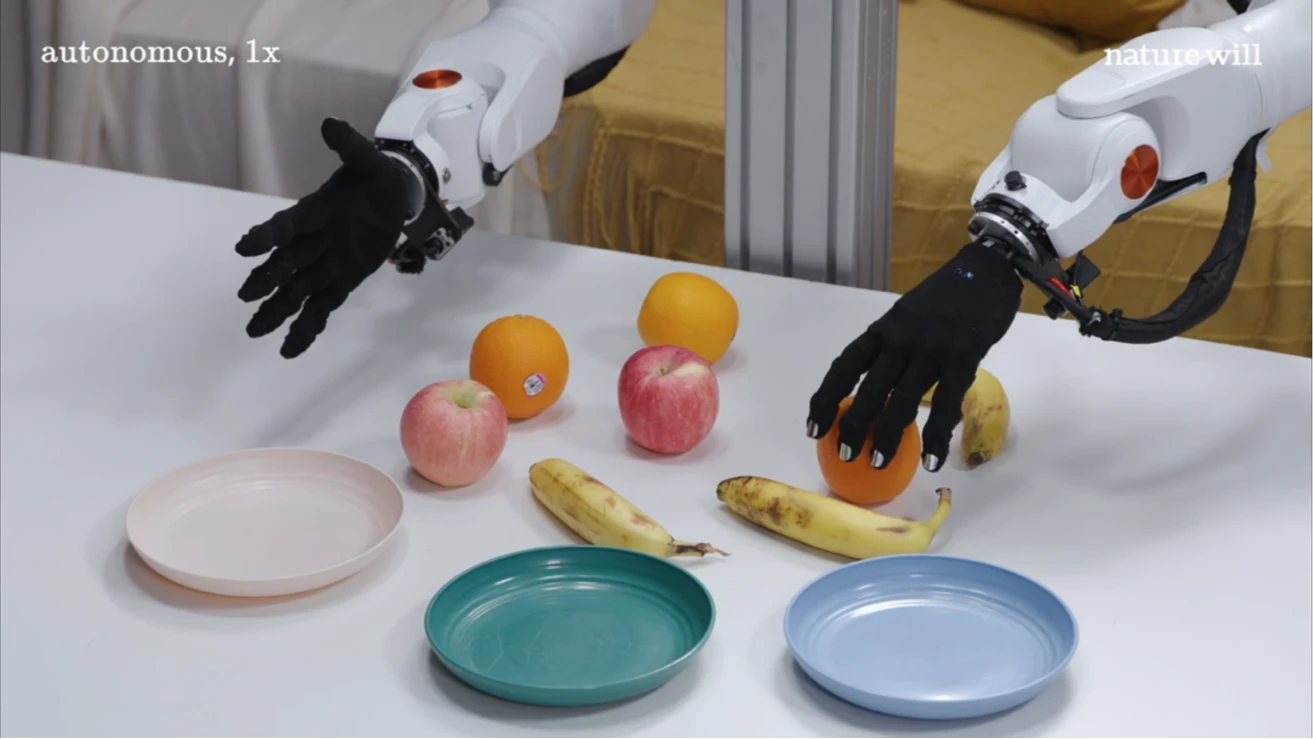
A similar phenomenon appears in object grasping. The team revealed that Natura-1 demonstrates remarkably broad grasping capabilities in internal testing. Even though the post-training data covers a limited number of scenes, objects, and tasks, the model can still complete a large number of pick-and-place tasks it was never specifically trained for. In ongoing internal tests, there is virtually nothing it cannot pick up.
"The post-training data for this is extremely limited—far less than people might assume—and it covers very few tasks, scenes, and objects. Yet we found that the model recognizes the vast majority of objects and can pick them all up."
In another scenario, researchers instructed the robot to first slide a roll of tape onto a bottle, then use a pair of bread tongs to pick up the empty bottle, and finally place it on top of a pair of scissors. The model executed these ad-hoc combinations successfully. The challenge lay not entirely in handling the tape, bottle, or tongs themselves, but in navigating the novel combinatorial relationships between the objects—relationships it had never been explicitly trained to handle.
Perhaps the most impressive demonstration for the researchers was a test that began as a bit of a joke.
A researcher decided to "tease the model." He held a lemon in his hand and quickly pulled it away just as the robot reached to grasp it, testing whether the robot could track the movement. As his hand kept moving, the robot continuously adjusted the positions of its robotic arm and dexterous hand. To the team's surprise, during this public demonstration, the robot's hand never touched the researcher's hand. This kind of continuous, interactive human-robot manipulation was entirely absent from the team's post-training data.
"In the video, you can see that the researcher's hand wasn't just moving back and forth across the table; its height was constantly changing as well. The robot's hand would dart behind the human hand, then dip below it, and then move above it."
The team had initially worried that when the lemon was moved above the researcher's hand, the robot might simply reach out and make physical contact with the person to grab the target, potentially causing injury. Instead, it executed a bypassing maneuver. The researchers half-jokingly described this behavior as the machine exhibiting a "benevolent personality."
This suggests that the Natura-1 model may have already learned the spatial relationships between humans and objects to some extent, using them to adjust its actions in dynamic environments.
Similar behaviors have appeared in other Natura-1 demonstrations. When picking up playing cards, the robot pushed the cards over the edge of a box to create an overhang that made it easier for its fingers to grip them. When it could not reach a ball of yarn, it used a long rod threaded through the basket's handle to pull the basket closer before retrieving the object. After failing to stack cups, it attempted to change the cups' orientation by rotating its wrist significantly. In a clothes-folding test, the researchers did not issue new verbal instructions; instead, they used gestures to draw the robot's attention to an orange resting on the fabric. The model responded to this nonverbal cue and subsequently reorganized its manipulation sequence.
These phenomena vary in complexity and cannot all be attributed to a single capability. Some may simply involve composing new actions from existing manipulation experience, while others require visual feedback in dynamic environments, spatial reasoning, or behavioral adjustment after a failure. Together, however, they illustrate a broader shift. As embodied foundation models scale up, researchers are shifting their focus from pre-designed, isolated skills to the manipulation strategies that models generate autonomously for novel tasks.
For Natural Will, these unexpected behaviors are a key reason the team remains excited and motivated to take the next step.
05 The Will To Act

The release of Natura-1 marks the first time Natural Will has presented a relatively complete picture of its technical vision for general physical intelligence. The approach involves building a foundation model on large-scale human experience and then using a comparatively limited amount of robot data for embodiment adaptation, enabling the model to gradually acquire dexterous manipulation skills across tasks. Whether this approach continues to succeed depends on whether data, models, and infrastructure can scale synergistically.
Natural Will’s technical report refers to this approach as "Build to Scale." On the data side, the team must continuously acquire, process, and filter large-scale human experience. On the model side, the architecture must effectively utilize this ever-growing stream of information. On the infrastructure side, more compute resources must be translated into actual training time rather than lost to system overhead and equipment idle time.
In the interview, the team noted that these three components do not follow a strict sequence and must advance together. The biggest current challenge is translating generalization capabilities into reliable performance on complex tasks. Key questions remain: can the model maintain high success rates over longer horizons, execute finer movements, and recover from failures? Furthermore, it must still meet the speed, hardware stability, and cost requirements of real-world deployment. All of these areas require continued effort.
In the interview, the Natural Will team identified model generalization as the core challenge they must continue to address. Moving forward, the team will further improve the model's generalization across diverse tasks and scenarios, specifically targeting higher success rates and faster execution in long-horizon tasks, fine manipulation, and error recovery.
This capability ultimately needs to be demonstrated through complete tasks. For example, when entering a new kitchen and encountering unfamiliar utensils and ingredients, the robot must be able to execute multiple steps coherently and adjust if deviations occur along the way. For users, what matters is whether the robot can reliably finish the job, rather than just demonstrating a single isolated action.
These behind-the-scenes stories also bring the people involved vividly to life, revealing the gripping details behind Natura-1 and the idealism that drives the Natural Will team alongside their cautious expectations.
Natural Will stated that it maintains long-term expectations for the general manipulation capabilities of dexterous hands, while also anticipating that initial deployments may first utilize lower-cost hardware. Looking ahead, the company will continue to explore the upper limits of general physical models and determine how to translate existing capabilities into stable, affordable real-world applications. When asked about the arrival of a 'GPT moment' for embodied AI, the team expressed cautious expectations.
Regarding a 'GPT moment' for embodied AI, it is currently more appropriate to describe progress in terms of specific capabilities: which tasks the model can generalize to, under what conditions it succeeds, whether it can recover from failures, and whether it can achieve the reliability required for practical use. In the future, we hope these capabilities will continue to expand, enabling robots to learn from human experience and operate in more real-world scenarios.
To date, a growing number of embodied AI companies have observed early signs of emergent machine intelligence at the technological frontier, recognizing the importance of ingesting data from the physical world and scaling up training. Recently, Guanglun Intelligence and Jianzhi Robotics both announced collaborations with Natural Will focused on human embodied data, demonstrating that the emergence of intelligence also relies on synergy across the broader industry ecosystem.
The tide of intelligence rolls on. As one of the leading companies in China's embodied AI sector, Natural Will carries significant expectations. Amid widespread industry and public anticipation for an embodied AI 'GPT-3 moment,' the release of Natura-1 marks the company's first major milestone in developing a general physical intelligence foundation model. Looking ahead, the core of the general artificial intelligence Natural Will ultimately aims to achieve lies in possessing comprehensive generalization capabilities. Truly realizing this goal remains a long journey; for now, the journey itself matters more than the final answer. In its quest to uncover intelligence within the physical world, Natural Will keeps moving forward.