

Baidu Unveils AI Products and Proposes 'Three Principles of Organizational Evolution' at Baidu World 2026
By Jiang Si Qi
At Baidu World 2026 in Beijing on November 12, Baidu founder Robin Li identified the "intelligent organization" as the next phase of AI and introduced three principles for organizational evolution: breaking role boundaries, solidifying tacit knowledge, and designing closed-loop processes.
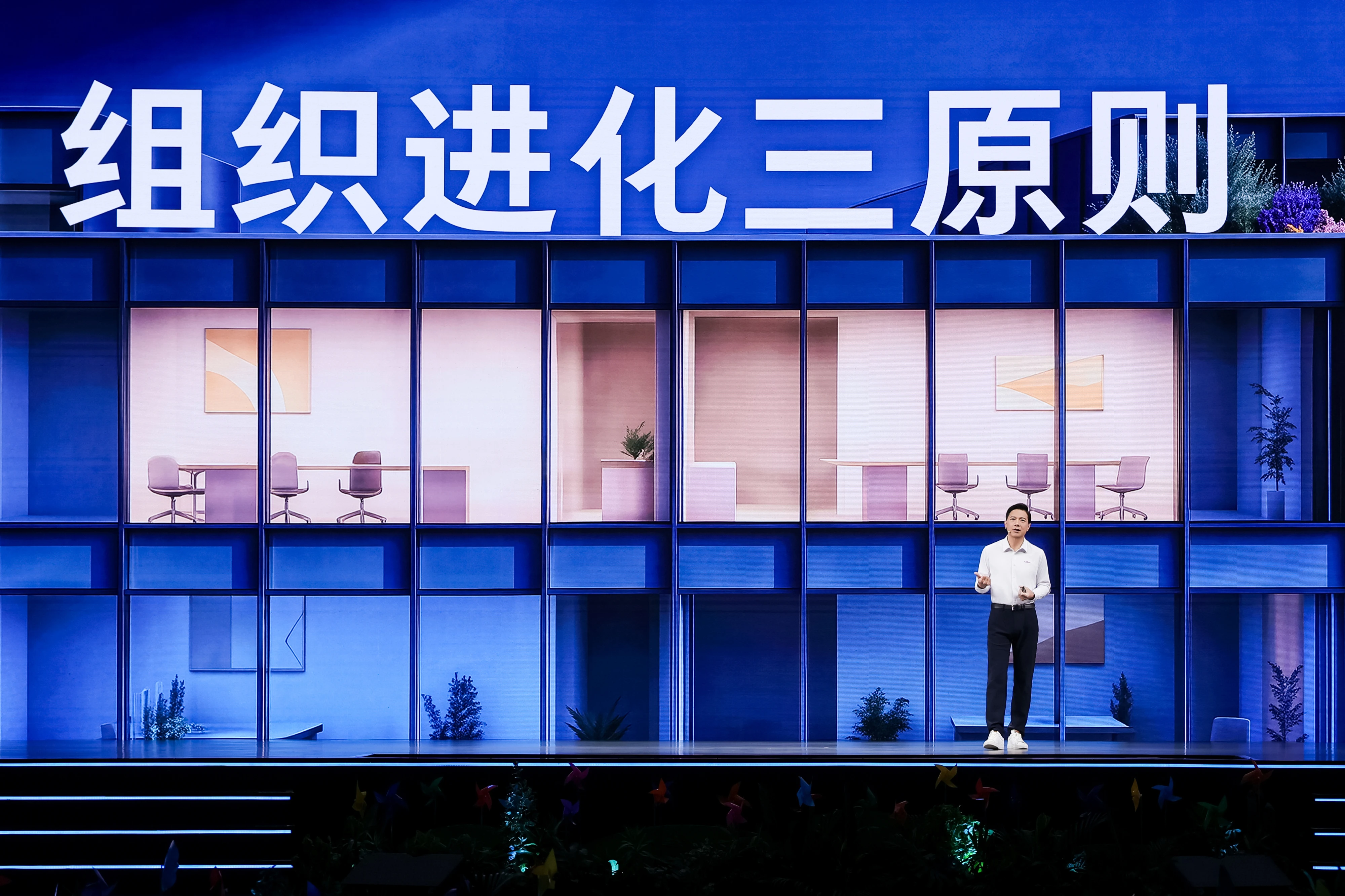
On November 12, Baidu World 2026 was held in Beijing. At the opening ceremony, Baidu founder Robin Li proposed that the next chapter of artificial intelligence is the "intelligent organization," and introduced the "Three Principles of Organizational Evolution" for the first time: breaking down role boundaries, consolidating tacit knowledge, and designing closed-loop processes.
That day, Baidu launched "Token Exchange," a large model trading platform, released the preview version of ERNIE 5.5 Flash and two ERNIE application models, and updated its four major agents: Baidu Dazi, Kuku, Baidu Yijing, and Famu. Meanwhile, Baidu Intelligent Cloud released the Tianchi 1,024-card supernode, Kunlunxin announced its follow-up product plans, and Apollo Go disclosed its global operational progress.
From role division to task networks
According to Li, applying AI in enterprises requires redesigning organizations and workflows. He drew an analogy to factory transformations in the industrial era: replacing electric motors was just the starting point; redesigning the factory is what ultimately translates new technologies into productivity.
Building on this premise, his first principle is to break down role boundaries, shifting organizations from fixed role divisions to task networks. He believes roles will not disappear but will gradually converge into two categories: Builders, who create new things, and Sellers, who handle communication and connections between people.
The second principle is to consolidate tacit knowledge. If employees' experience remains solely in their heads, it remains an individual capability; it must be made explicit and consolidated on the company's platform to be reused across the organization. The third principle is to design closed-loop processes, establishing measurable standards for tasks so that AI can continuously optimize based on the outcomes.
"Turn one person's experience into the entire organization's capability." Li used this phrase to summarize the impact of knowledge consolidation.
According to Baidu, over the past year, the number of daily active internal agents grew from approximately 5,000 to 37,000, and the number of effective tasks completed by these agents each week increased from 84,000 to more than 1 million. Currently, Baidu has established 4,300 workspaces and consolidated more than 20,000 organizational skills.
Token Exchange Provides Model Verification as Ernie Updates Foundation and Application Models
The proliferation of AI models has introduced challenges in evaluating their origins, quality, and service stability. To address this, Baidu has launched Token Exchange, a large model trading platform that allows enterprises and individuals to select and invoke model tokens.
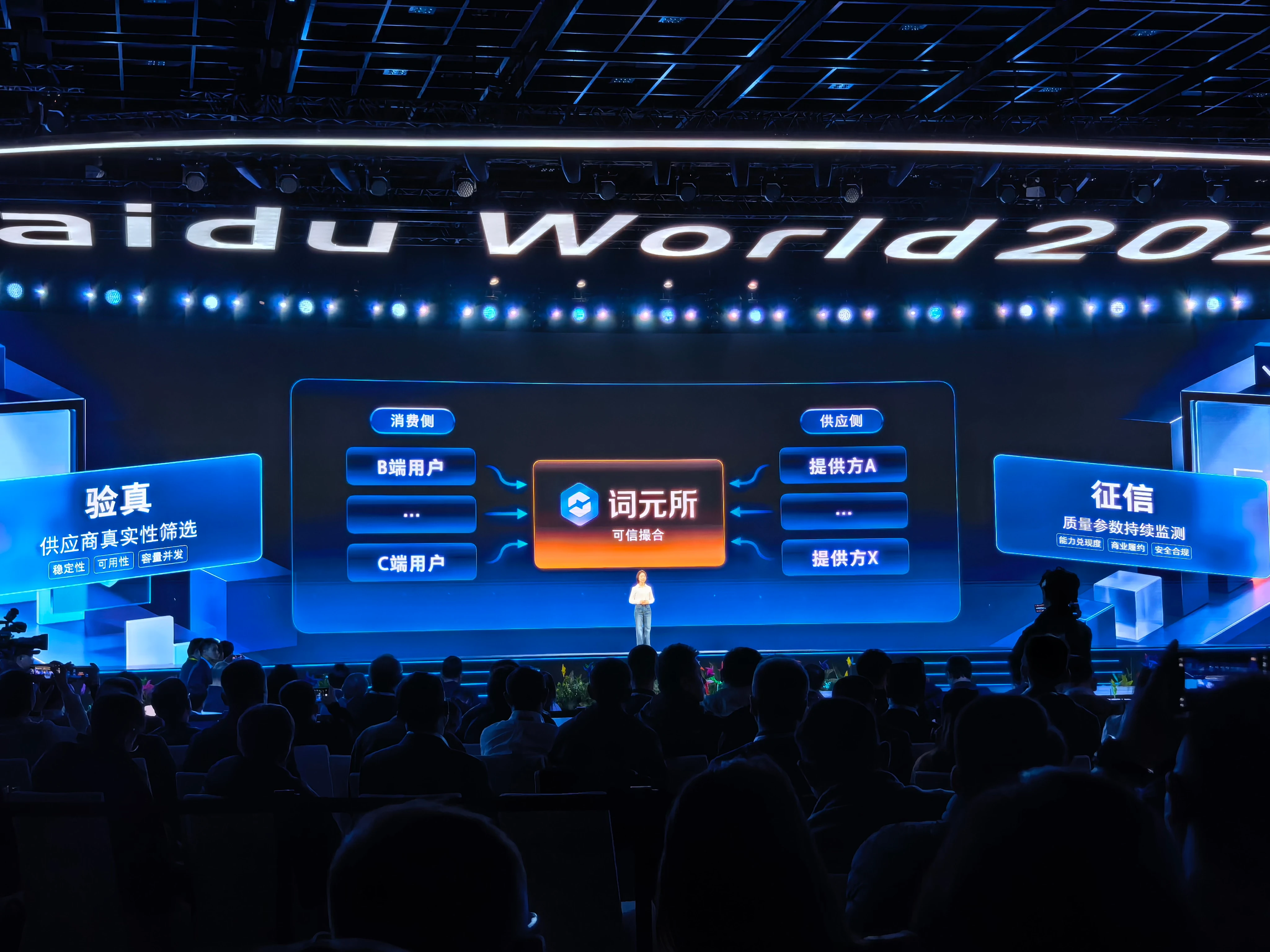
Token Exchange primarily offers two core capabilities: authentication and credit assessment. It verifies resources through model fingerprint matching, capability evaluations, and performance and availability testing. It then combines regular spot checks with call-chain monitoring to establish credit ratings for model providers.
According to Baidu, in the month since Token Exchange launched, more than 100 supply resources have onboarded the platform. Daily invocation volume has surpassed 50 million calls, processing over 700 billion tokens per day.
On the foundation model front, Baidu released Ernie 5.5 Flash Preview. The model features 280 billion total parameters, activating 14 billion parameters per token, and supports a context length of up to 1 million tokens. Baidu states that its capabilities span programming, 3D modeling, knowledge work, and content creation.
For application models, Baidu simultaneously launched the Ernie Flash Deep Thinking model and the Ernie One-Camera Micro-Expression large model. Both are now available on the Baidu Intelligent Cloud Qianfan platform, with API services opened to enterprise customers and partners.
Four Major Agents Update Creative and Business Capabilities
Baidu Yijing, a digital human agent, has launched Short Comic Drama Studio. The platform covers the entire production pipeline from ideation, scripting, and storyboarding to final video rendering. It also supports the localization of plots, characters, and scenes in existing works to help short comic dramas expand overseas. Baidu announced that, powered by its proprietary video generation model, the production cost is RMB 0.2 per second.
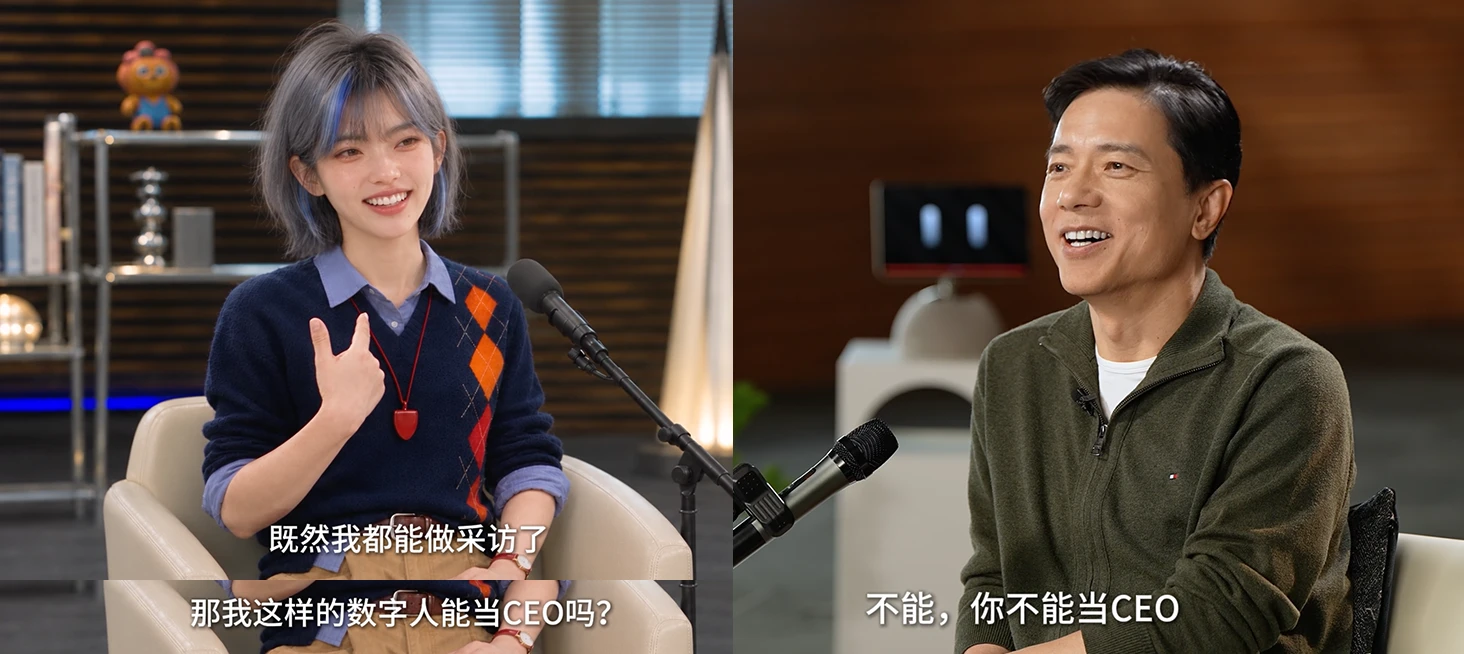
The video clip featuring digital human Xijiajia interviewing Robin Li, showcased at the conference, was also generated by Baidu Yijing.
Baidu Dazi has been upgraded to serve as a unified entry point connecting all of Baidu's professional agents, while also opening up the Harness engine and Agent API. Baidu disclosed that the Dazi team completed more than 160 iterations over six months, with 90% of the code and 50% of external communication materials generated by Dazi itself.
Kuku, jointly launched by Baidu Wenku and Baidu Netdisk, along with its overseas version KOOKO, is designed for document processing and content creation. Baidu stated that these platforms house 1.8 billion pieces of professional content, 750 million Chinese and English documents, and a network of millions of experts, providing robust content and knowledge support for the products.
Baidu Famou has been upgraded to version 3.0, targeting complex tasks such as production operations, business strategy, and industrial R&D, with ultimate business metrics serving as optimization objectives. Currently, its customer base spans 25 of China's 41 major industrial categories.
Tianchi supernode unveiled, Kunlunxin M300 planned for launch next year
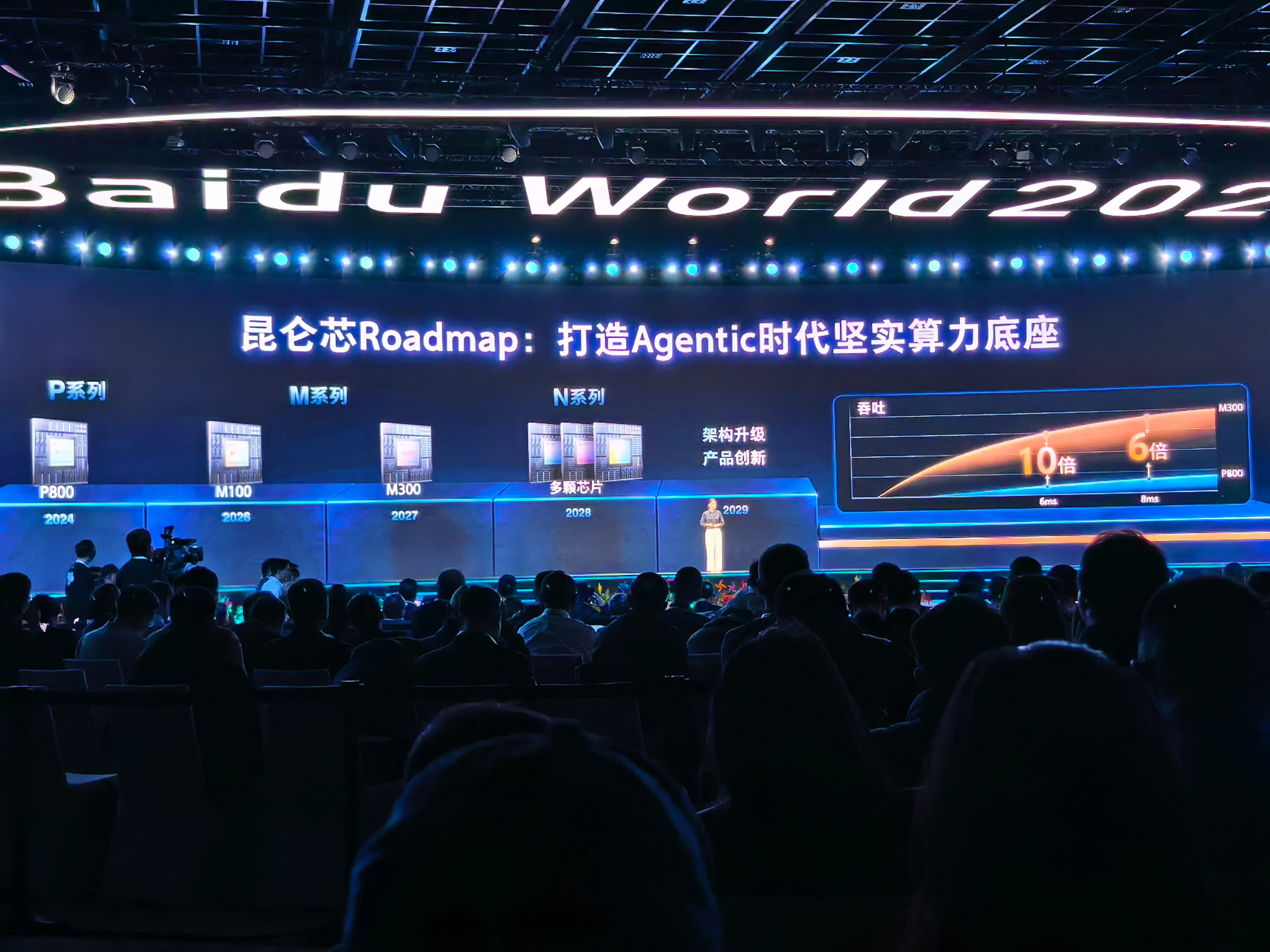
On the compute infrastructure front, Baidu Intelligent Cloud unveiled the Tianchi 1,024-card supernode. Kunlunxin disclosed that the M100 is now commercially available, positioned primarily for cost-effectiveness, while the flagship M300 is scheduled for launch in 2027, featuring upgrades in compute, storage, and interconnect capabilities.
Discussing embodied AI, Robin Li assessed, "Today's embodied AI is roughly at the same stage of development as autonomous driving was around 2016."
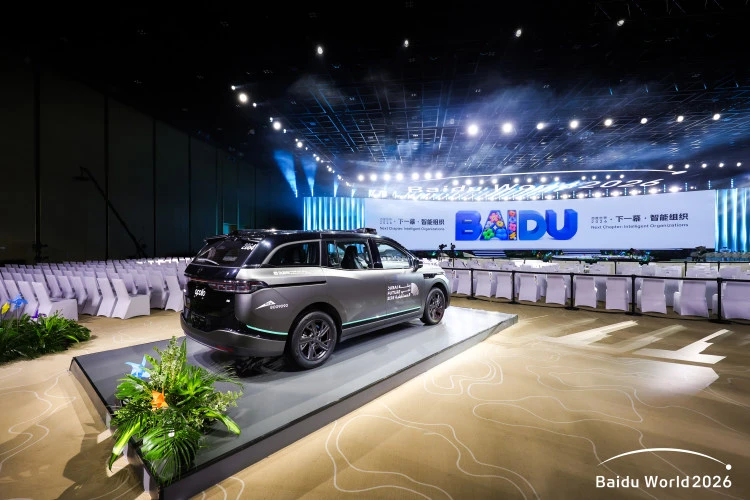
Baidu also disclosed that Apollo Go has expanded to 28 cities globally, accumulating more than 350 million kilometers of autonomous driving mileage, and has launched fully driverless commercial operations in Dubai and Abu Dhabi. Additionally, Apollo Go has partnered with CAR Inc. to explore mobility models that combine traditional self-drive rentals with autonomous driving services.