
4.5 Billion RMB in Funding, One Hand, and an Ice Cream Shop
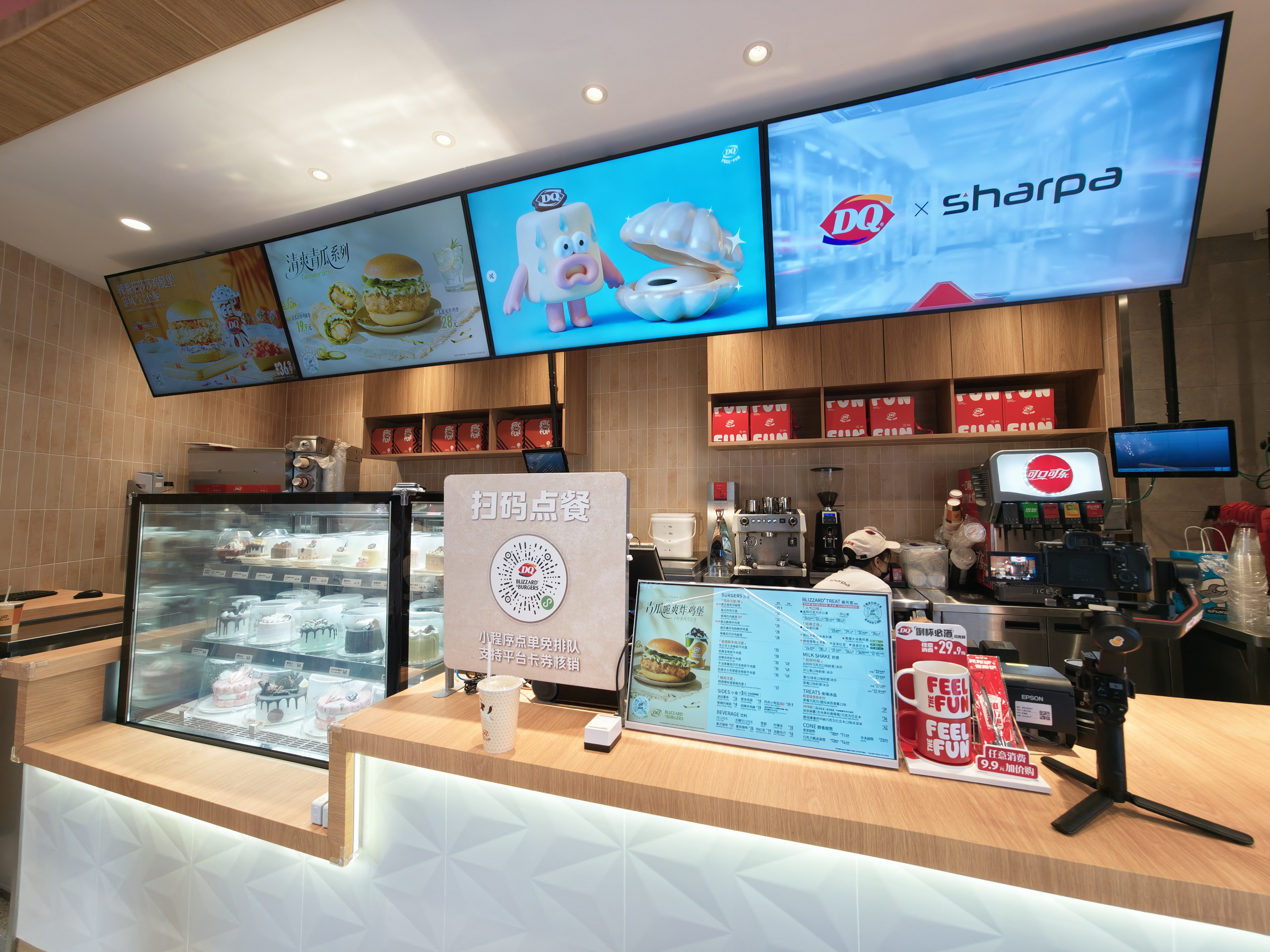
Inside a Dairy Queen (DQ) store on Wujiang Road in Shanghai, a white robot stands tall, its body covered by large white panels. Two long mechanical arms hang down along its sides, ending in five-fingered dexterous hands nearly the size of human hands. To make ice cream, both hands are fitted with transparent food-grade gloves.
In front of it lies the same operational area previously used by DQ staff. Paper cups, metal cup rings, the ice cream machine, and toppings are arranged on the counter and storage racks exactly as they were before. The robot extends its long arms to pick up cups, attach rings, dispense ice cream, add toppings, mix, and finally deliver the product.
We watched the robot complete an entire ice cream-making process on-site. Its movements were smooth, with no remote control from humans or engineers stepping in midway. From picking up the cup to final delivery, the robot took over six minutes; a human employee would typically complete the same task in about three minutes.
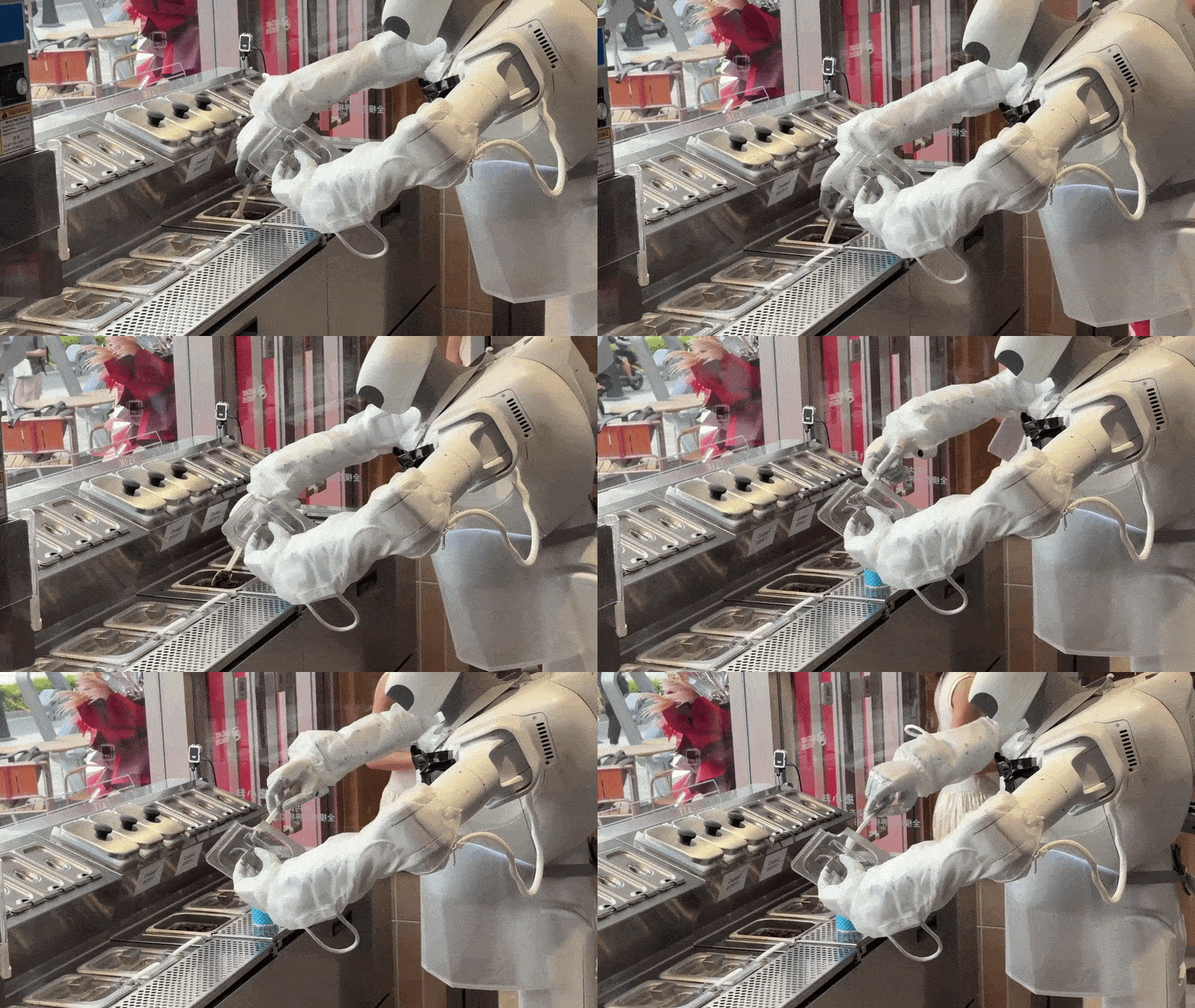
This white robot is named North, developed by Sharpa. The Wujiang Road location marks the first time Sharpa and DQ have deployed North in a real, operating restaurant.
Currently, North can only make one type of ice cream: the Oreo Blizzard. If you’re not a DQ customer, the name “Blizzard” might not be familiar. DQ stands for Dairy Queen, a chain brand that started with ice cream, and the Blizzard is one of its most iconic products. Soft-serve ice cream is blended thoroughly with toppings like Oreo cookies and chocolate until thick enough that after preparation, staff invert the cup to demonstrate that the contents do not fall out—the “upside-down test” has become this product’s most recognizable feature.
North successfully performed this signature move on-site, drawing cheers from the crowd.
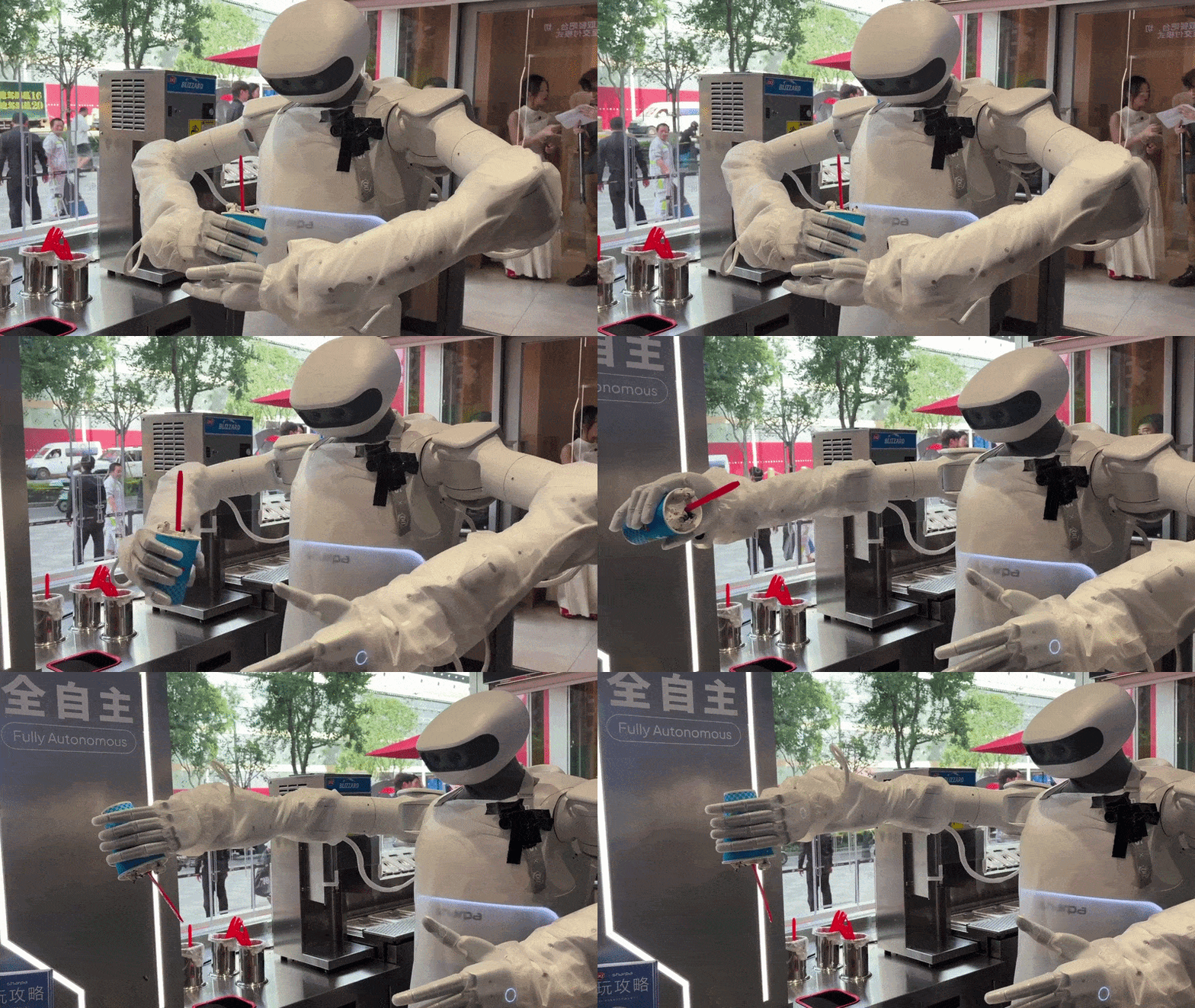
We visited the store for an interview on the day before its official opening. When checking the reservation mini-program, all available slots for consumers the next day were already fully booked. After the store officially opened, online reservations for the following two weeks were quickly filled up as well.
The store currently operates 24 hours a day, but North runs for approximately 12 hours each day at this stage. Calculating at six minutes per cup, even without any interruptions, North's theoretical daily production capacity is only around 100 cups. Actual operation also needs to account for battery changes, unit replacements, and handling exceptions. This output is certainly insufficient for a single store, so the manual counter remains open for orders, eliminating the need for online reservations.
Sharpa was founded in late 2024 by Li Yifan, Xiang Shaoqing, and Sun Kai, who are also the three co-founders of Hesai Technology. Sharpa operates independently, with the three co-founders primarily responsible for strategic guidance, planning, and setting the general direction, without holding specific daily management positions. Hesai has become one of Sharpa's suppliers through components such as LiDARs and robotic actuators.
Just before DQ's opening, Sharpa publicly disclosed for the first time that its cumulative financing had exceeded 4.5 billion yuan. Investors include Alibaba, Meituan, Tencent, JD.com, Transsion, Sequoia China, Qiming Venture Partners, Meituan Longzhu, and Guanghe Capital.
After observing North at work, we went upstairs to communicate with the Sharpa team. About ten minutes later, Li Yifan entered the room. He is a co-founder of Sharpa and still serves as the CEO of Hesai Technology.
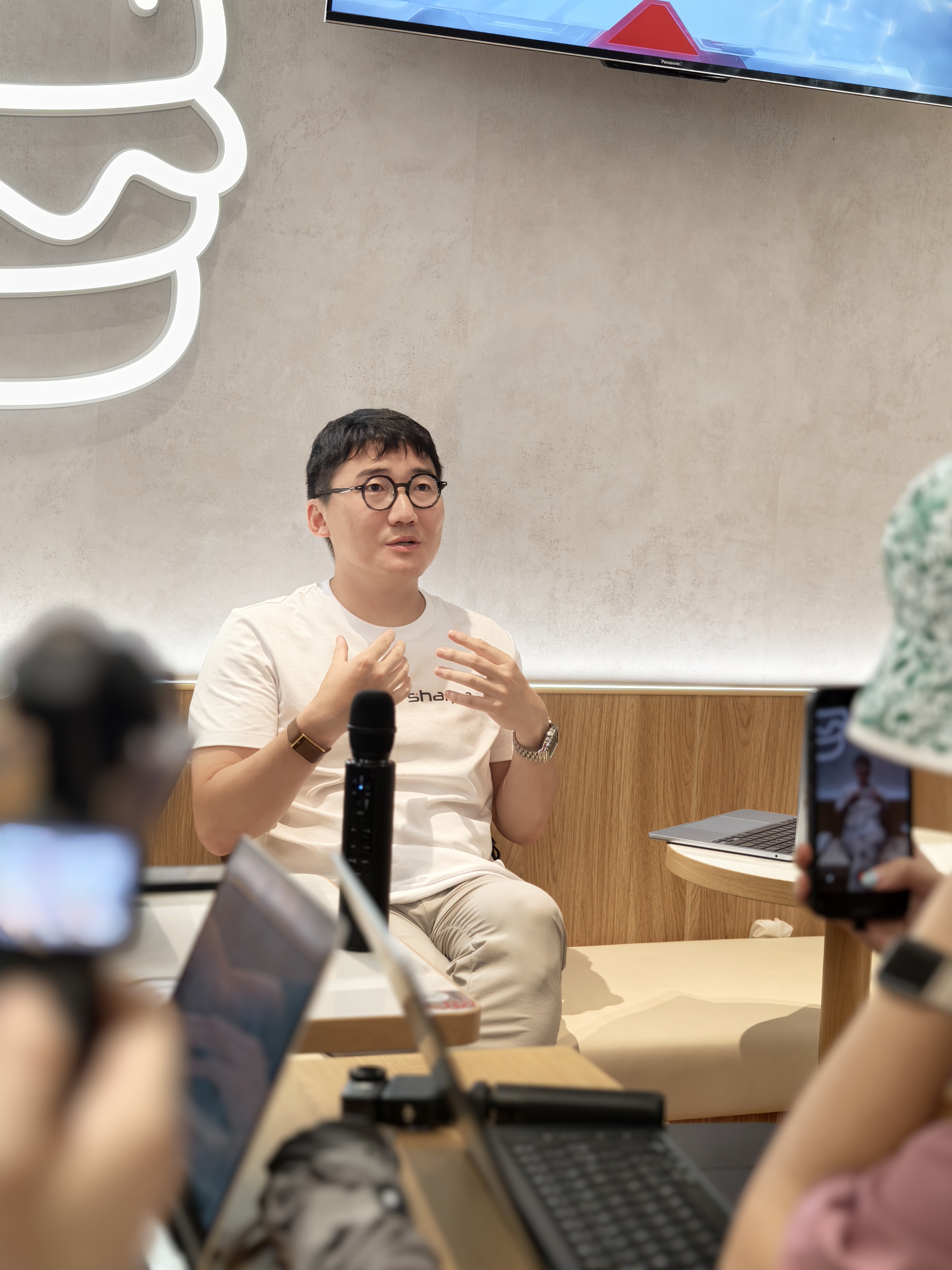
Li Yifan began by correcting an impression that outsiders easily form:
'Only you think Sharpa is a dexterous hand company; I don't see it that way.'
In his definition, Sharpa aimed from its inception to create "end products and AI" that would ultimately enter homes. It did not intend to build a robot primarily for chatting and companionship, but one capable of truly doing laundry, clearing tables, picking up packages, and even scrubbing toilets.
"Singing and dancing do not solve these problems."
However, the product for which Sharpa was first remembered by the industry was neither North nor a home robot—it was a hand.
And it was an expensive hand.
I. Why Start with an Expensive Hand
In 2025, Sharpa launched Wave. Close in size to a human hand, it features 22 active degrees of freedom across five fingers and incorporates high-resolution tactile sensing at the fingertips. Subsequently, it has been seen dealing playing cards, folding paper, taking instant photos with a Polaroid camera, and playing table tennis. Wave has also entered robotic research and public demonstrations at institutions such as NVIDIA and Google DeepMind.
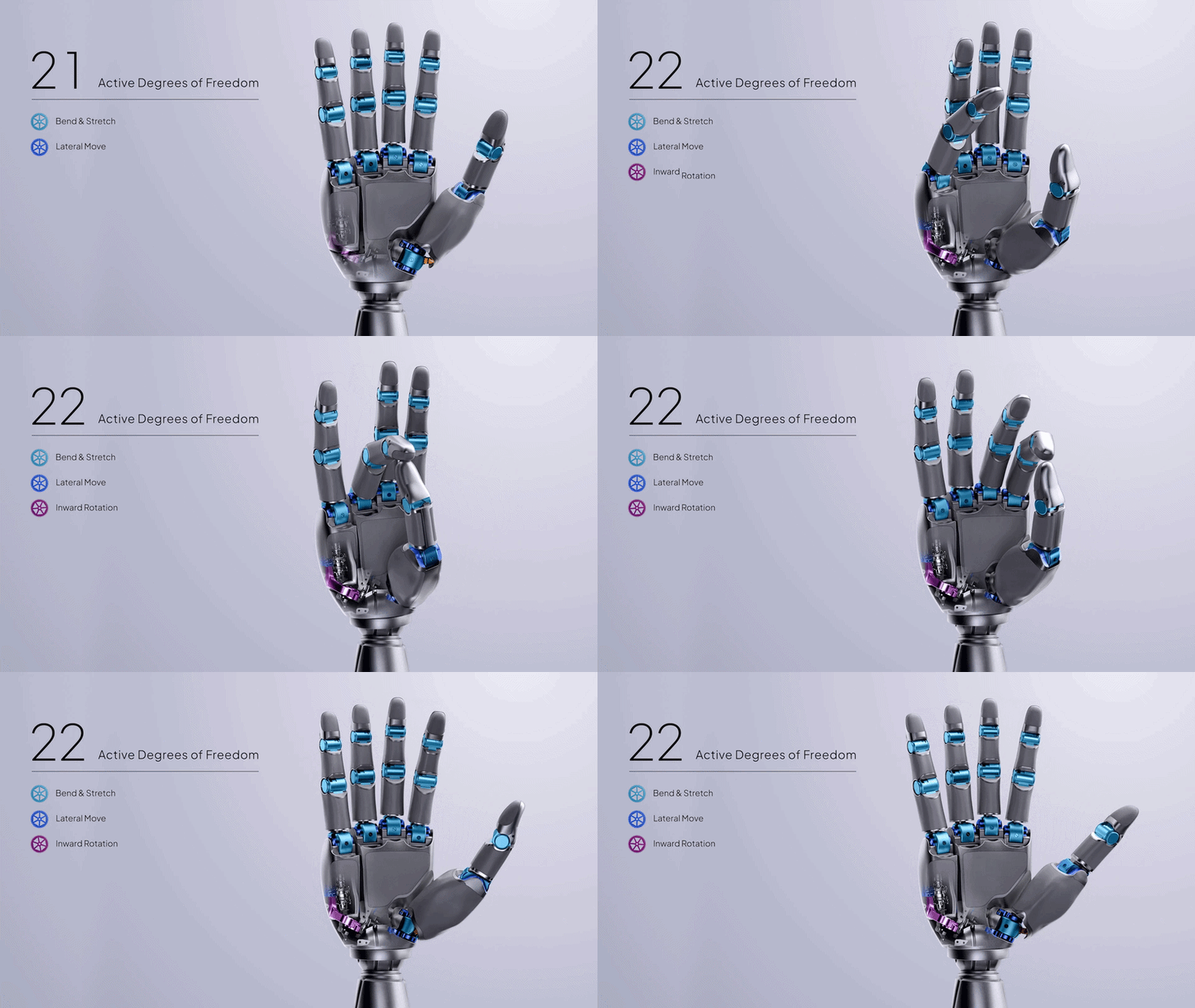
There has long been a notion in the industry that a single unit costs approximately $50,000. Sharpa has not published a uniform retail price, stating only that custom quotations are adopted.
However, this price is already quite high for domestic dexterous hands today. Over the past year, as humanoid robots have begun to transition from prototypes to small-batch deliveries, a wave of dexterous hand companies has been increasing degrees of freedom and tactile capabilities while driving prices down from tens of thousands or over a hundred thousand yuan to just a few thousand yuan. For an embodied AI company preparing to mass-produce robots, the cost of two hands ultimately becomes a key consideration in the overall system cost.
Sharpa, however, does not treat price as its top priority; its product priorities for Wave are performance, reliability, and cost. Officially published specifications include 22 active degrees of freedom, a weight of 1.3 kg, and tactile data output at up to 180 frames per second. Reliability testing includes 2.5 million presses, over 4,000 meters of friction stroke, 3,200 instances of 30g mechanical shock, and more than 1,000 hours of temperature cycling.
Performance is naturally important, but the reliability of dexterous hands remains a significant industry pain point. In conversations with multiple robotics companies, complaints about the lifespan of dexterous hands were common. Under intensive R&D and data collection efforts, it is not rare for a hand to begin malfunctioning after just a few days or a week of use. As more motors, transmission components, sensors, and cables are packed into a space roughly the size of a human hand, issues such as wear, heat dissipation, collisions, and cable lifespan become critical factors in long-term operation.
Feedback regarding Wave has been relatively positive. Some practitioners reported that their Wave units could be used continuously for two to three weeks, though others believed actual usage was shorter. Given the significant differences in load, motion frequency, and testing methods across teams, it is difficult to convert these feedbacks into a unified lifespan figure. However, among the users we have engaged with, the consensus is that Wave is relatively durable.
A founder of a robotics company told us that a crucial criterion when selecting a dexterous hand is "whether after-sales support can keep up." If one hand fails, it may halt an entire robot, along with subsequent data collection, model training, and testing. If there is no replacement hand immediately available during return-for-repair periods, the entire R&D schedule will be affected. Once procurement decisions are made, beyond degrees of freedom, tactile capabilities, and load capacity, delivery times, spare parts availability, and repair speed also enter the evaluation.
While Wave’s performance and reliability have gained considerable recognition, its price and supply constraints limit its widespread adoption as a standard component by embodied AI companies. Even if customers are willing to accept the price, orders do not necessarily result in immediate delivery.
But Sharpa never intended to make becoming a Tier 1 supplier of dexterous hands its ultimate business goal.
In a recent interview with Wan Dian (LatePost), Li Yifan stated that in the era of physical artificial intelligence, "there is no opportunity to be purely like OpenAI; the only chance is to be like Apple." In his view, robotics is not just about perfecting models; hardware platforms, data, models, and final products must be integrated.
The first-generation Wave therefore did not simultaneously undertake two mutually constraining tasks: pushing operational performance to a very high level and immediately achieving cost levels that large-scale robot manufacturers could accept. Sharpa chose the former first, and its early users, who were better matched with this type of product, were more likely to be technology companies and robotics laboratories with ample budgets seeking to maximize operational capabilities.
In today's embodied AI industry, shipment volume is not the sole industry coordinate. Mass production can verify manufacturing and supply chains, but since technical routes have not yet converged, which laboratories a piece of hardware enters and what new data and model methods it is used to validate also influence its position in the industry.
Wave quickly gained the latter kind of influence.
NVIDIA, the University of California, Berkeley, and the University of Maryland participated in EgoScale, which used twenty thousand eight hundred fifty-four hours of first-person human videos to train a twenty-two degree-of-freedom Wave, studying whether human videos can provide scalable data for high-degree-of-freedom dexterous manipulation; another work from Berkeley attempted to remap ordinary third-person human videos into data that robots can execute.
These studies may not directly lead to a significant increase in hardware sales, but they have gradually made Wave a highly recognizable hardware platform in this round of dexterous manipulation research. People haven't yet figured out what kind of robot Sharpa ultimately wants to build, but its hand already has a name.
If robots are ultimately to do laundry, cook, and clean for people, they must first learn to use a world already designed for human hands. Cabinet doors, kitchen tools, and appliance buttons are all ready-made. Traditional automation can add fixtures and fix materials around the machine; if general-purpose robots require environmental modifications every time they move to a new location, their range of transferability will quickly become limited.
DQ has brought this requirement into reality. As a mature chain restaurant brand, DQ's ice cream machines, paper cups, toppings, food safety standards, and production processes are all embedded within a standardized operational system. For robot companies, switching to an easier-to-grasp cup, fixing the spoon in place, or replacing a machine can all reduce technical difficulty; for DQ, however, these things cannot be changed on-site by engineers just because they want to.
Li Yifan gave a very small example: it is not that easy to replace Oreo with another ingredient, let alone replace a kitchen appliance.
"He won't change, so I have to."
North continues to use DQ's original paper cups, metal rings, spoons, toppings, and ice cream equipment. The store has adapted its space, facade, and infrastructure for display, operations, and robot deployment, but DQ did not build a new kitchen specifically for the robot.
A high-degree-of-freedom hand with tactile feedback, sized similarly to a human hand, finds a more concrete purpose here than dealing cards or playing ping-pong: enabling robots to continue using tools designed for humans.

With this capability, North faces challenges beyond merely gripping steadily.
It can pick up a spoon and sense that the paper cup is slipping, but it also needs to understand why it should pick up a spoon at this moment, whether the Oreo Blizzard already has two or three scoops of toppings added, and where it should go next.
2. Connecting the 55 Steps
At DQ, a single Oreo Blizzard is enough to simultaneously activate all the issues facing the entire robot.
North first needs to know where the production process stands. A Blizzard requires three consecutive scoops of Oreos; after each scoop, the visual scene may not change much, but the system must remember which step it has just completed. The two hands must move between the cup rack, ingredients, and the ice cream machine without colliding with the equipment or each other. Once the paper cup is firmly held, the system must detect whether the cup deforms, begins to slide, or experiences changes in resistance during stirring, requiring faster feedback.
Sharpa does not use a single model to process everything at the same frequency. It now divides the entire system into three layers: a slower layer for understanding and task planning, a middle layer for motion, and a bottom layer that handles touch, force, and post-contact movement corrections at a higher frequency. Sharpa refers to the two layers responsible for motion and high-frequency contact control as CraftNet.
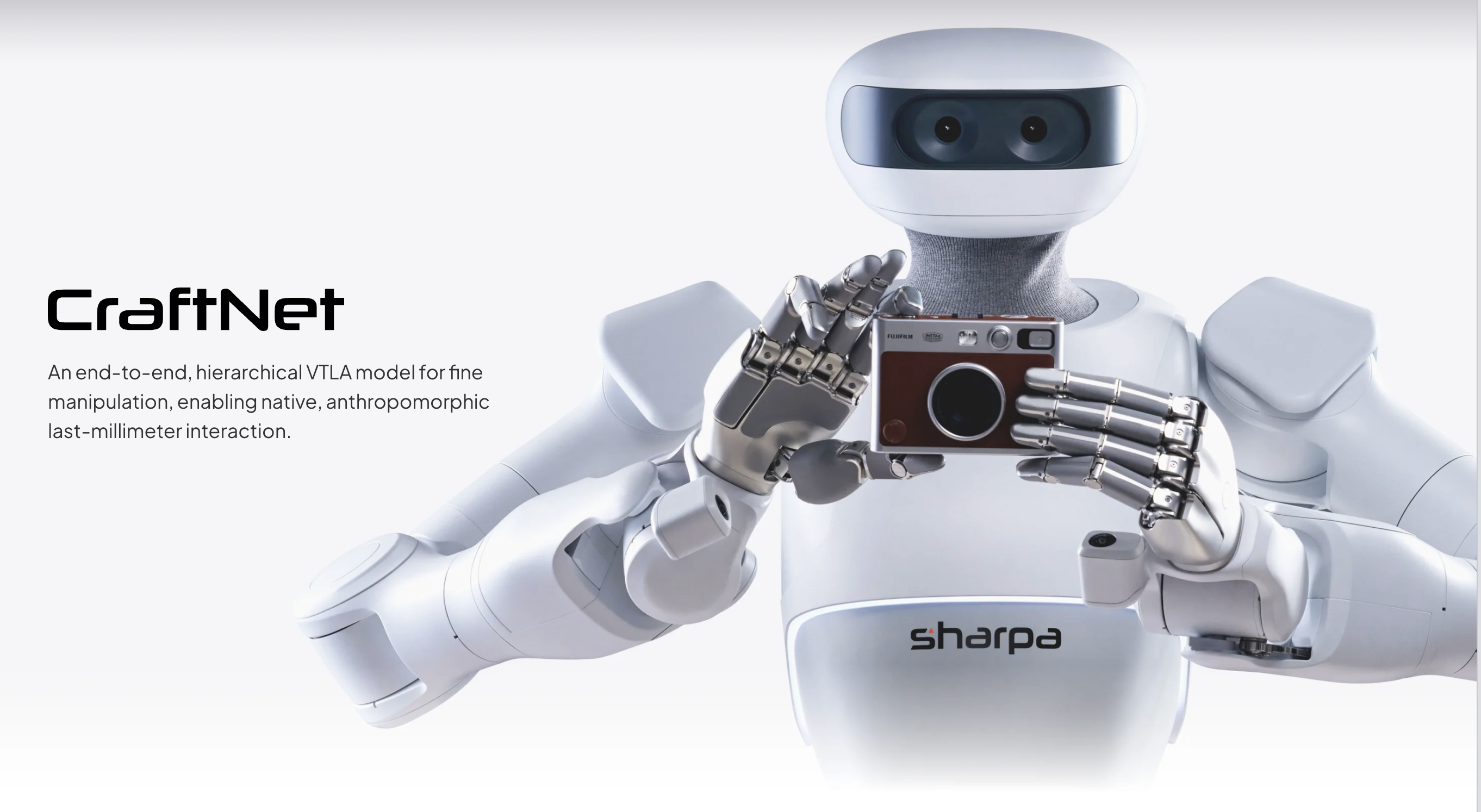
Li Yifan uses human driving as an analogy. When a person sees a turn ahead on the road and decides where to go, it is a relatively slow process; once the steering wheel is halfway turned, the vehicle encounters road variations, and the hands and body make continuous adjustments on a faster timescale. Robots work similarly. The upper layer can instruct it to "pick up the cup," but when the cup starts slipping, the fingers cannot wait for the upper-layer model to rethink before deciding whether to increase grip strength.
This layered approach is not unique to Sharpa. Figure's recently released Helix 02 also adopts a similar three-tier structure: System 2 handles scene understanding, language, and task objectives; System 1 outputs full-body movements at 200Hz; and the lowest layer, System 0, handles execution control at 1kHz. NVIDIA's GR00T also separates the high-level VLA from faster full-body motion control.
Robots can afford a relatively longer time to understand "what to do next," but they cannot wait that long once they actually come into contact with objects. Figure's Helix initially separated slower semantic reasoning from 200Hz visual-motor policies; in Helix 02, it added a 1kHz execution layer below.
Within this layered architecture, Sharpa particularly emphasizes what happens after contact. Vision and task planning can instruct North to pick up the paper cup, but once grasped, touch and force feedback must continue to determine how the fingers adjust.
In DQ, an seemingly insignificant variable enters this layer: the temperature of the ice cream.
Li Yifan explained that the actual temperatures of different ice cream machines are not entirely consistent. When the ice cream is softer, the resistance during stirring changes; as resistance varies, the robot's gripping position and force for holding the cup also adjust accordingly.
"It is impossible to simulate in a virtual environment the fact that insufficiently cold ice cream leads to a different tactile feel," he added.
To get this workflow running, Sharpa set up a complete DQ operation environment in the office. The ice cream machine, paper cups, cup rings, toppings, and workbench were prepared as closely as possible to those in a real store. Li Yifan referred to it as a "free ice cream shop." The team conducted repeated tests there, consuming considerable amounts of product in the process.
However, once truly deployed at Wujiang Road, variables absent from the office setting still emerged.
The store features large glass windows with constant pedestrian traffic outside, causing constantly changing natural light and street scenes to appear in the robot’s camera feed. Food safety regulations require workers to wear an additional layer of food-grade gloves over their hands. Furthermore, equipment conditions and raw material states vary daily and are never completely identical.
Staff informed us that during past testing, North would occasionally dispense two paper cups at once. It could detect the error, return the extra cup, and retrieve another one; when facing a basket of small red spoons, if its initial grasp was unsteady, it would readjust. In this particular full production run observed on-site, such issues did not occur.
More significant anomalies still require human intervention. If a cup actually falls to the floor, it currently cannot pick it up itself; if Oreo crumbs spill onto the countertop, it will not spontaneously wipe the table clean.
Defining the boundaries of the workflow is crucial in commercial scenarios.
Li Yifan describes their goal as "completing the entire workflow within a specific scenario." He cites an algorithm example: a job with 55 steps, where a robot can handle 54 of them over the long term, but the final step still requires a human to be present for processing. By action count, automation exceeds 98%; yet by labor time, the person has not truly left.
Folding towels is another example he mentioned in interviews. No matter how well a robot folds towels, there are rarely full-time positions dedicated solely to folding towels in reality. Similarly, after an automatic coffee machine finishes brewing, if a robot only handles handing the cup to customers, that is not the entirety of a barista's job.
Robotics research tends to break down capabilities into individual skills such as grasping, opening doors, folding clothes, plugging in cables, and tool usage; whereas enterprises purchasing automation calculate how many humans are still needed at the end of a complete workflow.
Over the past few decades, traditional automation has taken over much of the simple, repetitive, and environmentally stable work. Li Yifan uses parking lot attendants as an example: an attendant may spend 99% of their time watching cars and raising barriers, but the remaining 1%—where equipment breaks down, disturbances occur, or anomalies arise—is what truly requires human intervention. If a robot takes over only the repetitive actions, leaving a person to handle that 1%, the position does not truly disappear.
Having worked in automotive supply chains, Li Yifan offers another perspective on the "99%." A system running normally 99% of the time, if that remaining 1% causes line stoppages, cleaning requirements, product scrap, or massive manual remediation, the final return on investment could easily turn negative.
"After that 1% goes wrong, the mess it creates means the cost of cleaning it up might be more burdensome than the value generated by the other 99%."
North currently completes the workflow for making Oreo Blizzard desserts.
Refilling cups, adding toppings, cleaning countertops, handling dropped items, recharging, replacing food-grade gloves, and managing larger anomalies still require human involvement. The robot needs rotation every three to four hours; to minimize maintenance downtime, the store prepares one working unit and two backups. Although the store operates 24 hours a day, North runs for approximately 12 hours daily at this stage, and on-site R&D personnel have not yet withdrawn.
The speed hasn't caught up to humans yet. North takes over six minutes to make a cup, while an experienced employee can do it in about three minutes. Li Yifan didn't shy away from this fact, describing it as "the slowest employee DQ has ever seen."
At this stage, the priority for both parties is to ensure the robot completes the entire production process completely and stably before further compressing the time. Li Yifan noted that if speed were pursued at the expense of increased failure rates now, the result might be "ice cream all over the floor every day."
This generation of North's hardware was initially designed for robotics companies, developers, and laboratories, not optimized for the cost structure required for large-scale deployment in the food service industry. The current work remains focused on making this workflow more stable and faster, gradually expanding the tasks the robot can handle.
Externally, Sharpa reassembles these steps into a truly deliverable unit of work; internally, it continues to break down the entire process further.
Li Yifan listed some atomic skills they hope to retain: opening the warming cabinet, pulling out the tray, removing items and closing it back; operating mixing equipment; holding a large scoop to continuously add ingredients; finding the right small spoon from a basket and lifting it steadily.
For customers, the delivered unit is a complete job; for Sharpa, these 55 steps need to be transformed into a set of reusable robotic capabilities.
III. Starting with One Workflow
In the past year, robot company demonstrations have clearly shifted from showcasing individual actions to executing complete workflows. At WAIC, Ant Lingbo linked order-taking, medication retrieval, dispensing, and delivery into a full pharmacy process; by WRC, continuous tasks in coffee, retail, logistics, and industry became even more prevalent. Reintegrating previously separate capabilities like grasping, moving, and tool use into a single comprehensive task is becoming an increasingly common method for product validation.
Sharpa's DQ project took place in a chain store that remained open daily. While exhibitions can shut down after demos, stores must continue operating the next day. Once the Oreo Blizzard workflow was successfully demonstrated, Sharpa faced two directions: replicate this capability across more DQ locations, or first expand North's responsibilities within the same food service system.
At the current product stage, large-scale replication across stores is still premature. The North generation hardware was originally designed for high-performance developers and lab environments; one store requires three robots rotating shifts, with engineers still on-site. Li Yifan stated that it is not yet time to deploy at scale based on food service ROI calculations.
We noticed a small detail in the DQ mini-program: the promotional image shows North holding a Blizzard in one hand and a burger in the other. Since DQ already operates hot food offerings like burgers, Li Yifan mentioned in interviews that they plan to expand SKUs and food categories further. This image resembles an early Easter egg, leading us to speculate that burgers will likely become one of North's next tasks.
If the next item is indeed a burger, capabilities developed during ice cream preparation will be reused. While the sequence, ingredients, and tools change, opening cabinets, retrieving items, bimanual coordination, tool use, and contact control do not need to be rebuilt from scratch. Moving from making ice cream to making burgers represents one type of growth—increasing the range of tasks a robot can perform—whereas replicating from one DQ to ten DQs represents another—increasing the number of deployments of proven capabilities.
When discussing "generalization," Li Yifan is also concerned with how much existing capability remains applicable when the same model encounters new scenarios. Can development time be reduced? Can original capabilities still function despite changes in ingredients, temperature, and environment? In materials prepared by Sharpa for DQ, metrics such as data requirements for adding a new SKU, engineering adjustments needed for new stores, and skill reuse across scenarios were listed as follow-up indicators.
But Sharpa's ultimate goal is homes, and home robots are not products achieved simply by continuously adding workflows to menus.

Chain restaurants have already standardized equipment, ingredients, and employee workflows. In a DQ (Dairy Queen), robots know in advance where the cups are, where the ice cream machines are, and which steps constitute the start and end of producing a single serving. Homes lack unified equipment and standardized processes; room layouts, appliances used, item placement, and even individual interpretations of "clean" all vary.
Home-use robots also face a realistic cold-start problem: insufficient capabilities give consumers no reason for long-term use; and without enough robots actually entering homes, it is difficult to gather real-world data from constantly changing household environments.
First-generation home robot companies are tackling this challenge from different starting points.
1X chose to enter homes as early as possible. NEO still allows remote experts to assist with complex tasks, enabling the robot to interact with real households and end users first. Physical Intelligence and Skild focus more on general-purpose models and diverse data sources, aiming to eliminate the need for robots to relearn every new task.
Sharpa opted to have robots operate outside the home first. Restaurant workflows are more fixed than those in homes, yet materials, equipment, people, and environments are not as strictly controlled as in laboratories. Robots can run here first, encounter real-world variations, and then gradually take on more responsibilities.
This route presents another practical issue: today's Wave is too expensive.
At an industry-wide rumored price of approximately $50,000 per unit, a pair of Waves reaches $100,000. By comparison, 1X's NEO Early Access model for home use retails at $20,000. While product positioning and pricing structures cannot be directly compared, the magnitude difference suffices to show that the first-generation Wave was not designed with home consumer product cost structures in mind.
1X has similarly not abandoned complex hands. NEO’s hands feature high active degrees of freedom, employing cable-driven mechanisms, tactile sensing, and waterproof designs tailored for home use. The difference is that 1X integrated these hands into a $20,000 home robot from the start, with the total unit price constraining how the hands, actuators, manufacturing, and maintenance should be approached.
Huoshu has taken yet another path. It early on focused its structural design around the total machine cost for quadruped and humanoid robots, lowering prices to levels far below automotive production scales through self-developed motors, reducers, drivers, and high integration. The initial structure of a product, the number of components used, and which parts are manufactured in-house inherently determine a significant portion of the cost.
Sharpa’s approach differs from others. Its first-generation Wave initially accepted higher costs, prioritizing performance and reliability before addressing subsequent cost reductions.
Li Yifan is not particularly worried about this matter. In interviews when discussing costs, he directly referenced his past experience in the automotive supply chain. He believes that continuous cost reduction is something the automotive supply chain excels at and is a process Hesai has already undergone once.
Public data reveals this change. The average selling price (ASP) of Hesai LiDARs dropped from approximately $17,400 in 2019 to around $260 in 2025; confirmed revenue-generating LiDAR units reached about 1.62 million in 2025. Notably, this change in ASP also reflects a shift in product structure toward lower-priced ADAS LiDARs, meaning it does not imply that the same product dropped directly from $17,400 to $260 over six years.
But Hesai's cost reduction over the past few years was not just about switching to cheaper products. Chipization, product architecture changes, self-built manufacturing, automated production, and shipping scale all occurred simultaneously. By 2025, despite a continued decline in Hesai's average selling price for LiDAR units, its full-year gross margin reached 41.8 percent, while annual shipments increased from approximately five hundred thousand units in 2024 to one million six hundred twenty thousand units.
The three founders have thus already experienced one cycle of high-performance hardware moving from expensive, small-scale production to redesign and large-scale manufacturing. This background explains why Sharpa today dares to prioritize the product sequence as performance, reliability, and then cost.
However, there was another important condition for Hesai's cost curve back then: the automotive market provided sufficiently large volumes.
As for where Sharpa's volume will come from, several sources are already visible. Wave itself can be sold to tech companies, laboratories, and other external customers; North consumes its own hardware; and Hesai has already begun providing robot actuators and manufacturing services to Sharpa.
In July this year, Hesai increased the annual cap on related transactions with Sharpa for 2026 from RMB 100 million to RMB 300 million. In its announcement, Hesai cited the reason that the commercialization progress of Sharpa's dexterous hand has been faster than previously expected, and it has already secured commercial contracts from leading global technology companies. According to Hesai's estimates at the time, the scale of robot actuators and related manufacturing services provided to Sharpa in the second half of 2026 would increase by approximately nine times compared to the actual scale from late March to late June.
This means that Sharpa's hardware manufacturing does not have to wait until North scales up significantly before achieving volume. External customers, its own complete machines, and upstream actuator manufacturing can all advance simultaneously. As for the future volume required for home products and what kind of structure the dexterous hand will ultimately adopt, it may differ completely from today's Wave product generation.
If we group these companies together, the divergence of first-generation home robots is already quite clear. 1X enters the home directly; Physical Intelligence and Skild start from models; Figure first places complete robots in factories. Domestically, X Square Robot切入 (enters) via embodied foundational models, while Galactic Brain advances complete machines, models, and commercial scenarios together. Sharpa, on the other hand, moves forward from operational capabilities and commercial workflows.
Li Yifan recently gave a very clear judgment in an interview with LatePost: While the global automotive market can accommodate over a hundred players and the mobile phone market still has dozens, the general-purpose robot market will "ultimately have no more than five players."
Following his judgment, Sharpa's chosen competitors are no longer other dexterous hand companies. The current batch of companies has been pushed to very high valuations by capital: After completing over $1 billion in financing in 2025, Figure reached a valuation of $39 billion; Skild AI raised $1.4 billion in its latest round, reaching a valuation of over $14 billion; Physical Intelligence raised $1 billion in its latest round, with a valuation of approximately $11 billion. Domestically, leading embodied AI companies such as X Square Robot and Starry Sky Map have also entered the valuation range of over RMB 20 billion.
Sharpa just disclosed cumulative financing exceeding RMB 4.5 billion, without announcing its valuation. Besides this, the list also includes companies like Tesla and XPeng, which can rely on their automotive businesses to invest long-term in robotics.
Who the final five will be is unknown to anyone at present.
More interestingly, the first steps taken by these companies, which may enter the final competition, were hardly on the same path. 1X has already sent robots into homes; Figure first went to factories; Physical Intelligence and Skild started from models; Sharpa was first famous for a very expensive hand, and now it is putting it into DQ to make ice cream.
The places they want to go are getting closer.
Looking back in a few years, these entirely different first steps taken today may ultimately reveal where home robots should actually begin.