

After Selling 7 Million Pairs, Meta Turns to AI Agents for Smart Glasses

At Meta Connect on September 23, glasses remained the star of the show: Ray-Ban Meta updated to its third generation, smart glasses with displays gained new features, and Meta VR Glasses are planned for release next spring. The most interesting product, however, was a stripped-down version of the Ray-Ban Meta Audio. It removed the camera but kept calling, music playback, and voice assistant functions, starting at USD 349, with shipments beginning on October 13. In the European and American markets, cameras in glasses have long been controversial due to concerns about recording people without their knowledge; removing one camera makes it easier to bring these glasses into public spaces.
If you look only at the hardware, this year's launch event indeed offered fewer surprises. Lighter frames, longer battery life, and more choices are hard to reconcile with the excitement people felt when they first saw smart glasses years ago. But Meta seems no longer in a hurry to showcase a grand future through any single device. It has reserved more space for Muse: a personal AI agent already available on mobile phones and web browsers, which is next preparing to enter smart glasses.
Meta has already demonstrated that people are willing to buy its glasses. Next, it hopes that once people wear the glasses, they will entrust more tasks to them.

The significance of removing the camera
For smart glasses, the lenses worn on the face can affect how people around feel. When taking photos with a smartphone, people typically raise their hand and aim at the subject; however, since glasses remain on the face, bystanders find it difficult to determine whether the wearer is capturing images based on their movements alone.
This concern has a realistic background. In July this year, Meta acknowledged that individuals had attempted to tamper with the camera indicator lights and stated that it would disable the cameras if such behavior was detected. Earlier, groups including the American Civil Liberties Union had opposed Meta's reported consideration of a facial recognition plan for its glasses. Although the relevant features have not yet been included in products available for sale, the controversy demonstrates what the glasses can see and record will affect whether they can naturally appear in public spaces.
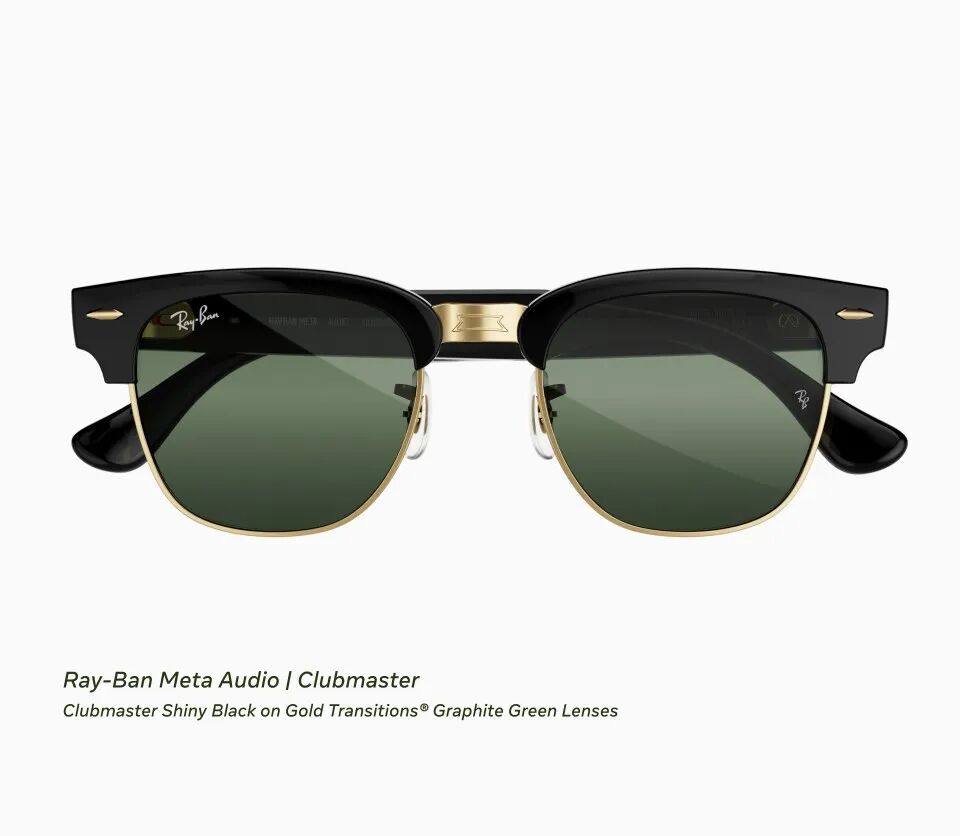
Removing the camera from the Meta Audio glasses eliminates at least the possibility of bystanders being captured on film. During chats with friends, there is no longer a need to watch for indicator lights on the frame. However, the device still has a microphone, and voice interaction involves the processing of sound and data; privacy issues do not disappear along with the lens.
Moreover, the absence of a single camera explains why these glasses might be more readily accepted, but it fails to clarify why users would pay USD 349 for them. Headphones also lack cameras, yet they can play music, handle calls, and wake up voice assistants. When commuting and wanting to block out noise, in-ear noise-canceling headphones are typically the more suitable choice.

Audio aims to capture a different kind of time: people already wear glasses, and when walking, doing chores, or busy with tasks at the office, they want to take a call or ask AI a question without having to find and put on headphones. The open-ear design also allows users to remain aware of their surroundings. For those who need prescription lenses every day, this convenience is genuinely practical.

The lesson left by the metaverse is that users will not change their habits for a vision.
Looking back at Meta's press events over the years, the changes have been quite pronounced. In 2021, when the company rebranded, it placed the metaverse at the center of its brand identity. The narrative then started from a world that had not yet taken shape: first establishing immersive spaces, social interactions, and computing devices, before users gradually moved into them.
Five years on, virtual reality has not disappeared, and Quest still retains its own gaming and movie-watching audience. Yet the broad social and office migration Meta envisioned back then did not happen naturally alongside hardware investments. Financial reports show that Reality Labs, which oversees related hardware, software, and content, recorded an operating loss of approximately USD 19.193 billion in 2025.
Mark Zuckerberg discussed this strategic pivot at this year’s Connect event. He noted that when Meta first began developing smart glasses, it assumed the metaverse would arrive first, with advanced AI following later; he now believes personal superintelligence will arrive first and have a greater impact. Consequently, Reality Labs has temporarily lowered the priority of the metaverse, reduced the release of VR devices, and plans to launch new products only when significant breakthroughs occur.
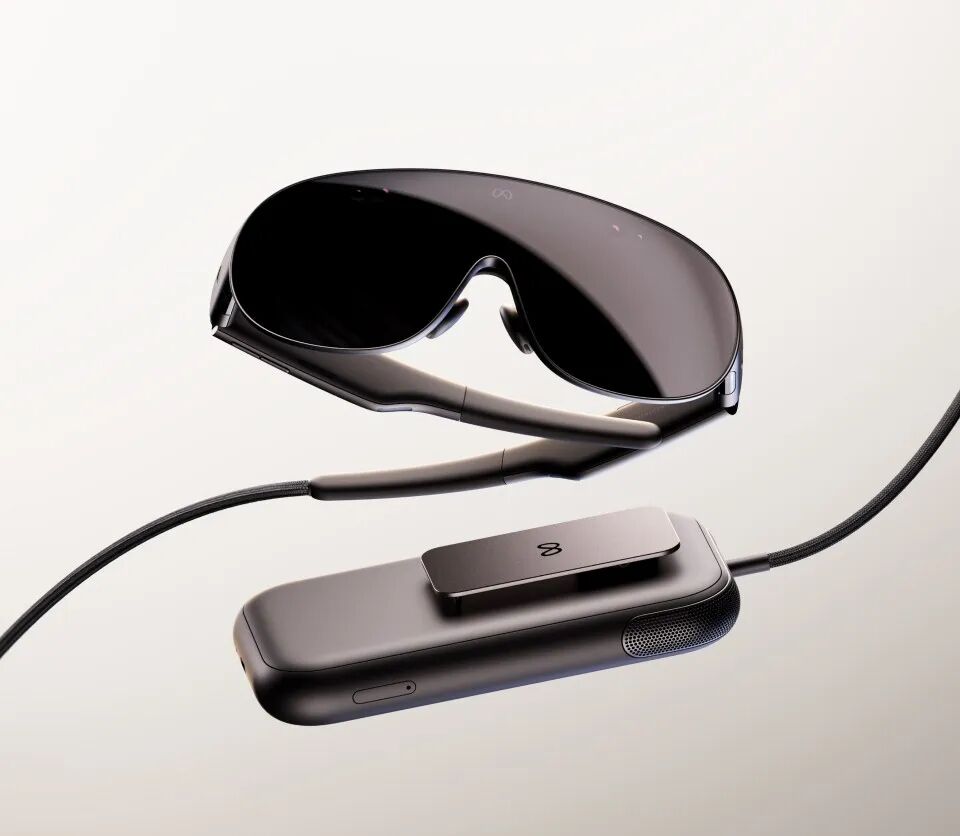
This year’s Connect still featured VR, but the focus has shifted from the metaverse to activities people engage in daily: talking, traveling, shopping, scheduling, and handling work on phones and computers. The concept of personal agents is equally ambitious, yet it can be tested against these existing needs. Users do not need to enter a new world to determine whether AI saves them time.
Smart glasses have found a more grounded role here than as a "gateway to the metaverse." EssilorLuxottica announced that Ray-Ban Meta and Oakley Meta combined for sales of over 7 million units in 2025. These figures indicate that consumers are already willing to try this category, providing Meta with justification to continue its investment.
This aligns precisely with the lesson Meta learned from its metaverse experience: selling a device is a single purchase; building habit requires sustained user engagement. People may enjoy answering calls or listening to music but rarely need to ask an assistant; they might be willing to let an assistant look up information but insist on opening their phone to complete a purchase themselves. Crossing each boundary requires earning trust through tangible help.

Can Muse succeed?
When Meta launched Muse in early September, it already possessed the ability to browse web pages, fill out forms, and invoke certain services. This Connect event filled in more specific pieces of the puzzle: Mac support for computer operations with user permission was added, and the partnership list expanded to include services such as Walmart, Best Buy, Notion, and GitHub; the next step is to bring Muse into glasses. Meta wants the same task to begin with a voice command on the go and continue seamlessly when the user returns to their desk.

The experience may sound smooth, but the most difficult part often lies in the handoff between services. For example, when a user asks an assistant to plan a weekend trip, searching for a destination is only the beginning. The assistant must then cross-reference schedules, transportation options, and budgets; identify cancellable orders; and clearly explain the final choice. If any condition is unclear, the faster the assistant acts, the more time the user may spend untangling the results. This is especially true for prices, refund and change policies, and payment settlement times, which are often hidden in the corners of different pages. If the assistant merely reports the most prominent numbers, it may appear that the task is complete, but the risk borne by the user has not disappeared.
Glasses can even amplify this problem. With a phone, users have a screen; they can glance at the page and adjust an option. Glasses rely primarily on voice interaction. If the assistant reads out every step, it becomes verbose; skipping key steps makes users feel they’ve lost control. The system needs to know which tasks can be completed silently and which require explicit confirmation first. For users, the ideal state is roughly: trivial steps are handled without fuss, while important decisions are never quietly bypassed. A brief announcement might suffice—such as “Found two trains; the second is cheaper but non-refundable”—with detailed terms left for the phone display. Defining what glasses versus phones should do is more important than having the assistant repeat the same script across all devices. If it mishears the destination, users would have to start searching for tickets again on their phone, and those glasses would quickly revert to being little more than tools for taking calls and playing music.
Meta has designed permission and audit mechanisms for Muse: users choose which services to connect, sensitive operations require reconfirmation, and task records can be viewed. These rules make the process of "AI doing things for me" more understandable. However, the glasses-based Muse described at the launch event remains a future plan; capabilities on phones, web browsers, and computers cannot be directly counted as experiences already available on the glasses today. Whether it can accurately understand commands in noisy streets and report progress appropriately midway through tasks must be left to daily use for answers.
There is another layer of competition easily obscured by the launch event's demonstration. As models capable of answering questions become more numerous, the ability to integrate into users' existing email, calendar, shopping, and payment workflows determines how much an assistant can actually do. Meta has its own entry points such as WhatsApp and Instagram, and is also expanding connections with third-party services; retail, travel, and office partners are already on the list. However, users' lives do not conveniently fit within a single company's applications. For Muse to step outside its own platform each time, it requires partners to be willing to open up their capabilities, accept corresponding authorization methods, and handle liability in case of errors. Competitors do not need to offer the same glasses; they simply need to complete these tasks more reliably on mobile phones to keep users on their original screens.

Meta wants to secure more traffic entry points
Why does Meta care so much about glasses? Sales volume is one answer; control over the system is another. Facebook, Instagram, and WhatsApp boast massive user bases, yet they still operate within Apple’s and Android’s mobile ecosystems. While Meta can position AI within its apps, it struggles to dictate how the entire phone system hands off perception, notifications, and cross-app tasks to its own assistant.

The glasses offer a different kind of relationship. Users can make requests to Meta's assistant before opening a specific app. Whoever hears the need first has the opportunity to participate in subsequent information filtering, service selection, and transactions. For a company that has long operated in social and advertising businesses, the commercial significance brought by this entry point is direct and highly "imaginative."
Of course, a pair of glasses cannot bypass all platform limitations. It still needs to be paired with a mobile phone and rely on the network, depending on external applications and services to complete many tasks. A more realistic goal is to keep the moment when the user initiates a task within its own ecosystem, and then collaborate to carry out the subsequent steps.
For third-party applications, integration is not an unconditionally positive development. In the past, users would visit their pages to view product rankings, membership benefits, and promotional information; when AI handles comparisons and places orders on their behalf, these applications may face nothing more than a request to complete a task. Questions about where traffic originates, who is responsible for explaining transaction issues, and whether the application can maintain its relationship with the user will all influence the extent to which they are willing to open up. The stronger the assistant's capabilities, the harder it becomes to resolve these divergences through a single press conference. Meta's publicly announced list of partners already includes retailers and software companies, but the amount of capability each company on that list is willing to cede may vary significantly. Allowing queries about product inventory requires a fundamentally different arrangement of trust and responsibility than allowing an assistant to place or cancel orders on behalf of users.
Therefore, how Meta will enable its partners to achieve visible returns in the next phase is a matter worth watching. The list of partners may be long, but what matters more are product data, fulfillment, after-sales service, and profit distribution.

The next round of competition has only just begun
The personal superintelligence vision presented by Meta easily conjures images of glasses that are always watching, listening, and offering advice. But a person's day does not require an assistant who talks incessantly. A reminder in the office might be useful, but continuous announcements on the subway could only lead to people taking off their glasses; finding a ticket for a user is cause for joy, but using contacts and payment methods without prior warning will make people wary.
The author tends to believe that the competition in smart glasses will unfold in two phases. The first takes place on the face: style, weight, prescription compatibility, and social acceptance determine whether users are willing to wear them long-term. The second phase concerns what smart glasses can actually do: how much an intelligent assistant knows, how far it can act on a user's behalf, and where it stops. This latter contest has only just begun.
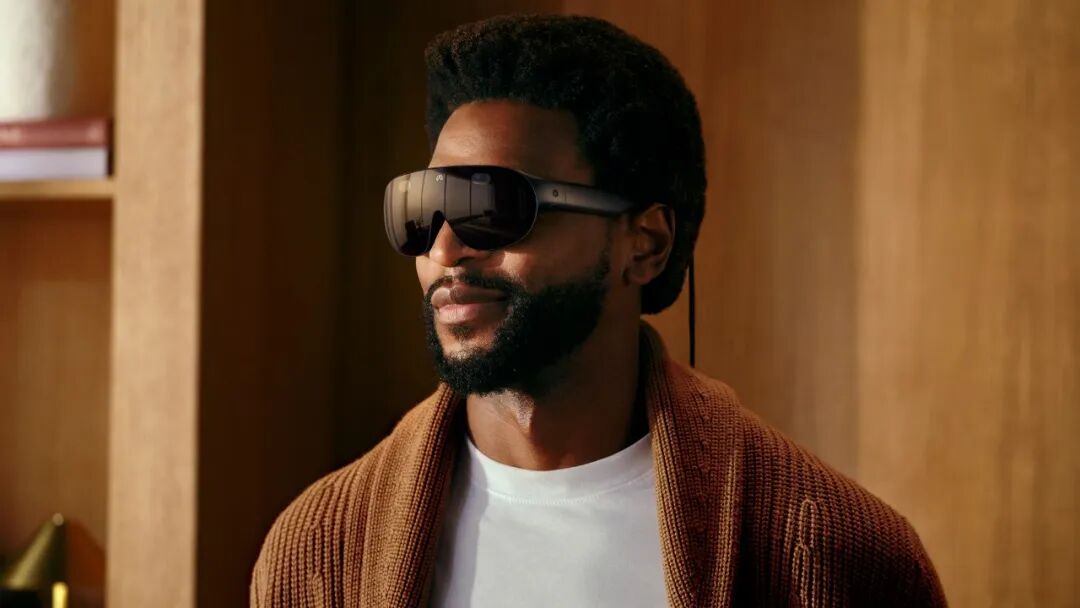
If you look back on this launch event next year, it may be best to set aside the number of new frames added and instead revisit a few more fundamental questions: Will users still use the assistant every day after wearing the device? Can cross-app tasks be completed with only a few confirmations? And can both the user and bystanders understand when the device is collecting information and when a task requires human intervention?
This year's Connect event offered few groundbreaking new hardware reveals, yet feels closer to daily life than the metaverse hype of years past. Meta has already sold its smart glasses in volume. Now, it aims to cultivate a more difficult habit: getting people to entrust small tasks to Muse when they're too busy to handle them themselves—and then finding the experience so seamless and considerate that they'd willingly use it again.
Author: Hope
Edited by Yisong


Source: Future Devices