

Mira Light: An Embodied AI Desk Lamp That Responds to Touch
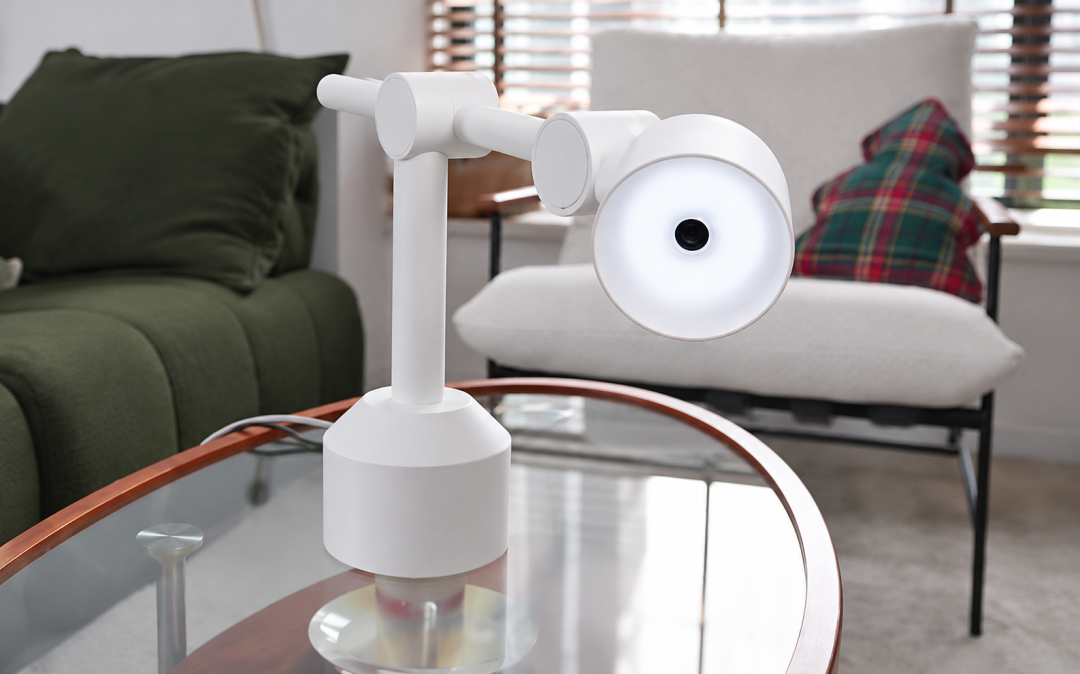
Have you ever seen a desk lamp that leans in to let you pet it?
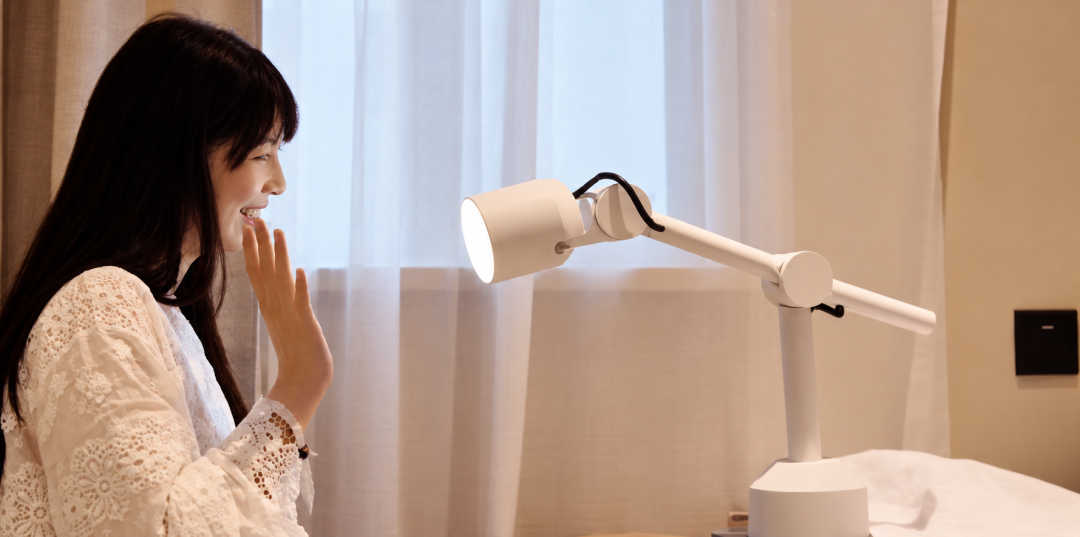
Mira Light aims for the former reaction. According to the team’s published interaction design, when a hand reaches toward the lamp head, it moves forward and gently nudges, while the light color warms. Once the hand withdraws, it performs a brief forward-tracking motion before returning to its position illuminating the desk.
Mira Light is currently in an Early Access (EA) testing phase. A pioneer experience version is expected to launch this December, with pricing set at RMB 1,399 in China and USD 299 overseas.
Visually, Mira Light retains the traditional form of a desk lamp: a lamp head, an arm, and a base. A hidden camera embedded in the center of the lamp head captures visual data to determine human position and movement. Capacitive sensors detect touch, while motors drive the rotation of both the lamp head and the arm. The team intends to integrate these capabilities so the lamp can respond appropriately when someone approaches or touches it.
Voice interaction is another key feature. Public project documentation details implementations for voice capture, command recognition, and audio output, enabling synchronization between sound and physical movement. These designs expand the lamp’s utility. The lamp head becomes a “head,” the arm a “body,” and gestures such as bowing, pausing, and leaning forward serve as forms of communication.

The initial idea
For smart glasses, the camera on the user's face can affect how people around them feel. When taking photos with a smartphone, people typically raise their hand and aim at the subject; however, since smart glasses remain on the face, bystanders often cannot tell from the wearer’s movements whether it is recording.
This idea came from an ordinary moment. Team member Jianle Wang recalled that at 3 a.m., while he was still working, his cats and dogs were asleep, but the desk lamp was still on. Since it was always by his side, could it also offer some response?
Jianle Wang graduated from the University of Wisconsin–Madison, where he majored in graphic design and economics. He is also a fan of Pixar animation; the bouncy lamp in Pixar films, which expresses curiosity and emotion through movement alone, provided a familiar reference for this concept.
To bring the idea to life, he recruited his friend Junkai Wang, who studies quantum physics at Tsinghua University, and met partners like Yu Liu, who graduated with a degree in electronic information from Harbin Institute of Technology, at a hackathon. Together, they gradually formed a six-person team.
In the early prototype stage, the team built the first version of Mira Light in 48 hours. It was showcased at JD.com JoyInside’s inaugural “AI Terminal New Species” Hardware Innovation Competition, demonstrating actions such as turning its head, bowing, and gently rubbing against objects.
These movements gave the lamp a bit of a pet-like quality, but to make it likable in daily use, the team had to consider factors beyond just motion.
At the S-Tron Shanghai 2026 Science and Technology Innovation Conference, the team emphasized two principles: avoid disturbing users when they are focused, and do not add extra display screens to the lamp. Instead, they plan to focus more energy on improving the intelligence of its interactive movements.
Because desk lamps typically remain on a table for extended periods, they do not need to be taken out specifically for interaction. They also come with existing lamp heads and arms; slight postural changes allow people to perceive the movement. The team attempted to leverage these features to integrate interaction into a familiar daily object.
However, detecting that someone is sitting at a desk does not mean the lamp should immediately move. A person’s acceptance of the same motion may vary significantly whether they are reading, daydreaming, or attending a meeting. How to observe people is a technical challenge; whether to respond after observation requires product design decisions.
This clarified Mira Light’s direction. Detecting someone at a desk does not mean the lamp must move. It still needs to fulfill its primary function of illumination, then select appropriate moments for interaction based on human behavior and current context.

More Direct Response
Ordinary desk lamps can move, but only if a user manually adjusts them to the desired position. Mira Light’s interaction design allows the lamp head to approach proactively, making the movement itself part of the communication.
A gentle nudge after being petted is an easily understood response. It borrows from familiar social cues: when small animals lean toward a hand, people interpret it as affection; when the lamp head slowly lowers, people associate it with drowsiness. Even knowing there are motors and programs inside, the movements still provide emotional feedback.
The threshold for this interaction is low. Users can express intent simply by reaching out. However, for the device, seeing a hand in the frame is not enough to determine the next action.
The user might be inviting interaction, or simply adjusting the lighting, picking up a water cup, or wiping the lampshade. Someone passing by may not necessarily intend to greet it. The desk lamp must first identify the target of attention, then select a response based on hand movement and contact information.

The public code reveals that the team has already considered some of these issues. For example, when a previously tracked person remains visible, the system prioritizes maintaining focus, reducing erratic head turns between multiple individuals; if the target is briefly lost in the frame, it can temporarily retain information from the previous cycle to avoid immediately interpreting an occlusion as the user leaving. These measures are basic, yet they determine whether a person feels "it is responding to me."
Once the motion begins, this coordination must continue. As the light head approaches, if the user withdraws their hand but the device still executes a full gentle brushing motion, the interaction will feel disjointed. If it moves too quickly, people tend to dodge; if it responds too slowly, users may lose interest.
Thus, the appeal of head-patting stems not only from an adorable gesture but also from the seamless coordination between both parties' movements. A response when reaching out, continuity while staying in place, and a clear conclusion when withdrawing—these elements make the interaction feel engaging to humans.

The Body Language of Desk Lamps
Many desktop companion devices use screens to display eyes, mouths, and expressions. Mira Light delegates more expression to movement, thereby preserving the lamp's original appearance. Without an expression screen, posture and rhythm must carry more information: a quick head lift might appear excited, a slow turn might seem curious, and standing still can indicate waiting.
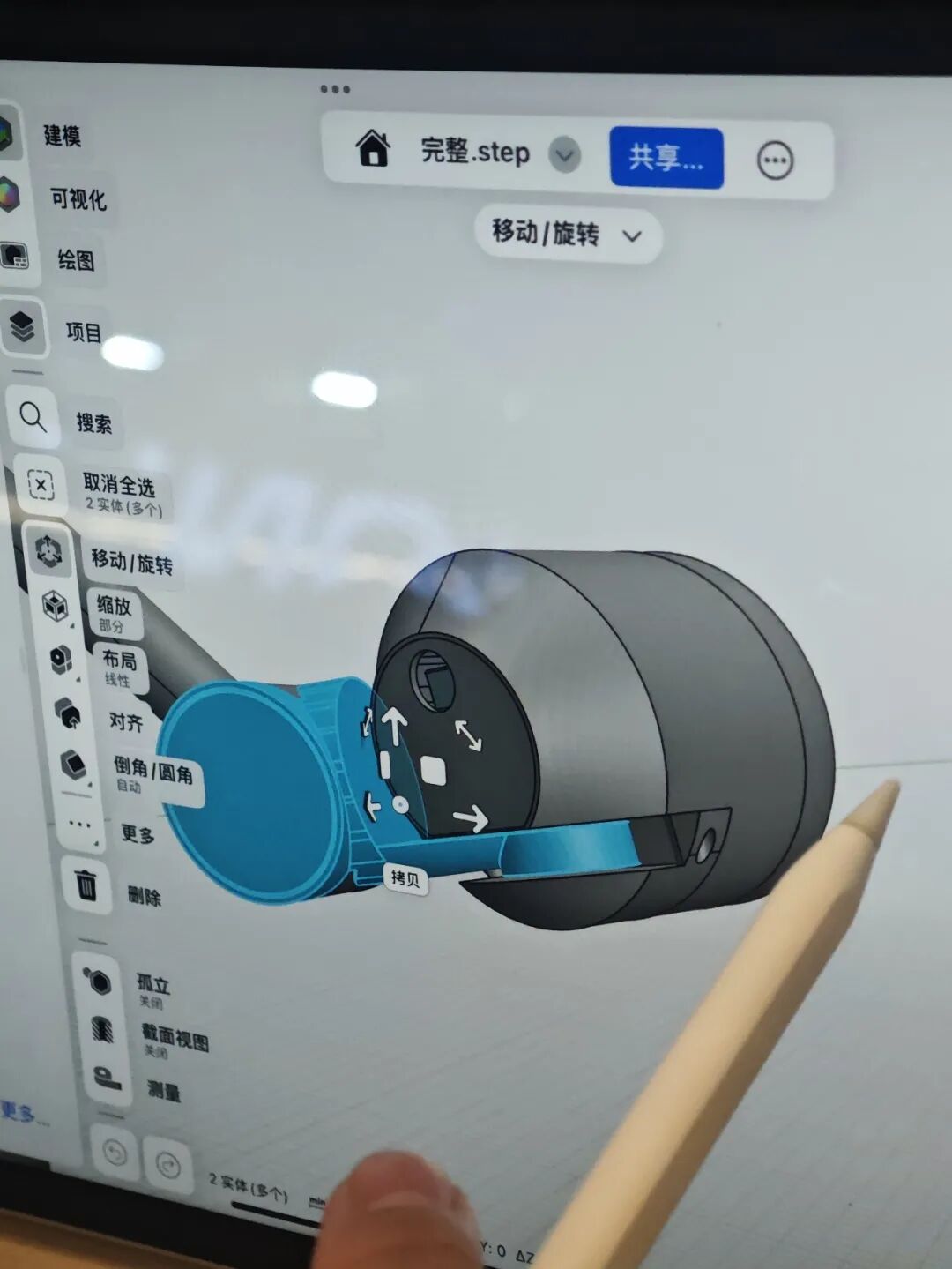
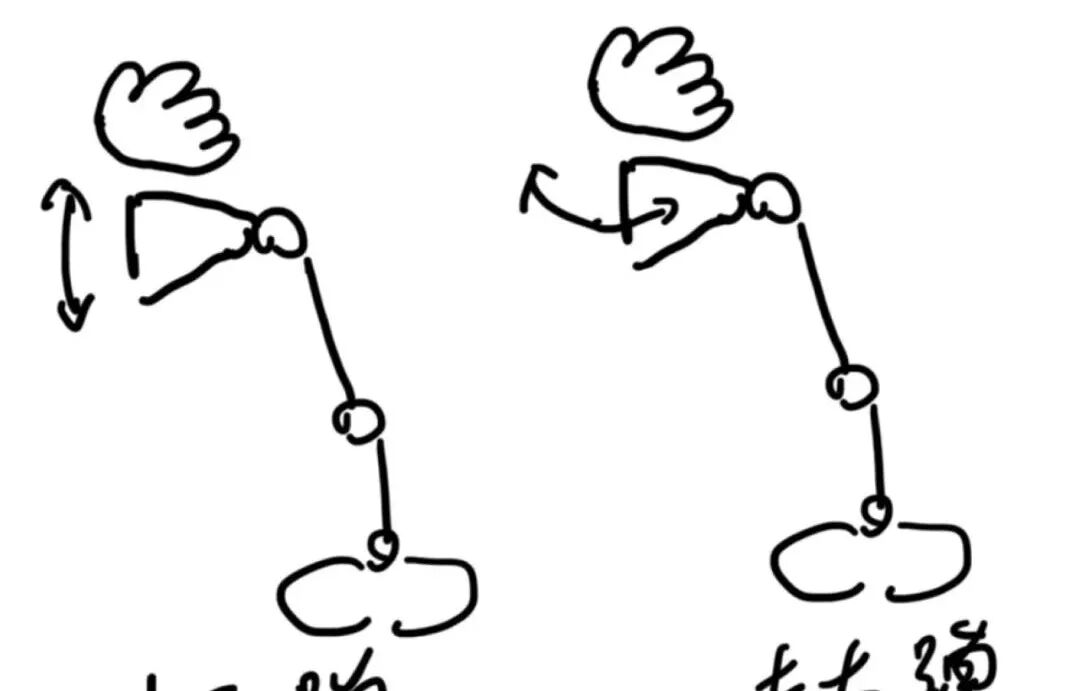
The publicly released engineering version of the project features a four-degree-of-freedom structure, allowing the base, lamp arm, and head to rotate in coordination. However, the number of joints only indicates available directions of movement; liveliness depends more on how those movements are executed.
This is a notable point in the public information: a "head pat" scenario is broken down into approaching, lowering, gentle rubbing, and returning to neutral. Each step has specific posture, lighting, and pause settings before being executed by the controller. A "waking up" sequence might involve raising the lamp head first, then turning toward the user; a "dozing off" sequence gradually slows the motion until the head droops.
A significant portion of these body languages are manually designed. While models may help interpret context, programs handle action selection and execution. This division of labor allows the team to repeatedly adjust the amplitude of a gentle rub, the speed of a turn, and the pauses between actions, focusing effort on expression itself.
Designed movements can evoke emotional associations, but the key is whether they correspond to user behavior. If actions are merely played back in sequence, even vivid animations risk becoming a solo performance rather than an interaction.
Movements also require boundaries. The public version checks joint angles, shrinking or rejecting commands that exceed limits. However, restricting angles differs from sensing collisions; existing information is insufficient to confirm whether it can control force or yield softly upon contact with a hand.
The lamp's form presents another practical issue: the head handles both expression and illumination. When it turns toward a user, the light position may shift accordingly. A user reading may not want their desk darkened just to witness an interaction.
Therefore, movement range, interaction timing, and post-interaction return positions must be designed alongside lighting functions. On display stands, moving parts easily attract attention; but on a daily-use desk, the lamp must still keep light where it is needed.

Why open source?
Mira Light also has another noteworthy option: the team has open-sourced the project code on GitHub.
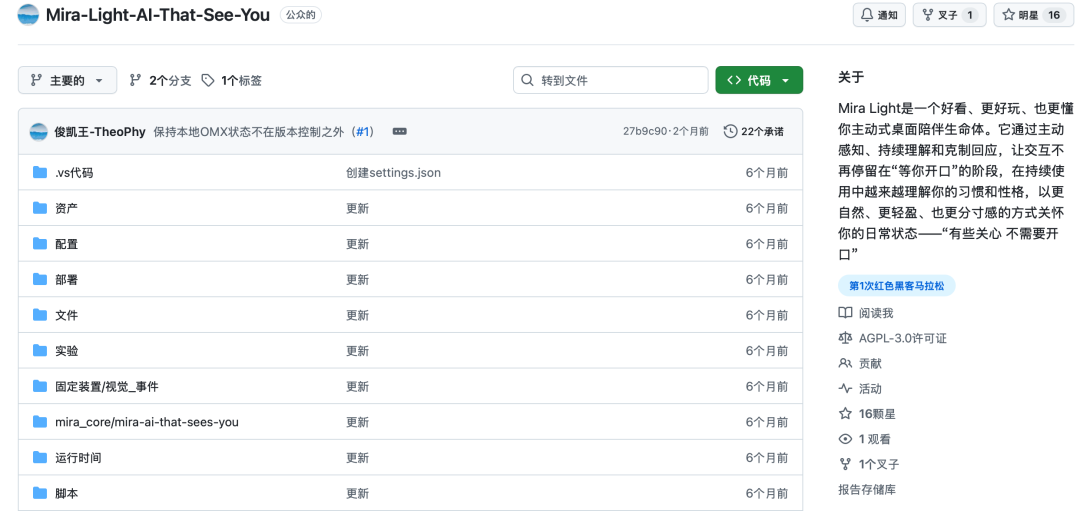
The public content covers visual event processing, action scene choreography, device control, voice-related implementations, and tools for demonstrations and debugging. The repository also includes ESP32 firmware, deployment instructions, and test files. Those with development capabilities can examine how an interaction is organized, modify the rhythm of actions, or attempt to build a smart desk lamp that is uniquely their own.
However, there is still a distinction between open-sourcing code and fully open-sourcing hardware. Currently, the mechanical design files, circuit designs, complete bill of materials, and manufacturing processes required to produce a formal product have not all been made public. After downloading the code, one still needs to prepare the hardware, configure the software, and complete debugging.
Although the development team did not explicitly explain why they adopted an open-source strategy, the repository itself is organized around development, demonstrations, and technical handover, which already provides a practical rationale: making the interfaces and implementations of different modules public facilitates others taking over, troubleshooting issues, and continuing development. Furthermore, developers have the opportunity to expand into new interactive scenarios. The tasks the desk lamp can participate in do not need to be designed item by item by the original team.
However, this brings us back to a direct question: After the code is made public, why would users still buy the product?
Even after the code is open-sourced, the finished product retains its own value. Most users will not go through the trouble of selecting motors, assembling lamp arms, and debugging software just to have a desk lamp nudge their hand. They are buying a fully assembled, calibrated device that works reliably, along with ongoing maintenance and after-sales support.
Thus, open-source development and hardware sales can coexist. Developers gain the flexibility to modify the system, while ordinary users save time by skipping the assembly process. Ultimately, whether the finished product is worth purchasing depends on how it performs once placed on a desk.

The timing of interaction matters in daily companionship
The team’s emphasis on “silence-first” design is particularly critical for desktop devices like Mira Light. Although it possesses voice-related capabilities, this does not mean it needs to speak constantly.
At trade shows, users expect it to move quickly and demonstrate interesting reactions. Back at an office desk, however, a person may not want to hear it make any sound for two hours straight, nor do they want a lamp head constantly swaying in their peripheral vision.
Several scenarios introduced by the team help illustrate how the device intends to integrate into daily life: reminding the user to drink water when they haven’t had a sip for too long; helping record sudden thoughts during reading; and linking with computers to provide prompts after Codex tasks are completed.
These scenarios all require a well-timed intervention. A water cup is right nearby, so slight movements may suffice; when an idea strikes mid-read, the user needs to jot it down quickly; and once a computer task is complete, the prompt should signal that it's time to return to work.
In this light, "companionship" takes on a more concrete purpose. The device can step in during the few moments that matter, and remain quietly on the desk for the rest of the time.
The same reminder can evoke different feelings depending on the context. If a person is sitting and spacing out, a lamp head leaning in might seem cute; but if they are rushing to meet a deadline or attending a meeting, its repeated movements will appear annoying. Capturing human motion via cameras is only the starting point for judgment; the device must also consider the current situation to decide whether to respond.
The team also hopes that Mira Light will accumulate shared memories over time, gradually developing distinct personalities. If these memories can influence the frequency of reminders and the manner of responses, users are more likely to perceive the changes brought by long-term interaction. For instance, specific criteria for evaluating the effectiveness of personalization include whether reminder frequency decreases after frequent reminders are ignored, or whether the device adopts more gesture-based responses when user preference indicates a liking for touch.
Next, it needs to integrate this playful charm with everyday lighting. It should respond when users want to interact, yet remain undisturbed when they are busy. A relationship where you occasionally pat its head but otherwise each goes about your own business is the kind of coexistence that makes it more suitable as a daily necessity than a novelty toy.
Author: Hope
Edited by: Yisong

Source: Future Devices