
From Unitree's 5,500 Units to Li Auto's Urgent Hiring: The Robot Industry Has Reached a Turning Point
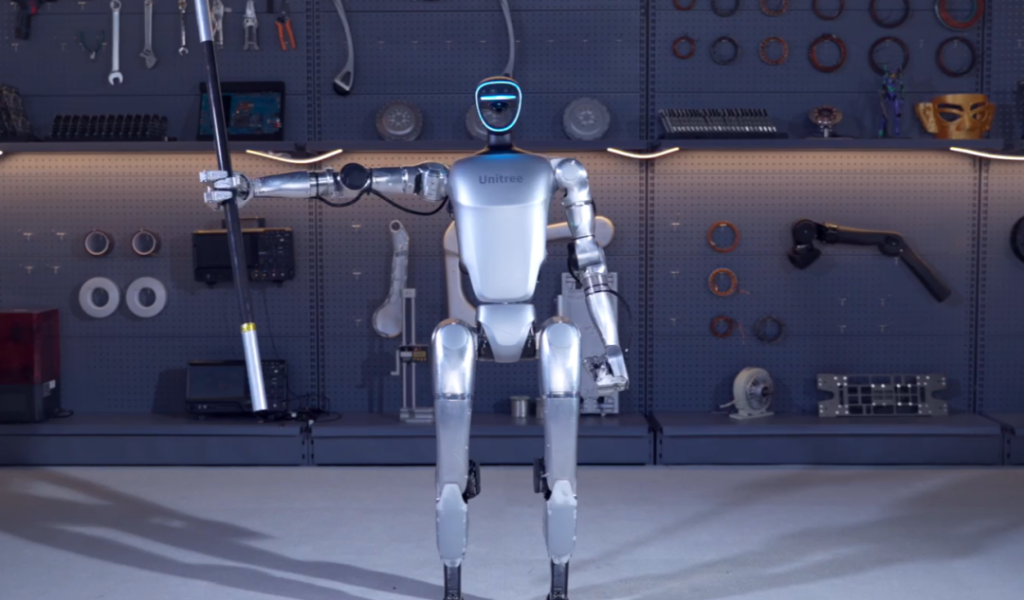
Evening of January 22, Unitree Robotics publicly disclosed its humanoid robot sales data for 2025 for the first time. Its actual shipment volume in 2025 has already exceeded 5,500 units.
Unitree revealed that this figure represents only the quantity actually sold and shipped to end customers, not the order volume, which is higher. Furthermore, its mass production of the main body in 2025 has already exceeded 6,500 units.
Additionally, Unitree pointed out: "The above data refer exclusively to the number of our pure humanoid robots and do not include other robotic products such as our dual-arm wheeled models."
According to Unitree's official website, its current general-purpose humanoid robots include the H2, R1, G1, and H1/H1-2.
In the announcement, Unitree also emphasized: "Currently, various robotic forms are diverse. We recommend against directly merging and comparing the quantities of different types of robots."

It is worth noting that previously on January 8, international research firm Omdia released a list of global humanoid robot shipments for 2025. In this ranking, Unitree's 2025 humanoid robot shipment volume was 4,200 units, ranking second, while Agibot ranked first with 5,168 units.
Among other domestic robot manufacturers on the list, UBTech's shipments last year were 1,000 units, Leju Robotics were 500 units, Zhongqing Robotics were four hundred units, and Fourier Intelligence were three hundred units.
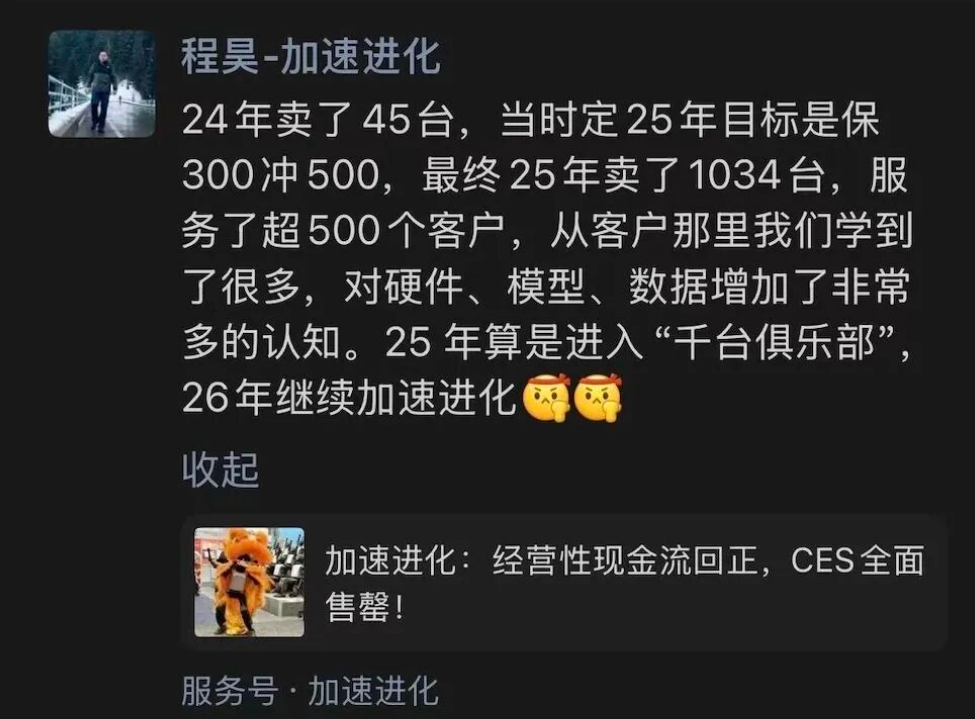
Additionally, in the WeChat Moments of Cheng Hao, founder and CEO of Accelerated Evolution, he mentioned that Accelerated Evolution's robots have already sold 1,034 units in 2025, a figure not included in Omdia's rankings.

The Mass Production Milestone for Robots: Li Auto Revives Related R&D
Compared to 2024, when many robots couldn't even stand up, the robots of 2025 can perform high-difficulty movements and execute some simple tasks in scenarios such as factories and homes.
The rapid advancement in robot capabilities has steadily increased market acceptance, accelerating the mass production and implementation of robots. Against this backdrop of an industry maturing towards maturity, some automotive enterprises are actively positioning themselves in the field of robotics.
For example, recently Li Auto posted a batch of R&D positions in the humanoid robot direction on its official website. Specifically, these include dexterous hands, joint modules, bipedal locomotion, and interactive perception, with the word "urgent" appended to the job titles to indicate immediate hiring needs.

The positions being urgently recruited by Li Auto indicate that the company requires talent covering the entire hardware and software pipeline of humanoid robots.
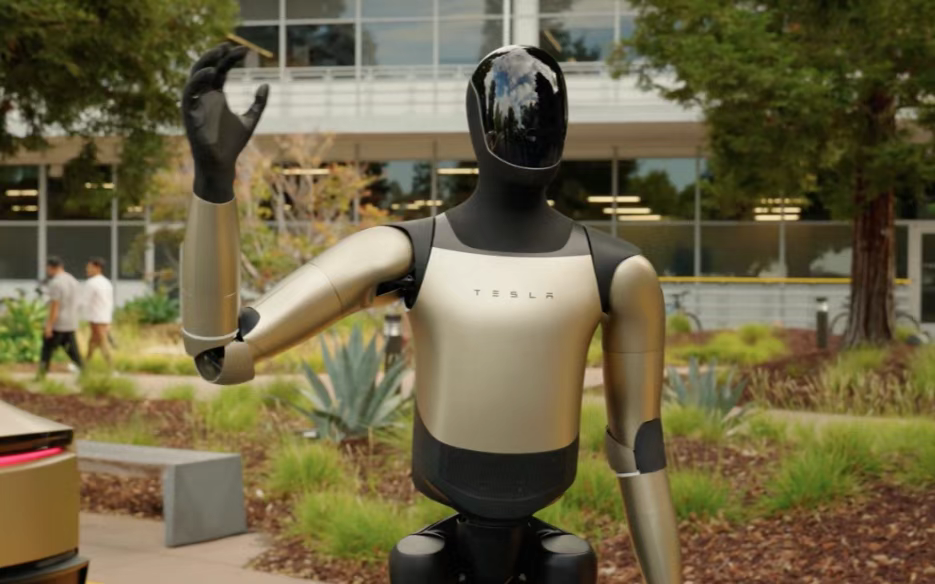
The current robotics industry is racing toward large-scale mass production. Notably, at last year's shareholder meeting, Elon Musk stated that Tesla plans to build a robot production line with an annual capacity of one million units in Fremont by 2026. Furthermore, he emphasized at Davos this year that Optimus robots may be available for public sale by the end of 2027.
As the timeline for robot mass production becomes clearer, it is highly logical for automakers, whose supply chains share significant similarities with those of robotics, to accelerate their布局 (layout) into the robotics sector. Many car manufacturers naturally possess ideal scenarios for the practical implementation of robot mass production: automotive manufacturing plants.
In this regard, Li Auto made similar attempts as early as early 2024. At that time, Liao Pingping, who had approximately ten years of experience in robot R&D, joined Li Auto to lead the team in developing wheeled, dual-arm humanoid robots for specific industrial applications within factories, such as "screw tightening."
However, due to relative instability in technology and an immature supply chain at the time, Li Auto once paused its humanoid robot R&D efforts.
Nevertheless, deploying robots in factories to replace certain manual labor remains an inevitable trend of the times; only the timing differs.

Li Xiang, founder and CEO of Li Auto, stated at the AI TALK in late 2024: "We will definitely build humanoid robots; the probability is 100%, but the timing is not now. If we cannot even solve Level 4 autonomous driving cars, how can we solve something more complex? Because a car is a non-contact robot, and roads are standardized, including road signs and participants, all of whom are trained in traffic rules. I believe this is the simplest type of robot. If cars cannot achieve autonomy, then other AI robots will remain very limited."
With robots entering a certain mass production rhythm and capable of performing simple tasks within factories, Li Auto's decision to restart robotics R&D at this moment clearly aligns with both industry maturity and its own core business accumulation.

The Industry Watershed Has Arrived
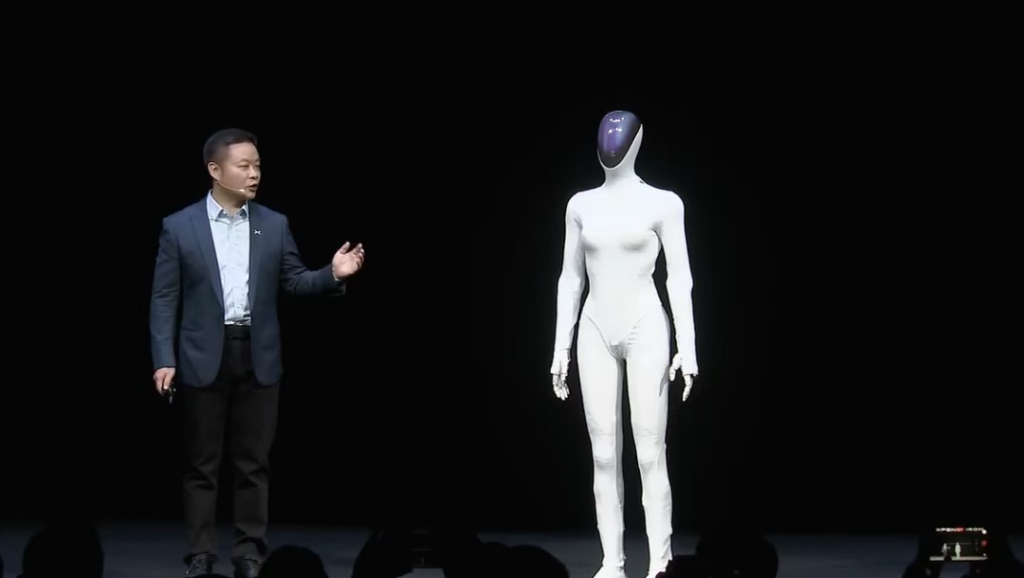
Over the past few years, the robotics industry has gathered talent from various fields such as AI, automobiles, and consumer electronics. A significant proportion comes from the automotive sector. For example, XPeng's IRON robot and Xiaomi's 'Tie Da' robot.
There are also many individuals with automotive industry experience who have founded Embodied AI startups, such as Zhao Zhelun, former Intelligent Driving Product Director at Li Auto, who founded Weidong Power, and Guo Yandong, former Chief Scientist at XPeng, who founded Zhifang Square.
In fact, viewed from a broader industrial perspective, once an emerging industry is repeatedly validated as having a 'sufficiently large market,' it will almost inevitably attract major tech companies to enter. However, the prerequisite for these giants to place heavy bets is that the industry has passed its most chaotic early stage and begun to reveal a scalable outline.
Take the moves by Huawei and Xiaomi in the new energy vehicle (NEV) sector as a prime example. The narrative of smart electric vehicles has been told countless times over the past decade, but what ultimately convinced these two giants to commit heavily was the simultaneous convergence of several key conditions: the electrification route has largely stabilized, intelligence has become the definitive competitive frontier, the supply chain is highly mature, and consumers are willing to continuously pay for experience upgrades. In other words, the automotive industry has shifted from a period of technological route博弈 (battles) to one focused on product and scale competition. Only in this phase are the organizational capabilities, financial strength, and engineering advantages of large tech firms truly amplified.
At this stage, the core of competition lies in who can reliably produce products and sustain sales. Scale, manufacturing, distribution channels, brand power, and ecosystem synergy have become the decisive factors—areas where large corporations excel.
This logic maps closely onto the robotics industry. Humanoid robots were primarily in an exploratory phase regarding capabilities in the previous couple of years, rather than focusing on mass production or application. However, once robots begin stably executing specific tasks in factories, logistics, and service scenarios, and when mass production timelines become clear, the industry naturally enters the radar of major tech players.
In this phase, the industry begins to enter a rhythm suited for large enterprises to leverage their strengths. Automotive companies, in particular, possess significant technical accumulation advantages due to the high similarity between their supply chains and technologies and those required for robotics.
Therefore, automotive manufacturers entering the robotics market represents the true 'Tesla route,' rather than simply replicating a humanoid appearance or establishing standalone robot companies. In Elon Musk's definition, robots are more of a natural spillover from autonomous driving technology: the same perception systems, the same decision-making and planning logic, and the same data closed loops—only the execution end shifts from 'wheels' to 'legs and hands.'
From this perspective, automotive manufacturers entering the field marks a critical watershed in the robotics industry, signaling that the sector is moving from validating possibilities toward genuine large-scale competition.