
Musk Predicts Optimus Sales Next Year; Li Auto Resumes Humanoid Robot R&D; Microsoft Launches VLA+ Model | Weekly Tech Roundup

1. Unitree Technology Announces 2025 Sales Data
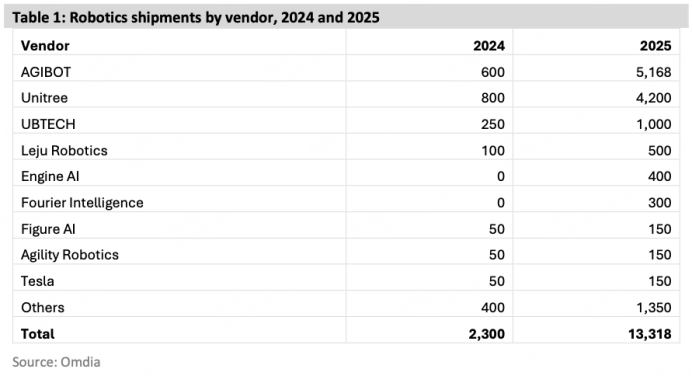
On January 8, the international agency Omdia released a ranking of global humanoid robot shipments for 2025. In this list, Unitree Technology’s 2025 humanoid robot shipment volume was 4,200 units, ranking second, while Zhiyuan Robotics had 5,168 units, ranking first.
On the evening of January 22, Unitree Robotics publicly disclosed its humanoid robot sales data for the year 2025 for the first time, with its actual shipment volume in 2025 exceeding five thousand five hundred units.
Unitree Technology noted that this figure represents only the quantity actually shipped to end customers, not order volume, which is higher. Additionally, its mass production下线 (line-out) of robot bodies in 2025 had already exceeded 6,500 units.
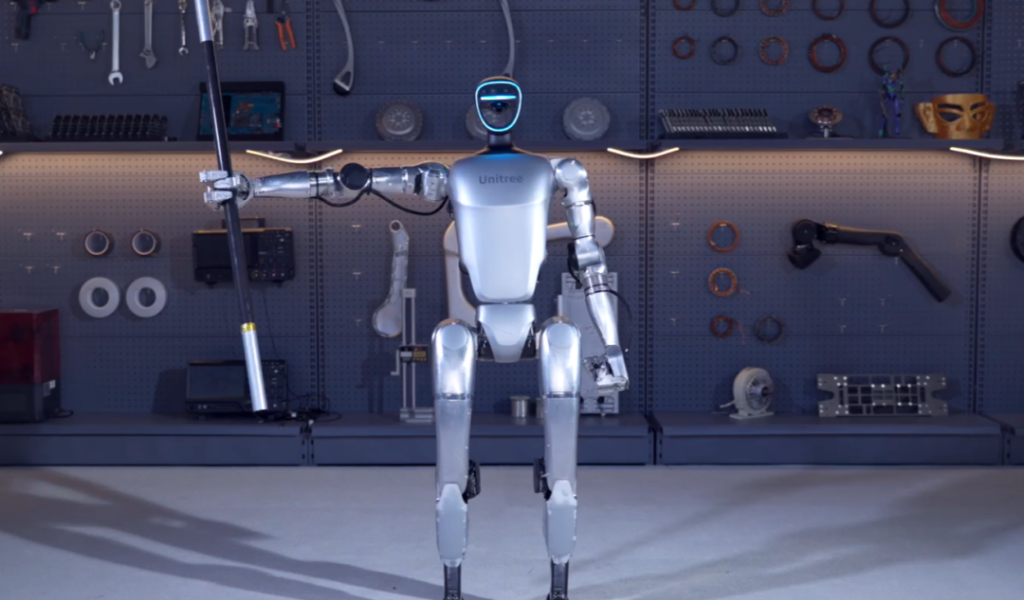
Furthermore, Unitree Technology stated: 'The above data refer exclusively to the number of pure humanoid robots from our company and do not include other robot products such as our dual-arm wheeled models.' According to Unitree's official website, its current general-purpose humanoid robots include H2, R1, G1, and H1/H1-2.
In the announcement, Unitree Robotics also emphasized: "Currently, there are various forms of robots. We suggest that you do not directly combine the quantities of different types of robots for comparison."
2. Musk Predicts Optimus Will Be Available for Sale Next Year
On January 22 local time, at the World Economic Forum Annual Meeting in Davos, Musk revealed progress regarding the Optimus robot. He stated that Tesla has already used some Optimus units in its factories to perform simple tasks. By the end of 2026, these robots will be capable of completing more complex work.

Additionally, Musk said: "Tesla may begin selling Optimus to the public by the end of next year." This is because he believes Tesla will only officially release it to the public when it is "certain that its products possess extremely high reliability, extreme safety, and an extremely wide range of functions."
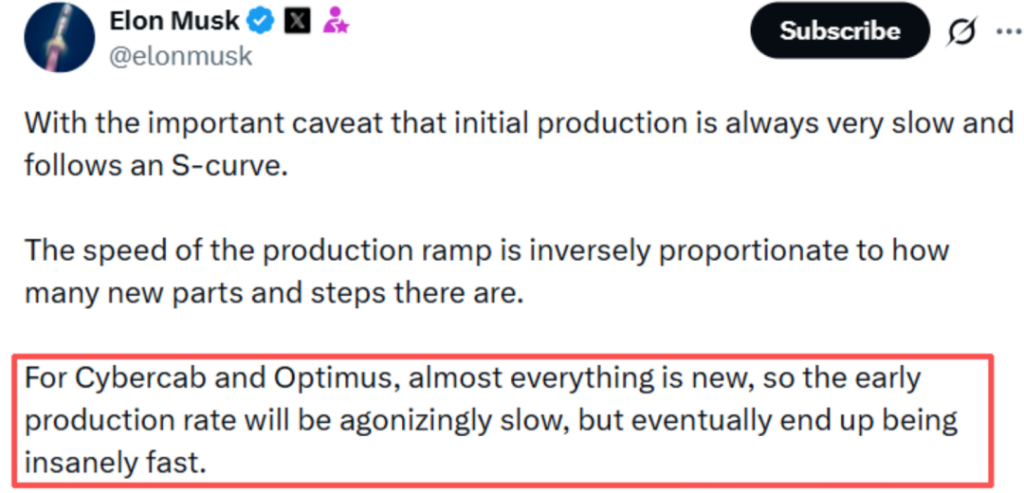
Prior to this, Musk also posted on X that both the Cybercab autonomous taxi and the Optimus humanoid robot under the company consist almost entirely of new components, meaning early production speeds would be extremely slow, but ultimately they will become exceptionally fast.
3. Li Auto Resumes Humanoid Robot R&D
Recently, Li Auto posted a batch of R&D positions for humanoid robots on its official website, covering areas such as dexterous hands, joint modules, bipedal locomotion, and interactive perception. The character "urgent" is appended to the titles of these positions, indicating immediate hiring needs.

These roles indicate that Li Auto requires talent covering the full hardware and software pipeline for humanoid robots. In early 2024, Li Auto had already initiated R&D in this field, led by Liao Pingping, who has approximately 10 years of experience in robotics. The team primarily developed wheeled, dual-arm humanoid robots for specific industrial scenarios within factories, such as "screw tightening."
However, due to relative technological instability and an immature supply chain in the robotics industry at the time, Li Auto once paused its humanoid robot R&D efforts.
Li Xiang, founder and CEO of Li Auto, also mentioned during the AI TALK event in late 2024: "Li Auto's development of humanoid robots is 100% certain in probability, but the timing is not now."
With the robotics industry entering a certain mass production rhythm and capable of performing simple tasks in factories, Li Auto's decision to restart robot R&D at this moment aligns with both the maturity of the industry and the accumulation of expertise in its core business.
4. Microsoft Releases VLA+ Model
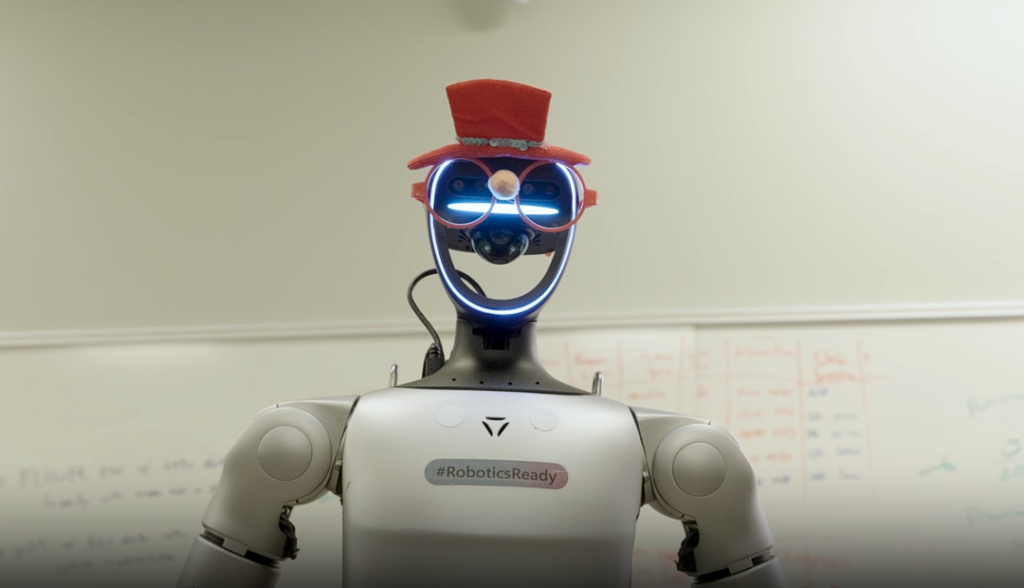
On January 21 (local time), Microsoft Research officially released Rho-alpha, Microsoft's first VLA+ model designed specifically for robots, built upon the company's Phi series of vision-language models.
Rho-alpha aims to convert everyday natural language instructions into precise robot control signals in real time, enabling robots to perform highly complex physical tasks such as bimanual coordination. This breaks free from the limitations of traditional robotic systems that rely on pre-set scripts, hard-coded paths, or cumbersome intermediate planning.
Compared to standard VLA frameworks, Rho-alpha integrates not only vision and language understanding but also introduces tactile perception as a key modality while advancing the integration of force feedback. The official statement notes that it expands the set of perception and learning modes typically used by VLA models, allowing it to be referred to as a VLA+ model.
This endows robots with multi-modal capabilities that go beyond seeing and hearing to include 'touching,' enabling real-time adjustments in dynamically changing, real-world environments.
The model has currently been evaluated on a dual-arm UR5e robotic arm platform equipped with tactile sensors, as well as on humanoid robots.