

Crowdfunding Hits $1 Million in 20 Hours: Buyers for AI-Driven Desktop Automation

Having an AI agent handle work tasks often still requires significant human preparation: copying data, uploading files, explaining on-screen content, and then moving the generated results back into the original software. If AI could directly interpret a computer screen and operate the mouse and keyboard like an external avatar to assist with work, how much would it improve efficiency?
Violoop, the AI hardware brand under Shenzhen Benwei Wujie Technology Co., Ltd., is turning this concept into a desktop device and has attracted its first batch of paying backers.
At midnight Beijing Time on September 16, Violoop X launched on Kickstarter, raising over $1 million in just 20 hours. By 3 p.m. on September 18, funding reached $1.28 million from 2,268 supporters. The early-bird price is set at $399, with a planned retail price of $699.
This performance indicates that allowing AI to take over computer operations has already attracted a group of users willing to pay for trial access. However, given that software agents can also operate computers today, why is a separate hardware box necessary? Violoop X must answer this question.

What is Violoop X?
Violoop X is a palm-sized desktop device featuring a display screen on its front. It connects to the user’s existing computer to capture the screen image, then translates model judgments into actions by simulating keyboard and mouse inputs.
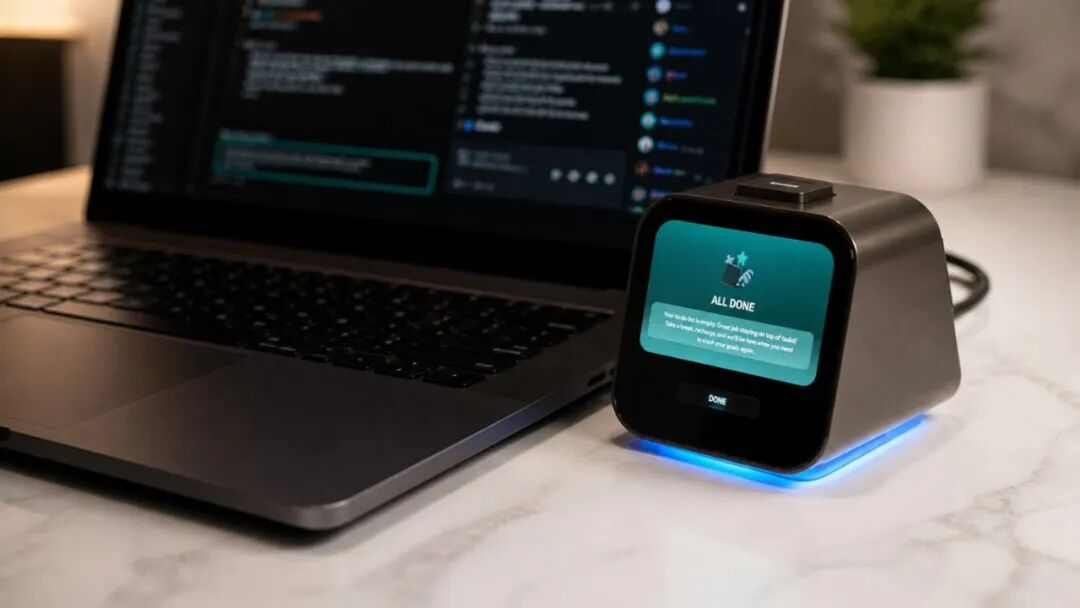
According to the official specifications, video input can be provided via HDMI or a USB-C port that supports video output. When the interface conditions are met, a single USB-C cable can handle both video transmission and control connections simultaneously.
This effectively equips AI with a set of tools for observing and operating on a computer. It can identify which windows are currently open and what content the user is processing, then determine the next action based on instructions.
The device utilizes an RK3576 processor paired with a dedicated AI accelerator, delivering a total AI compute power of 26 TOPS. This supports running models with up to 8 billion parameters locally. Local computation handles tasks such as screen understanding, while more complex tasks can leverage cloud-based models.
A key point of interest here is whether users will need to do less preparatory work to provide context.
An interview record from Mingliang Gongsi documented a product demonstration: when a chat message requested a resume, the device located the file locally based on the conversation, prepared it for sending, and waited for user confirmation. This demonstration illustrates the specific problem the product aims to solve.
Finding files, switching windows, and preparing documents for sending are not complex steps individually, but they constantly interrupt ongoing work. If an assistant can handle these preparations in the context of the current conversation, users can avoid the tedious task of searching across different windows.
Of course, ensuring the correct file is found and the right recipient is selected remains critical. Operations still carry risks; convenience must be predicated on reliable outcomes.

What’s the difference compared to Codex?
Compared with Codex, Violoop X makes its clearest distinction by integrating screen understanding, partial model inference, and operation authorization into a single standalone device. This design addresses specific needs for users who want to keep daily perception local while requiring explicit control over AI operation permissions.
First, clarify a premise: software without APIs is not a unique capability of Violoop X. Codex can already view graphical interfaces, click, input, and execute cross-application tasks via Computer Use. Therefore, 'the ability to simulate human computer operation' is insufficient to explain why one would purchase additional hardware.
The first value Violoop X offers is dedicated computing resources prepared for local perception. The device includes an internal processor, AI accelerator, and local models, completing some screen understanding and inference within the box. This integration reduces the hassle for users to build local model environments themselves and gives the assistant independent inference resources separate from the work computer.
According to official specifications, after activation, offline mode can handle screen reading, memory, proactive suggestions, simple Q&A, and tasks involving only a few steps. This means some daily functions can run without calling cloud models, while longer-chain tasks require larger models.
The second value is more active participation in work. Violoop places observing the screen, understanding current content, and preparing the next step in advance at the core of product interaction.
The significance of this proactivity is reducing preparation time before initiating a task. For fragmented work, the time spent finding materials, supplementing background information, and organizing prompts may already approach the time it takes to do it manually. If the assistant can use visible information to prepare in advance, users are more likely to seamlessly integrate it into their workflow.
This also requires distinguishing between "proactive preparation" and "autonomous decision-making." According to the official design, steps that produce actual consequences—such as sending, submitting, or deleting—require user confirmation via physical buttons or a paired mobile phone, with authorization verified by an independent security chip. The AI can advance the work up to the point where a decision is needed, but the final step remains in the user's hands.
Thus, the appeal of Violoop X over Codex centers on this integration approach: using dedicated hardware to handle local perception, providing proactive suggestions based on current tasks, and then confirming control of key operations via the hardware. Proactivity is not unique to hardware solutions, but Violoop combines it with local computing, personal memory, and physical authorization, forming a clear product orientation.
For users who want their assistant to remain on the desktop, require minimal context setting, and retain intuitive control methods, this is the reason to purchase an additional box. Its advantage lies in how it integrates into daily work; whether it completes tasks faster or more accurately than Codex remains uncertain based on current information.

Industry Status: The Scarcity of Personalized Solutions
On the other hand, the company's background helps to clarify this product strategy.
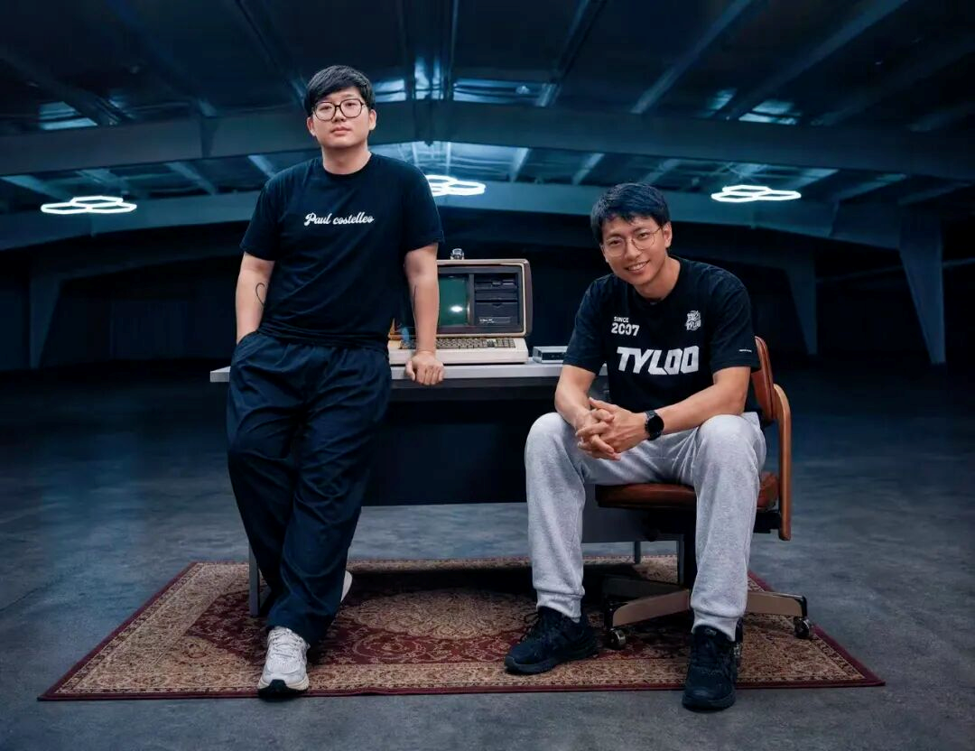
Violoop was founded in Shenzhen in December 2025. CEO Jaylen He previously had experience founding software startups, and CTO King Zhu worked at ADI and Microsoft, contributing to the hardware development of products such as Xbox, HoloLens, and Surface. The company has announced the completion of its angel and Pre-A financing rounds, which were at the hundred-million-RMB level. Investors include Lenovo Capital, CICC Porsche, Lanchi Ventures, Genesis Capital, Cowin Capital, and Zero2IPO Holdings.
The team had previously participated in enterprise model deployment and workflow projects, where they encountered a practical problem: while models can answer general questions, they may not know which project a specific user is working on, how different files relate to each other, or the typical procedures for handling certain tasks.
This is also the reason why Violoop incorporates personal memories into its products.
General-purpose models can explain how to write an email, but they do not inherently know what requirements a specific client previously raised. Being able to understand a document does not mean it knows which version has been invalidated or who should currently receive it. This information must be obtained from authorized work content and updated as changes occur.
According to the interview introduction by Mingliang Gongsi, Violoop builds personal memory locally on the device, linking people, projects, files, and tasks. Users can view, correct, and delete these entries. The team also aims to further accumulate users' common workflows, enabling the assistant to gradually master how to handle repetitive tasks.
The value of this direction is concrete: after performing the same task a few times, can users explain less, and can the assistant take fewer detours?
But "remembering" is not the same as "remembering correctly." An erroneous project status, if repeatedly referenced by subsequent tasks, can also cause ongoing trouble. Personal experience needs to be useful, which requires it to be updatable, correctable, capable of autonomous judgment, and able to re-confirm with the user when information conflicts arise.
The team is also exploring the application of experience to personalized model training. However, the interview explicitly stated that these capabilities are still in the testing and engineering phases and have not yet been rolled out as a complete feature. Therefore, it cannot be said that they possess "self-evolution" capabilities.
Privacy is the other side of the same coin. In Meta's prior class-action lawsuit stemming from its training data, outsourced annotators were accused of accessing sensitive imagery captured by users. Devices that collect data at a single point gather precisely the most intimate information, yet they often lack the capability to ensure end-to-end security — data must be uploaded to their own cloud, and neither their cloud infrastructure nor the trust ecosystem they have accumulated possesses the scale of Apple's.
The barrier to entry for this endeavor has never been the ability to manufacture a device. Only through collaboration within a single brand and ecosystem can personal context be truly leveraged: when data flows within the same system, AI can piece together fragmented information into a coherent picture of an individual. Apple is the only player in this industry that controls everything from chips and operating systems to services.
It does not need to build a new device; it simply needs to transform existing devices into a set of distributed context nodes: the iPhone provides a screen, camera, location, and account; the Watch is worn on the body, capturing voice and health signals; AirPods are in the ears; CarPlay assists with driving; home cameras cover indoor spaces; and Vision Pro knows what you are looking at. Then, Siri maintains the same relationship across these nodes. This is a rewrite of Steve Jobs' 'digital hub' concept for the AI era.

Is $399 Worth It?
For users who already own a computer, $399 represents a significant additional expense.
If the primary need is occasionally asking questions or rewriting text, adding another device may not be necessary. However, if one must search for information, organize files, and perform repetitive data entry across multiple software applications every day, Violoop X's product approach becomes more attractive. As for stability, real-user feedback is still needed.
Specific limitations exist during use. The official notice warns that the device may switch windows or change focus while executing tasks, so users should treat their computer as shared with the assistant. For work requiring continuous, uninterrupted focus, users can have it execute tasks on a separate computer.
This means it cannot be simply imagined as an assistant that is always busy in the background without affecting the user at all.
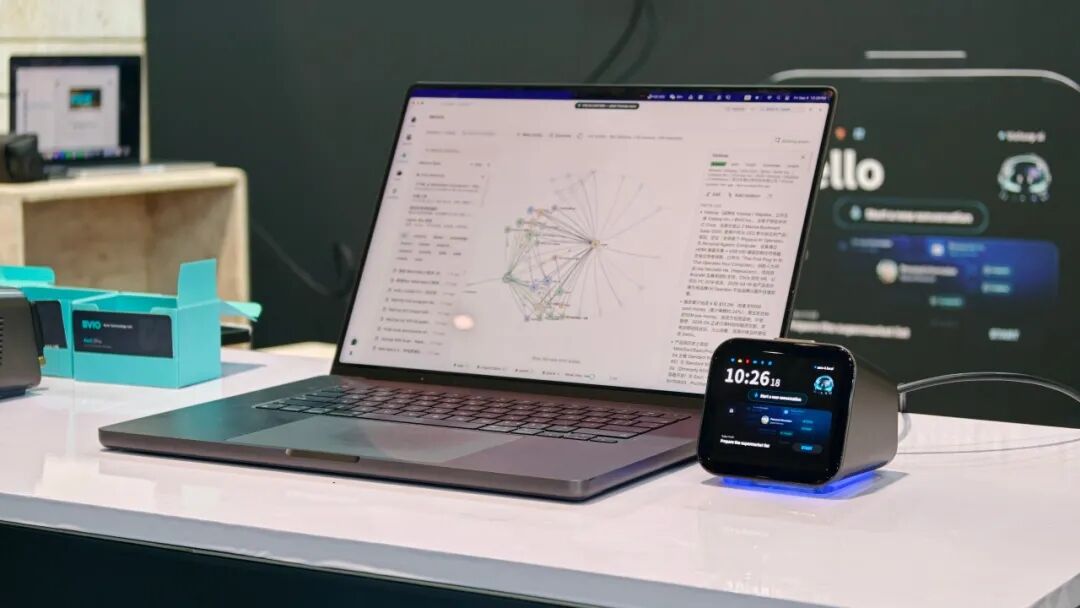
Moreover, usage costs extend beyond the purchase price. The official stance is that the local mode does not require a mandatory subscription; users with their own cloud API pay service providers directly, while Violoop Cloud is priced separately.
Returning to the start, the crowdfunding campaign breaking one million dollars in 20 hours indicates that this product concept has garnered support from early adopters. It offers a way for AI to enter existing computer workflows and attempts to make assistants more suitable for long-term use through local computing, personal memory, and hardware confirmation.
However, until answers are found to the above issues, the $399 purchase remains largely a vision.
Author: Hope
Editor: Yisong

Source: Future Devices