
No Robots of Its Own, Yet This Company Commands a $38.5 Billion Valuation: The Bet on an Operating System
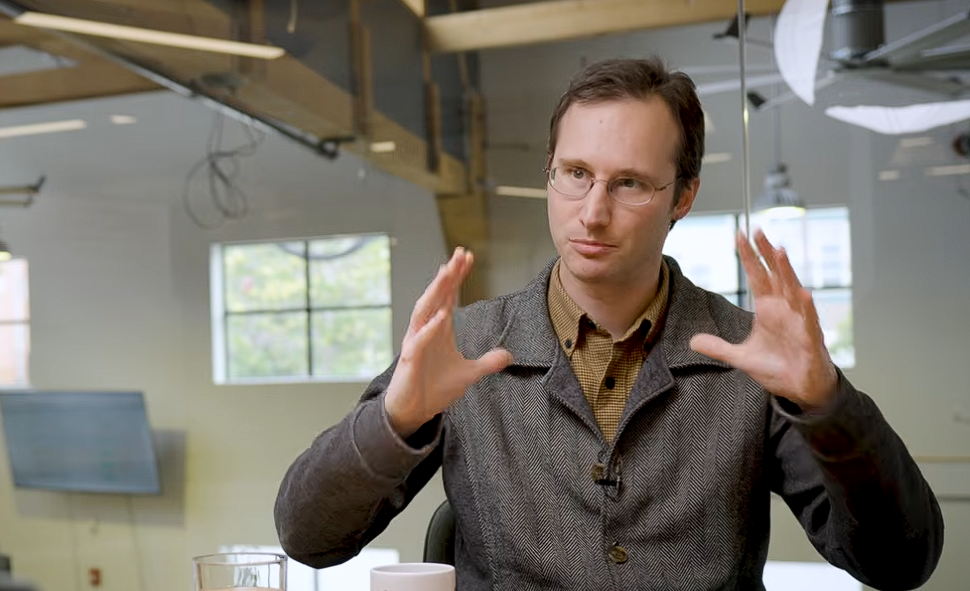
Recently, Sergey Levine, co-founder of the American Embodied AI company Physical Intelligence (PI), appeared on the podcast "Invest Like The Best." In an interview lasting over an hour, Levine discussed in detail the model roadmap for robots, the data flywheel, and hardware本体 issues.
As a software-focused Embodied AI company, PI's business model is to provide models to other robot teams, similar to software companies that supply autonomous driving systems to automakers. Following a $600 million financing round completed late last year, PI reached a valuation of $5.6 billion (approximately RMB 38.5 billion), which is higher than the valuations of many fully vertically integrated Embodied AI companies.
Additionally, as PI's co-founder, Sergey Levine serves as an Associate Professor of Computer Science at UC Berkeley. His Google Scholar citation count reaches 180,000, granting him significant influence in robotics and related fields.

Regarding the industry's shared focus on data, Sergey Levine believes that quantifying the scale of a "ultimate dataset" is not the primary issue at this stage; rather, building practical systems capable of executing diverse tasks and continuously collecting data is more critical.
On the topic of robots entering homes on a large scale, Sergey Levine stated that if robots are not yet working in households by 2050, it is likely because the challenges of handling scenario diversity and the long-tail difficulties of technology interacting with human society have not been adequately resolved.
Therefore, throughout this process, PI has aimed to build a foundational layer akin to an operating system, thereby adapting to various types of robot hardware.

The most critical step is to get the data running first
Compared with large language models, the data issues in the robotics industry are even more complex. Levine also pointed out a key difference: robots lack "internet-scale data." With almost no standardized format and low-cost labeling available.
So currently, the industry's approach to data is roughly divided into two paths:
- Real-world + data-driven: Utilizes extensive real-world data and multi-task learning to build general-purpose models. The key characteristics are strong generalization and closeness to real-world scenarios, but the cost of large-scale data collection is very high.
- Simulation-driven: Models learn primarily in simulation environments with low costs, and some extreme, dangerous scenarios can also be simulated. However, there are usually some microscopic discrepancies between simulations and the real physical world.
PI follows the former path, placing greater emphasis on real-world data. However, Levine does not blindly overestimate it; he noted that these two approaches will either converge in the future or one will ultimately prevail, and it is not certain that the real-data approach will necessarily be the final winner.
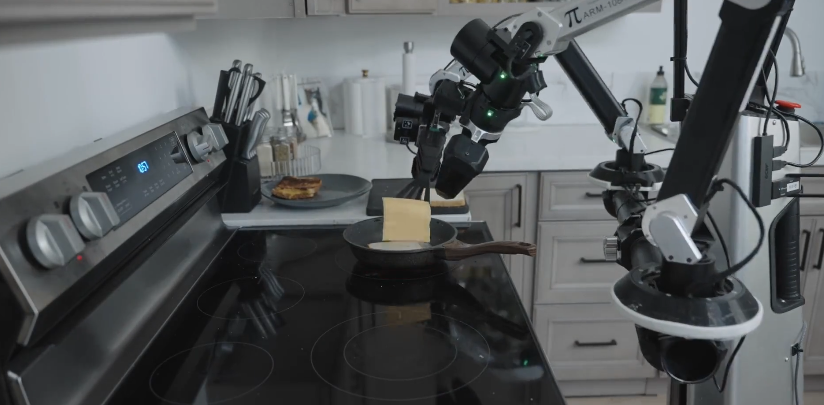
At present, PI's strategy is still very close to Tesla's autonomous driving logic. Levine stated that the core is to enable the system to first have practical value, allowing it to enter the real world and autonomously collect more data, much like how Tesla never worries about vehicle data volume, with data even exceeding processing capacity. The key does not lie in quantifying the scale of the ultimate dataset, but in building a practical system that can be deployed, execute diverse tasks, and continuously collect data.
This is the data flywheel for robots, and it's also what many robot companies are currently advocating for and most eager to implement and drive forward:
- Get the system up and running first. Although it may not be perfect, the core objective is to sustain task execution in real-world environments.
- Collect data during usage. In this process, users gain practical value, while the entire system achieves continuous learning and establishes a vehicle for data generation.
- Feed data back into the model. Data generated during actual implementation allows the model to continuously optimize its strategies, thereby enhancing its capabilities.
But there is a deeper change here: the focus of data is shifting. In the past, robots relied on precise control data, manually annotated trajectories, and action-level supervision.
Now, Levine points out a very critical technical breakthrough: robots can be optimized using only "language annotations." This means that when a robot makes a mistake, there is no longer a need to teach it how to move; simply annotating what went wrong with language allows the model to improve.
This means that robots are gradually entering an era of weak supervision, similar to how large models have moved from precise annotation to large-scale weak supervision, and from action learning to semantic learning. This step is also key to the scaling of robots.

A Foundation as Robust as an Operating System Is Even More Important
In the field of robot hardware, there are typically two design approaches. One is dedicated robots, such as logistics and dishwashing robots, which can perform specialized tasks in niche scenarios but become useless when moved to a different scenario.
Another type is the general-purpose humanoid robot, which aims to perform all tasks that humans can do. It has strong versatility but comes with extremely high R&D challenges.
Levine argues that none of these are the primary issues; the core challenge of intelligence for all robots is consistent. Building a foundational platform akin to an operating system is a more critical issue, and it is a more reasonable path for a wide variety of physical hardware forms to emerge on top of it. Furthermore, excellent foundation models should be decoupled from robot morphologies, capable of autonomously adapting to manipulate bodies and tools.
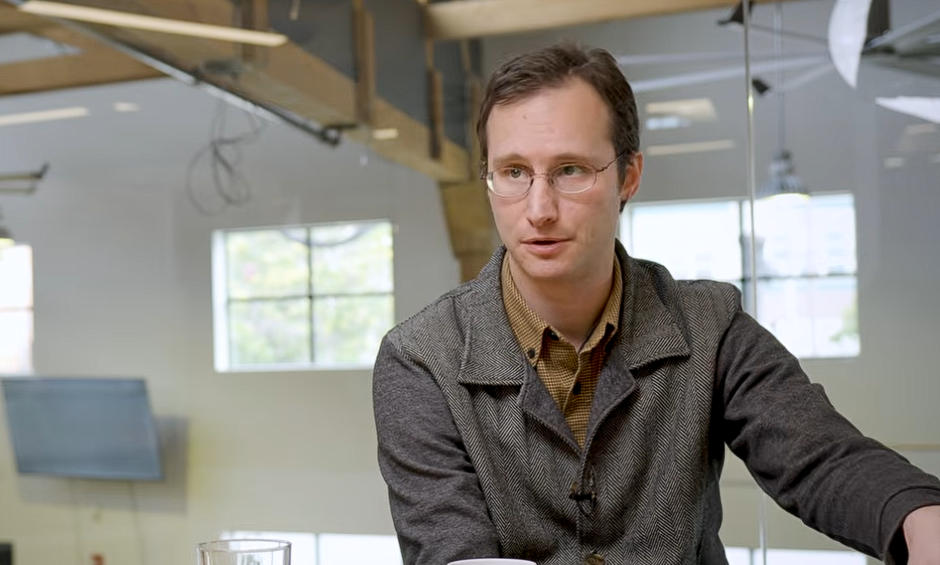
This is also his definition of physical intelligence, with the goal of developing a robot foundation model capable of controlling any embodied system to perform 'any task'.
Here, Levine also compared large language models with robot models:
- Language models can unify various application scenarios, with the core being their ability to leverage a broader range of data sources. This is not merely about integrating data from different scenarios; rather, it involves learning a more comprehensive understanding of the world through weakly supervised data, establishing a foundational cognitive base upon which various applications are built, thereby significantly improving efficiency.
- In the field of robotics, world cognition capabilities are even more critical. Humans can quickly master new skills because we understand physical rules and can intuitively predict outcomes in unfamiliar scenarios, rapidly applying what we have learned. If data from multiple sources, scenarios, and robots can be integrated, models can acquire physical cognition capabilities, making it easier to expand new applications on such platforms later.
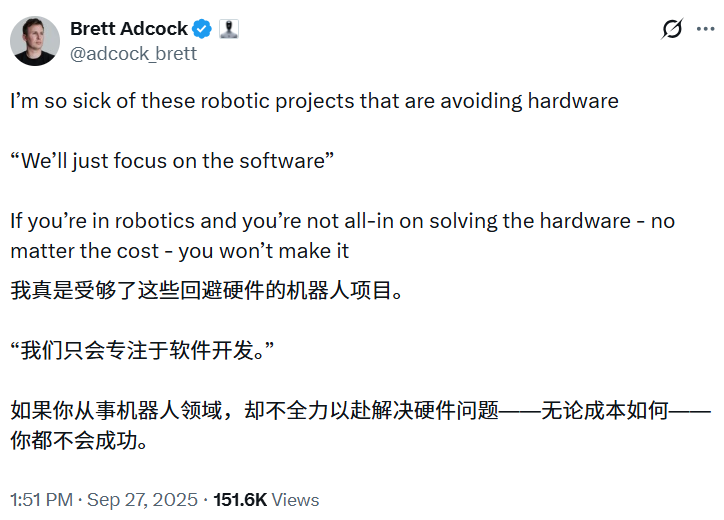
Building on this, PI's path has always prioritized R&D at the model and algorithm levels, despite a saying circulating in the robotics industry: "If you work in the field of robotics but do not go all out to solve hardware problems, regardless of cost, you will not succeed."
This quote comes from the founder of Figure, a company that holds the highest valuation in the global robotics industry at $39 billion.

If robots still haven't entered homes after 25 years
Since robotics began to enter the public eye on a large scale in recent years, people have been eagerly anticipating that robots will truly enter households to help with chores.
However, due to limitations in technological maturity—especially regarding models—for many years, the public could only learn about how robots perform tasks through short video demos. But over the past year, with advancements in models, data, and hardware,
many professionals in the robotics industry have become more optimistic about robots entering homes. A timeline of five to ten years is frequently mentioned by CEOs, corresponding to a timeframe around 2030 to 2035.
"If by 2050 kitchens still lack robots to help wash dishes, what is the most likely reason?"
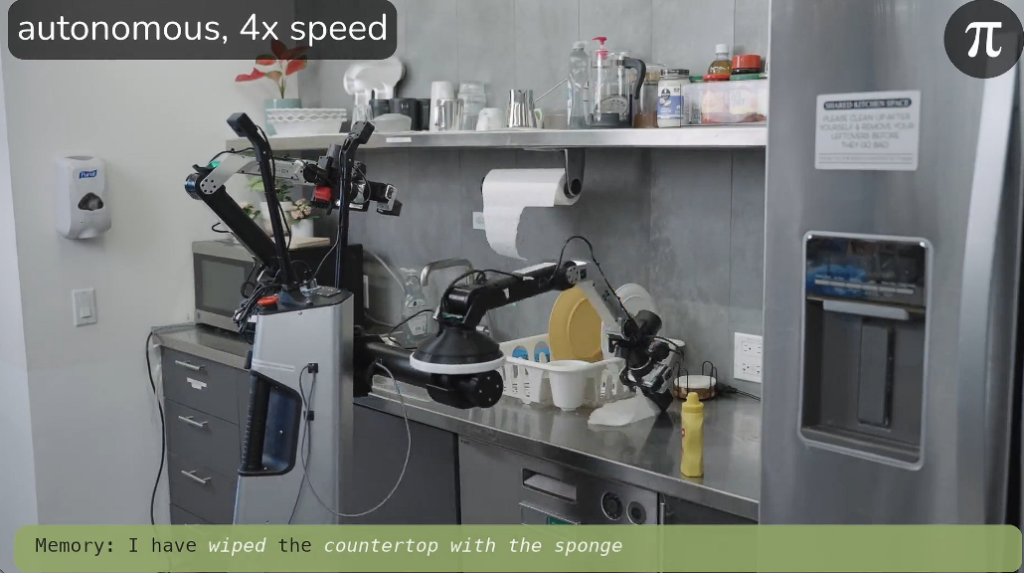
Levine stated that if this is the case, the core obstacle might be the long-tail challenge of technology interacting with human society. At the technical level, the greatest risk lies in the diversity of scenarios to handle.
- The long-tail challenge of technology interacting with human society: Similar to autonomous driving, meeting technical standards is only one aspect; public acceptance of the technology and tolerance for imperfect performance are also significant issues.
- Diversity of application scenarios: We are confident in tackling relatively controllable complex scenarios such as cleaning hotel rooms or assisting chefs in restaurants. However, home environments are filled with unpredictable emergencies, requiring models to make precise predictions and intelligent adaptations. When anything can happen and robots will genuinely impact the physical world, it is essential to ensure that every decision is reasonable and controllable, and that behaviors align with human expectations.
Moreover, for robots to enter households, the most challenging tasks are caregiving activities such as helping the elderly get out of bed and changing diapers for infants. These tasks carry very high risks and can easily cause injury to humans during interaction.
These represent the ultimate challenges for robots and are also the areas where the difficulty is most easily underestimated.

Mid-level Reasoning is the Core Focus Now
With the technical pathways in the current robotics industry yet to fully converge, Levine also briefly revealed that the core of PI's R&D at present lies in the mid-level reasoning process.
He mentioned that to achieve generalization, one must rely on commonsense knowledge, and the representation format of knowledge is crucial. Large language models excel at text conversion, but robots require multi-dimensional cognition including spatial and semantic aspects.
This actually reflects a growing industry consensus: the primary bottleneck in robotics has shifted from actuation to decision-making and understanding.
A more significant change is that the representation form of reasoning is also gradually evolving.
Over the past year, many robotic systems have begun incorporating Chain-of-Thought mechanisms similar to large language models, first decomposing tasks into language before executing actions step by step. This was highly effective in early stages, essentially offloading the capabilities of large models onto robots.
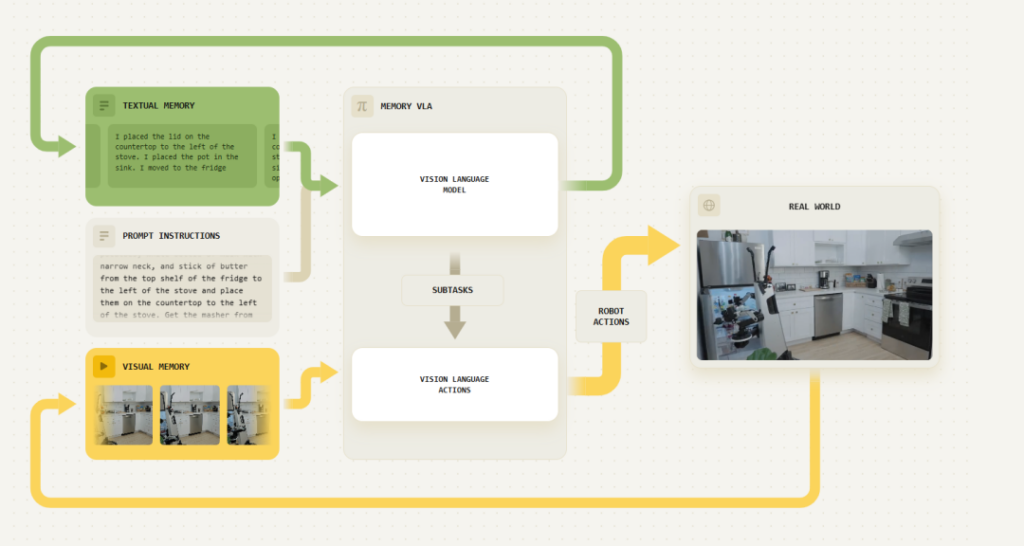
However, during practical deployment, it became increasingly clear that language is not an efficient representation of the physical world. Converting spatial relationships, object states, and continuous changes—all information robots encounter—into text for reasoning is not only inefficient but also prone to errors.
This highlights the key point raised by Levine: there is a need for new "knowledge representation methods" rather than relying solely on text. The current industry direction involves shifting reasoning from "explicit language" to "implicit structures."
In simple terms, this means moving away from verbose, step-by-step verbal thinking. Instead, the model directly forms joint representations of space, semantics, and action internally. This is analogous to human intuition, where we do not consciously narrate each thought but instead make direct intuitive judgments.

Final Thoughts
Viewing this conversation within the broader context of the robotics industry, PI's choice becomes quite clear:
- Betting on real-world data and the data flywheel.
- Emphasizing a universal foundational layer akin to an operating system for its systems.
- Focusing its next steps on mid-level reasoning and representation methods for its models.
In the field of robotics, this represents a slower, longer, yet deeper technical curve, requiring acceptance that significant economic benefits may not be visible in the short term.
Therefore, for PI, whose business重心 lies primarily in software, driving the data flywheel is not easy. They need to push their model algorithms to the extreme to convince large-scale hardware manufacturers to pay.