
30 Days, 3 Billion RMB in Financing: What’s Behind This 10-Billion-Valuation Robot Startup?

On April 7, Embodied AI company Qianxun Intelligence announced the completion of a new round of financing totaling 1 billion yuan.
This round of financing was co-led by Shunwei Capital and Yunfeng Fund, with support from Dascent Venture Capital, a leading domestic currency fund, Yinhe Yuanhui, Turing Fund, Xinding Capital, Gengxin Capital, and others.
It is reported that this is the latest financing completed by Qianxun Intelligence within 30 days after raising nearly 2 billion yuan in February, bringing its cumulative financing to 3 billion yuan.
Notably, Qianxun Intelligence was founded in January 2024, breaking through a valuation of 10 billion yuan in less than two and a half years. After entering 2026, its financing pace has accelerated significantly, completing multiple large-scale financing rounds in quick succession.
Against the backdrop that technical paths have not yet fully converged, such high financing density is rare. Therefore, a more noteworthy question is: How does Qianxun Intelligence's technical route differ from current mainstream approaches?

A Model That Doesn't Rely on 'Clean Data'
For the current embodied AI industry, it is already difficult to secure very large funding rounds or rapidly escalate valuations by focusing solely on hardware bodies and motion control performance.
This trend has become even more pronounced over the past half year. After all, for robots to achieve widespread deployment in factories and homes, solving the embodied model (the "brain") is a more critical issue; the impact of cerebellar-level motion control performance is subject to diminishing marginal returns.
In terms of embodied models, the mainstream approaches in the industry are roughly divided into two routes: VLA (Vision-Language-Action) and World Models, each with its own focus.
According to public information, Qianxun Intelligence's key offering is an end-to-end VLA model system. However, they do not overly emphasize "clean data"; their Spirit-v1.5 model, open-sourced earlier this year, actually posits that "clean data is the enemy of excellent foundational robot models."
- Carefully designed tasks: Scripted operations are written to ensure consistency and high success rates during data collection.
- Controlled object placement: Objects are placed in predictable and easily reachable positions.
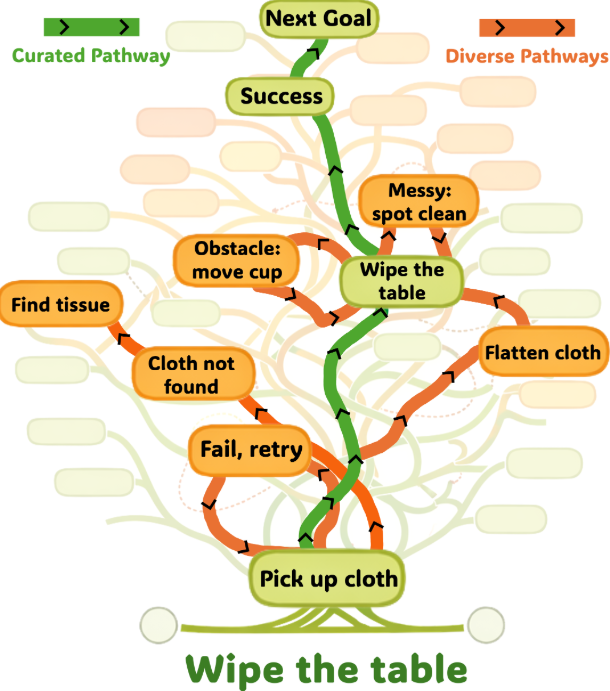
For robots, such "clean data" appears to have high value, featuring low noise and relatively clear task logic, leading to high task success rates in laboratory settings.
However, from Qianxun Intelligence's perspective, this kind of "perfect" data often limits the model's generalization capabilities when applied in real-world scenarios. If a robot only learns in environments where everything is fully visible and accessible, it is likely to fail in the variable conditions of the real world.
Regarding data, the Qianxun Intelligent team places greater emphasis on data collected by 'data collectors' through improvisation. That is, under the premise that the main task objective has been determined, how to complete the task is left to the discretion of the data collector.
In relevant experiments by the team, models trained with diverse datasets outperformed those trained on demonstration datasets in terms of convergence speed and final performance. Specifically, the model trained with diverse datasets required 40% fewer iterations to achieve the same performance as the baseline model.
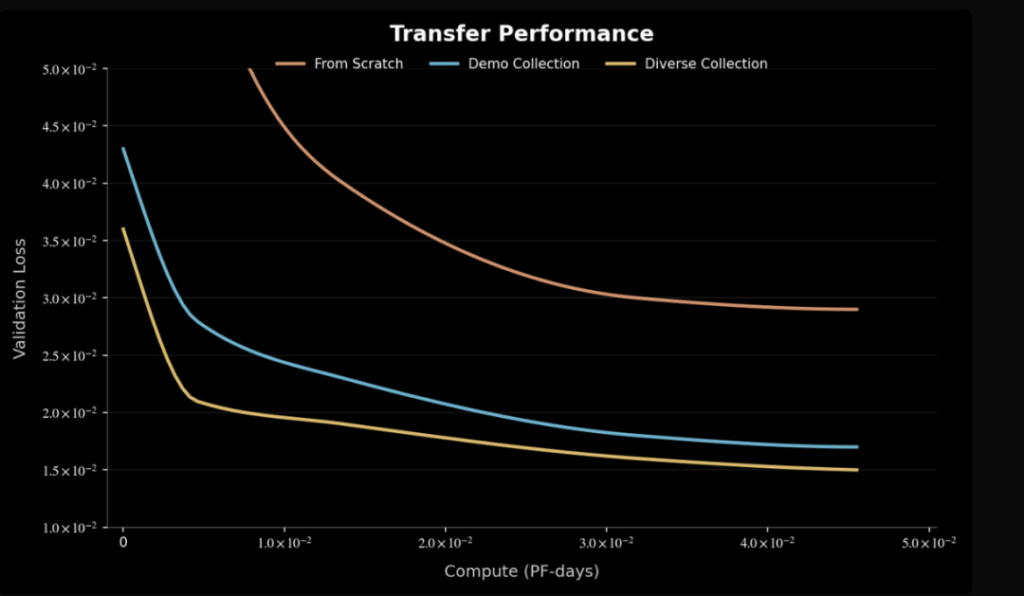
The training approach adopted by this team closely resembles that of large language models: it first uses internet video data for pre-training (whereas large language models typically use text data), and then aligns the model using real interaction data. This route effectively cultivates the model's world understanding capability first, before focusing on specific tasks.
Notably, in research on scaling effectiveness, Qianxun Intelligent also found that as the dataset grows, the validation error for new tasks continues to decrease.
This aligns with the pursuit of Scaling Laws by American embodied AI company Generallist. Gao Yang, co-founder of Qianxun Intelligent, previously emphasized at the Chinese Humanoid Robot and Embodied AI Industry Conference last year the importance of data scale to model performance, pointing out a power-law relationship between data volume and model generalization ability.
From this perspective, one can see the direction of Qianxun Intelligent's model strategy: rather than improving success rates by cleaning data, it primarily relies on expanding distribution to achieve generalization capabilities.
This essentially shifts the problem of Embodied AI from task modeling to a more typical problem driven by data scale and data distribution.
This is why most of Qianxun Intelligence's subsequent actions have revolved around "data."

Driven by the "Diverse Data" Route
For robots, if models determine the direction, then the data system determines whether this route can be successfully executed.
Based on currently disclosed information, Qianxun Intelligence's core strategy regarding data is very clear: prioritize expanding the data distribution and follow the "diverse data" route. It is understood that the company has already accumulated over 200,000 hours of multi-type real-world interaction data, mainly including:
- Internet video data: Used in the pre-training phase to provide large-scale visual and physical world priors.
- Teleoperation data: To learn specific task execution processes.
- Wearable device collected data: Records more natural human operation methods, providing non-standard operation paths.
Among these data sources, one of Qianxun Intelligence's core investments lies in its wearable collection system. It is reported that its self-developed wearable devices have iterated to the fifth generation, reducing data collection costs to approximately 1/10 of traditional methods.
This allows data collection to shift from laboratory behaviors to scalable production activities. On this basis, Qianxun Intelligence has also expanded its data team to a scale of 1,000 people. The company expects its total data volume to exceed 1 million hours by 2026.
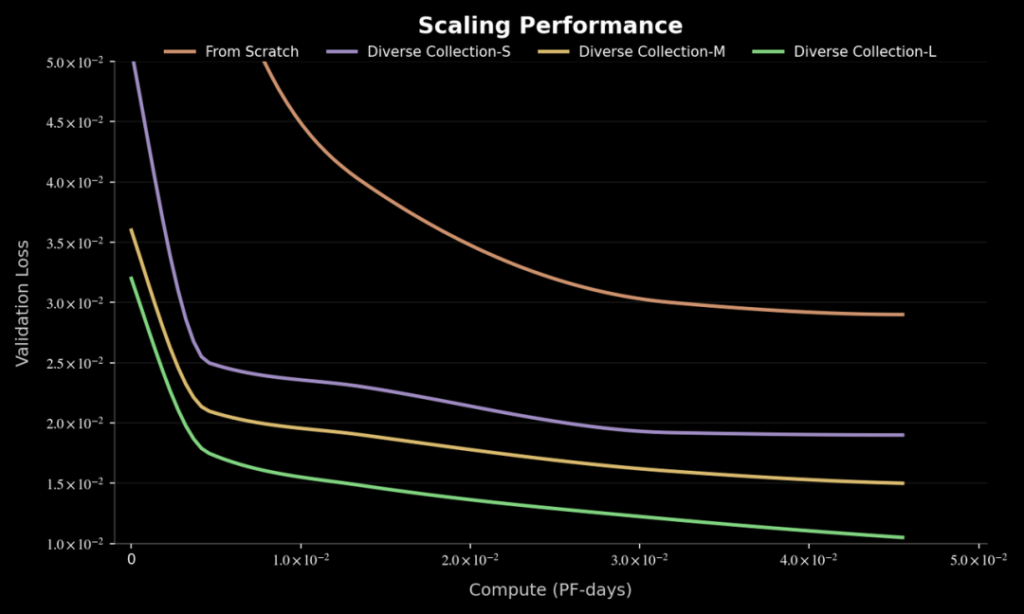
Considering the Scaling Laws in robotics mentioned earlier, when the cost of data collection is sufficiently low, scaling up itself becomes a means to enhance capabilities.
It is worth noting that during the pre-training phase, Qianxun Intelligence also chose to fuse internet video data with wearable data to help the model learn basic common sense about the real world. For specific tasks, the team used teleoperation data for supervised fine-tuning, and then employed reinforcement learning so that the model could continuously simulate and generate new data in real-world environments. This new data is then used to reverse-train and refine the model.
However, it is important to note that this data system has a very clear premise:
- Diverse data inherently brings higher noise.
- Convergence is relatively difficult in the early stages of model training.
- The system is highly dependent on data scale.
This resembles a typical scale-driven path. With continuous data growth, long-tail problems will be covered, and the model's stability and generalization capabilities will truly manifest.
Therefore, beyond the models themselves, Qianxun has invested heavily in building its data infrastructure.

**The current commercialization focus is not on profit
From the current implementation actions, it is clear that Qianxun Intelligence's focus is not on short-term monetization; serving technology remains its primary objective.
This is also what the entire industry is currently pursuing: a closed loop of robot deployment, data回流 (return), model feedback, capability enhancement, and increased deployment scale.
This closed-loop system itself is not complex, but the threshold for execution is very high. Almost every team talks about this; the key lies in whether there are stable real-world scenarios to continuously trigger this loop.
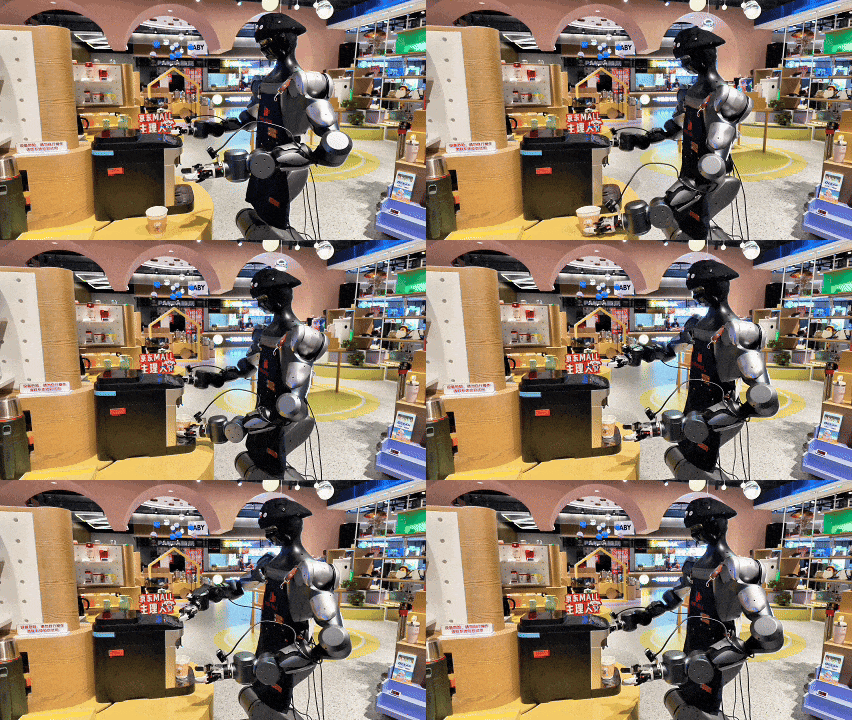
From this perspective, the collaboration between Qianxun and JD.com resembles more of a data node. The Moz robot making coffee in JD MALL; the coffee-making itself is not the key point, what matters are the scene characteristics:
- Clear task boundaries, facilitating evaluation.
- High repetition frequency, making data accumulation easy.
- Not fully standardized, allowing for variation.
This kind of scenario is neither as clean as a laboratory nor as uncontrollable as a fully open environment; it is closer to an intermediate state. For Qianxun, the value of such deployment points lies in their ability to continuously generate real interaction data with disturbances, rather than one-off demonstration data.
Once these data enter the training and fine-tuning pipeline, model changes are no longer just offline optimizations but directly correspond to issues encountered in real-world operations.
As the number of such nodes increases, the rhythm of model iteration will gradually shift from phased updates to a more continuous process.
Viewing models, data, and deployment together, Qianxun Intelligence follows a scaling-based technical approach.
From scenario implementation at JD MALL to an anticipated accumulation of one million hours of data, Qianxun Intelligence is waiting for embodied AI models to reach a qualitative leap at a certain critical point.
Therefore, along this path, data has become the most closely watched issue for the entire embodied AI industry in 2026.