
Open-Sourcing Three Major Models: Tencent Robotics Is 'Overtaking'
Following the release of Tairos, the first modular open-source platform for Embodied AI by Tencent Robotics X Lab at WAIC 2025, Tencent Robotics X Lab and Futian Lab, in collaboration with Tencent Hunyuan, unveiled new achievements in Embodied AI at this year's WAIC.
The new achievements include the release and open-sourcing of three foundational Embodied AI models based on the Hunyuan large model: Hy-Embodied-VLM-1.0, Hy-Embodied-RxBrain-1.0, and Hy-Embodied-VLA-0.5.
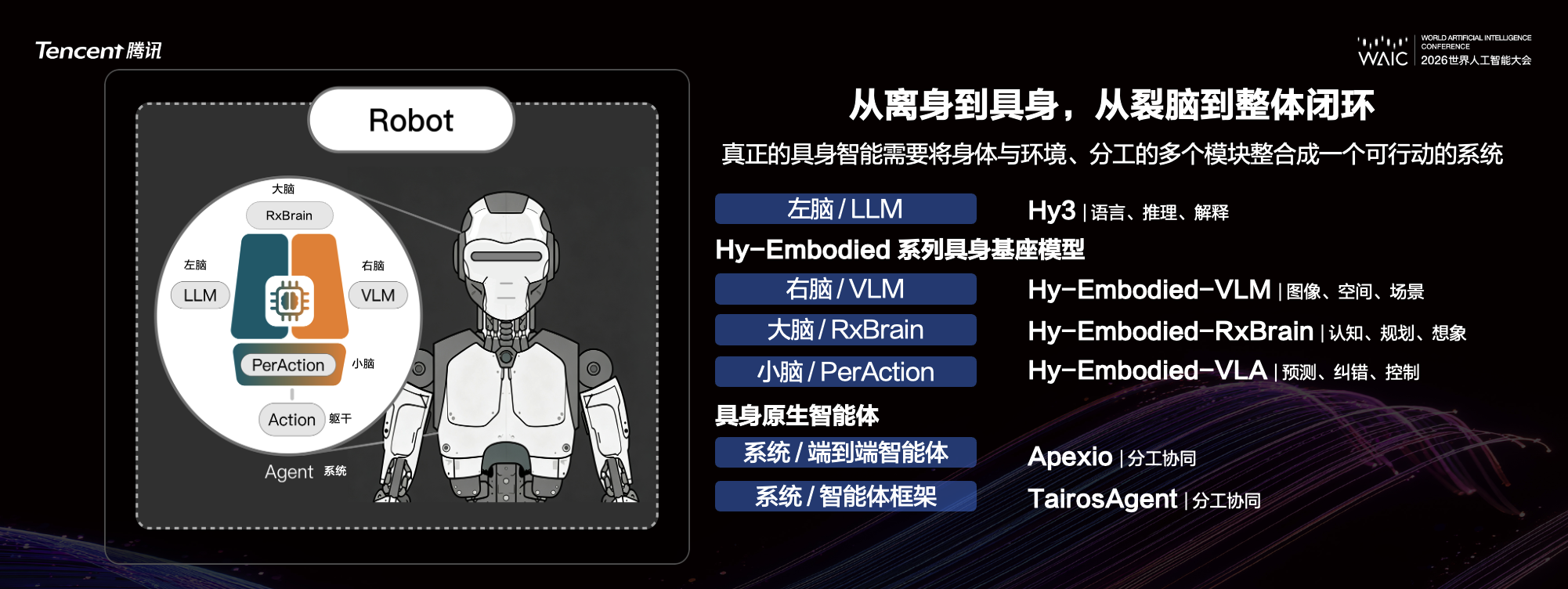
As shown in the image above, VLM-1.0 serves as Tencent’s next-generation Embodied VLM foundation model, acting as the 'right brain' to progressively perceive the physical world; RxBrain functions as a self-developed world model, serving as the Embodied brain to complete full-chain reasoning from cognition and prediction to sub-task planning; VLA-0.5 acts as the 'cerebellum' responsible for control, enabling robots to truly learn from failure and translate cognition into genuine physical actions.
The three models correspond respectively to perception, cognition, and action, attempting to build a complete system of foundational models for Embodied AI.
This system aims to resolve the long-standing 'fragmentation' in Embodied AI models, where teams working on VLMs do not handle actions, and VLA teams’ perception capabilities wait for the development of general models.
Furthermore, all three models in the system are open-sourced. Globally, while Google’s RT series and Physical Intelligence’s π series boast strong performance, their model weights and training details are not fully open. Tencent’s entry via an open-source stance provides dozens of domestic robot hardware manufacturers with a 'plug-and-play' intelligent foundation.
Crucially, the three models share the Hunyuan large model base, giving them a natural advantage in aligning inputs and outputs between each other. This effectively transforms the complete chain for a robot—from 'seeing the world → understanding physical causality → predicting action consequences → planning task steps → generating specific actions'—into a deliverable, deployable, and cross-hardware-migration standardized solution.
Robots Need More Than Just "Image Recognition"
It is well known that much of the current work in the robotics field still relies on general-purpose Vision-Language Models (VLMs) as the perception layer. Models such as the Qwen-VL series and Gemini series have already demonstrated impressive capabilities in image understanding, scene question-answering, and simple reasoning when deployed on edge devices.
If these VLMs were only responsible for letting robots know "what is on the table," that might indeed be sufficient. However, the environments robots face require a much deeper level of understanding than general scenarios. That is to say, the Tencent team believes that Embodied AI agents need not only multimodal perception and understanding capabilities but also the ability to extend these capabilities to interactions with the real physical world.
To address this, Hy-Embodied-VLM-1.0 constructs an action-centric capability classification system and uses this system to guide data collection, organization, and training in reverse.
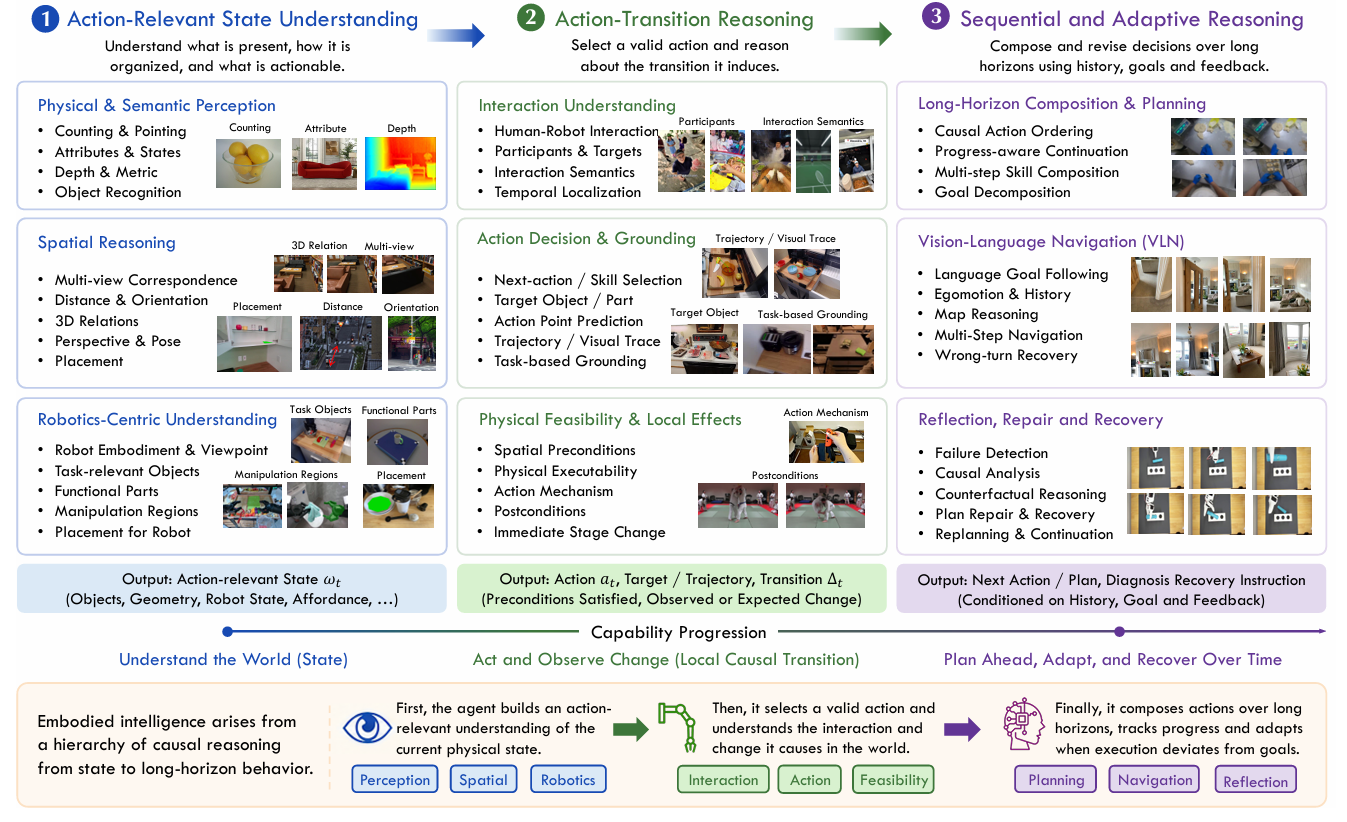
As shown in the figure above, this system divides the capabilities required for Embodied AI into a three-tier progressive structure. Action-related state understanding focuses on comprehending agent and environmental states, including physical attributes, 3D spatial structures, and embodiment-related attributes; action-state transition understanding focuses on understanding the interaction between actions and the agent/environment, inferring consequences and underlying physical principles; sequence and adaptive reasoning further extends these capabilities along longer time dimensions.

Notably, as shown in the figure above, data for the SFT (Supervised Fine-Tuning) and RL (Reinforcement Learning) stages are organized according to the same three-tier capability classification system, but each stage has its own focus in terms of data distribution.
SFT builds upon the hybrid data of Hy-Embodied-0.5, emphasizing coverage across more layers, including deep reasoning, task-conditioned localization and affordance localization, social interaction, object- and robot-centric trajectory supervision, physical causal reasoning, fault-aware reasoning, and vision-language navigation.
The RL data distribution focuses on verifiable reasoning tasks, such as state reasoning, localization, planning, reflection, and navigation, which are convenient for verification and subsequent reward optimization.
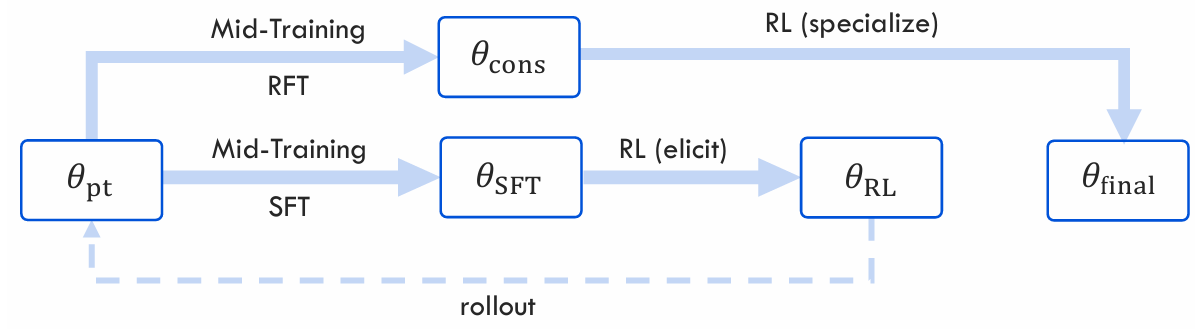
The figure above shows the training pipeline of Hy-Embodied-VLM-1.0. Unlike the traditional three-stage approach of 'pre-training → SFT → RL', this model introduces a 'self-evolution loop' during the training phase. Through RL (elicit), shallow reasoning is introduced into deep embodied reasoning; rejection sampling filters high-quality reasoning data; RFT (Rejection Sampling Fine-tuning) internalizes reasoning capabilities into a clean model; and RL (Specialize) further refines it.
The significance of this training closed-loop lies in the fact that reasoning capabilities can self-evolve from fewer thinking samples, eliminating the need for large-scale manually annotated reasoning data.
Notably, Hy-Embodied-VLM-1.0 employs a combination of the Hy3-A3B language model, the Hy-ViT2 visual encoder, and an MoE architecture. The MoE structure allows the model to maintain 'large-model capabilities' while achieving 'small-model inference costs'. This means that Hy-Embodied-VLM-1.0 not only enhances reasoning capabilities through training but also improves inference speed through architectural optimization, offering significant engineering value.
Specific experiments demonstrate where Hy-Embodied-VLM-1.0 outperforms other VLM models.
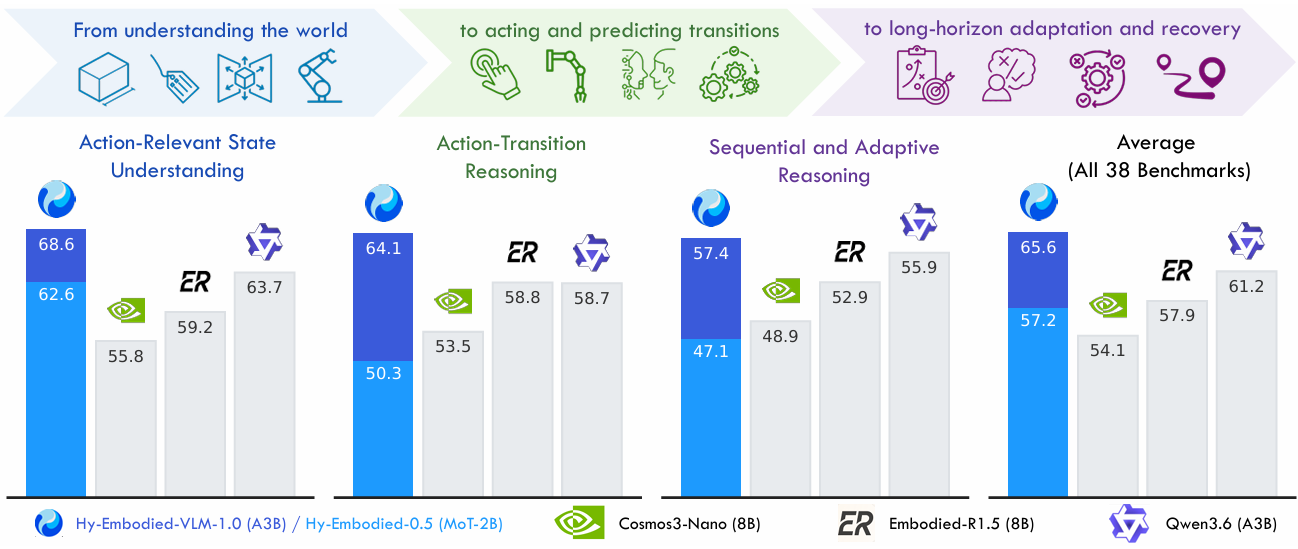
As shown in the figure above, Hy-Embodied-VLM-1.0 leads all models of comparable parameter scale in world understanding, action prediction, and long-horizon adaptability. With only 3B activated parameters, it surpasses Cosmos3-Nano and Embodied-R1.5, which have 8B parameter scales. Among the three levels, the largest gap is in the most challenging "action-state transition reasoning" (leading the second-place model by 5.3 points), indicating that the model's capability advantage is concentrated at the causal reasoning level most needed by robots.
Furthermore, at the sequence and adaptive reasoning level, which is the most difficult, performance across all models drops significantly, representing a hard ceiling for current Embodied AI.
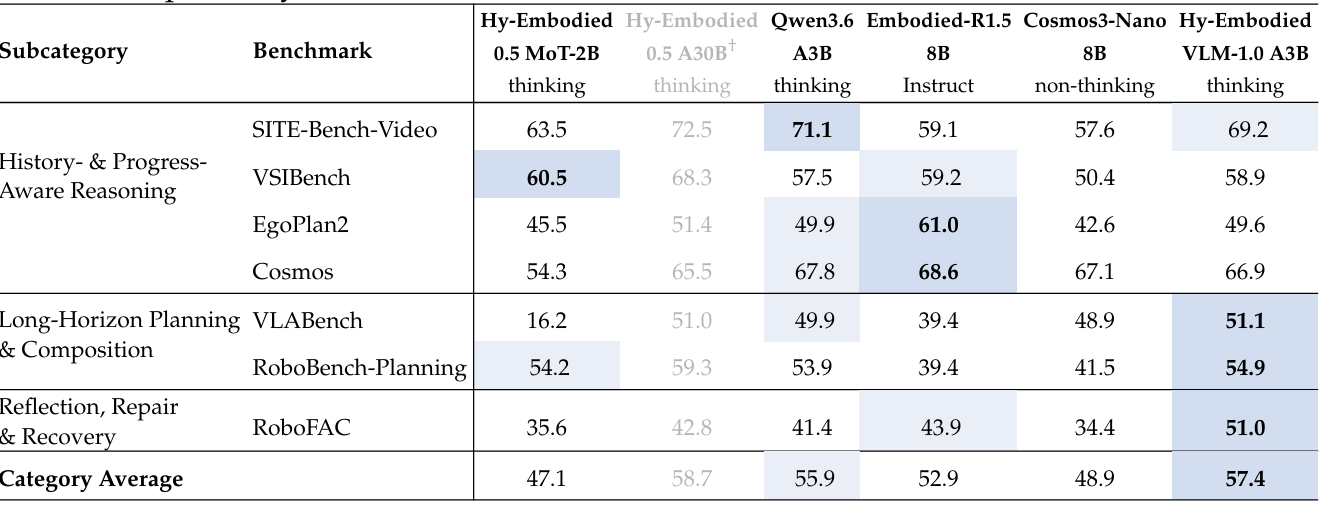
As shown in the table above, Hy-Embodied-VLM-1.0 leads other models in long-term planning capabilities and outperforms the second-place model by 7.1 percentage points in RoboFAC (Fault Analysis and Correction).
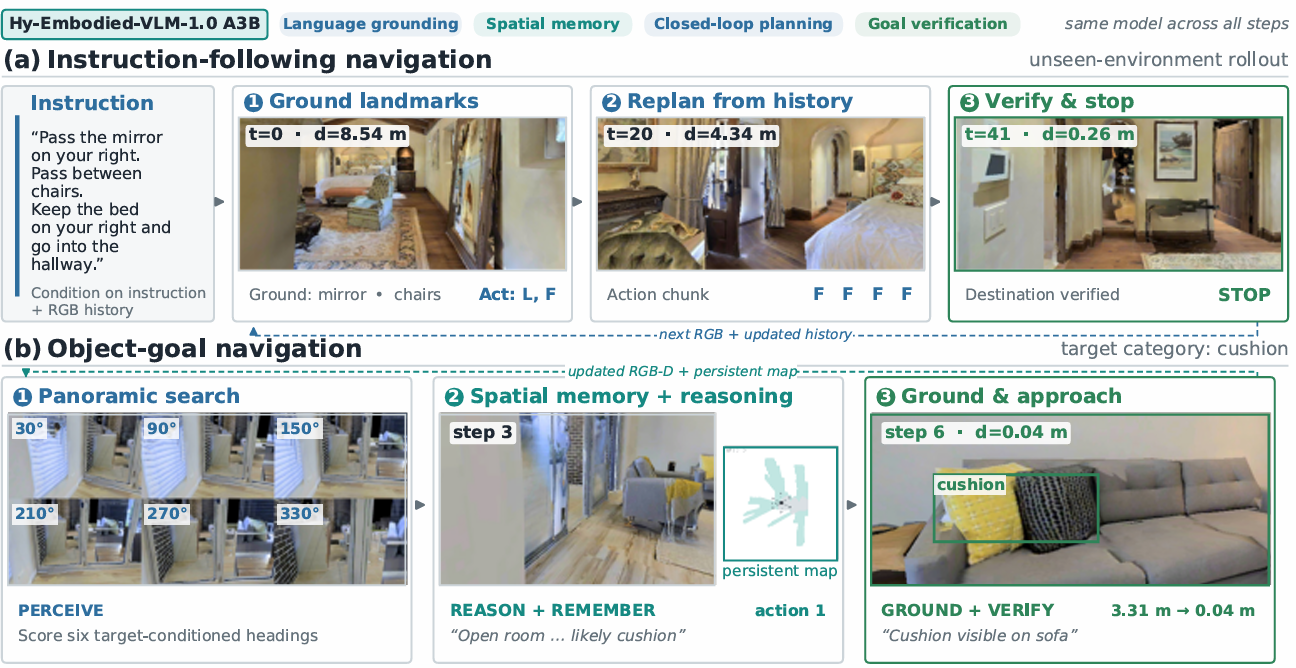
As shown in the figure above, HyVLM-1.0's complete navigation trajectory in the Matterport3D environment. The model first uses language to locate landmarks, then replans from historical data, and finally verifies the target and stops. Through this closed-loop navigation experiment, HyVLM-1.0 demonstrates its powerful system-level capabilities.
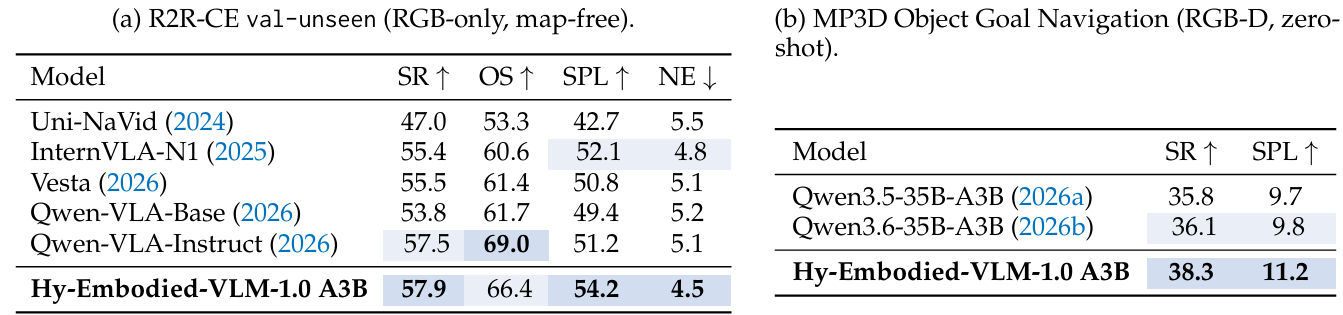
In fact, what is even more impressive is the table below. Previously, most works used Qwen series VLMs as tools to annotate physical properties for geometric data. Now, on MP3D zero-shot object goal navigation, Hy-Embodied-VLM-1.0 achieves a 38.3% success rate, surpassing the 35B-parameter-scale Qwen3.6-35B-A3B. This indicates that HyVLM possesses physical world understanding and agent reasoning capabilities that are competitive with QwenVLM.
Hy-Embodied-VLM will help robots truly understand the world, and its "action-centric" capability system can also guide robot movements to a certain extent, rather than relying on traditional "image-based perception only."
Text-Visual Interactive Generation for True Next-Step Planning
Hy-Embodied-VLM-one-point-zero successfully established action-centric world understanding, and subsequently Hy-Embodied-RxBrain-one-point-zero can serve as a world model, further planning the robot's next actions through prediction.
The paper points out that for complex tasks such as planning, relying solely on text reasoning or visual imagination cannot fully specify an executable intent. The reason is understandable: text reasoning tends to lose key state or spatial details, while visually depicted desired scenarios may conceal underlying physical causality and intermediate decision-making processes.

As shown in the figure above, RxBrain possesses three major capabilities: using embodied reasoning to determine whether a task is completed; leveraging world state prediction to output four consecutive frames of future visual states based on one image and description; and uniquely alternating between generating text plans and visual goal states within the same sequence.
To achieve these three capabilities, RxBrain is implemented via a Modality-Aware Transformer (MoT) architecture. Its backbone includes two modality-specific attention branches for language and vision, as well as three modality-specific feedforward experts for text, visual understanding, and visual generation.
Specifically, although text-understanding and visual-generation tokens share the attention projection layer, text tokens pass through standard feedforward networks, while visual tokens pass through widened-dimension feedforward networks. This allows text and vision to guide and verify each other via information sharing at the attention layer, while selecting their most suitable parameter paths through different feedforward networks at the computation layer.
With the architecture in place, it leverages data priors to "predict the future." RxBrain employs an automated three-stage pipeline that converts raw robot manipulation videos into structured training samples. The data sources cover four categories: real-world robot operations (17,000 hours), handheld device human demonstrations (17,000 hours), simulation environments (over 1,000 hours), and daily human activities (14,000 hours), totaling more than 50,000 hours.
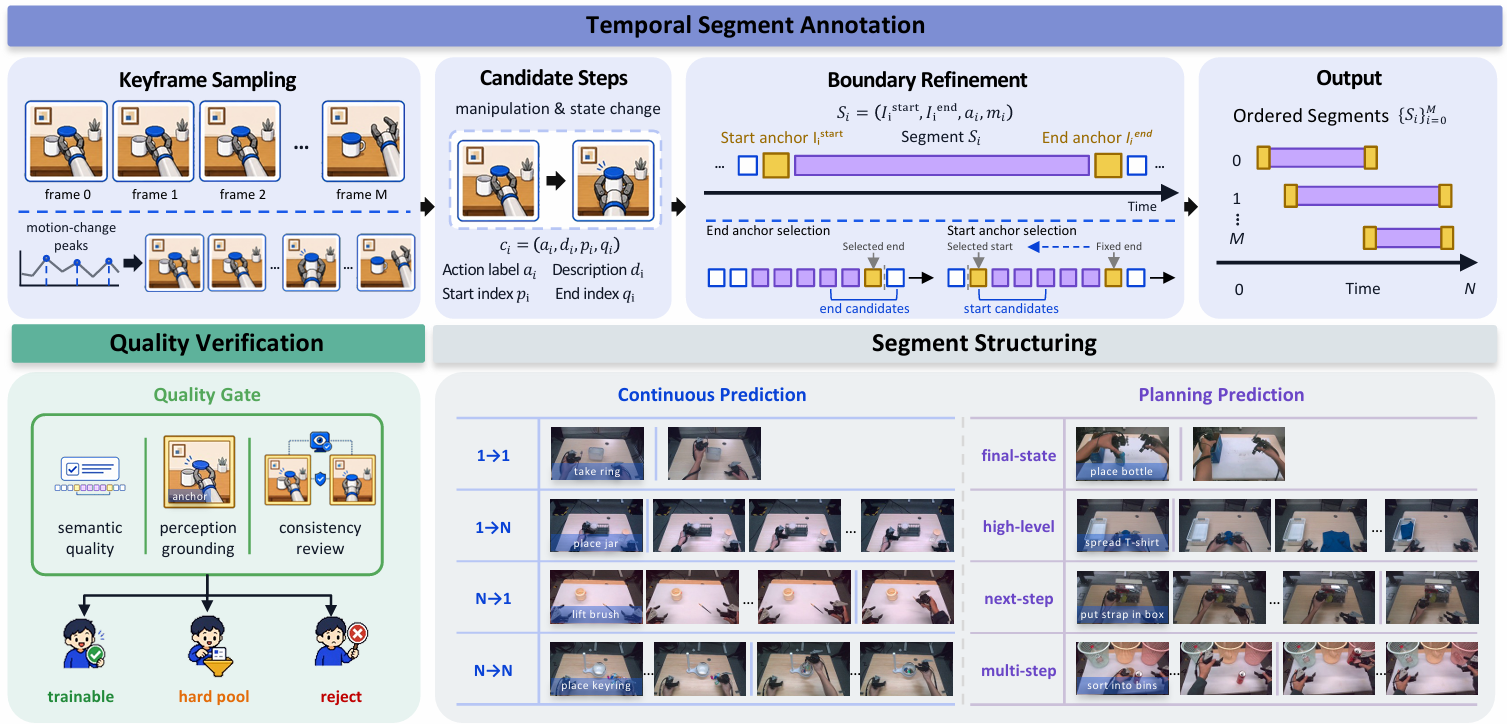
As shown in the figure above, the first step of this pipeline is temporal segment annotation. In simple terms, this involves converting long, untrimmed embodied task videos into localized planning steps. Each localized step includes a short step name, a detailed textual description, and two visual anchors: the start frame and the end frame.
The second step uses an MLLM-based validator to check semantic quality, visual localization, and consistency between text and visual transitions, determining whether the data is suitable for training.
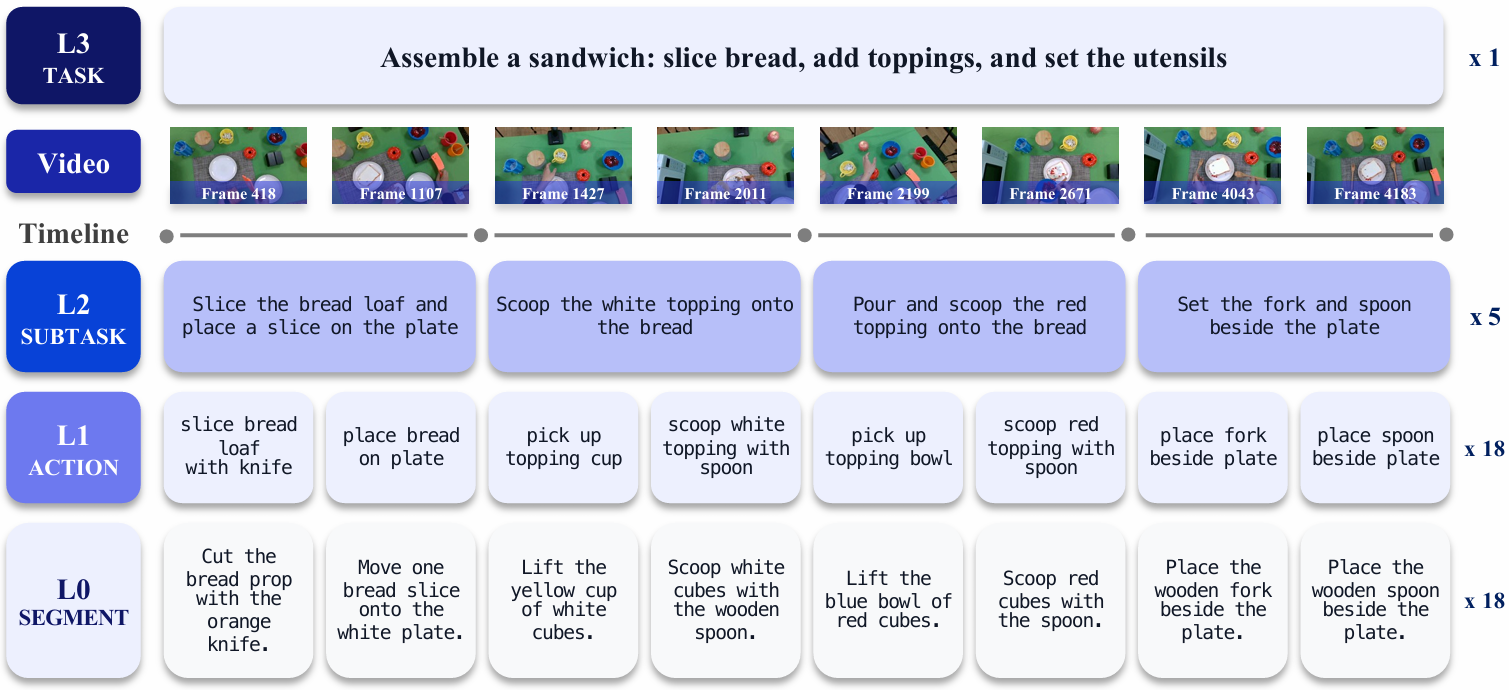
Looking at the specific details in the figure above, the third step further organizes segments into 4-level joint text-visual planning samples. These are: learning visual state changes within a single planning step; connecting consecutive steps for step-level joint planning; grouping adjacent steps into higher-level sub-goals; and modeling the final outcome of the entire task.
Based on the aforementioned data and architecture, RxBrain obtains its model through a two-stage training process consisting of pre-training on large-scale image-text pairs and supervised fine-tuning on embodied scenarios. Meanwhile, we focus on observing RxBrain's performance in three key experiments below.

As shown in the figure above, researchers compared RxBrain with Qwen and Cosmos across several evaluation metrics. On the GenEval task for text-to-image generation, RxBrain scored 82.4, significantly outperforming Cosmos, demonstrating that joint training did not compromise generative capabilities. Meanwhile, RxBrain also showed considerable advantages over other models in trajectory prediction and 3D spatial understanding.
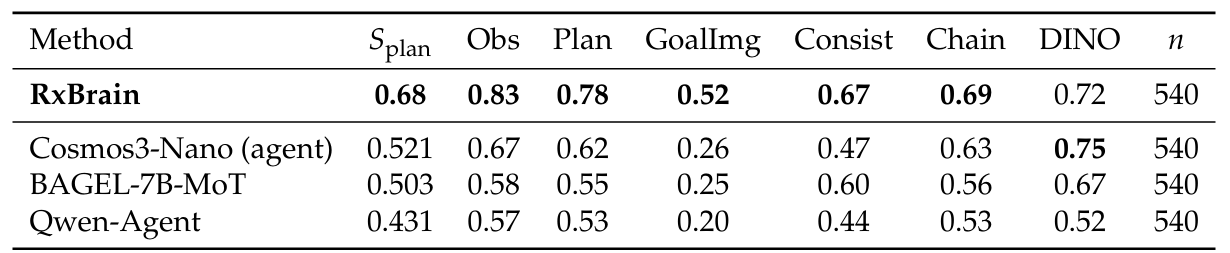
As shown in the table above, this experiment evaluated RxBrain's joint planning capability. In terms of Plan (planning) and GoalImg (target image correctness), RxBrain surpassed both Qwen-Agent and Cosmos, indicating that when textual planning and visual imagination are alternately generated within the same model, they serve to mutually calibrate each other.

Finally, as shown in the figure above, in three real-world robotic manipulation tasks—setting a dining table, folding and storing eyeglasses, and picking up trash—RxBrain achieved an average task success rate of 87%, outperforming π0 (68%) and π0.5 (82%). All of this was accomplished solely by leveraging world knowledge and state prediction abilities learned during the pre-training phase, transferred to the action branch via gated fusion, without relying on large-scale action pre-training data.
Thus, RxBrain functions more like a robot's brain, acting as an Agent. This also suggests that a world model capable of predicting the future can inherently serve as a solid foundation for action policies.
A Complete Learning Stack from Data Acquisition Hardware to Deployment
In the three-layer architecture of the Hy-Embodied system, the VLM is responsible for action-centric world understanding, while RxBrain handles task prediction and planning. However, robots still require concrete actions for execution. Hy-Embodied-0.5-VLA serves to translate the cognitive outputs of the VLM and RxBrain into correct actions.
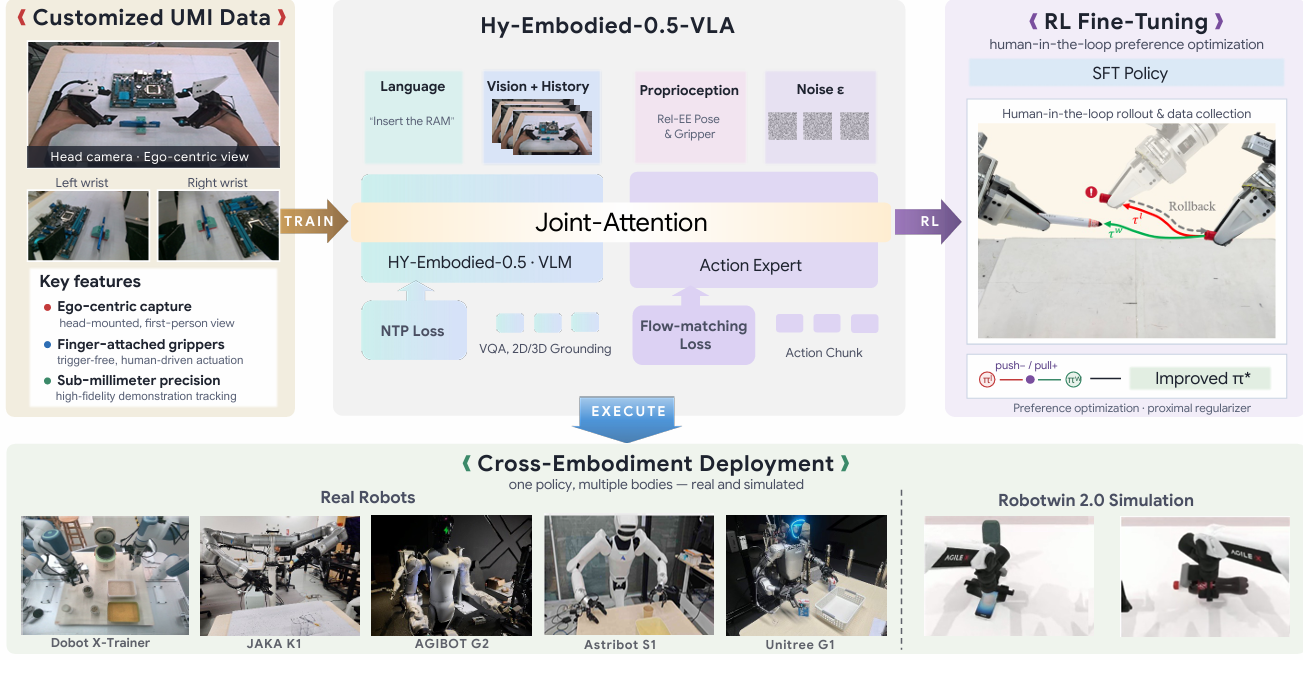
As shown in the figure above, the most significant feature of Hy-Embodied-0.5-VLA is that its technical approach constitutes a complete machine learning stack. The top left shows custom UMI data acquisition hardware, including fingertip-mounted grippers, an external optical motion capture system, and sub-millimeter precision tracking. The center section illustrates the training pipeline, which comprises the HY-Embodied-0.5 VLM backbone, flow-matching action experts, and Delta-Chunk action representations.
Simultaneously, at the crucial deployment layer, the same model can drive five robots with vastly different forms: Dobot X-Trainer, JAKA K1, AGIBOT G2, Astribot S1, and Unitree G1. This phase involves sim-to-real transfer and cross-embodiment mapping, enabling the model to smoothly migrate from simulation environments to real-world hardware and from one robot platform to another. On the far right, Reinforcement Learning (RL) teaches the robot how to correct errors.

Specifically, as illustrated above, for VLA models, the data foundation determines the superstructure. The training dataset for Hy-Embodied-0.5-VLA consists of 10,000 hours of UMI corpus. According to subplot (a), the top four data scenarios are laundry rooms (28.5%), kitchens (19.2%), personal care and miscellaneous tasks (13.8%), and dexterous/tool usage (10.4%). These scenarios demand high precision and are sensitive to action errors.
According to subplot (b), the two most frequent skill categories are bimanual folding and stacking (3,945 hours) and spatial organization (3,065 hours). Such operations require extremely high force control and trajectory precision, which is precisely where motion-capture-grade precision data can maximize its value.
With this data foundation established, we must also understand what truly enables Hy-Embodied-0.5-VLA to deploy across multiple embodied platforms.
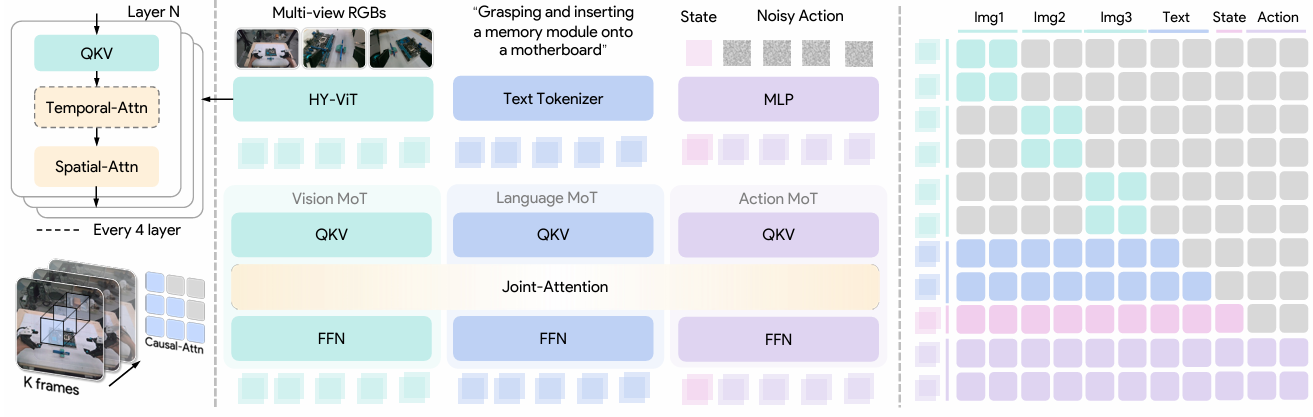
As shown in the figure above, in the complete architecture of the model, besides the standard VLM component, HyVLA-0.5 also adds action MoT, a compact memory encoder, and
Block causal attention masks establish the attention patterns between vision, language, state, and action tokens. Additionally, through the Delta-Chunk action representation design, HyVLA-0.5 predicts the movement increments of the actuators rather than the absolute positions of the end-effectors.
The key point is that this increment is defined in the End-Effector Frame (EEF), completely decoupled from the robot's base position and joint configuration. During deployment, only a lightweight platform mapping layer needs to be added; this mapping layer can for fixed-base arms, use forward kinematics to synthesize EEF increments into world coordinates, and for humanoid robots, first infer the chassis coordinate system before execution.
Notably, the article also addresses the issue between reasoning speed and control frequency. The researchers designed an ingenious asynchronous execution scheme for HyVLA-0.5: after reasoning is completed, action chunks are placed into a thread-safe buffer, and the execution thread retrieves commands from the buffer at the control frequency.
Next, we compare the performance of HyVLA-0.5 with other strategies, moving from simulation to real-world implementation.
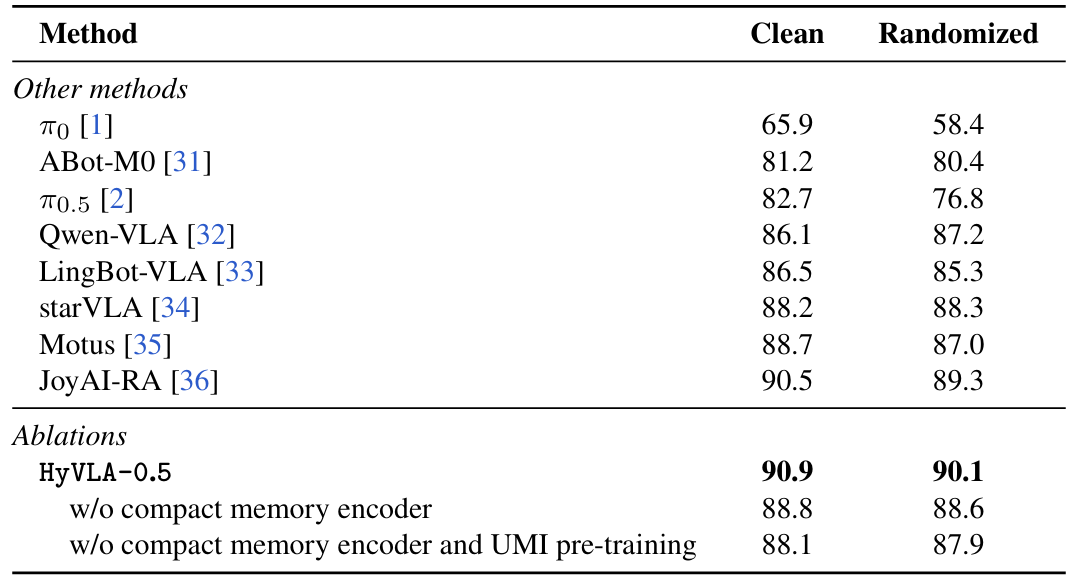
In the 50 simulation tasks of RoboTwin 2.0, HyVLA-0.5 achieved first place in both the Clean and Randomized settings. Detailed ablation studies were added below to demonstrate the importance of the memory encoder and UMI data pre-training.
In addition, the real-robot performance of HyVLA-0.5 is also highly convincing. As shown in the figure below, the experiment was set up with six dual-arm manipulation tasks, five robot platforms, and two deployment routes (Track-A for within-embodiment, Track-B for cross-embodiment).
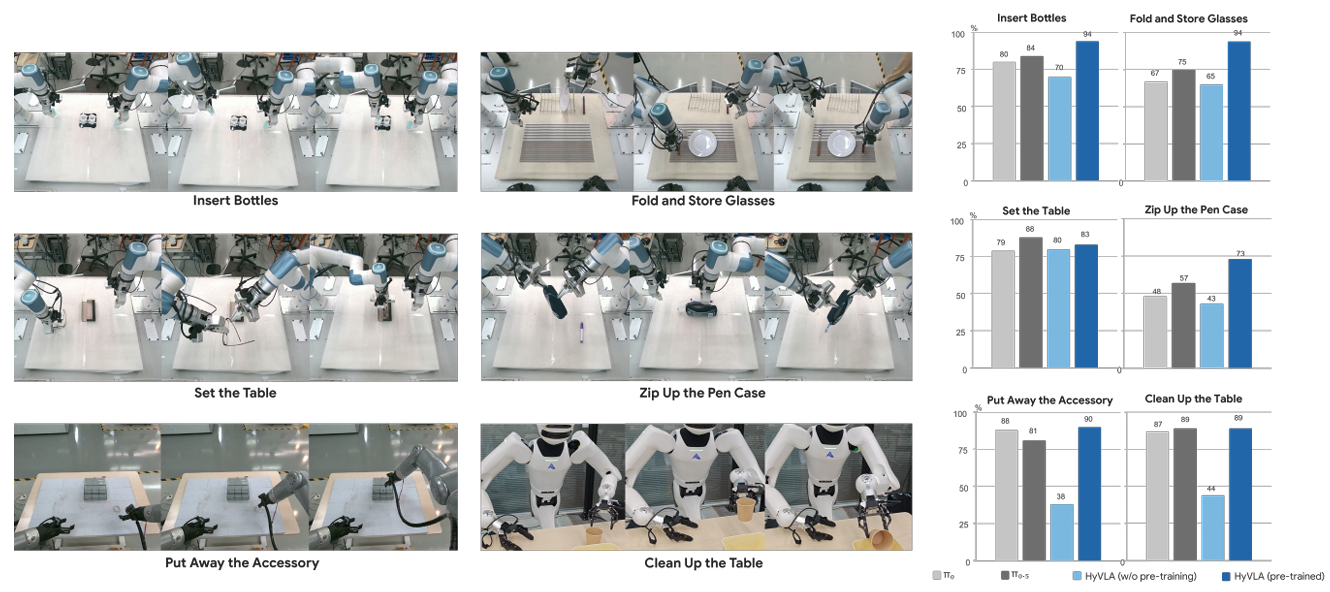
Among them, HyVLA-0.5 leads both π0 and π0.5 across all six tasks. Track-B (cross-embodied transfer) is the most significant highlight: JAKA K1 and Astribot S1 had never seen their own teleoperation data during training; the policy was fine-tuned solely on UMI human demonstrations and deployed directly onto robots with entirely different morphologies, outperforming π0 and π0.5 that were also only post-trained on UMI data.
Impressively, in the third-party RoboDojo evaluation (covering generalization, memory, fine manipulation, long-horizon operations, and open semantic understanding), HyVLA-0.5 ranked first in overall simulation performance. Notably, the RoboDojo evaluation emerged only after the official release of HyVLA-0.5, fully demonstrating its robust capabilities.
HyVLA-0.5 can be described as the action layer built upon the perception capabilities of VLM and the prediction capabilities of RxBrain. The synergy of these three components forms a complete chain: from seeing the world, to understanding it, to predicting the future and planning tasks, and finally executing actions.
Final Thoughts: From Absence and Lag to Catching Up
Looking back at Tencent's development trajectory in the robotics field, it is not difficult to discern a narrative arc from absence and long-term accumulation to a concentrated explosion.
Since its founding in 2018, Robotics X Lab has successively unveiled eye-catching demos such as Max, Ollie, TRX-Hand, and "Xiao Wu." However, with a small team size, it has long been viewed as a minor "frontier exploration" unit within Tencent, rarely participating in industrial competition and almost invisible to the outside world.
However, the times have changed.
2025: The Tairos platform was launched, with Tencent stepping into the spotlight for the first time as an "Embodied AI Open Platform." 2026: The Hunyuan large model underwent a complete restructuring, topping the global invocation rankings on OpenRouter and providing a truly robust foundation for embodied base models.
Then, at this year's WAIC, three embodied base models were open-sourced simultaneously. The AI agent framework, TairosAgent, compressed end-to-end response times to 2-3 seconds, enabled deployment across five robot platforms, and achieved a success rate of over 95% on factory production lines. These are productive forces that have already begun to land.
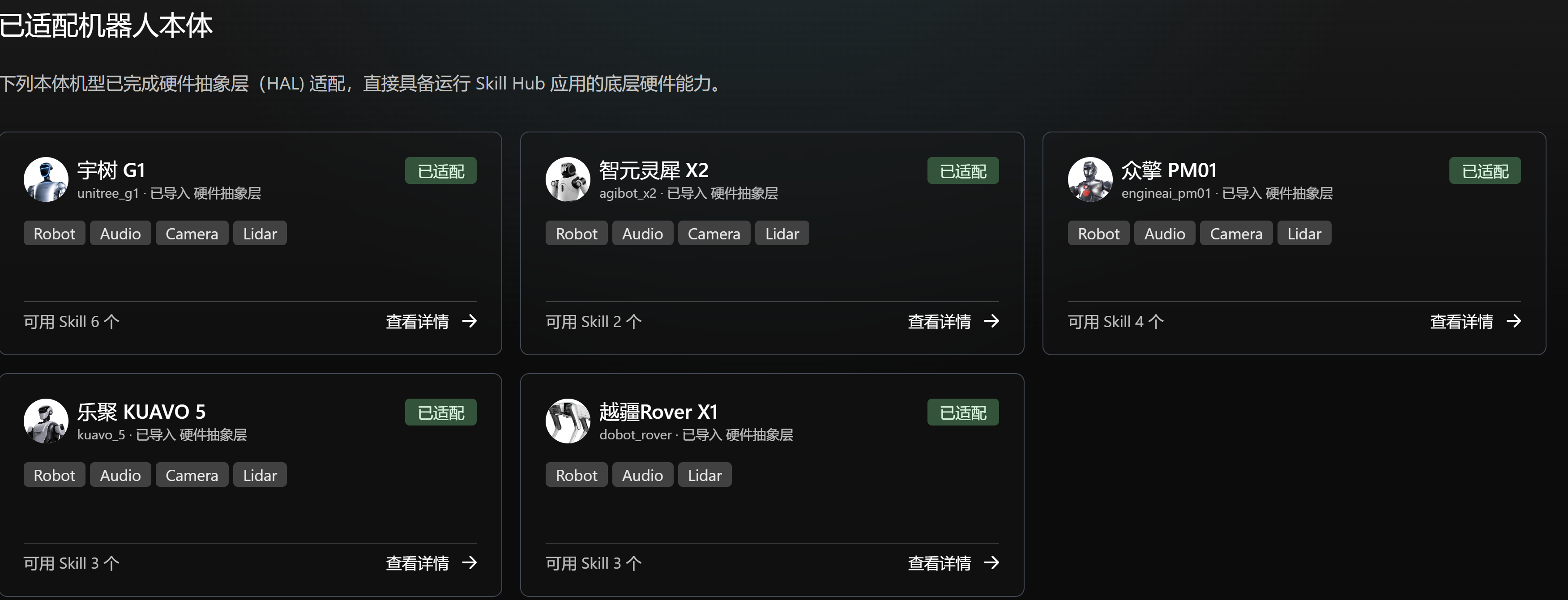
More crucially is its strategic clarity. Zhang Zhengyou repeatedly emphasized "not making hardware, but making Android," positioning Tairos as a "titanium screw" connecting the ecosystem. In fact, this positioning avoids direct confrontation with body manufacturers like Unitree and Zhiyuan, allowing Tencent to devote all resources to models, platforms, and toolchains.
From absence, to catching up, to attempting to define the rules of the game in the guise of "platform-based open source," ultimately, Tencent remains Tencent. In the Embodied AI track, similar to Mini Programs and Tencent Cloud, it still prefers to bet on the infrastructure layer, waiting for ecological value to be released over a longer cycle.