

ACE Robotics Releases ACE-Brain-0.6, Outperforming GPT-6 Astra in Six Spatial Anchoring Tests
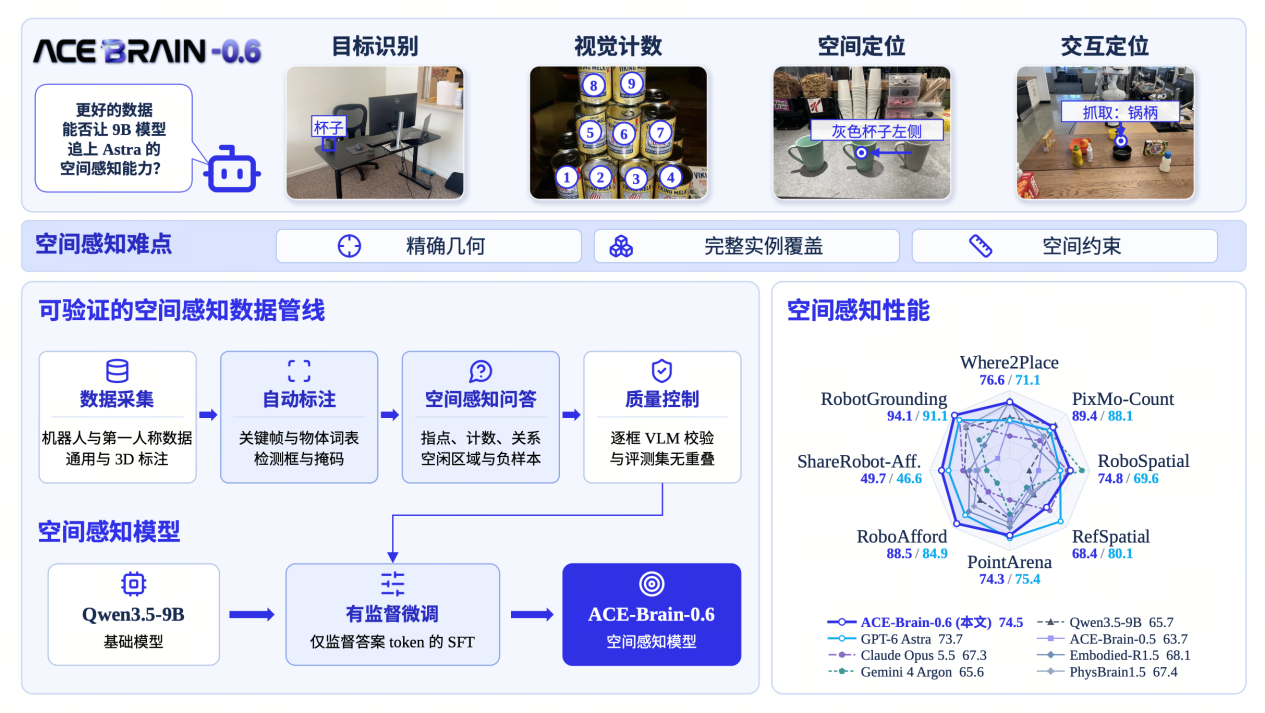
On October 19, ACE Robotics released the embodied foundation model ACE-Brain-0.6. According to the team, this 9B parameter model scored higher than GPT-6 Astra in six out of eight visual spatial anchoring evaluations. Its average score across seven public benchmarks was 74.53, compared to 73.68 for Astra.
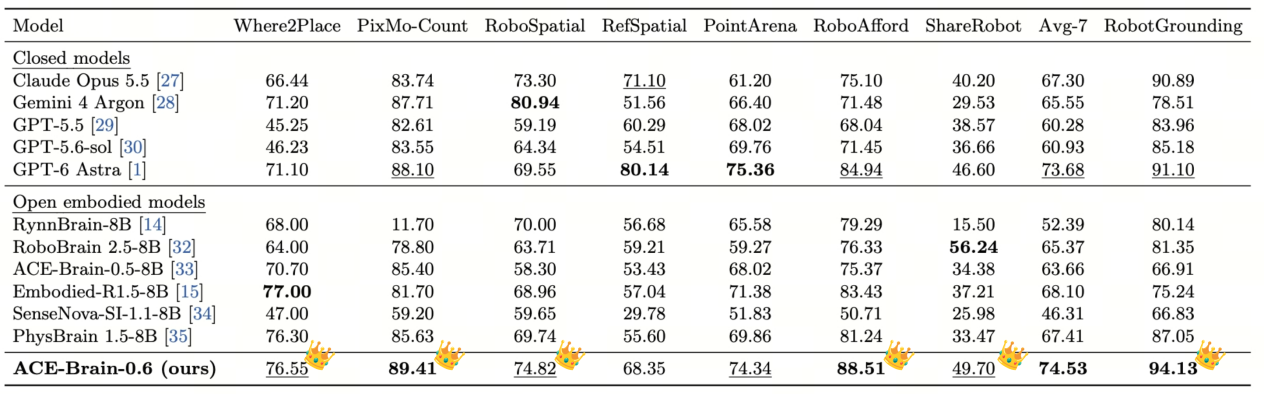
Visual spatial anchoring addresses the question of where a robot should act—for example, locating a target object based on an instruction, identifying the correct grasp point, or determining suitable placement locations. ACE-Brain-0.6 is built on Qwen3.5-9B and enhances these capabilities using approximately one million training samples sourced from more than 30 open-source robot data families and private first-person perspective data.
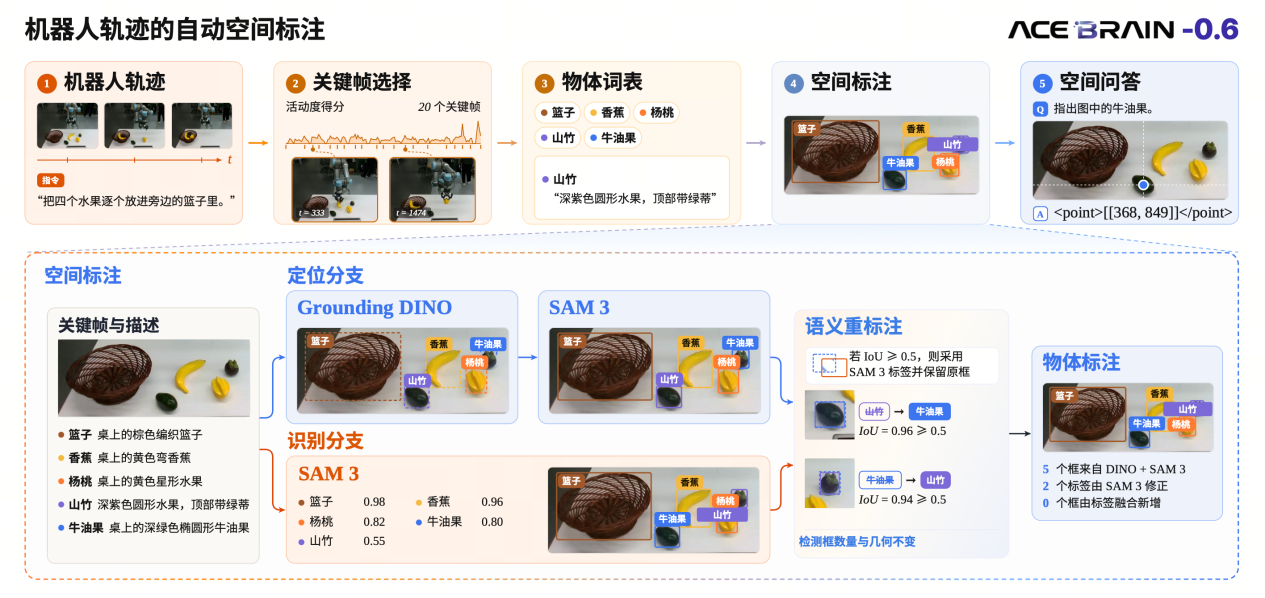
The team also conducted data scaling experiments. With the model architecture and training methods held constant, increasing the training data from 260,000 to approximately one million samples raised the average score on seven public evaluations from 69.3 to 74.5. Simply adding more data of existing types yielded less than a one-point improvement; introducing new scenarios, spatial relationships, and supervision forms delivered significantly greater gains.
ACE Robotics is chaired by SenseTime co-founder Xiaogang Wang, with Tao Dacheng serving as Chief Scientist. The reported results primarily measure spatial localization and understanding capabilities and cannot be directly equated with actual robot operational success rates.