

DexRoam Author Zhou Rui on Translating Human Demonstrations into Robot Action Data
Mobile manipulation research faces a key challenge: enabling robots to perform fine manipulation while moving their bodies, much like humans. This was a central focus at the 2026 Conference on Robot Learning (CoRL), held in Austin from November 9 to 12.
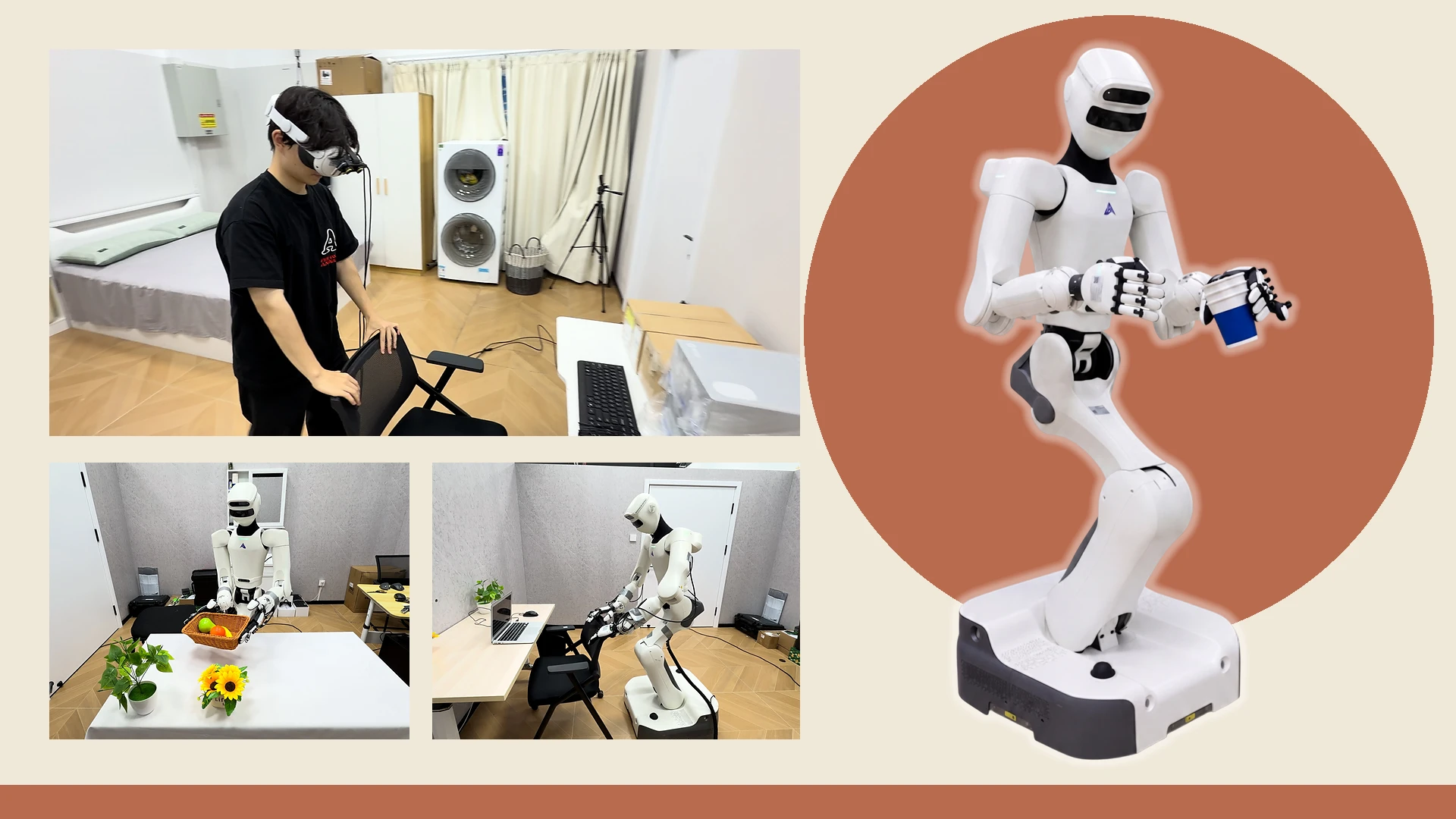
Mobile manipulation research faces a fundamental question: how can robots perform fine manipulation while moving their bodies, just like humans?
The 2026 Conference on Robot Learning (CoRL) took place in Austin, Texas, from November 9 to 12. The conference accepted 687 papers spanning robot imitation learning, reinforcement learning, vision-language-action models, world models, and real-world robot manipulation.
Among the accepted papers, researchers from The Hong Kong University of Science and Technology, Beijing Academy of Artificial Intelligence, Peking University, Beihang University, and the Institute of Automation, Chinese Academy of Sciences jointly published DexRoam: Learning Mobile Bimanual Dexterous Manipulation from Egocentric Whole-Body Human Demonstrations.
The team introduced DexRoam, which aims to teach robots the coordination between mobility and manipulation directly from whole-body human movements, moving away from a complete reliance on traditional teleoperation for training data collection.
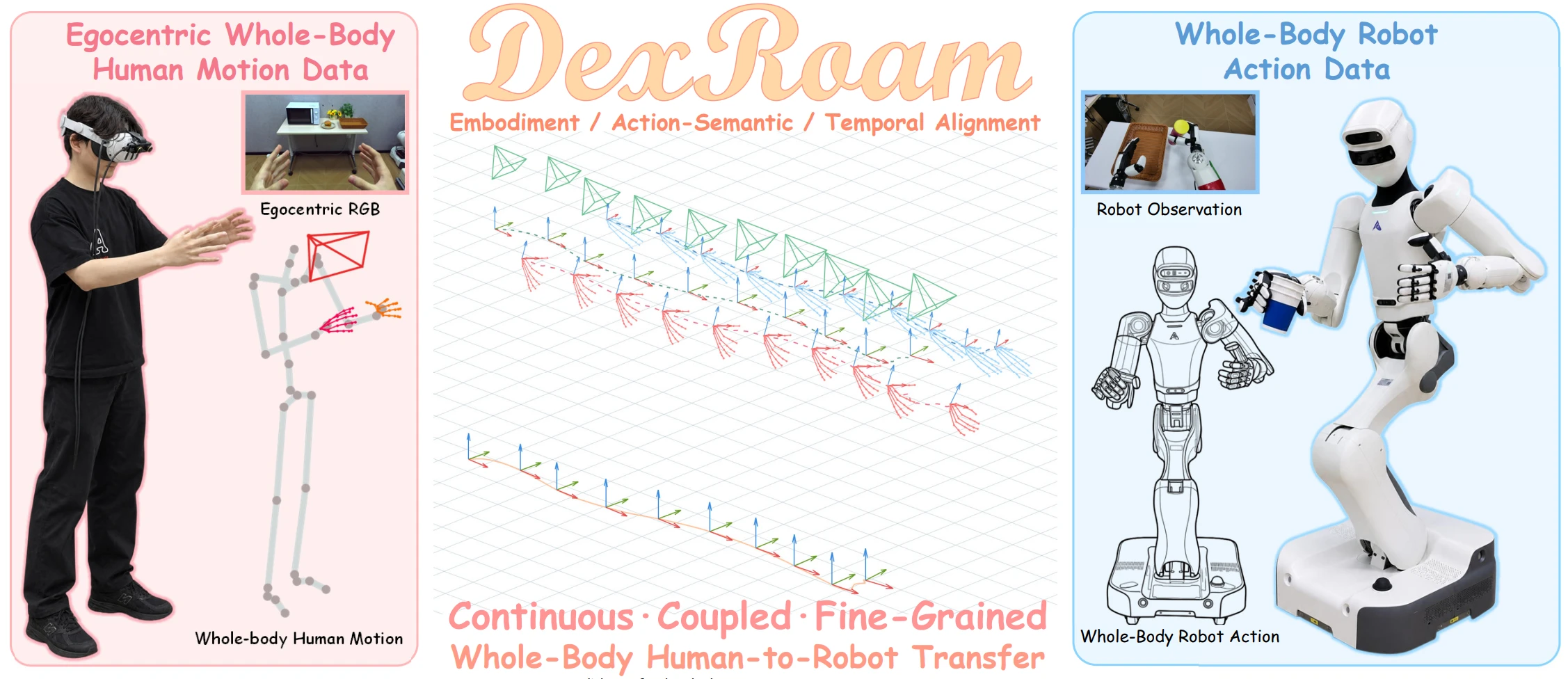
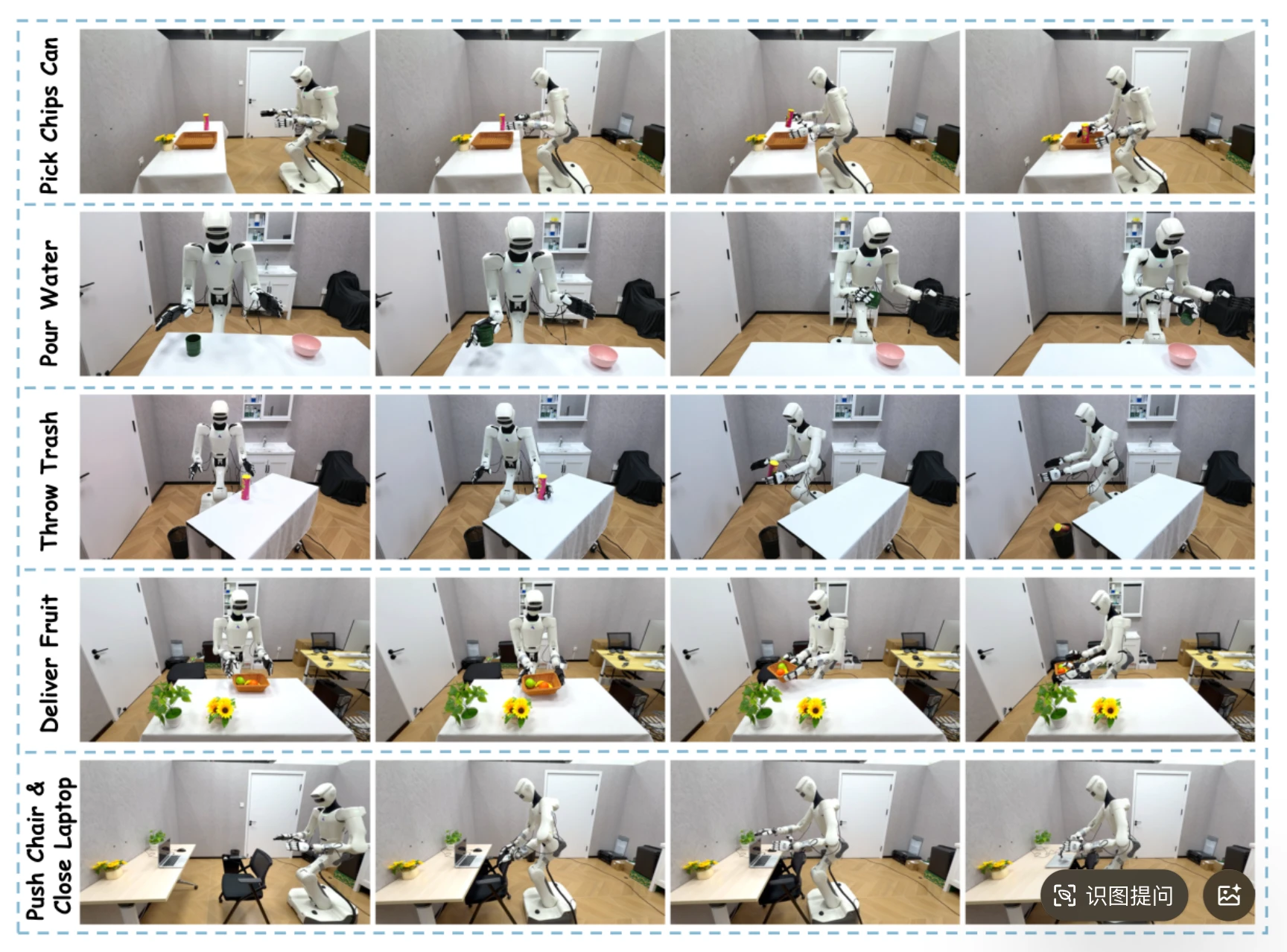
The paper evaluates the approach across five real-robot tasks. These include object grasping, as well as tasks requiring coordinated mobility and manipulation, such as pushing a chair and closing a laptop.
Incorporating human demonstration data led to performance gains in two vision-language-action (VLA) models: the average task success rate for GR00T N1.7 improved from 29% to 56%, while π0.5 improved from 32% to 57%. In a separate set of experiments specifically comparing real-robot data requirements, certain configurations matched the performance of purely real-robot training using only half the amount of real-robot demonstrations.
The experiments also revealed that relying solely on human demonstrations is insufficient for robots to reliably complete target tasks; a small amount of real-robot data remains necessary to map the actions to the specific robot embodiment.
42HOW Robotics spoke with Zhou Rui, the first author of DexRoam and a Ph.D. student at The Hong Kong University of Science and Technology, to discuss the study's initial concept, the cross-institutional collaboration process, and the practical challenges involved in collecting human motion data.
From Teleoperation to Human Demonstration
"At first, it was just a rough prototype; we wanted to train a mobile manipulation policy using human data," Zhou Rui recalled, describing the origins of DexRoam.
Zhou observed that the physical robot would sometimes "reach its arm forward before even arriving at the target position."
The team wanted the robot to perform bimanual dexterous manipulation while moving, which requires the base, torso, head, arms, and fingers to coordinate around a single task.
The team first built a teleoperation system for the physical robot. During data collection, a Meta Quest 3S recorded the operator's upper-body posture, VR controllers tracked wrist poses, and MANUS Pro gloves controlled the dexterous hands. A single operator had to simultaneously control the robot's omnidirectional base, torso, head, both arms, and two XHands.
Zhou noted that the "learning curve to use it proficiently was quite steep," and once the gloves were on, it was difficult for operators to free their hands to operate other devices. To address this, the team designed specific recording gestures to start, stop, save, or discard a demonstration.
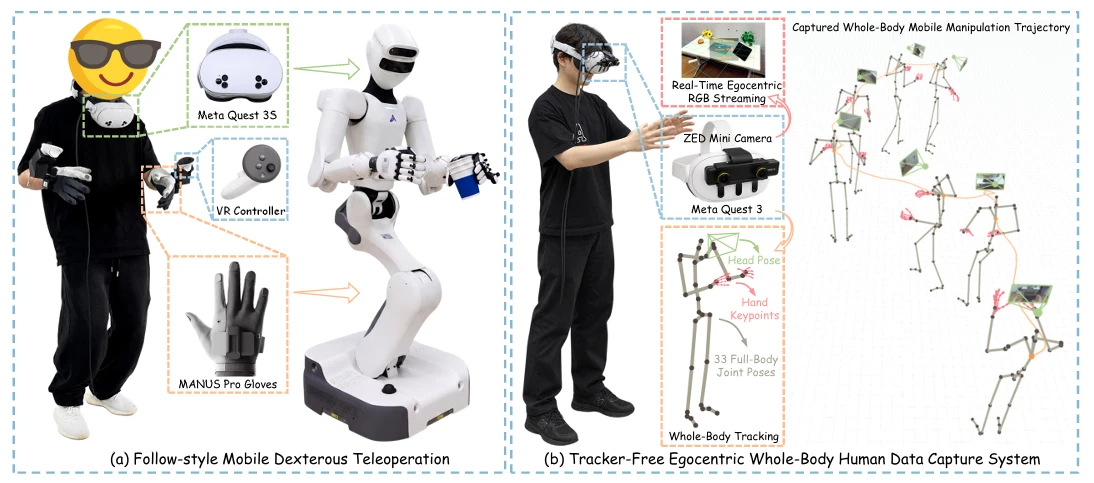
When collecting human demonstrations, participants wore a Meta Quest 3 headset and a ZED Mini stereo camera to perform the tasks directly. The system synchronously recorded head pose, 33 body joints, 25 keypoints per hand, and timestamped stereo color images, continuously capturing body and hand movements. The collection process required no external cameras, environmental markers, or additional wearable trackers.
The stereo camera also streamed its video feed back to the headset in real time. Demonstrators used this view to walk, reach, and grasp, and during training, the model received this exact same visual input. This helped reduce a specific bias: a human might see a nearby object and adjust their movement accordingly, but the images received by the model would otherwise lack this information.
To verify whether usable motions could still be obtained without external trackers, the team selected three tasks—picking up a potato chip can, pouring water, and throwing away trash—and replayed five converted human trajectories for each. All 15 trajectories were successfully replayed without a single inverse kinematics failure, meaning executable joint configurations were found for every control target.
The head-mounted display (HMD) and stereo camera setup yielded average position errors of 12.54, 4.01, and 6.30 millimeters for the torso, left arm, and right arm, respectively. The control group, using a PICO HMD with five trackers, recorded errors of 13.16, 4.12, and 5.63 millimeters. The replay error magnitudes for both setups are comparable, reflecting the accuracy with which the robot follows a given trajectory.
Head-mounted displays also have physical limitations for the wearer. "Even after finishing this paper, I still feel that VR might only serve as a transitional data collection device," said Zhou Rui. He and many of the data collectors experience dizziness after prolonged use, making it difficult to wear the device for extended periods. He believes that glasses or headbands might be better suited for scaling up data collection.
Human demonstrations provide a more accessible source of motion data, but these movements cannot yet be directly executed by robots. The two differ significantly in physical structure, motion representation, and execution speed.
Mapping human motion to the robot coordinate system
Translating human motion into robot commands requires sequentially addressing differences in physical structure, motion representation, and execution cadence.
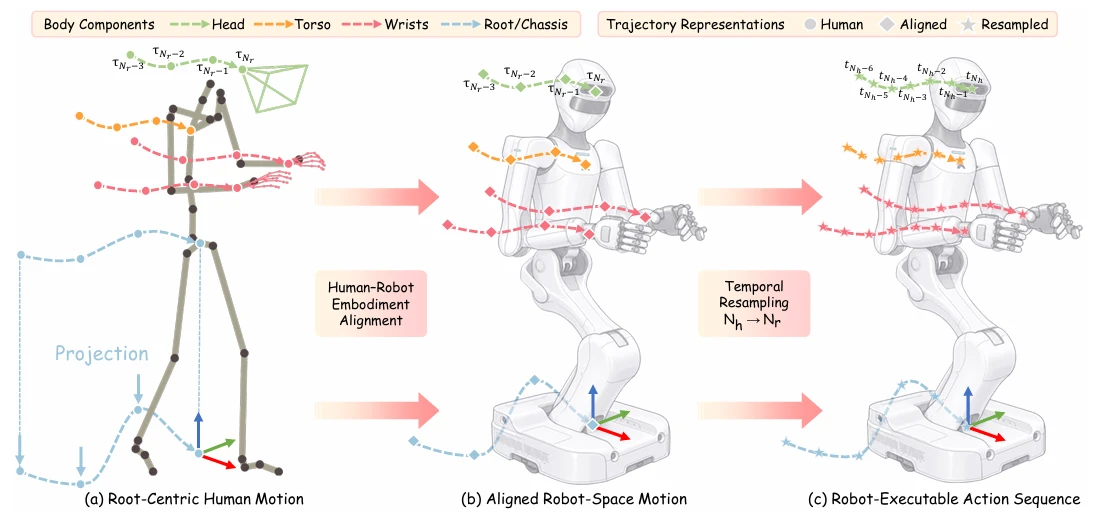
Humans vary in height, limb proportions, and initial standing positions, whereas a robot must execute actions using its own chassis, torso, arms, and dexterous hands. If human trajectories are fed directly into the policy, the model might simply learn "how a specific person moves from a specific location" rather than how the robot itself should move to accomplish the task.
To address this, DexRoam breaks down motion alignment into three stages:
The first step is embodiment alignment. DexRoam uses the ground projection of the pelvis as the origin and the pelvis's horizontal orientation to define the forward direction. Human forward movement, lateral translation, and turning correspond to the planar motion of the wheeled base. The chest and wrists share a single coordinate system, mapping to the torso and the robotic arm end-effectors, respectively. The head retains pitch and yaw, while hand postures are converted into joint targets for the XHand.
Zhou Rui notes that during debugging, each coordinate system must be "adjusted one by one"—calibrating the origin and axes individually—so that once the wrist trajectory is transferred to the robot, it maintains the correct orientation relative to the base and torso.
The second step is semantic action alignment. Absolute poses retain differences in the demonstrator's height, arm length, and standing position. The team instead set the targets for the wrists and torso to local displacements and rotations between consecutive time steps.
Taking the wrist as an example, the model learns how much further to extend and rotate from its current pose. The base is similarly represented by forward-backward displacement, lateral displacement, and rotation angle, while the head and dexterous hands continue to use the previously converted joint targets. Zhou Rui refers to this wrist transformation as the DeltaEF conversion, where EF stands for the robotic arm end-effector.
The third step is temporal resampling. Humans and robots require a different number of steps to complete the same task. The team targeted the average step count from real-robot demonstrations, sampling uniformly along the normalized task progress of the human demonstrations. Position and rotation are obtained via interpolation, with each sampled point paired with the temporally closest original video frame.
Resampling only modifies the demonstration data. The real-robot control frequency and the length of the action chunk predicted per inference remain unchanged, and the base and upper body are still jointly predicted by a single policy.
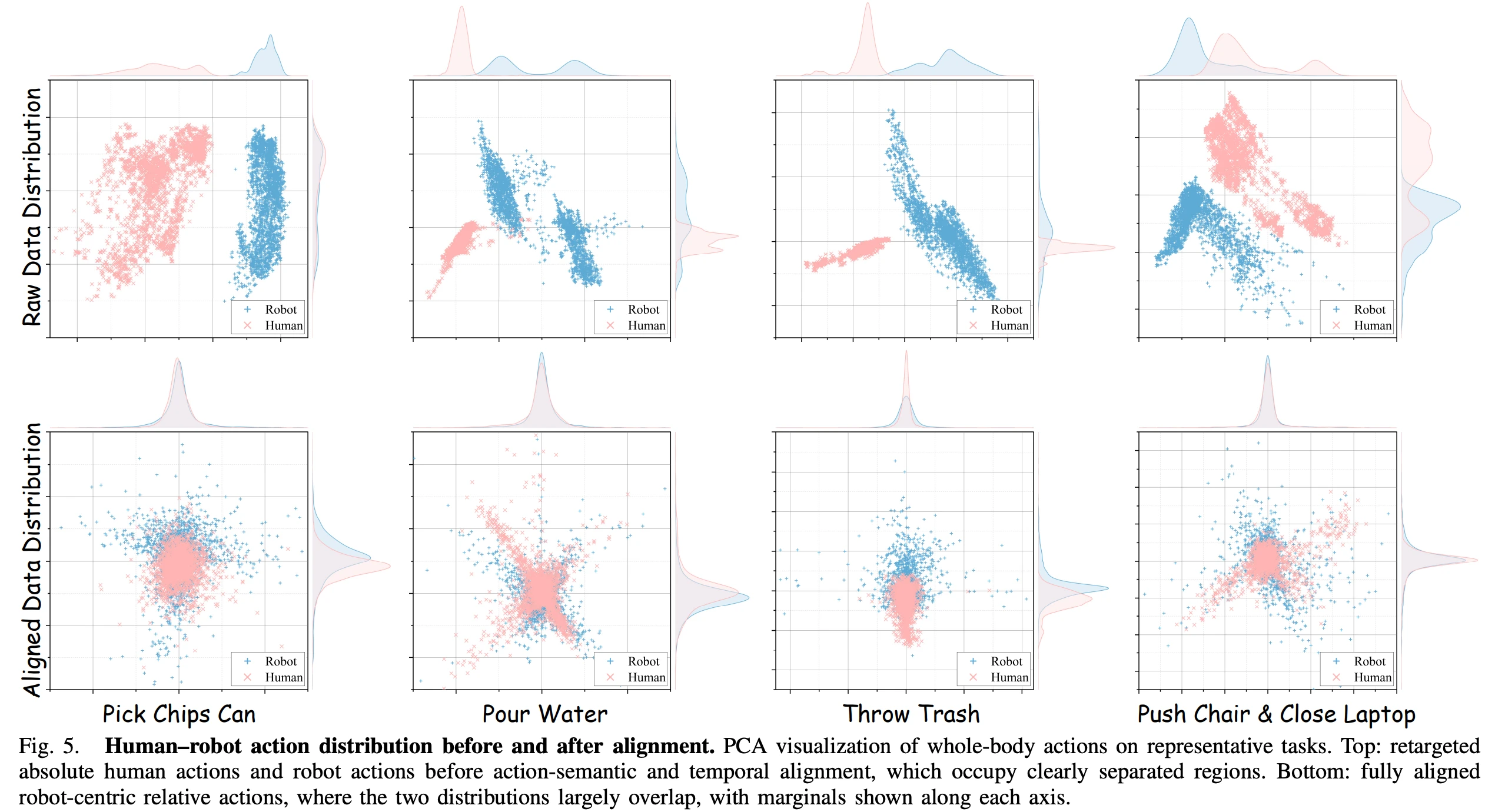
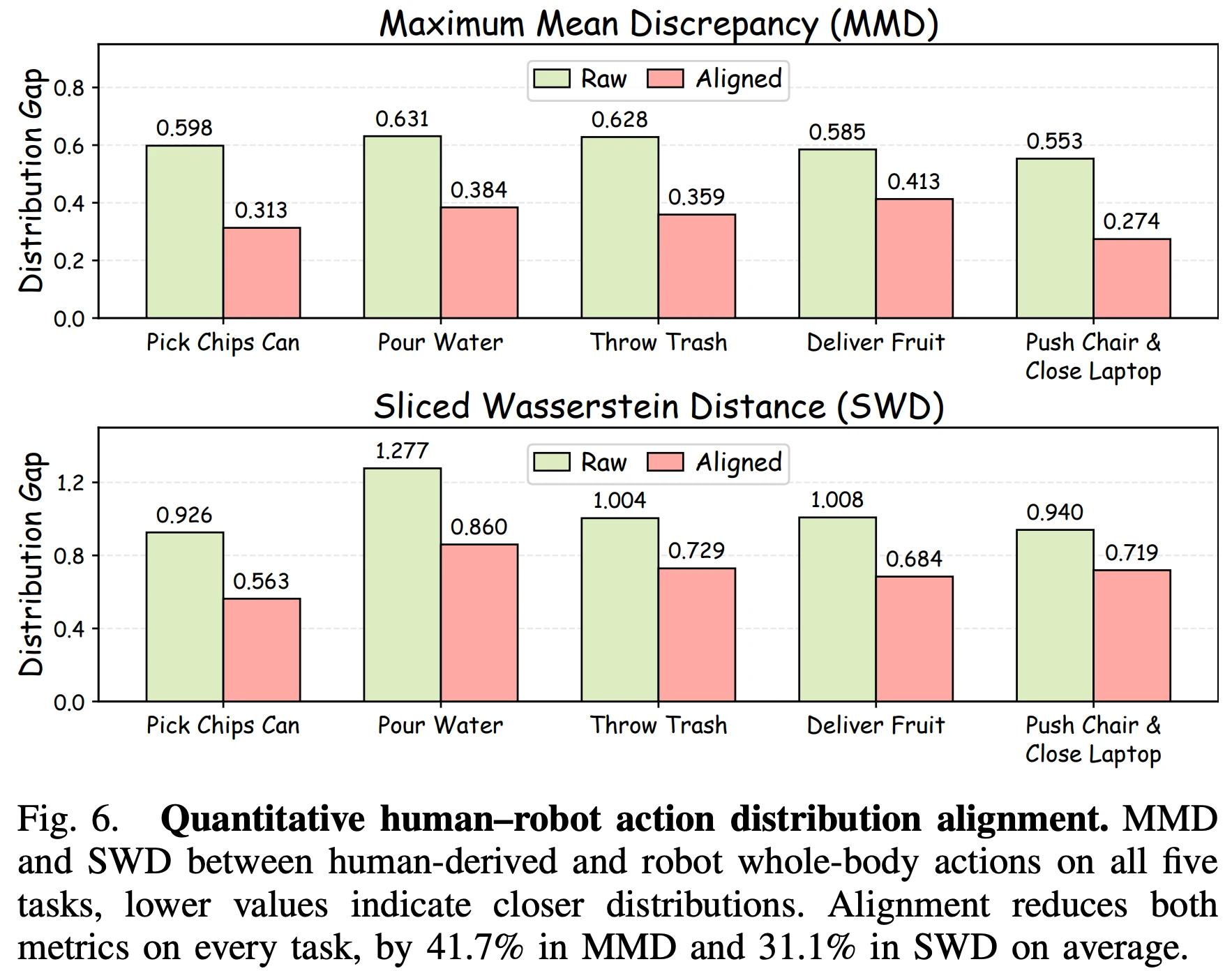
To verify whether the alignment reduced the distribution shift between the two datasets, the team first projected the full-body motions into two dimensions. When represented using absolute poses, the action distributions of humans and robots are mostly separated; however, after alignment, the overlap between the two increases significantly. The team further calculated the Maximum Mean Discrepancy (MMD) and Sliced Wasserstein Distance (SWD) within the 56-dimensional action space. Both distance metrics decreased across all five tasks, dropping by an average of 41.7% and 31.1%, respectively. For the task of pushing a chair and docking a computer, the MMD fell from 0.553 to 0.274.
The team used GR00T N1.7 to conduct ablation studies on two tasks—retrieving a potato chip canister and disposing of trash—to evaluate the effects of relative actions and temporal resampling, respectively. When all three training settings were switched to use the redirected absolute poses, the success rate dropped to 0%. When relative actions were retained but temporal resampling was removed, the average success rate across the six experimental groups fell from 68.3% to 44.2%.
After removing temporal resampling, the largest performance drop occurred in the potato chip can task under the setting of pre-training with human data followed by joint fine-tuning, where the success rate fell from 90% to 20%. The magnitude of this drop varied across different tasks and training configurations.
Zhou Rui summarized this iterative process: "Initially, we converted full-body data into robot manipulation data using the chassis as the base frame, aligning it with the robot data. Later, we introduced a conversion to Delta poses. Ultimately, we realized the issue might lie in step size—since humans execute movements faster, each step covers a larger distance, so we added a resampling process." These three steps were not determined all at once; rather, they were the final combination retained after the team systematically compared different approaches.
Human data provides priors, real-robot data anchors the policy
Once the two types of demonstrations are aligned, they are fed into a Vision-Language-Action (VLA) model through a unified interface. The inputs consist of two 640 × 480 first-person-view images, a language instruction, and a 53-dimensional proprioceptive state. This 53-dimensional state captures feedback from both arms, the torso, the head, and the hands, but excludes the global pose of the chassis as an input.
The model outputs a 56-dimensional full-body action at each step. Each hand accounts for 12 dimensions, while the arms and torso each account for 9 dimensions. The head accounts for 2 dimensions, and the chassis accounts for 3 dimensions. The chassis translation and rotation are predicted jointly with the hand actions.
Both models share the same action interface but employ different adaptation methods. For π0.5, the action input and output projections are reinitialized before fine-tuning the entire model. For GR00T N1.7, the pre-trained vision and language backbones are frozen, and only the projection module and the diffusion action decoder are trained.
Zhou Rui noted that the experiments included in the CoRL submission focused on GR00T. The team later reran the experiments using π0.5 to verify whether human demonstrations remain beneficial when switching to a different model.
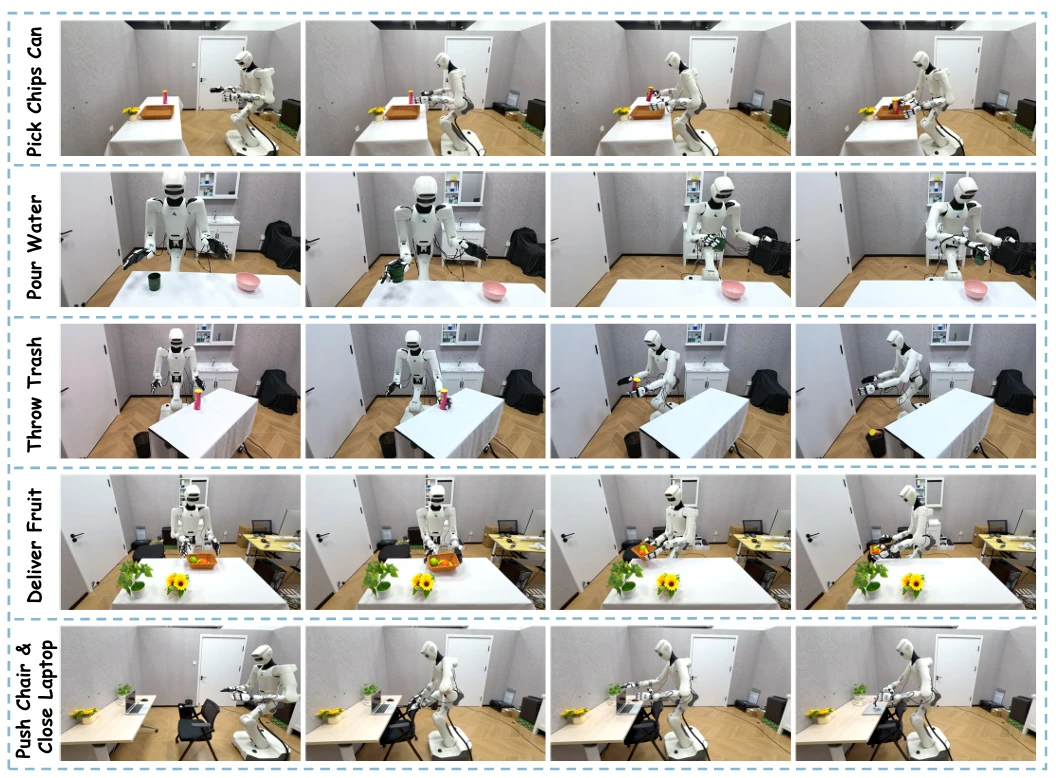
Five real-robot tasks evaluated different coordination capabilities. Pouring water tests finger grasping and wrist rotation. Discarding trash requires coordinating chassis movement with the timing of the release. Delivering a fruit basket demands that both hands maintain a stable grasp while the chassis turns.
The team established a baseline using only real-robot demonstrations and compared three training setups: directly mixing human and real-robot demonstrations, pre-training on human data followed by fine-tuning on real-robot data, and pre-training on human data followed by joint fine-tuning on both datasets.
Each setup was evaluated with 20 trials per task. The team tracked both the overall task success rate and the step-by-step completion score. For the laptop-closing task, for instance, the five scoring steps are: touching the chair back, maintaining contact to push the chair, pushing the chair to the target position, reaching behind the screen, and closing the lid.
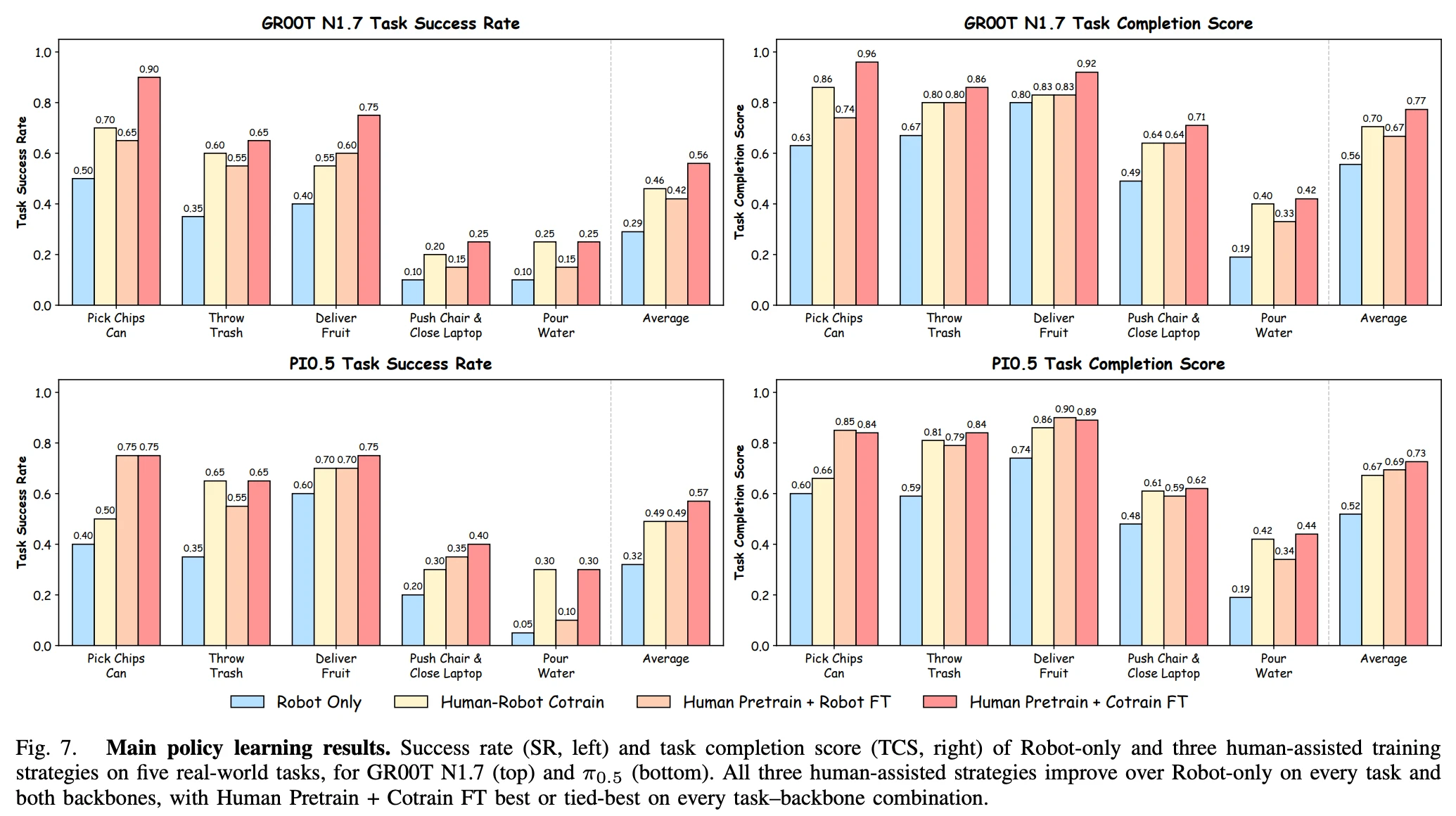
Pre-training on human data followed by joint fine-tuning on both datasets yielded the highest average task completion scores for both models. GR00T N1.7 improved from 0.56 to 0.77, and π0.5 improved from 0.52 to 0.73.
Improvements in overall task success rates varied by task. Under this same training setup, GR00T N1.7’s success rate for retrieving a potato chip canister rose from 50% to 90%, while its success rate for pushing a chair and closing a laptop rose from 10% to 25%. For the latter task, π0.5 improved from 20% to 40%. The two models achieved water-pouring success rates of 25% and 30%, respectively.
Zhou Rui recalled that when trained on just 50 real-robot demonstrations, the robot 'could only grasp from a single direction' (approaching the chip canister straight from the front). The paper notes that when the canister's orientation changed, the policy trained with human demonstrations sometimes reached from the side. This grasping approach was present in the human demonstrations but absent from the real-robot dataset.
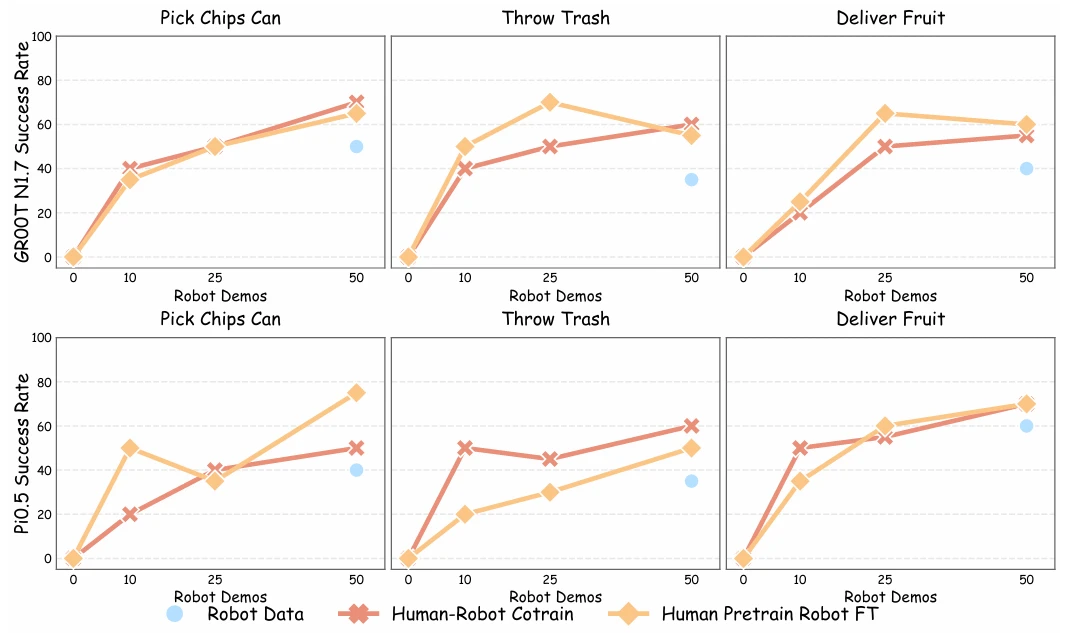
To determine how much real-robot data human demonstrations could replace, the team fixed the number of human demonstrations at 50 for three tasks—retrieving a chip canister, throwing away trash, and delivering a fruit basket—while varying the real-robot demonstrations to 0, 10, 25, or 50. With just 25 real-robot demonstrations, GR00T N1.7 matched or exceeded the baseline of 50 pure real-robot demonstrations across all three tasks, and π0.5 matched or approached the baseline in several configurations.
With zero real-robot demonstrations, the robot failed all three tasks. Success rates began to improve after adding just 10 real-robot demonstrations. Zhou Rui noted that while human demonstrations provide motion examples for task completion, the model still requires a small amount of real-robot data to learn how to execute operations using the specific chassis, arms, and dexterous hands of the robot.
Mobility and manipulation still disconnect on real robots
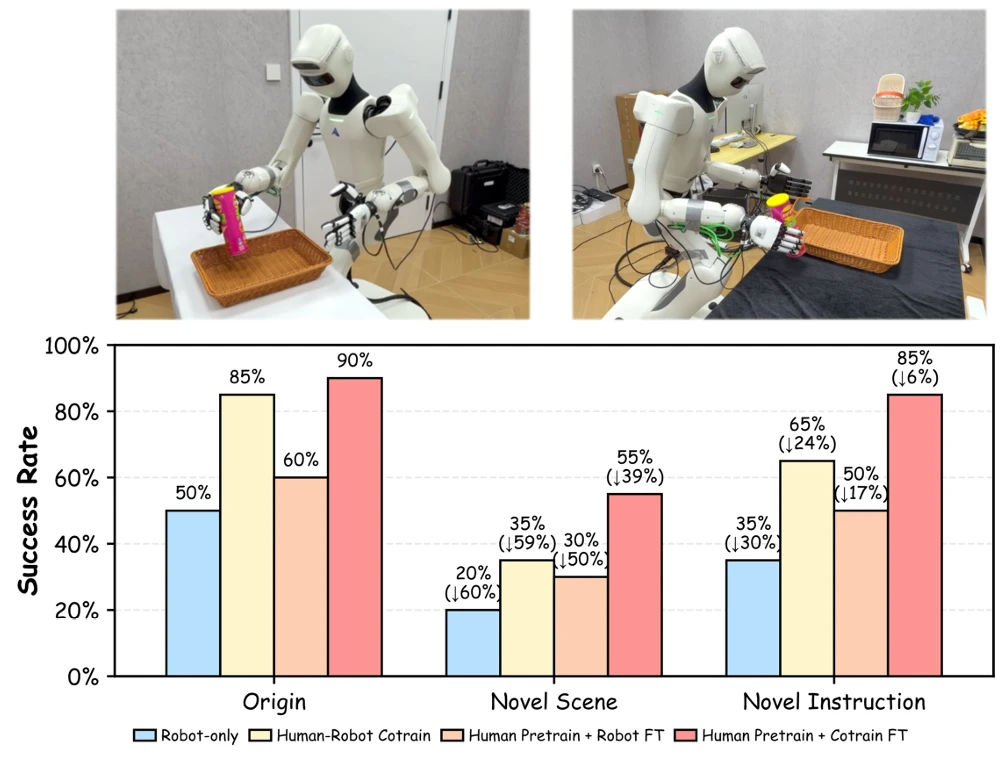
Additionally, the paper evaluated performance under background variations and novel instruction phrasings, but validated these tests exclusively on the single task of picking up a can of potato chips.
Under background variations, the success rate of the policy trained on robot-only data dropped from 50% to 20%, while the best-performing configuration incorporating human demonstrations fell from 90% to 55%. When faced with novel instruction phrasings, the relative performance drop was smaller for certain combined human-robot training setups. These results indicate that while human demonstrations help mitigate variations within this specific task, success rates still decline, which is insufficient to prove that cross-task generalization has been resolved.
Grasping stability, however, is constrained by feedback limitations. Zhou Rui notes that a common issue on the real robot is when "it looks like a successful grasp, but it isn't actually holding on tightly, so the object drops when the robot lifts its arm." The team did not track the proportion of these specific failures relative to all failure cases, making it impossible to determine their exact impact on overall performance. Zhou Rui believes that integrating tactile and force feedback is a priority worth pursuing.
Zhou Rui aims to further validate two questions: whether human demonstrations for one task can help a robot learn a different task, and whether this approach can be transferred to humanoid robots.
Found an error? Tell us