
Behind the 100 Billion RMB Revenue Target for 2030, What is Zhiyuan Really Trying to Achieve?
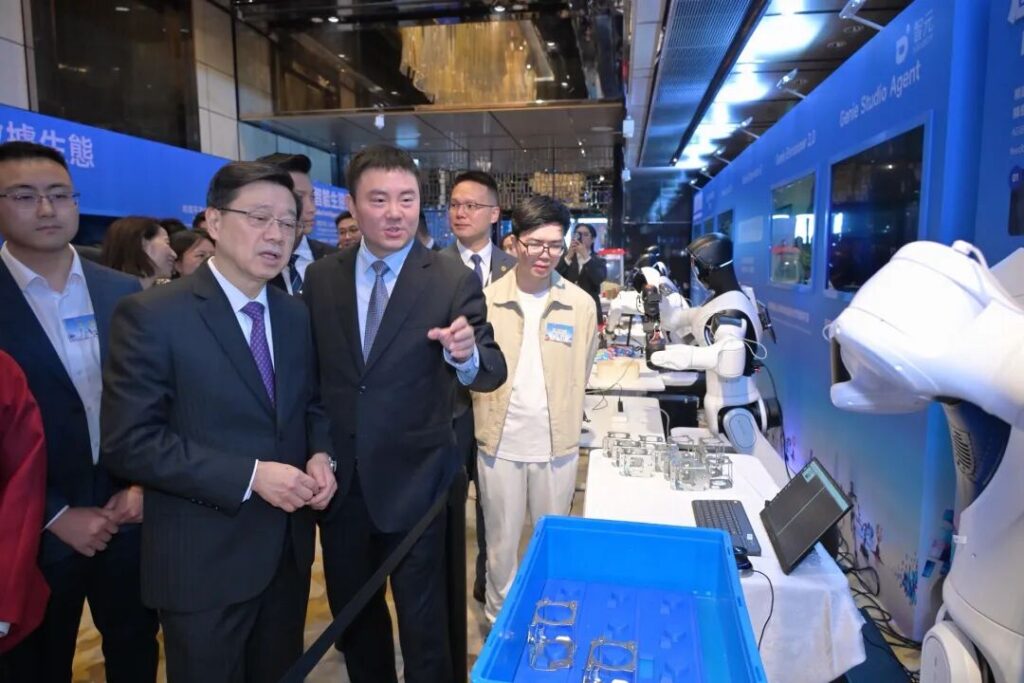
In the past two years, the most striking impact robots have had on people's lives is their ability to run, jump, and perform complex movements. However, by today in 2026, these feats are no longer novel. Top-tier companies can easily add a few more tricks, mid-tier companies produce roughly comparable results, and even lower-tier firms can showcase several demos.
As an industry with immense potential, the scope for robotics extends far beyond this.
Developing performance-oriented robots allowed robot companies to achieve a breakthrough in visibility from 0 to 1; whereas large-scale deployment across various industries is the critical step for these companies to grow from 1 to 10.
Therefore, there has been increasing discussion this year about when robots will truly enter our world.
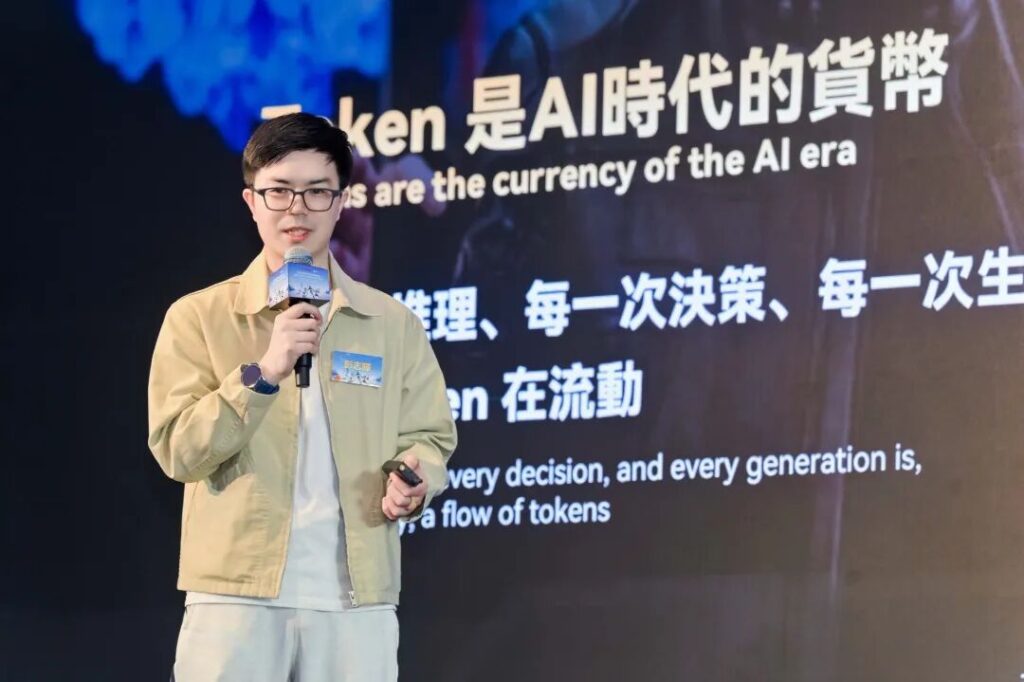
Yesterday morning, at the inaugural Hong Kong Embodied AI Industry Summit & 2026 Zhiyuan Partner Conference, Zhiyuan co-founder, president, and CTO Peng Zhihui (aka Zhihui Jun) stated: "The embodied AI industry is no longer about showing off isolated capabilities; it is a systematic engineering project."
This may well represent the most significant shift in the current embodied AI sector: the industry is gradually transitioning from artistic performance to practical productivity implementation.
At this stage, Zhiyuan is building its own moat.

2030 Revenue Target of 100 Billion
In his speech at the conference, Peng Zhihui proposed the "XYZ Curve" for the development of the embodied AI industry, dividing the entire industry's development into three stages.
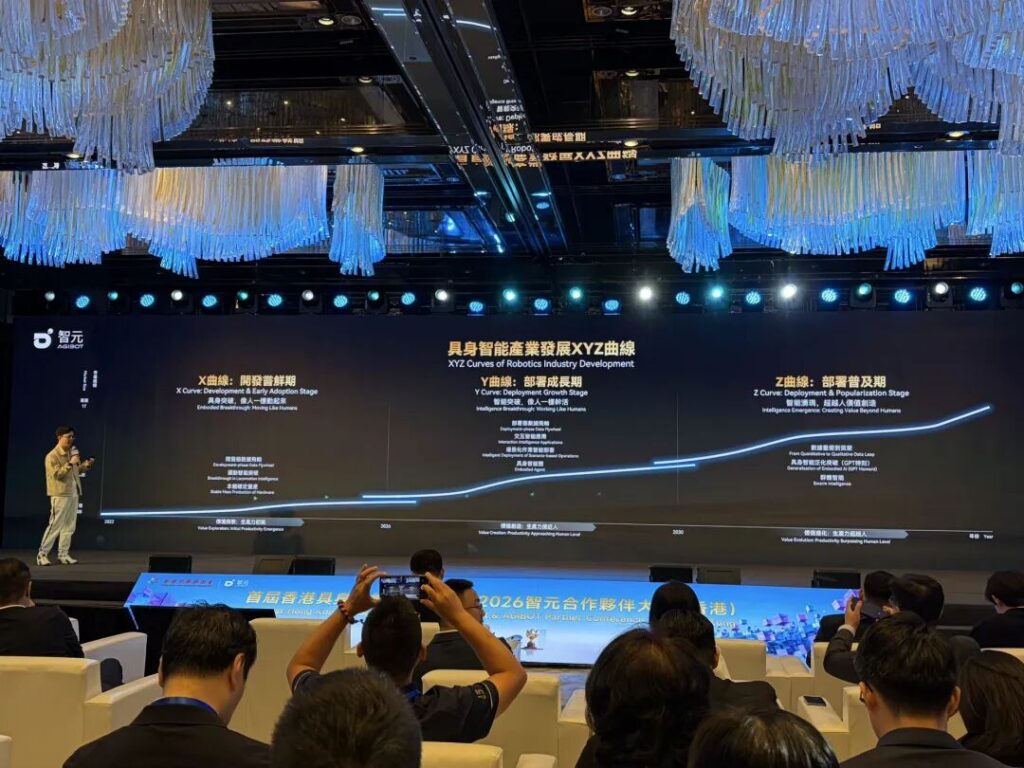
He assessed that in recent years, the embodied AI industry has risen rapidly, with robots moving like humans. The industry has achieved breakthroughs in motion intelligence, and many malls have realized stable mass production of their physical bodies. This represents the X curve of the embodied AI industry.
However, starting from 2026, the entire industry will enter a deployment growth phase, which corresponds to the Y curve. From this stage onwards, robots need to create value, work like humans, and ultimately bring robot productivity close to that of humans.
Starting from 2030, the embodied AI industry will enter a deployment and popularization phase, known as the Z curve. In this stage, breakthroughs in robot generalization will be achieved, ushering in a ChatGPT moment, and ultimately, robot productivity will surpass that of humans.
The "XYZ Curve" corresponds precisely to Zhiyuan's "358 Master Plan." The "3" refers to the three-year period from Zhiyuan's founding in 2023 to 2025, during which it completed the X-curve phase, achieved entry-level productivity, and generated annual revenue exceeding 1 billion yuan.
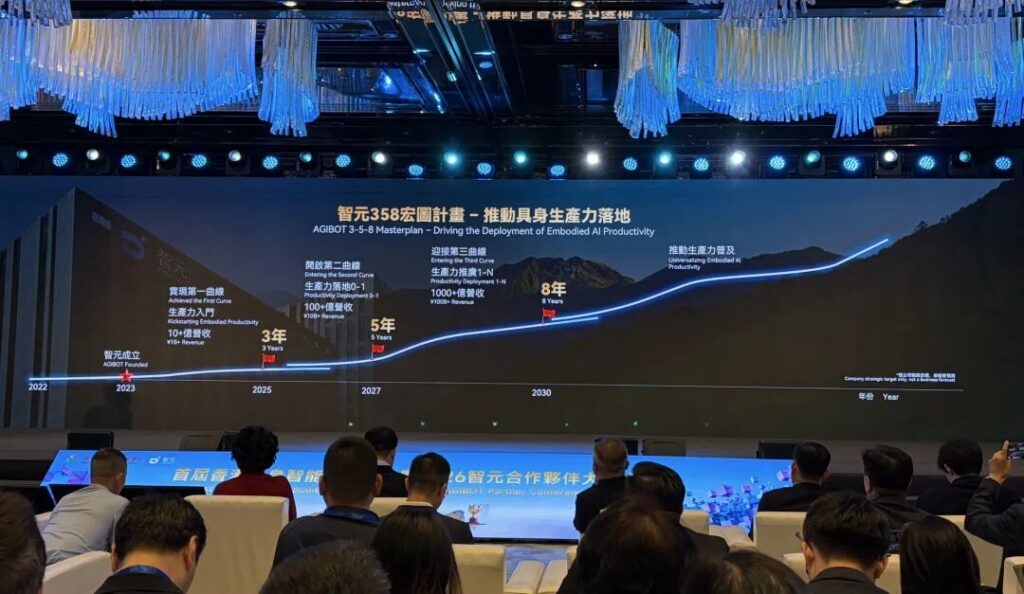
Starting in 2026, Zhiyuan Robotics will embark on the Y-curve, scaling productivity from 0 to 1, with a goal of achieving annual revenue exceeding 10 billion yuan by its fifth year (2027).
After 2027, Zhiyuan Robotics will enter the third curve, aiming for annual revenue exceeding 100 billion yuan by its eighth year (2030).
In fact, Zhiyuan has already implemented solutions across multiple productivity scenarios. These include robots entering production lines to handle material transport and human-robot collaborative operations, as well as performing roles such as shopping guides, receptionists, and tour guides in retail settings.
This April, Zhiyuan conducted an 8-hour live broadcast on a real production line at Longqi Technology's Nanchang factory, completing nearly 3,000 tasks with a 100% success rate.
Meanwhile, some robots have also entered service environments such as telecom operator showrooms, consumer electronics stores, and Haidilao restaurants.
Compared to previous industry showcases that were largely "performance-based," this shift signifies that robots are beginning to truly integrate into real-world workflows for the first time.

Behind the Integration, 'Three Intelligences' Matter More
Deng Taihua, founder, chairman, and CEO of Zhiyuan, discussed the company's product strategy in his speech, which can be summarized as "one integration and three intelligences." This refers to a single physical body combined with motion intelligence, operational intelligence, and interaction intelligence.
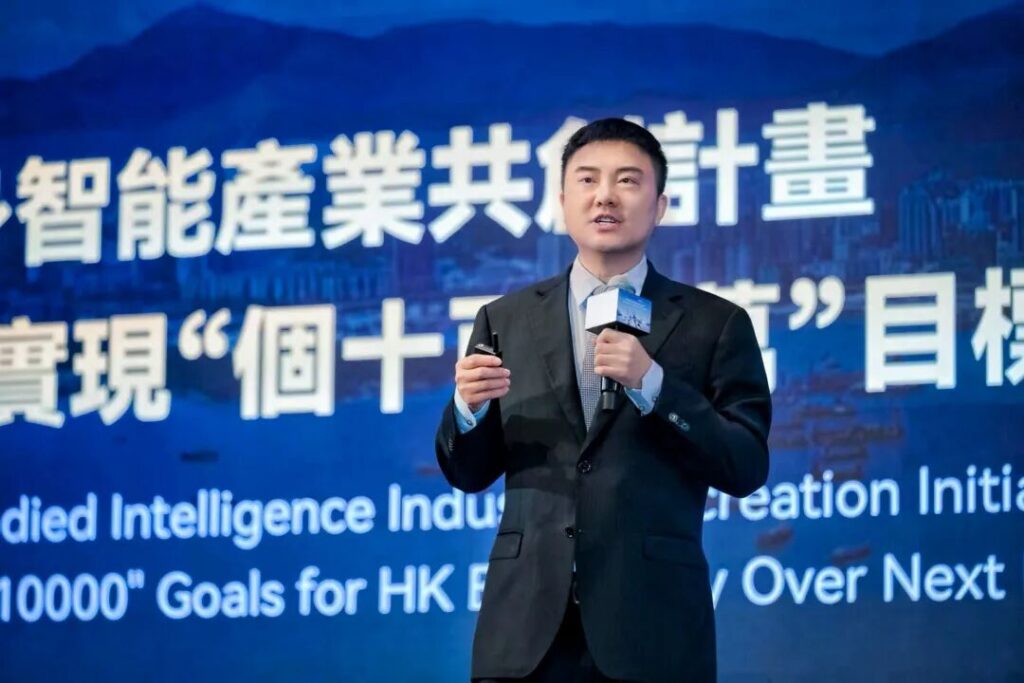
The physical body determines which scenarios a robot can enter. For example, bipedal robots are better suited for service industries, quadruped robot dogs are ideal for inspection tasks, while wheeled robots may be more appropriate for factory environments.
What truly determines the commercial potential of robots is the subsequent "three intelligences."
Over the past year, the most noticeable advancement in the industry has been the rapid progress in motion intelligence.
Zhiyuan unveiled its Motion Intelligence Base Model (BFM) at the event, aiming to equip robots with more versatile and natural capabilities for understanding and executing movements. Its core approach involves training on large-scale, diverse human motion data to build a foundational model capable of understanding and generating complex behaviors, thereby supporting motion intelligence across various scenarios.
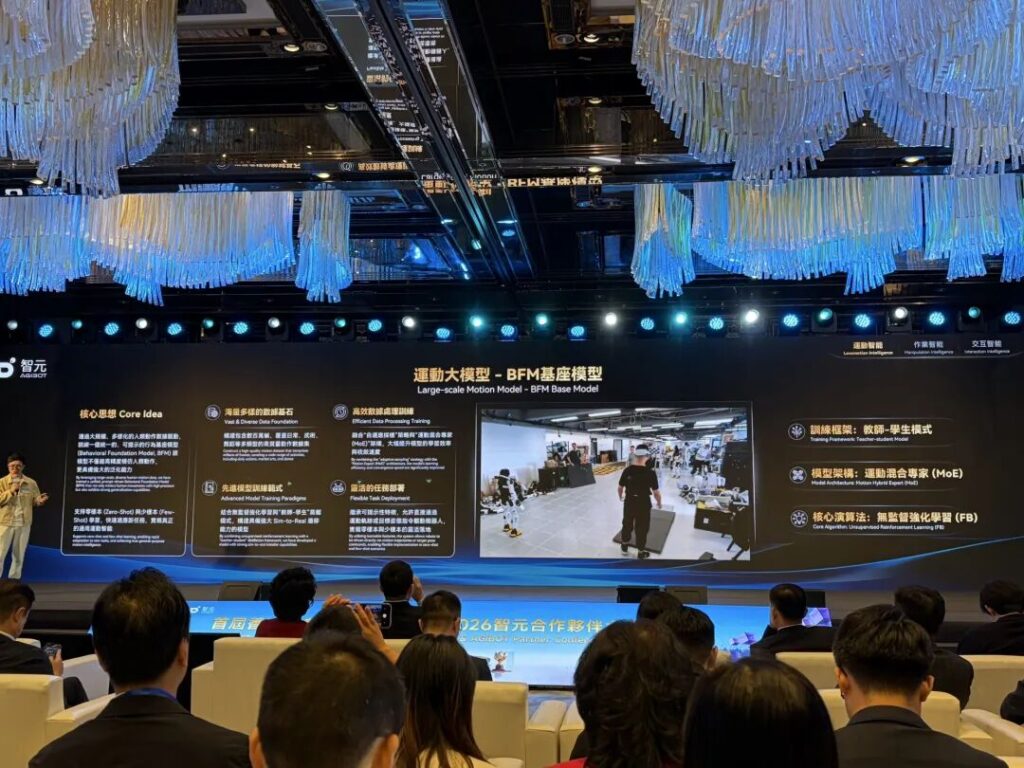
Architecturally, BFM employs a Mixture of Experts (MoE) framework for motion, combined with teacher-student training paradigms and unsupervised reinforcement learning methods to enhance the model's generalization capabilities and learning efficiency in complex tasks. BFM is not merely a single-action model but a comprehensive system covering 'data collection—training—deployment.' On one hand, it establishes a data foundation through massive, multimodal human motion datasets; on the other, it leverages advanced training paradigms such as Sim-to-Real, enabling robots to transfer learning capabilities from virtual environments to the real world.
In terms of application, BFM has demonstrated strong generalization abilities. For instance, through zero-shot/few-shot learning, robots can quickly imitate and reproduce human actions. Additionally, by leveraging VR motion capture and full-body movement tracking, robots can learn more complex, continuous human behaviors.
This implies that robots will no longer be limited to fixed-program control. Instead, they have the potential to acquire cross-scenario motion capabilities like a 'brain plus body' via foundational models, providing a unified motion intelligence base for service, industrial, and even home robots.
Furthermore lies the Generative Motion Model, GCFM. In the past, robot movements required humans to provide reference motions; however, GCFM enables robots to autonomously generate actions based on text, audio, or trajectories.
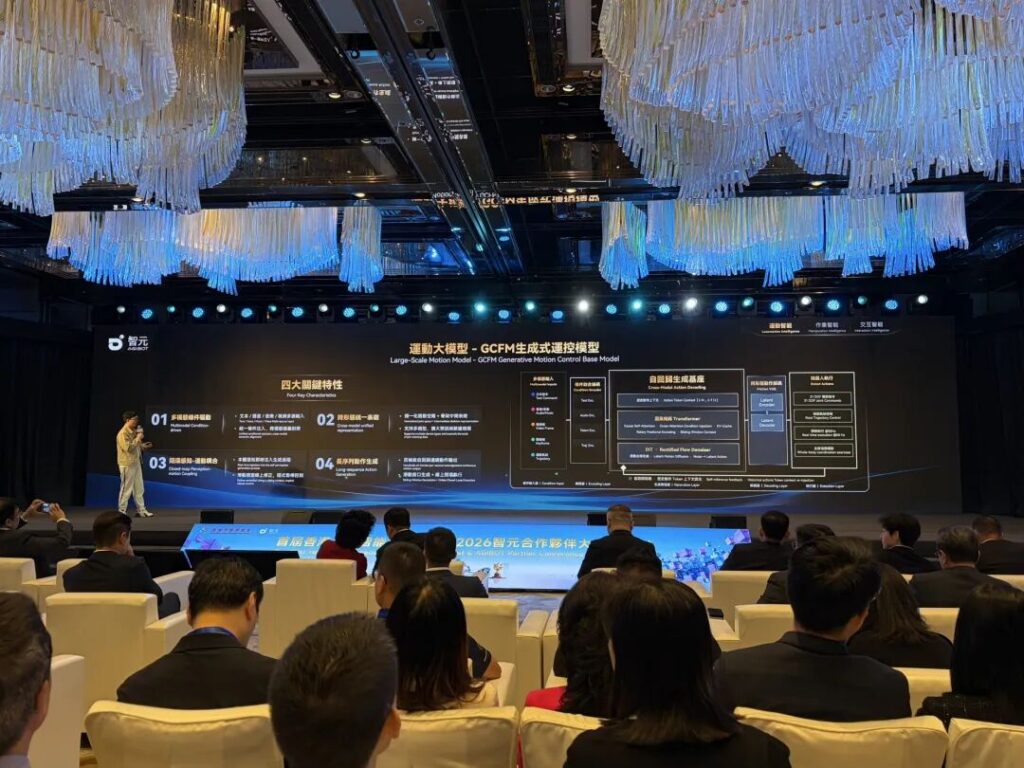
For example, given an input such as 'perform a Tai Chi routine, then take two steps forward,' the robot can automatically generate complete, continuous motion sequences.
To some extent, this signifies that robots are beginning to transition from executing predefined actions to generating them.
From a technical architecture perspective, the core features of GCFM include multimodal conditional driving, cross-modal unified representation, closed-loop perception-motor coupling, and long-sequence action generation. The model can simultaneously receive different inputs such as text, speech, vision, video frames, and keypoint trajectories, and then generate action control signals through a unified Cross-modal Action Decoder. This means that in the future, robots will not only be able to understand the environment but also autonomously generate the next step of actions based on language instructions, visual changes, or even human demonstrations.
In terms of model architecture, GCFM also introduces generative structures similar to Diffusion and VAEs to handle complex motion control problems. Compared to traditional control algorithms that predict short-term actions one at a time, GCFM emphasizes the continuous generation of long-sequence actions, making robot movements smoother, more stable, and closer to human behavioral logic. Meanwhile, its closed-loop perception feedback mechanism means that robots will continuously adjust their actions based on environmental changes, rather than mechanically executing predefined paths.
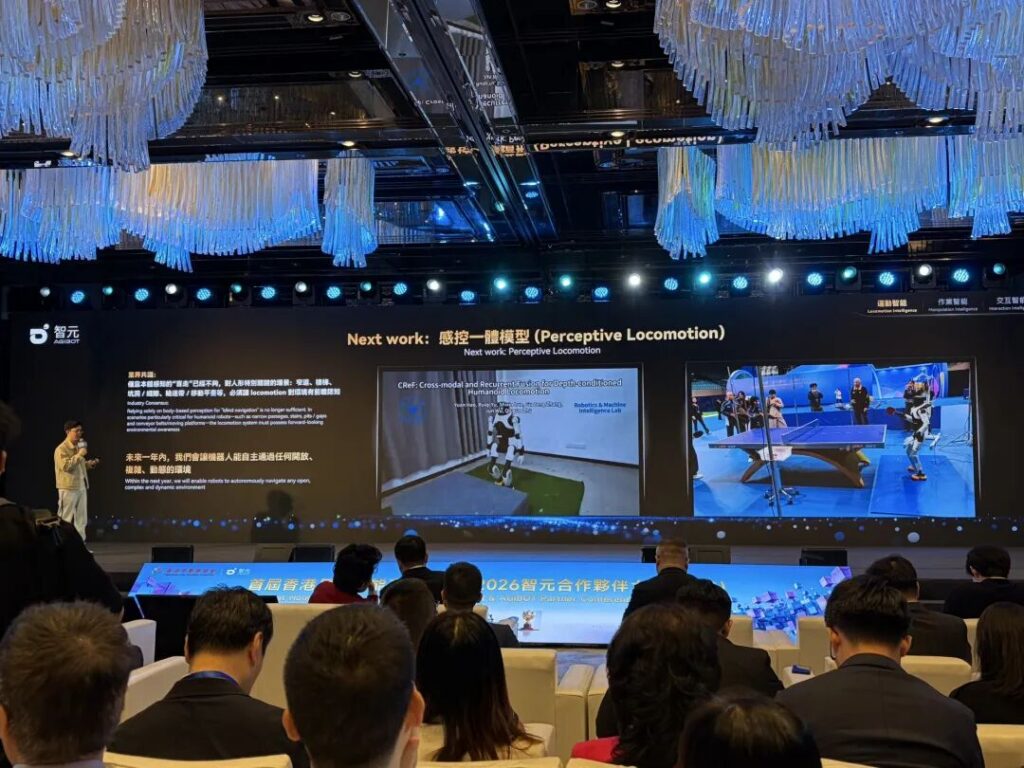
Next, Zhiyuan Robot will also develop a perception-control integrated model, and Peng Zhihui has set a goal: within the next year, to enable robots to autonomously navigate through any open, complex, and dynamic environment.
Beyond motor intelligence, task execution is a more critical element.
Embodied AI is the capability of robots to truly enter the physical world and complete tasks, which is also the hottest topic in the current Physical AI industry.
On site, Zhiyuan showcased its next-generation VLA model GO-2 and the world model GE-2.
Peng Zhihui believes that in the past, robot simulation required manually building 3D scenes, assets, and environments; whereas in the future, robots can be trained directly in a world generated in real time. "Let robots suffer losses in the world model first, so they make fewer mistakes in the real world."
This is currently a core technological pathway in the industry. Because once robots truly enter the real world, the biggest challenge is not just movement, but long-tail scenarios. How to complete massive training in the real world at low cost determines whether Embodied AI can ultimately achieve scalable capabilities.
Therefore, Zhiyuan has also proposed SOP (Distributed Online Learning System). Its core logic resembles the data closed loop of autonomous driving: robots work continuously in real-world scenarios, sending data back to the cloud; models then iterate online and are subsequently redistributed to the robots.
In other words, the more robots there are, the faster they learn.
This means that in the future, the true barrier in the robotics industry will no longer be hardware capabilities. Data scale, model capabilities, and continuous iteration capabilities in the real world are far more critical factors.

The Robotics Version of AWS
Beyond technology itself, another very obvious distinction for Zhiyuan is that it is redefining the business model of robotics.
Looking at the development of the entire industry, the robotics sector seems to have already established a default business logic: making money by selling equipment.
But since last year, Zhiyuan has already begun to promote another logic: RaaS (Robotics as a Service). At the end of last year, Zhiyuan established a subsidiary called Qingtiangzu specifically for RaaS services.
In Zhiyuan's view, robots are not necessarily one-off hardware products for sale, but more like 'productivity resources.' Factories do not necessarily need to buy robots; they can subscribe to robot services on a monthly basis, similar to hiring labor.
The operations company is responsible for all matters behind this, including robot maintenance, scheduling, insurance, data, and asset management.
Zhiyuan partner, co-president, and president of marketing and service Jiang Qingsong made a very vivid analogy: "I don't think Qingtiangzu is like Taobao; the analogy we use internally is more like Amazon Web Services."
What it provides is not just the robot body itself, but the robot's capabilities themselves. To some extent, this is also why Peng Zhihui repeatedly mentioned a viewpoint at the event: in the future, robots will be both actuators and token consumption entry points.
In his view, today's large models mainly remain in the digital world consuming tokens, but robots are different. Once robots enter the real world, they require perception, reasoning, decision-making, and control at every moment. They cannot rely on one-time token calls, but rather continuous token consumption embedded in real-world workflows.
Therefore, robots may not only become a new type of hardware product in the future, but also serve as new AI infrastructure. This actually reflects Zhiyuan's judgment on the future of the entire industry.
In the past few years, the most important issue in the robotics industry was whether robots could take two steps. But next, the real competition in the industry will gradually shift towards who can faster enable robots to enter the real world, who can acquire more real-world data, and who can form a larger embodied data flywheel.
As robots begin to truly enter factories, retail, and service industries, the real competition in the Embodied AI sector is just beginning.