
The First Wave of Consumer Quadruped Robots Enters Homes: What Are These Users Thinking?
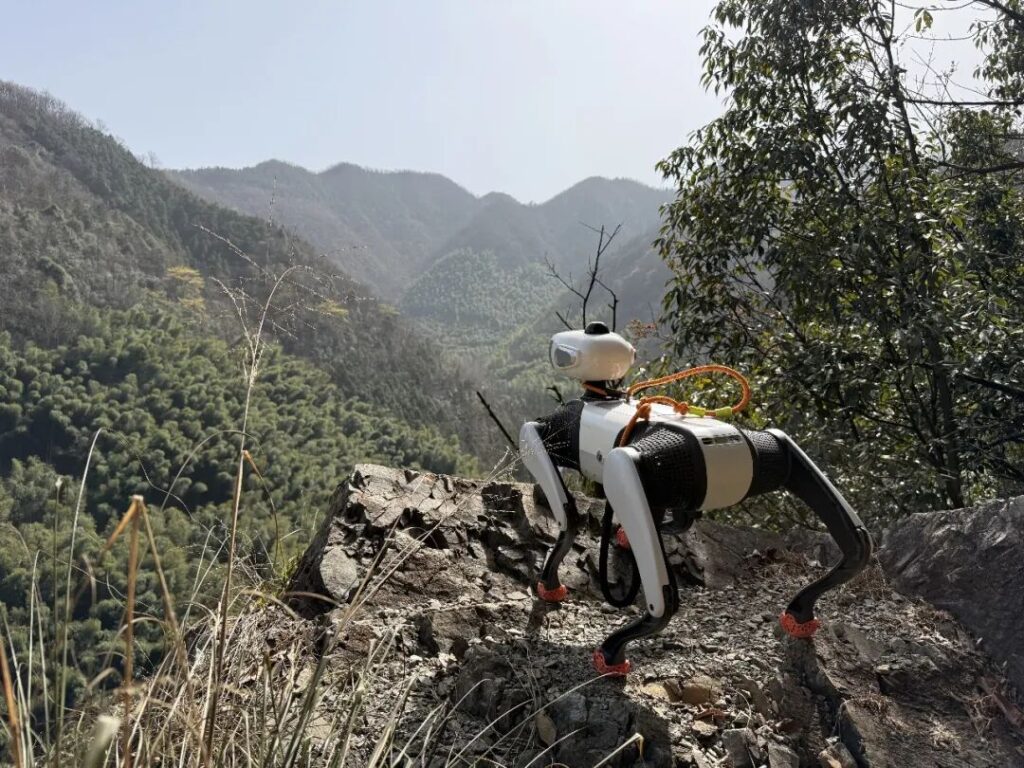
You may have seen scenes like these on short-video platforms: humanoid robots spinning and leaping on stage, tidying beds at home, or quadruped robots traversing ruins with ease. Algorithms keep刷新ing our perception on screens, making it feel as though the era of robots is just within reach.
But back in reality, the deployment of Embodied AI products is far slower than imagined. The industry is only just budding, the supply chain remains immature, and products that can truly enter homes are extremely rare.
Therefore, with prices and functionalities still full of uncertainty, many believe that it will take a long time for Embodied AI products to achieve large-scale adoption in households.
However, even at this early stage, a group of users has already brought home a robot dog called "Big Head BoBo".
Actually, quadruped robots are not new to the market, but consumer-grade quadruped robots that do not require remote control make "Big Head BoBo" one of the first of its kind.
Since VitaDynamics officially began deliveries on May 8, the first batch of reserved users has started receiving their products, although many others still need to wait for factory capacity to ramp up.
According to plans, VitaDynamics expects to complete delivery of all pre-ordered units by the end of June. Meanwhile, offline Vbot experience stores in Beijing and Shanghai also have "Big Head BoBo" in stock.
Who is actually buying the 'Big Head BoBo'? What drove these users to take home a robot dog when the industry was still far from mature? And what did they truly experience after using it?
With these questions in mind, we spoke with several early adopters of the 'Big Head BoBo' to hear about their somewhat ahead-of-the-curve consumer experience.

Why Buy a Robot Dog?
"Because I knew I had to buy it."
Saying this, Liang Yi's tone was calm. As an electronics enthusiast, Liang Yi often orders new products that catch his interest, and he personally wanted to get involved with the emerging field of Embodied AI.
So, when Liang Yi learned about the 'Big Head BoBo' in January this year, he believed that few products on the market could combine its price (founder's rights price of 9,988 yuan), functionality, and consumer-grade positioning.
He felt that most robot dogs on the market are not suitable for home use, and given their prices approach 20,000 yuan, they did not fully meet his needs regarding battery life and other performance aspects.
After a comprehensive horizontal comparison, he ultimately chose the VITA Power Big Head BoBo robot dog.
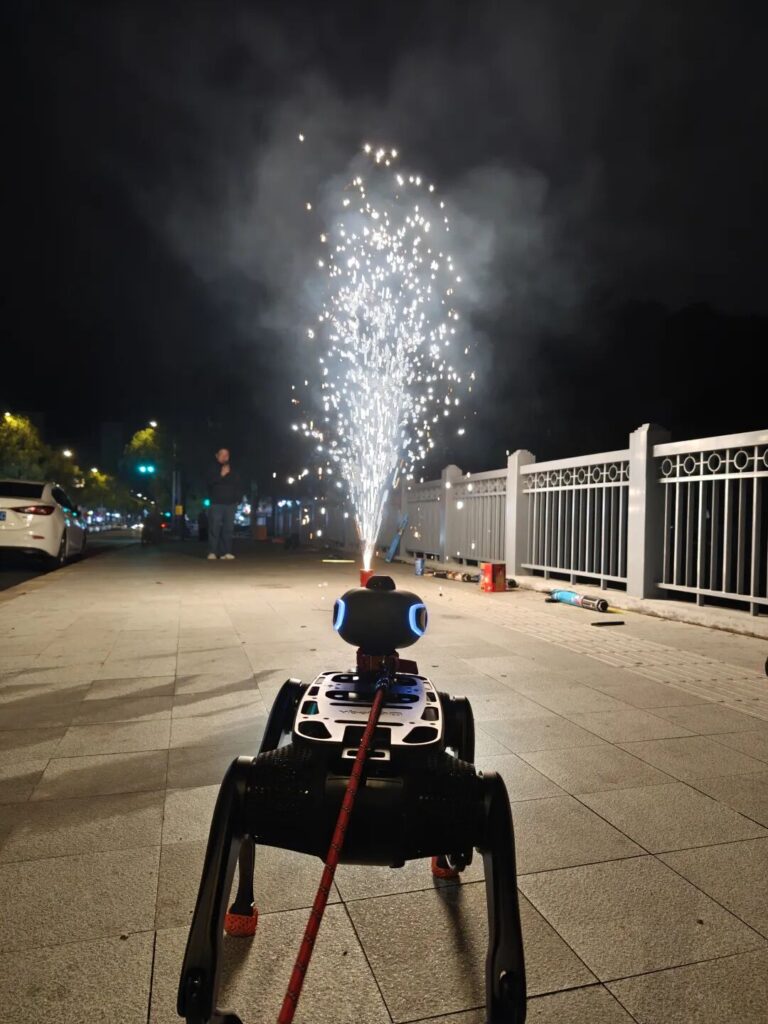
Michael, also an enthusiast of tech products, primarily considered that the Big Head BoBo's features perfectly suited his family when making his purchase. He planned at least four usage scenarios for the Big Head BoBo:
- The robot dog can accompany him on night runs. This is because carrying items during night runs is inconvenient, and running alone can be somewhat boring;
- It provides emotional companionship for family members, especially children in the household;
- His daughter's school invites parents to enter classrooms as guest teachers, and the robot dog can serve as teaching material.
- When he is not at home, the robot dog can act as a mobile camera inside the house, helping him monitor the situation of his two cats.
Mr. Yan, who also has a 5-year-old daughter but does not keep pets at home, hopes that the Big Head BoBo can provide companionship similar to a pet. Compared to real pets that require significant effort to care for, the Big Head BoBo—a robot dog that does not shed hair, does not need bathing, and does not require feeding—became an excellent companion medium.
Moreover, the Big Head BoBo's founding rights price was exactly 9,988 RMB, which fully met his price requirement (under 10,000 RMB).
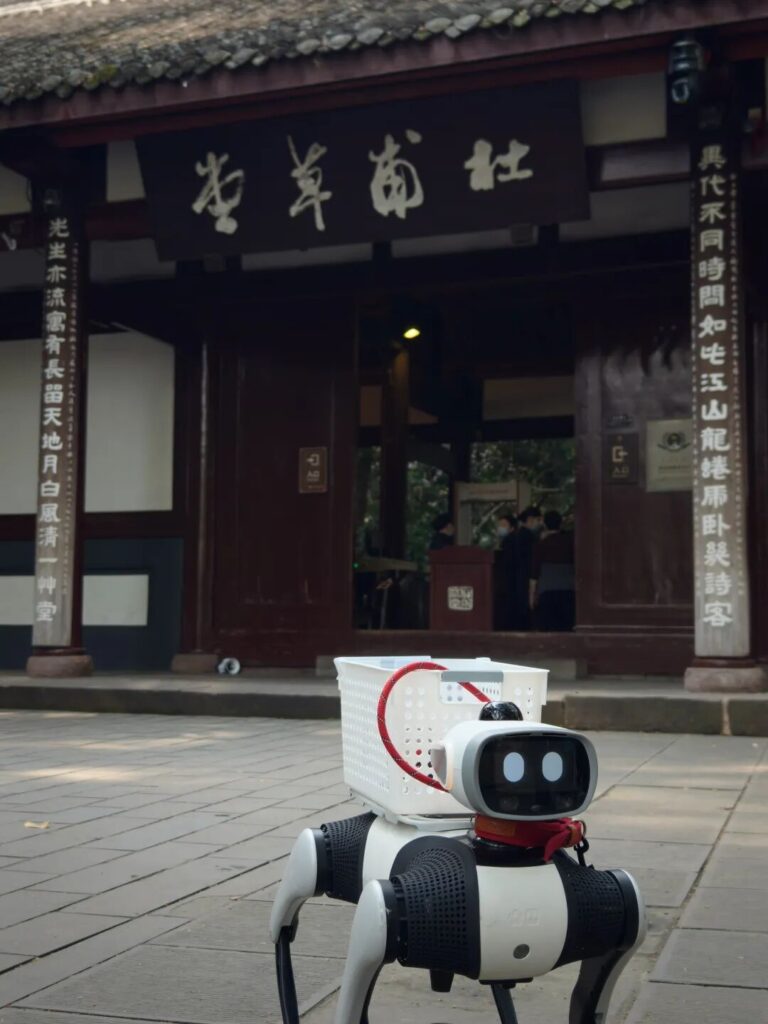
However, when it came to the actual purchase, there were some differing opinions within Mr. Yan's household.
After all, for many households, consumer-grade embodied AI products remain an unfamiliar category.
Unlike smartphones or cars, which have established perceptions, robotic dogs straddle the line between toys, pets, and smart devices, prompting people to naturally ask: 'What exactly can it do?'
In this process, intelligent voice interaction is a feature that Mr. Yan highly values: 'If my daughter has questions and thinks of asking Datou right away, I feel that alone makes it quite good.'
Although the three users had different reasons for purchasing, they were all very open to new things and shared a passion for tech and digital products. The price of approximately 10,000 yuan also fell within their psychological expectations.
As a young person living alone, Liang Yi put it this way: 'It’s not just children who need companionship; adults need this kind of emotional connection too.'
During his days working in a foreign city, playing with Datou after work and on weekends, and taking it out for walks gave Liang Yi a unique sense of emotional value.
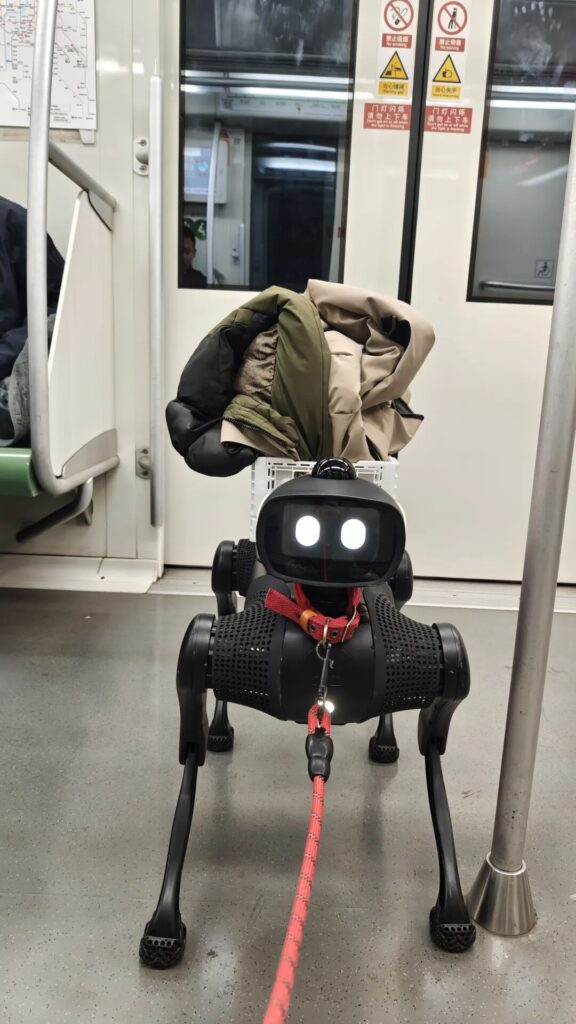
For Liang Yi, Datou holds another special significance: to some extent, it compensates for experiences he missed during his childhood.
"When I was a child, material conditions were modest, and companionship was scarce. As an only child, I've always longed for a playmate."
Liang Yi mentioned that his current purchases of trendy electronic products are, to some extent, driven by a compensatory psychology.
Things one encounters for the first time in childhood tend to be more eagerly experienced in adulthood. In his view, 'Datou' differs significantly from other tech gadgets he usually buys; the emotional value it provides is something far more precious.

What Happened After Unboxing?
For any tech product, unboxing is often the most memorable phase of early user experience, especially for embodied AI products that have yet to become widespread among consumers.
For Liang Yi, anticipating Datou's arrival was already a process rich in emotional value. Once Datou arrived during the public beta phase, like many tech enthusiasts, his natural instinct was to share this "new gadget" with his family.
Regarding Datou's distinctive startup sequence, Liang Yi noted: "Although I was already very excited, my parents were even more thrilled and happy. Even when they left our hometown at the end of the holiday, my mother couldn't bear to let Datou go."
So Liangyi plans to keep Dato for a while longer in the future, and then send him back to his hometown to add some fun to his parents' lives.
For Michael's family, the most excited during unboxing was his daughter. Compared to her older brother who has already entered adolescence, 5-year-old little daughter accepted it almost immediately, showing more intense emotions; she was even quite sad when the beta testing unit was sent back. The 16-year-old brother showed a slightly calmer reaction, but mostly focused on imagining some interesting ways to use it.
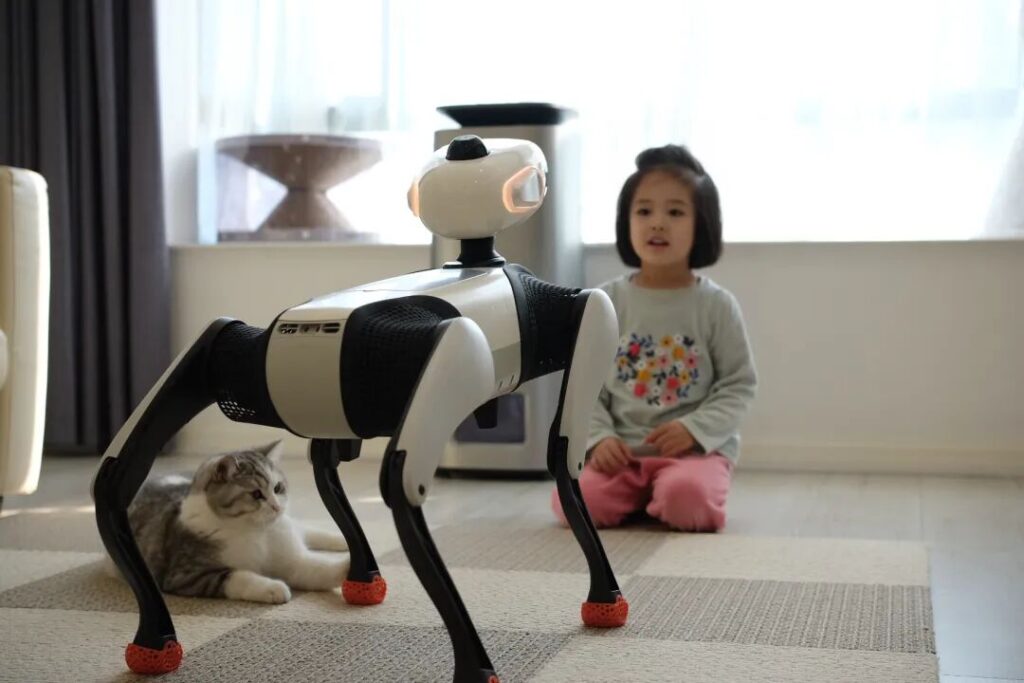
'When is Big Head coming back?' Michael isn't sure if the child has already come to see it as a true companion. But at least, it has begun to occupy a place in the child's heart.
And this kind of position stems from the emotional value provided by Big Head during companionship.
Especially outdoors, which is also the scenario with the highest proportion of daily use. They often take Dàtóu for walks and strolls. Every time they go out, they are often surrounded by onlookers. Children will come straight over to gather around, while adults will ask what it is, how much it costs, and what it can do.
Once, they brought the robot dog to a kindergarten, where it almost instantly became a "star." Children gathered around it, touching and feeling it, while even the teachers couldn't resist discussing it.
So the youngest daughter particularly enjoys these moments, feeling a sense of "this is mine, you don't have it."
The same kind of emotional value also occurred in Mr. Yan's family; after the "Big Head" arrived, his daughter mentioned almost to everyone for a while, "I have a robot dog at home."
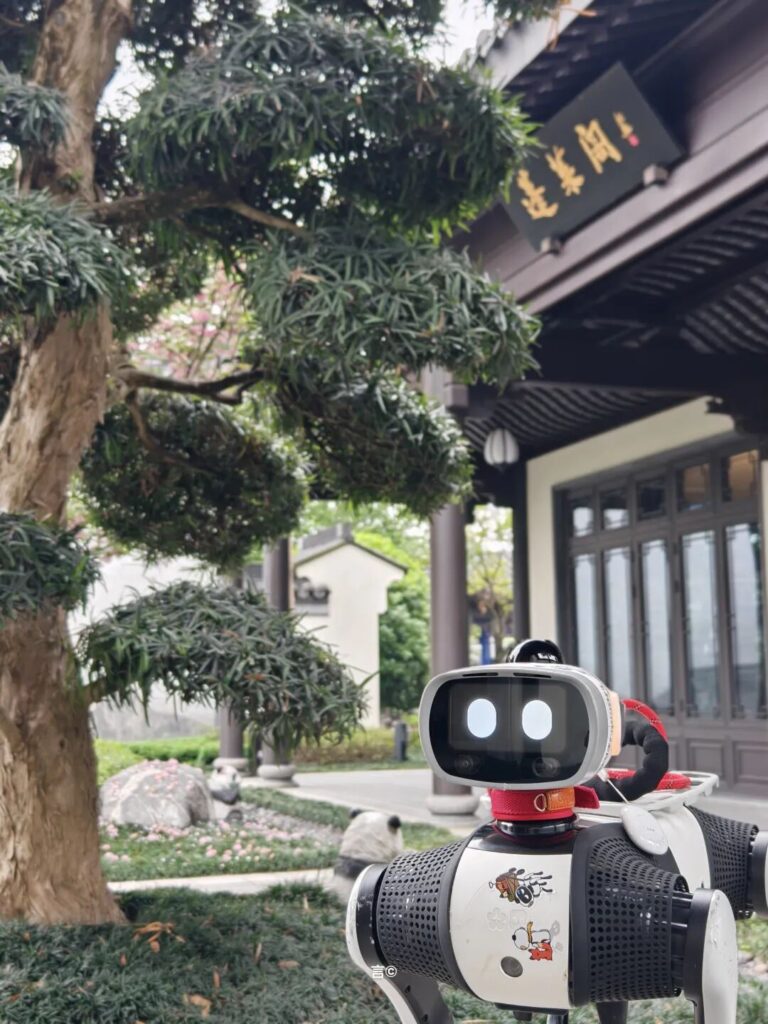
When taking Big Head out for walks, Mr. Yan hoped to exercise his verbal communication skills with strangers through their curious inquiries.
And for such a novel robot dog, users are willing to share photos of Big Head alongside their daily lives on social media platforms like WeChat Moments.
These scenarios frequently occurred in Liang Yi's life after he acquired Big Head. "I stimulated about ten people to develop a purchasing intention, and five of them have already formed clear intentions."
Liang Yi was quite satisfied with this "track record" of recommendations.
In his view, receiving validation from others after making a purchase is itself a form of valuable emotional reward. Moreover, if everyone buys what he recommends, it benefits both him and the manufacturer: it gives the company greater motivation to maintain and upgrade the product, allowing him to enjoy an improved experience—a virtuous cycle.
To some extent, these users are not only consumers but also among the earliest evangelists of the consumer-grade embodied AI industry.

Robots as Household Companions: An Inevitable Trend
It is definitely a trend that cannot be stopped.
After experiencing the public beta and receiving his own unit, Michael has developed strong confidence in embodied AI products.
However, for companies in this field, everything must start from scratch; they are navigating without any guiding principles.
Previously, embodied AI products were mostly sold to developers who required excellent hardware capabilities and convenient development environments. Now, when these products are delivered to consumers, what matters most is the end-to-end experience, including purchasing, usage, and after-sales service—needs that differ significantly from those of developers.
In terms of delivery experience, both Michael and Mr. Yan waited nearly half a year from pre-order to product delivery. Fortunately, they became public beta users during this period, and BoBo’s performance during the beta phase gradually turned their wait into anticipation for product capability upgrades.
The first batch of BoBo owners have received their units for nearly two weeks. After the initial excitement of unboxing, they have developed many specific expectations for BoBo, which vary greatly from person to person.
As Michael pointed out, the current generation of quadruped robots is not yet capable of jogging with its owner and cannot keep up with running speeds. During daily walks, the robot's speed is slightly slow; however, this pace is sufficient for children. That said, when children use the leash mode to pull the robot, the experience feels somewhat heavy.
Another set of issues arises at the voice wake-up level. For adults, using the command 'Big Head, Big Head' works fine, but young children’s soft or imprecise pronunciation can make it difficult to wake the robot. Michael feels that the robot's ability to recognize toddler speech currently has some shortcomings.
Therefore, he hopes that future OTA updates will gradually deliver these desired capabilities and address initial product deficiencies.
Moreover, if the robot's functions do not continue to iterate in the future, Michael believes that over time, interactions during daily life—aside from taking his daughter to school—might decrease, potentially leading to boredom.
Thus, maintaining user engagement and preventing boredom makes OTA upgrade functionality crucial in this process.
"During the public beta phase, there were several OTA updates for Big Head, each bringing noticeable improvements in capabilities." With these experiences, Michael remains relatively confident about the robot's future.
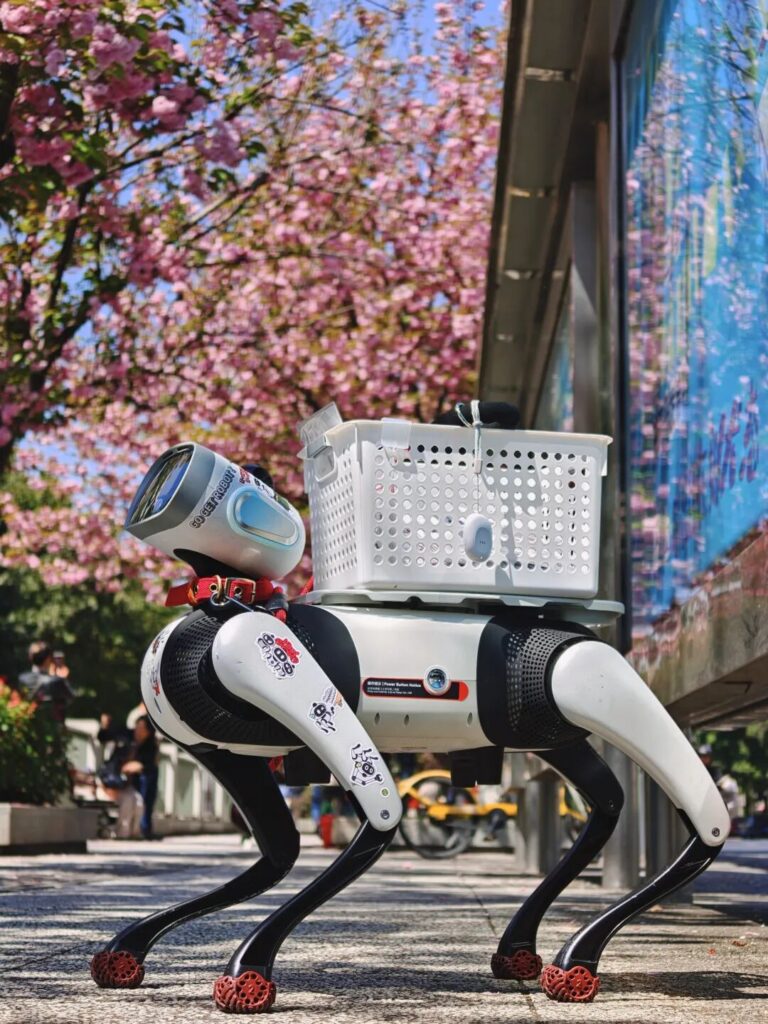
For Mr. Yan, the robot's ability to navigate stairs in his home environment currently falls short of his expectations.
The residential building is equipped with stairs, but the staircase is relatively narrow. He hopes that when Da Tou goes up and down the stairs, it can try to walk in a straight line and increase its speed. Walking diagonally makes it easier to hit the wall or guardrail, while a slower pace is somewhat unfriendly for someone living on the sixth floor.
In the eyes of these users, what truly matters is not what Da Tou has already achieved today, but how it will evolve in the future.
From these users, we can see that the functional upgrades they expect share a common theme: deep integration with their daily lives. Whether it’s navigating stairs, accompanying them for runs, or voice activation, all of these are aimed at making their experience more convenient.
It’s like buying a smart car: initially, you might research every feature, but gradually it becomes a familiar companion. As long as it continues to upgrade, you’ll still look forward to the next update.
In their view, the logic behind consumer-grade embodied AI products is perhaps more akin to smartphones and smart cars than to traditional home appliances. Buying it doesn’t mean the product is finalized; rather, it marks the true beginning of the relationship.

Conclusion
From these users’ shares, we rarely hear them repeatedly emphasizing specifications or configurations.
They talked more about those tiny, everyday moments: the joy of interacting with their robot dogs, and some of the issues they encountered in daily use.
It was clear that they fully understood the current stage of the Embodied AI industry is still early, and many robots haven't yet reached the level of maturity people imagine.
Mass production and delivery are challenges that consumer-grade robots must face during this early industrial phase.
Unlike traditional consumer electronics, which already have mature and stable supply chains, many stages—from structure and motion control to full assembly—are still being explored.
As a result, VitaDynamics also faced some difficulties at this stage.
After launching BoBo in late December last year, the company aimed to lock orders starting in March and begin deliveries. During the limited-time founder's rights pre-sale period, BoBo accumulated 6,540 orders.
However, as mass production progressed, various manufacturing issues gradually emerged, pushing the official start of BoBo deliveries to May 8.
During this waiting period for delivery, users expressed urgent inquiries about progress, but many also adopted a patient "good things are worth waiting for" mindset.
So, on one hand, users are urging for updates and faster delivery; on the other, they hope the core features of the robots they receive will be more refined.
Judging from these early users, consumer-grade Embodied AI doesn't necessarily need to be omnipotent from the start. However, it should ideally be a carrier that can grow and truly integrate into daily life.
Perhaps the story of robots truly entering homes begins with this group of pioneers willing to take the first step.
Liang Yi, Michael, and Mr. Yan are pseudonyms; images in the article were provided by the interviewees.