
Tesla's Third-Generation Humanoid Robot to Debut; Figure Robotics Uses Buttocks to Close Drawers; LimX Dynamics Closes $200 Million Series B | Electric Wave Weekly Report

1. Tesla's Third-Generation Humanoid Robot to Debut
On February 2, Tesla announced on its official blog that the third-generation Tesla humanoid robot (Optimus V3) is set to debut, with an expected annual production capacity of one million units. Redesigned from first principles, the robot can learn new skills by observing human behavior. Tesla AI reposted this information, stating it is Tesla's first humanoid robot to move towards mass production.
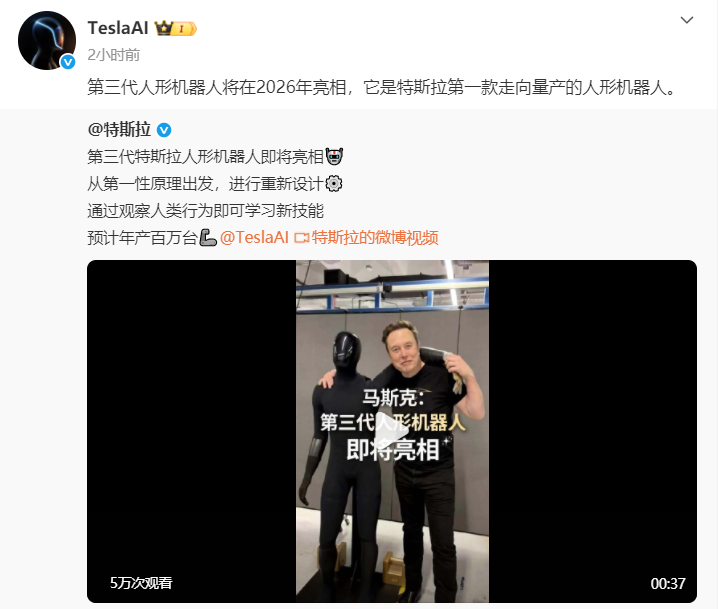
Tesla has recently been frequently revealing progress in the planning for the Optimus robot. Previously, during a quarterly earnings call, Tesla CEO Elon Musk stated that production of the Model S and Model X would gradually cease next quarter, with the Fremont factory transitioning to produce Optimus humanoid robots.
At the beginning of January, Musk also stated at Davos that Tesla is currently using some robots in its factories to perform simple tasks. It is expected that by the end of 2026, the Optimus robot will be able to execute more complex tasks, and thereafter, possibly before the end of next year, Optimus may be sold to the public.
However, according to foreign media Futurism, Tesla missed its original target of producing 5,000 units of Optimus last year.
Overall, as the robotics industry reaches the stage of mass production deployment, the Optimus V3 has become one of the most anticipated new products in the industry this year.
2. Figure Unveils Helix 02 Model
On January 28, the embodied AI company Figure introduced its latest end-to-end robot model, Helix 02. Capable of achieving full-body long-horizon autonomous control through a single neural network, it can drive robots to execute continuous long-thread tasks lasting up to 4 minutes in a home kitchen, and even close drawers using its hips like a human.
Differing from its predecessor, the Helix model which only controlled upper-body movements, Helix 02 achieves unified control from pixels to continuous whole-body actions. This enables robots to perform complex tasks continuously in real-world environments, coordinate gaits with manipulation, and handle real-time feedback and error adjustments.
In the release video, a Figure 03 robot equipped with Helix 02 operates a dishwasher in a kitchen without any remote control intervention. In its technical blog, Figure stated that this continuous task involved 61 distinct movement actions.
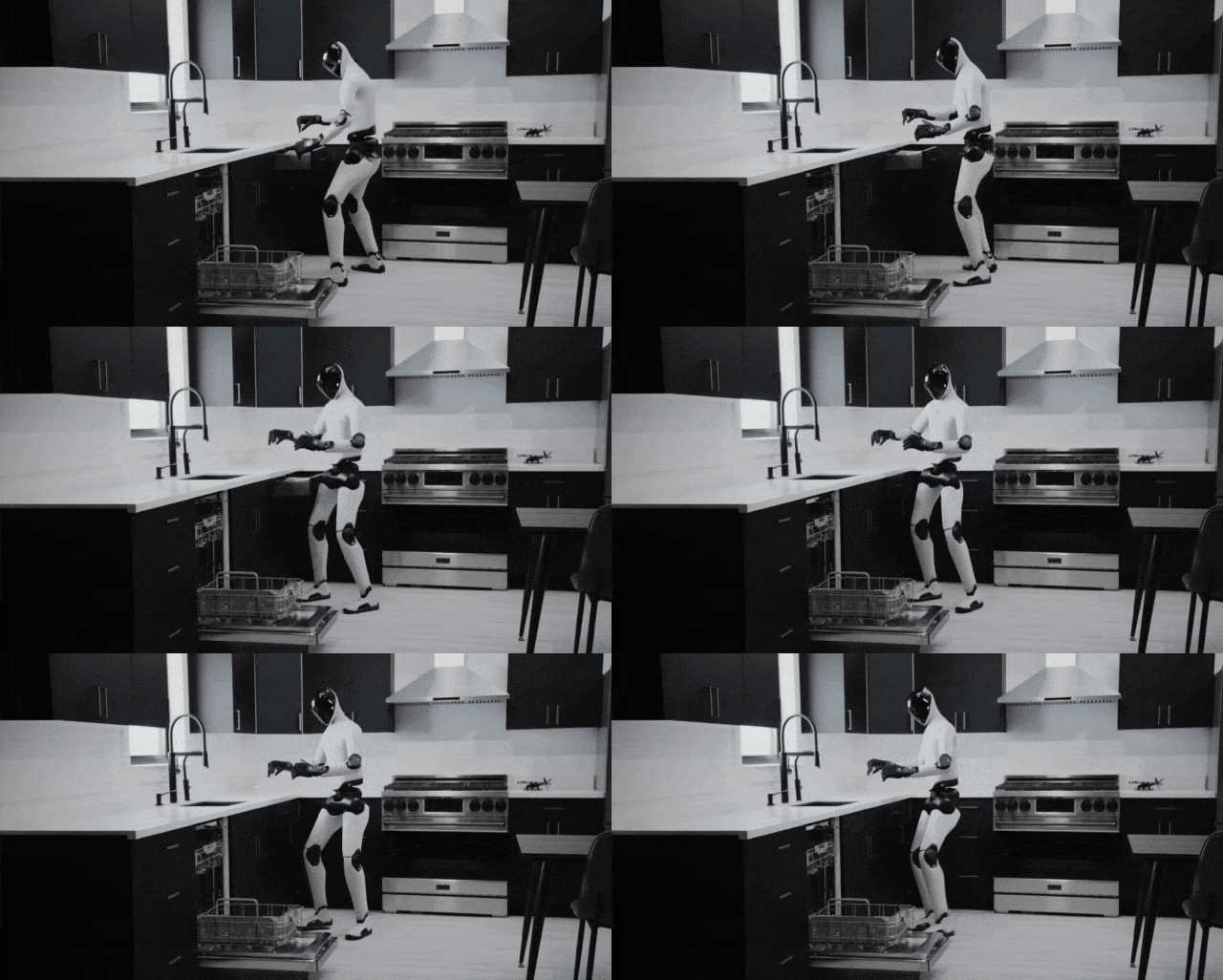
For instance, when a drawer door needed closing and the robot's hands were occupied, it chose to push the drawer closed with its hip before leaving. Additionally, when closing the dishwasher door, the robot first lifted the door to an appropriate height with its foot before using its hands to shut it completely.
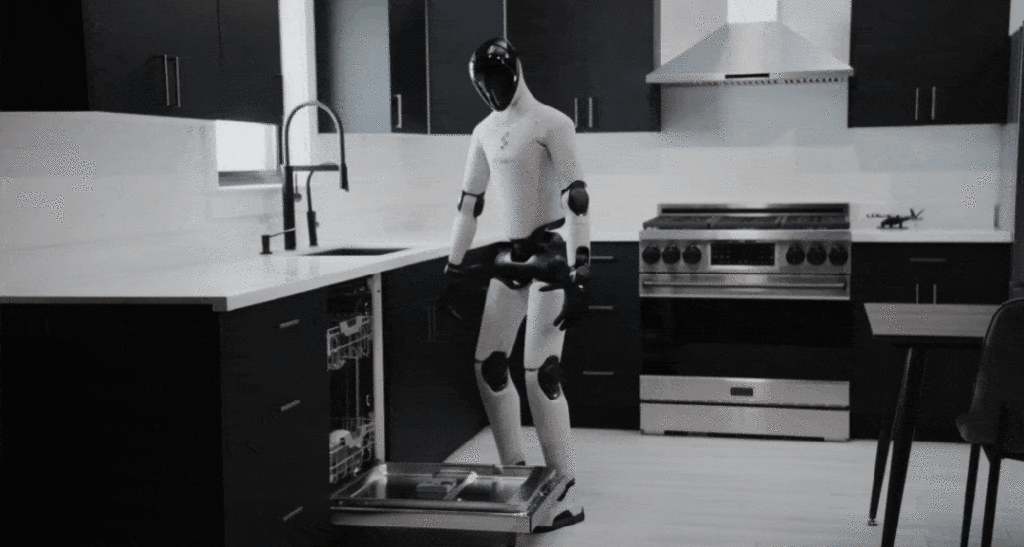
Overall, the logic displayed by the robot in the release video is remarkably human-like. The key lies in Helix 02 incorporating a foundational control layer, System 0, designed specifically for stabilizing and coordinating whole-body movement. Meanwhile, two other layers, System 1 and System 2, focus on sensor input processing and behavioral intent understanding, respectively, allowing the robot to maintain fluidity during long-horizon tasks.
3. Unitree Open-Sources UnifoLM-VLA-0 Model
On the evening of January 29, Unitree Robotics announced the open-sourcing of the UnifoLM-VLA-0 model, a Vision-Language-Action (VLA) large model designed for general-purpose humanoid robot manipulation. Through data construction, model optimization, and real-world validation, the model aims to make robots more reliable in the physical world.
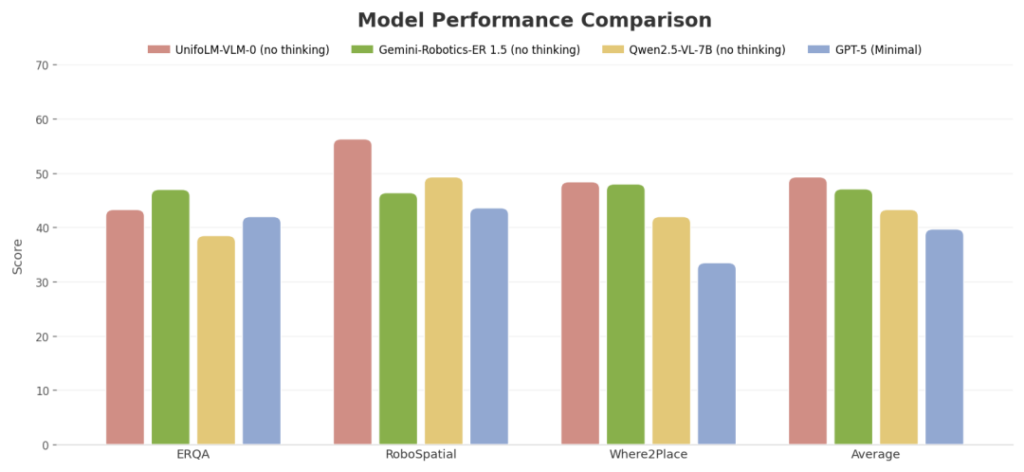
Specifically, the core of UnifoLM-VLA-0 lies in its spatial perception capabilities and task generalization. UnifoLM-VLA-0 inherits the spatial reasoning abilities of UnifoLM-VLM-0. In spatial understanding benchmark tests such as ERQA, RoboSpatial, and Where2Place, the model demonstrated significant improvements in spatial perception and understanding compared to Qwen2.5-VL-7B, and it could compete with Gemini-Robotics-ER 1.5 even in "no thinking" mode.
In the LIBERO simulation benchmark test, UnifoLM-VLA-0 achieved high scores across four typical scenarios, with a comprehensive average score of 98.7.
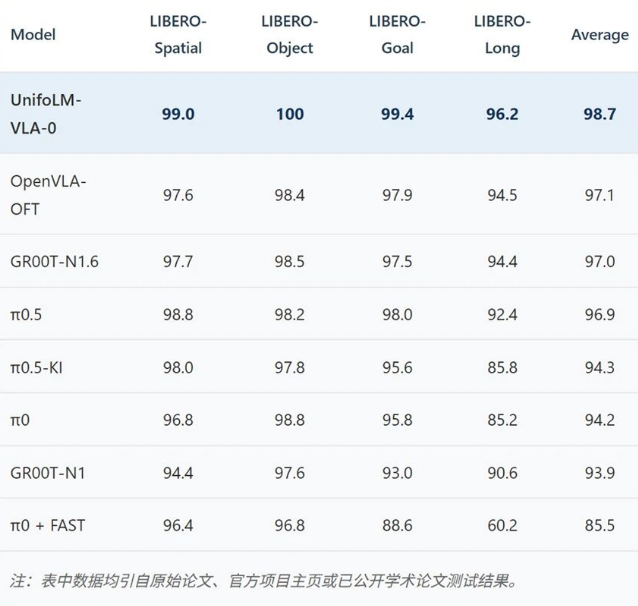
Additionally, the Unitree team conducted real-machine verification on the G1 humanoid robot platform. The experiments covered 12 categories of typical manipulation tasks, using the same policy network for end-to-end execution, with some tasks incorporating external disturbances.
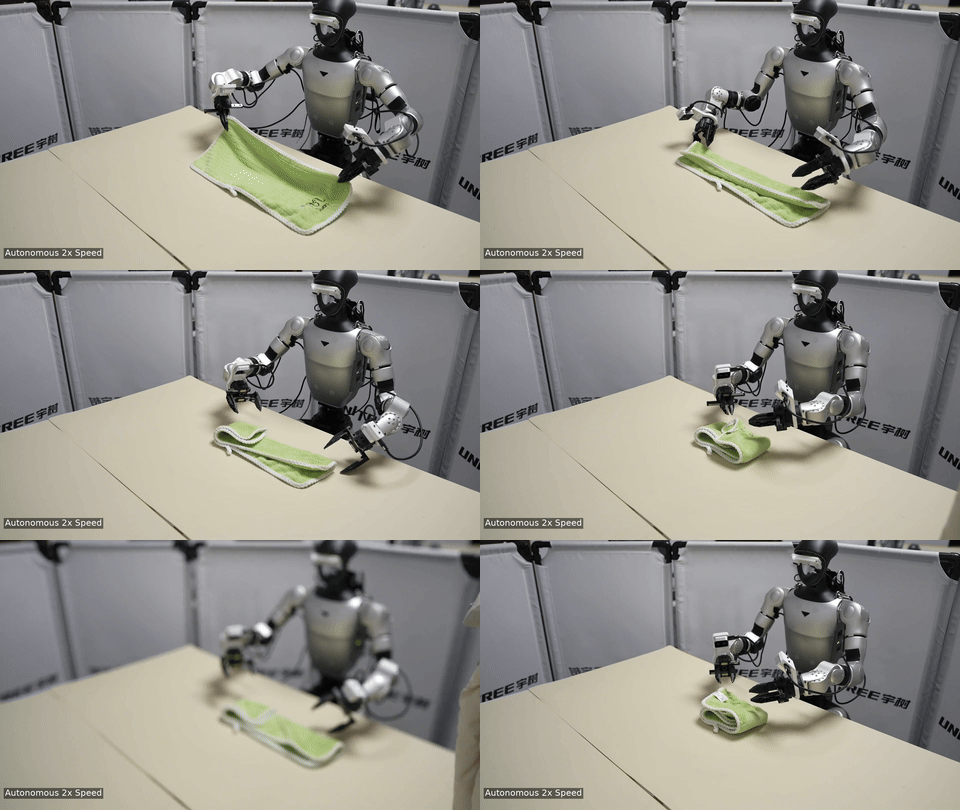
From real-world tests involving tasks such as folding towels, organizing stationery, and arranging fruits, the UnifoLM-VLA-0 model was able to complete all task categories without specific parameter adjustments for each task. The system also maintained high execution stability in the presence of external disturbances.
4. LimX Dynamics Closes $200 Million Series B Funding Round
On February 2, LimX Dynamics announced the closing of a $200 million Series B funding round.
This round involved participation from numerous well-known domestic and international institutional investors, including Stone Venture (UAE), Orient Fortune Capital, Foundation Capital, Tianchuang Capital, GF Xinde, Hefei Innovation Investment, Guotai Junan Innovation Investment, China Securities, Tangxing Capital, and Caixin Capital. Strategic industrial investors include JD.com, Zhongding Shares, Guangyang Shares, and Dongtu Technology. Existing shareholders, including Shangqi Capital (under SAIC Group), Bi'an Times, NIO Capital, and Mingshi Ventures, continued to increase their stakes.
LimX Dynamics was founded in January 2022 and has previously completed eight funding rounds.
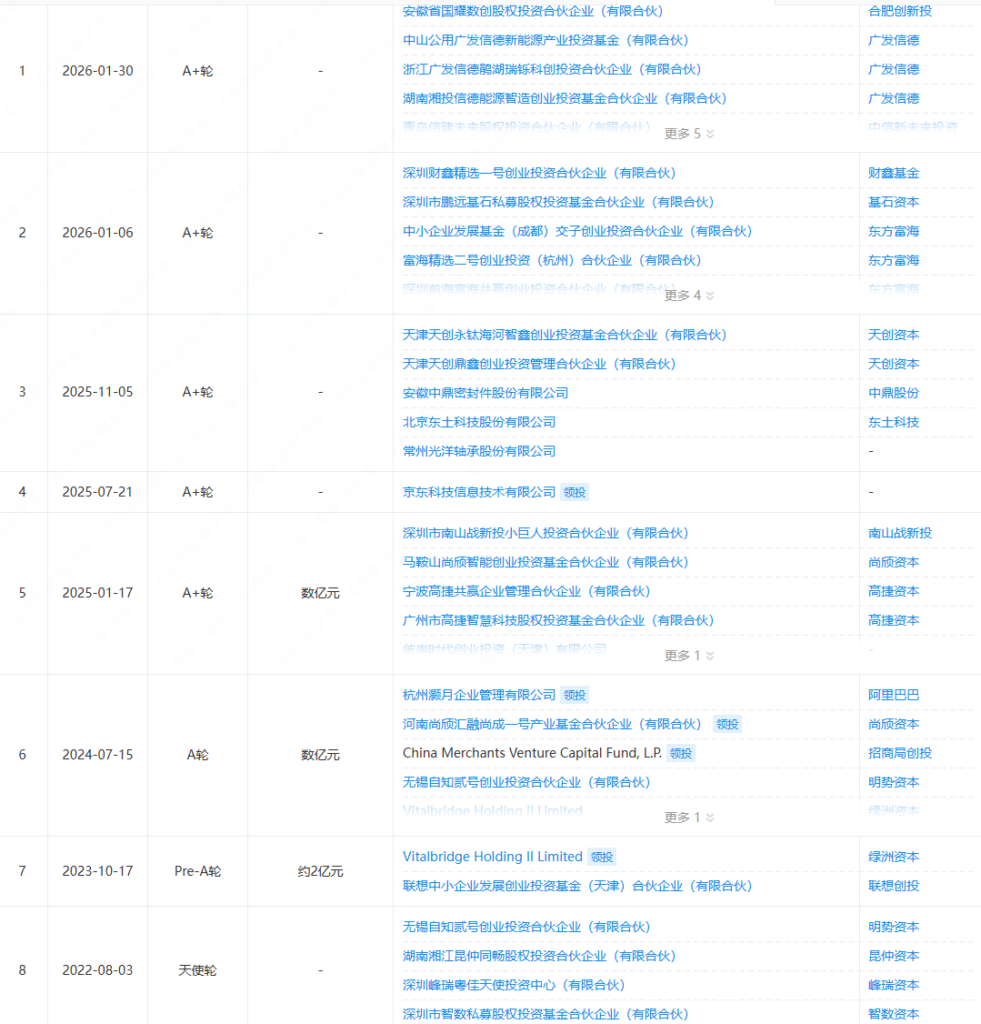
In the past two months, LimX Dynamics has continuously released multiple forms of embodied robots, the TRON 2, and the embodied AI agent OS system, LimX COSA.
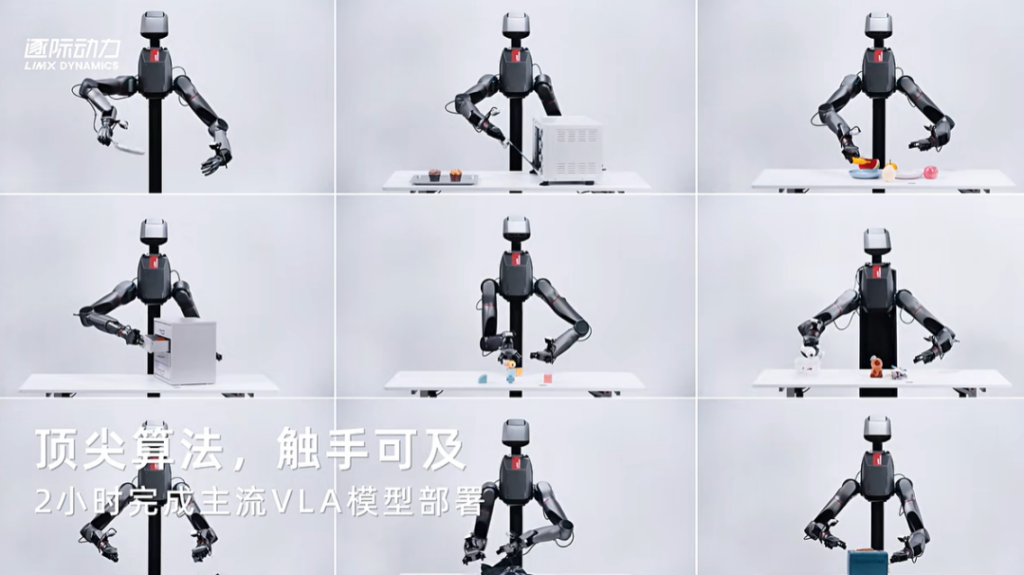
TRON 2 supports flexible combinations in various forms, enabling developers and industry users to quickly build appropriate robot configurations tailored to different application scenarios.
LimX COSA is an Embodied AI Agentic OS native to the physical world, deeply integrating high-level cognitive and decision-making capabilities with full-body motion control. Driven by COSA, the humanoid robot Oli can understand tasks, perceive the environment, plan behaviors, and continuously adjust its decisions during execution to cope with changing environments and tasks.