

Shihang Intelligence's CEORION Marine Foundation Model Completes CAC Filing for Underwater Operations
By Jiang Si Qi
Shihang Intelligence announced that its CEORION marine general foundation model has completed filing with the Cyberspace Administration of China. Built on a Language-World-Action Model architecture, the system integrates multimodal sensor data to enable underwater robots to perceive, plan, and execute tasks within a single framework.
Shihang Intelligence recently announced that its independently developed maritime general foundation model, CEORION, has completed its filing with the Cyberspace Administration of China. Based on the LWAM (Language-World-Action Model) architecture, the model integrates multiple sensory inputs—including vision, acoustics, pressure, fluid dynamics, and pose—aiming to enable marine robots to process environmental perception, task comprehension, action planning, and task execution within a single unified model.
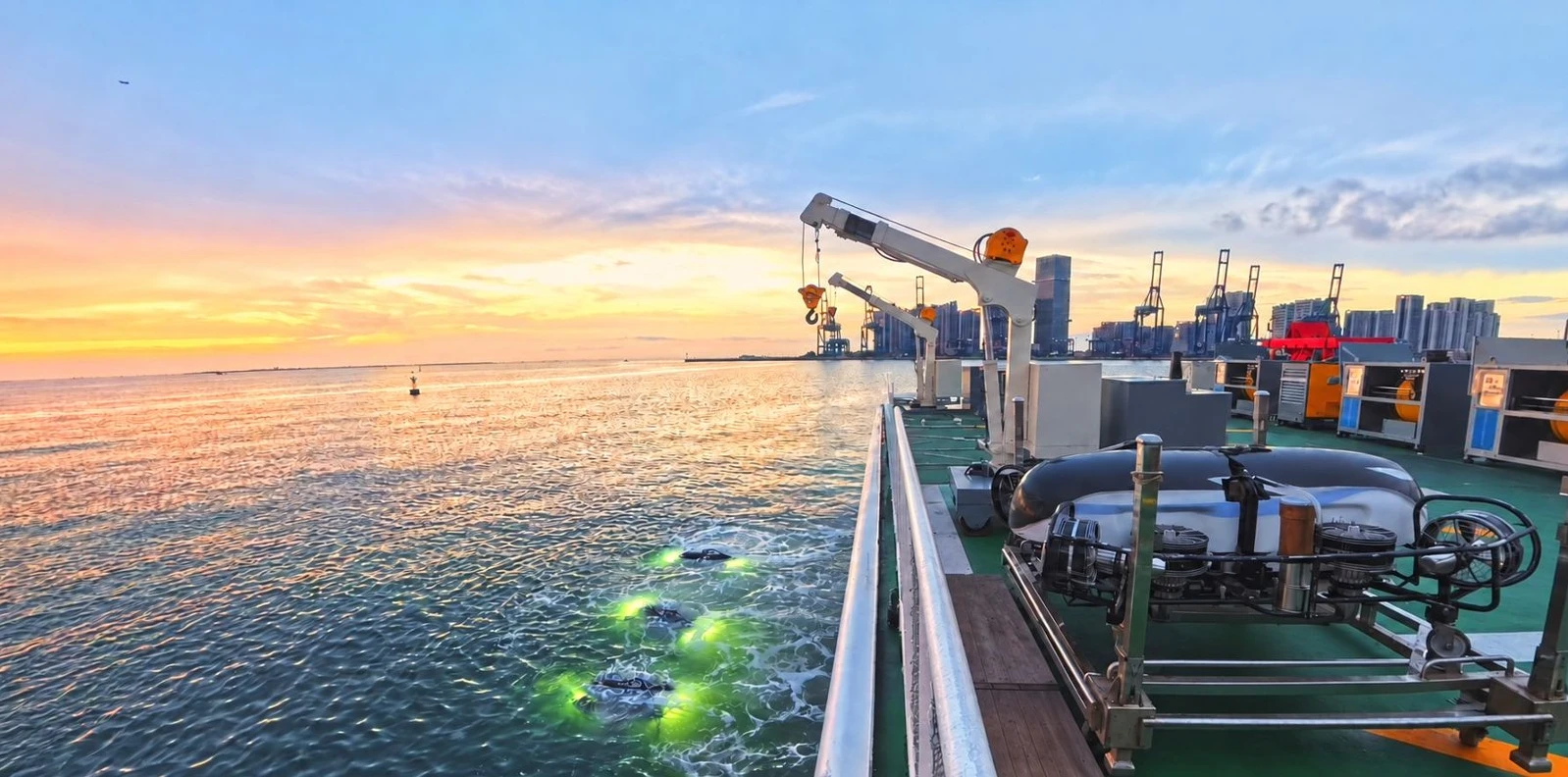
This approach addresses a specific set of underwater challenges. As operating depth increases, the pressure on equipment rises; ocean currents and water turbulence affect robot mobility and manipulation; and insufficient underwater lighting, combined with turbid water and suspended particles, interferes with target recognition. Meanwhile, underwater communication suffers from limited bandwidth, high latency, and unstable connections, making it difficult for robots to continuously transmit on-site data to the cloud for processing or to rely solely on remote teleoperation.
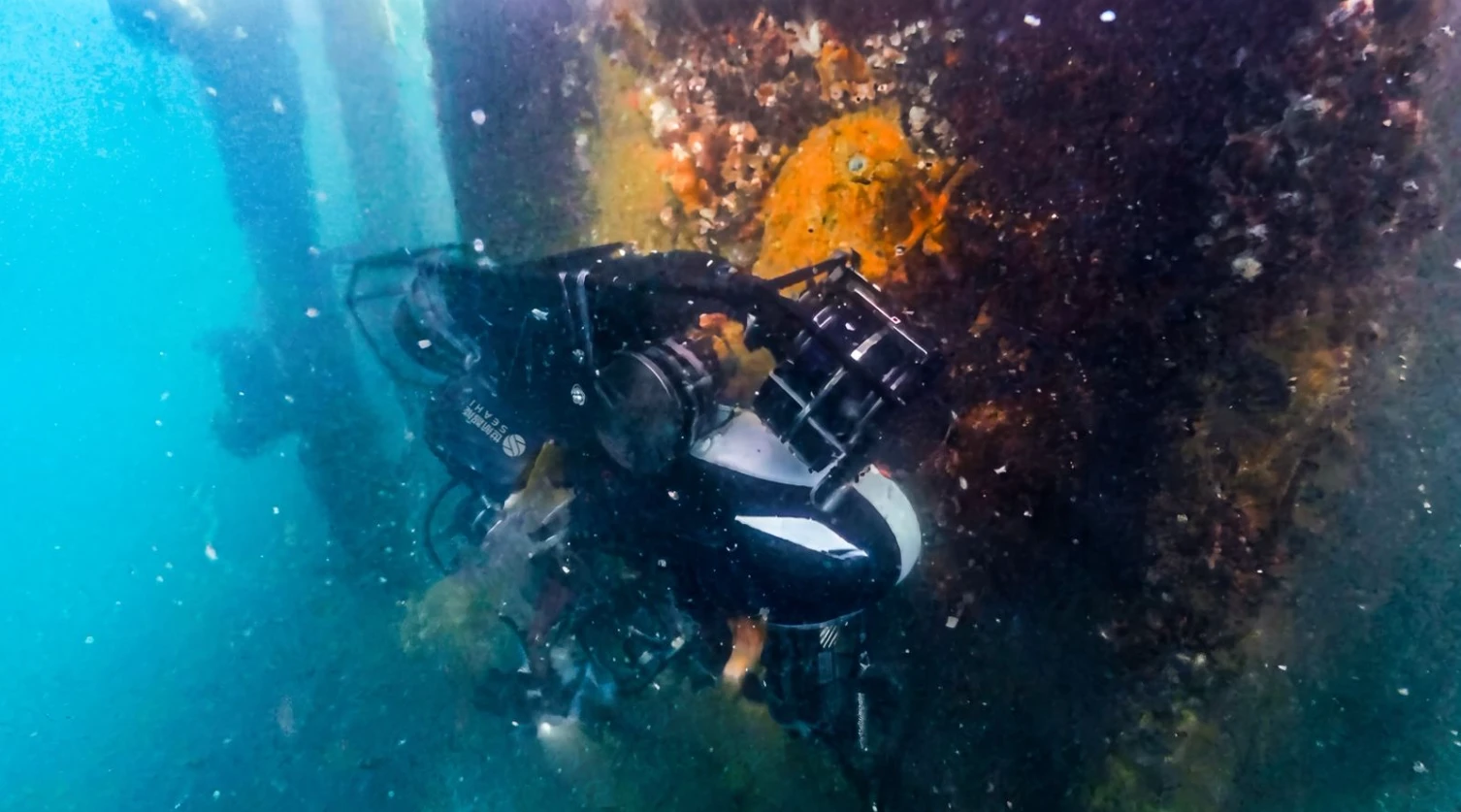
Consequently, marine robots must be able to assess tasks and take action based on real-time environmental changes, even when information is incomplete and communication is restricted. Shihang Intelligence notes that CEORION can fuse data from sonar, force sensors, inertial navigation, and vision, dynamically adjusting its perception channels according to the operating environment to support perception and operations in low-light, highly turbid waters. This design aims to reduce the system's reliance on a single visual channel, allowing the robot to gather the necessary operational information even in poor visibility conditions.
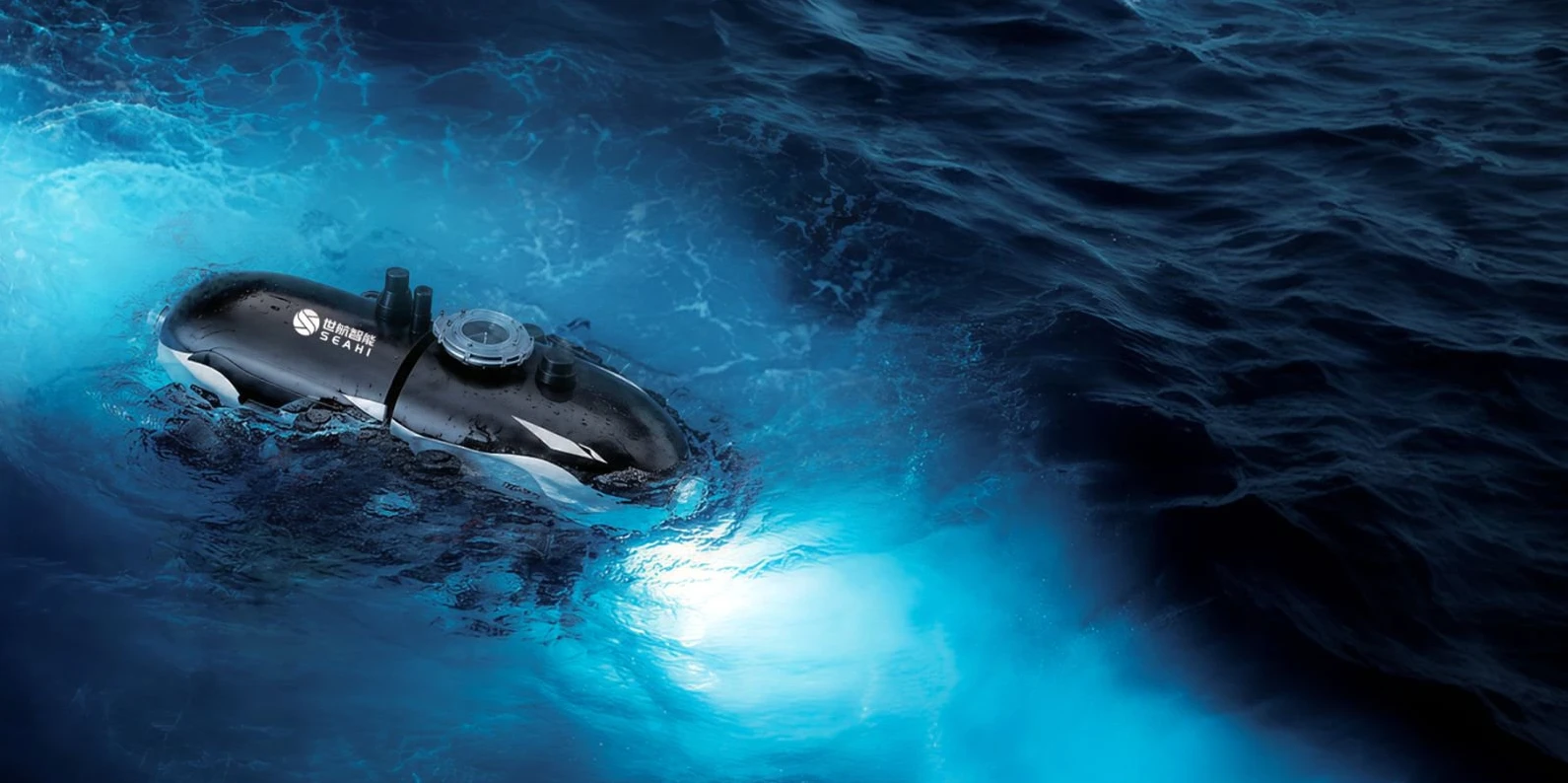
Beyond perception, robots must also handle the motion uncertainty caused by ocean currents and varying forces. According to Shihang Intelligence, CEORION's maritime world model incorporates fluid dynamics and robotic kinematic constraints to predict current impacts and underwater force feedback, adjusting its actions accordingly. The model also combines language understanding, environment modeling, and action generation to support underwater environmental perception, task assessment, path planning, autonomous operations, and emergency response.
Shihang Intelligence has also developed specialized models for various maritime operation scenarios, coordinating these capabilities through the LWAM architecture. The company aims to expand the model's capabilities from single-task execution to cross-scenario and cross-task operations. According to Shihang Intelligence, CEORION can adapt to 12 types of underwater operations—including inspection, detection, cleaning, grasping, cutting, welding, exploration, search and rescue, emergency response, mining, operation and maintenance, and sequestration—without needing to switch between different models.
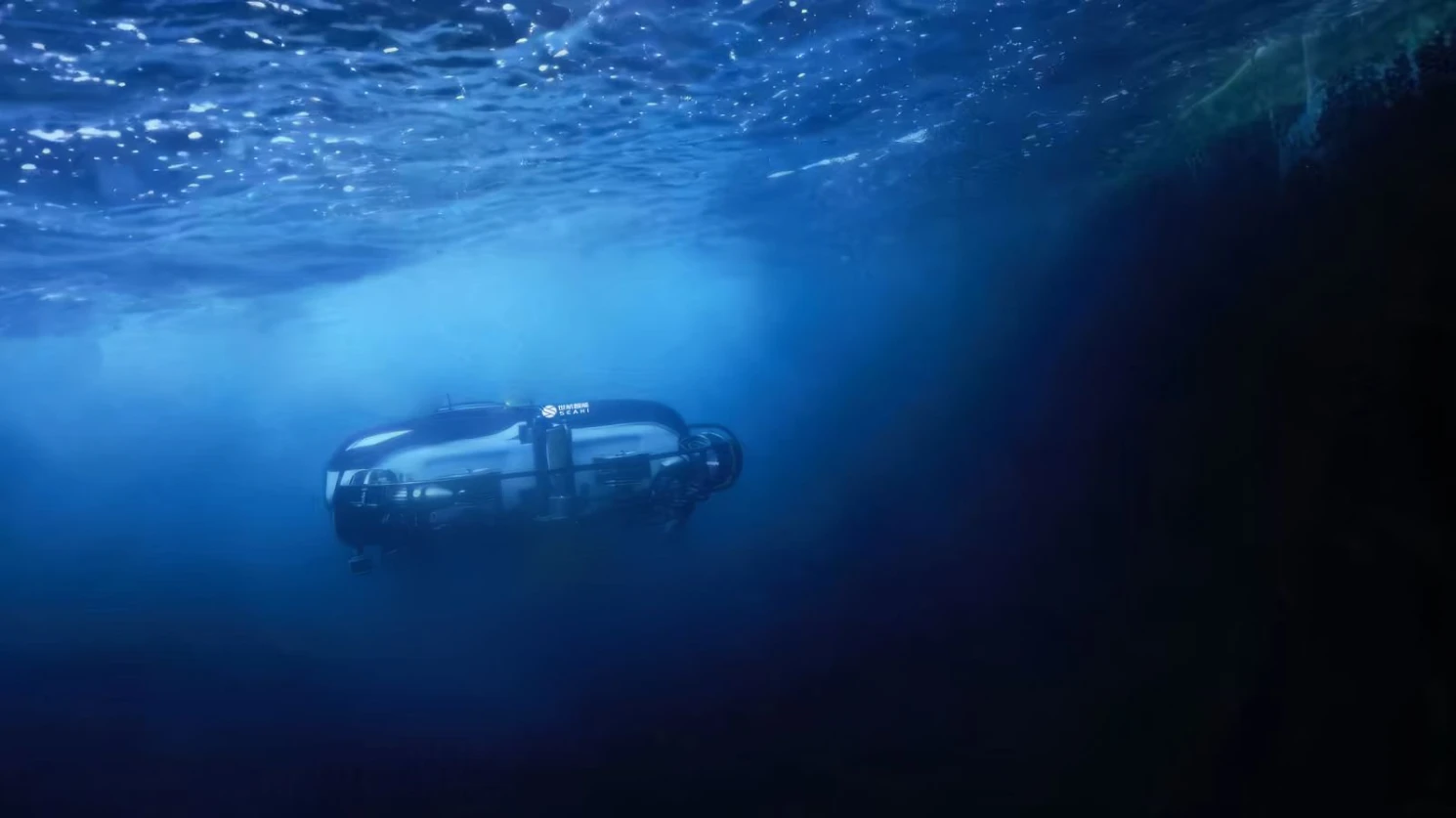
The model's capabilities ultimately need to be validated in real-world environments. Shihang Intelligence states that CEORION's capabilities have been applied in ship hull cleaning, port dredging, aquaculture, marine engineering and infrastructure, as well as deep-sea resource exploration and development. These real-world operations also provide scenarios and data for model iteration. The company plans to continue expanding its application scope, integrating the model's capabilities with marine production tasks.
Completing this filing marks a step forward in Shihang Intelligence's advancement of the research, development, and application of its maritime general foundation model. The company stated that it will continue to focus on the field of maritime general intelligence, driving the application of related technologies in marine engineering, resource development, and operation and maintenance.