
What Happened to the Top 3 Humanoid Robots from Last Year's Marathon? Who Will Take the Crown This Year?
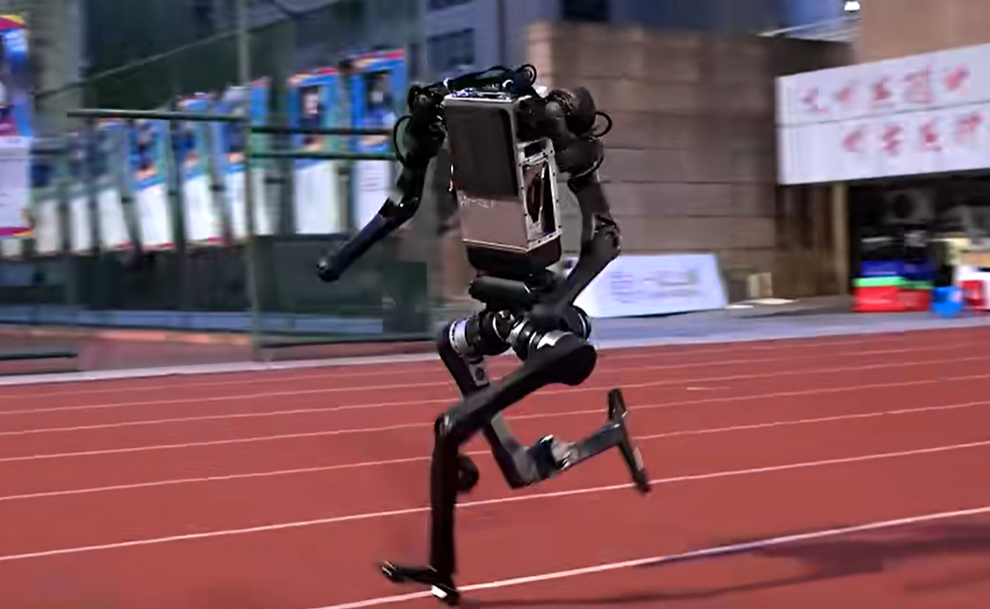
This weekend, April 19, the 2026 Humanoid Robot Half Marathon is set to kick off in Beijing's Yizhuang area, marking another prominent appearance of robots in the public eye following their showcase on the Spring Festival Gala.
After a year of rapid development in the robotics industry, competition for this year's event has intensified significantly. The number of participating teams has surged from 20 to over 100, with a stronger emphasis on fully autonomous operation without remote control.
However, robot capabilities were generally less advanced last year; simply completing the race was considered a relatively impressive achievement. Consequently, the top three finishers of last year's marathon became major traffic drivers and public attractions after the event.
- Champion: TianGong Ultra Robot from the Beijing Humanoid Robot Innovation Center, with a time of 2 hours, 40 minutes, and 42 seconds.
- Runner-up: Songyan Dynamics N2 Robot, with a time of 3 hours, 37 minutes, and 50 seconds.
- Third place: Zhuoyide Xingzhe No. 2 Robot, with a time of 4 hours, 25 minutes, and 56 seconds.
So, what developments have the previous top three humanoid robots experienced over the past year?

Beijing Humanoid Robots Focus on Industrial Scenarios
As the champion of last year's robot half-marathon, Beijing Humanoid Robot Innovation Center was founded in 2023. Its "Tiangong Ultra," a full-size humanoid robot approximately 180 cm tall, competed in the event. After standing on the podium, the company attracted considerable attention.
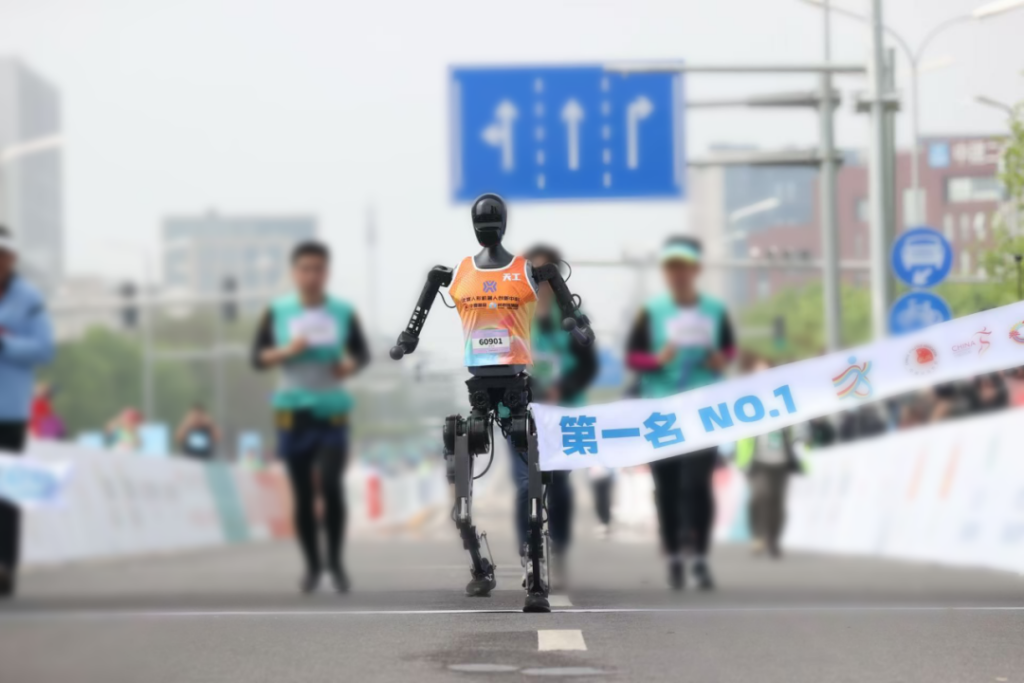
Soon after, Beijing Humanoid released its motion control framework, Tien Kung-Lab, open-sourcing the motion control algorithms from the robot marathon to the industry.
However, compared to the motion control performance in the robot "cerebellum," Beijing Humanoid's R&D efforts over the past year have shifted toward the "brain." Unlike running on the track, what robots need most for practical deployment is model-based "brain" capabilities.
In August last year at the World Humanoid Robot Games, the Tianyi 2.0 robot equipped with the "Huisi Kaiwu" platform simultaneously won first and second place in the material handling competition. This platform targets the robot's ability to perform work tasks.
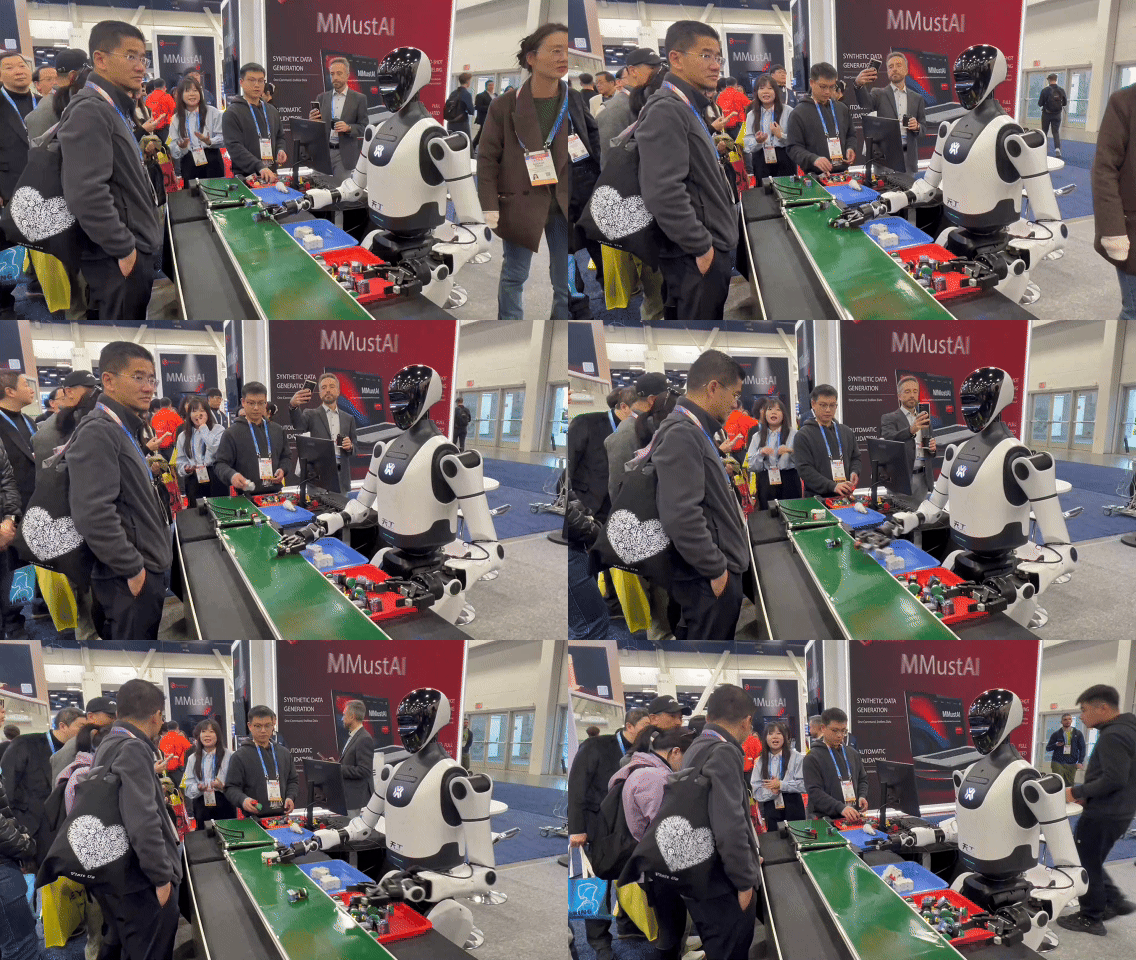
At CES this January, the "Embodied Tiangong 2.0" robot autonomously sorted parts on-site, taking on factory-like work. This capability primarily stems from the cross-embodiment VLA (Vision-Language-Action) model released by its Huisi Kaiwu platform.
In terms of specific applications, scenarios involving high-risk, high-intensity, and repetitive labor remain their current main focus for deployment.
Notably, Beijing Humanoid completed its first round of financing totaling over 700 million yuan in February this year. This was the only financing event for the company following its championship win last year. After replenishing its financial reserves, enhancing autonomous capabilities remains a key focus.

Songyan Dynamics has raised at least 1.6 billion yuan
In last year's robot half-marathon, the runner-up was the small-sized robot N2, which stands approximately 1.2 meters tall and is produced by Songyan Dynamics, a company founded in 2023.
After securing second place, Songyan Dynamics focused its efforts on consumer-grade humanoid robots. These robots are typically compact in size and primarily target educational and home scenarios.
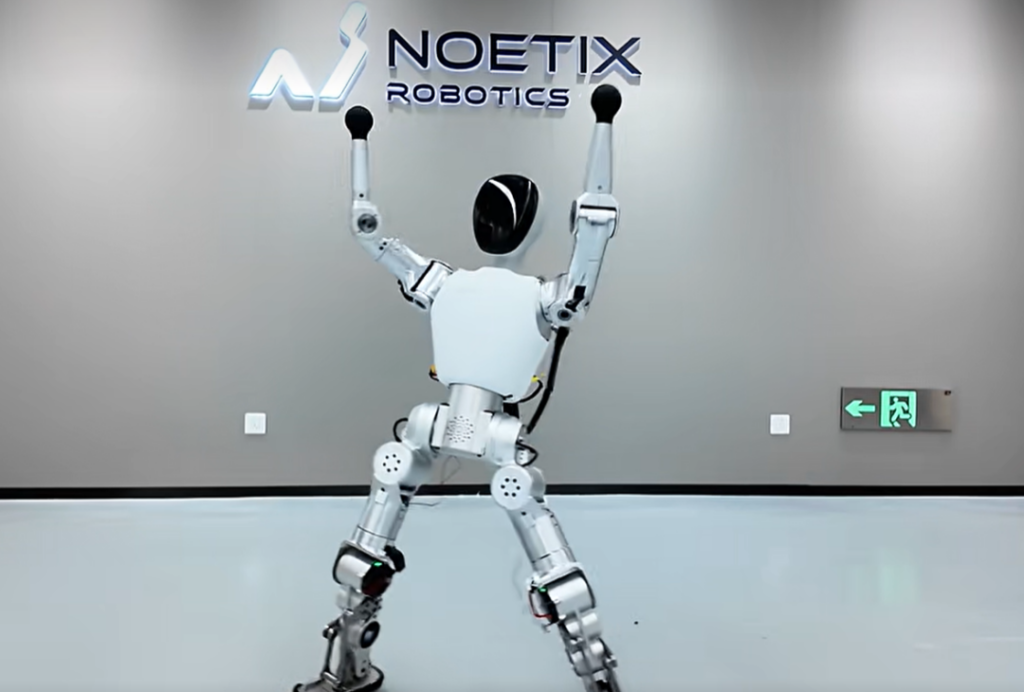
Following this strategy, the company launched the "Bumi" (Xiao Bumi) robot in October of the same year. Priced at 9,998 yuan, it measures 94 cm in height and weighs 12 kg.
Notably, during the Spring Festival Gala this Year of the Horse, their robot appeared on the show, performing a skit titled "Grandma's Favorite" alongside actors Cai Ming and Wang Tianfang. In the skit, "Grandma Cai Ming" used the robot to provide emotional value.
So, broadly speaking, Songyan Dynamics' route is still mainly consumer-grade humanoid robots, with little information released regarding the robots working autonomously.
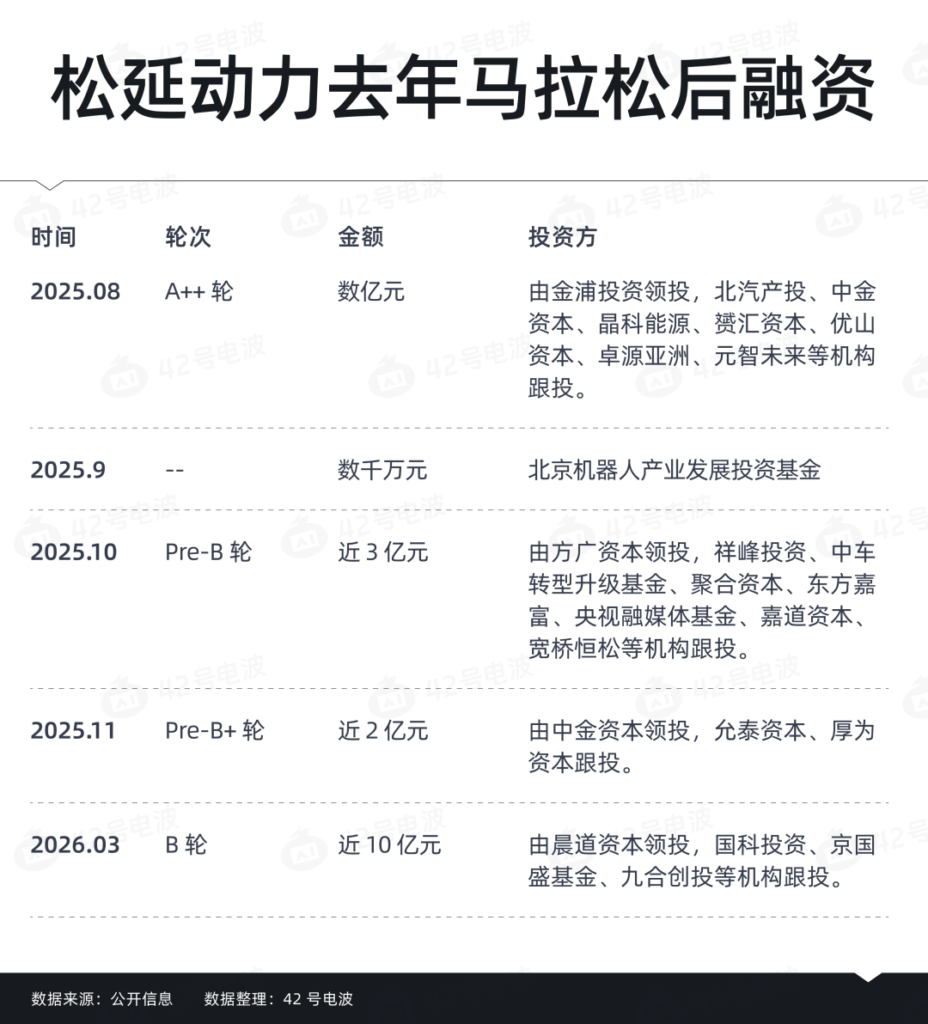
However, in this track, Songyan Dynamics has been relatively dense in financing. From the robot half-marathon last year to now, the financing amount is at least 1.6 billion yuan. The mass production and implementation of consumer robots have been their focus over the past year.

Zhuoyide Launches Bionic Robot
As the third-place finisher in the 2025 robot half-marathon, Zhuoyide sent "Xingzhe No. 2," a full-size humanoid robot standing 170 cm tall.
After last year's competition, Zhuoyide Robot chose a different niche track: bionic robots. This route mainly focuses on developing anthropomorphic and emotionally expressive humanoid robots.
At the end of January this year, the company launched the bionic embodied AI robot Moya, which is 1.65 meters tall and weighs approximately 32 kg. In terms of "looking human," Moya features an eco-friendly silicone skin with temperature regulation capabilities, maintaining a body temperature between 32 and 36 degrees Celsius, and can also simulate human facial expressions.

In terms of pricing, Moya, which is scheduled to begin limited pre-sales in the fourth quarter of 2026, has an initial batch of 50 units priced between 1.2 million and 1.5 million RMB.
Shortly after launching Moya, Zhuoyide Robotics also announced the completion of a nearly 100 million RMB Pre-A+ funding round.
Overall, the top three finishers from last year's robot half-marathon have each pointed toward different tracks over the past year. Whether it’s entering factories for work, targeting consumer scenarios, or providing bionic companionship, these all represent distinct sub-directions within the field of Embodied AI.
However, if we broaden our perspective slightly, we can see that not only have the development paths of the participating companies changed, but this year’s competition itself is also undergoing changes.

What Has Changed in This Year’s Competition?
Last year, only 20 teams participated in the robot marathon, with just six teams completing the race. More importantly, many spectators criticized numerous participating robots, noting that they resembled toys because they were being remotely controlled while running.
This was the key issue emphasized by the industry throughout last year: enabling robots to break free from remote control and become more autonomous.
Accordingly, this year's competition format has been adjusted to reflect changes in the robotics industry. The approximately 21-kilometer track features different categories such as autonomous navigation and remote control. Among these, autonomous navigation requires robots to run independently, testing their sensing and navigation capabilities; nearly 40% of the teams fall into this category.
Consequently, robots will be labeled with tags like 'autonomous' or 'remote-controlled,' allowing audiences to intuitively understand which group a specific robot belongs to upon seeing its label.
The organizers further encourage autonomous racing by applying a 1.2x performance weighting coefficient. Under this rule, robots competing in the autonomous category gain an advantage in the final results.
However, fully autonomous does not mean robots operate without any human assistance. In scenarios such as battery replacement, robot falls, or switching to backup robots, staff members may intervene on the track after confirmation by referees.
If a robot is replaced, time penalties are added to the final result. However, battery changes at supply stations do not stop the clock and incur no penalties.
Notably, during last year's robot half-marathon, Unitree's G1 robot also appeared in the race. However, this was not an official participation by Unitree; rather, a client used the Unitree G1 to compete.
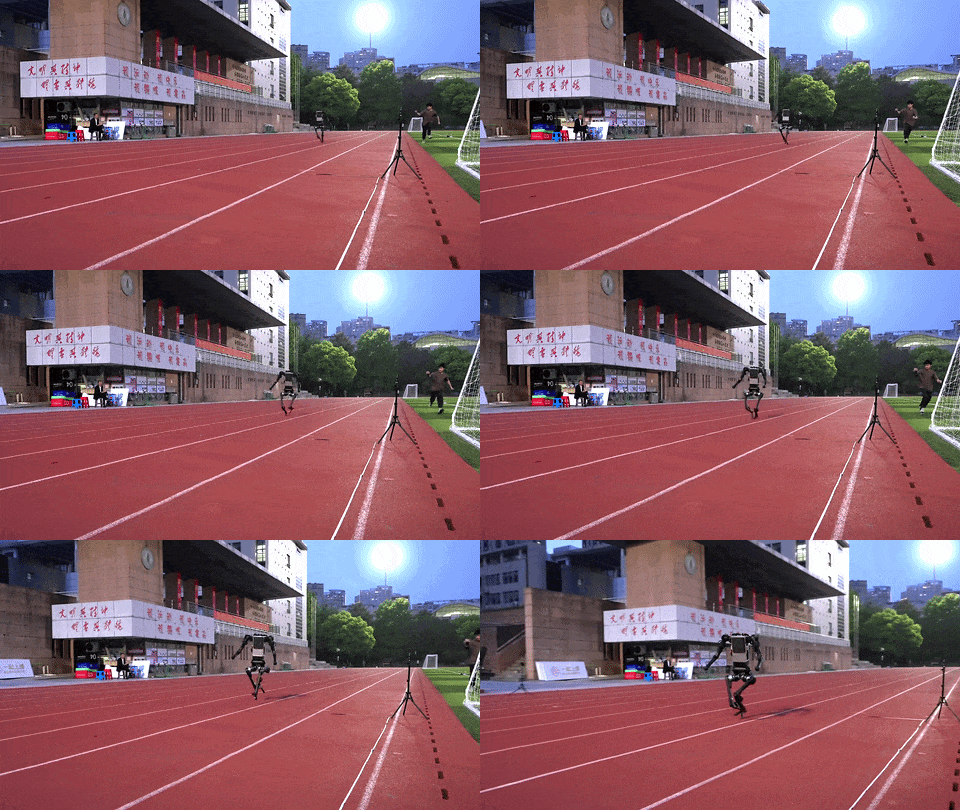
And for this year's competition, Unitree officially chose to participate. Last week, Unitree also shared a video of its H1 robot running, with the H1 reaching a top speed of ten meters per second.
After the video was published, many people said that there would be no suspense about this year's champion. However, competitions are never decided until the very last moment, and with the rapid development of the industry over the past year, there is no shortage of experts in the field of robotics. The champion last year was Tiangong Ultra; who will take the crown this year?