
6-Month Funding of 2 Billion RMB Makes This Company the Youngest Unicorn in Embodied AI
Recently, Embodied AI company Zhijian Dynamics announced that it has completed five rounds of financing in less than six months, raising a total of 2 billion RMB, making it the youngest unicorn in the Embodied AI sector.
In terms of the investor lineup, financial investors include Yuancheng Capital, BlueRun Ventures, Sequoia China, Legend Capital, CAS Starlight, and GaoRong Venture Capital; strategic investors are Tencent and Alibaba Group. The latest round of financing was advised by Source Code Capital as the financial advisor.
The funds raised will be comprehensively invested in training foundation models, body R&D and iteration, data collection, and core algorithm R&D, accelerating the large-scale application of Embodied AI technology across multiple scenarios.
As a company established in late July 2025, there were few public news reports about Zhijian Dynamics in the preceding half-year.

However, behind it stands a core founding team with expertise in full-stack technology R&D and large-scale mass production delivery, which is the key logic for capital's continuous injections over the past six months.
Public information shows that Zhijian Dynamics CEO Jia Peng (pictured below) is the former head of intelligent driving technology R&D at Li Auto, Chairman Wang Kai is the former CTO of Li Auto, and COO Wang Jiajia is the former head of intelligent driving mass production at Li Auto.
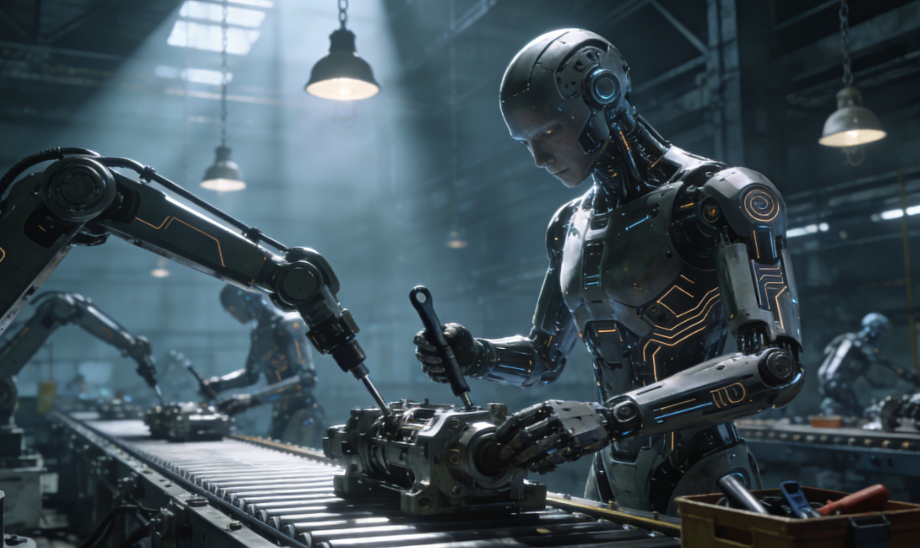
Notably, the automotive industry background of the company's core team has also determined the strategic direction of Zhiji Dynamics. In terms of application scenarios, Zhiji Dynamics follows a progressive iterative path from closed to semi-open and then fully open environments, taking an early lead in closed scenarios such as factory workshops, supermarkets, and logistics.
It is reported that Zhiji Dynamics' first generation of self-developed robotic bodies have undergone small-batch production and initiated PoC (Proof of Concept) validation.
Focusing on core scenarios such as "mass production, entering factories, and performing tasks" aligns highly with current capital expectations for scaled delivery in the second half of the Embodied AI sector.
Aiming for real-world scenario implementation, technically, Zhiji Dynamics has developed an integrated model combining World Models and VLA (Vision-Language-Action). Through a unified Transformer, it achieves joint modeling, understanding, and generative prediction of language logic, visual semantics, 3D spatial structures, and robot states. This approach realizes a higher-capacity model architecture while reducing manual design efforts.
So far, Zhiji Dynamics has launched:
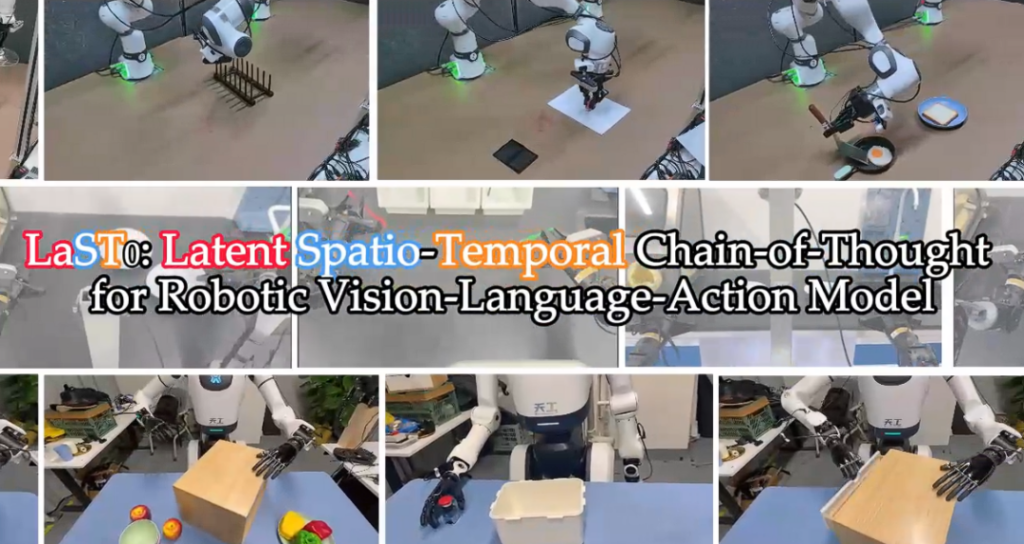
- LaST₀ Foundation Model: Integrates the World Model's understanding and prediction of the physical world with the fast and slow thinking mechanisms of VLA, enhancing efficient reasoning capabilities regarding dynamic physical worlds, enabling robots to "think quickly while moving";
- ManualVLA Long-Horizon Task Model: Building on the LaST₀ foundation, ManualVLA focuses on long-horizon tasks, allowing the model to automatically generate multimodal "operation manuals" similar to those used by humans starting from target states, addressing how robots should "think clearly before acting";
- TwinRL Real-Robot Reinforcement Learning Framework: TwinRL expands the exploration space for real-robot reinforcement learning through digital twins. On multiple tasks, robots can achieve a 100% success rate in desktop areas in less than 20 minutes.
Furthermore, in terms of learning paradigms, Zhiji Dynamics recently proposed a "Human data is all you need" robotic learning paradigm, which has been validated as applicable to various dexterous manipulation tasks (including grippers and various dexterous hands).
During the pre-training phase, massive operation data is efficiently collected via human hands to enhance the model's generalization capabilities; in the downstream task phase, human demonstrations enable rapid task data collection, expanding the task exploration space and improving execution accuracy; during the post-training phase, humans participate in post-training through real-time guidance, enabling robots to achieve efficient online learning and continuous capability enhancement.
Meanwhile, by deploying on-device and embedding additional computing power, shadow mode enables on-device training and testing/validation of models under user scenarios.
Through this paradigm, ZhiJin Dynamics can effectively improve data universality and reusability, creating a closed-loop system for efficient data collection, training, testing/validation, and deployment.