
Opening Doors, Making Beds, and Nodding: Figure Turns Two Robots into 'Colleagues'
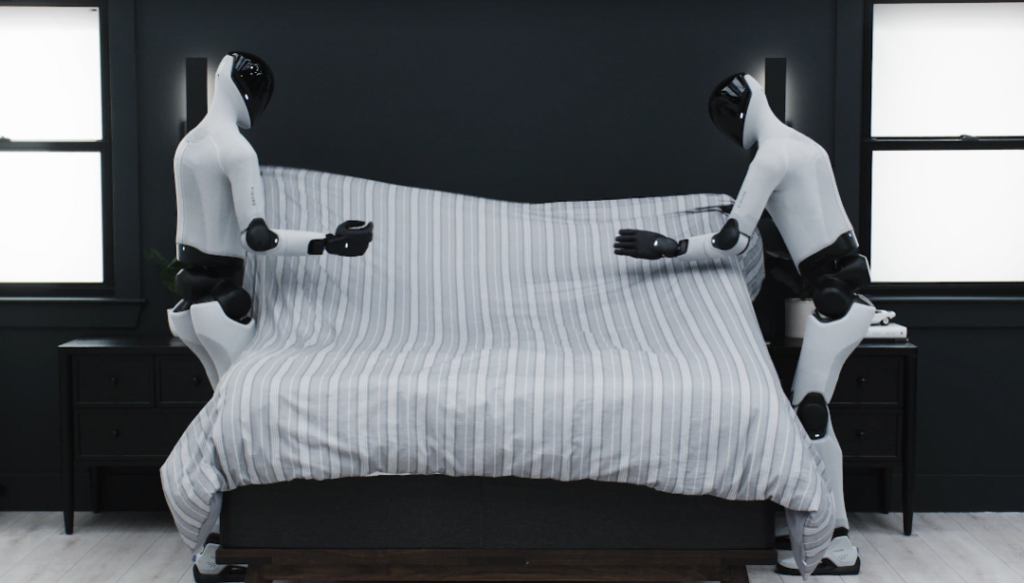
Figure is no longer content with showcasing the capabilities of a single robot; it is now targeting dual-robot collaborative operations.
In Figure's latest model progress update, the Figure 03 robot, equipped with the Helix 02 model, has begun entering bedroom scenarios to complete long-sequence tasks such as folding clothes, making beds, and organizing clutter.
Compared to previous tasks performed in kitchens and living rooms, the biggest difference this time is the deployment of two robots to demonstrate their ability to cooperate with each other.
In the bedroom, the two robots can dynamically allocate space, avoid each other's movement paths, and continue collaborating within the same environment.
Even Figure founder Brett Adcock couldn't help but boast: 'To be honest, they do a better job at this than most humans.'

In home scenarios, even when robots have the capability to enter homes and perform tasks, it is unlikely that many people would buy two units directly. After all, more robots mean occupying more space, and centralized management also presents challenges.
Therefore, the main significance of Figure's latest demo lies in showcasing the robots' collaborative operation capabilities, laying the groundwork for future multi-robot collaboration in scenarios such as factories, logistics, and service industries.

How Does Helix 02 Operate in the Bedroom?
In this bedroom scenario, Figure once again emphasized that the core algorithm of the Helix 02 model remains unchanged; by adding new data, it has achieved a comprehensive integration of mobility, dexterous manipulation, and perception.
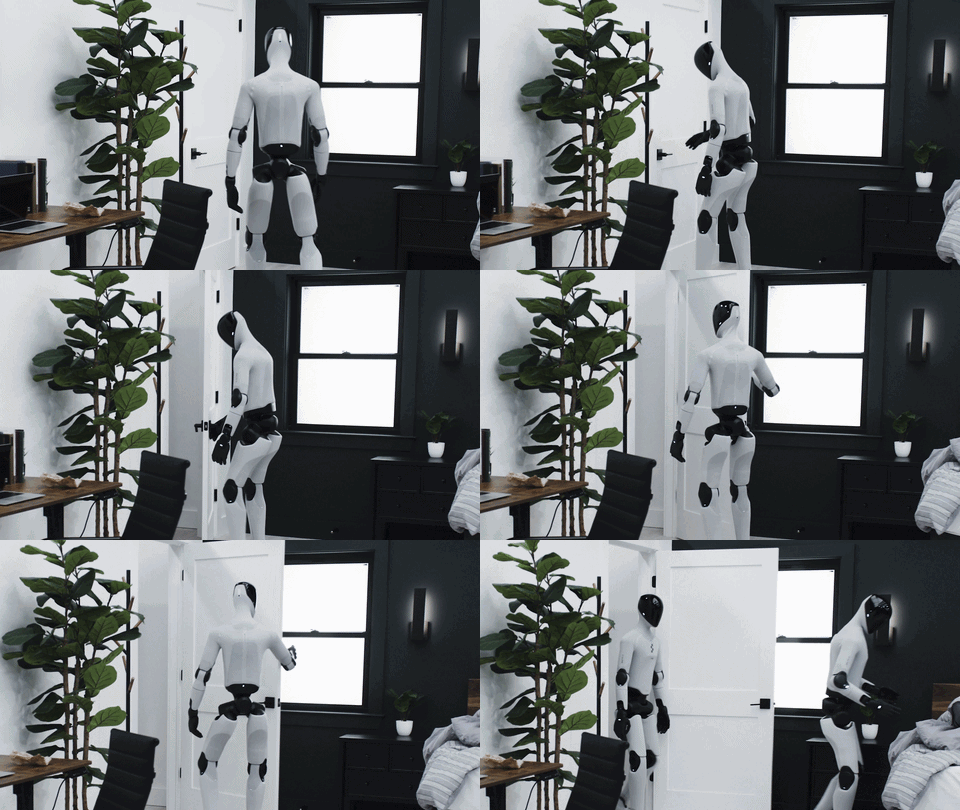
In the video, mobile operations account for a significant proportion. While opening the door for the other robot, the Figure 03 utilizes whole-body coordination: after pressing the door handle, the robot pulls the door inward while its body moves in sync with the opening of the bedroom door.
After entering the room, the other robot uses whole-body coordinated effort, leveraging the force generated by foot movement to push the chair underneath the table.
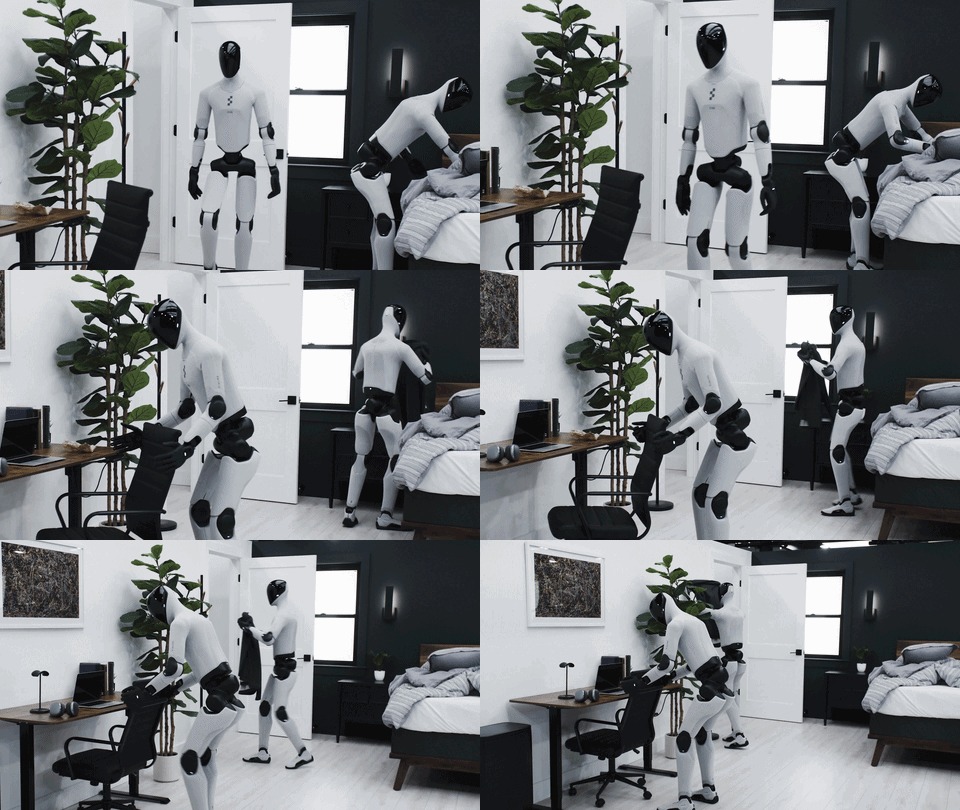
It is worth mentioning that during the chair-pushing operation, the robot did not rigidly push with its hands. This demonstrates the capability brought by Helix 02's integration into the System 0 layer, which handles balance, contact, and full-body coordination.
This same capability was evident when disposing of trash. After picking up debris from the desk, the robot located a trash can on one side, stepped on the foot pedal to open the lid, and tossed the trash inside, all while maintaining its body balance.
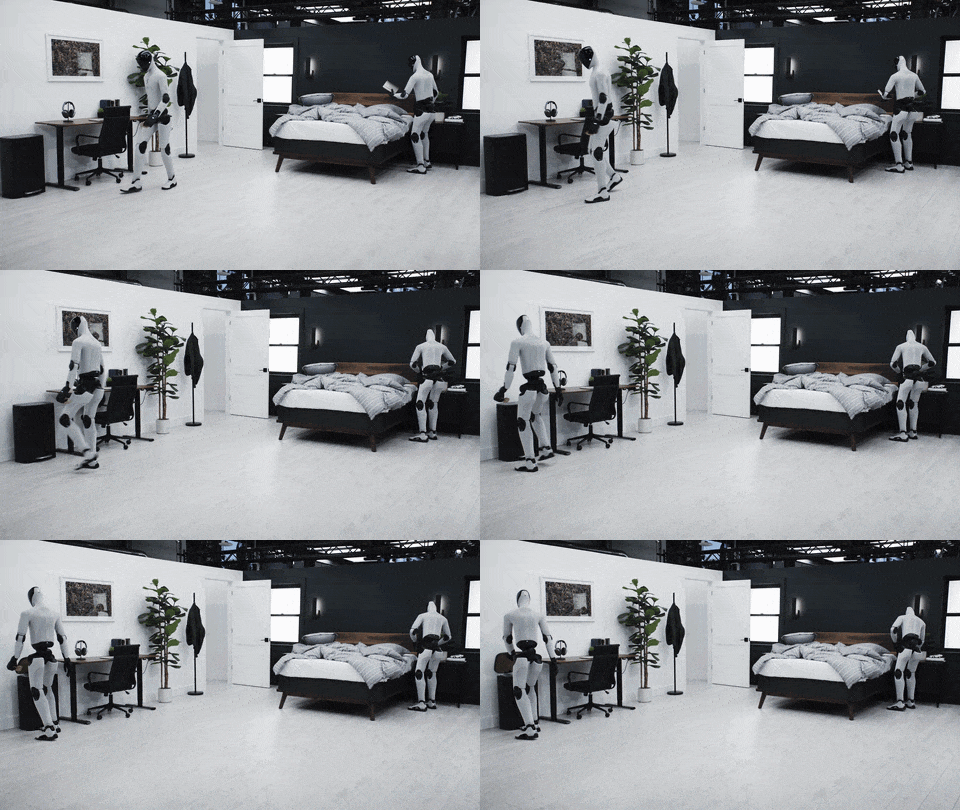
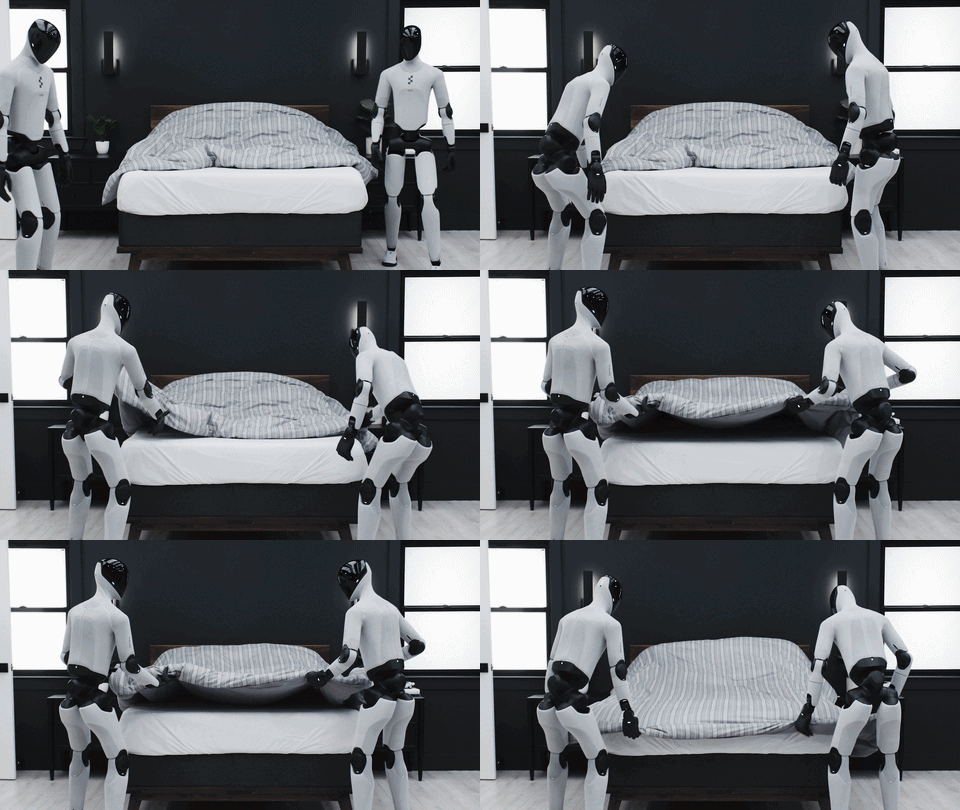
Next, in the most critical task of making the bed within the bedroom scenario, the two robots began working together. The robot on the right grabbed one corner of the duvet and chose to wait. After the robot on the left completed the same step, it nodded to signal 'OK,' after which both robots spread the upper half of the duvet over the head of the bed.
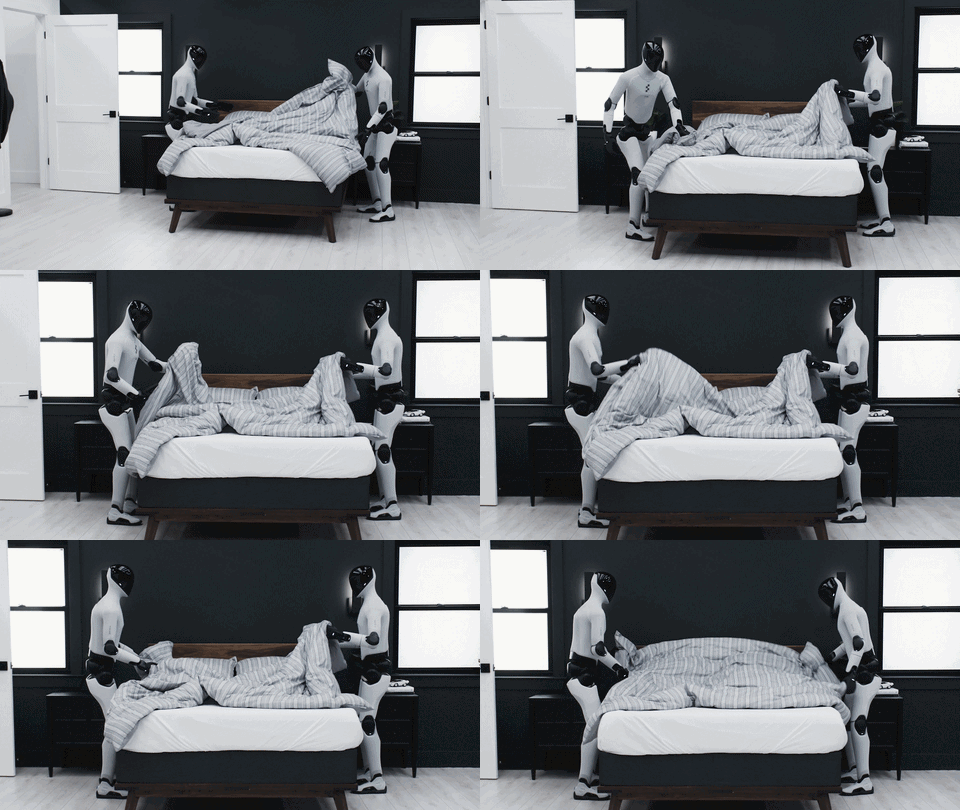
The two robots then moved to the foot of the bed and used the same method to grab and spread the lower two corners of the duvet. This time, the robot on the right nodded to signal.
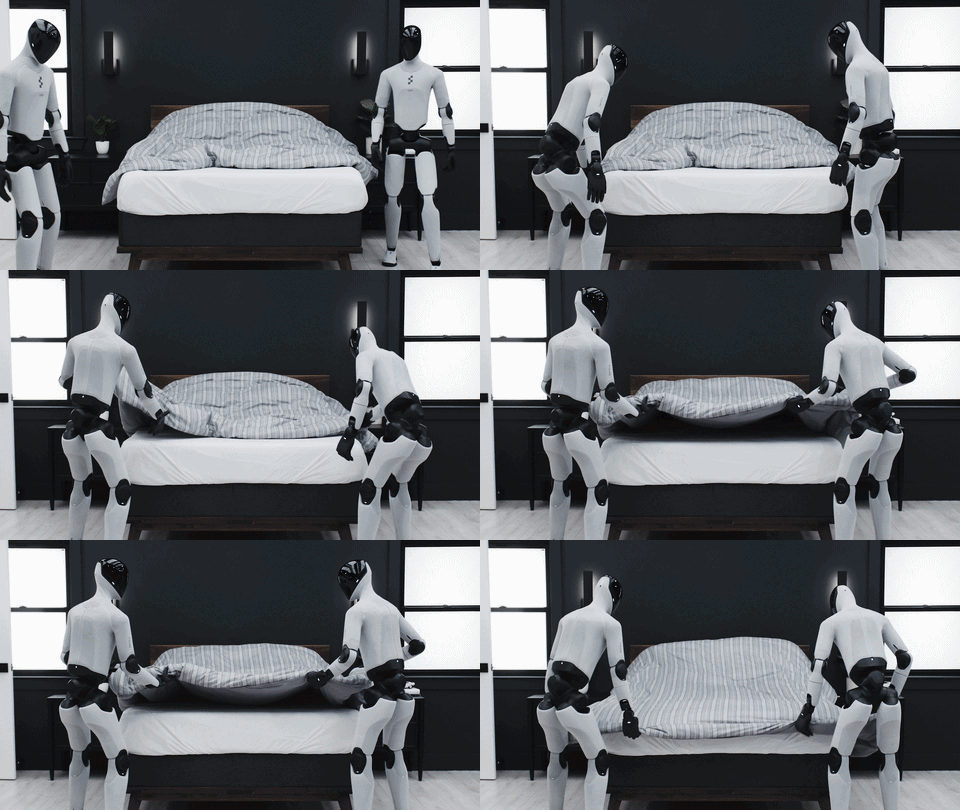
After fully spreading out, the robot returned to the head of the bed and folded the duvet together.
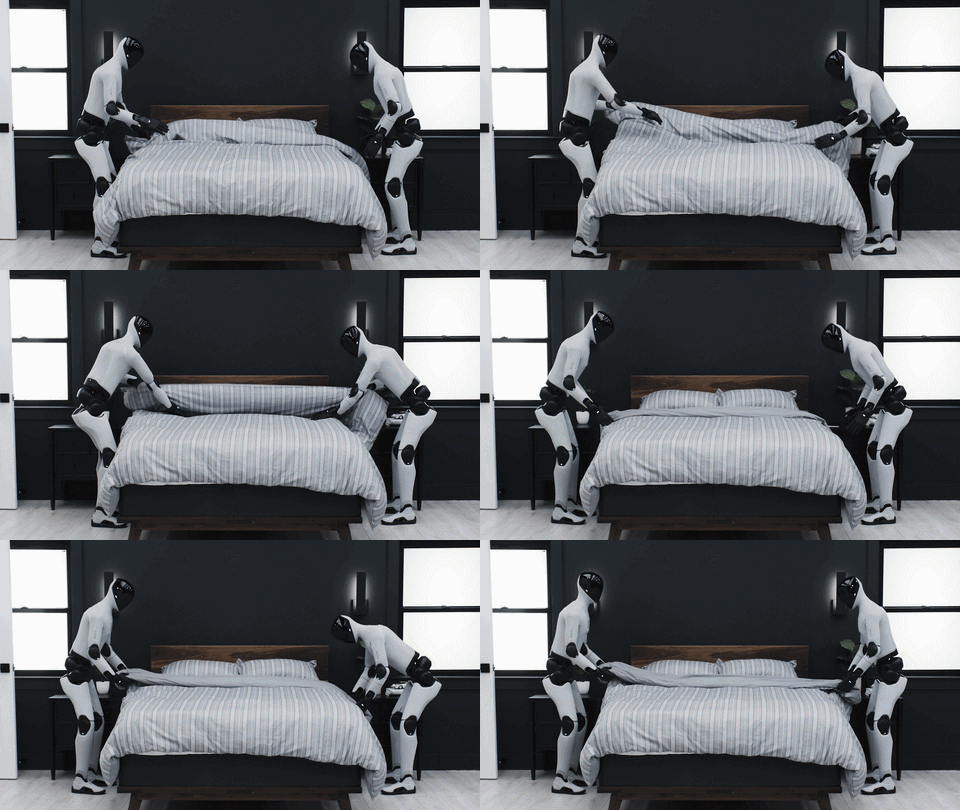
Throughout the bedroom tidying process, Figure 03 demonstrated highly human-like movements, and its dual-robot collaboration capabilities were truly impressive. This collaborative ability marks a significant starting point for what Figure considers a key future development trend.

What Makes Dual-Robot Collaboration Challenging?
However, more noteworthy than the bedroom tidying itself is that Figure deployed two robots to work together this time.
Dual-robot collaboration is actually considerably more difficult than single-robot operation. While a single robot only needs to understand its environment, a dual-robot system must not only comprehend the environment but also continuously interpret the other robot in real-time.
This includes understanding what the other robot is currently doing, ensuring their actions do not conflict, etc. These issues are further amplified in narrow spaces like a bedroom.
As the second robot enters the same space, the environment becomes "alive." Every second, the other robot reshapes the current situation. The duvet's position changes, and previously planned grasp points vanish. Each action of the first robot presents a new challenge to the second.
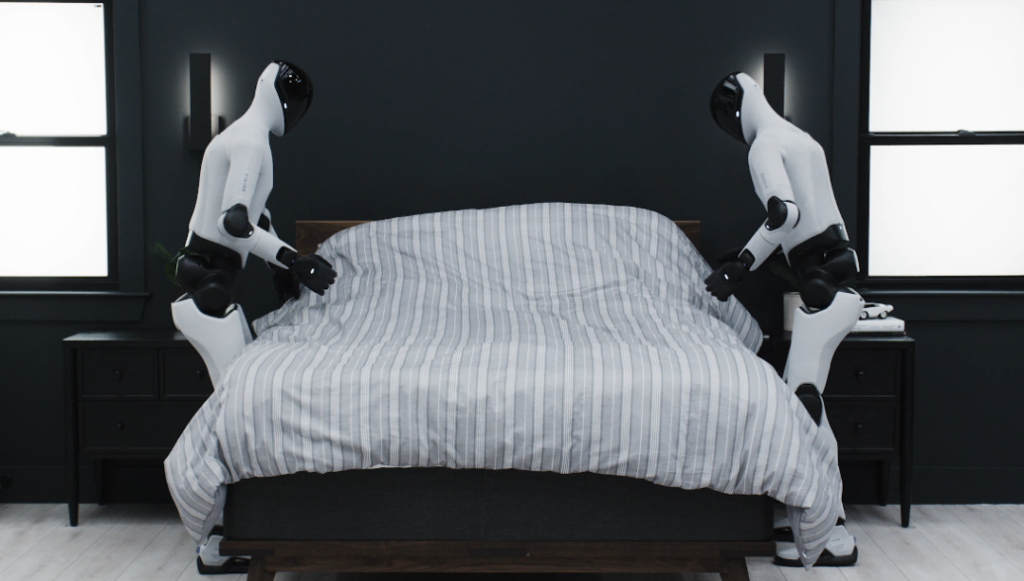
In the video task, the two robots must infer each other's intentions from their physical movements, performing dozens of predictions and corrections per second.
Moreover, since the duvet is soft and its shape is not fixed, both robots must synchronously predict each other's next moves when determining their own grasp points, continuously updating these predictions as the fabric stretches, drapes, and slides.
Furthermore, during the approximately two-minute bedroom tidying process, Figure's collaborative speed demonstrated the potential for future work in specific real-world scenarios.
For robots, the true difficulty of collaboration lies in multiple continuously moving agents achieving real-time coordination within a shared space. This variability represents an exponential increase compared to single-robot operations.
However, most tasks in the real world are never solo efforts. Whether in factories, warehouses, or home services, true efficiency gains often come from collaboration.

Final Thoughts
For this demo, Figure emphasized a key point: the ability of 'intelligent humanoid robots to coordinate with each other to achieve common goals in human environments' is an important future development trend for robotics.
This aligns closely with Figure's progress in mass production and deployment. Recently, Figure announced it has delivered over 350 Figure 03 robots.
Furthermore, production capacity increased by a factor of 24 in less than 120 days; previously, the factory could produce only one unit per day, but now it can produce one unit per hour.

As production enters a rapid scaling phase, considering what large-scale deployment should look like becomes a natural progression.
Compared to single-robot operation, when multiple robots begin to share environments, tasks, and decision-making, the complexity of the entire system suddenly increases. This involves not only perception, control, and motion planning, but also task decomposition, intent understanding, dynamic博弈 (game theory), and collaborative decision-making.
Therefore, as the global robotics industry accelerates efforts toward mass deployment, the next challenge naturally comes to the forefront: how robots can transition from individual intelligence to swarm intelligence.