
How GENE-26.5 Teaches Robots to Crack Eggs, Slice Tomatoes, and Play Piano: The Secret Isn't Just in the Model
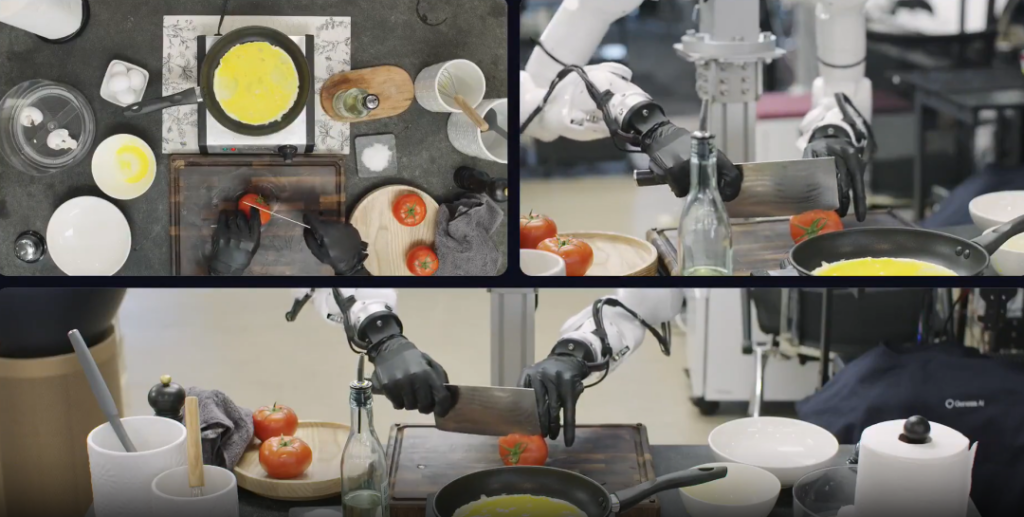
After a year of development, Silicon Valley embodied AI startup Genesis AI has finally released its first robotic foundation model system, GENE-26.5. Under this system, robots can solve Rubik's cubes independently, crack eggs, and slice tomatoes, demonstrating dexterous manipulation capabilities unlike anything seen before.
While many manufacturers previously focused on showcasing single-point model capabilities upon release, what is most noteworthy about Genesis AI this time is treating "robotic manipulation" as a complete engineering system.
In recent years, many teams in the industry have favored a model-centric approach: the larger the model, the more data, and the stronger the generalization, the smarter the robot would naturally become.
However, Genesis AI believes that relying solely on models is insufficient to solve dexterous manipulation. They argue that it is the entire full-stack system that truly determines the upper limit.
Therefore, the GENE-26.5 released this time is essentially a comprehensive system. It incorporates their full-stack understanding across foundational models, simulation systems, dexterous hands, data collection gloves, control middleware, real-time control systems, and multimodal training frameworks.
As a robotics company founded in late 2024, Genesis AI secured $105 million in funding in July last year, setting a record for the largest seed round in the embodied AI sector in Silicon Valley at that time.
Over this nearly year-long period, the latest achievement, GENE-26.5, has prompted the industry to re-examine a question: Is robotics closer to "human-level operational capability" than we imagined?

What Makes GENE-26.5’s Dexterous Manipulation Different?
When people think of what robots might do around the house, cooking often comes to mind first—but it’s not easy for robots. In complex, long-horizon tasks, a robot must complete dozens of sub-tasks, which heavily tests its coordination and planning capabilities.
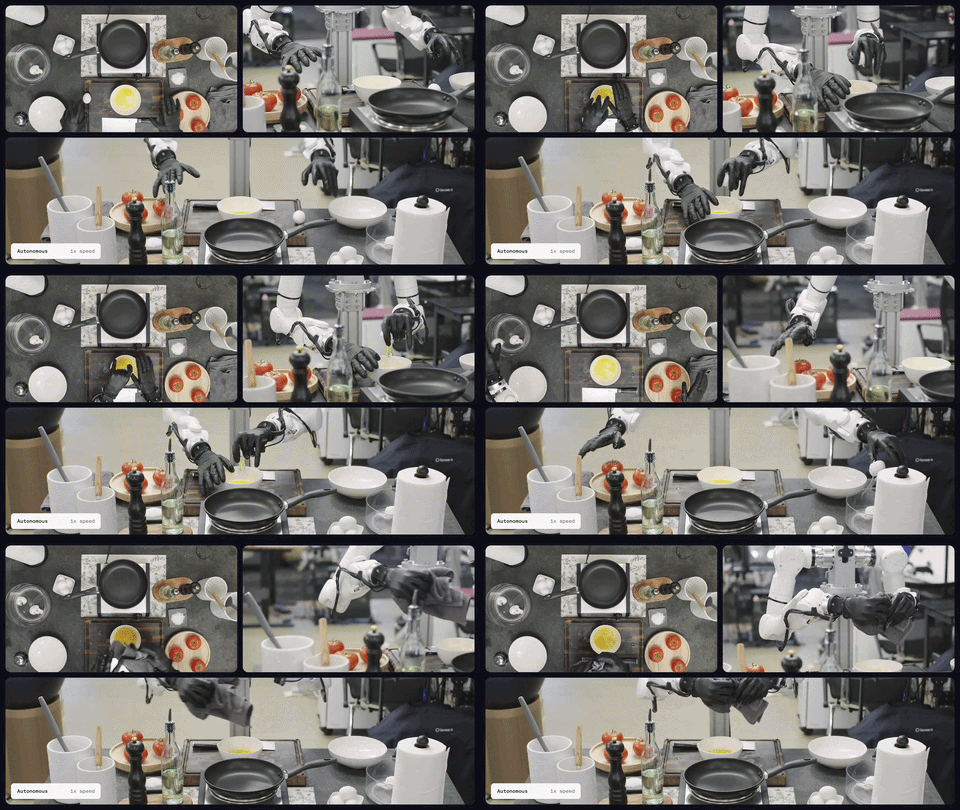
One of the core achievements brought by this version of GENE-26.5 is cooking. Over a roughly four-minute long-horizon task, the cooking logic demonstrated by the robot closely resembles that of humans in many cases.
After cracking an egg with one hand, the robot casually wipes its hands with a nearby towel to prevent egg liquid from contaminating other ingredients.
When cutting a tomato, the robot uses one hand to hold the tomato steady while using the other to wield the knife. After discarding the excess stem, it makes the first cut down the middle, then reverses direction to dice the tomato. Finally, it scoops up the diced pieces onto the blade and pours them into the pot.
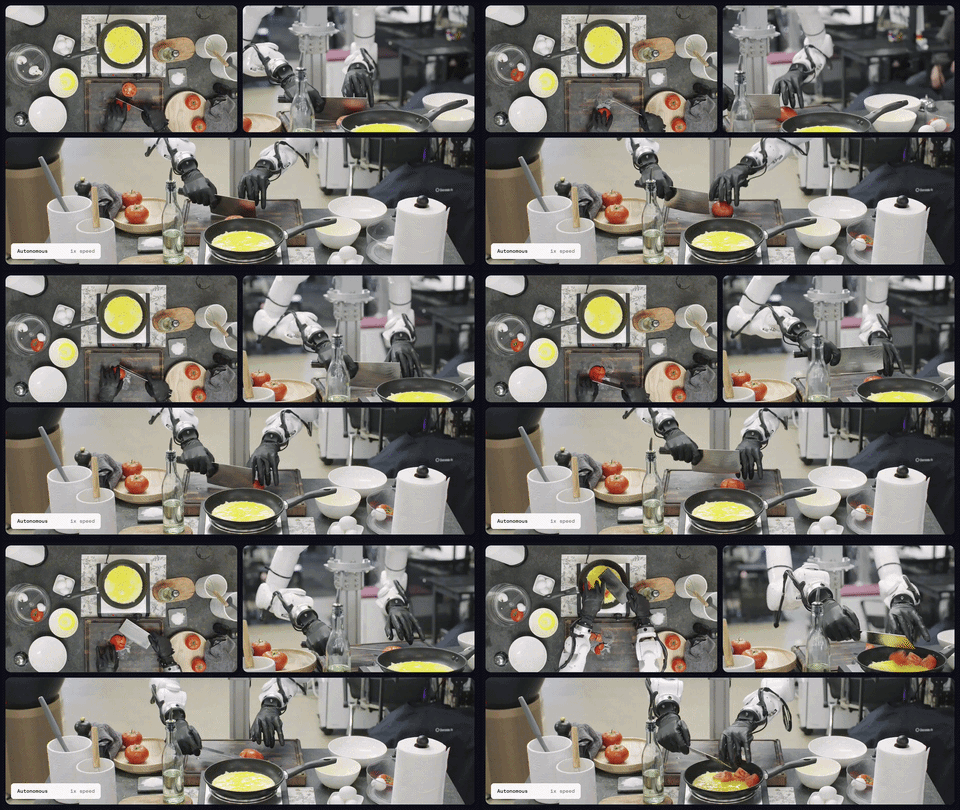
The robot's logic for performing tasks closely resembles that of a human who frequently cooks, and the entire sequence is shown at 1x speed. At this normal pace, the robot's movements no longer appear slow or clumsy.
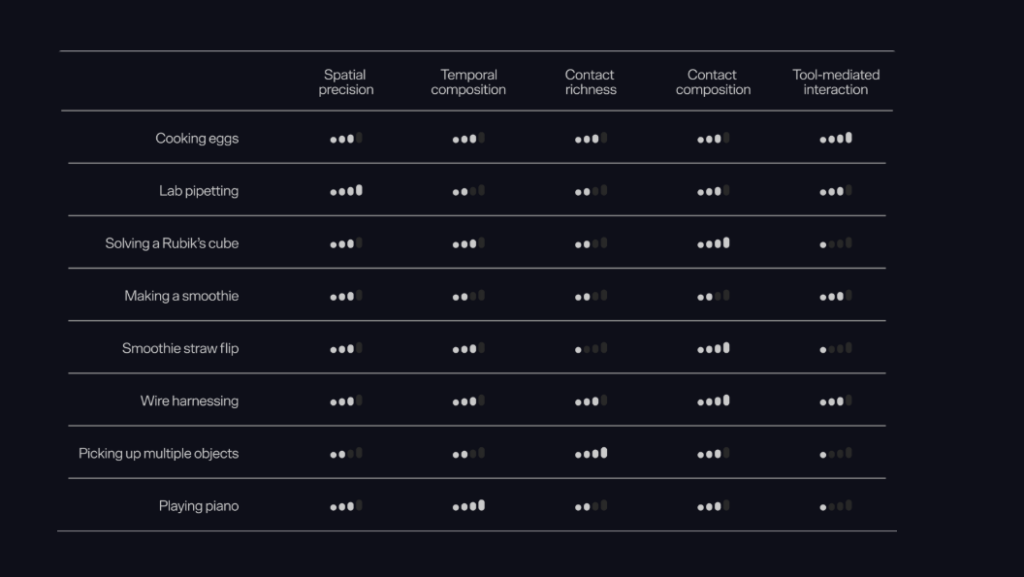
In terms of two-handed coordination, GENE-26.5 also demonstrated the skill of solving a Rubik's Cube with both hands.
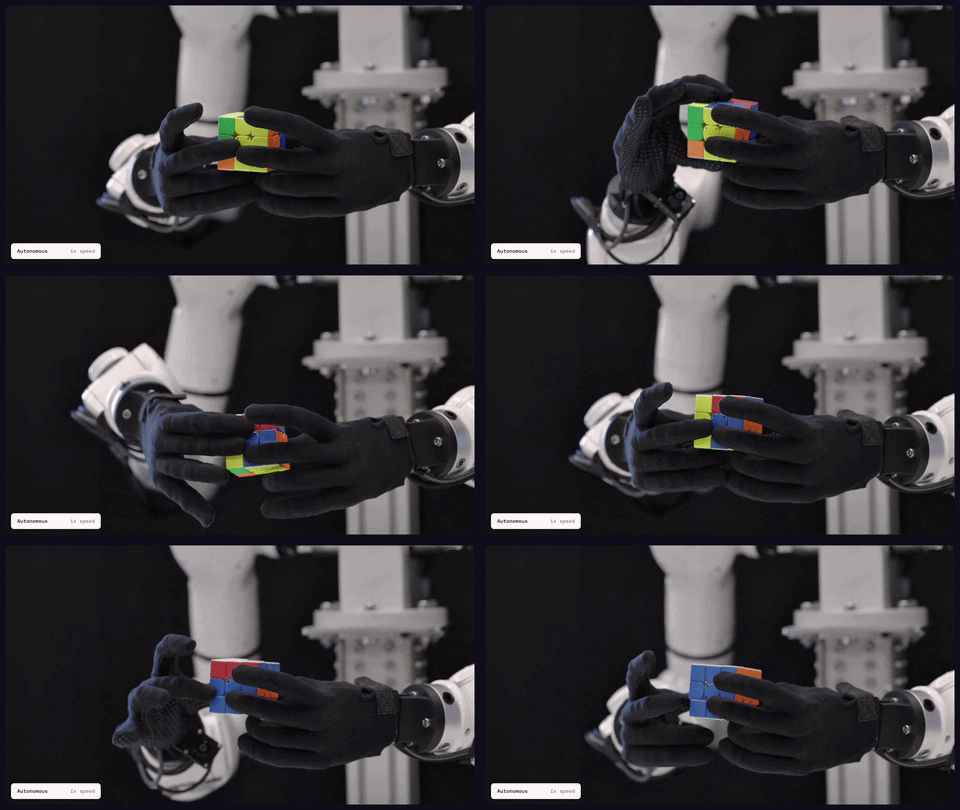
Unlike OpenAI's single-handed solution in 2019, GENE-26.5 focuses on using a general-purpose model to handle problems rather than specialized strategies.
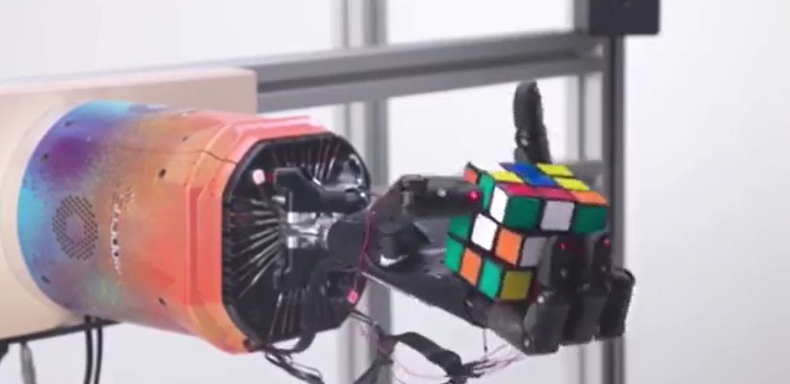
Furthermore, two-handed cooperative manipulation requires extremely high levels of agility and precision from dexterous hands; therefore, many manufacturers prefer to use cube-solving demonstrations to showcase their new dexterous hand products.
In laboratory pipetting, a task with current commercialization potential, the robot can complete a series of fine operational procedures such as picking up the pipette, attaching the tip, transferring liquids, and sealing samples. This also tests its ability to use precise tools.
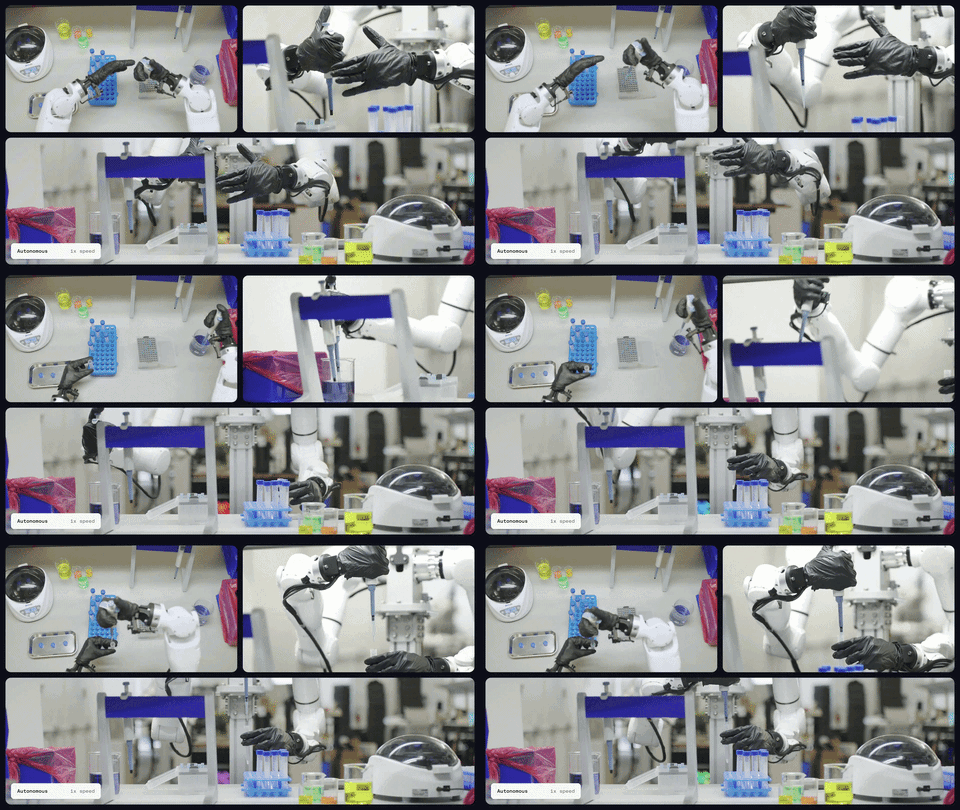
If this tedious and highly repetitive task is standardized effectively, it represents one of the best entry points for dexterous robots to transition from demos to industrial applications.
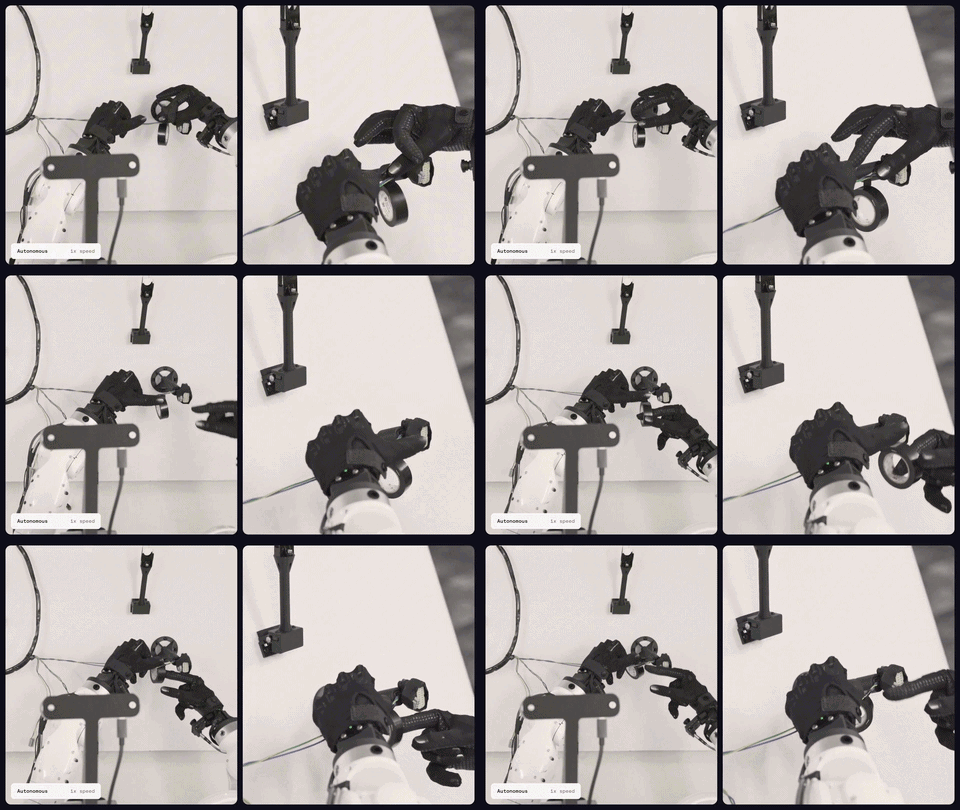
Additionally, in industrial wire harness organization tasks, robots can leverage their dexterous hands: one hand assists while the other wraps around, securing the harness with tape.
Notably, the team also had the robot play the piano piece 'Rush E.' By reading sheet music, the robot precisely positioned its fingers on the corresponding keys while maintaining a fast pace.
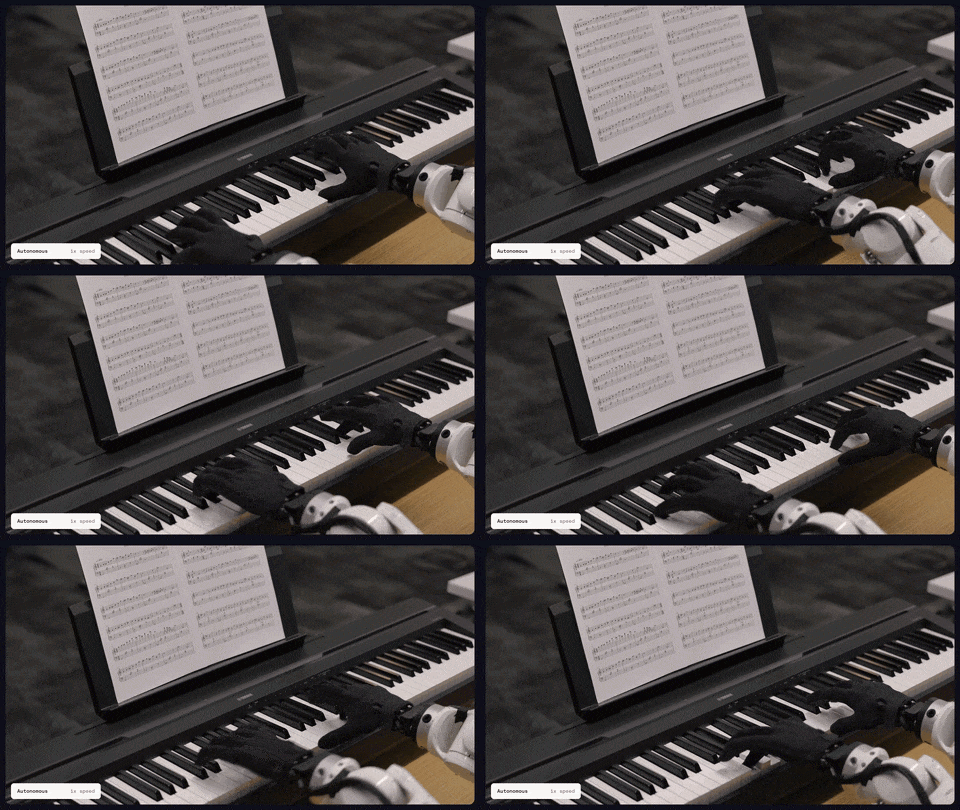
Judging by the video still playing at 1x speed, Genesis demonstrates considerable confidence in its robots' capabilities.
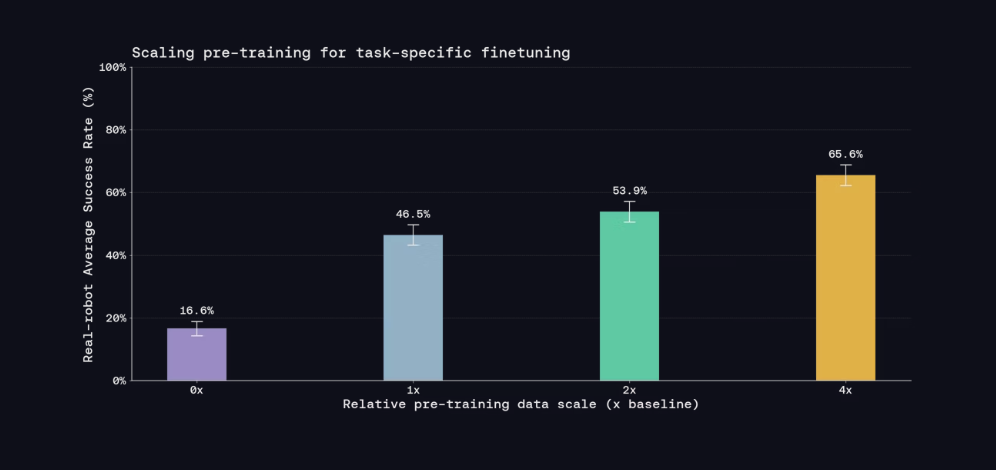
Notably, for many tasks demonstrated, the team used less than one hour of task-specific robot data, and for skills lasting under 20 seconds, fewer than 200 trajectories were sufficient.
These achievements rely on Genesis's full-stack capabilities, which constitute the most critical component of GENE-26.5.

The Core Is Not Just the Model
One of Genesis's core perspectives is that robotic manipulation is a systems problem, not purely an AI problem.
This differs from the 'model-centric' approach prevalent in much of the industry.
The team believes that any bottleneck among the five layers—sensors, actuators, control, data, and models—will hinder overall performance. More importantly, many problems that appear to require model-level solutions can be addressed more fundamentally at other layers.
Thus, at the full-stack level, Genesis adheres to the following five foundations:
- Bridging the morphological gap by directly aligning hardware with human hands at the physical level, rather than compensating in the model.
- High-fidelity field data, where data collection is integrated into real workflows instead of disrupting them.
- Low-latency control to eliminate discrepancies between control intent and actual execution.
- Native robot models supporting joint modeling of language, vision, proprioception, touch, and action.
- Scalable evaluation through dual tracks of simulation and the real world, enabling rapid iteration.
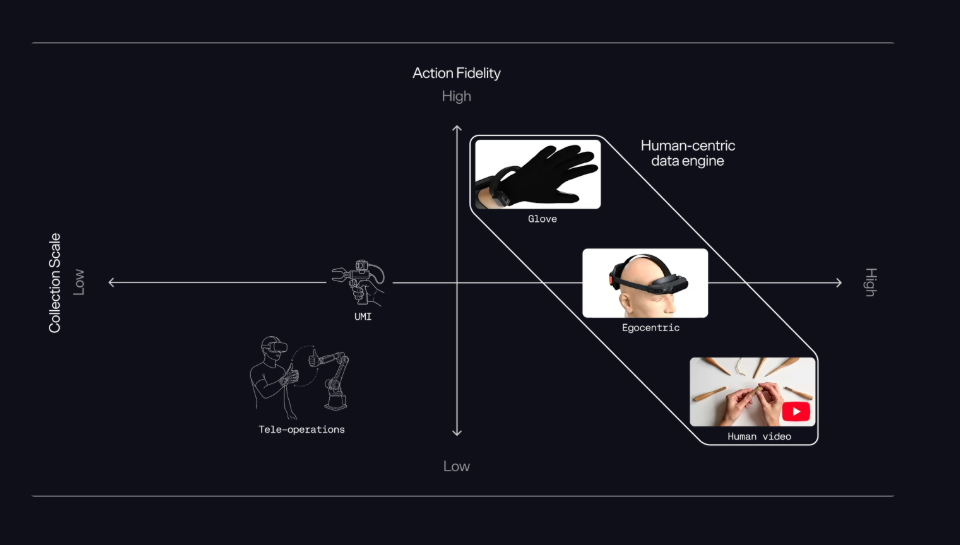
In this context, Genesis adheres to a human-centric data approach, based on the team's assessment that the biggest challenge for robots lies in the extreme scarcity of high-quality dexterous manipulation data.
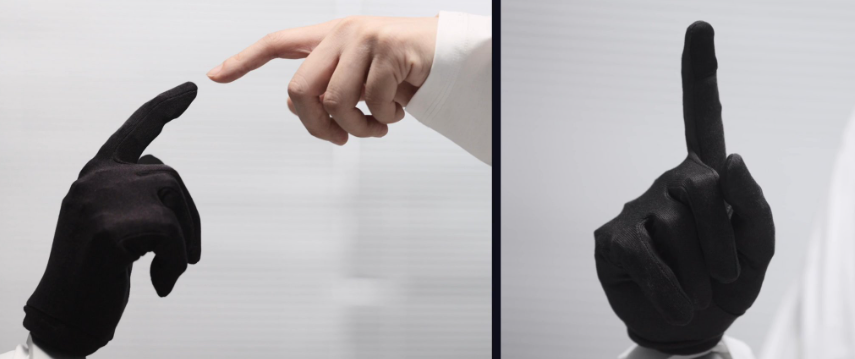
When many teleoperation and low-degree-of-freedom operation datasets failed to meet their needs, the team directly redesigned a data pipeline from human to robot. The core components include:
- Genesis Hand 1.0 bionic dexterous hand: With a 1:1 scale to the human hand, it features 20 active, back-drivable degrees of freedom and soft material covering the palm and fingers. This design aims to minimize physical differences and reduce information loss inherent in mapping.
- Data collection gloves: The team developed EMF + tactile sensing gloves. These record hand motion trajectories while simultaneously capturing touch, force feedback, and contact states. Many operations demonstrated in the demo rely heavily on such critical data.
Vision can only observe outcomes; however, what truly determines whether an action succeeds is often force feedback. This is also a key reason why many teams are beginning to re-emphasize tactile sensing.
Based on the data hardware and collaborative partnerships, Genesis revealed that the team has already collected over 200,000 hours of cross-modal data. This includes data collected using gloves, first-person human perspectives, internet videos, and other data types.

Simulation becomes the accelerator for base model iteration
Even with scaled-up data collection solutions, training robots in the real world remains too slow. Therefore, another key layout of Genesis is a high-fidelity simulation environment.
If the data engine solves the problem of "what to feed" during training, then simulation targets the question of how well the trained results actually perform.
In the field of LLMs, the cost of evaluating a new checkpoint is extremely low; running benchmarks yields results in minutes, allowing for very high iteration frequencies. However, this is not the case for robot foundation models.
Evaluating robots in the real world often takes several minutes per task, requiring dozens or even hundreds of repetitions for each checkpoint. Each variable (lighting, object position, instruction phrasing) must be tested separately. Calculated out, evaluating a single checkpoint may require several days of human-machine labor hours.
This gap is not just an efficiency issue; it directly impacts the number of model iterations.
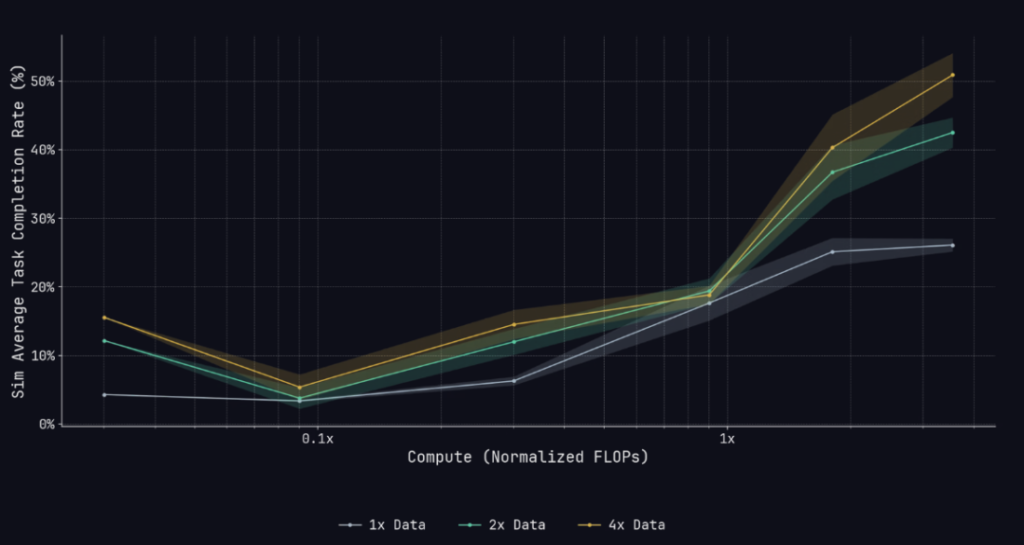
So Genesis attempts to solve the entire problem using simulation; in the scaling law chart, this corresponds to an evaluation effort of 2,700 human-machine hours. Completing this in the real world would be nearly impossible.
In simulation, these experiments cover variant combinations of hundreds of lighting conditions, backgrounds, object properties, scene layouts, and instruction phrasings, allowing for systematic probing of the model's generalization boundaries.

Control Systems Are Equally Important
Beyond models and data, another key focus brought by Genesis lies in the control layer.
Typically, when a model outputs action commands, they must pass through several layers: control middleware, PID controllers, and motor FOC drivers. Each layer introduces latency and error.
Traditional approaches train using teleoperation data, which naturally incorporates the robot's inherent latency characteristics, enabling the model to learn "expected latency." However, when Genesis aims to train using human data, this assumption fails: the training data lacks latency, while the robot's execution does, creating a distribution shift between training and deployment.
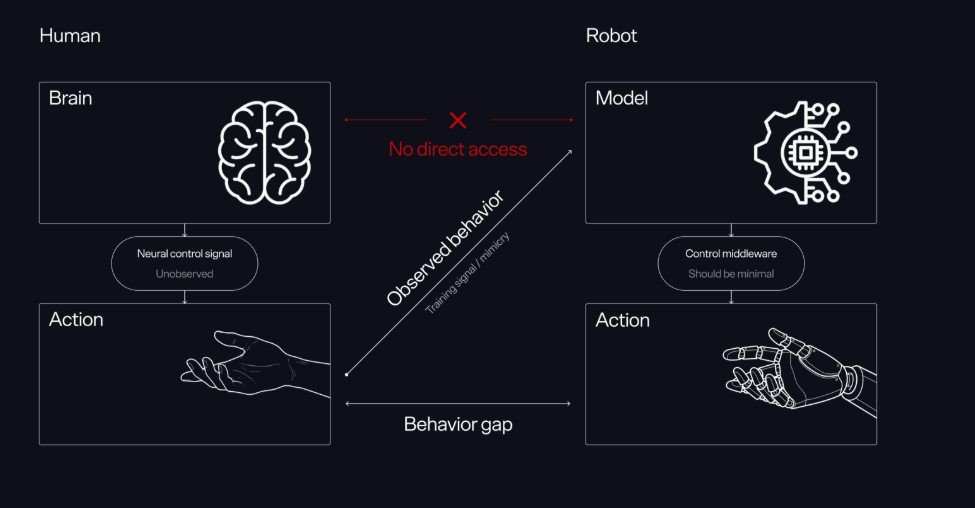
To address this situation, the team directly rewrote the robotic arm control middleware, including PREEMPT_RT, EtherCAT, real-time scheduling, 500Hz control frequency, and a custom impedance controller.
The result is that the trajectory error has been reduced from 20mm to 2mm, and the latency has been reduced from 80ms to 9ms, with a limit of three milliseconds.
These operations allow robots to finally approach "real-time contact control." Before this, the issue with many dexterous manipulation tasks was not whether they could be done, but whether they could be done in time.
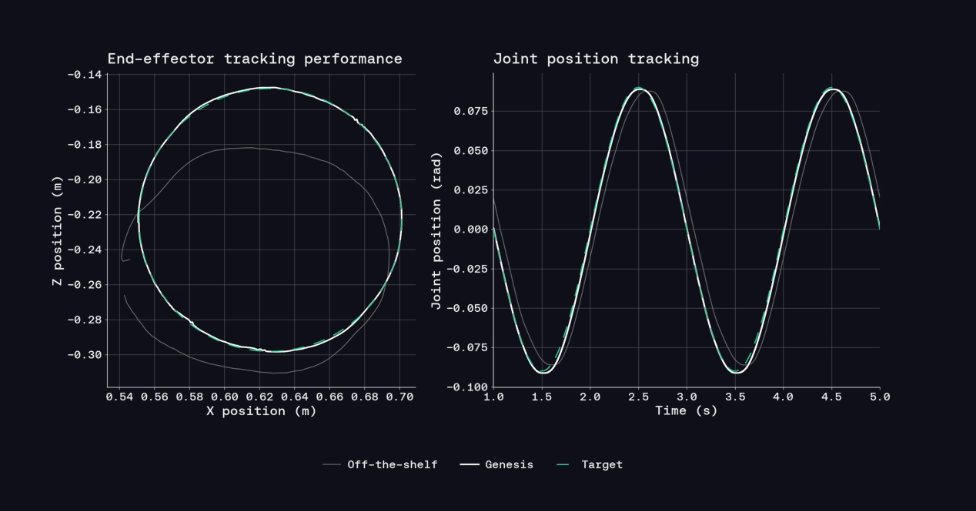
Especially in dynamic grasping, two-handed coordination, rapid contact adjustment, and compliant control, once the latency is too high, the entire movement will be distorted.
This also means that the scope of available training data is no longer limited to teleoperation data with robot dynamics noise, but can directly learn from clean human motion.

In Conclusion
The recently released GENE-26.5 by Genesis is not only stunning in its demos but, more importantly, it once again validates a key point: the robotics industry is shifting from competition based on "single-point capabilities" to competition based on "system-level capabilities."
As robots gradually enter complex real-world scenarios over the past year, it has become increasingly clear that robotics is not merely a single-module issue. Any failure in software, hardware, data, or other components can ultimately lead to task failure.
This is why leading robotics companies are increasingly converging on similar strategic paths.
As Figure's founder once emphasized, "If you're in the robotics industry but don't fully commit to solving hardware problems, you won't succeed." This reflects Figure's holistic, full-stack mindset.
On this track, everyone is unconsciously building out capability systems encompassing data engines, hardware infrastructure, and low-latency control.
The industry now recognizes that the true bottleneck for robots lies not in the upper limit of any single capability, but in whether the entire system can form a continuously iterative closed loop. The most noteworthy aspect of GENE-26.5 is precisely this trend toward full-stack integration.