

LiberAI Launches Liber-0 to Transfer Human Action Experience to Robots
By Jiang Si Qi
On November 4, physical world model startup LiberAI released its world action model, Liber-0. The model was pretrained on more than 2.2 million hours of human experience data. The team evaluated its zero-shot performance on 60 manipulation tasks proposed by GPT-6, conducting 600 test rounds across three categories of 20 tasks each, with every task repeated 10 times.
On November 4, LiberAI, a startup focused on physical world models, officially released its world action model, Liber-0.
According to official information, Liber-0 was pre-trained on more than 2.2 million hours of human experience data. The team conducted a zero-shot evaluation using 60 manipulation tasks proposed by GPT-6. These tasks were divided into three categories of 20 tasks each, with each task tested 10 times, for a total of 600 trials. The weight checkpoints used for testing were not specifically trained on robot demonstration data exclusive to these target tasks.
The overall success rate reached 36.0%: 63.5% for pick-and-place (PnP), 34.0% for short non-pick-and-place (short non-PnP), and 10.5% for multi-step, high-difficulty non-PnP tasks.
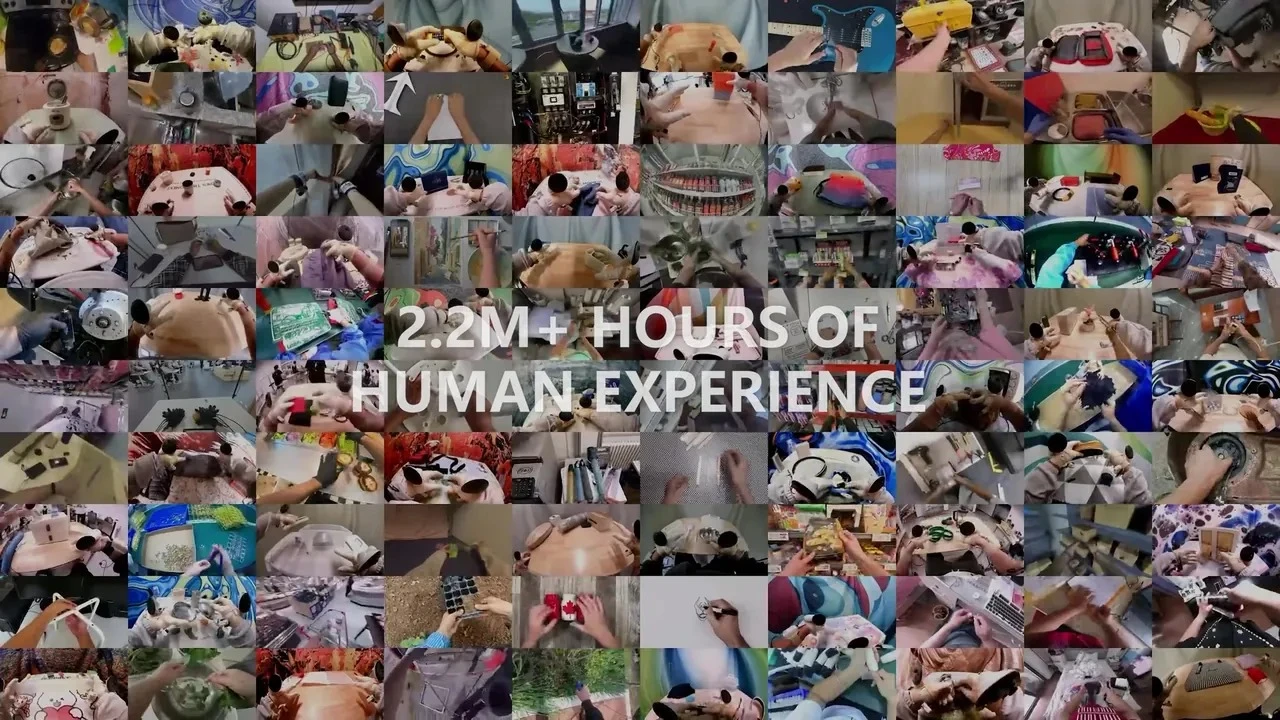
Liber-0 is a world action model (WAM) built on a Mixture-of-Transformers architecture, comprising multiple expert modules for language, vision, and action. It jointly predicts future visual frames and actions while introducing a unified embodiment representation to bridge geometric and kinematic differences between humans and robots, thereby enabling action transfer. During training, the model is jointly trained on semantic tasks such as visual question answering, image segmentation, image editing, and video understanding. It can also interface with reasoning agents, such as GPT-6 Astra, which handle intermediate goal planning.
For the same 60 tasks, using GPT-6 Astra alone as the robot policy (Astra-only) as a baseline yielded success rates of 8.3%, 5.0%, and 1.7% for pick-and-place, short non-pick-and-place, and multi-step high-difficulty non-pick-and-place tasks, respectively. This baseline involved three trials per task group, totaling 180 trials. According to official data, Astra's average inference time per decision was 87.3 seconds, and the average end-to-end time to successfully complete a task was 17.8 minutes.
Its pre-training data falls into five main categories: data collected by LiberSense data gloves, cross-embodiment robot data, the public first-person dataset OpenEgo, the externally collected VendorEgo dataset, and internet human video data, supplemented by visual understanding data for joint training. Pre-training proceeds in three stages: first, general visual prediction; second, joint learning of world and action modeling; and finally, increasing the sampling weights for glove and teleoperation data to specifically refine manipulation capabilities. Official scaling experiments also revealed that after expanding the internet human data to 2 million hours, the progress scores (0–100) for pick-and-place and non-pick-and-place reached only 64.6 and 51.2, respectively, still underperforming the version trained on just 10,000 hours of glove data.
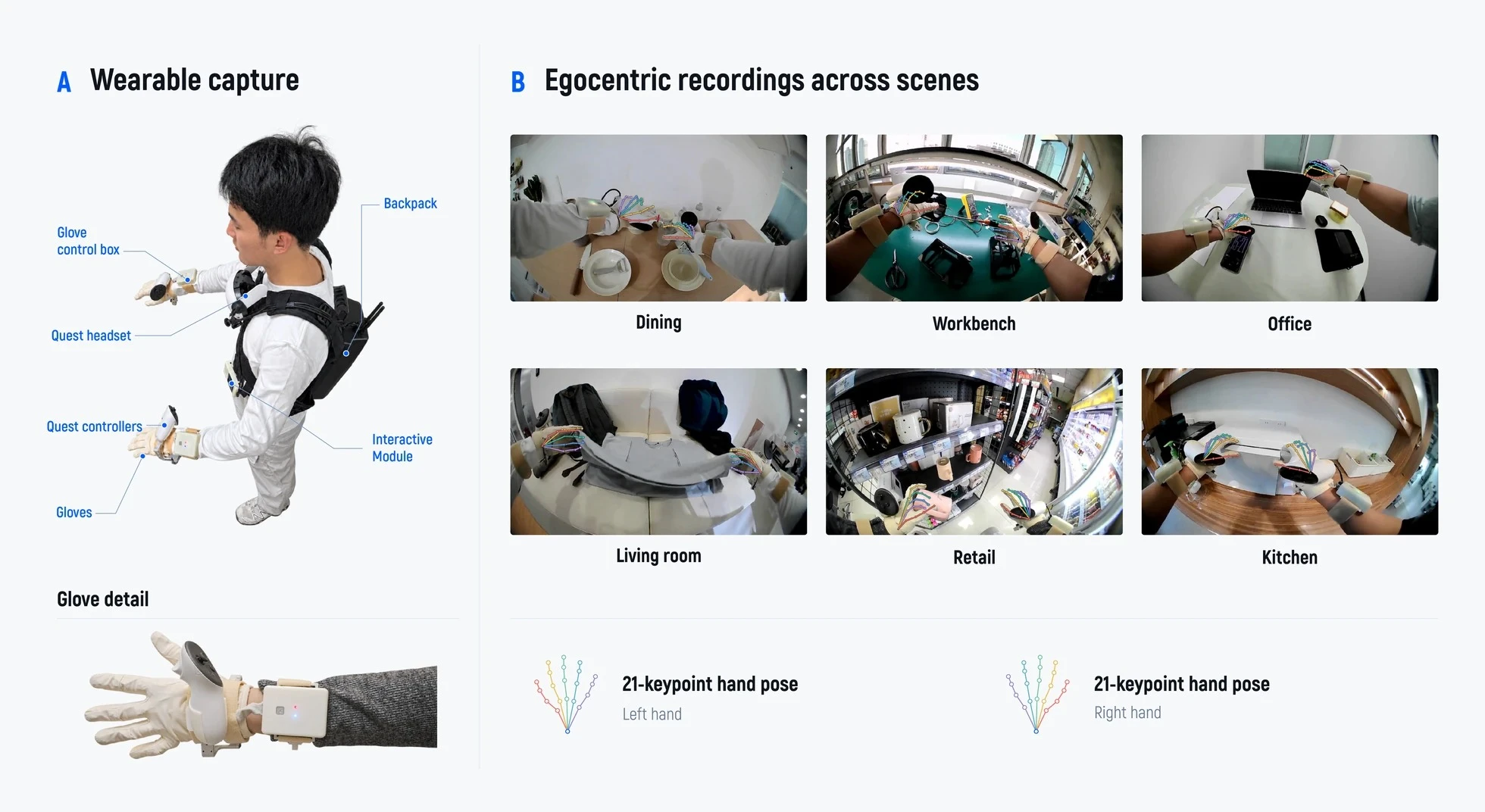
The accompanying LiberSense data glove is just 0.3 mm thick, weighs 131 g, and features a skin-tone appearance. It can synchronously capture hand pose trajectories, an egocentric view, and feeds from two wrist-mounted cameras, enabling independent action data collection without requiring a paired robot. According to Leifeng.com, these gloves have already been deployed at scale to collect data in real-world work and daily life scenarios.
In a low real-robot data transfer experiment, the team evaluated eight tasks on the LEO platform equipped with WUJI2 dexterous hands. Each task was repeated 10 times, totaling 80 trials. Using only the full set of robot demonstration data yielded a progress score of 72.8. The team then fixed robot demonstrations at 25% of the data pool and gradually increased the proportion of glove data from 25% to 50% and then to 100%, achieving progress scores of 61.2, 68.4, and 75.6, respectively. Even with a 75% reduction in real-robot demonstrations, this approach outperformed the 72.8 score achieved by the pure robot data baseline.
The team also verified that glove data can teach the model new capabilities. When relying solely on teleoperation pick-and-place data, the progress score for non-pick-and-place tasks was just 2.2. After supplementing the dataset with glove-collected non-pick-and-place data, the score jumped to 47.5. Incorporating the complete glove dataset further increased the score to 54.6.
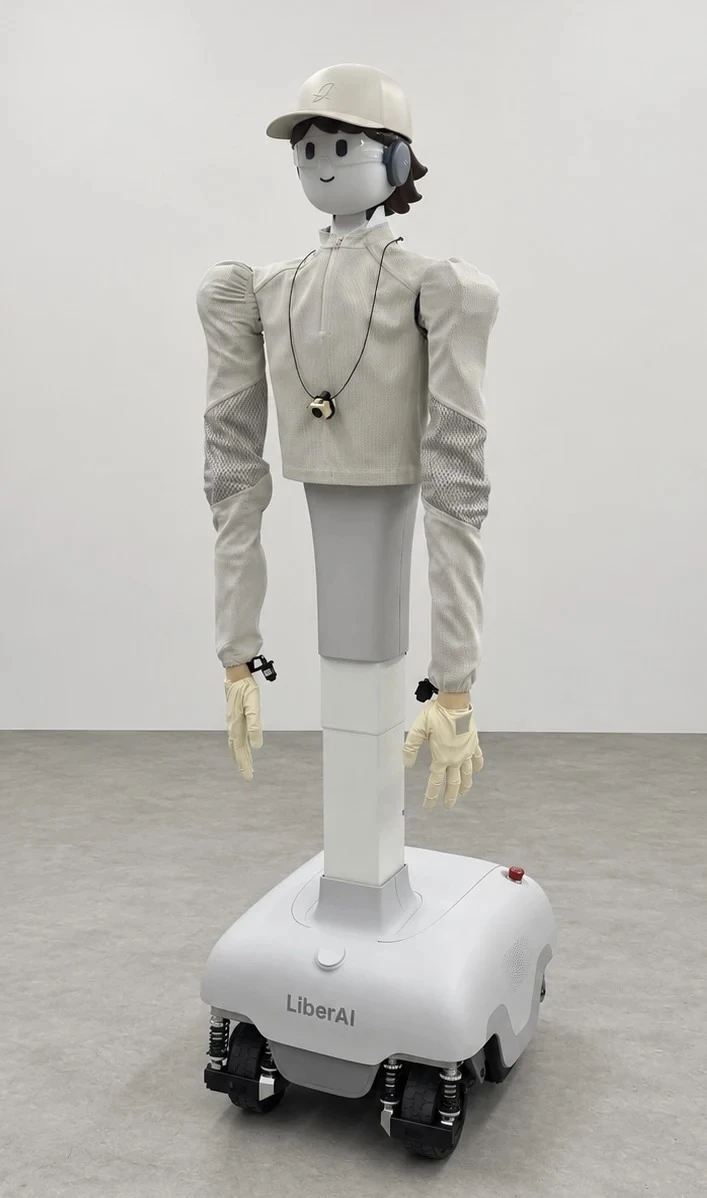
The proprietary robot hardware LEO features dexterous hands, slender forearms, human-like wrists, and an articulated waist. Its wrists have three rotational degrees of freedom, allowing for human-like wrist rotation without moving the forearms. The camera perspectives on the chest and wrists are aligned with the glove-based data collection system to minimize visual and kinematic discrepancies when transferring human experience to the physical robot. According to Zhidx, LiberAI founder Liu Songming holds a Ph.D. from the Department of Computer Science at Tsinghua University.
The company stated that the pre-trained model can be rapidly integrated into various deployment workflows. Public demonstrations include everyday scenarios, such as making milk tea.
Publicly available information indicates that Liber-0 has not yet disclosed details regarding open-sourcing the model or its pricing. After completing post-training for Liber-0 on 100 hours of simulated teleoperation data, users can upload custom objects to https://sim.liberai.work/ and observe manipulation performance in simulation without requiring additional training for those specific objects.