

Hands-On With OPPO's Xinliqiu AI Wearable: Building a Proactive Personal Agent From Always-On Audio
By Xu Yi Song
The OPPO Xinliqiu, identified in the companion app as the OPPO AI Pin, is a minimalist 9.8-gram always-on audio wearable. We tested its real-world context capture and integrated it with third-party tools via the Model Context Protocol (MCP) to build a proactive personal agent, evaluating its utility and hardware limitations.
The first time I connected the OPPO Xinliqiu, I almost thought an old friend had slipped into my phone.
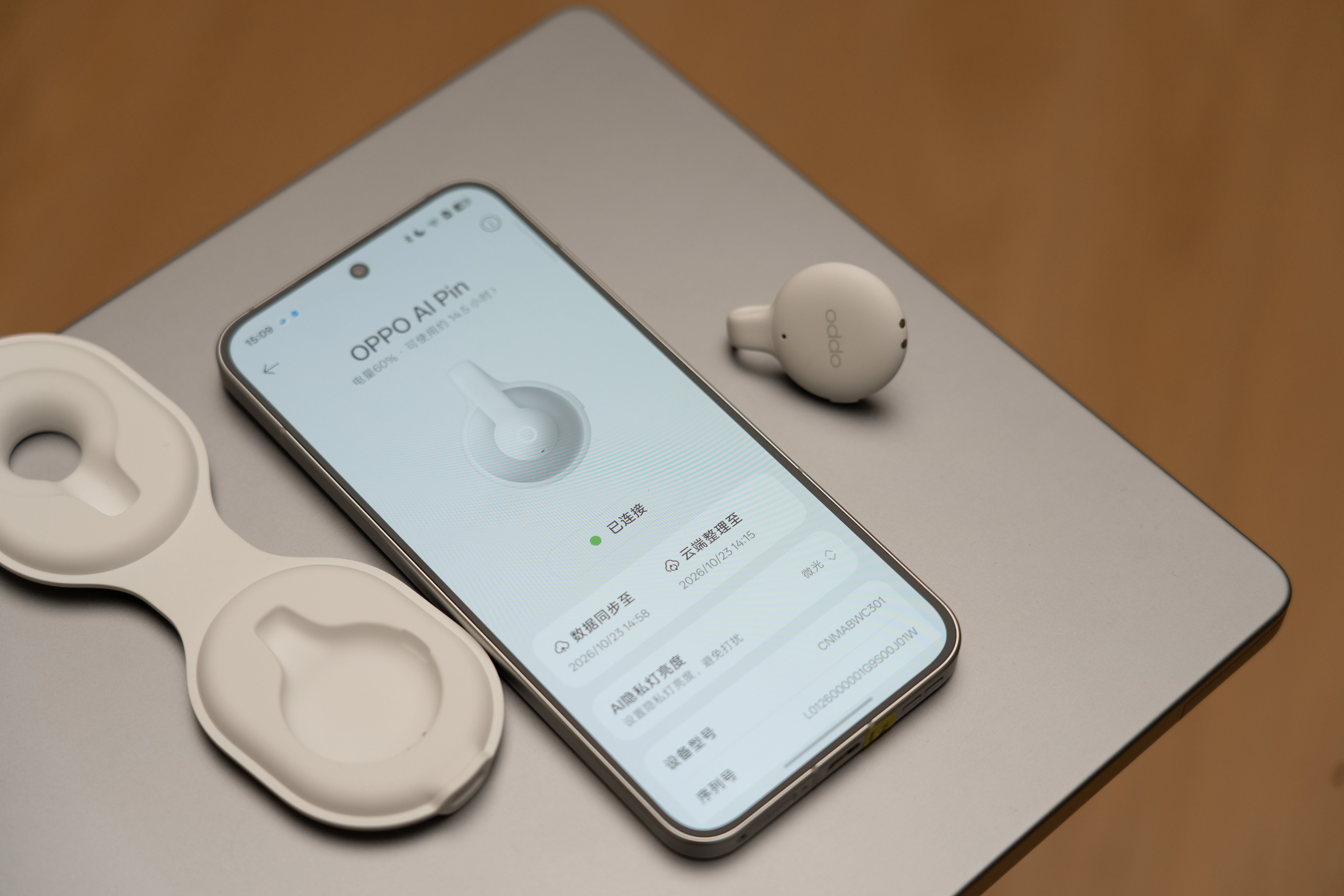
The device name displayed in the app is: OPPO AI PIN.
Seeing those words, anyone who regularly follows tech news will likely have an involuntary reaction. Humane's famous AI Pin, which flatlined alongside its cloud services in February 2025, apparently has a successor bearing the same name.
However, compared to the highly futuristic concept of the original AI Pin, the Xinliqiu's ambitions are currently much more modest. Its hardware is practically rudimentary, featuring only two buttons and a microphone for on-device input. Weighing just 9.8 grams, it is so small that you often forget it is even there.
As for why they suddenly decided to build this device, it comes down to two very distinct trends currently shaping the AI product industry.
One camp is building 'AI that works on its own.' Meta's Muse is the prime example: instead of waiting for prompts, it generates a list of 'things I can help you do,' monitors movie ticket release times, and extracts and fills out forms from emails entirely on its own.
The other camp is much more low-key, focusing on a single task: transcribing real-world audio into text around the clock. They are not selling an interactive experience, but rather an information harvester designed to record everything you say throughout the day.
The former is focused on 'how AI gets work done,' while the latter is focused on 'what AI uses to understand you.' In theory, they are tackling two separate problems, but combining them appears to yield a 1+1>2 effect.
So I wore it for four days to see how much value this "sounds right on paper" product can actually deliver.
A Distinctly Apple-esque Hardware Design
The Xinliqiu's packaging is among the most minimalist I have encountered for any consumer electronics product recently.
It includes a charging dock that barely qualifies as a storage case, the main unit, and a user manual. There is no data cable, no charging brick, and no forced "cutting-edge tech" aesthetic.
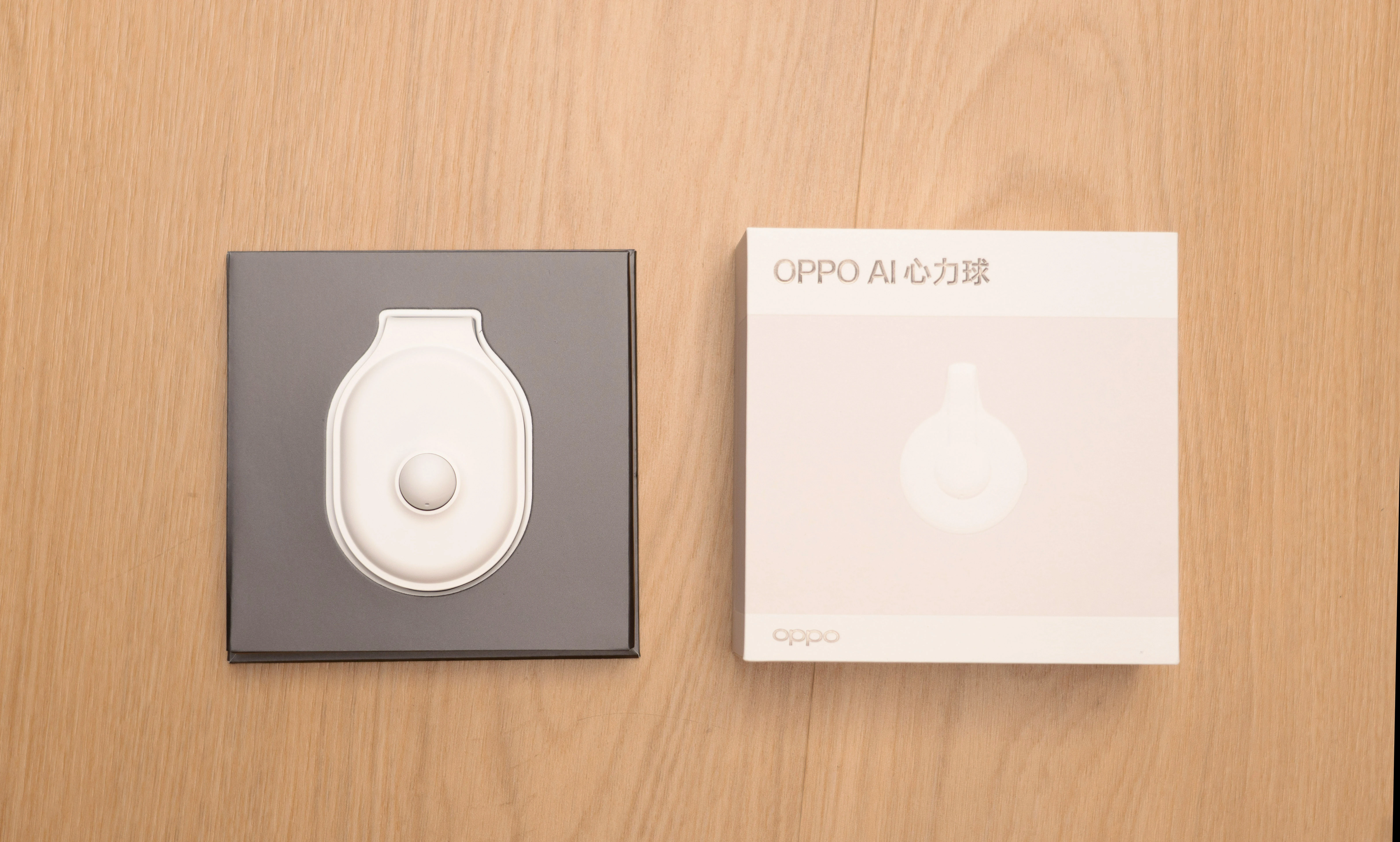
The main unit is highly compact, weighing just 9.8 grams and feeling almost weightless in the hand. Its structure is designed as a clip. When paired with its charging dock, however, the ensemble exudes a distinctly Apple-esque aesthetic. With its skin-friendly soft-touch silicone material and nearly seamless surface finish, the industrial design is clearly anything but rough.
The manufacturer recommends clipping it to the collar near the mouth to optimize audio capture. In practice, though, when wearing a short-sleeved shirt in the height of summer, there are not many other places to clip it anyway.
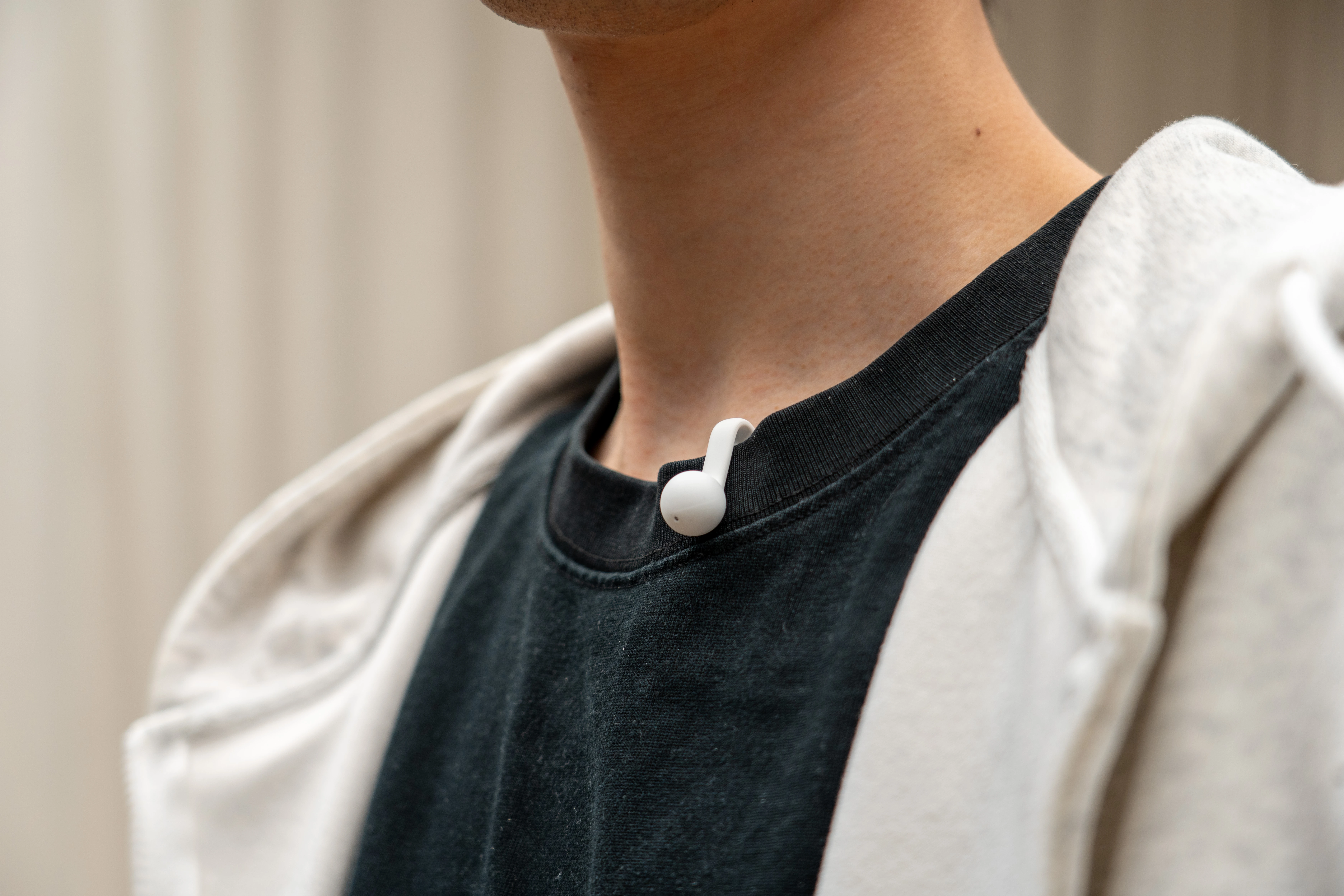
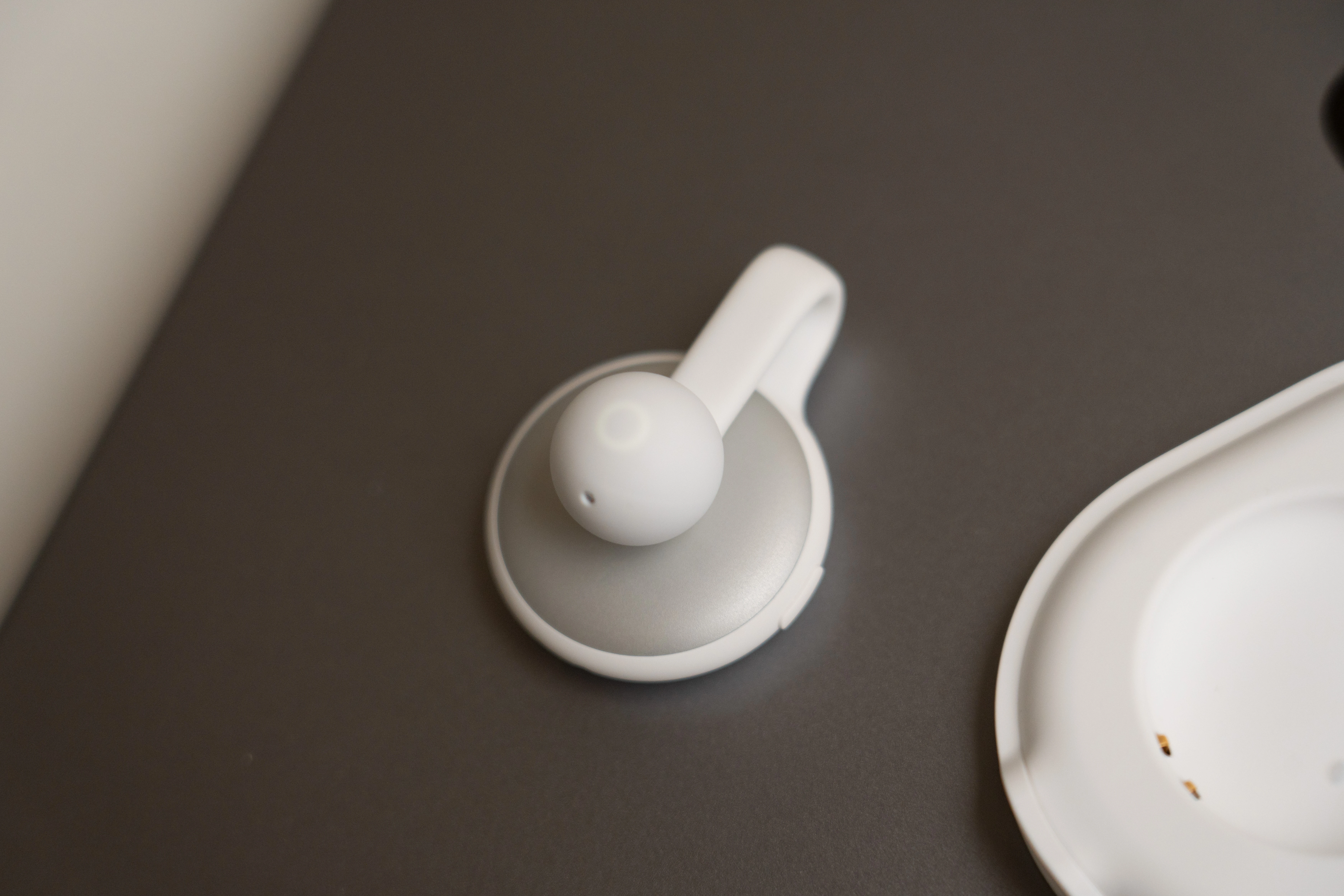
The main unit features just two buttons. The outer AI button marks the preceding audio as important with a short press, or records a quick voice memo with a long press. The inner button toggles recording on and off, and can be pressed to check the battery level. It has neither a screen nor a speaker. Instead, a single ring-shaped indicator light shows whether the device is active, while the inner indicator shows the battery level.

Beyond the physical buttons, the operational logic is even simpler: the device begins working the moment it is removed from the charging case. I believe this is the right approach. The power switch for an all-day recording device should not require conscious thought; taking it out of the case should inherently turn it on, mirroring the logic of modern TWS earbuds.
The indicator light is a bit awkward because it cannot be turned off; it is designed as a privacy light to signal the device's presence to others. You can only dim it to a 'low light' setting in the menu. While it is indeed less noticeable on the low setting, it is still slightly visible if you are wearing a light-colored shirt and happen to be in someone's line of sight across from you. If you really want to block the light, the solution is crude but simple: wear it backward or tuck it inside your shirt.
The official battery life is rated at 24 to 25 hours. In my actual use, however, power consumption felt quite unstable. Sometimes, after ten or so hours in a day, the battery was still at 70% or even 80%, but on the first day, it barely lasted a little over ten hours. Therefore, a reasonable estimate is that its actual battery life should exceed the official rating.
When pairing, the device name that appears in the app search results is listed as: OPPO AI PIN.
Of course, this has no causal relationship with the disastrous AI Pin launched overseas. 'PIN' might just be an internal codename or a legacy Bluetooth name. But it feels too much like a metaphor: for any company trying to turn a voice recorder into an AI device, the first hurdle they face is the same—if your product name includes 'PIN', it seems to have a notoriously tough fate.
Setting the name aside, its architecture is not complex. OPPO has not disclosed the full picture, but its behavior allows us to deduce a clear pipeline: the device itself handles listening and storage, the smartphone handles transcription, and the cloud-based PCC runs the models for summarization and contextual linking.
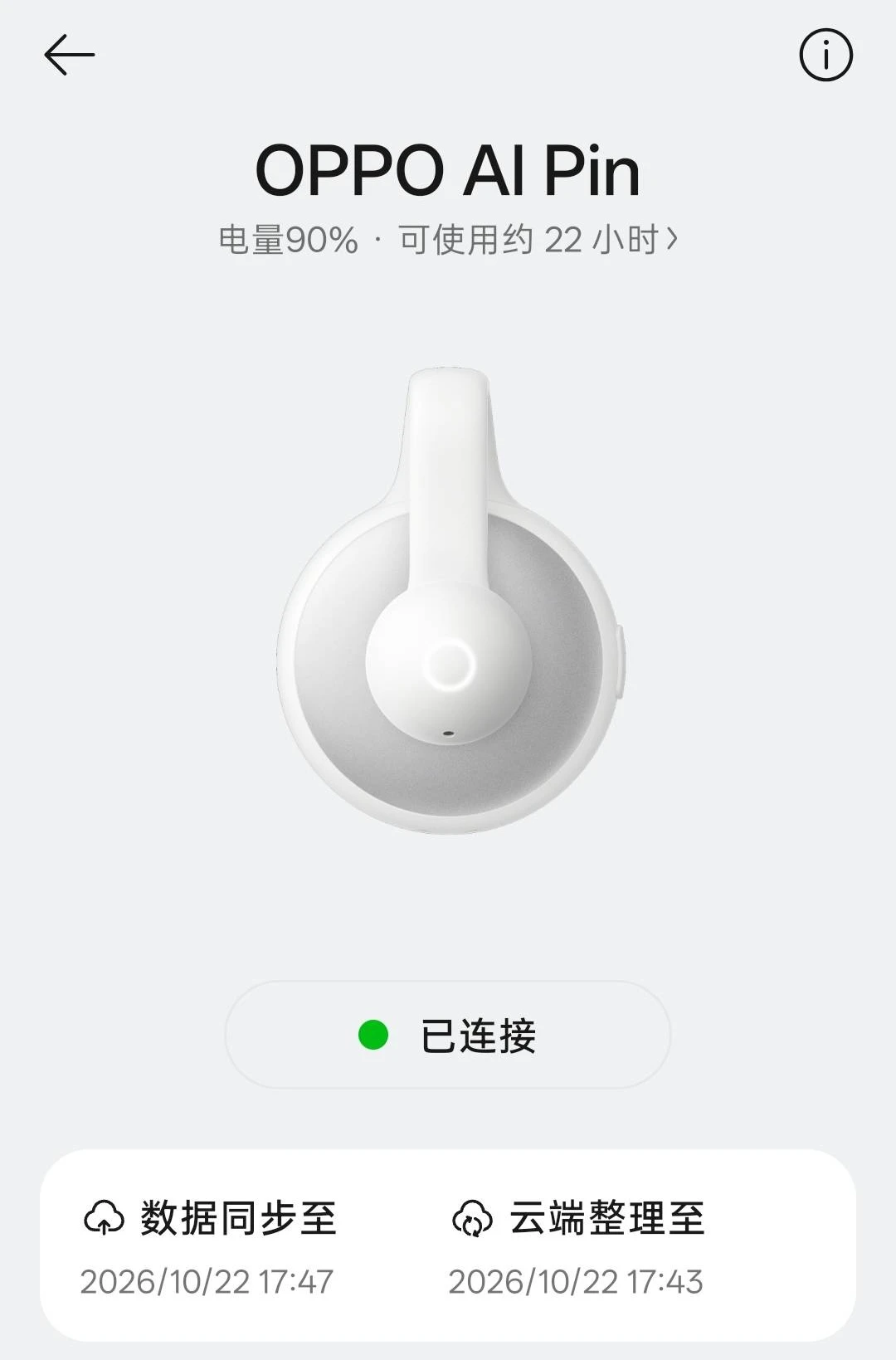
This division of labor was explained in the official user group as 'not entirely completed on the device.' The device has computing and storage capabilities, but complex organization is processed via the smartphone and the personal cloud. As a result, you will encounter a very typical phenomenon: the sphere is still recording, but nothing appears in the app, because it has to wait for the phone to connect, the data to upload, and then the processing queue to clear.
With the Xinli Sphere, the information ultimately resides in the cloud, not on the edge device. The benefits of this are straightforward: if you switch to a different phone and log into the same account, all your history is there. You can also authorize external AI tools to read the data via MCP without having to figure out how to extract the data first or access the phone every time.
The official privacy stance is 'keep only the text, discard the original audio': the low-fidelity audio recorded is only for machine reading, destroyed immediately after transcription is complete, and the entire process is encrypted within a private compute cloud. This approach is relatively novel at present, but it has already been recognized as the right direction. It also creates a fundamental difference from past AI recording cards and voice recorders.
At the current stage, retaining text is the more practical choice. It takes ten minutes to listen to an audio recording just to extract information, whereas a transcript containing names, timestamps, amounts, and decisions forms a database that AI can directly search and reason over. Therefore, "not retaining original audio" solves not only legal and emotional concerns but also represents a choice adapted for AI processing.
Are Other People's Business Also My Business?
Meetings are its primary use case: it only begins summarizing after an entire conversation concludes, rather than popping up a card after every single sentence. Within ten to twenty minutes after a standard meeting, it generates a summary. It also captures and summarizes nearly all daily communications, arranging them along a timeline. After a full day, simply scrolling through the timeline allows you to recall exactly what happened at every moment.
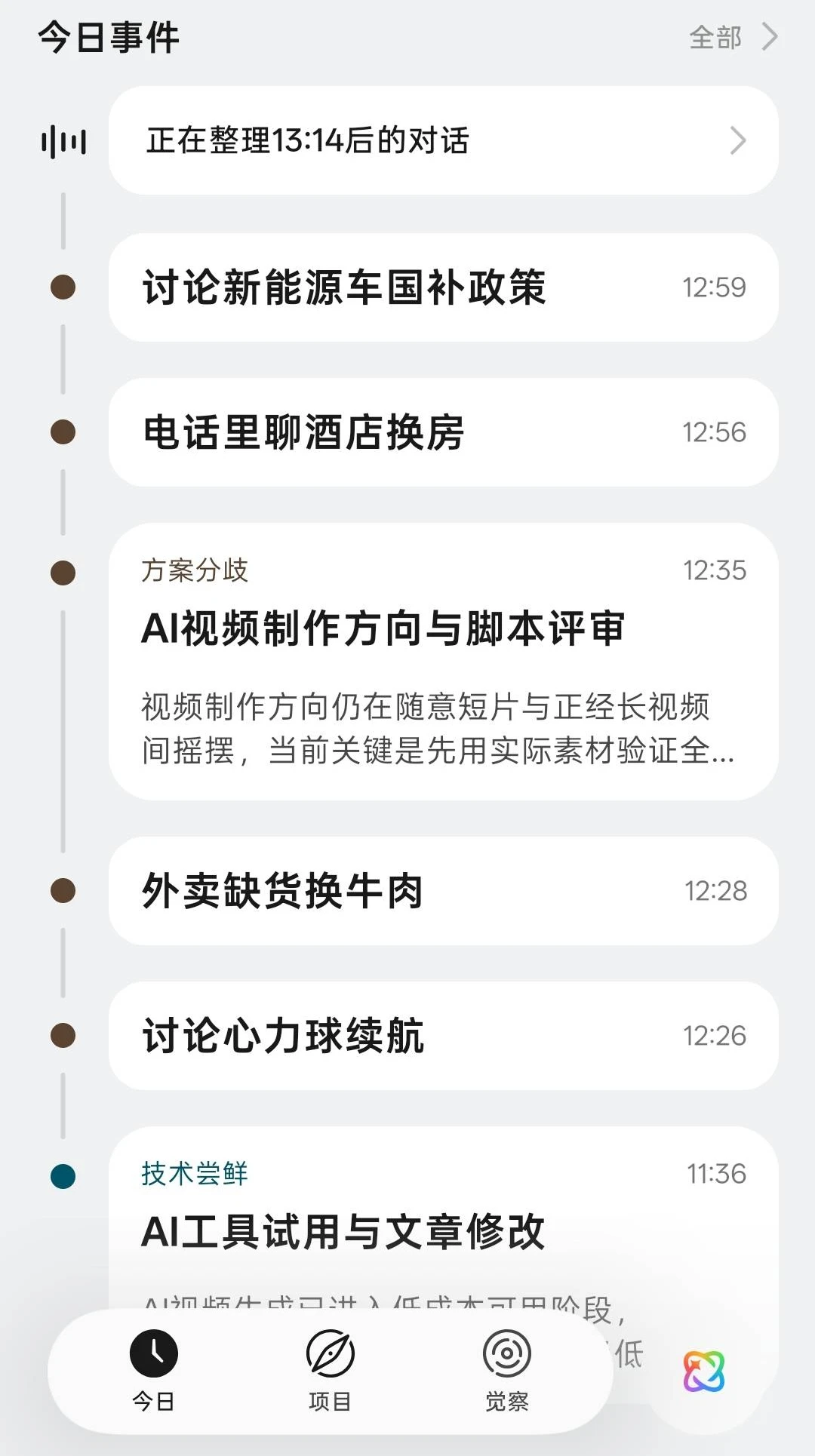
This provides an experience completely unlike the manual recall required in the past.
However, there are also many issues, primarily because the AI cannot accurately understand all the sounds it picks up.
At noon in the elevator, two people standing nearby were whispering about travel plans. That afternoon, a new entry appeared on my timeline: "discussing hotel room changes on the phone." The AI assumed I was planning a trip.
At noon, a colleague was discussing visa scheduling with someone else. That evening, the system flagged an item for me: "visa processing pace determines whether the subsequent itinerary can be finalized," assuming I needed to pay close attention to the matter.

More often than not, colleagues discuss projects at desks just three meters away. While I sit at my own desk, the device captures all their conversations. A little while later, several project-related discussions appear in the summary. I stared at it in disbelief, only to realize it was a long list of communications that had absolutely nothing to do with me.

These aren't transcription errors, as the speech recognition is actually quite clear. The flaw lies in the default logic: the system doesn't decide whether to record based solely on whether the user is the one speaking. As long as it captures clear linguistic information, everything is transcribed and then summarized by the AI. As a result, the summaries often mistakenly attribute other people's plans to my own progress.
To the system, these sounds are indeed all happening around 'me.' Even when I am not speaking, it defaults to the assumption that someone else is talking to me.
The official advice is to record a voiceprint, mention in conversations how others usually address you, and clearly specify who is responsible when assigning tasks. These are all valid tips, but they merely 'improve accuracy' rather than 'solve attribution.'
Every time this happens, I have to manually delete the summary, and fixing one instance just means dealing with the next.
Therefore, rather than a delete button, what I really want right now is a tagging feature. I want to be able to tell it: this snippet is elevator gossip, this is a colleague's private matter, this is something I overheard while walking past. It should then learn from these tags what my daily noise profile looks like.
Another shortfall lies in handling 'small tasks.' It can provide a structured review of an entire meeting, but if you ask it to remember to 'call so-and-so back at 3 p.m. on Wednesday,' you have to consciously press a button to tell it. Buried in a massive stream of conversation, it currently cannot accurately identify time-bound to-dos. Furthermore, rather than keeping this feature inside the app, it would be much more practical to integrate it directly into the phone's native to-do system, which is exactly what the team is working on.
Crafting a 'mom-flavored' product with it
Recently, Muse has been incredibly popular, but it remains largely inaccessible for casual use in China. This got me thinking: if I use the Xinliqiu alongside third-party AI tools, how close can I get to building a proactive AI tool like Muse?
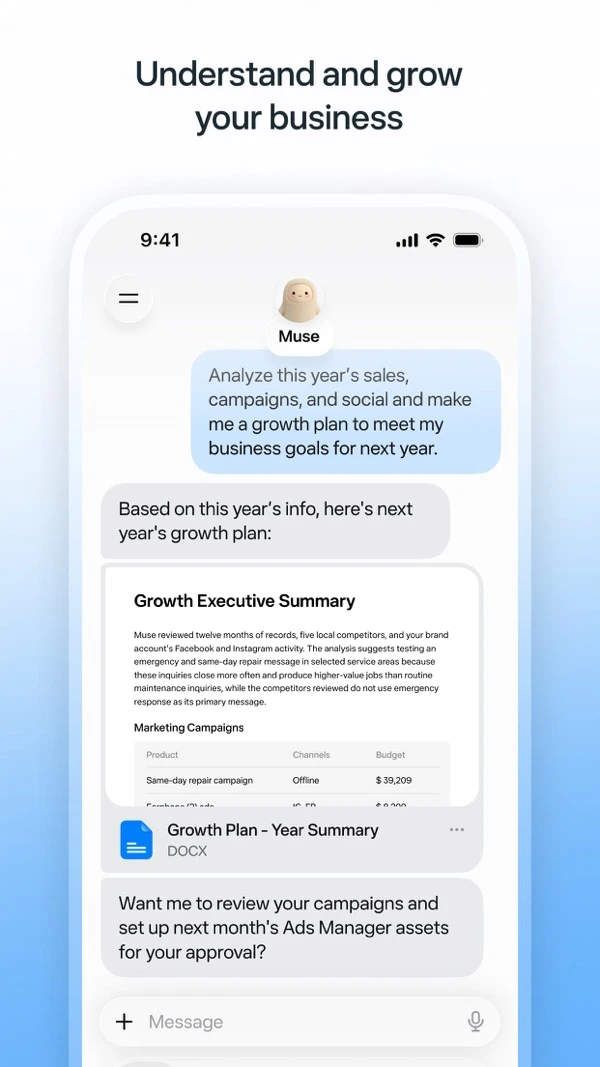
"Proactivity" actually breaks down into two layers. The first is the willingness to initiate—pushing relevant information to you before you even ask. The second is actually doing the work for you, such as booking tickets, sending emails, or adjusting schedules. However, achieving the latter requires more than just technology, so let's start by trying to achieve the former.
So I decided to do something: I connected it to WorkBuddy via the Model Context Protocol (MCP) to see just how far it could go.
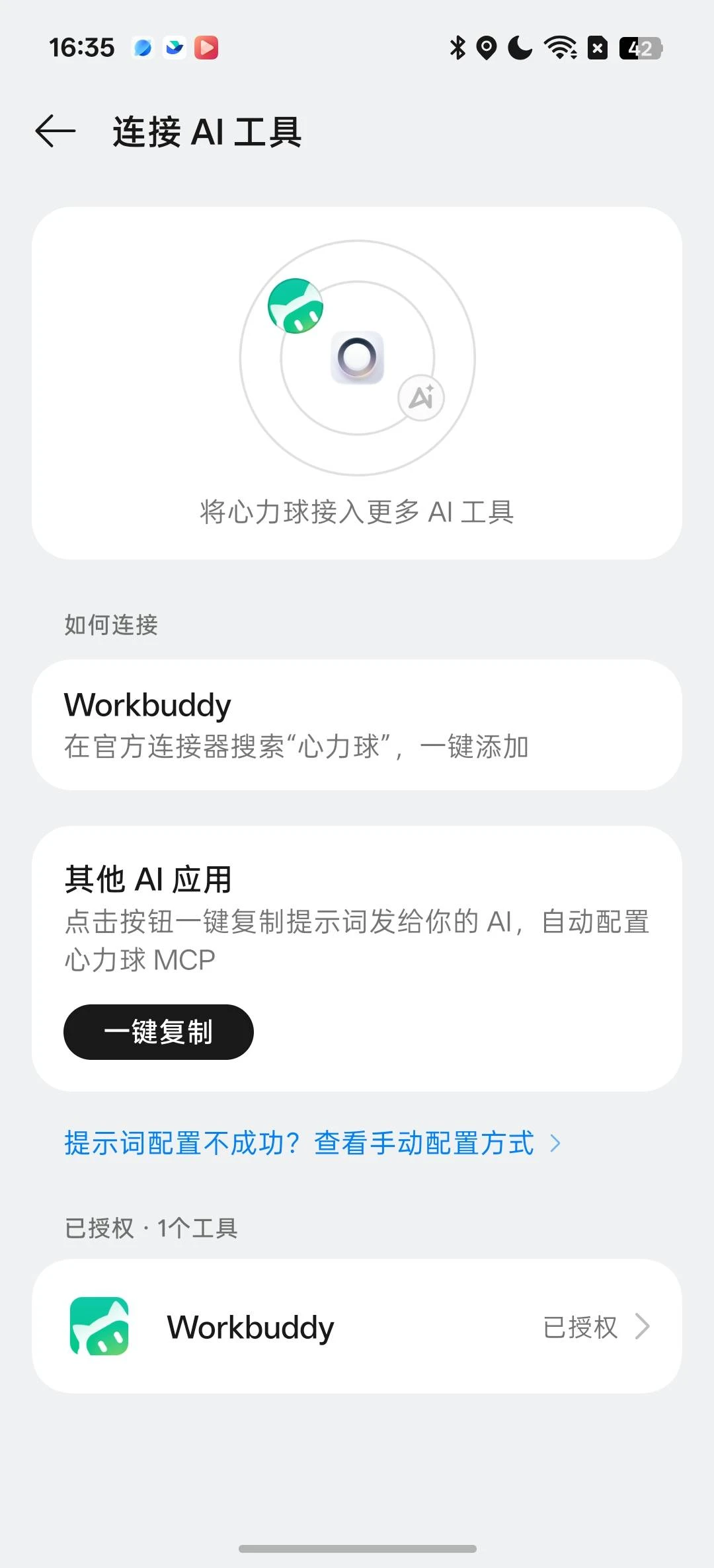
I set up an automated task that pulls the latest updates from Xinliqiu every hour. The AI then evaluates which items are pending work tasks, which require immediate attention, and which warrant a proactive reminder, ultimately pushing the most critical current information to me.

Just a few hours later, it was already beginning to astonish me.
While chatting with colleagues about the progress of a few ongoing projects, Xinliqiu picked up the conversation. WorkBuddy, reading the data periodically via MCP, detected these pending tasks and proactively popped up a reminder for me.
I essentially ended up with an AI that keeps tabs on my work progress. I barely mentioned something in passing, and it was already prompting me to get back to work.
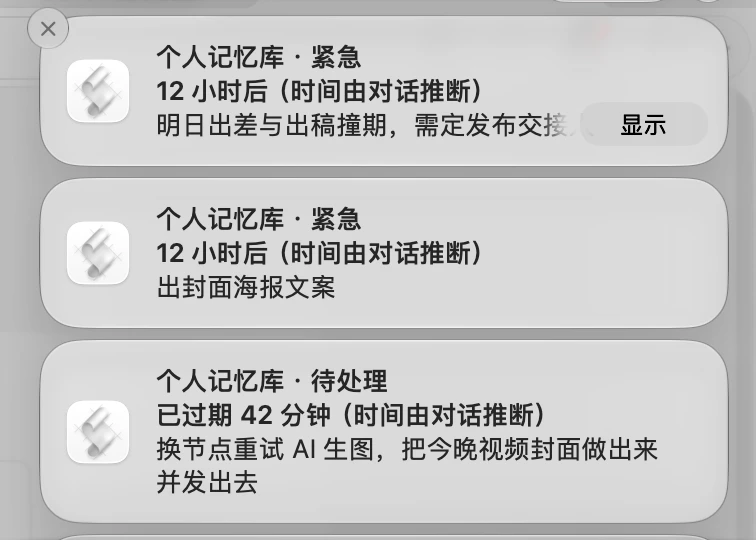
As someone with ADHD, I never expected an AI to cure my procrastination just like that.
It even went so far as to pick up on a conversation with colleagues about my recent habit of staying up too late. When I was still chatting with them just after 10 p.m., it advised me to stop editing my draft by 11:30 p.m. and be in bed by 1:00 a.m., warning me to go to the hospital otherwise.
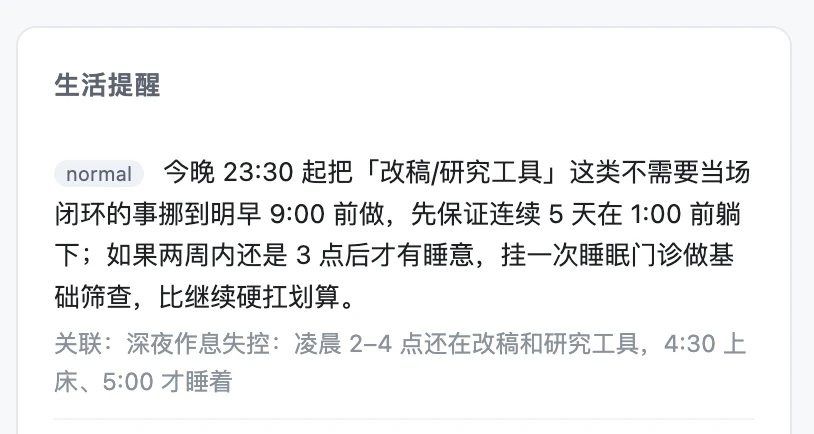
I suddenly realized that the feature I casually built into WorkBuddy carries an inherent maternal touch.
But there is a caveat: it can only monitor what I actually say out loud. It remains completely blind to any communication happening internally on my computer or phone, and it cannot capture unspoken thoughts.
This is likely the critical design consideration for this category of products. The focus shouldn't be on the hardware or a single app, but rather on the 'completeness of personal context' for a personal agent.
The ideal state would look like this: a single agent integrates with my email, calendar, health data, brokerage accounts, work documents, and social media, while also capturing everything I say throughout the day. It then deploys multiple bots to manage different threads—tracking which project is stalled, which funds need to be moved, which commitments are expiring soon, and which time slots should be kept open. Each module can issue individual reminders, and together they can generate a highly rationalized schedule.
This is technically feasible today, but the puzzle pieces are scattered across different companies. Xinliqiu provides the 'reality layer' piece, while email and calendar apps provide the 'terminal layer' piece. As of now, there is no single product that can truly integrate all of this. However, at least it opens its interfaces to users, allowing them to build custom integrations from scratch, such as connecting it to Muse.
There is also a notable shortcoming: 'other people's matters' are not pre-filtered, which can still lead the downstream agent to make incorrect judgments. This highlights the biggest challenge for this category of products right now: determining the scope of a conversation based on the environment and context. For instance, in a meeting room, it should capture audio across the full range, whereas in everyday conversations, it should use algorithms paired with a microphone array to gauge conversational distance, effectively separating 'my matters' from 'other people's matters'.
This is a challenge that inevitably arises once the software reaches a certain level of capability. The hardware must then provide dedicated solutions to support the underlying software requirements.
It Seems to Lack Technical Barriers
The bigger challenge facing the Xinliqiu, however, is not whether it can be built.
On the hardware side, a weight of 9.8 grams and a 25-hour battery life are well within the capabilities of today's supply chains; there is little difference between a one-year effort and a three-year one. On the software side, features like voiceprint recognition, summarization, and project linking are hardly proprietary secrets.
Therefore, the barrier to entry lies not in the product itself, but in the question of how to keep users engaged and willing to pay.
Currently, the Xinliqiu still bills based on effective recording duration, and its subscription plans are still being recalculated. This model is highly familiar: it essentially locks "your memory" within its ecosystem and charges based on usage.
However, I believe this path will only grow narrower, for two reasons.
First, the value of memory lies not in its storage, but in its retrieval. Simply storing 10,000 hours of recordings generates no value on its own, unless the system can make judgments, issue reminders, and draw connections based on that content. The better it performs these tasks, the more it requires the involvement of external tools.
In other words, it is most valuable precisely when information flows out. The tighter the data is locked down, the more users will treat it as just a slightly more expensive voice recorder—meaning the 499 hardware is truly only worth 499. Alternatively, if competitors quickly release products that do not lock user data, users will immediately switch. Meanwhile, to access IM and MCP features, users must subscribe to the first membership tier, and higher processing quotas require upgrading to even higher subscription tiers.
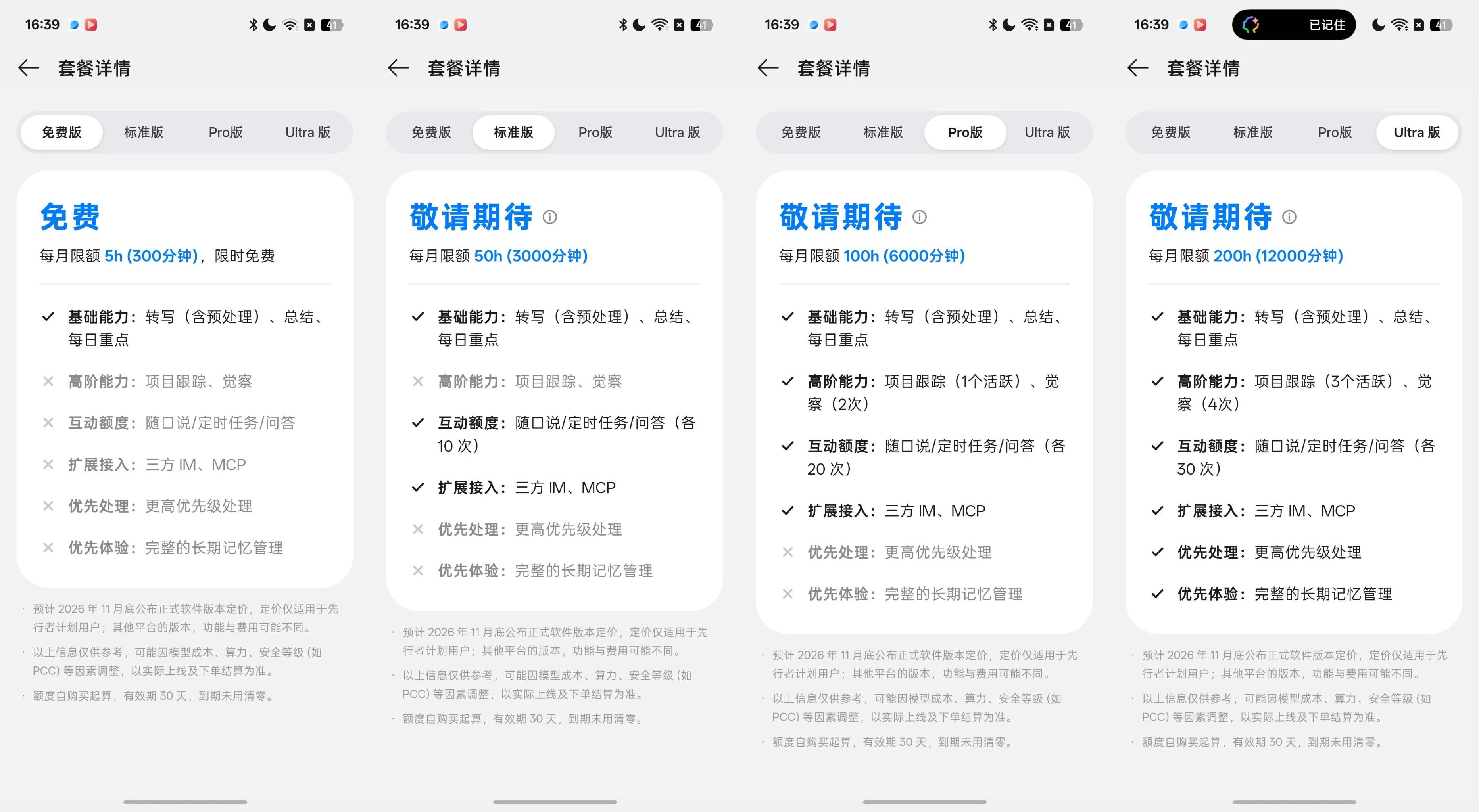
The second reason is even harder to circumvent: it cannot become the "only device" a user needs. It has ears but no screen; it cannot overlay information in the user's field of vision, nor can it facilitate true two-way interaction. For a solution that combines always-on data collection with always-on display, the form factor will inevitably lean more toward smart glasses or smartwatches.
It is merely an accessory, yet it is priced like a platform gateway, which is its most awkward aspect right now.
Let us return to the opening question: what exactly is the use of a device that remembers what you did yesterday better than you do?
My interim answer is that its current role is to turn continuous recording into a tangible product for the first time—one that is affordable, stable, and wearable every day. Whether it survives in the long run, however, depends on how much of its uncompromising stance it is willing to relax.