
After Parting Ways with OpenAI, Is Figure AI Actually Stronger?

Recently, Figure founder Brett Adcock appeared on the Shawn Ryan Show podcast, where he provided an in-depth discussion on robotics pathways, industrial applications, and the AI bubble during a three-hour interview.
As the founder of the world's most valuable robotics company (valued at $39 billion), Brett Adcock is known as "Musk 2.0." Therefore, in the robotics sector, both Figure and Tesla favor pursuing production capacities in the millions.
In the interview, he mentioned that currently Figure's factory can produce one robot every 90 minutes, with a full-capacity output of approximately 40,000 to 50,000 units per year. The long-term goal is to reach an annual production capacity of 1 million units within the next 10 years.
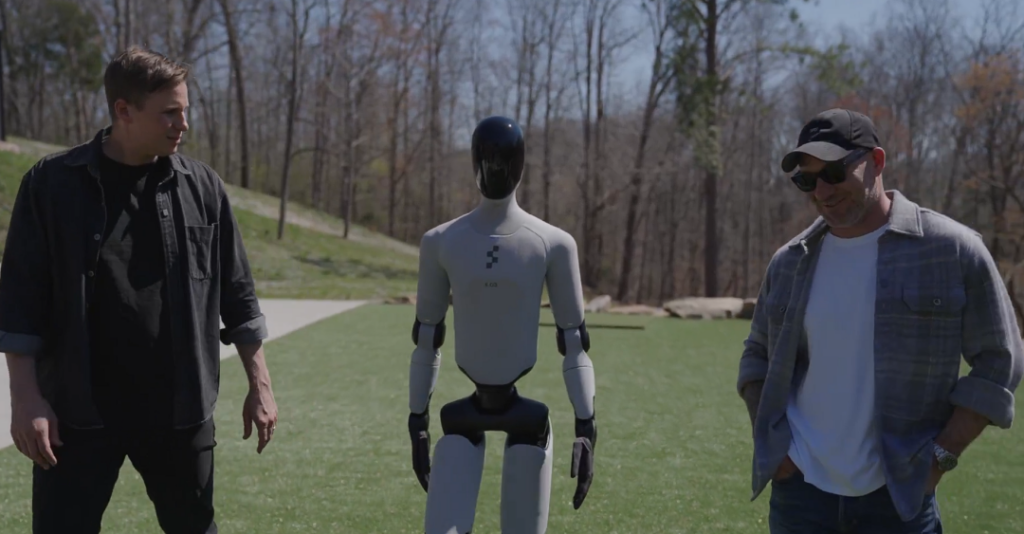
As for the AI bubble issue that many people are discussing, Brett Adcock believes that this is merely the starting point for AI to be widely implemented in the physical world.
However, robots currently lack sufficient data. In response to this, he offered a rather radical viewpoint: "If we could immediately obtain enough data and input it into the Helix 02 model, I believe we could solve the general-purpose robot problem right now."
So in this process, Figure is also building a self-iterating closed loop where data, models, and hardware are scaled up to generate落地 (deployment) data, which then feeds back into the model to enhance robotic capabilities.

Programming Doesn't Work; Mobile Operations Are Crucial
In the past one or two years, driven by AI, the robotics industry has undergone significant changes. During this process, robots that rely on programming have become unable to meet the demands of complex scenarios.
Brett Adcock provided a very intuitive explanation: A humanoid robot has approximately 40 degrees of freedom. If you calculate all its possible postures, the number is 360 to the power of 40 (far exceeding the number of atoms in the universe). This means it is impossible to exhaustively enumerate this system with code.
For robots, even the simplest movements are whole-body coordination problems, all occurring in real time within a state of dynamic balance:
- Main controller: Sends 200 or more commands per second to all joints, ensuring the robot maintains balance.
- Force feedback system: Operates at a frequency of 5 to 6 kHz, directly transmitting to the motor control system. Data is fed back to the main controller, which uses control software to instruct the entire body what to do at each time point to maintain balance.
In this process, Figure gradually discovered that focusing solely on the robot's upper body operations makes it difficult to ensure stability in real-world environments. After all, humans sometimes work while walking, and their posture is not always static.
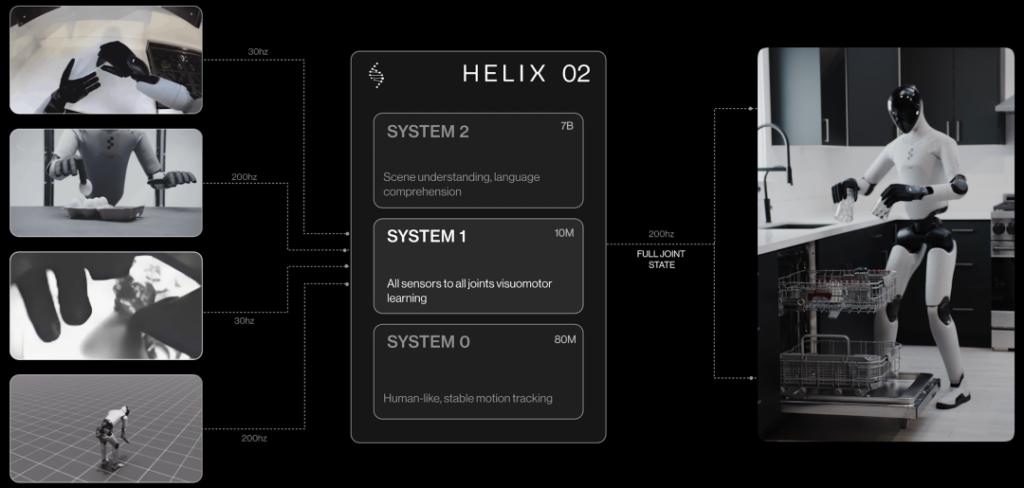
So, at the beginning of the year, Figure released the Helix 02 model, where System 2 is responsible for understanding tasks and scenarios, while System 1 continuously generates full-body movements.
The newly added System 0 can be understood as "muscle memory," providing a physical foundation that makes all movements viable. Because of this layer, System 1 can confidently generate continuous movements without needing to consider whether the robot will fall at every step.
However, Brett Adcock also admitted that even when testing his company's robots at home, he would not feel comfortable leaving them alone with children for an entire day.
Although robots have certain safety protocols, there is still a long way to go before they can truly understand the boundaries of danger in real life.

Parting Ways with OpenAI: AI Does Not Exist in a Bubble
As a startup founded in 2022, Figure has reached its current valuation of $39 billion, a milestone that was inseparable from the financial support of major tech companies in its early days.
In early 2024, OpenAI participated in Figure's $675 million Series B funding round, and subsequently, members of the OpenAI team joined Figure's board of directors to collaborate on advancing humanoid robot model development. However, after just one year, the two parties chose to part ways.
Brett Adcock did not view the split as a loss, arguing that Figure should develop its own AI technology independently. Given the potential for Figure and OpenAI to become competitors in the embodied AI space, he believed that separating paths was necessary to mitigate long-term risks associated with sharing information.
It is worth noting that before launching the well-known ChatGPT, OpenAI also had a history of robotics research:
- 2017: Released the open-source software Roboschool in the field of robot control algorithms.
- 2019: Developed a system capable of solving a Rubik's cube with a single robotic hand in dexterous manipulation.
- Late 2020 to Summer 2021: Disbanded its robotics team due to reasons such as a lack of training data.
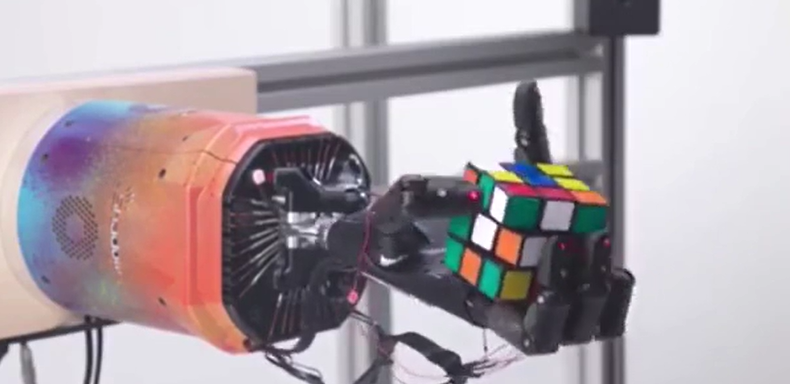
In contrast to the data for embodied models, data for large language models clearly has broader sources and is easier to obtain. Consequently, OpenAI soon brought forth the world-shaking ChatGPT, accelerating the development of the entire AI field.
But more than three years have passed since then, and discussions about whether there is an AI bubble have grown increasingly intense. After all, even OpenAI had to add ads to ChatGPT to monetize it and shut down the very 'money-burning' AI video generation tool, Sora.
Regarding this, Brett Adcock firmly believes that there is absolutely no AI bubble. Instead, we are currently standing at the starting line of AI's large-scale implementation in the physical world. Deploying millions of humanoid robots in the physical world would bring unprecedented productivity improvements.
He further believes that within two years, robots will be able to handle daily chores well, becoming assistants to humans.
However, during this process, data has become a major bottleneck for the entire industry. Currently, major robotics companies worldwide are struggling with this issue: real-world data is high-quality but costly and difficult to acquire; internet-scale data is abundant but of lower quality. Consequently, many companies have opted for simulated data as a compromise.
Figure primarily focuses on the domain of real-world data. During its Series C funding round last year, which raised $1 billion, Figure announced a partnership with Brookfield, one of the world's largest alternative asset management firms, to generate substantial amounts of real-world home scenario data for training the Helix model.
Although data is already Figure's biggest differentiator from other robotics companies, Brett Adcock still believes there is not enough data: "If we could instantly acquire sufficient data and input it into the Helix 02 model, I believe we could solve the general-purpose robot challenge right now."
Brett Adcock's reasoning is sound. In a demonstration video released recently, Figure emphasized that the robot's ability to autonomously tidy up a living room was achieved simply by adding new training data, without designing specific actions for each movement.
Therefore, as long as there is sufficient data, Figure is likely to drive further advancements in the robotics field. However, the path of acquiring real-world data is not easy; it still requires time and capital investment to accumulate.

Humanoid Robots Will First See Commercial Application
In the realm of humanoid robot deployment, many wonder: if the goal is to enter households, why not start directly in homes?
Brett Adcock’s judgment is clear: humanoid robots will first be deployed in commercial sectors. This is driven by current technological and economic structures.
From a technical perspective, the biggest challenge for humanoid robot deployment is their ability to perform tasks stably in complex environments. Home settings are highly complex due to:
- Highly personalized spatial layouts; every home is different.
- An extremely diverse and ever-changing variety of objects.
- Unpredictable human behavior, especially from children and pets.
- Tasks with no clear boundaries, constantly changing.
Crucially, these variables often do not exist independently but overlap, creating high complexity that robots currently struggle to handle.
In contrast, Brett Adcock highlights the advantages of commercial scenarios like manufacturing and logistics. These have fixed work areas, processes that can be documented on paper, clear requirements for each step, and lower safety protection difficulties.
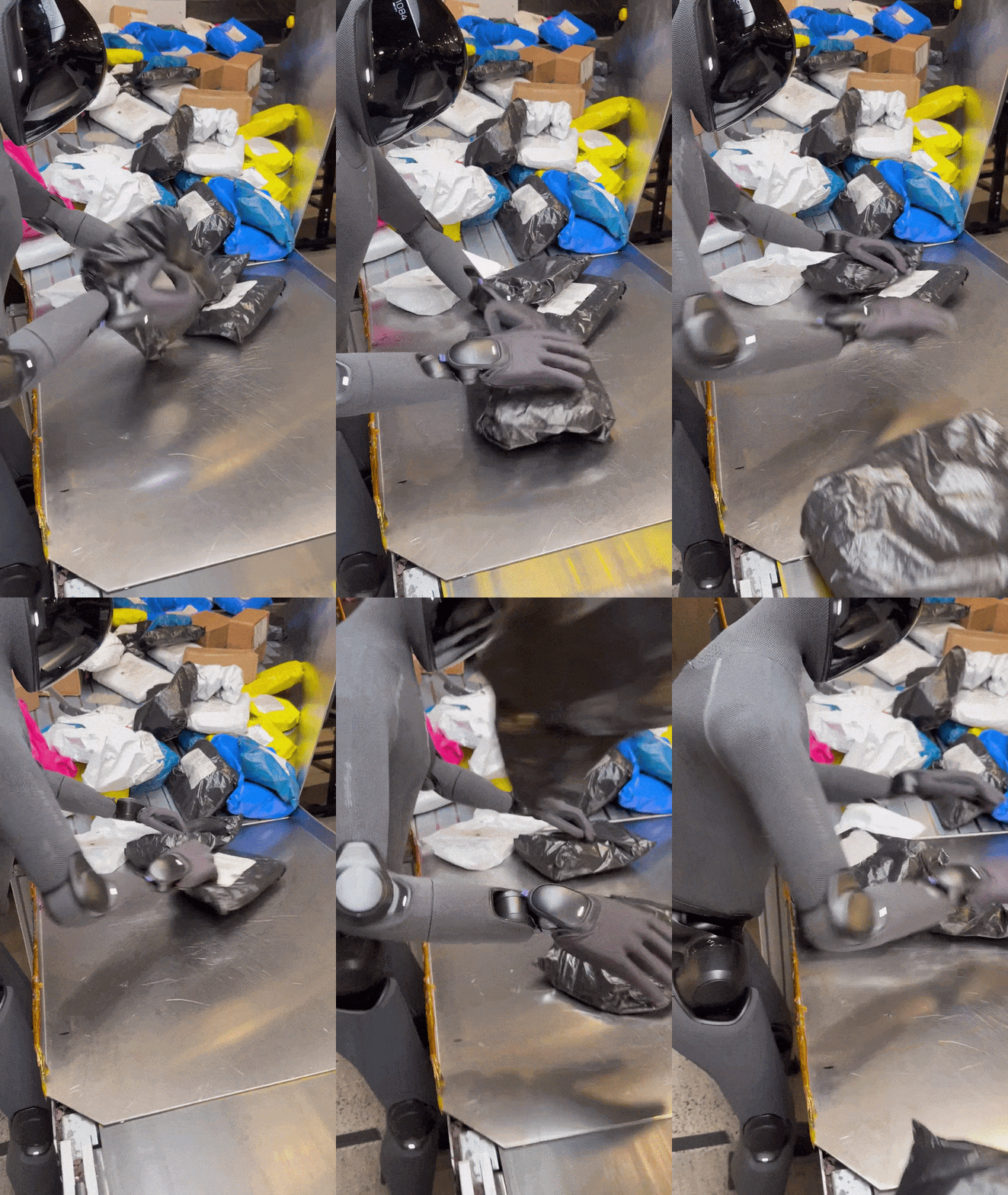
Thus, the problem shifts from an open world to a constrained system. Commercial scenarios are relatively easier to converge upon, which is vital for data-driven robotic systems.
And there is another more practical factor: the economic structure. Brett Adcock pointed out a straightforward statistic: globally, approximately 40% of GDP comes from human labor.
So if humanoid robots are to generate real value, the most direct entry point is to replace labor with clear economic value. Commercial scenarios happen to meet three conditions:
- Rigid demand: Enterprises must complete these tasks.
- Quantifiable costs: Labor costs can be directly compared, with clear returns and ROI.
- Large profit margins: The monthly fee for home robots is around $500, while commercial services charge more than ten times that amount.
Therefore, in addition to progress in home scenarios, Figure has also achieved significant results in the commercial sector. For example, as Brett Adcock mentioned, Figure robots have been deployed at BMW car factories—this was their first time placing robots into a real industrial environment to perform actual work.
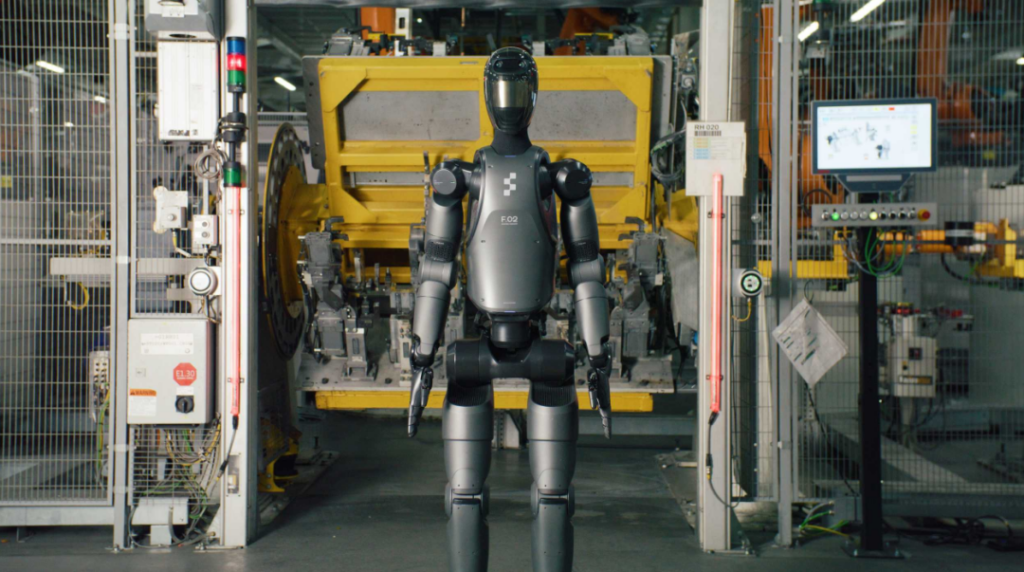
At the BMW plant, the core task of the Figure robots is to pick up sheet metal parts and place them onto designated fixtures, working shifts of 10 hours per day.
During actual factory operations, many people question whether robots can operate stably over long periods. If they can only last a week or a month, their practical usability would be greatly diminished.
However, Brett Adcock revealed that even after six consecutive months of continuous operation, the hardware of the core robots remains completely fine. Through this process, he gradually considered a key question: Can we manufacture tens of thousands of robots and deploy them in factories across the globe?

One Unit Every 90 Minutes: Mass Production Isn't the Biggest Hurdle
For robots, current commercial sectors offer promising application scenarios; however, these also require significant volume to gradually realize performance. Consequently, scaling up robot production has become a challenge that major manufacturers must address.
Brett Adcock stated that Figure's manufacturing assembly line currently produces one unit every 90 minutes, with capacity set to continue growing in the future.
And currently, the factory's full-capacity production is about 40,000 to 50,000 units per year. Figure's long-term goal is to achieve a capacity of one million units per year within the next ten years.
Brett Adcock emphasized that there are two core issues in the robotics industry today: large-scale mass production and technology—specifically, enabling robots to perform all tasks in home environments.
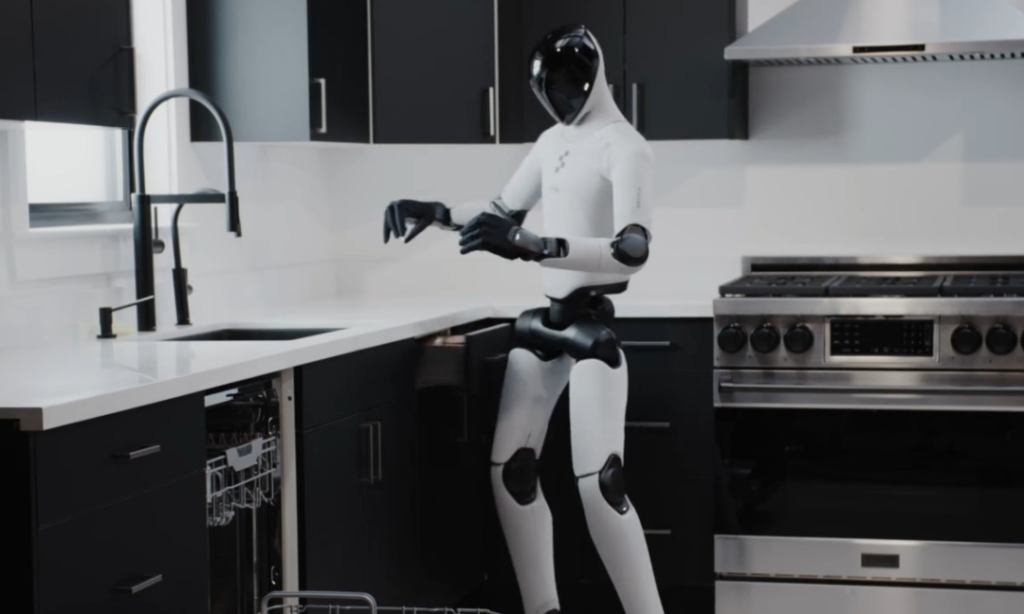
However, he believes the biggest challenge is not mass production, but technology: the ability to place a robot in an unfamiliar home and have it autonomously complete all necessary household chores within five hours. Whoever achieves this goal first will become the world's largest company.
In the past year, Brett Adcock has repeatedly emphasized in nearly every public appearance the importance of system-level autonomous capabilities—specifically, whether robots can understand their environment, plan tasks, and execute them continuously without human intervention.
To achieve this goal, Figure’s efforts can essentially be distilled into three core pillars:
- Data: Building a data framework that more closely mirrors human behavior, centered around complete task workflows, and gradually forming a data flywheel during deployment.
- Model: Integrating vision, language, and action into a continuous decision-making system, further emphasizing high-frequency, low-latency body control, and enhancing the robot's mobile manipulation capabilities.
- Hardware: Within Figure’s logic, hardware is not merely a pre-fixed carrier but must be reverse-designed around model capabilities and iterated continuously.
Combining these three points reveals a clearer trend: Figure is attempting to build a complete closed-loop system integrating software-hardware synergy and real-world deployment. As data flows continuously during mass production and deployment, it feeds back into the model, thereby enhancing the robot’s capabilities.

As Brett Adcock previously stated, if there is sufficient data, the challenge of general-purpose robots can currently be solved.
From this perspective, the significance of manufacturing capacity is also undergoing subtle shifts: deploying robots at scale into the real world to activate the data engine that determines performance ceilings.
Once this closed loop truly operates, industry competition will hinge on which systems can enter the real world faster, acquire more data, and then complete self-iteration at an accelerated pace.
So what Figure is really pursuing is a longer-term path: enabling robots to learn continuously in the real world until, one day, they can find their own answers in unfamiliar environments just like humans do.