

Maniformer Showcases Robot Data Collection and Governance System at CoRL 2026
By Jiang Si Qi
At the 10th Conference on Robot Learning (CoRL 2026) in Austin from November 9 to 12, Maniformer showcased its real-world data product ecosystem, featuring MEgo series collection devices, a distributed collection network, and the MEgo Engine data governance platform. The suite addresses the need for real-world interaction data in training and evaluating robot models.
From November 9 to 12, the 10th Conference on Robot Learning (CoRL 2026) was held in Austin, Texas. At the event, Maniformer showcased its real-world data product ecosystem, which includes the MEgo series of data collection devices, a distributed data collection network, and the MEgo Engine data governance platform.
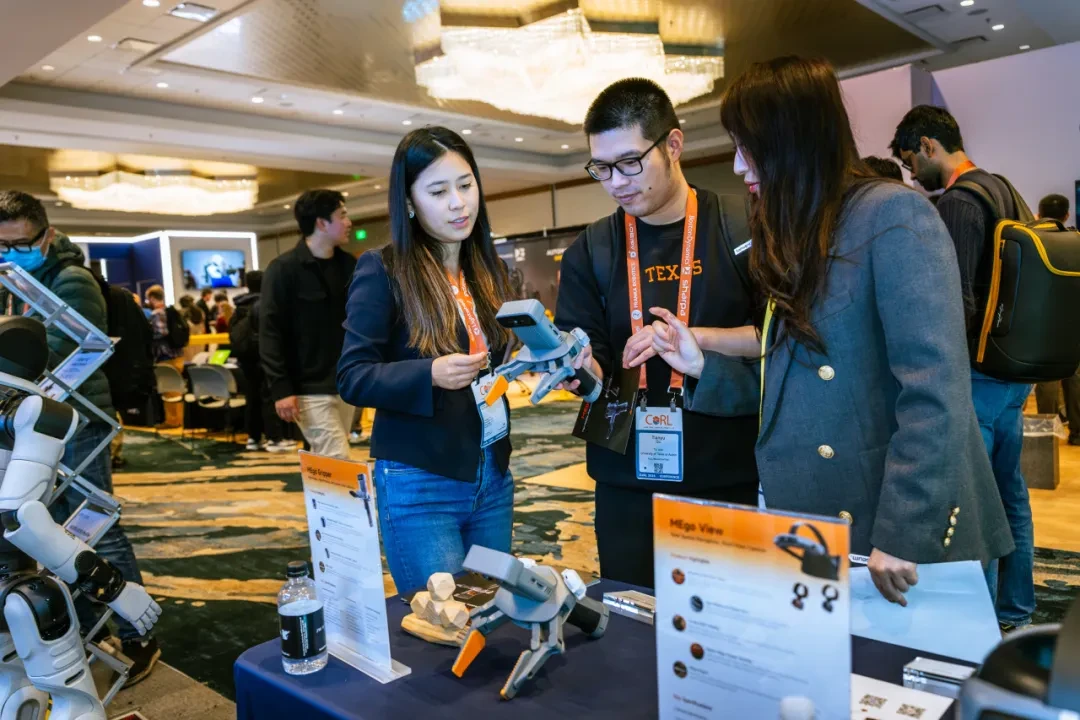
Training and evaluating robot models require data from real-world interactions. Capturing operational experience across different scenarios and processing raw data into training-ready formats is a foundational task in robot data production. The product pipeline showcased by Maniformer covers multiple stages, from on-site collection to data processing and delivery.
MEgo Engine 2.0 covers the data governance workflow
At CoRL, Maniformer demonstrated the upgraded MEgo Engine 2.0. The system integrates collection quality control, sensor alignment, spatial perception, action annotation, quality assessment, and embodiment mapping into a single data processing pipeline.
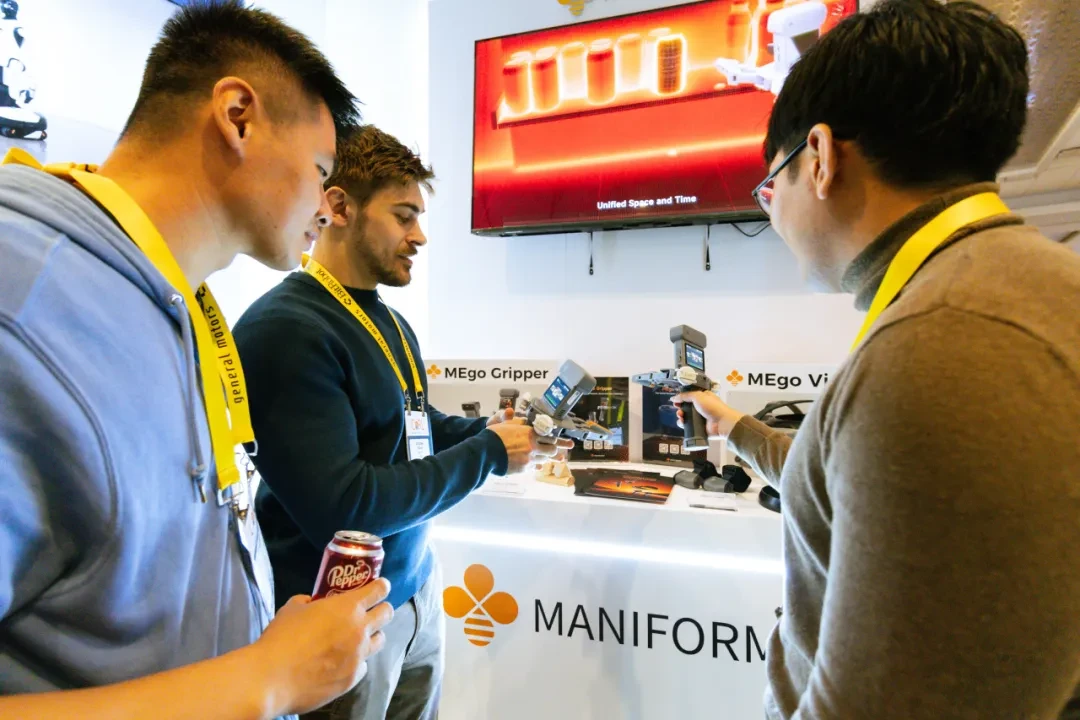
The MEgo series devices capture visual, motion, and interaction data from humans in real-world environments. Maniformer's dispatch platform connects distributed collectors with physical scenarios. MEgo Engine handles quality control, processing, annotation, and assessment of the collected data before delivering it to model development teams.
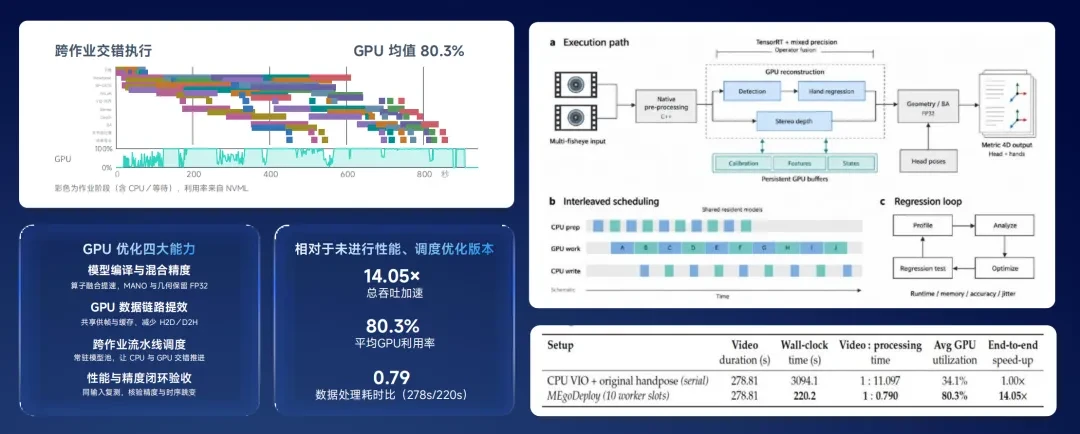
According to Maniformer, following end-to-end GPU pipeline optimization, the overall system throughput of MEgo Engine 2.0 has increased 14.05-fold, and its multi-source hierarchical trusted semantic annotation capability reaches 76.2% of human expert standards. For complex environments involving occlusions and multi-person interactions, MEgoVista improves the reconstruction reliability of hand poses and manipulation trajectories, achieving sub-centimeter accuracy.
Discussions on data and robot capabilities during CoRL
On the evening of November 10, Maniformer and AgiBot co-hosted a Research Social Night, featuring lightning talks, panel discussions, and networking. Researchers from universities, research institutes, and technology companies participated, discussing topics such as autonomous exploration, model efficiency, robot scaling, failure data, and capability evaluation.
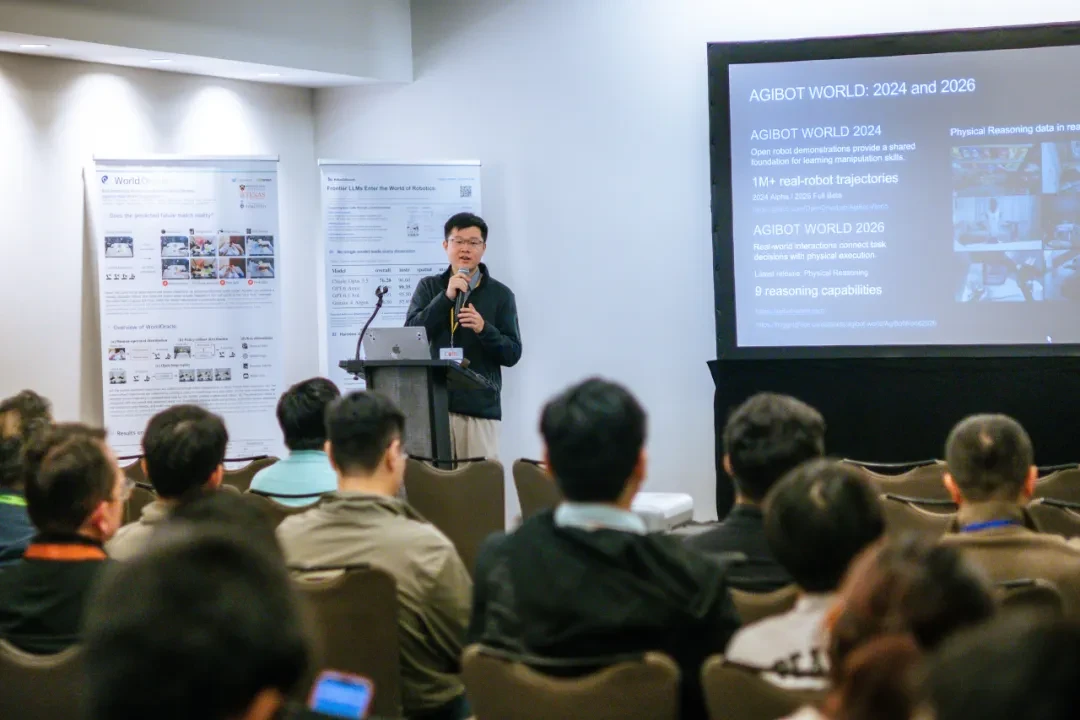
Discussions at the event also focused on capability allocation within robotic systems: human videos can provide task experience, while real-world interaction data can supplement action feedback; high-level reasoning, skill routines, and low-level perception and control must be coordinated to balance task generalization with real-time execution. Participants also discussed how to leverage failures during deployment, human interventions, and recovery logs to identify model capability gaps and guide subsequent training.
Expanding overseas data collection nodes and industry engagement
Mifeng stated that its domestic data collection network currently covers innovation centers in more than 20 cities, while its overseas presence spans more than five country-level nodes, connecting data collection partners across different regions through its hardware and platforms.
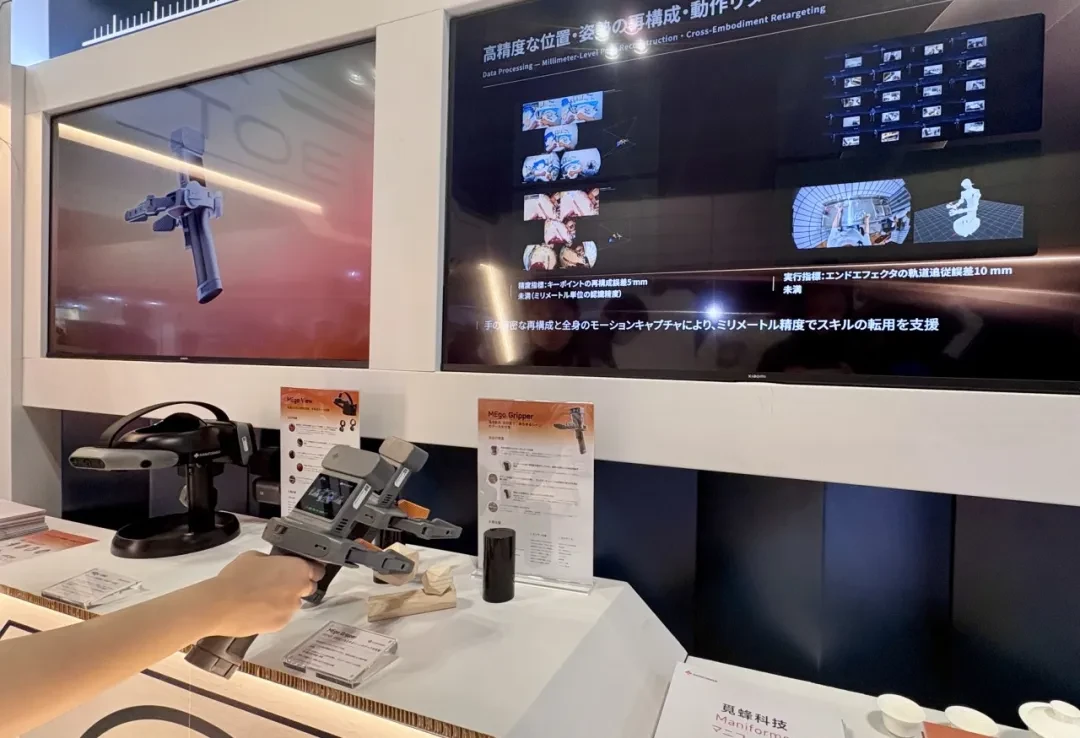
From November 11 to 13, Mifeng also participated in the NexTech Week 2026 Autumn exhibition at Makuhari Messe in Japan, showcasing its data collection and governance products. The company stated that it plans to further expand its overseas data collection network to provide real-world scenario data for robotics model teams.
From the product pipeline showcased at CoRL to its overseas exhibition participation and data collection node deployment, Mifeng provided a comprehensive overview of its business progress in robot data collection, governance, and delivery. The real-world performance of these systems still requires continuous validation based on data quality, usage efficiency, and model training outcomes across different tasks.