



LingBot Embodied AI Challenge Concludes With Real-Robot Deployments in 48-Hour Hackathon
The inaugural LingBot Embodied Foundation Model Challenge held its offline finals from November 14 to 16 at the Zhangjiang Science Convention Center in Shanghai. The event marks LingBot's first embodied AI competition for developers and stands as the industry's largest embodied developer contest to date.

Xiaomi Robotics Details PACE Framework for Tactile-Guided Precision Manipulation
The Xiaomi robotics team discusses how its PACE framework uses temporal tactile conditioning to refine precision manipulation. As the embodied AI industry shifts focus toward real-world deployment in 2026, the team highlights the critical role of tactile perception in bridging the gap between foundation models and physical execution.

Agents Rapidly Top RoboDojo Leaderboard Over 33 Days as Benchmark Enters Adjustment Phase
Robot-use agents have sequentially overtaken world and vision-language action models on the RoboDojo leaderboard over a 33-day period, prompting the creators of the prominent embodied AI benchmark to announce structural adjustments to maintain evaluation fairness.

Tsinghua and UC Berkeley release uni-robot-agent framework for open-source robot control
A joint research team from Tsinghua University and UC Berkeley has released uni-robot-agent, a unified framework for Robot-Use Agents. The open-source model Qwen3.8-Flash-Next achieved a score of 31.39 on the RoboDojo benchmark by directly controlling a robot, surpassing the previously published score of 28.97 by GPT-6 Astra.

Shanghai Jiao Tong University and Partners Introduce UniFlowWAM, Elevating 3D Scene Flow to a Core Modality
Shanghai Jiao Tong University, Shanghai Chuangzhi Academy, and Qianzhi Intelligent introduce UniFlowWAM. Over the past six months, research on world-action models has increasingly trended toward extracting physical signals into abstract modalities, feeding them into encoders to train embodied AI models.

Copper-Policy Replaces Pixel Prediction With Compact Latent Representations for Robot Control
The Copper-Policy model jointly learns compact latent world representations and action policies, bypassing the heavy computational cost of pixel-level video prediction. First author Zexin Feng from The University of Hong Kong explains how this asymmetric architecture achieves robust control without extensive embodied pre-training.

Anthropic Files S-1 for Nasdaq IPO Amid Exponential Growth and $500 Billion Compute Commitments
On October 26, Anthropic filed a 338-page S-1 registration statement with the U.S. Securities and Exchange Commission to list on the Nasdaq, taking the lead in the IPO race among competing U.S. AI companies.

Nature Will Debuts Natura-1, a 50B-Parameter Embodied Foundation Model Trained on One Million Hours of Human Experience
On October 13, Nature Will—founded by Ding Ning, assistant professor and doctoral supervisor at Tsinghua University's Department of Electronic Engineering—released Natura-1, its first general-purpose embodied foundation model, along with a technical report. The 50-billion-parameter mixture-of-experts model was pretrained on more than one million hours of first-person human video and can drive a 20-DOF dexterous hand within a 100-millisecond control loop.
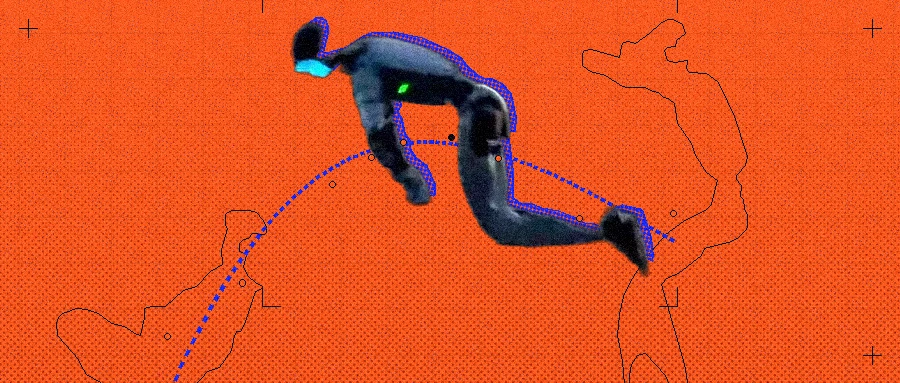
UC Berkeley's SuperMimic Slashes Compute for Humanoid Whole-Body Control
Accepted as an oral paper at CoRL 2026, the SuperMimic framework uses a differentiable world model to train humanoid whole-body control on a single GPU in three hours, outperforming previous methods that required massive GPU clusters.