

Robotics
Robotics, embodied intelligence and real-world applications.
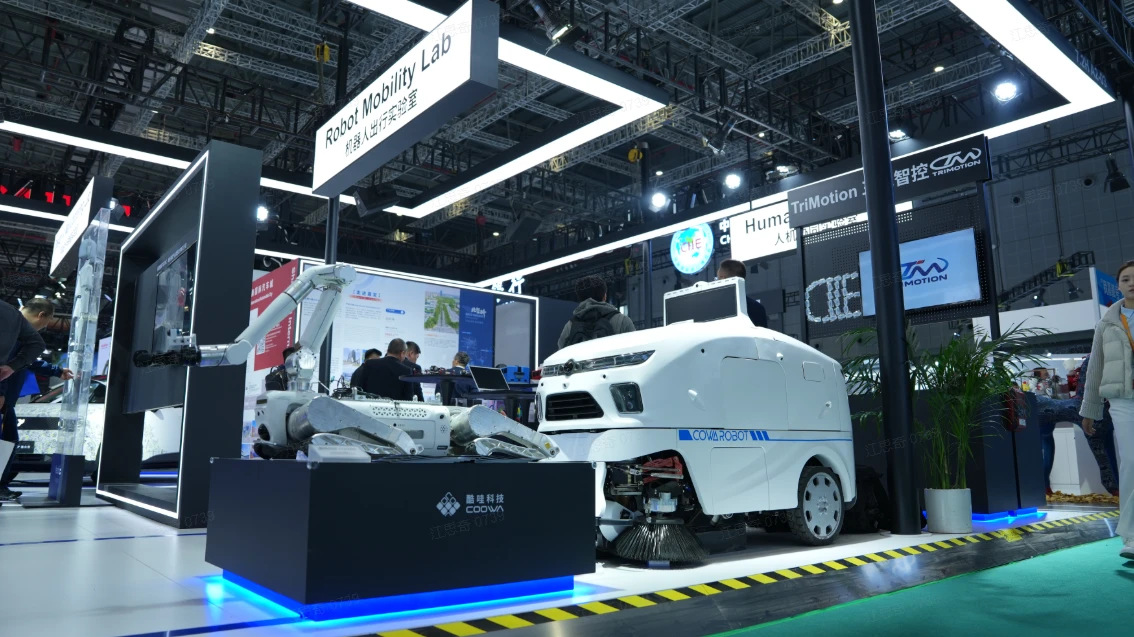
Coowam Debuts at CIIE With Edge-Deployed World Models for Multi-Form Robots
At the 9th China International Import Expo on November 6, Coowam made its debut by showcasing the D0 heavy-duty quadruped and X1 urban service robots. Both machines run on the company's proprietary COOWAM dual-layer agent world model, demonstrating its approach to driving diverse robot form factors with edge-deployed world models.
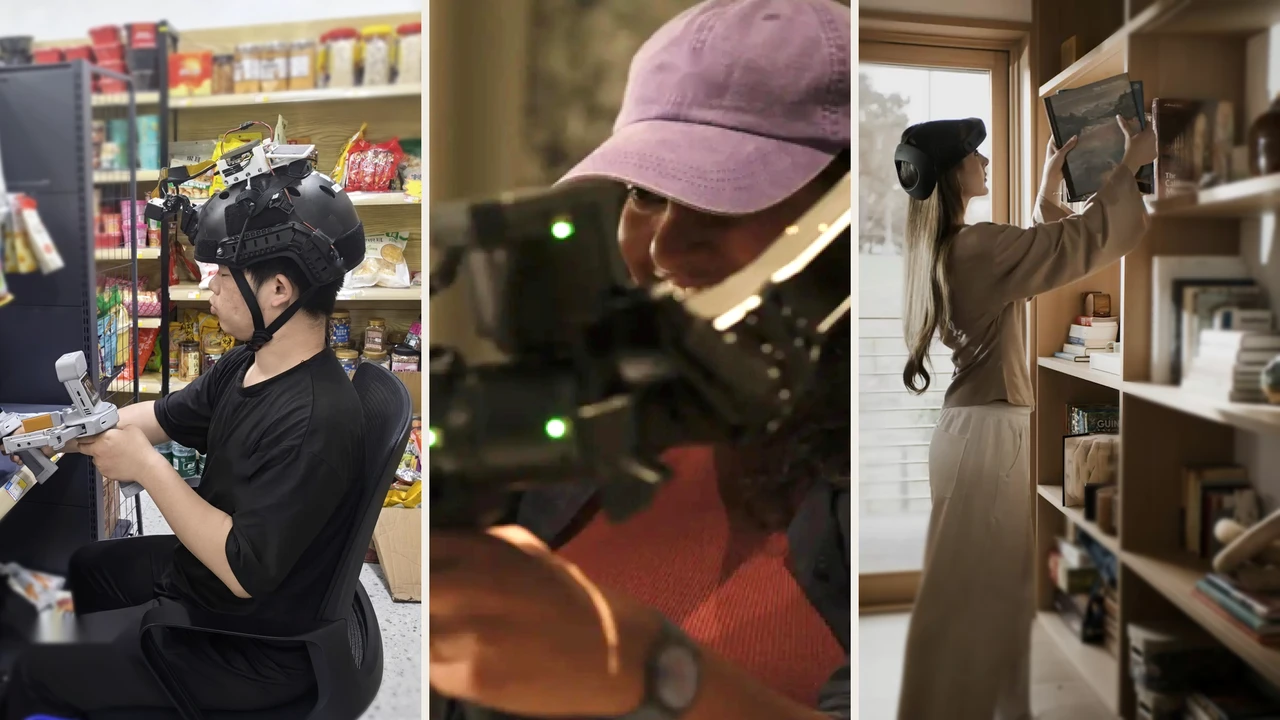
Robot Data Supply Chain Restructures as Buyers Prioritize Task Complexity Over Volume
Data collection intermediaries report that robot training clients are now evaluating task complexity segment by segment, effectively halving per-hour payouts for mixed-difficulty videos. As model companies shift from bulk purchasing to demanding specific, high-quality task data, the million-hour data supply chain is undergoing a painful restructuring.
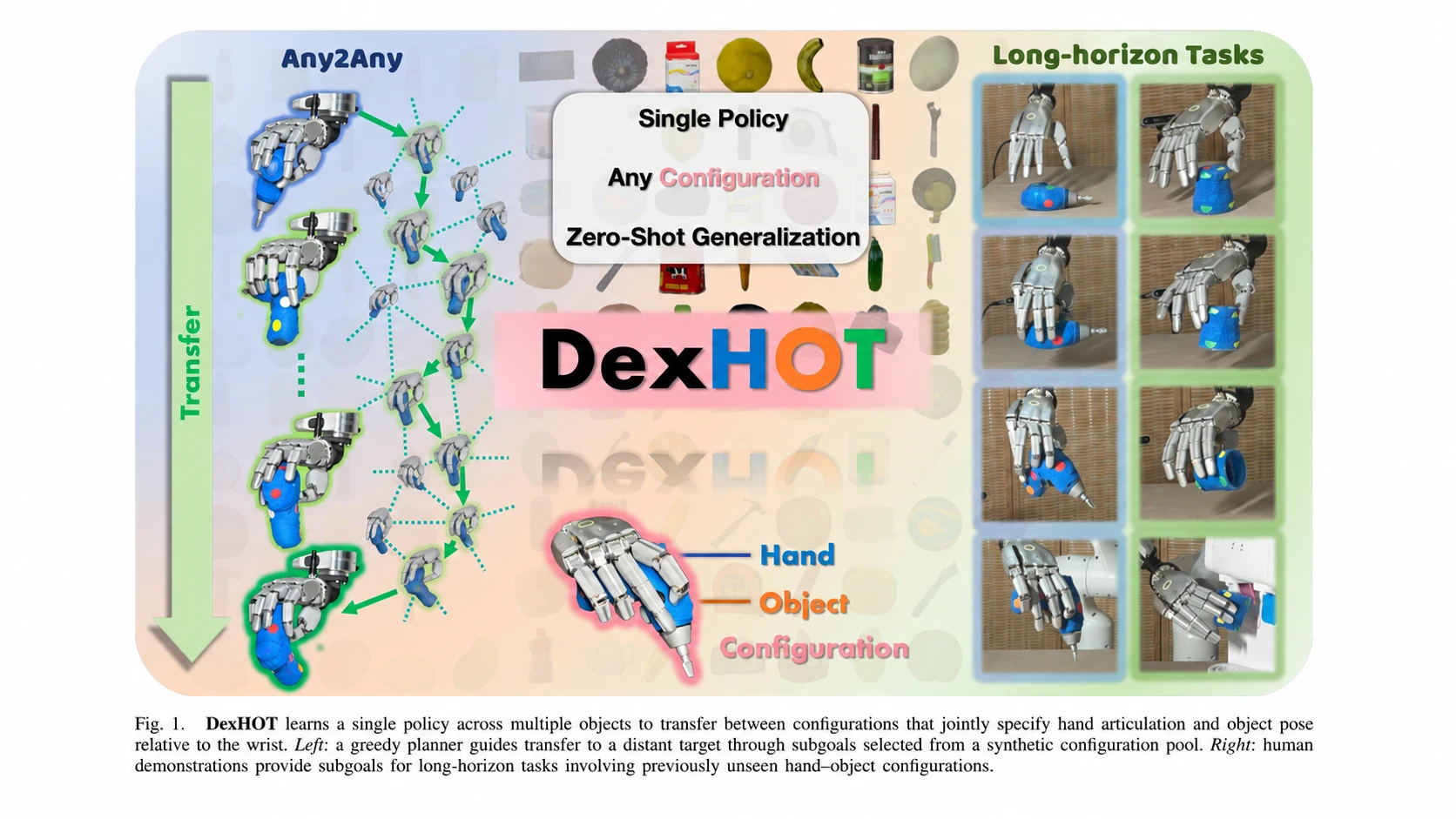
Peking University Team Succeeds in 27 of 30 Real-Robot Dexterous Task Tests by Optimizing Hand-Object Configurations
A joint team from Peking University, PrimeBot, and the Beijing Institute for General AI has introduced DexHOT, a framework that optimizes hand-object configurations rather than just object poses, achieving a 90% success rate in real-robot dexterous manipulation tasks.
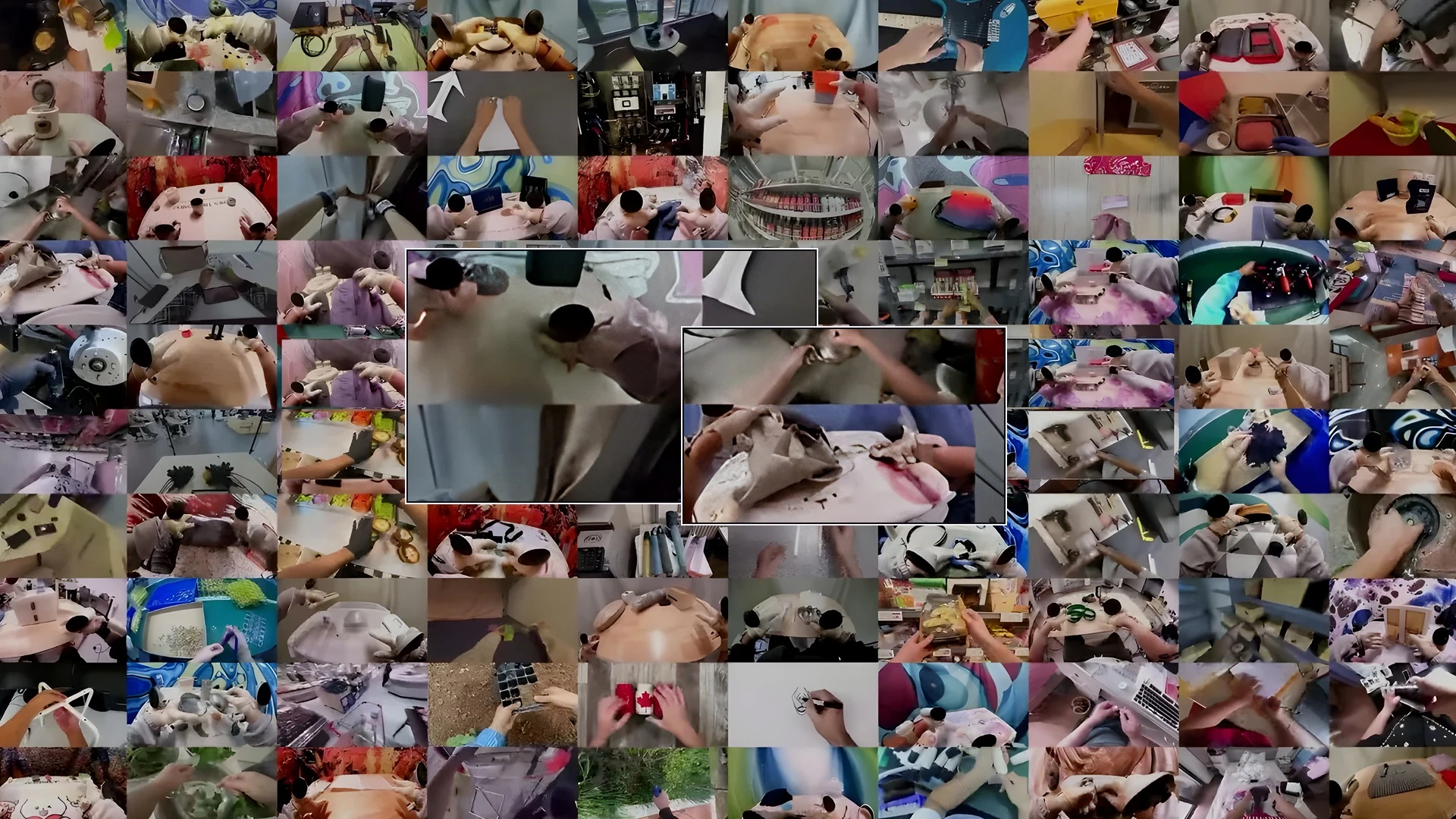
LiberAI Launches Liber-0 to Transfer Human Action Experience to Robots
On November 4, physical world model startup LiberAI released its world action model, Liber-0. The model was pretrained on more than 2.2 million hours of human experience data. The team evaluated its zero-shot performance on 60 manipulation tasks proposed by GPT-6, conducting 600 test rounds across three categories of 20 tasks each, with every task repeated 10 times.
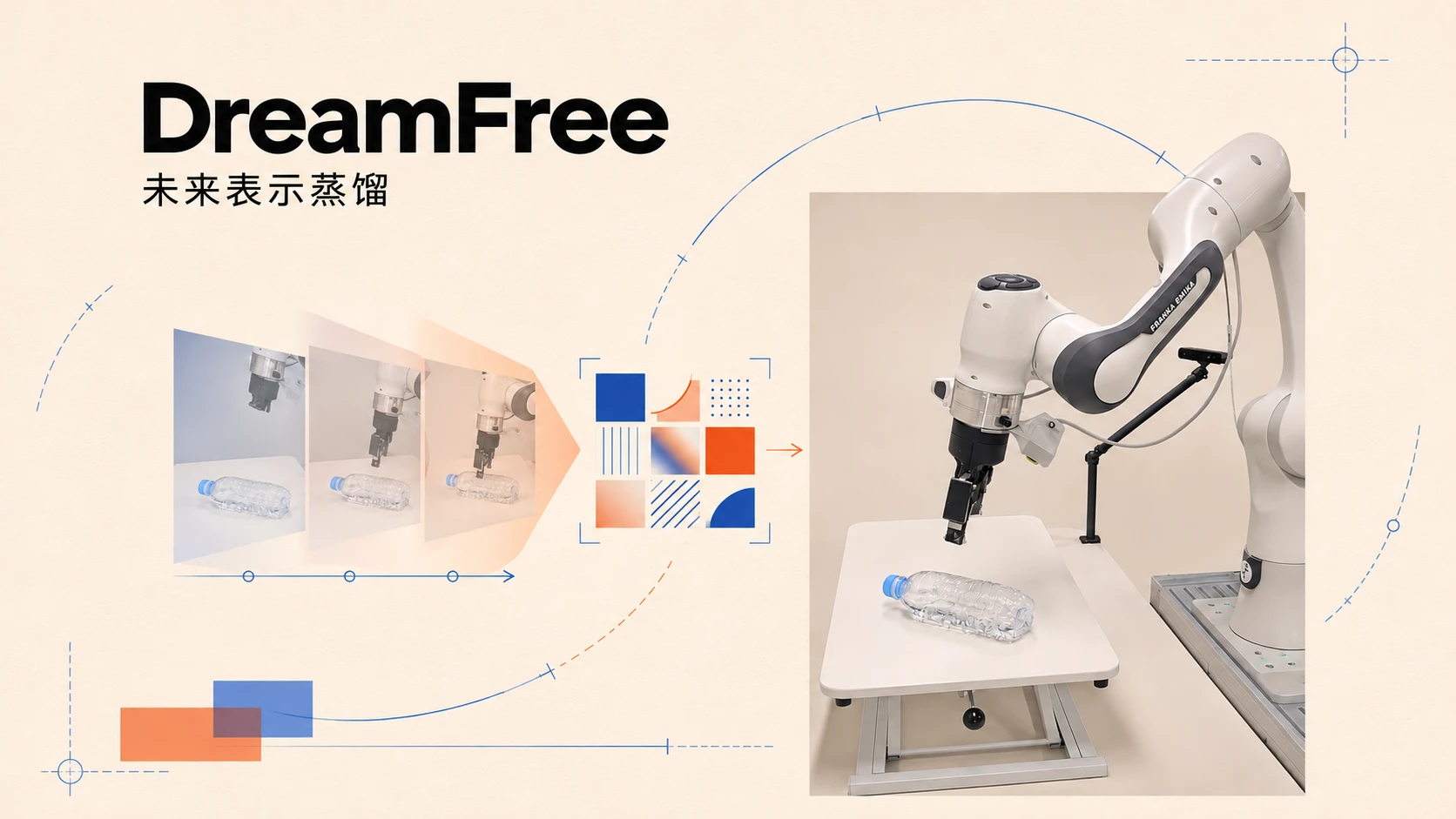
DreamFree Distills Future Representations for Imagination-Free Robot Control
KAIST researchers introduce DreamFree, a world-action model that distills predictive capabilities from a video diffusion model into a visual encoder. This enables robots to output actions from a single current frame, bypassing the computationally expensive step of generating future video sequences during deployment.
Ant Group’s LingBot Open-Source Robot Brain Surpasses 2.2 Million Downloads at Wuzhen Summit
At the 2026 World Internet Conference in Wuzhen, Ant Group’s embodied AI subsidiary LingBot showcased its fully open-source robot foundation models and a smart pharmacy deployment developed with Guoda Pharmacy.

Qiyuan Embodied Research Center Unveils PrimeSim, Exploring Video Generation Models for Robot Simulation
On November 4, Qiyuan Embodied Research Center released PrimeSim, a world model simulator for robot manipulation policy training built on a pretrained video generation model. The team plans to open-source the model weights, inference code, and training code on November 6.
Tsinghua University Researchers Propose Utility-WAM for On-Demand Future Video Generation in Robot Action Planning
Predicting future video frames for action planning offers dynamic foresight for long-horizon tasks in embodied AI, but the mixed effects on action outputs yield negligible net gains in average success rates while incurring full computational costs.

Tsinghua and UC Berkeley release uni-robot-agent framework for open-source robot control
A joint research team from Tsinghua University and UC Berkeley has released uni-robot-agent, a unified framework for Robot-Use Agents. The open-source model Qwen3.8-Flash-Next achieved a score of 31.39 on the RoboDojo benchmark by directly controlling a robot, surpassing the previously published score of 28.97 by GPT-6 Astra.
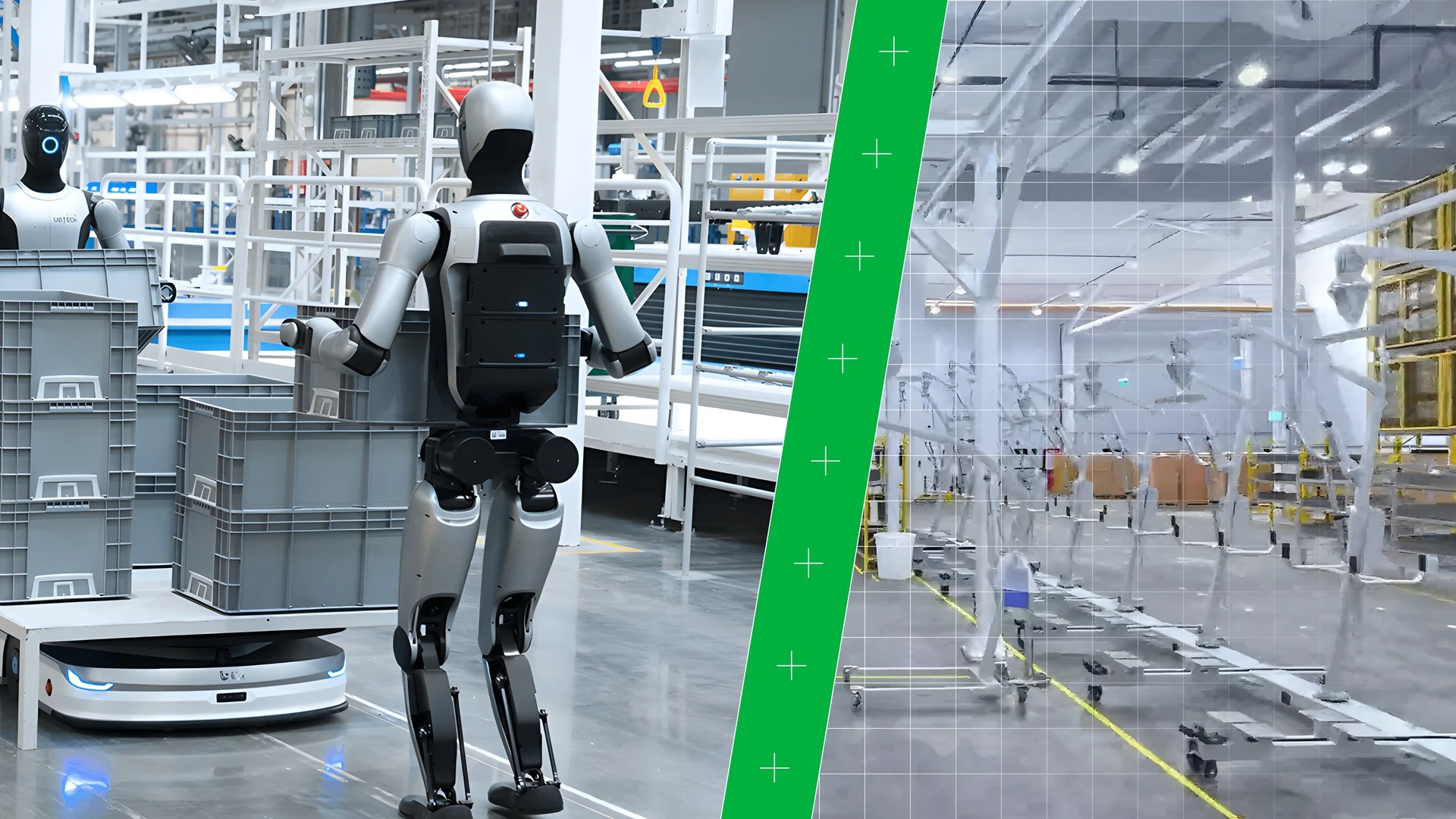
UBTECH Launches Thinker-Sim Platform for Embodied AI Simulation, Data Synthesis, and Evaluation
Unveiled on November 2, Thinker-Sim integrates real-to-sim-to-real scene digitization, large-scale data synthesis, and robot capability evaluation into a single system, with a single 8-GPU node synthesizing 390 hours of simulation data daily.

Shanghai Jiao Tong University and Partners Introduce UniFlowWAM, Elevating 3D Scene Flow to a Core Modality
Shanghai Jiao Tong University, Shanghai Chuangzhi Academy, and Qianzhi Intelligent introduce UniFlowWAM. Over the past six months, research on world-action models has increasingly trended toward extracting physical signals into abstract modalities, feeding them into encoders to train embodied AI models.
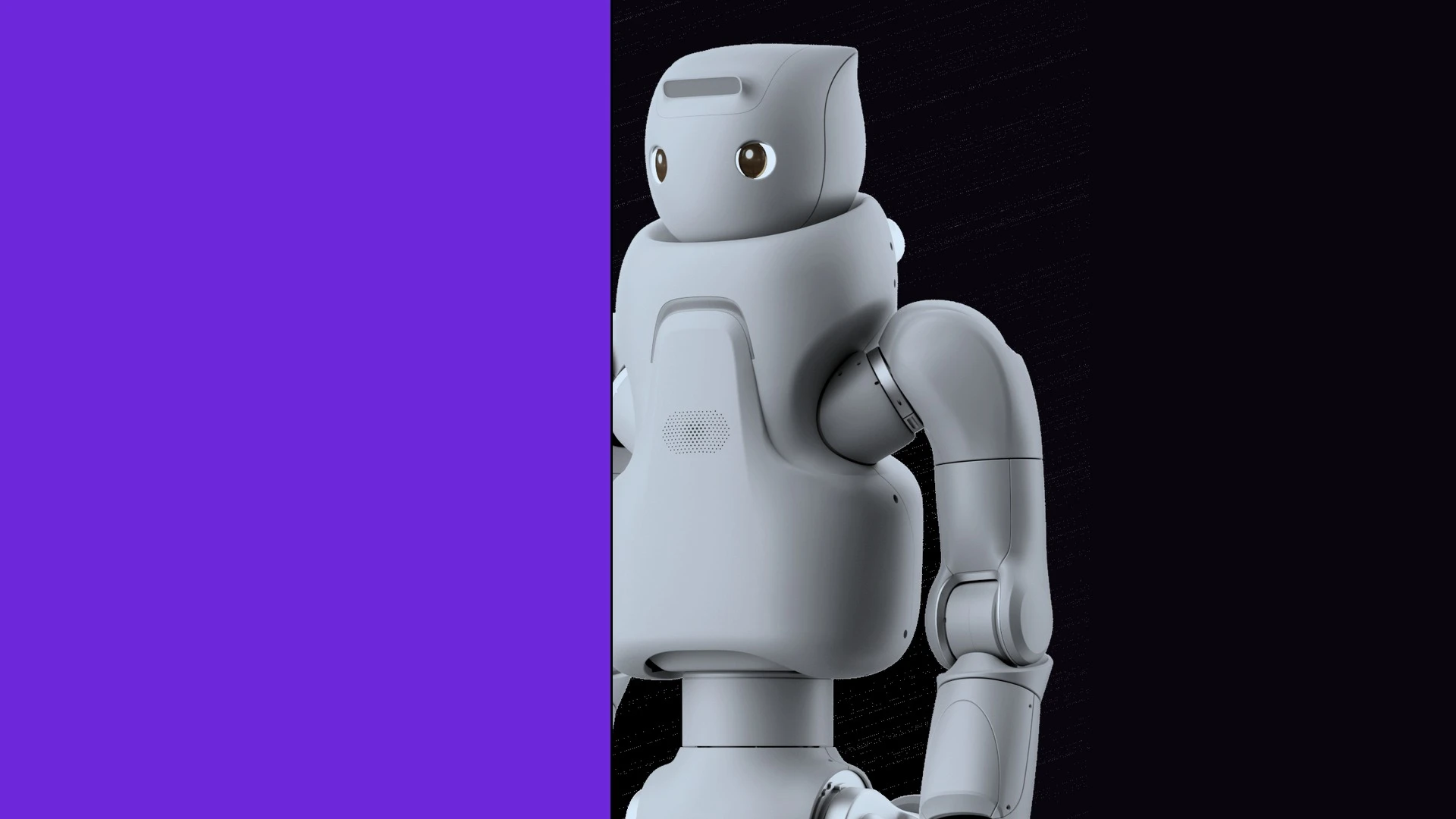
Meta and Fourier Develop Humanoid Robot Prototype Codenamed Max
According to The Information, Meta and Chinese robotics company Fourier have jointly developed a humanoid robot prototype codenamed Max, with development of a second-generation Max 2 underway since September 2026.