

Latest
Tactile sensing emerges as the next critical data modality for robot learning at IROS 2026
At IROS 2026 in Pittsburgh, sessions on tactile sensing were fully packed, highlighting a critical gap: while vision records appearance and motion, it cannot capture contact physics. Researchers from MIT, Columbia University, and Amazon presented low-cost sensors and human-demonstration methods to scale tactile data collection.

Shanghai Jiao Tong University and LandSpace Team Release DynaForge to Turn Failed Robot Demonstrations into Training Data
Researchers from Shanghai Jiao Tong University and LandSpace have released DynaForge, a system that uses motion planning as a prior and residual learning to convert failed dynamic manipulation trajectories in simulation into valid training data for robot policies.

IROS Best Paper Finalist: Helping Robots Detect Glass for Safer Navigation
42HOW Robotics interviews co-first author Yu Jingwen on the Southern University of Science and Technology team’s RANSAC-based framework that fuses depth foundation models with sensor data to enable safe robot navigation through glass obstacles.

RIMBOT Unveils Physical RSI Framework, Targets Industrial Validation
RIMBOT, a robotics startup founded in March 2026, is deploying its Physical Recursive Self-Improvement framework in industrial ICT testing lines. Co-founder Yuanxin Zhong explains why factories offer the necessary failure data and infrastructure to move beyond zero-shot generalization toward continuous real-world learning.

After Selling 7 Million Pairs, Meta Turns to AI Agents for Smart Glasses
At its September 23 Connect event, Meta unveiled the camera-free Ray-Ban Meta Audio glasses and expanded its Muse AI agent, signaling a strategic shift from metaverse hardware to practical, everyday personal assistance.
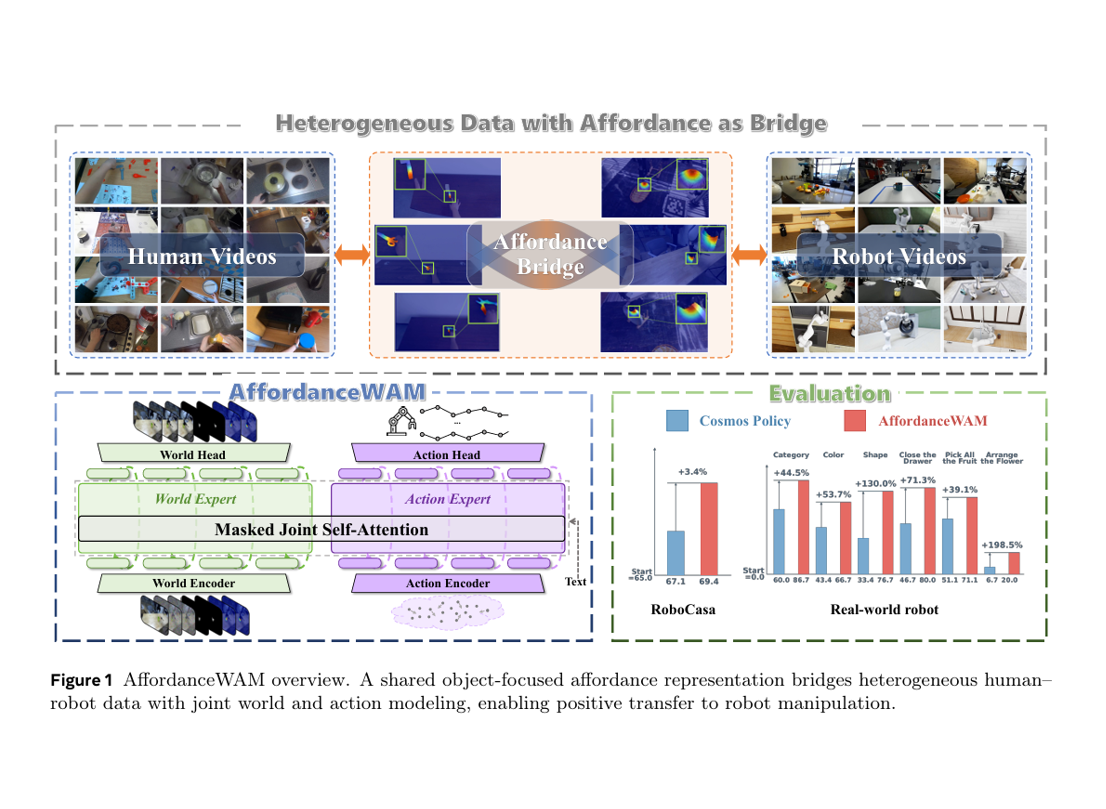
Five Universities and Knowin AI Release AffordanceWAM to Bridge Human Video and Robot Training via Affordance Prediction
A joint team from five universities and Knowin AI introduces AffordanceWAM, a world-action model that uses explicit affordance prediction to align human video data with robot training, resolving long-standing semantic mismatches in embodied AI.
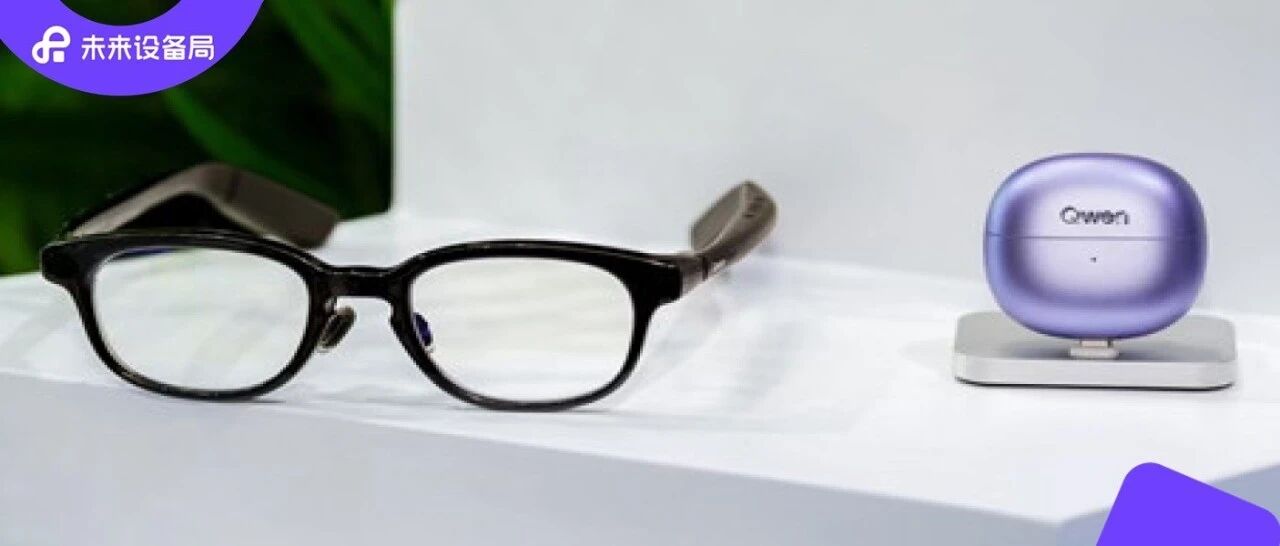
2026 Apsara Conference: Qwen's Focus on Real-World Deployment
At the September 22 Apsara Conference, Alibaba unveiled a suite of Qwen-powered hardware including AI glasses, earbuds, and office devices, aiming to move AI interactions beyond text prompts into visual and auditory contexts.
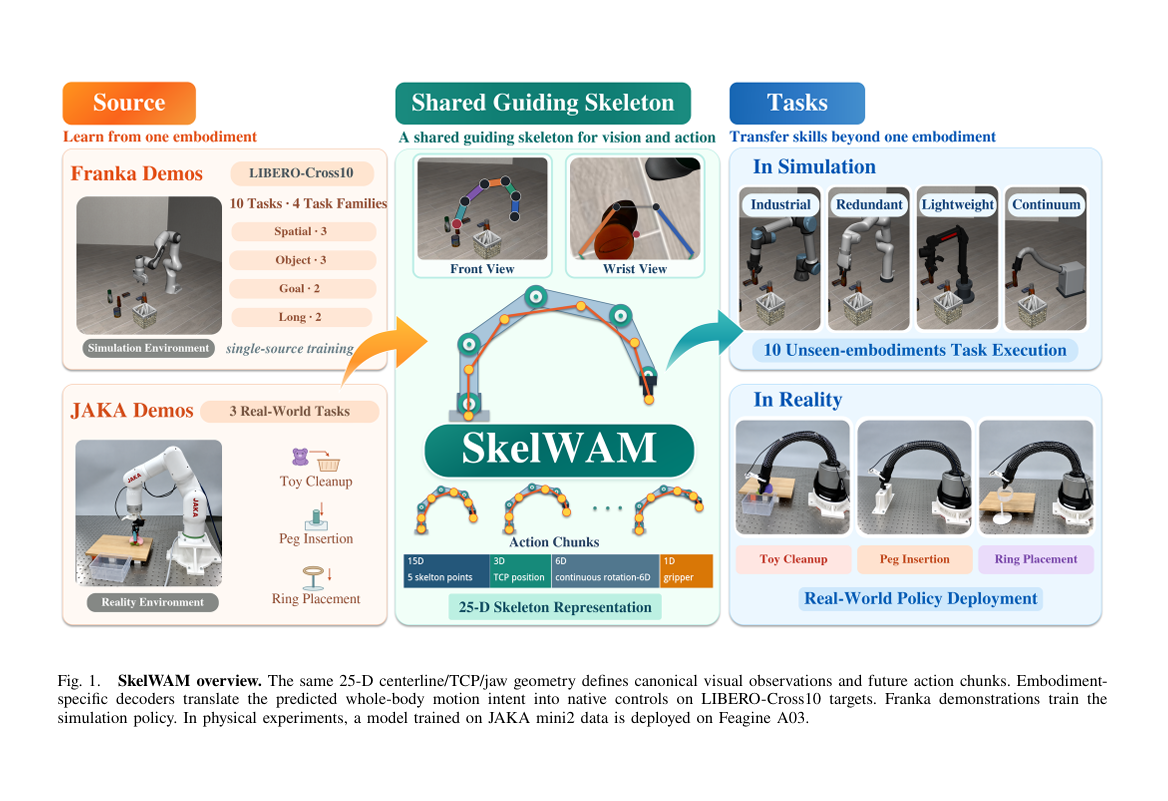
Tsinghua and Peking University Teams Release SkelWAM for Zero-Shot Cross-Embodiment Manipulation
Researchers from Tsinghua University and Peking University have introduced SkelWAM, a skeleton-guided world-action model that enables zero-shot transfer of manipulation policies across ten different robotic arm structures without retraining.

Tsinghua’s Cao Ting Unveils Zeva-Ego Model for Physical Self-Evolution via Causal Learning
At a Tsinghua University event, Zhang Ya Qin introduced Physical Self-Improvement (PSI), while Professor Cao Ting unveiled the Zeva-Ego model and ICCL framework to enable robots that learn causal relationships from real-world interaction.
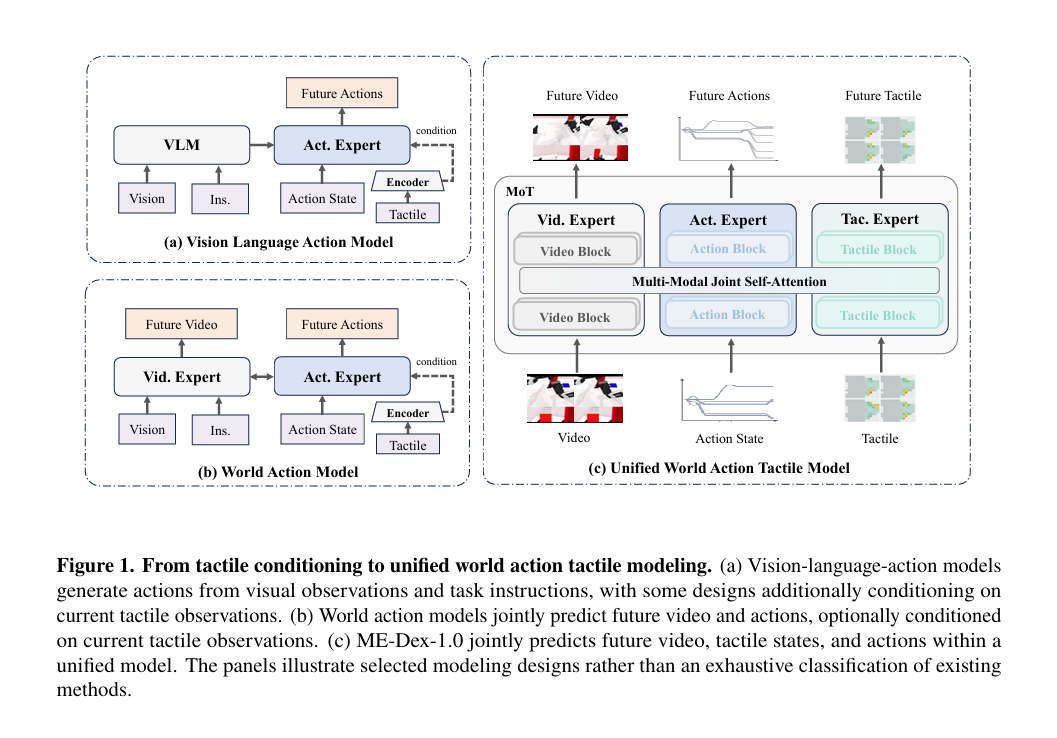
Li Auto's ME-Dex 1.0 Predicts Future Tactile States Alongside Visual Observations
Li Auto’s foundation model team released ME-Dex 1.0, a world action model that treats tactile sensing as a parallel prediction target to video. By aligning heterogeneous tactile data from five different hands into a unified representation, the system significantly improves success rates in high-contact dexterous manipulation tasks.
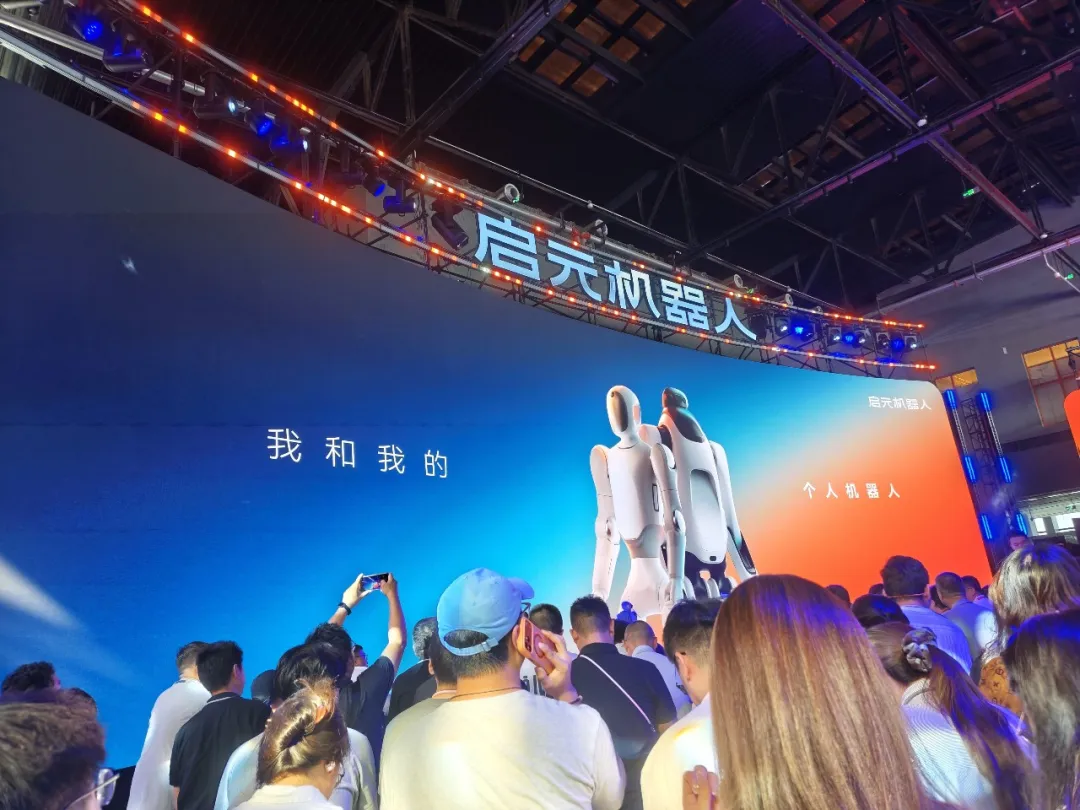
PrimeBot Launches Personal Robots at iPhone Price, Bets on AI as a Physical Terminal
Shangwei New Materials's PrimeBot released the Q1 and T1 humanoid robots starting at RMB 19,999, positioning them as personal AI terminals comparable in cost to high-end smartphones while aiming to build a developer ecosystem.
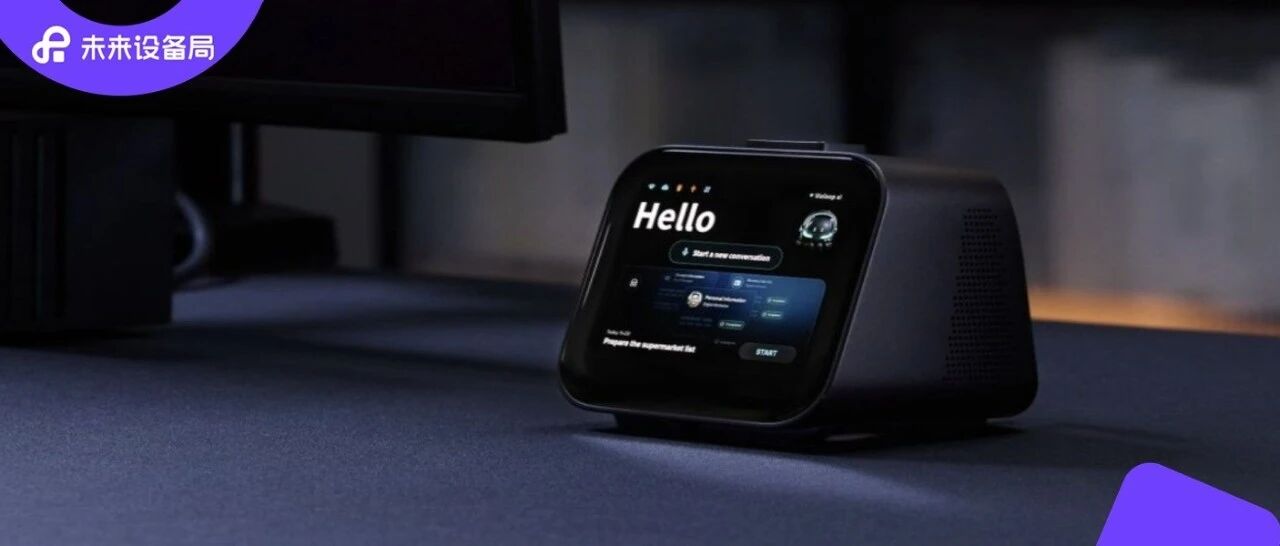
Crowdfunding Hits $1 Million in 20 Hours: Buyers for AI-Driven Desktop Automation
Shenzhen-based Violoop's desktop AI agent hardware raised over USD 1.28 million on Kickstarter within days of launch, signaling early market interest in local-first, screen-aware AI assistants that operate via physical mouse and keyboard simulation.