XPENG Plans Hardware Mass Production of Humanoid Robot IRON for January 2027, Store Internships in Q1
At the 2026 XPENG Technology Day on November 25, Chairman and CEO He Xiaopeng announced the mass production timeline for the IRON humanoid robot. Hardware mass production is scheduled to begin in January 2027, with an official public launch targeted for the second quarter.
On November 25, at the "Origin" 2026 XPENG Technology Day in Guangzhou, XPENG Chairman and CEO He Xiaopeng announced the mass production plans for the IRON humanoid robot. IRON is scheduled to enter hardware mass production in January 2027, with an official launch targeted for the second quarter. According to on-site reports from China News Service and IT Home, the robot will begin its first deployment in XPENG's domestic stores during the first quarter, interning as a shopping guide.

Image | XPENG IRON render (Source: XPENG official website)
At last year's Technology Day, IRON demonstrated a human-like gait. This year, it took the stage to deliver speeches in both Chinese and English and answered questions from the live audience. He Xiaopeng asked it about his own outfit for the day, while overseas media asked it in English where in the UK it would like to travel. XPENG stated on its official community platform that the interaction involved no teleoperation and that the responses were generated by the robot in real time.
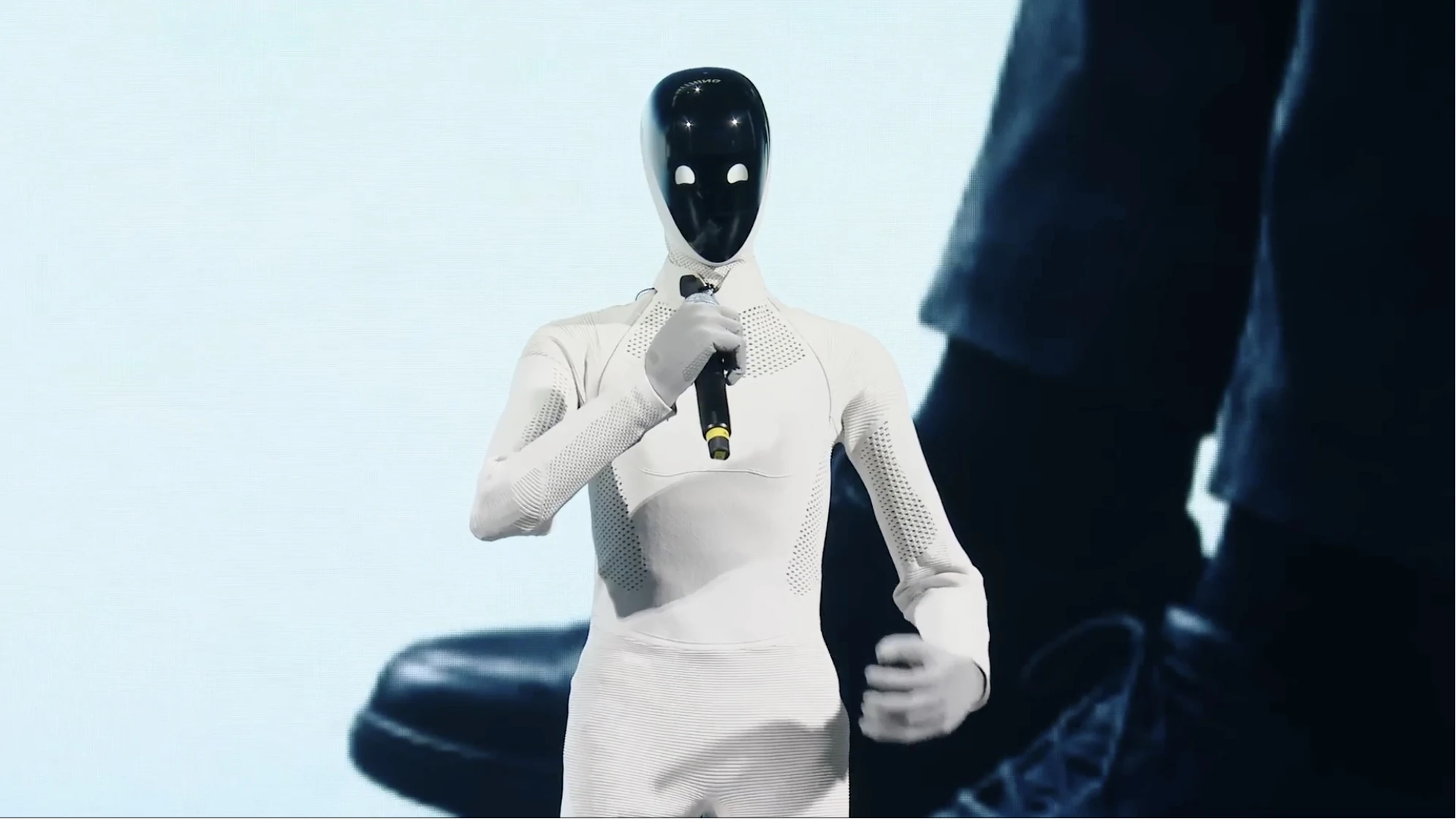
Image | IRON at the 2026 XPENG Technology Day event (Source: XPENG online community)
According to data published on XPENG's official website, IRON stands 170 cm tall and weighs 62 kg. It features 76 degrees of freedom across its body, with a combined 9 in the waist and hips. Each dexterous hand has 21 degrees of freedom and 375 tactile sensors, enabling it to perform 33 types of daily tasks. The website notes that the sound of its footsteps during indoor walking does not exceed 52 dB(A).
IRON features more than 1,500 contact points across its body, with tactile coverage exceeding 80% in core areas to perceive contact, friction, and slip. It is equipped with four cameras, one ultrasonic radar, and nine microphones. Powered by three Turing AI chips delivering an effective computing performance of 2,250 TOPS, the robot runs its large models locally.
For commercial scenarios such as retail stores, XPENG has equipped IRON with shift scheduling, autonomous mapping, and exception reporting capabilities. The robot can switch between roles—including shopping guide, receptionist, internal trainer, and security guard—based on its schedule, with tasks configurable via voice or a mobile app. When the battery is low, it can autonomously recharge. According to the official website, a 20-minute charge provides 1.5 hours of operation.
Safety features include dual-channel communication, balance control during a loss of stability, and impact reduction during a fall by bending the knees. The solid-state battery cells showcased on the official website have an energy density of no less than 300 Wh/kg, and sensitive data such as faces and voices are isolated on-device. The website notes that the features and specifications currently demonstrated may differ from the final mass production version.
XPENG states that its roughly 50,000-square-meter robot data factory spans more than 250 scenarios and 15 job categories to collect real-robot operational data and validate tasks. The company's website lists over 1,000 automotive-grade validation tests, alongside durability testing for the complete robot assembly, legs and feet, and dexterous hands. According to the Economic Information Daily, the fully automated assembly line also incorporates more than 600 AI-powered quality inspections.
He Xiaopeng stated that XPENG will initially deploy IRON in clearly defined roles, such as retail assistance and guided tours, to build operational experience in reception and customer service before expanding into other scenarios. XPENG has also launched an open robotics platform to enable partners to develop role-specific applications. Regarding monetization, He Xiaopeng noted on-site that the company is exploring two pricing models: software subscriptions and token subscriptions.
Found an error? Tell us

 Daji