Hands-On: Miaodong’s Beni Ground-Tracking Robot Balances Camera Utility With Companion Appeal
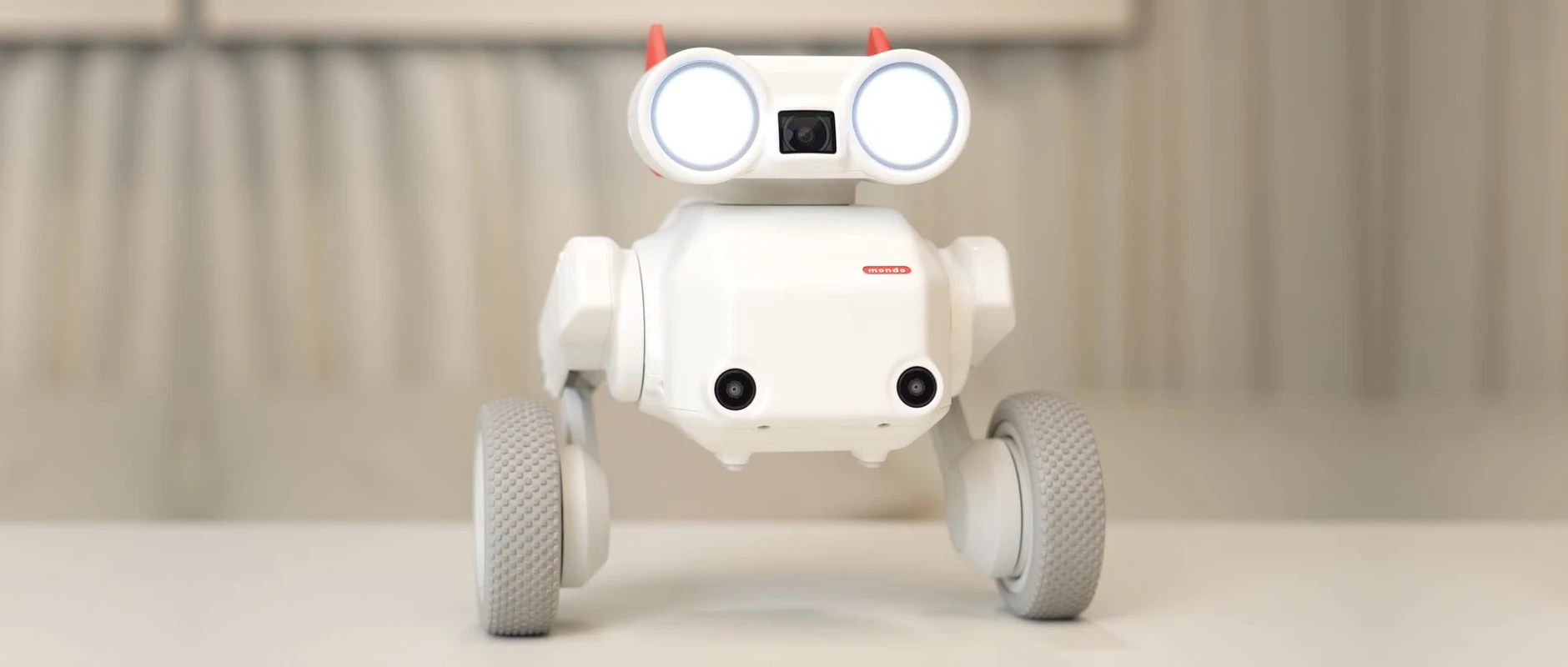
Shenzhen startup Miaodong Technology has launched its first product, the Beni ground-tracking robot, priced from RMB 4,999 in China and USD 799 overseas. The launch follows a highly successful crowdfunding campaign and a valuation surge to USD 1.2 billion.
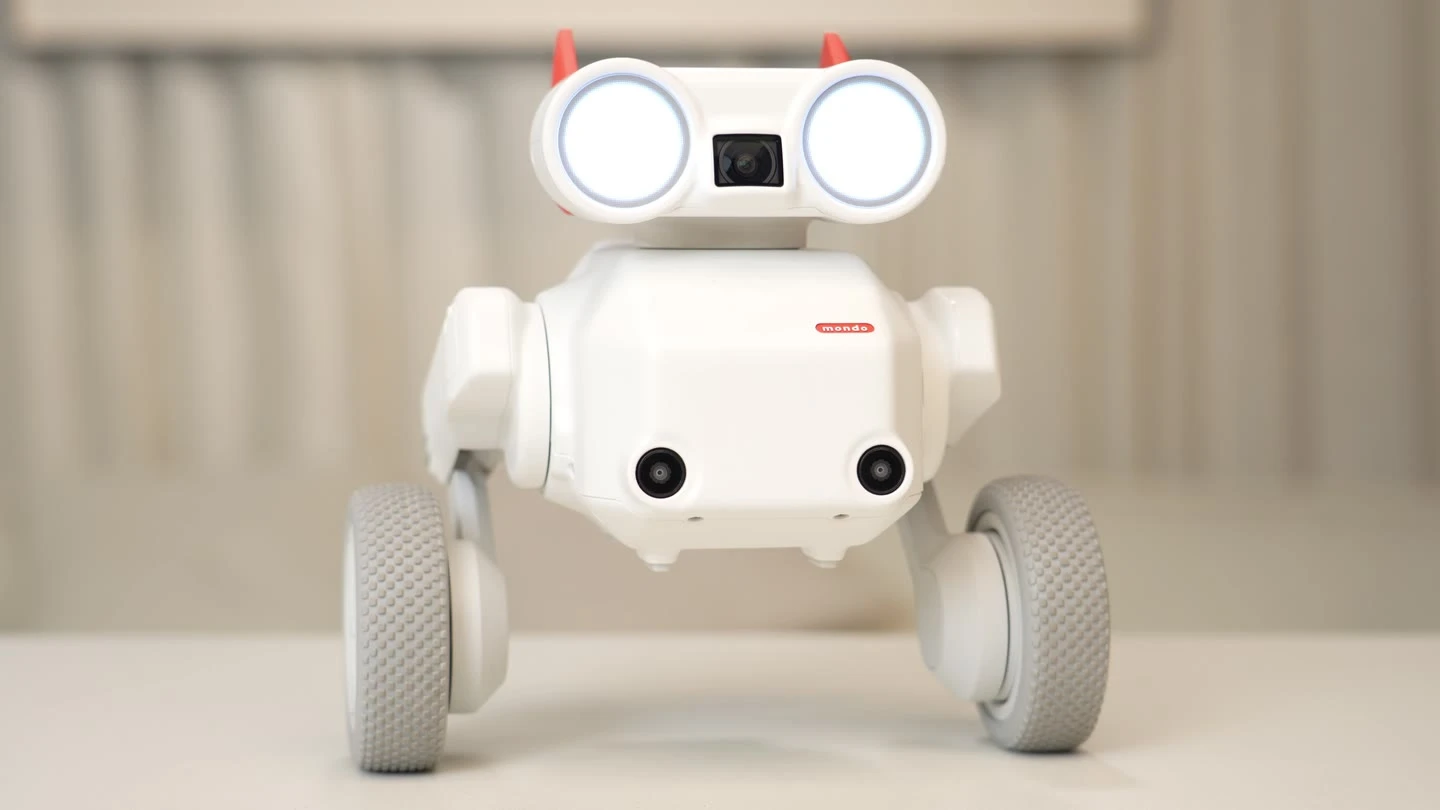
On November 10, Miaodong Technology, a Shenzhen startup founded less than two years ago, officially launched its first product, Beni. The domestic standard kit is priced at RMB 4,999, the exploration kit at RMB 5,799, and the overseas retail price starts at USD 799.
For a Shenzhen company less than two years old, the attention it has garnered is already considerable. After launching on Kickstarter on July 8, Beni raised more than USD 1.25 million within 10 hours. When the 60-day crowdfunding campaign ended, 7,926 backers had pledged a total of USD 5.003 million. Driven by strong institutional demand, Miaodong's valuation has climbed from USD 700 million to USD 1.2 billion in its recent funding round.
The consumer imaging market is already highly competitive and dominated by giants. DJI has captured more than 70% of the global consumer drone market, and Insta360 generated RMB 6.6 billion in revenue in the first three quarters of this year. Even Zero Zero Robotics, which focuses on hands-free tracking, sold more than 500,000 units of its HoverAir last year, pushing its revenue past RMB 1 billion. Amidst a host of mature players, the fact that a camera on wheels can generate such momentum itself proves that ground-based tracking has indeed tapped into an unmet need.
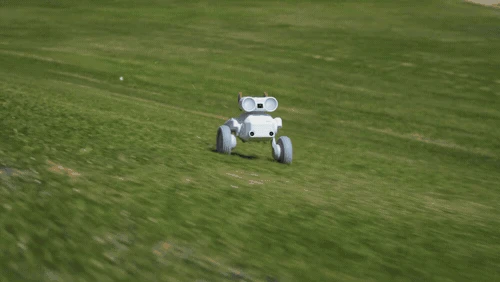
Yet, when a camera moves to the ground and becomes a consumer robot, does filming really become more hassle-free?
"Automatic Tracking" Isn't So Automatic
Operating Beni's tracking feature is straightforward. In the app, simply tap to lock onto the subject, select a tracking mode, and start filming. There are three tracking modes in total: rear follow, parallel follow, and focus tracking.
Rear follow provides the best experience, easily keeping up with a subject even in complex indoor environments. The other two modes have some minor bugs. For instance, during parallel follow, if the subject walks through a doorway, Beni doesn't follow but instead drives straight toward where the person disappeared. This directly impacts usability. If you are walking forward and notice the robot hasn't kept up, you have to turn back and reset it, which breaks the rhythm of the preceding footage.
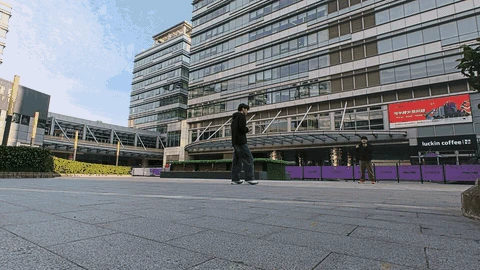
When taken outdoors for real-world use, even inconspicuous small obstacles on the path can interrupt filming. In testing, the automatic obstacle-clearing trigger during tracking proved unstable. When encountering a small bump, Beni often stops in its tracks, requiring the user to pause filming and use the remote control to manually command it to jump, or sometimes even physically assist it (this has since been fixed via an OTA update). Furthermore, real-world tests show that Beni can only clear a single step and cannot navigate a continuous flight of stairs.
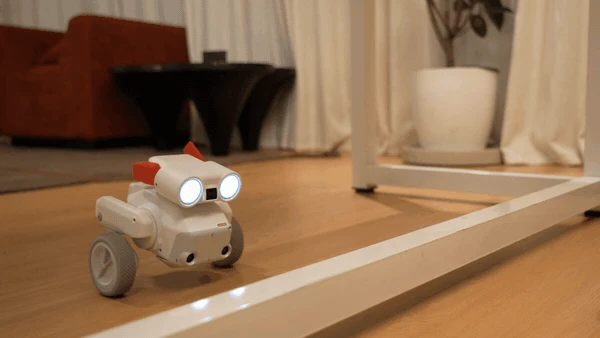
Similar issues arise on grassy terrain. Sometimes, even with the joystick pushed fully forward, the robot remains stationary because its obstacle avoidance system misidentifies the grass as a barrier, effectively stranding it in place. While resolving a single instance is relatively simple, encountering it repeatedly during a shoot quickly tests your patience.
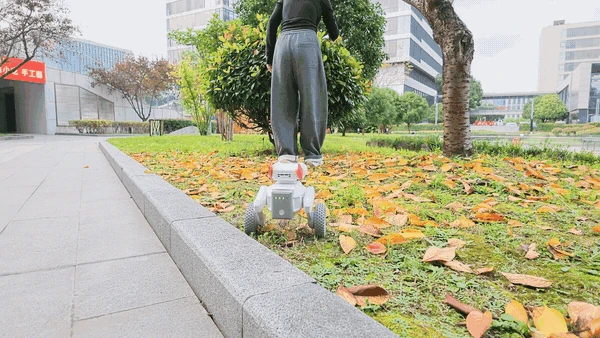
Environmental factors also disrupt tracking. If the subject walks behind a tree, turns a corner, or blends into a crowd, the robot will sometimes stop and scan left and right to relocate them. To resume filming, you then have to pull out your smartphone or use the motion tracker to re-lock the target.

Over the past two weeks of testing, every outdoor tracking session required me to constantly look back to check if Beni was keeping up or about to collide with something. This is especially true when running or cycling; instead of focusing on the workout, I found myself constantly distracted by having to watch the robot.
Buyers looking to use it for recording runs or rides should weigh this carefully. While its rear-following performance is solid in controlled settings, real-world running routes with stairs, sharp turns, or pedestrian occlusion will still require you to stop and manually take over. If you only need a few quick running shots, it works fine. However, if you want to run at your natural pace without the robot interrupting your stride, we recommend waiting to see if upcoming OTA updates can stabilize the tracking.
How does the footage look?
Beni’s stabilization performance far exceeded my expectations. During cycling follow-shots and tests on bumpy terrain, the robot's body visibly bounced up and down, leading me to expect severely shaky footage. However, reviewing the clips revealed that the final video was much smoother than the robot's actual physical movement.
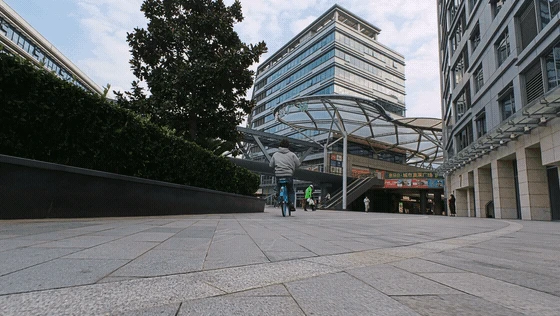
It utilizes HybridFlow hybrid stabilization, which first uses the wheel-legs to absorb initial bumps. Then, a mechanical stabilization structure in the head combines with the body's motion data for compensation, finally overlaying electronic image stabilization. The synergy of these systems delivers genuinely impressive real-world results.
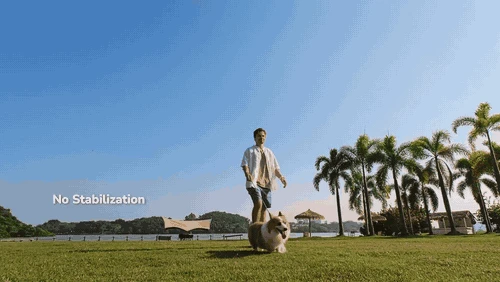
Image quality, however, is highly dependent on lighting. In well-lit outdoor conditions, Beni’s dynamic range is acceptable, and it can generally handle highlights even in strong backlight. But indoors or in low light, issues with low sharpness and noticeable smearing become apparent. When compared to mature imaging devices from DJI and Insta360, the gap is still quite noticeable.
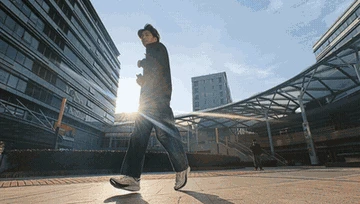
However, the camera angle impacts daily use even more than image quality. At just 21.8 centimeters tall, Beni's lens is essentially forced to look upward when filming adults. While an occasional low-angle shot might feel unique, relying on it continuously makes the perspective monotonous. This angle is not always suitable for everyday scenes like walking or chatting, and it quickly becomes tiresome.
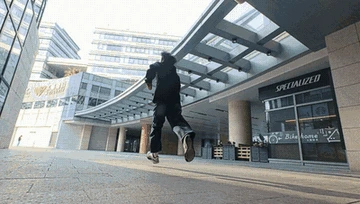
A human operator can easily raise or lower a camera to frame the subject. Although Beni offers three height settings—low, medium, and high—the practical difference is limited. Therefore, users must consider in advance whether a low-angle perspective suits the content. Combined with its limitations in low-light image quality, Beni's optimal use case is filming sports-oriented shots that benefit from a low angle in well-lit outdoor environments.
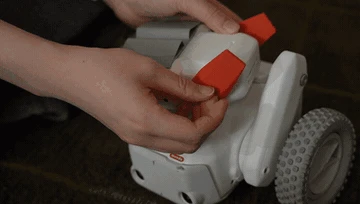
Fortunately, the robot's top features a standard 1/4-inch screw mount, allowing users to attach an action camera or a DJI Pocket via an adapter for more versatility. However, the external camera and adapter must be sourced separately, and the added payload affects the robot's balance. Moreover, even with a swapped camera, the robot still operates close to the ground, meaning the low-angle limitation cannot be entirely resolved.
Is it user-friendly?
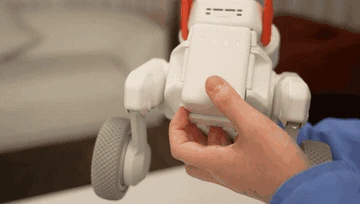
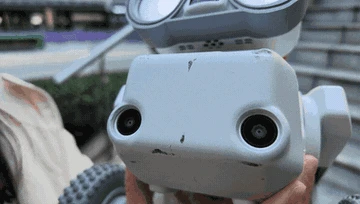
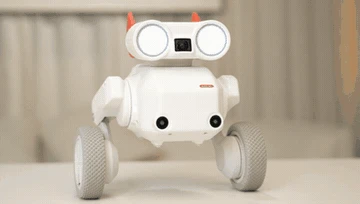
The Beni robot features a highly minimalist design with only a single power button on its body. Day-to-day operation relies primarily on a motion-sensing remote controller and a smartphone app.
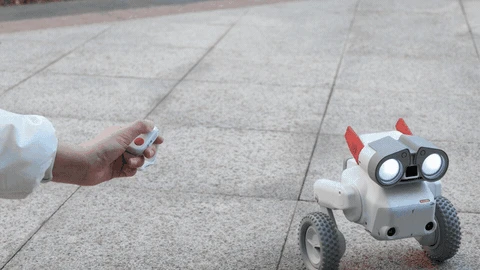
The remote controller features a joystick and buttons. Pressing the joystick or flicking the wrist commands the robot to jump in place, which has a low learning curve. However, the controls feel clunky in both the remote and the app. The standard speed setting feels sluggish, while the high setting is overly sensitive. Given the robot's running speed, manual control easily results in collisions. This also degrades the manual takeover experience. When automatic subject tracking encounters issues, users should be able to seamlessly take over with the remote, but they first have to adjust to the joystick's response.
The app is generally user-friendly. Real-time video preview, shooting parameter adjustments, and subject tracking position switching are all intuitive and smooth. It includes seven built-in intelligent camera movements; once the subject is locked and the start button is pressed, the robot automatically executes the sequence. This is highly convenient for users unfamiliar with manual camera operation.
However, the app occasionally experiences bugs. Sometimes, even after Beni completes a camera movement, the phone still displays "incomplete." Users only discover the video was successfully recorded after opening the gallery. While this does not directly affect the final footage, it creates uncertainty about whether the shot was actually captured. Consequently, users must manually check the gallery after every shoot before proceeding with confidence.

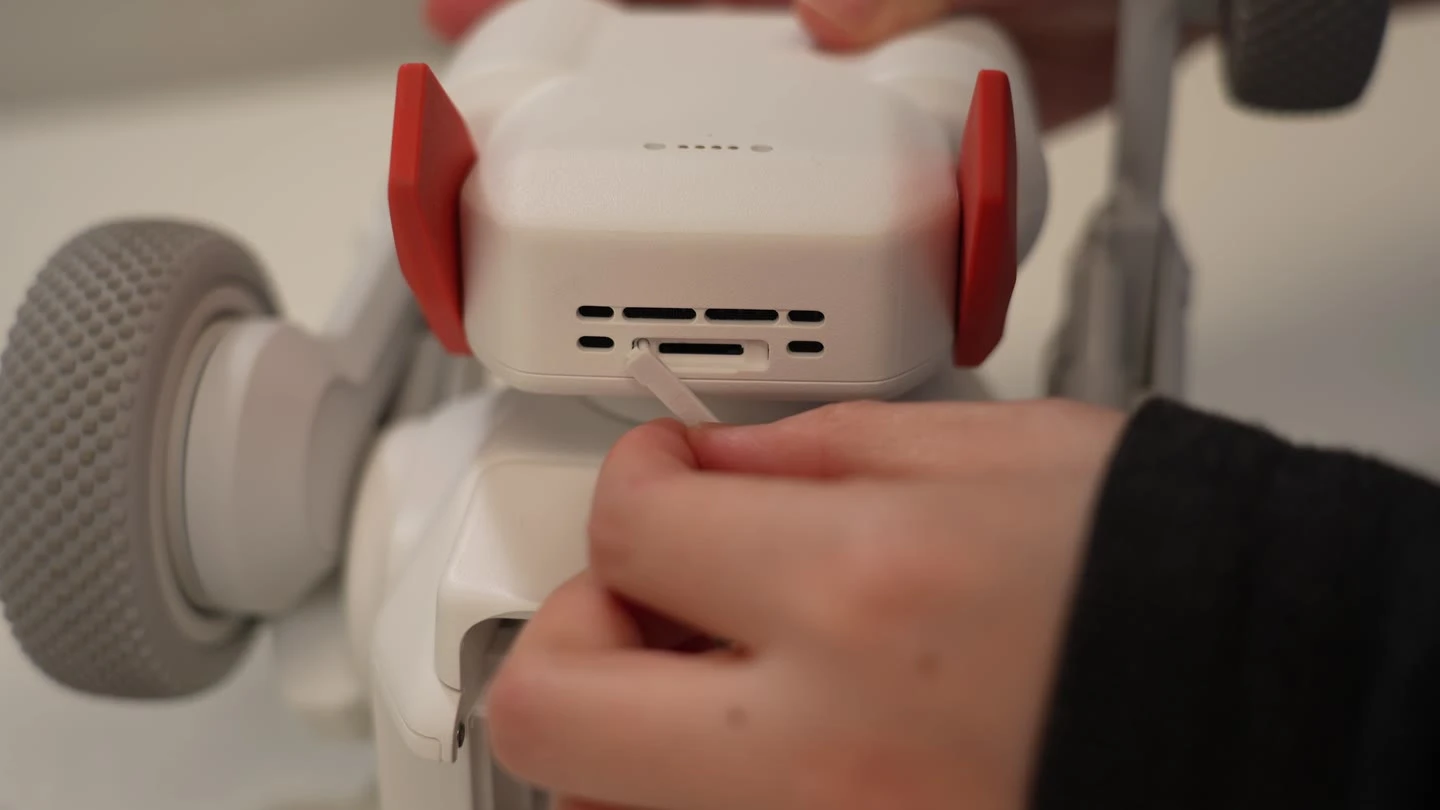
Transferring footage takes even more time. In our tests, transferring a roughly 6 GB 4K video took about five minutes. This is fine for a few short clips, but if you shoot a lot of footage, slowly transferring it via your phone becomes a chore. I highly recommend inserting a microSD card beforehand and using a card reader to export the files directly after shooting.
The app also features a dedicated AI editing function that automatically selects highlight clips and edits them into a short video synced to the beat of the music. The results are quite good; while they may not match the work of a professional video editor, they are more than sufficient for sharing on social media. It also saves you the hassle of manually selecting clips and matching the rhythm.
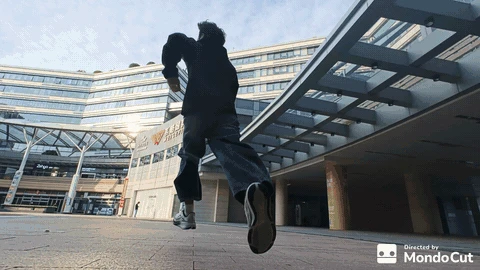
We used complimentary credits during our review, so how this feature will be priced in the future remains unknown. Additionally, this function requires at least one minute of raw footage to work, so you need to record extra clips while shooting. The raw footage itself must be of good quality for the auto-editing to select visually appealing content.
Its primary function is follow-along filming, but its standout feature is companionship
When not recording video, Beni's interactive features are more engaging than expected.
Pat its head, and it bounces in place twice. Call out "Beni," and it turns to look at you. Wave at it, and it runs toward you. Leave it unattended for a while, and it shakes its head while emitting a sound like a cat's purr.
Its movements after falling and getting back up also look remarkably crisp and agile. Together, these details give it a strong sense of presence even when it is not performing its filming tasks.
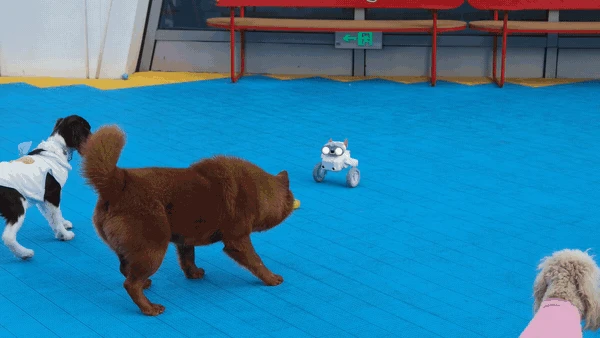
The app also features four games. In "Find the Gold Coins," you remotely control the robot to search for virtual coins around the room; the closer you get to the target, the faster the audio cue plays, and it spins in place twice upon finding one. "Tug of War" is a two-player test of reflexes, with the robot swaying left and right in the middle.
These interactions are simple yet engaging. Compared to adjusting parameters or reviewing footage, the feedback from patting its head or waving is much more immediate—you can just pick it up and figure out how to play.
It is also remarkably durable. Whether it experiences collisions, drops, or tumbles, the chassis may pick up a few scratches, but it remains fully functional. After falling over, it pushes itself up off the ground and shakes its head a couple of times, which is surprisingly endearing. However, it is vulnerable to hard metal objects, which can easily crack its outer shell, so it is best to avoid them during remote control operation.
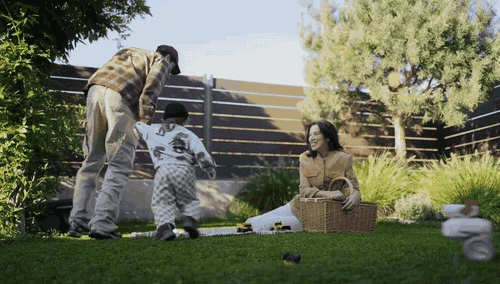
This makes Beni an excellent companion robot for the home. Children can treat it as a large, interactive toy, and parents can easily join in. For instance, when playing the "Find the Gold Coin" game, the child handles the controls while the adults listen to the audio cues and help guide the direction. The gameplay is simple, yet perfectly suited for young children.
Beyond playtime, Beni can also act as an on-the-spot videographer. When parents and children sit on the floor building blocks, placing Beni nearby provides a ground-level perspective that perfectly captures the child's facial expressions and hand movements. The low camera angle that felt slightly awkward when filming adults earlier proves to be ideal in this scenario.
The same applies to filming pets. When standing to shoot a dog, the frame usually only captures the top of its head and its back; a low angle makes it much easier to capture the dog running toward you with a ball in its mouth. Furthermore, Beni boasts robust tracking capabilities, so when playing with your dog, you can let it follow and film from the sidelines, keeping both the human and the dog in the frame. If your dog is not afraid of it, they can even chase and play together.
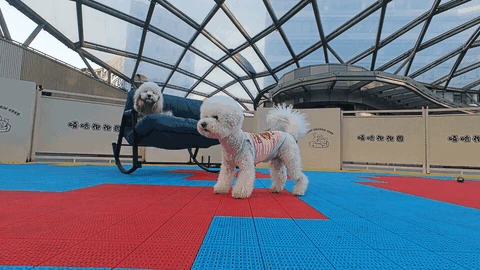
Operating Beni at home also offers peace of mind regarding safety. First, its physical footprint is smaller than that of a typical dog, avoiding the high center of gravity seen in traditional humanoid robots that can easily crush or injure someone if they fall over. It operates exclusively at ground level, so even if children or pets are running around nearby, there is no risk of it causing harm.
Second, regarding data security—a major concern for many users—Beni performs all tracking and video processing locally on the device. Footage is saved directly to local storage, and its companion app is explicitly labeled as collecting "no data," eliminating concerns about family videos being uploaded to the cloud. Additionally, its large front-facing eyes light up while it is operating, allowing family members to see at a glance that it is powered on. Compared to a surveillance camera left running in a corner, this design significantly reduces the discomfort of feeling constantly watched.
Is it a camera or a robot?
Returning to the question posed in the title, Beni's appeal is only complete when it successfully fulfills both roles: camera and robot. Judged purely as a camera, it has plenty of rough edges that still need smoothing out. Yet, viewed as an interactive robot, photography provides it with a highly practical use case. This duality is the most contradictory takeaway from my past two weeks of testing. On one hand, its photography experience isn't entirely hassle-free; on the other, it is hard not to find the device endearing.
Ultimately, whether the RMB 4,999 price tag is justified depends on how much you value each of these two aspects. If your sole goal is to solve the problem of filming yourself while exercising, the current generation's level of polish means it isn't worth rushing to buy. However, if you already want to bring a robotic companion into your home and are willing to spend time interacting with it while capturing everyday moments, Beni is a highly compelling choice.
As the world's first follow-shooting robot deployed in the consumer market, this first-generation product inevitably has some rough edges, and the maturation of a new product category cannot be rushed. I am willing to give this novel device more time. I also look forward to the day when it can deliver on its promises, ensuring that those who bought it simply because they liked it will feel their money was well spent when they actually need it to work.
Found an error? Tell us

 Daji